A product, not a deck
We deliver working software in production every two weeks, fully observable, with feature flags and rollback paths from sprint one.

Services
YuSMP Group delivers custom software development services to US and EU companies that need senior engineering, predictable delivery, and an audit-ready compliance posture. Our 80+ engineers in Yerevan run a CET workday with a 9 AM–1 PM ET overlap, building bespoke web, SaaS, and platform software under GDPR-aligned, SOC 2 Type II in-progress controls.
GDPR-aligned · ISO 27001 ready · SOC 2 Type II in progress · HIPAA-capable · CCPA-acknowledged · CET workday with 9 AM–1 PM ET overlap
This page is for product, engineering, and procurement leaders evaluating a custom software development company to build, modernize, or extend a proprietary platform. We cover bespoke software development services for SaaS, fintech, healthcare, and B2B verticals across the US and EU, with engagement through Fixed Price, Time & Materials, or Dedicated Team. Typical MVPs land between 60–180k EUR; full enterprise platforms start from 250k EUR. Compliance scope covers GDPR, HIPAA-capable, PCI DSS-capable, CCPA, and ISO 27001 ready, with SOC 2 Type II in progress. See it in practice in our CheckList case study.
We deliver working software in production every two weeks, fully observable, with feature flags and rollback paths from sprint one.
GDPR, ISO 27001 controls and audit trails are part of the delivery, not an afterthought added before your next certification window.
We add AI features when they cut workflow time or unlock revenue, and we keep them measurable, governed and behind clear guardrails.
Fixed sprint cadence, transparent burndown, weekly demos and one written status update. No surprises at the end of the quarter.
Every engineer on your team has shipped US & EU production systems. No bench juniors, no shadow staff, no blind handovers between time zones.
Clean architecture, full test coverage on critical paths, ADRs and documentation that lets your in-house team take over on day one.
One senior team, full lifecycle — from a first MVP to a modernized enterprise platform. Each capability is a dedicated practice you can scope on its own or combine.
Multi-tenant SaaS with billing, RBAC and metering, built to scale from first paying customer to enterprise rollout.
SaaS development →Complex line-of-business systems with audit logging, SSO and data residency for regulated US & EU operations.
Enterprise software →Fast, accessible web apps on React and Next.js, wired to your data and third-party APIs from sprint one.
Web development →Native and cross-platform iOS/Android apps shipped to the App Store and Google Play with offline-first UX.
Mobile development →REST and GraphQL APIs, event streams and integrations that connect legacy systems to modern services cleanly.
API development →Incremental re-architecture and cloud migration that retires risk without freezing your roadmap.
Software modernization →Two to four weeks of product, technical and compliance discovery, ending in a signed scope, roadmap and fixed first-release plan.
Architecture, UX flows and security model are decided up front and recorded as ADRs, not invented during implementation.
Two-week sprints, weekly demos, hardened CI/CD, and feature flags. Production deploys begin in sprint two, not at the very end.
SLOs, on-call rotation, observability and a monthly improvement plan keep the system healthy long after the first release ships.
Best for well-defined MVPs and migrations. We commit to scope, budget and date after a paid two-week discovery.
Best for evolving products. Weekly invoicing, a fixed senior team, and full transparency on hours and outcomes.
A long-term squad embedded in your product organization. You manage priorities, we handle hiring, retention and delivery.
Every build is scoped individually, but published US & EU ranges give you a realistic planning baseline before discovery. We issue a fixed estimate after a paid two-week discovery, then convert it to Fixed Price, Time & Materials, or a Dedicated Team.
€60,000–€180,000 · 12–20 weeks. A focused first version with one or two integrations, scoped to prove the model and reach real users fast.
From €250,000 · 9–14 months. Multi-tenant architecture, role-based access, billing, audit logging and HIPAA or PCI DSS scope for regulated US & EU workloads.
Priced per squad. An embedded, long-running squad of 4–12 senior engineers under CET hours with East-Coast overlap — best for evolving roadmaps and mid-market to enterprise buyers.
Four factors move the number most: feature depth and data-model complexity, the number of third-party integrations, your compliance scope (GDPR-aligned by default; HIPAA-capable and PCI DSS-capable on request), and the engagement model you pick. Every quote reflects senior-only engineers — no offshore juniors billed as seniors.
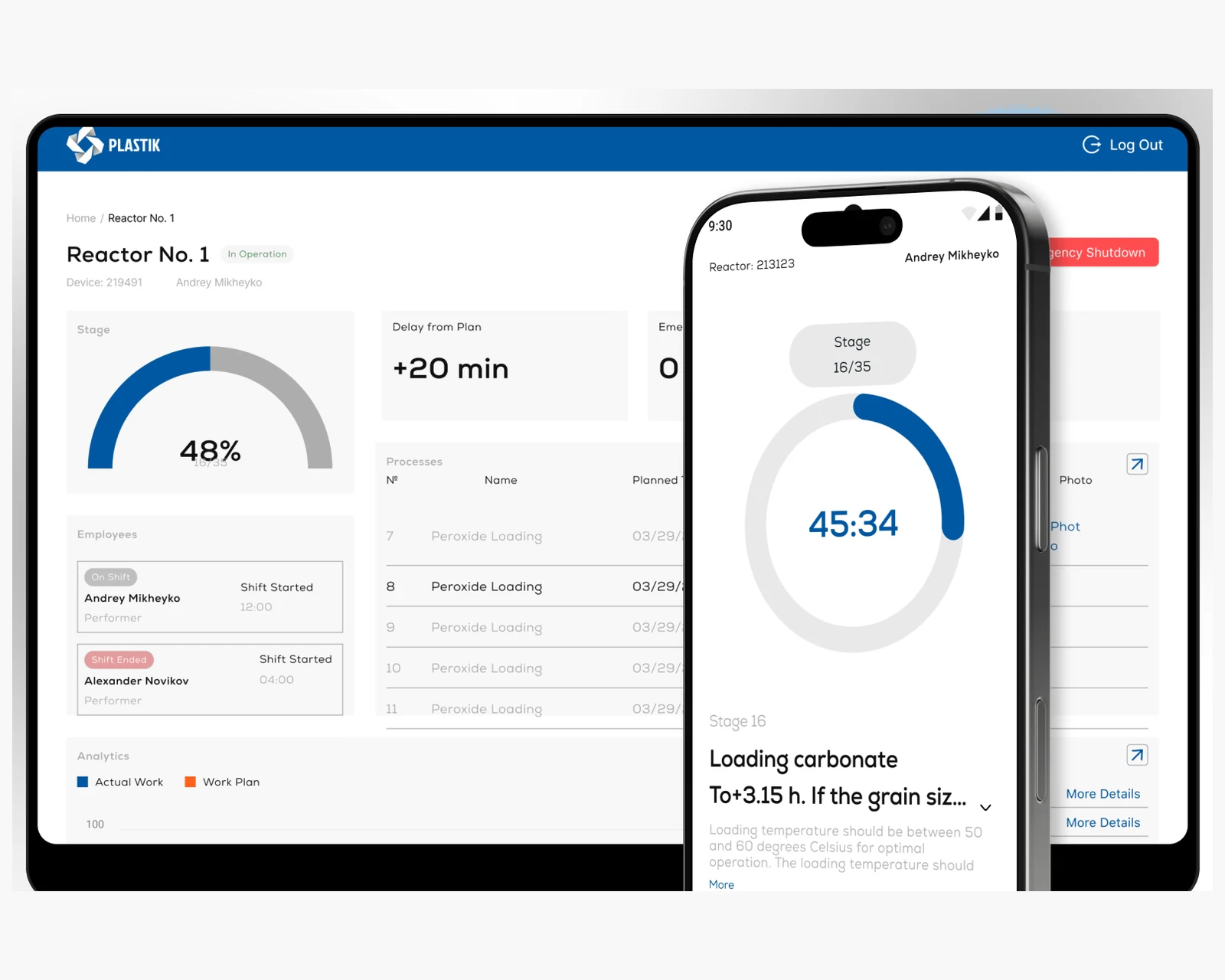
Offline-first ecosystem replacing paper journals for reactor process control — Android, admin, controller dashboard.
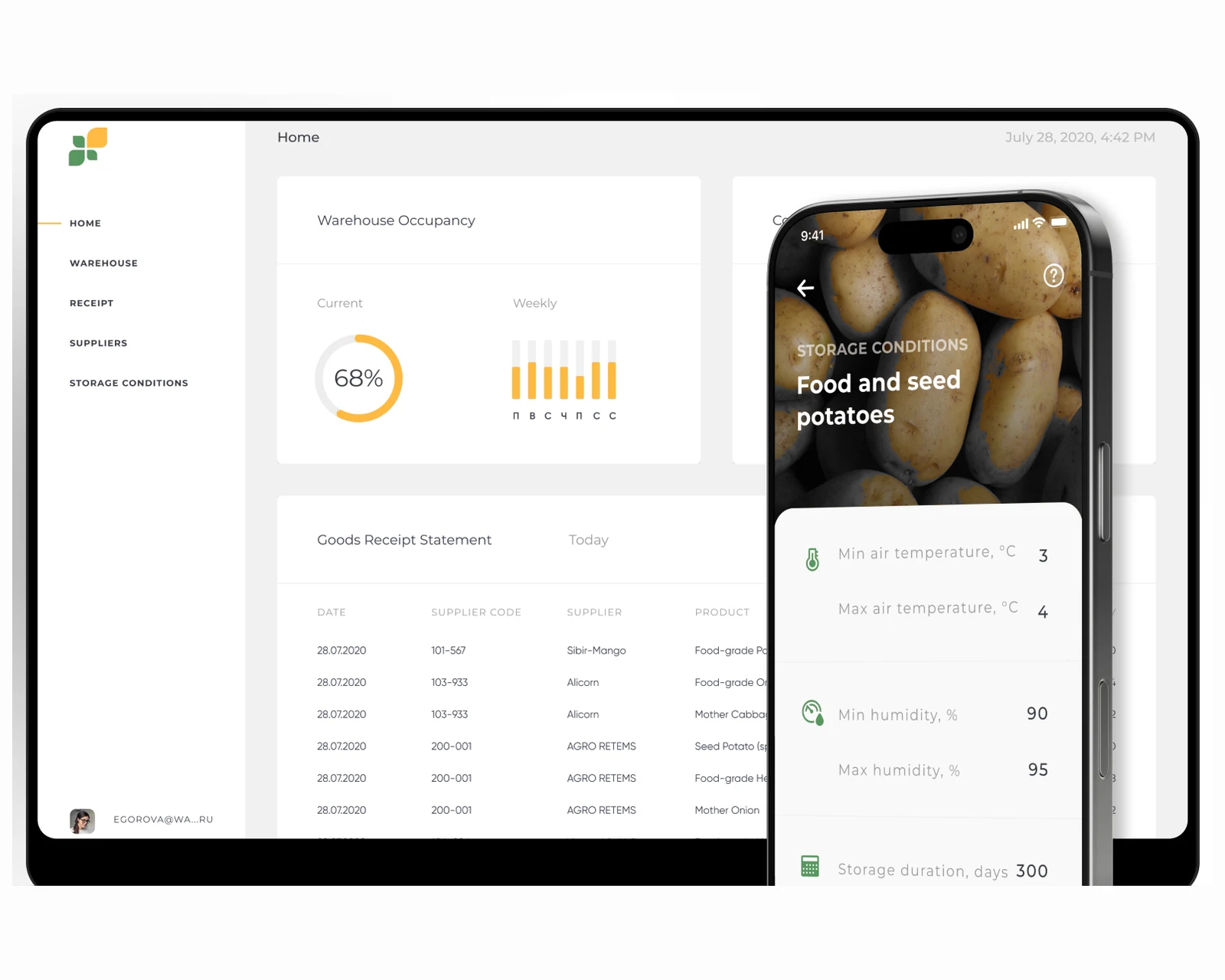
Warehouse management system with web dashboards and mobile scanners — throughput up 2×, errors down 78%, US & EU ready.
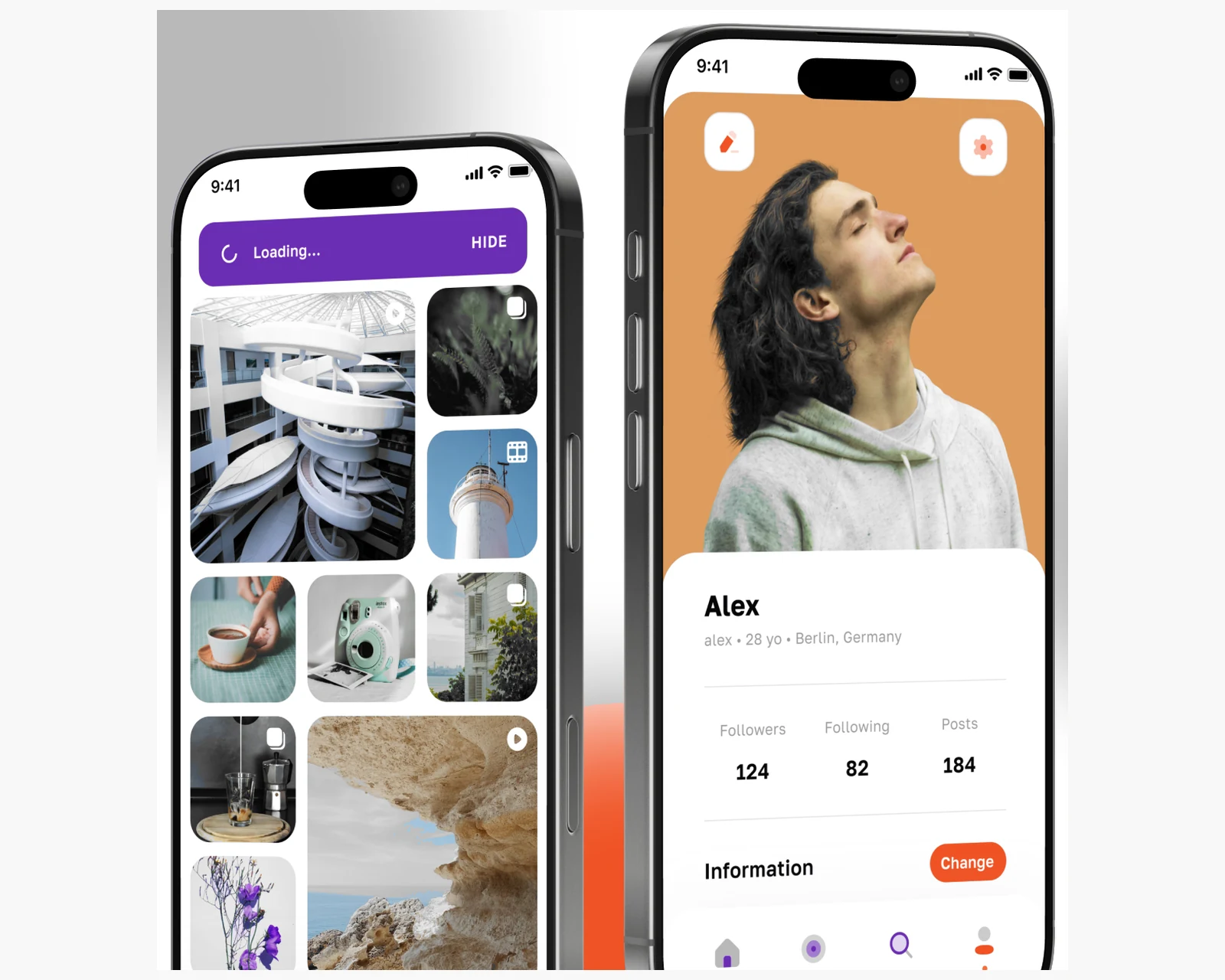
Production social platform — App Store + Google Play, live across the US and EU — with geo Radar, encrypted messaging and a virtual economy.
Custom software is only as good as its fit with your regulatory and operational reality. We pair senior engineering with industry-specific compliance across US & EU markets.
PCI DSS-scope payments, lending and wallet platforms with KYC/AML flows for US & EU retail and pro users.
FinTech software →HIPAA-capable, GDPR-aligned patient portals, telehealth and records systems with documented data flows and BAAs.
HealthTech software →Commerce platforms, headless storefronts and back-office tooling with consumer-law-aligned checkout.
Retail software →Warehouse, dispatch and tracking systems with offline-first mobile clients and third-party carrier integrations.
Logistics software →Numbers below come straight from the engagements — no composites, no projections. Each build started with an operating problem that off-the-shelf software could not model, and ended with a system the client's own team runs today. Three different industries, three different stacks, one constant: the client kept full ownership of the code, the data and the infrastructure when the engagement closed.
A high-volume storage operator ran its warehouse on spreadsheets, paper receipts and operator memory. Packaged inventory platforms failed the first acceptance test: they could not model container-level storage conditions, perishable shelf life, or the industrial scales already installed on the floor.
We built a unified platform from first principles — a React web control plane, native iOS and Android operator scanners, QR-tagged containers and an offline-first sync layer that captures 100% of scans and weight reads even when connectivity drops. Two hardware classes were integrated directly: industrial scales and QR container terminals.
Result: roughly 2× throughput on goods receipt and write-off versus the prior manual process, and accounting errors down 78% once scanning and scale integration removed manual data entry. Managers got a live, remote view of occupancy and storage conditions for the first time. A comparable WMS MVP typically fits a 14–22 week window.
Read the Warehouse case →REHAU's dealer network had outgrown a legacy ordering portal: catalogs lived in spreadsheets, prices varied silently by region, and dealers spent hours configuring profile-system orders by hand. SAP Commerce Cloud and Adobe Commerce B2B could not host the engineering-grade configurator rules without forking the vendor's engine.
We built the portal end to end on Next.js and NestJS: a guided configurator that validates every profile-and-accessory combination against headquarters' rulebook, region-aware pricing, and a streaming SAP integration that keeps dealer-visible stock within 60 seconds of ERP truth.
Result: six European markets live at rollout, one deterministic SKU output per configurator session so the quote and the SAP invoice match line for line, 100% audit coverage of price changes and overrides, and 5+ UI languages at launch. Comparable scope plans for 24–32 weeks.
Read the REHAU case →An international law firm serving clients across the US, EU and UK was closing contracts by courier: print, sign, scan, ship, wait weeks. The firm needed a defensible electronic record — not emailed PDFs with a hostile trail of forwarded headers.
We shipped three surfaces in one engagement: a native iOS client in Swift, a native Android client in Kotlin, and a Symfony + React operations CRM. Every signature is bound to a verified identity through a 5-step KYC onboarding — phone verification, profile, signature capture, passport upload, selfie-with-document — and every document state change reaches the client through one of four channels: push, SMS, email or WhatsApp.
Result: zero paper rounds for a routine signing — a contract that previously waited weeks now closes inside a single working session, with a GDPR-aligned evidence trail. A comparable e-signature MVP fits 14–22 weeks before compliance hardening.
Read the Signatory Pro case →All three builds share one pattern: the differentiating workflow was exactly the part no vendor platform could host, so owning the code was cheaper than renting a fork. That is the build-vs-buy test we apply in every discovery — if a packaged product covers 90% of your workflow and the last 10% is not what you compete on, we will tell you to buy it. When the last 10% is the business — a configurator rulebook, an offline plant floor, an evidence trail a court will accept — custom is the cheaper option over a five-year horizon, because you stop paying per-seat licenses and vendor-fork maintenance for the privilege of working around someone else's roadmap. For deep enterprise scope — multi-entity, ERP-integrated, audit-heavy — see our enterprise software development practice.
The four-stage model above is the contract view. Day to day, an engagement moves through six phases, each with a named owner and a written exit criterion, so you always know what has been decided and what is still open. The phases are sequential on paper and overlapping in practice — design work on release two starts while release one is in hardening — but no phase exits without its checklist signed off by both sides.
Two to four weeks with a solutions architect, a product lead and a designer. We map workflows, integrations, compliance scope and the build-vs-buy line, then hand you a signed scope, a costed roadmap and a first-release plan. Discovery is paid and its output is yours either way — several clients have taken the discovery package to their board before committing to a build. If the honest answer is "buy off-the-shelf", we say so before you spend a build budget.
Data model, service boundaries, security model and hosting topology are decided up front and recorded as architecture decision records. In parallel, UX flows are prototyped and tested against real user scenarios — an operator with gloves on a plant floor is a different user than a partner at a law firm.
Production deploys start in sprint two behind feature flags. Every sprint ends with a live demo and a written status note; CI/CD, automated tests on critical paths and observability are wired in from the first commit, not retrofitted before launch.
Before v1.0 we run load tests against agreed traffic profiles, a security review against OWASP ASVS, and the compliance pass your scope requires — GDPR data-flow documentation, audit logging, RBAC review, DPA schedules, and PCI DSS or HIPAA-capable controls where relevant.
Phased rollout with rollback paths rehearsed, not assumed. We migrate data with checksummed dry runs, train your admins on the real system, and keep the legacy process running in parallel until the numbers prove the new one — the same discipline that took Warehouse from paper to 2× throughput without a stopped shift.
SLOs, on-call, monthly improvement plans and a roadmap backlog. Most clients convert to a smaller retained team after launch; some scale up — the REHAU portal kept growing market by market after the six-market rollout. Either way, the code, infra and docs are yours from day one.
Governance runs the same way in every phase: one weekly written status update, a live demo every sprint, a shared risk register, and a single delivery manager accountable for the schedule. US clients get the 9 AM–1 PM ET overlap for standups and decision calls; EU clients share the full CET workday. Nothing about the project lives only in someone's head or a chat thread — decisions land in ADRs, and scope changes go through a written change note with a cost and schedule impact before anyone writes code.
Budgets below are 2026 market ballparks for senior-led custom builds serving US and EU companies — useful for planning, not a price list. We don't publish fixed hourly rates or packages; every engagement is scoped and quoted after discovery. The honest reason: two projects with the same one-line description can differ by 3× in cost once integrations, compliance scope and data migration are on the table, and a rate card hides exactly the variables that decide your budget. Full details on how we quote are on our pricing page.
From €60k (≈ $50k–$120k) over 8–16 weeks. A typical squad is a project manager, a product designer, two engineers and a QA engineer. Fixed-scope MVPs are the sweet spot for the Fixed Price model — the scope is signed before the first sprint, so the number you approve is the number you pay. See our dedicated MVP development service for how we cut scope without cutting the product's point.
$50k–$150k over 3–6 months. Role-based access, a real data model, two or three integrations, and an admin surface. The Warehouse WMS and Signatory Pro both sit in this territory: multiple client surfaces, hardware or KYC integration, and a compliance posture that has to hold up in both the US and the EU. This is the tier where most mid-market companies replace the spreadsheet-and-email process that quietly runs the business.
$150k–$500k over 6–12 months, with full platforms starting from €250k. Multi-tenant architecture, ERP or payment-rail integrations, audit requirements and staged multi-market rollouts — the REHAU dealer portal class of build. For this tier, start with our enterprise software development practice.
From $500k and up. Product organizations rather than projects: a Dedicated Team of 4–12 senior engineers embedded with your product owner, owning a platform through successive releases, market launches and certification cycles, with quarterly capacity reviews instead of per-feature quotes.
Each additional integration adds design, test and failure-mode work — an SAP stream or a payment rail is a workstream, not a line item. Compliance tiers stack: GDPR alone is table stakes, PCI DSS or HIPAA-capable scope adds documented controls, audits and hardening sprints. Data migration from a live legacy system, multiple client surfaces at v1.0, and offline-first requirements each move a project up a tier.
Ruthless v1.0 scope — ship the workflow that earns money, defer the rest to a costed backlog. Cross-platform where native buys nothing. Managed cloud services instead of self-run infrastructure until scale demands otherwise. And a paid discovery that kills expensive assumptions on paper, where changing your mind costs a meeting instead of a rewrite.
What moves a quote inside these ranges: number of integrations, compliance scope (GDPR alone vs PCI DSS or HIPAA-capable), data migration volume, and how many client surfaces ship at v1.0. Discovery converts the ballpark into a fixed estimate — here is exactly how we quote. Tier also maps to engagement model: fixed-scope MVPs run best on Fixed Price, mid-complexity builds on Time & Materials with a stable senior squad, and enterprise platforms and multi-year programs on Dedicated Team, where you direct priorities and we guarantee capacity, retention and delivery discipline quarter over quarter. Our 2026 software development cost benchmark breaks these ranges down by project type across the whole market.
The chips above are the menu; the decision is always workload-first. Stack choices are made in discovery, recorded as ADRs with the alternatives we rejected, and constrained by one rule: your in-house team must be able to hire for and maintain everything we pick. We do not chase framework fashion — every technology below has carried at least one of our production systems through multiple years of releases, audits and team handovers.
Node.js with NestJS is our default for product backends — fast to evolve, easy to staff. .NET 8 wins for enterprise estates already on Microsoft, Python for data-heavy and AI-adjacent services, Go for high-throughput infrastructure components. The REHAU configurator engine runs on NestJS precisely because rule-engine logic changes weekly and the type system keeps it honest.
React for application surfaces, Next.js when SEO, multi-market localization or hybrid rendering matter — the REHAU portal shipped in 5+ UI languages with per-language search synonyms. Admin panels and dashboards get the same engineering standard as customer-facing screens, because that is where your operations team lives all day.
PostgreSQL is the default until a measured workload says otherwise; MongoDB for document-shaped domains, Redis for caching and queues, Kafka for event streams like the sub-60-second SAP stock pipeline at REHAU. Offline-first products — Warehouse, CheckList — get a local-queue-and-drain sync layer designed before the first screen is built.
AWS or Azure with EU data residency by default and US-region options on request; Kubernetes where elasticity earns its complexity, plain managed services where it doesn't. Everything is Terraform-managed infrastructure-as-code, so the closeout package includes the environment itself — not a wiki page describing it. On-prem and air-gapped deployments (like CheckList's plant LAN) are first-class, not exceptions.
Security and AI tooling cut across every layer: dependency scanning and secrets management in CI, OWASP ASVS-aligned reviews before each major release, and AI-assisted development used where it measurably speeds delivery — always with senior review, never as a substitute for it. When the product itself needs AI features, we scope them under the EU AI Act and the NIST AI Risk Management Framework from the first design session, not as a retrofit.
GDPR-aligned · ISO 27001 ready · SOC 2 Type II in progress · HIPAA-capable · CCPA-acknowledged
Our delivery centers operate on CET with East-Coast US overlap (9 AM–1 PM ET). You get same-day decisions, weekly demos and no overnight handovers.
Average engineer has 8+ years in production. We hire for ownership, not for resumes that look pretty in a slide.
EU data residency · US options on request, DPA templates and security controls aligned to ISO 27001 with SOC 2 Type II in progress. PCI DSS and HIPAA-capable scoping available for fintech and health engagements.
For payments, lending and wallet workloads we operate inside PCI DSS scope and partner with QSAs already familiar with the YuSMP delivery model.
Remote document signing is a legal minefield. YuSMP built both the mobile signing flow and the Symfony CRM in a single engagement, handled KYC onboarding, and delivered API docs that our compliance team cleared in days.
We publish dozens of sports articles a day. YuSMP built an editorial pipeline using a Telegram bot as the CMS — editors post once, content lands on web, iOS, and Android instantly. The architecture requires zero daily maintenance.
For US and EU clients, YuSMP scopes MVPs between 60,000 and 180,000 EUR depending on feature depth, integrations, and compliance scope. Full enterprise platforms typically start at 250,000 EUR and scale with data model complexity, multi-tenant architecture, and audit requirements. We issue a fixed estimate after a paid discovery, then convert to Fixed Price, Time & Materials, or Dedicated Team. Pricing reflects senior-only engineers, no offshore juniors.
A focused MVP with one or two integrations typically ships in 12 to 20 weeks. Mid-market SaaS or fintech platforms with role-based access, billing, and third-party APIs run 6 to 9 months to v1.0. Enterprise platforms with HIPAA or PCI DSS scope and multiple data sources plan for 9 to 14 months. We deliver in two-week sprints with a CET workday and 9 AM–1 PM ET overlap for live US calls.
We build under GDPR-aligned and CCPA-acknowledged controls by default. We are ISO 27001 ready, SOC 2 Type II is in progress, and we deliver HIPAA-capable and PCI DSS-capable engagements with documented data flows, encryption at rest and in transit, RBAC, audit logging, and DPA support. For EU clients we handle data residency in EEA regions; for US healthcare we operate under BAAs with named subprocessors.
The client owns 100% of the source code, designs, documentation, models, and derived artifacts on payment. Every Master Services Agreement includes a present-tense IP assignment, a work-for-hire clause valid under both US and EU law, NDAs with each engineer, and clean third-party license tracking. We hand over Git repositories, CI/CD pipelines, infrastructure-as-code, and a closeout package; no vendor lock-in to YuSMP infrastructure.
We offer three models. Fixed Price suits scoped MVPs and well-defined modules with stable requirements. Time & Materials fits evolving roadmaps, discovery-heavy work, and AI or data initiatives where scope shifts. Dedicated Team is the default for mid-market and enterprise buyers needing a long-running squad of 4–12 senior engineers, embedded with the client's product owner under CET hours and East Coast overlap.
Squads are senior-only. A typical Dedicated Team has a tech lead, 3–6 senior full-stack or backend engineers, a senior frontend engineer, a QA automation engineer, a DevOps engineer, and a delivery manager. Optional: solutions architect, security engineer, data engineer, product designer. Average tenure is 6+ years; we do not bench juniors on client projects. 80+ engineers in Yerevan, NPS 71 across 120+ delivered projects.
Yes. Modernization is one of our core engagement types: we stabilize the legacy system first, then run a strangler-fig rebuild behind feature flags so users never lose service. For REHAU we replaced a legacy dealer ordering portal with a custom Next.js and NestJS platform live in six European markets, with SAP stock data refreshed in under 60 seconds. Modernization work usually runs on Time & Materials with a fixed senior team.
As a 2026 market ballpark: a fixed-scope MVP or simple app starts from €60k (roughly $50k–$120k) over 8–16 weeks; a business application of mid complexity runs $50k–$150k over 3–6 months; a complex or enterprise platform runs $150k–$500k, with full platforms from €250k, over 6–12 months; large-scale multi-year programs start at $500k+. We do not publish fixed hourly rates or packages — every engagement is scoped and quoted after discovery.
Yes — the practice is built for both markets. Our teams run a CET workday with a live 9 AM–1 PM ET overlap for US clients, contracts carry IP-assignment and work-for-hire clauses valid under both US and EU law, and data flows are GDPR-aligned for the EU and CCPA-acknowledged for the US, with EEA data residency by default and US-region options on request. Warehouse, CheckList and Signatory Pro were all delivered for combined US and EU operating requirements.
Practical guides on scoping, costing and delivering custom software for US & EU teams.

Waterfall, Agile, Scrum, Kanban, DevOps and Lean compared in 2026 — with a comparison table and how to pick the right one for…
Read article →
The ten practices that matter most in 2026 — version control, code review, testing, CI/CD, clean code and security — and how to…
Read article →
What consultants deliver, engagement and pricing models, 2026 hourly rates, when to hire one, and how to choose a consulting firm.
Read article →
Where AI helps across the SDLC, the real adoption and productivity data, the risks and how to adopt AI without shipping worse…
Read article →
The software development life cycle explained — the seven phases, the main SDLC models compared and how to choose…
Read article →Share a few details and a senior consultant will reply within one business day.