Store-ready from day one
Every release is checked against the latest Apple and Google guidelines, including DSA, EU DMA and tracking transparency, so first-submission rejections are rare.

Services
YuSMP Group builds production-grade mobile apps for US and EU companies — native iOS in Swift, native Android in Kotlin, and cross-platform products in Flutter and React Native. Senior engineers handle architecture, App Store and Play Store submission, biometrics, offline-first sync and post-launch support. GDPR-aligned delivery; SOC 2 Type II in progress. MVPs from 60k EUR, full platforms from 250k EUR.
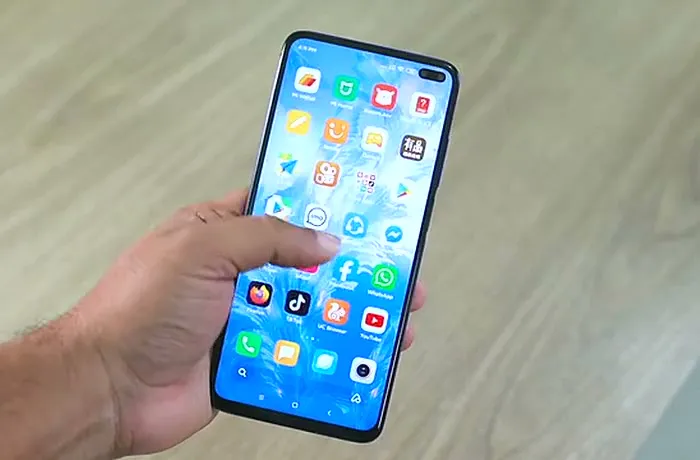
GDPR-aligned · ISO 27001 ready · SOC 2 Type II in progress · HIPAA-capable · CCPA-acknowledged · CET workday with 9 AM–1 PM ET overlap
We deliver the full mobile lifecycle: discovery, UX, native iOS (Swift, SwiftUI) and native Android (Kotlin, Jetpack Compose), and cross-platform builds in Flutter and React Native when a shared codebase serves the roadmap better. Our teams ship App Store and Google Play submission packages — code signing, TestFlight, internal testing tracks, store metadata and review handling — then stay on for post-launch support: crash triage, store-release cadence, performance work and feature growth. Engagements are anchored from Yerevan with daily 9 AM–1 PM ET overlap. See it in practice in our Building JoyJet case study.
Every release is checked against the latest Apple and Google guidelines, including DSA, EU DMA and tracking transparency, so first-submission rejections are rare.
We profile, not guess. Animations, lists and camera flows hit 60 fps on mid-range devices, not just on the latest flagships in the office.
Minimal SDKs, consent-gated tracking, certificate pinning and at-rest encryption. Privacy nutrition labels and Data Safety forms maintained alongside code.
Mobile-first APIs, push, deep links and offline sync are designed and built by the same team, so your app is never blocked on a separate backend group.
CoreML and on-device LLMs for vision, voice and personalization, with sensible cloud fallbacks. Latency stays low, data stays on the phone where possible.
99.5 percent crash-free user sessions as a hard SLO. Sentry, Crashlytics and structured logs are wired in before the first internal beta.
We are deliberately boring about tooling: proven platform SDKs, one cross-platform framework per project, and a backend the same team owns. The stack below is what actually ships in our production apps for US and EU clients — not a logo wall.
Swift with SwiftUI for the UI layer, Combine or structured concurrency for data flow, and platform frameworks where they earn their keep: NetworkExtension for VPN and traffic tooling, CoreLocation for background tracking, CoreML for on-device inference, StoreKit 2 for subscriptions. We ship Packet Tunnel Providers, widgets, App Clips and watchOS companions when the product calls for them — the LiMP VPN client is a thin Swift wrapper around a NetworkExtension tunnel, which is why its connect flow finishes in under a second.
Kotlin with Jetpack Compose, coroutines and Flow, WorkManager for deferrable jobs and foreground services for anything that must survive Doze mode — the discipline that keeps GPS streams alive on Samsung, Xiaomi and Pixel battery optimisers in our logistics work. We handle Play Integrity, per-OEM quirks and staged rollouts as part of the release pipeline, not as afterthoughts.
Flutter or React Native (with Expo where it fits) when one codebase serves the roadmap better than two. We keep platform channels thin, isolate native modules behind typed interfaces, and profile on mid-range hardware so shared code never becomes an excuse for dropped frames. Cross-platform typically saves 30 to 45 percent of combined build cost; we tell you honestly when it will not.
Mobile-first backends in Node.js or .NET 8, Firebase or Supabase where managed services shorten the path, GraphQL or REST BFFs shaped for mobile payloads, push and deep-link infrastructure, and offline sync designed with the client team. Fastlane-driven CI signs, tests and ships every build; Sentry and Crashlytics feed a 99.5 percent crash-free SLO from the first internal beta.
Every engagement follows the same six phases, whether the target is a fixed-scope MVP or a multi-year platform. The phases overlap deliberately — architecture starts while UX is still in review — but each has its own exit criteria, so you always know where the project stands.
We audit user flows, device matrix, store policies and analytics goals, then agree on success metrics and a release plan for both stores. Discovery typically takes 2 to 4 weeks and ends with a scoped backlog, a cost corridor and a go/no-go decision you can defend to your board.
Native or cross-platform, UI patterns per OS, accessibility and offline behavior are decided up front and documented before the first commit. Clickable prototypes are tested on real devices — mid-range Android hardware included — not just on flagship simulators.
API contracts, offline sync strategy, push and deep-link infrastructure, the security model and the CI pipeline are fixed before feature sprints begin. This is where we decide what runs on-device, what lives in the backend, and how the app degrades when the network does.
Two-week sprints with TestFlight and Play internal builds at every demo. Fastlane CI, signed artifacts and store metadata version-controlled. You see a working build on your own phone every two weeks — not a slide deck about one.
Code signing, privacy nutrition labels, Data Safety forms, review notes and phased-release configuration are prepared as deliverables, not scrambled at the end. We pre-flight against current Apple and Google guidelines; plan for 24 to 72 hours per review cycle, with first-time rejections rare.
Phased rollouts, crash and ANR tracking against a 99.5 percent crash-free SLO, store review monitoring and a backlog dedicated to platform changes from Apple and Google. Most clients keep a maintenance retainer of 15 to 25 percent of build cost per year.
For MVP launches with crisp scope, defined design and a single store as primary target. Discovery comes first, then a fixed plan.
For evolving consumer apps where weekly experiments are the norm. Senior squad, weekly demos, capacity reviewed monthly.
A long-term iOS, Android and backend squad embedded in your product organization, owning store releases end to end.
Indicative ranges from our own engagements. Scope, integrations and compliance move the number more than code does — we confirm a fixed figure after discovery.
from 60k EUR
A focused iOS or Android MVP — core flows, one store, ready for real users and a first funding round. Mobile MVP development →
90k–180k EUR
One React Native or Flutter codebase across iOS and Android, with mobile backend, payments and analytics wired in.
from 250k EUR
A polished consumer product (typically 180k–350k EUR) — native performance, multi-region compliance and post-launch support.
Maintenance runs 15–25% of build per year. Full breakdown in our 2026 mobile app cost guide.
We don’t publish fixed hourly rates or packages — every engagement is scoped and quoted. But budgeting works better with honest market ballparks than with “it depends”, so here is the corridor most mobile projects land in.
A fixed-scope mobile MVP typically lands between 60,000 and 120,000 EUR all-in and ships in 8 to 16 weeks with a compact team: a project manager, a designer, two engineers and QA. That covers one polished core flow on iOS and Android, store submission included. See our MVP development service for how we keep scope honest.
Mid-complexity products — a consumer app with backend, payments, push and analytics, or a B2B field tool with offline sync — usually run $50k to $150k over 3 to 6 months. Integrations and compliance move this number more than screen count does.
Multi-app platforms, regulated products and apps with heavy real-time or on-device AI workloads range from $150k to $500k over 6 to 12 months; full platforms start from 250k EUR. Large-scale, multi-year programs go beyond $500k and are staffed as dedicated teams.
These are 2026 market ranges, not a price list — the final quote always follows a scoped discovery. For how we structure estimates and engagement models, see our pricing page.
What actually moves the number? Four things, in order of impact: the count of third-party integrations (payments, KYC, ERPs, medical interchange formats), the compliance envelope (GDPR, CCPA, HIPAA, PCI DSS each add review and engineering cycles), offline-first requirements (sync engines routinely cost as much as the visible UI), and whether you need one platform or two. Screen count — the metric most first-time buyers fixate on — matters far less than any of these. Timeline follows the same logic: most mobile apps take 3 to 6 months from discovery to launch, a simple app 2 to 3 months, and a complex regulated product 6 to 12 or more. For a full 2026 market overview of price ranges by project type, see our software development cost benchmark.
Task, stack and outcome for three engagements — every number below comes from the published case study, not from a marketing deck.
Task: a consumer VPN for US and EU audiences with a defensible no-logs posture and a one-tap connect — after white-label VPN SDKs failed both the bundle-size and the privacy-review tests.
Stack: native Swift and SwiftUI on a NetworkExtension Packet Tunnel Provider, native Kotlin on Android VpnService, WireGuard end to end, a Go control plane separating billing identity from tunnel identity.
Result: live on the App Store and Google Play across the US and EU, typical WireGuard handshake under 100 ms on mobile networks, zero persistent session logs thanks to RAM-only edge nodes, and a connect flow that finishes in under a second. A comparable VPN MVP on both stores is a 12–18 week delivery window.
Read the LiMP VPN case →Task: a tablet-first procedure platform for clinicians performing endoscopy — gastroenterology, ENT, pulmonology — where the recording surface lives on an iPad next to the patient, with GDPR-aligned handling of patient data.
Stack: React and TypeScript optimised for iPadOS Safari, a PHP 8 / Laravel 10 backend, browser-tier WebRTC and MediaRecorder capture, DICOM Secondary Capture and HL7 ORU^R01 export to hospital systems.
Result: sub-200 ms glass-to-glass capture latency, zero patient video frames traversing a third-party transcoding service, and 100 percent of study reads recorded in the audit log. A comparable tablet-first clinical capture platform is an 18–26 week window.
Read the ArgoView case →Task: stabilise a critically unstable production Android app that was live with a German logistics operator and causing failed deliveries, then ship an iOS counterpart with full feature parity.
Stack: Kotlin refactor with foreground services for battery-safe GPS streaming, a from-scratch Swift iOS build, and a server-side route optimiser running a 2-opt heuristic over a mapping-SDK matrix API.
Result: zero critical errors carried over from the legacy version, instant multi-point route calculation across dozens of stops, smooth real-time driver tracking, and in-app invoicing with a working payment system — ready to publish on both stores. The Android stabilisation pass alone is a typical 10–16 week schedule.
Read the xRouten case →Real US & EU-aligned mobile products we have shipped end-to-end — iOS, Android and cross-platform.
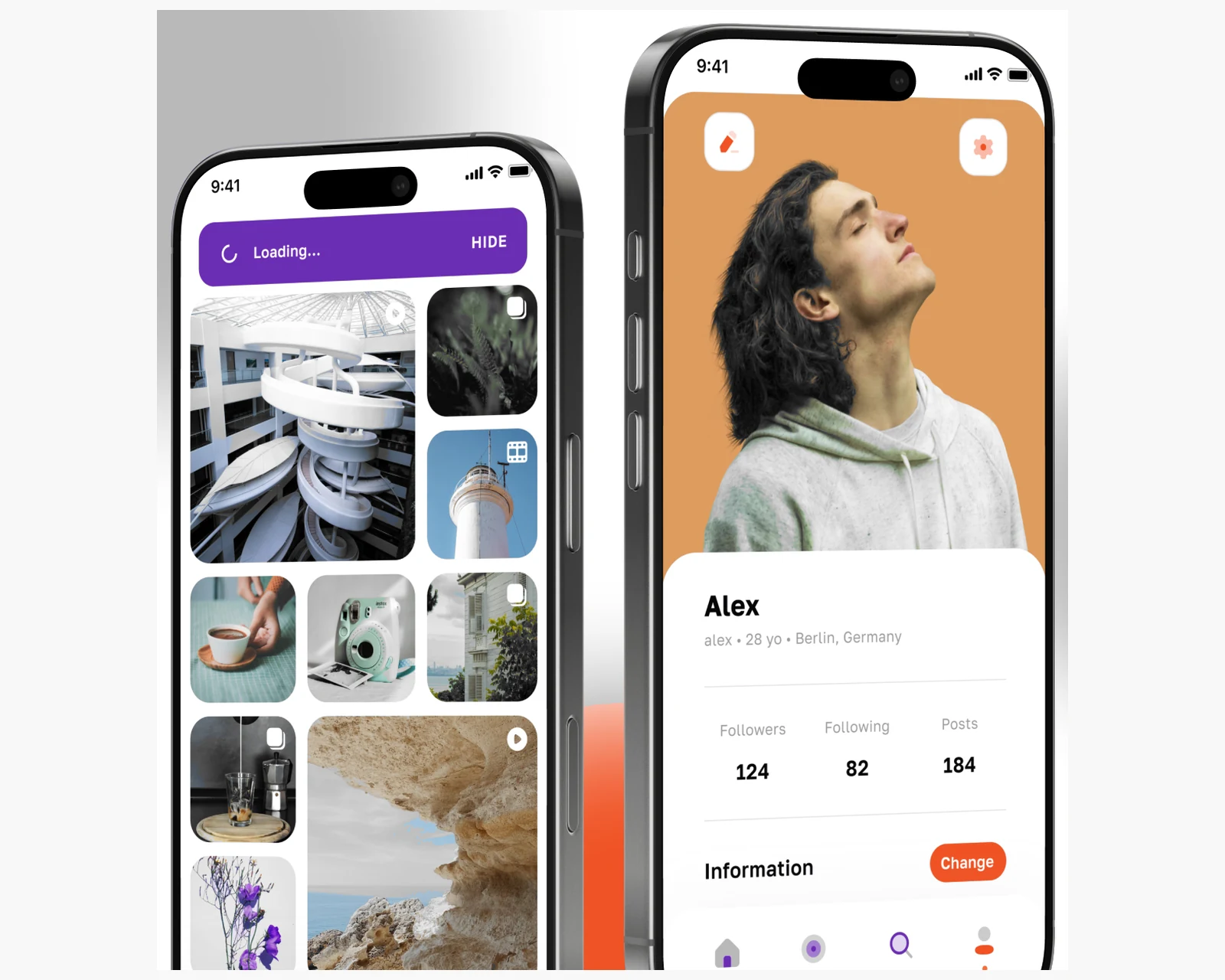
Production social platform — App Store + Google Play, live across the US and EU — with geo Radar, encrypted messaging and a virtual economy.
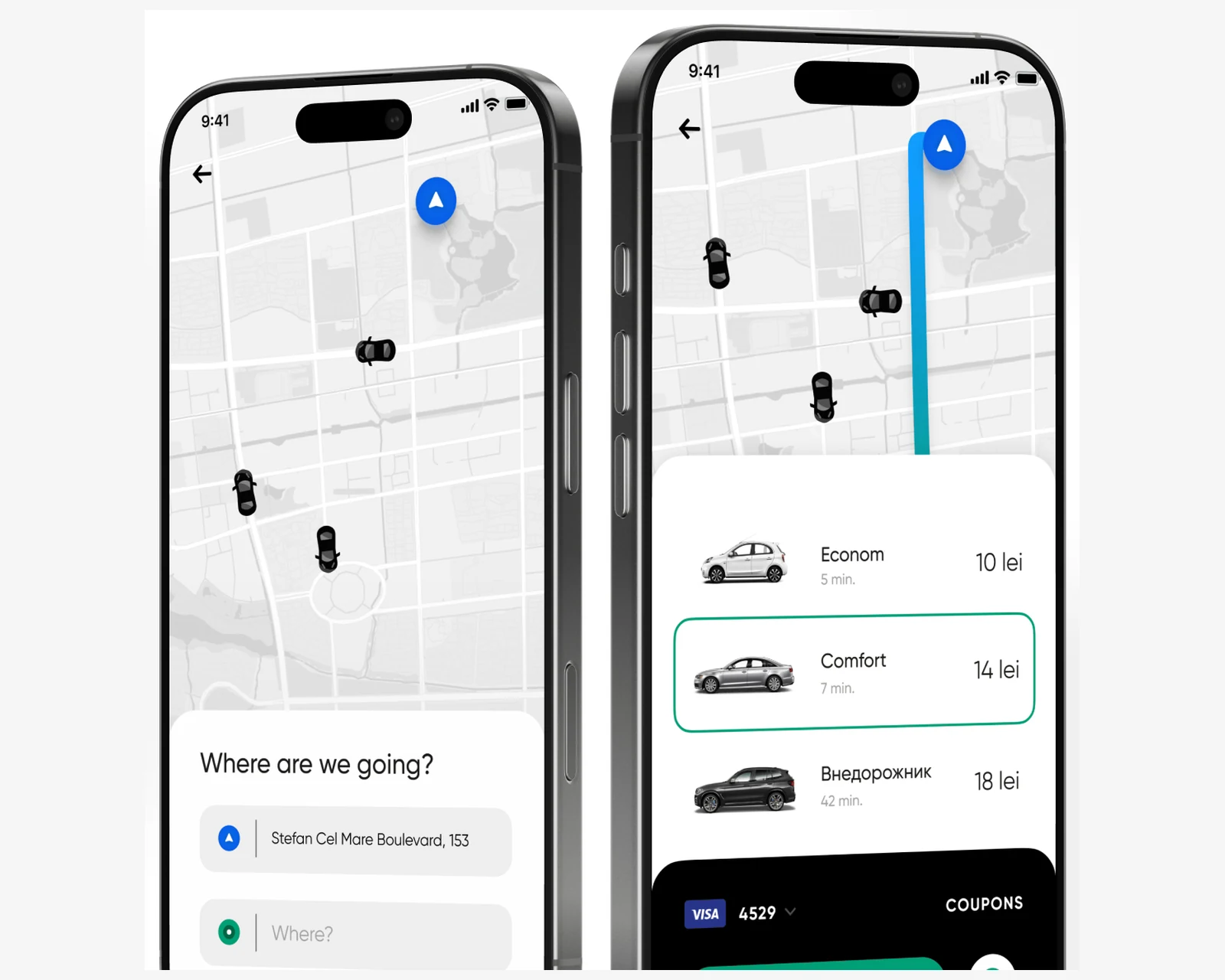
Three-app ride-hailing platform — driver, passenger, dispatcher — with real-time GPS, document verification, dual cash/card payments.
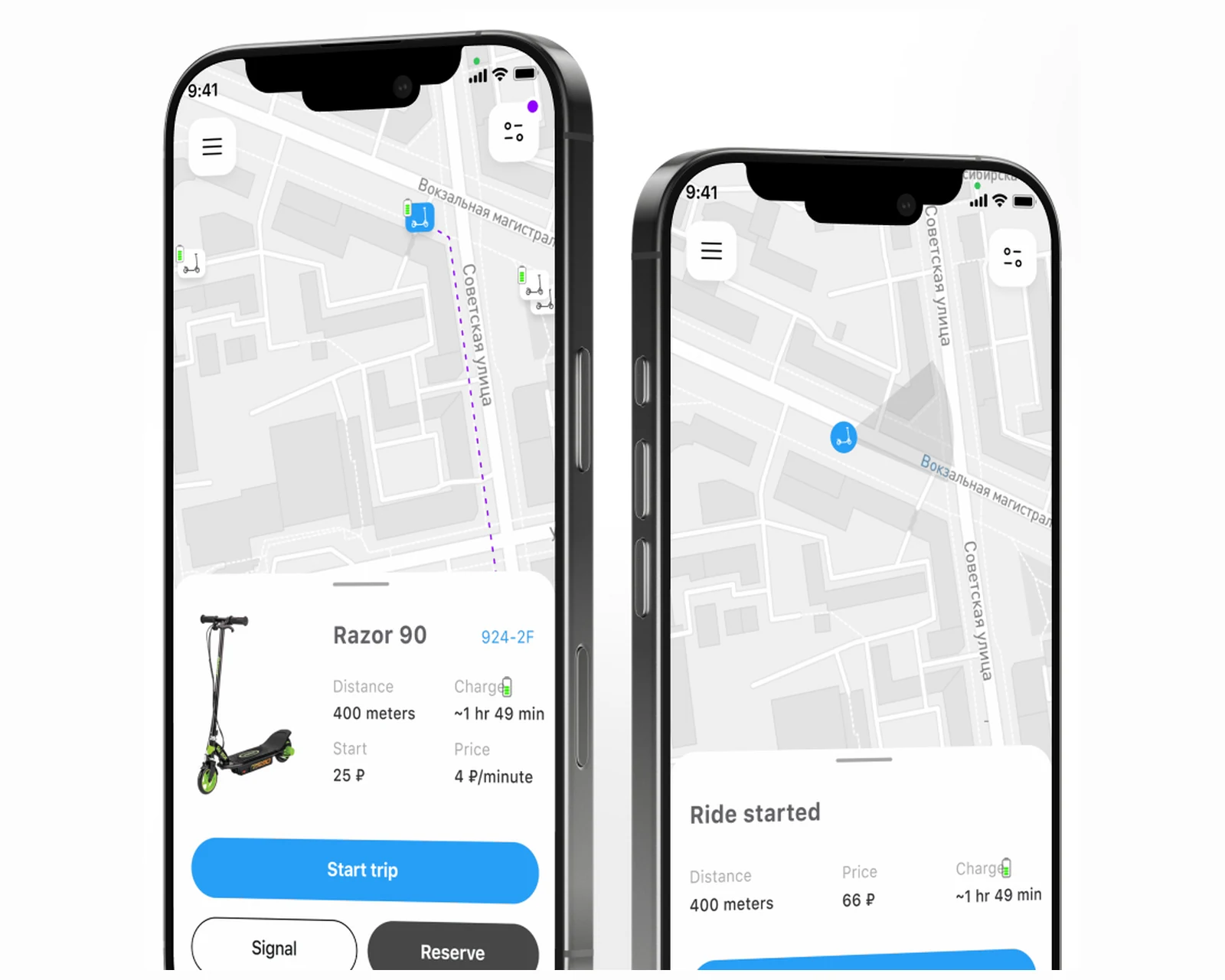
E-scooter sharing app with live map, QR unlock, and ride wallet for iOS and Android — 5,000+ riders, built for US & EU rollouts.
Mobile is the entry point for most consumer and B2B products across US & EU markets. We pair industry-specific compliance with App Store-grade quality.
PCI DSS, PSD2 SCA, MiCA-aware wallets, US money-transmitter-friendly KYC flows for US & EU retail and pro users.
Mobile fintech →GDPR + HIPAA + MDR-aware patient apps, telemedicine, FHIR-aligned records and consent management.
Mobile healthtech →Native shopping apps with on-device search, push commerce and US & EU consumer-law-aligned checkout.
Mobile commerce →Driver and dispatcher apps with offline-first, GPS-grade navigation and ELD/eFTI integrations.
Mobile logistics →Mobile apps live under stricter rules in the EU and a fragmented patchwork in the US. We bake the relevant frameworks into delivery, not into a final-week checklist.
Region-locked analytics by default (EU-only for EU traffic, US-region for US traffic). Native consent dialogs, IDFA and AAID gated until granted, signed DPAs for every third-party SDK in the bundle. CCPA / CPRA opt-out flows for US users.
App Tracking Transparency, Privacy Nutrition Labels and Data Safety forms maintained alongside code. EU Digital Markets Act sideloading and alternative billing handled where applicable.
On-device CoreML and TensorFlow Lite where data sensitivity demands it. Risk classification, transparency notices and provider duties tracked under both the EU AI Act and the NIST AI Risk Management Framework, with awareness of US state laws (Colorado AI Act 2026, NYC AEDT).
Apple Pay, Google Pay and card-on-file flows scoped under PCI DSS with tokenization, attestation and runtime app self-protection.
WCAG 2.2 AA on mobile, VoiceOver and TalkBack tested as part of the release checklist. EU Accessibility Act 2025 and US ADA / Section 508 are part of every consumer-facing build.
Age-gating, parental consent flows and stricter retention for under-16 audiences. Aligned with both Apple and Google kids-category guidelines, plus COPPA (US) and GDPR-K (EU).
GDPR-aligned · ISO 27001 ready · SOC 2 Type II in progress · HIPAA-capable · CCPA-acknowledged
Daily standups, same-day reviews, joint store release calls. CET workday with East-Coast US overlap (9 AM–1 PM ET). Your release manager and our team share one calendar.
Engineers with multiple shipped apps under their belt. We do not learn iOS or Android on your dime.
Region-locked data flows (EU data residency · US options on request), signed DPAs for every SDK, and ISO 27001 controls on the backend with SOC 2 Type II in progress. PCI DSS available for in-app payments; HIPAA-capable for health.
For wallet, BNPL and card-on-file flows we operate inside PCI DSS scope and align with your acquirer on tokenization, attestation and runtime protection.
Our iOS and Android apps had diverged over years of separate development. YuSMP rebuilt a single unified solution with live camera feeds, smart-home device control, and role-based multi-user access. Zero critical defects in the first six months post-launch.
Retail apps need to be fast and fault-tolerant with real-time inventory sync to offline stores. YuSMP built native Swift and Kotlin apps with ElasticSearch search, 1C ERP integration, and a two-tap checkout our customers genuinely love.
If your app needs deep platform features, sustained 60 fps animations or hardware integrations, we go native with Swift and Kotlin. For content-heavy apps with shared business logic, React Native or Flutter halve the cost without hurting UX.
Plan for 24 to 72 hours per submission. We pre-flight every release against current store guidelines, including DSA, EU Digital Markets Act and tracking transparency rules, so first-time rejections are rare.
Yes. We routinely take over legacy iOS or Android apps, stabilize them, and run a parallel rewrite. Users keep getting fixes while the new build matures behind a feature flag and a phased rollout.
We use native consent dialogs, IDFA and AAID handling per platform rules, region-locked analytics (EU-only for EU traffic, US-region for US traffic), and no SDKs that phone home before consent. DPAs are signed for every third-party SDK in the bundle. CCPA / CPRA opt-out flows for US users.
A cross-platform MVP for iOS and Android starts around 90,000 EUR. A polished consumer app with backend, payments and analytics typically lands between 180,000 and 350,000 EUR depending on scope and store readiness.
Yes. On-device AI (Apple Intelligence, Gemini Nano, Core ML, LiteRT) lets us add private, offline, instant features with no per-request cost, escalating to the cloud only when a request genuinely needs it. See our 2026 guide to on-device AI in mobile apps.
Most mobile apps take 3 to 6 months from discovery to launch — a simple app 2 to 3 months, a complex one 6 to 12+. See our stage-by-stage mobile app development timeline.
Budget 15 to 25% of the initial build cost per year, with the first year usually higher as the app stabilises. Full breakdown in our guide to mobile app maintenance cost in 2026.
Cross-platform (React Native, Flutter, Kotlin Multiplatform) typically saves 30 to 45% of combined build cost with one codebase; native (Swift, Kotlin) wins for performance-critical and deeply integrated apps. We help you decide in native vs cross-platform app development.
Practical guides on mobile app development, costs, and platform strategy for 2026.




Share a few details and a senior consultant will reply within one business day.
Deeper reading on building, costing and securing mobile apps for US & EU teams.

Performance, cost, code reuse and team fit — how to choose between native and cross-platform.
Read article →
A realistic stage-by-stage timeline from discovery to launch, and what drives 3–6 months.
Read article →
Privacy by design, consent, SDKs, encryption, ATT, CCPA and the 72-hour breach rule.
Read article →