Multi-tenant SaaS platforms
Subscription products with tenant isolation, billing, role-based access and usage analytics — built to scale from first customer through Series B.

Services
YuSMP Group is a custom web application development company for US and EU teams building SaaS products, B2B portals, and customer-facing platforms. We ship TypeScript codebases on Next.js, NestJS, .NET, and Python — engineered for Core Web Vitals, accessibility, and audit-ready scale. GDPR-aligned, SOC 2 Type II in progress, HIPAA-capable engineering across regulated workloads.

GDPR-aligned · ISO 27001 ready · SOC 2 Type II in progress · HIPAA-capable · CCPA-acknowledged · CET workday with 9 AM–1 PM ET overlap
We design and build production web applications end to end — multi-tenant SaaS, B2B and customer portals, internal admin platforms, marketplaces, and headless commerce front ends. Our senior engineers work in TypeScript on Next.js and React for the front end, NestJS, .NET, and Python on the server, with PostgreSQL, event-driven services, and cloud-native delivery on AWS, Azure, and GCP. Every engagement covers discovery, UX, architecture, accessibility (WCAG 2.2 AA), performance budgets, observability, and post-launch evolution — so the product scales past launch instead of stalling at MVP. See it in practice in our Mosokna case study.
From a first-release SaaS product to audit-ready enterprise platforms — the web application types we design, build and scale for US & EU teams.
Subscription products with tenant isolation, billing, role-based access and usage analytics — built to scale from first customer through Series B.
Self-service dashboards, account areas and B2B partner portals with SSO, granular permissions and real-time data.
Headless storefronts, marketplaces and B2B e-commerce with composable back ends and consumer-law-aligned checkout.
Admin consoles, operations dashboards and workflow apps that replace spreadsheets and ageing internal systems.
Focused first releases for startups — a shippable, investor-ready web product in 12–20 weeks, engineered to iterate.
Re-platforming Angular, .NET and PHP monoliths onto a typed, testable Next.js and NestJS stack — without a big-bang rewrite.
Real-user Core Web Vitals are tracked from staging onward. We refuse to ship a new feature that regresses LCP, INP or CLS budgets.
A typed component library, tokens and Storybook are foundation work, not afterthought, so your tenth feature ships as fast as your second.
CSP, SRI, signed cookies, OWASP top-ten reviews and dependency policies. No "we will harden later" tickets in our backlog.
ICU messages, locale-aware routing and right-to-left support are wired in from sprint one for products that target multiple US & EU markets.
Accessibility checked on every PR with automated and manual tests. EU Accessibility Act 2025 readiness is part of our definition of done.
Where it pays off, we add inline AI search, smart forms or copilots, governed by clear prompts, evals and human-in-the-loop fallbacks.
For most SaaS products and B2B portals we default to TypeScript on Next.js — server components, ISR, and edge rendering give us Core Web Vitals headroom that client-only SPAs struggle to reach. Where a pure single-page application fits better — internal consoles, embedded widgets, CRM control planes — we ship React with a typed design system, Storybook, and Playwright end-to-end coverage. Vue and Nuxt remain in the toolbox for teams that already own those codebases.
On the server we pair Node.js with NestJS for API gateways, event-driven services, and multi-tenant SaaS backends, and .NET 8 where enterprise integration, long-term support windows, or existing Microsoft estates dominate. PostgreSQL is the default database, Redis covers hot paths, and queues handle asynchronous work. The choice is documented in an architecture brief against workload, the team that inherits the code, and the regulatory profile — never by default.
We map user journeys, traffic shape and SEO goals, then agree on performance budgets, browser matrix and accessibility targets up front.
UX flows, design tokens and a component contract are built before feature work, so frontend and backend stay in sync from sprint one.
Stack selection, data model, multi-tenancy strategy, integration topology and compliance controls are fixed in an architecture brief before feature sprints start — so nothing structural gets renegotiated mid-build.
Two-week sprints, preview deployments per pull request, automated visual regression and Lighthouse gates on every merge to main.
Load-test baseline, security review, accessibility sign-off, observability wiring and a staged rollout plan — launch is a checklist, not a leap of faith.
Real-user monitoring, error budgets and quarterly performance audits keep the app fast and accessible long after launch day, while the roadmap keeps shipping in the same sprint cadence.
For marketing sites, portals and bounded SaaS modules with crisp scope, fixed launch date and pre-defined design system.
For evolving SaaS where roadmap shifts every quarter. Senior squad, weekly reporting, monthly capacity reviews.
Long-term frontend or full-stack squad embedded in your product organization, owning specific surfaces of the application.
Real US & EU-aligned web platforms we have shipped — SaaS, B2B portals, trading venues and analytics consoles.
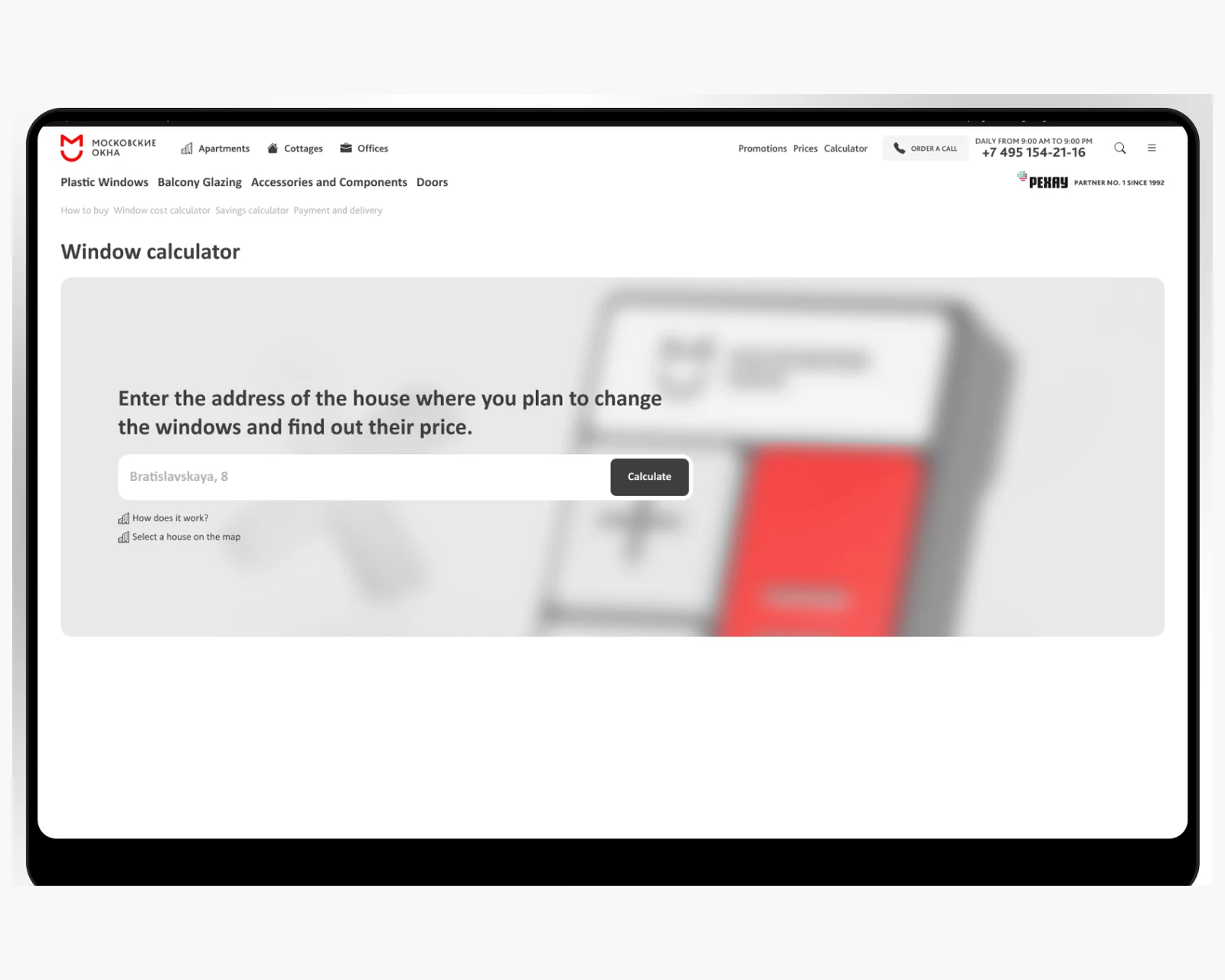
Unified online window calculator and CRM — address-based lookup, multi-tenant Laravel + React engine powering three brand sites.
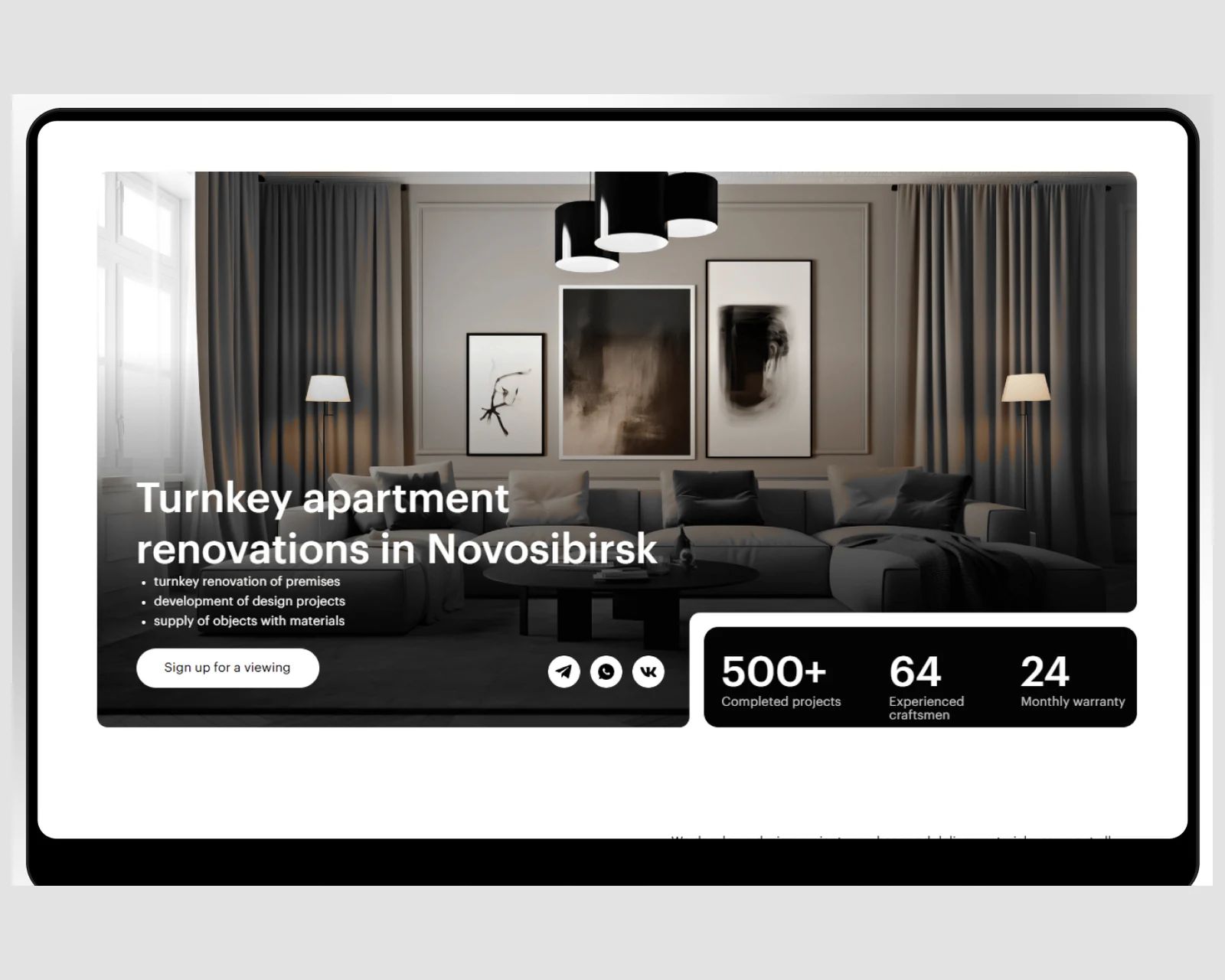
Redesigned, SEO-optimized Tilda website for an apartment renovation and design company — portfolio, blog, video, lead capture.
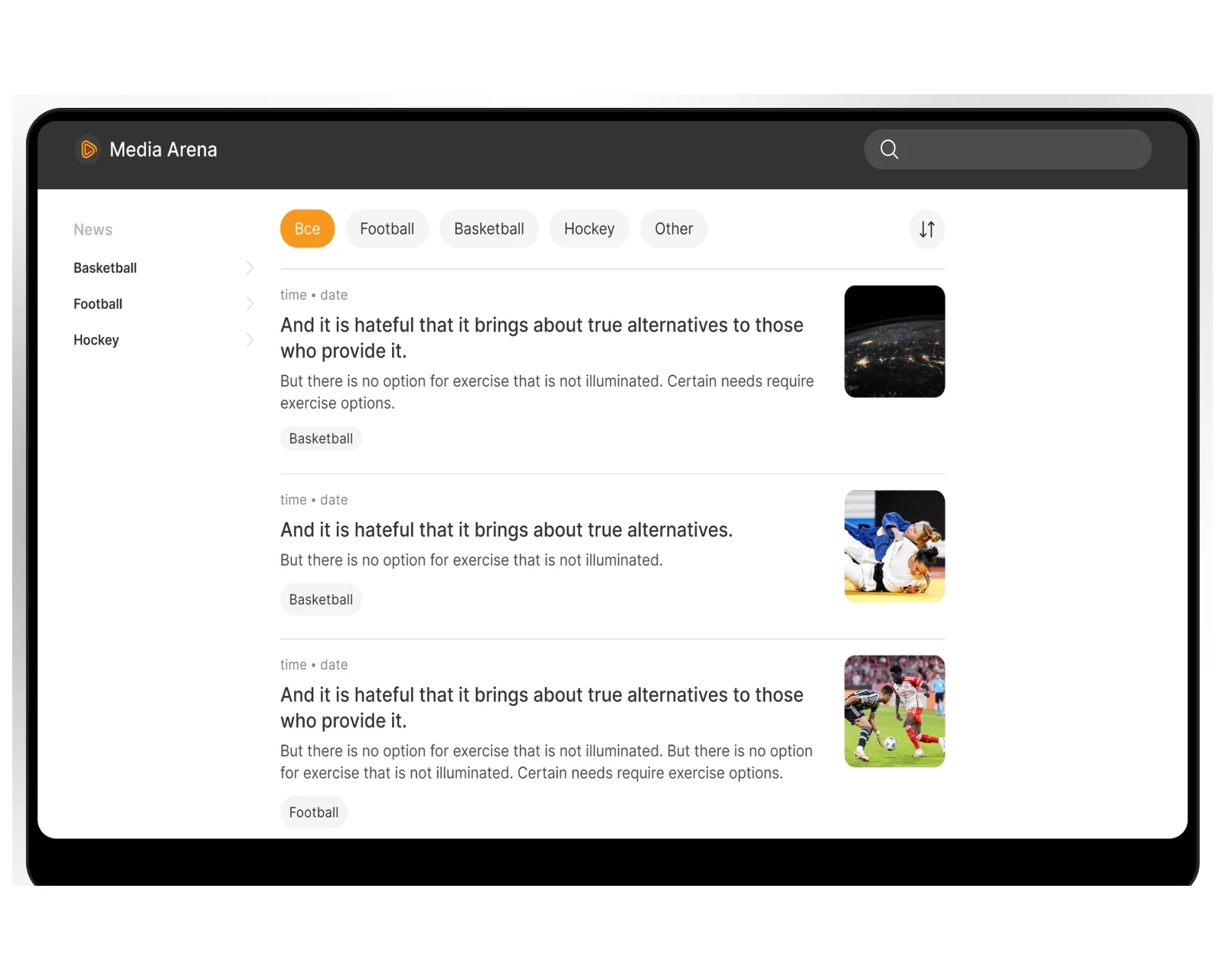
Cross-platform sports news app and web portal — Telegram-bot CMS instead of a custom admin, Markdown publishing pipeline.
Three production web builds from our case library — what the client needed, what we built it with, and what shipped.
Task: replace a legacy dealer ordering portal for a global polymer manufacturer with a guided product configurator, region-aware pricing and real-time SAP-driven stock. Stack: Next.js, NestJS, PostgreSQL, Redis, Elasticsearch, Kafka-based SAP streaming, Kubernetes on AWS with EU data residency. Result: live across six European markets with 5+ UI languages, SAP stock freshness under 60 seconds, deterministic SKU output that matches the ERP invoice line-for-line, and 100% audit coverage of every price change and override.
Read the REHAU case →Task: consolidate three brand sites with three drifting pricing calculators into one quoting engine with a real CRM. Stack: Laravel pricing engine, React + Redux Toolkit configurator state machine, PostgreSQL, Redis, OpenStreetMap-based address lookup. Result: three brand sites now run on one engine with zero legacy calculator drift, millimeter-precise quotes with server-side validation, address-based dimension auto-detect, and a parity harness that verified the new engine against 4,000+ historical quotes line by line.
Read the Mosokna case →Task: give a cross-border law firm a web operations CRM and remote document-signing platform to replace a courier-based paper workflow. Stack: Symfony backend, React single-page CRM, PostgreSQL, Redis, per-revision document hashing, OCR and face-match KYC pipeline. Result: zero paper rounds for routine signings, a 5-step verified-identity onboarding bound to every signature event, four notification channels (push, SMS, email, WhatsApp Business) behind one orchestrator, and a GDPR-aligned evidence trail the firm serves from its own CRM.
Read the Signatory Pro case →These are 2026 market ballparks, not a price list — every engagement is scoped and quoted individually. They match what US and EU clients actually budget for production web software; see our pricing page for how we scope.
A fixed-scope web MVP — one core workflow, auth, billing-ready foundation — starts from €60k (roughly $50k–$120k) and ships in 8–16 weeks with a PM, a designer, two engineers and QA. See our MVP development service for the full playbook.
A customer portal, internal platform or single-tenant SaaS with several integrated workflows typically runs $50k–$150k over 3–6 months, depending on integrations and compliance scope.
Multi-tenant SaaS, marketplaces and enterprise portals run $150k–$500k over 6–12 months; full platforms with ERP integration, audit trails and multi-market rollout start from €250k.
Platforms with multiple product surfaces, regulated data flows and dedicated squads run $500k+ across multi-year roadmaps — usually as a Next.js or React estate owned by an embedded dedicated team.
What moves a project between these tiers is rarely the number of screens. The dominant cost drivers we see across US and EU web builds are integration depth (a single ERP or CRM integration with reconciliation logic can add months), compliance scope (HIPAA, PCI DSS, or data-residency requirements change the architecture, not just the paperwork), multi-tenancy strategy, and the level of design-system maturity you want at handover. Timeline follows the same drivers: the REHAU-class B2B platform above ran multiple quarters because of its SAP streaming integration and audit requirements, while a focused quoting MVP in the Mosokna mold fits inside a two-to-four-month window. The honest way to budget is to fix the outcome first — then we scope backwards from it.
We don’t publish fixed hourly rates or packages — a ballpark estimate for your scope lands within three business days of the first call. For the full 2026 picture of what software costs across project types, see our software development cost benchmark.
From regulated FinTech consoles to patient portals meeting GDPR + HIPAA bars — we build web that meets US & EU compliance bars without sacrificing user experience.
Trading venues, neobanking dashboards, KYC portals and embedded finance — PCI DSS, PSD2, MiCA and DORA aligned.
Web fintech →Patient portals, telemedicine, EHR front-ends and clinical SaaS — GDPR, HIPAA-capable, MDR and ISO 13485-aware delivery.
Web healthtech →Headless commerce, marketplaces, B2B portals and omnichannel storefronts with US & EU consumer-law-aligned checkout.
Web commerce →Dispatcher consoles, TMS portals, fleet visibility dashboards and shipper APIs aligned with US & EU mobility frameworks.
Web logistics →Modern web is judged by Core Web Vitals on real devices, by WCAG / EU Accessibility Act / US ADA conformance, and by GDPR/ePrivacy + CCPA on every interaction. We treat all three as launch criteria.
LCP under 2.5s, INP under 200ms, CLS under 0.1 — budgeted at design time, measured with real-user monitoring and gated in CI on every release.
EU EAA 2025 turns accessibility from nice-to-have into legal baseline. Axe, screen readers, keyboard-only flows tested before each release.
Consent-mode patterns, server-side tagging where feasible, region-locked analytics by default (EU-only for EU traffic, US-region for US traffic). No third-party scripts run before consent; DPAs in place for every vendor.
Qualified electronic signatures and eIDAS-compliant identification flows for the EU; NIST SP 800-63 / E-SIGN Act / UETA-aligned identity proofing for the US. Audit-grade trails for documents, contracts and onboarding on both sides of the Atlantic.
Hardening web platforms against NIS2 (EU) and NIST Cybersecurity Framework / CISA guidance (US) — vulnerability disclosure, incident response, supply-chain controls and SBOMs for delivered code, with SOC 2 Type II evidence collection (in progress).
i18n-first routing, content models per locale, hreflang and locale-aware Open Graph — designed for English (US/UK), German, Dutch, French, Swedish and beyond from day one.
GDPR-aligned · ISO 27001 ready · SOC 2 Type II in progress · HIPAA-capable · CCPA-acknowledged
Designers, frontend and backend on a CET workday with East-Coast US overlap (9 AM–1 PM ET). No 14-hour review cycles, no async-only delivery.
We pair a tech lead, senior frontenders and a UX engineer on every web build. No bench juniors hidden behind invoices.
EU hosting · US options on request, region-locked analytics, consent-mode by default. ISO 27001 controls with SOC 2 Type II in progress; PCI DSS available where checkout is in scope; HIPAA-capable for healthcare surfaces.
For checkout, wallet and BNPL surfaces we operate inside PCI DSS scope and align with your acquirer and QSA on tokenization, logging and CSP rules.
Building an e-learning platform on Laravel and React sounds straightforward until you need progress tracking, certificates, and payment flows that actually convert. YuSMP made it look easy. Course completion rates on our platform consistently beat industry averages.
We needed a landing page that converts and routes leads to our team in real time. YuSMP delivered a Tilda build with a custom webhook-to-Telegram pipeline. Our sales team gets notified instantly and average response time is now under five minutes.
We pick the stack against three constraints: the workload, the team that will own it after handover, and the regulatory profile. For most US and EU clients that means TypeScript on Next.js for the front end, NestJS or .NET for the API, and PostgreSQL with a managed cloud platform. We deviate to Python when data, ML, or analytics workloads dominate. The decision is documented in an architecture brief before a single line ships.
Performance is a contract, not a polish phase. We set LCP, INP, and CLS budgets in the architecture brief, enforce them in CI with Lighthouse and bundle-size checks, and use Next.js primitives — image, font, partial prerendering, and edge runtime — to hit them. Real-user monitoring (Vercel Analytics, Sentry, or Datadog RUM) runs from day one so regressions surface within hours, not after a customer complaint.
Yes. Every interface we ship is built to WCAG 2.2 AA by default, which also covers the EAA 2025 requirements for EU operators and ADA expectations in the US. We use accessible component libraries (Radix, shadcn/ui patterns, React Aria), run axe and Pa11y in CI, and validate keyboard, screen reader, and reduced-motion flows during QA. VPATs and accessibility statements are available on request.
We design for horizontal scale from the start: stateless services behind a managed gateway, PostgreSQL with read replicas and connection pooling, Redis for hot paths, queues for asynchronous work, and a CDN-fronted front end. Autoscaling targets, SLOs, and a load-test baseline are part of every SaaS engagement, so the platform absorbs growth instead of being rearchitected at series B.
There is no single right answer — we pick per workload. Shared database with row-level security (Postgres RLS) is our default for cost efficiency and fast tenant onboarding. We move to schema-per-tenant when reporting and per-tenant backups dominate, and database-per-tenant for regulated workloads — HIPAA, financial, or data-residency-bound — where isolation and BAA scope outweigh operational cost. The decision is documented and reversible.
A focused MVP runs 60,000 to 180,000 EUR over 12 to 20 weeks. Full SaaS platforms and enterprise portals start at 250,000 EUR and scale with scope. We engage fixed-scope, time and materials with a cap, or dedicated team — most US and EU clients prefer T&M with a cap for predictability without losing flexibility. A ballpark estimate lands within three business days of the first call.
A fixed-scope web MVP typically ships in 8 to 16 weeks with a team of a project manager, a designer, two engineers, and QA. Fixed-scope MVPs land between 60,000 and 120,000 EUR all-in as a market ballpark. Mid-complexity business applications run 3 to 6 months; complex platforms and enterprise portals run 6 to 12 months. We scope every engagement individually — the first ballpark estimate lands within three business days.
Yes — we serve both US and EU companies. The team runs a CET workday with a guaranteed East-Coast US overlap from 9 AM to 1 PM ET, so stand-ups, demos, and incident response happen live rather than async-only. Contracts, data handling, and analytics are set up for both jurisdictions: GDPR-aligned for EU users, CCPA-acknowledged for US users, with US-region hosting available on request.
Yes. For legacy Angular, .NET, and PHP applications we prefer strangler-fig modernization: new surfaces ship on Next.js or React against the existing backend, and legacy modules are replaced incrementally without a big-bang rewrite. As a market ballpark, a mid-complexity modernization typically runs 50,000 to 150,000 USD over 3 to 6 months, while larger enterprise modernizations run 150,000 to 500,000 USD over 6 to 12 months depending on integration depth and compliance scope.
Deep dives that pair with custom web application development — cost, framework choice, platform strategy and architecture.

Transparent 2026 ranges for SaaS, B2B portals and marketplaces — line-item breakdown, compliance and maintenance.

Rendering models, SEO, the best fit for SaaS dashboards and B2B portals, plus enterprise auth and scaling.

Frontend, backend, database, hosting and auth — a practical decision matrix matched to your app type.

An OWASP-aligned hardening checklist for SaaS and B2B web apps — auth, access control, secrets, CSP and logging.
Share a few details and a senior consultant will reply within one business day.