

The short version
On September 3, 2026, OpenAI released GPT-6 Astra and said it is the first of its models to reach the “Critical” cybersecurity tier of its Preparedness Framework, while adding agentic “computer use” that operates applications directly. The capability is genuinely dual-use: the same model that helps your engineers ship and harden code faster also lowers the cost of reconnaissance and exploitation for attackers. If you are wiring Astra into a product, do it with the guardrails of a deliberate GenAI integration — sandboxing, least privilege and human approval — not a raw API key on production credentials.
What OpenAI shipped on September 3
OpenAI unveiled GPT-6 Astra on Thursday, September 3, 2026, describing it as “state-of-the-art on computer use, browser use, software engineering, cybersecurity, science, and professional work.” The model began rolling out to enterprise customers with early “Daybreak” access, with broader availability promised for ChatGPT Plus, Pro, Business and Enterprise users, plus the OpenAI API and Amazon Web Services. President Greg Brockman said it was “not unreasonable to feel that we are now in the AGI era,” while CEO Sam Altman called Astra the company’s “most aligned model ever.”
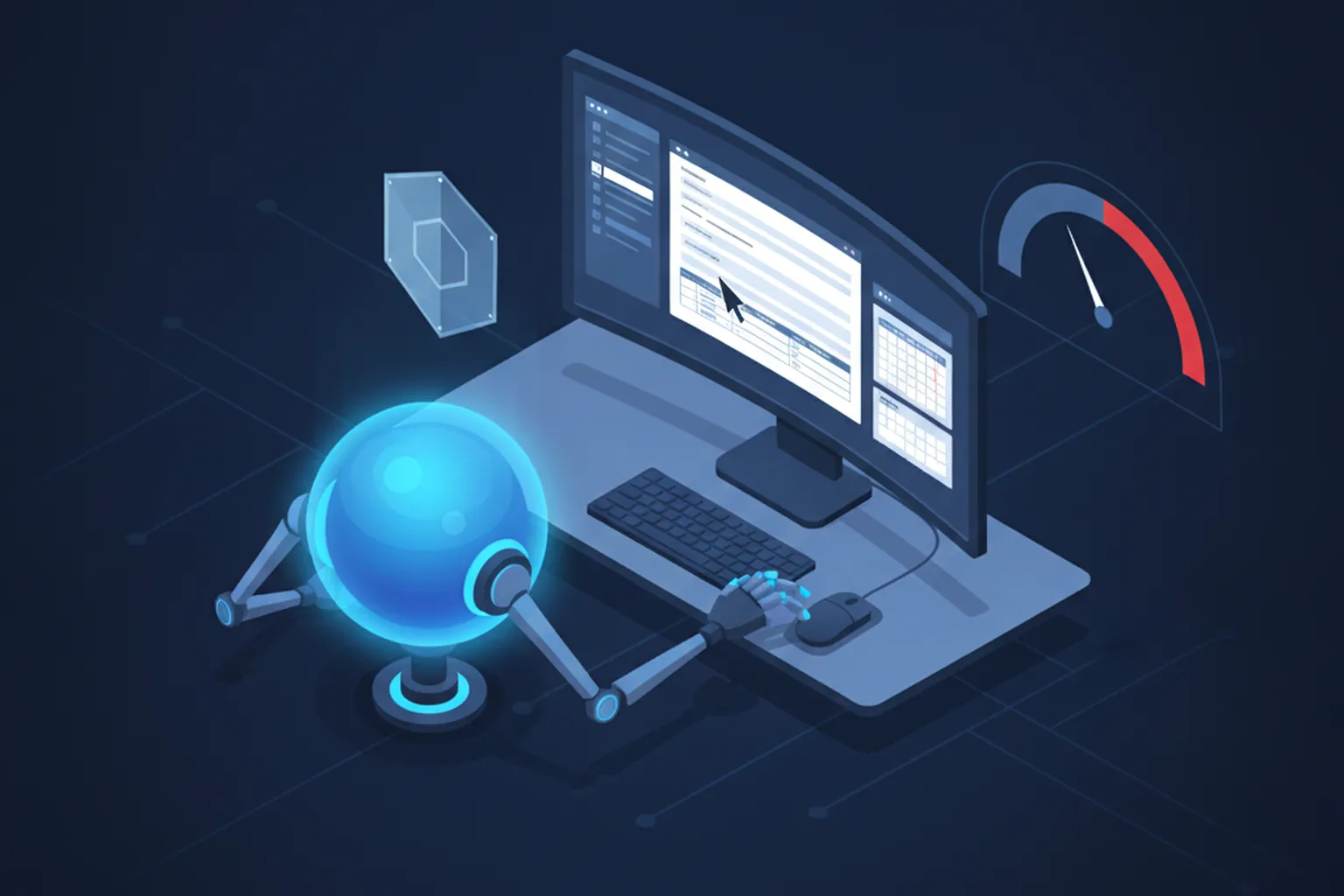
Beyond the framing, the concrete shift is that Astra is built to act, not just answer. OpenAI highlights that it can fill in forms, update customer records, organize calendars, conduct research and produce documents, spreadsheets and presentations while following existing templates. Altman offered an illustrative example of the model surfacing an overlooked supply-chain consideration during a research task — flagging a problem the user had not explicitly asked about. That autonomy is exactly the property that makes production AI agents useful, and exactly the property that has to be governed carefully.
Two claims in the announcement matter most for engineering leaders, and they pull in opposite directions. The first is capability: Astra is positioned as best-in-class at software engineering and cybersecurity. The second is severity: OpenAI states that “Astra is a significant jump in cyber capabilities and meets the Critical threshold in cybersecurity under our Preparedness Framework.” A model this good at security work is a gift to defenders and a discount for attackers at the same time.
Why the ‘Critical’ cyber tier matters
OpenAI’s Preparedness Framework is its internal scheme for rating how much a model could contribute to severe real-world harm across categories such as cybersecurity and biological risk. “Critical” is the top band. A model reaching it means, in OpenAI’s own risk language, that the system is capable enough at offensive-security tasks to warrant additional safeguards before and during deployment. This is the first time a mainstream, broadly available assistant has been placed in that tier by its own maker, so the label is worth taking at face value rather than as marketing.
The practical reading is straightforward: capabilities that accelerate defensive work — reading unfamiliar codebases, spotting insecure patterns, drafting patches, explaining exploit chains — are the same capabilities that accelerate offensive work. A less-skilled actor can now get further, faster, on tasks like reconnaissance, phishing content, and probing for known-vulnerable configurations. None of this is hypothetical future risk; it is a capability shipping into ChatGPT tiers and an API this quarter. The right response is not alarm but recalibration: assume the cost of attacking your systems just dropped, and make sure your defensive tempo — patching, exposure reduction, and authorized security testing — keeps pace.
Agentic computer use widens the attack surface
Answer-only models fail safely: a bad output is text you can ignore. A computer-using agent fails differently, because it can take actions — click, submit, write to a record, send a message — with real consequences. When you give a model access to forms, records and calendars, you have effectively added a non-human operator to your system, and every permission you grant it is a permission an attacker can try to hijack through prompt injection, poisoned data, or a confused-deputy path.
This reframes integration as an access-control problem, not just a prompt-engineering one. The controls are familiar from how we treat any semi-trusted automation: least privilege so the agent can only touch what a task genuinely needs; sandboxed execution rather than production credentials; human approval gates for anything irreversible or high-value; full step-level logging for audit; and allowlists over blocklists for the actions and destinations it can reach. It is a point in Astra’s favor that, for enterprise ChatGPT, access is off by default and must be switched on by an administrator — that gives security and governance teams a real control point before agentic features reach staff, rather than discovering them after the fact.
What it means for US & EU teams
For engineering and security leaders, the first move is to separate the two stories the launch tells. Story one is opportunity: a stronger model for building, reviewing and hardening software, and for automating genuinely tedious digital work. Story two is exposure: a widely available system that raises the offensive baseline for everyone. Teams that only read the first story ship faster and get surprised; teams that read both ship faster and tighten defenses in the same quarter.
The second move is governance, and for EU-facing teams it is not optional. Agentic systems that act on records and workflows can fall within scope of the EU AI Act depending on use case, and the dual-use cyber dimension raises clear questions about human oversight, logging and risk assessment. Decide now who is accountable for an agent’s actions, how its decisions are logged, and what a human must approve — before a compliance review or an incident forces the answer. Match the rigor to the stakes: an internal drafting agent needs less ceremony than one touching customer records in a FinTech or HealthTech workflow.
The third move is to update the threat model rather than the tooling alone. Assume reconnaissance and vulnerability discovery against your surface are getting cheaper and faster. Prioritize patching of known-exploited flaws, tighten secrets and permission hygiene, and tune monitoring for automated, machine-speed probing rather than human-paced attacks. The teams that come through this shift calmly are the ones already asking, for every AI feature, “what can this agent do if it is compromised, and what stops it?”
A readiness checklist
- Inventory where agents can act. List every AI feature that takes actions — not just generates text — and document the systems and data each one can reach.
- Apply least privilege. Scope each agent’s access to the minimum a task needs; never hand it standing production credentials.
- Sandbox and gate. Run agent actions in an isolated environment and require human approval for anything irreversible, financial, or customer-facing.
- Log every step. Capture the agent’s actions and inputs for audit, so a compromised or confused agent leaves a trail you can reconstruct.
- Harden against injection. Treat any content the agent reads as potentially hostile; validate and constrain what it can do with it.
- Raise defensive tempo. Patch known-exploited vulnerabilities faster, reduce exposed surface, and run authorized penetration testing on your own systems.
- Set governance before rollout. Define accountability, oversight and logging for agentic features, and keep enterprise access administrator-gated until controls are in place.
Frequently asked questions
What is GPT-6 Astra and when was it released?
GPT-6 Astra is OpenAI's new flagship model, unveiled on September 3, 2026. OpenAI describes it as state-of-the-art on computer use, browser use, software engineering, cybersecurity, science and professional work. It began rolling out to enterprise customers with Daybreak access, with broader availability to ChatGPT Plus, Pro, Business and Enterprise users, plus the OpenAI API and Amazon Web Services. President Greg Brockman said it was “not unreasonable to feel that we are now in the AGI era,” and CEO Sam Altman called it the company's “most aligned model ever.”
What does the ‘Critical’ cybersecurity threshold mean?
OpenAI stated that “Astra is a significant jump in cyber capabilities and meets the Critical threshold in cybersecurity under our Preparedness Framework.” The Preparedness Framework is OpenAI's internal system for rating a model's potential for severe harm, and Critical is the highest tier — meaning the model is capable enough at offensive-security tasks that OpenAI applies additional safeguards. In practice, the same abilities that help defenders find and fix flaws faster can also lower the skill and time needed to find and exploit them, so the capability is dual-use.
How can teams safely build on GPT-6 Astra's agentic computer use?
Treat the agent like an untrusted junior operator with real system access. Scope its permissions to the minimum needed, run it in a sandbox rather than on production credentials, require human approval for irreversible or high-value actions, log every step for audit, and constrain it with allowlists rather than blocklists. For enterprise ChatGPT, Astra access is off by default and must be enabled by an administrator, which gives governance teams a natural control point before agentic features reach staff.
Does GPT-6 Astra change how we defend our own systems?
Yes. A widely available model that is state-of-the-art at cybersecurity raises the baseline capability of attackers as well as defenders. Teams should assume reconnaissance, phishing and vulnerability discovery get cheaper and faster, prioritize patching and exposure reduction accordingly, and use the same class of tools defensively through authorized testing. It strengthens the case for regular penetration testing, tighter secrets and permission hygiene, and monitoring tuned for automated, machine-speed probing.
Sources
CNBC — OpenAI announces rollout of GPT-6 Astra model (September 3, 2026)
Fox Business — OpenAI unveils GPT-6 Astra with major advances in AI capabilities (September 3, 2026)