Headless commerce & PIM
Composable storefronts on commercetools, Shopify Hydrogen or custom stacks, with PIM, MDM and a single product backbone across all channels.

Industries GDPR PCI DSS
YuSMP Group builds retail software for US and EU brands that sell across web, app, store and marketplace. We engineer headless storefronts and online store builds, mobile shopping, POS and in-store inventory, customer data platforms, on-site personalization and loyalty stacks that share one product, pricing and customer model. PCI DSS scope stays minimal, GDPR and CCPA stay clean, WCAG 2.2 AA stays measurable. Recent omnichannel rebuilds have lifted conversion two to four points without rebrand risk.

Our retail practice covers six core lanes: headless commerce and PIM rebuilds for brands outgrowing their first platform; mobile shopping apps with native checkout and push-driven re-engagement; POS, in-store inventory and click-and-collect for retailers that operate physical stores; customer data platforms unifying web, app, store and CRM signal; personalization and search on first-party data; and loyalty plus subscription billing engines. We work under PCI DSS v4.0 for the payment surface, GDPR plus ePrivacy for EU customer data, CCPA for US opt-outs, and ADA plus WCAG 2.2 AA for accessibility. GS1, EDI and EAN/UPC underpin omnichannel SKU integrity. Explore how we deliver this through our Web Application Development service.
What we build
Composable storefronts on commercetools, Shopify Hydrogen or custom stacks, with PIM, MDM and a single product backbone across all channels.
Native iOS and Android shopping apps with native checkout, Apple Pay and Google Pay, scan-and-go and push-driven re-engagement.
Offline-first POS clients, store-level inventory, click-and-collect, ship-from-store and returns flows reconciled with web and app.
CDP with identity resolution across web, app, POS and CRM, server-side event collection and audience export to ad and email destinations.
On-site search, ranking and recommendations on first-party signal, with A/B harness and uplift-tested rollout, no third-party cookies required.
Points, tiers, perks and partner integrations, plus recurring billing with dunning, pause and skip — measured against MRR retention.
Compliance
PCI DSS v4.0 · GDPR · CCPA / CPRA · ADA Title III · WCAG 2.2 AA · GS1 (GTIN, GS1-128) · EDI EDIFACT · EDI ANSI X12 · EAN/UPC · DSAR automation · ePrivacy Directive · EU Omnibus Directive · FTC Section 5 · state UDAP statutes · ISO 27001 readiness · SOC 2 Type II progress.
Process
Catalog audit, channel map, conversion funnels and Core Web Vitals baseline. Two-week fixed scope.
Composable target state, PCI scope plan, data model, ADRs. Phased migration that keeps revenue stable.
Two-week increments behind feature flags, A/B harness from day one, peak-load rehearsal before traffic shift.
SRE coverage, conversion and CWV deltas per release, Black Friday chaos drills so the real one is uneventful.
Cases
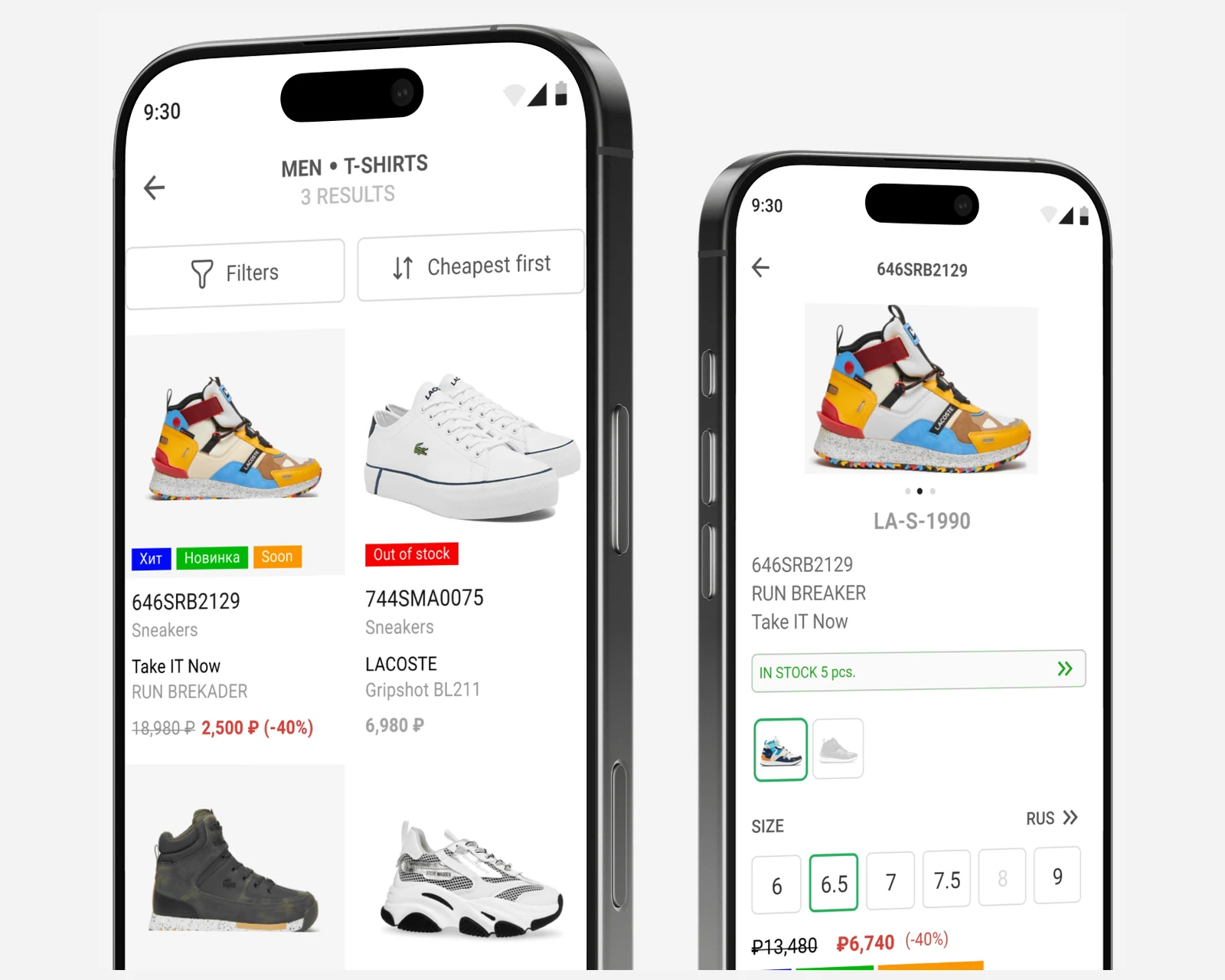
Retail POS companion app for a multi-brand boutique chain — ElasticSearch cross-store inventory search, 1C-system integration.
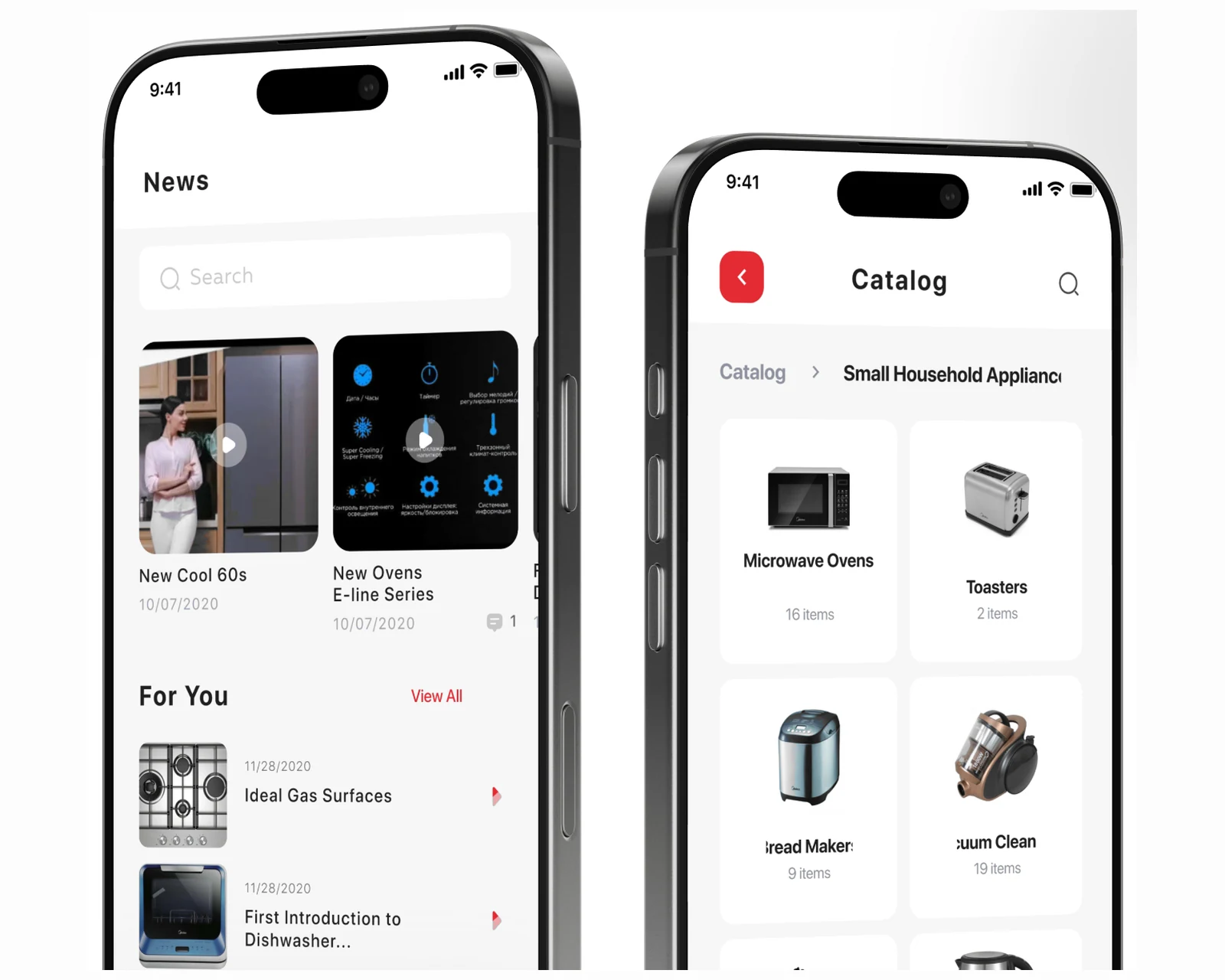
Gamified iOS & Android staff-training and product-catalog app — certificates, points, and ranks for a nationwide appliance chain, US & EU ready.
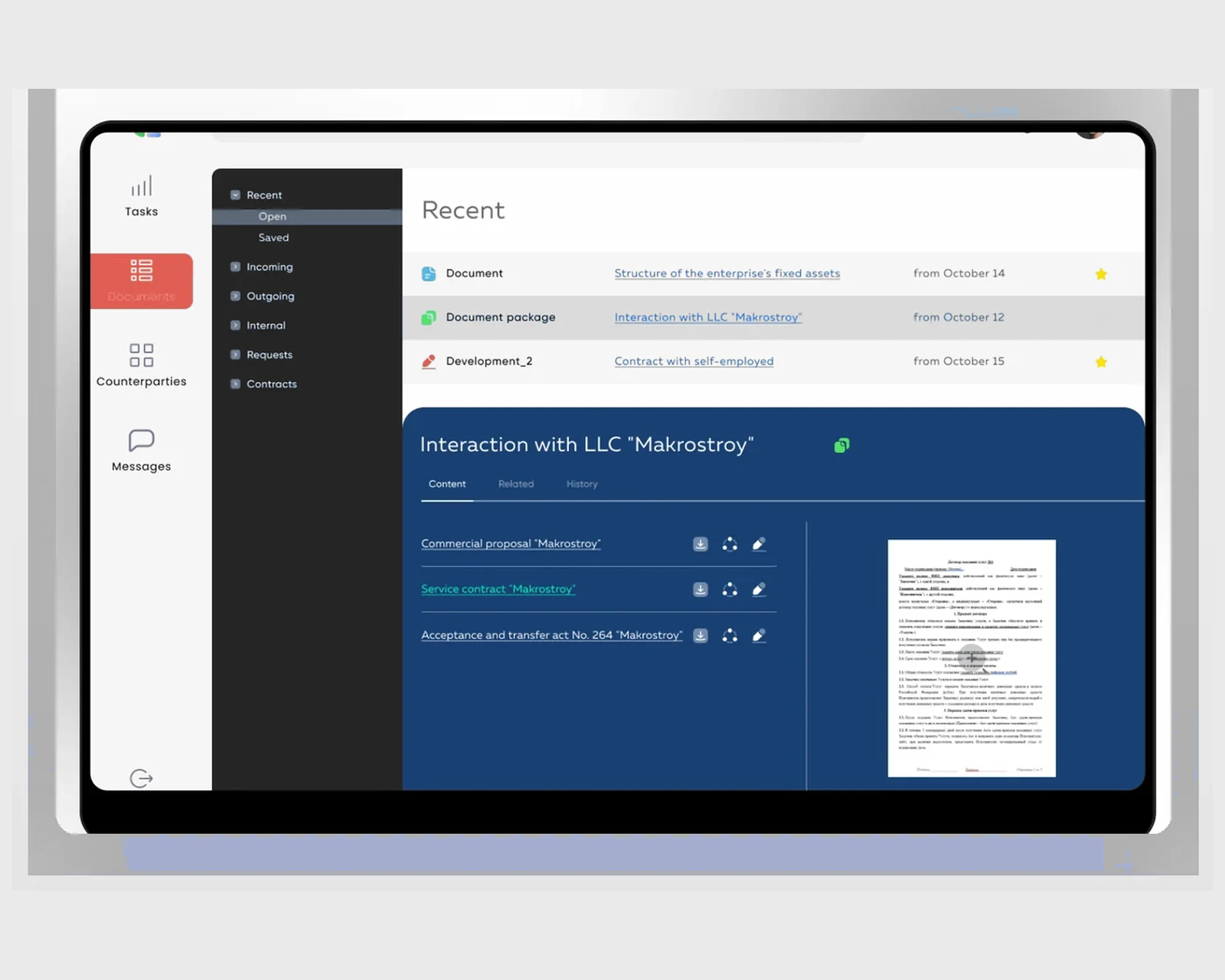
An internal EDM for a retail chain — e-signatures, approval routing, counterparties, and tasks on React + Laravel, built for US & EU operations.
Why YuSMP
We don't lock you into one platform. We compose what fits your catalog shape, traffic curve and store footprint.
Every release ships with conversion, AOV and Core Web Vitals deltas, not just velocity charts.
We rehearse Black Friday and Boxing Day with chaos drills so your real peak is boring on purpose.
GDPR-aligned · CCPA-acknowledged · PCI DSS scope-minimization · ADA / WCAG 2.2 AA · ISO 27001 ready · SOC 2 Type II in progress.
Retail apps need to be fast and fault-tolerant with real-time inventory sync to offline stores. YuSMP built native Swift and Kotlin apps with ElasticSearch search, 1C ERP integration, and a two-tap checkout our customers genuinely love.
Our consultants were losing 15 minutes per customer on manual inventory checks. YuSMP built native apps backed by ElasticSearch, wired to our 1C system in real time. Time-per-customer dropped 40% across all locations within a week of launch.
Technology stack
Modern retail runs on a composable set of specialised systems rather than a single monolithic platform. Below are the six categories we engineer most frequently — selecting, extending or replacing each component based on your catalog complexity, channel footprint and peak-load profile.
Cloud-native POS on Square, Lightspeed or custom stacks with offline-first mode, split-tender, gift cards and employee permissions. We integrate POS payment terminals (Ingenico, Verifone) behind a tokenized payment gateway so card data never touches application servers, keeping PCI scope minimal at the store edge.
Real-time inventory ledgers with multi-location allocation, replenishment rules, safety-stock modelling and supplier ASN management. Stock is reconciled across web, app and store in a single system of record so BOPIS reservations, ship-from-store and in-store restocking all draw from the same accurate availability figure.
Headless storefronts on commercetools, Shopify Hydrogen or Next.js Commerce with a shared product, pricing and promotions engine. Customers start a basket on mobile, add items on web and collect in store without losing their cart, their loyalty points or their previously applied discounts.
Points-and-tiers programs, coalition partnerships, subscription tiers and paid-loyalty models built on Antavo, Yotpo Loyalty or custom engines. We wire loyalty into the POS, mobile app and e-commerce checkout so customers earn and redeem consistently across channels without manual reconciliation runs.
Supplier portals, inbound shipment tracking and purchase-order collaboration on top of EDI X12 and EDIFACT exchanges. Real-time ETA updates feed into replenishment and allocation logic so buyers act on accurate lead times rather than static safety-stock rules that erode margin during disruptions.
Retail CDP unifying POS transactions, loyalty events, web and app behaviour and CRM records into a single customer view. Segment-level cohorts drive personalization, replenishment reminders and churn prediction — with consent properly gated so EU GDPR and US CCPA requirements hold across every activation channel.
Integrations
Retail systems only deliver value when they speak to each other reliably. Our integration practice covers the commercial platforms, back-office systems and logistics networks that US and EU retailers depend on — built against documented APIs and EDI standards, not brittle screen-scraping or vendor-specific export schedules.
We extend all three platforms with custom checkout logic, headless front-ends, multi-store configurations and marketplace connectors. For Shopify Plus we build Checkout UI Extensions, custom B2B pricing and draft-order workflows; for Magento and WooCommerce we refactor plugin dependency chains that have grown into performance and security liabilities.
Theme customizations and app builds both use the platform's native extension APIs so upgrades don't break customizations.
SAP S/4HANA and Oracle NetSuite integrations for order-to-cash, inventory valuation, financial posting and supplier master data. We use BAPI/RFC and OData V4 on SAP and SuiteScript / REST on NetSuite to build event-driven connectors with dead-letter queues and retry logic — so an ERP batch window doesn't become a customer-facing stockout on your storefront.
Microsoft Dynamics 365 F&SCM and Business Central integrations follow the same reliability-first pattern.
Stripe, Adyen, Braintree and PayPal integrations with network tokenization, 3DS2 exemption logic and multi-currency settlement reporting. We design the payment surface so card data enters the tokenized vault at the earliest possible point, minimising PCI DSS audit scope across web, app and store channels.
Apple Pay, Google Pay and BNPL providers (Klarna, Affirm, Afterpay) are wired into checkout with A/B-tested placement to lift conversion without inflating chargebacks.
Carrier integrations with FedEx, UPS, USPS, DHL, DPD and local last-mile providers via ShipStation, EasyPost or direct carrier APIs. Rate shopping at checkout, label generation, shipment tracking webhooks and returns portal flows are assembled into a single shipping abstraction that lets you swap or add carriers without touching the storefront.
For EU retailers we cover cross-border customs documentation, IOSS VAT handling and carrier-specific EU import restrictions.
Salesforce Commerce Cloud and Service Cloud integrations for unified customer service, order management and case routing. For HubSpot-centric stacks we build the commerce-to-CRM bridge that maps purchase events to lifecycle stages and feeds deal pipelines from repeat-purchase or B2B account behaviour.
Identity resolution de-duplicates contacts that exist in both the e-commerce platform and the CRM so agents never look at a split customer record when handling a return or complaint.
WMS integrations with Manhattan Active, Blue Yonder, SnapFulfil and 3PL-operated systems via EDI 940/945/856 ASN exchanges or REST webhooks. Pick, pack and ship status flows back to the OMS and customer-facing tracking in real time — eliminating the batch-upload delays that create "shipped" notifications hours after a parcel has left the building.
For retailers running their own fulfilment, we build wave planning, cartonisation and slotting-optimisation modules that plug into the existing WMS without a rip-and-replace.
Need a specific integration scoped? Our custom software development and enterprise software teams own the build and the runtime.
FAQ
Yes. We decouple storefront from commerce engine and CMS, move catalog into a PIM, and roll out new categories progressively to keep revenue stable during the cutover.
We push card data into tokenized vaults or hosted fields with payment providers, then design adjacent services so they never see PAN. The audit boundary stays around a thin, well-instrumented zone.
Yes. We deliver POS clients, offline-first inventory, click-and-collect, in-store fulfillment and returns flows that reconcile with the same product, pricing and loyalty data as web and app.
We build to WCAG 2.2 AA from the design system up, run axe and manual screen-reader passes per release, and document conformance to reduce ADA Title III demand-letter exposure in the US.
Yes. We model catalogs around GS1 GTIN, run EDI EDIFACT and ANSI X12 exchanges with suppliers and 3PLs, and validate EAN/UPC for omnichannel SKU integrity.
We deploy a consent management platform, server-side tagging and first-party data pipelines, plus DSAR and opt-out automation so personalization stays GDPR-aligned (EU) and CCPA-acknowledged (US) after the third-party cookie sunset.
Three foundations matter most: a single source of truth for inventory (so a BOPIS reservation or ship-from-store pick doesn't oversell), a unified customer identity that persists across web, app, POS and email (so promotions and loyalty points are consistent regardless of channel), and an order management system that can route fulfilment to the most cost-effective node — store, DC or 3PL — without customer-visible seams. We start with whichever foundation is weakest, because adding channels on top of fragmented inventory or split customer records amplifies existing problems rather than solving them.
Real-time inventory sync requires an event-driven architecture where every inventory movement — sale, return, receive, transfer — publishes an event to a central ledger immediately rather than waiting for a nightly batch. We build this ledger as the system of record and push updates to all channel endpoints (storefront, POS, mobile app) via webhooks or server-sent events with sub-second latency. Reservation logic holds stock during the checkout window to prevent overselling, and automatic release returns uncommitted stock if payment is not completed. Legacy ERP systems that only support batch exports get an event-adapter that translates scheduled feeds into near-real-time events.
POS-to-ERP integration typically covers four flows: product and pricing master data from ERP to POS, sales transactions from POS to ERP for financial posting and inventory deduction, customer and loyalty data bidirectionally, and stock replenishment orders from POS back to the ERP purchasing module. We build these as a message-bus integration (Kafka, RabbitMQ or cloud pub/sub) with transformation layers so the POS and ERP can evolve independently. For POS-to-e-commerce we align on the same inventory ledger described above and use order management APIs to handle BOPIS, returns and exchanges without manual reconciliation.
Effective loyalty programs need three technical components: a rules engine that awards points consistently across all channels in real time, a redemption ledger that tracks liability accurately and prevents double-spend, and an expiry and dormancy module that manages liability aging per your accounting policy. Points liability becomes a balance-sheet risk when the redemption rate is not modelled at the platform level — we build actuarial hooks into the program design so finance has accurate liability forecasts by cohort. For programs with coalition partners or third-party earn opportunities we use ISO 8583 or REST-based exchange APIs with reconciliation reporting that closes daily rather than monthly.
BOPIS reliability depends on three things working together: accurate per-location inventory availability exposed to the storefront (not a DC-level aggregate), a reservation hold that takes stock off the shelf immediately at order placement (not at pick confirmation), and a pick-and-notify workflow that gives store associates a manageable queue with clear SLA timers. We build the reservation engine with configurable hold windows and automatic release, integrate with POS so associates fulfil from the same screen they use for walk-in customers, and surface readiness signals to the customer via push notifications and email so they don't arrive before the order is ready. Failed picks (damaged or missing stock) trigger automatic fallback routing to an adjacent store or DC without customer-visible cancellation.
Response within 1 business day. NDA on request.
Share a few details and a senior consultant will reply within one business day.