12-week timeline
Weeks 1–2 discovery and architecture, weeks 3–10 design and build in two-week sprints, weeks 11–12 hardening and launch. Calendar-accurate, not aspirational.

Services
Ship a real MVP — not a clickable prototype, not a demo, a product your first customers can sign up for, pay for and use in production. YuSMP Group runs fixed-scope MVPs tiered by idea maturity: a hypothesis check from $1,800, a classic single-platform MVP from $6,900 in 4–8 weeks, and a multi-platform MVP+ from $13,800. A senior product team embedded around the founder, GDPR-aligned, with IP transferred to you on day one.

GDPR-aligned · ISO 27001 ready · SOC 2 Type II in progress · HIPAA-capable · CCPA-acknowledged · CET workday with 9 AM–1 PM ET overlap
An MVP, the way we build it, is not a prototype and not a proof of concept — it is a shipped product that real users sign up for, pay for or formally commit to. Scope and timeline are fixed at the end of discovery and we hold to them. Pricing is in USD, all-in, tiered by idea maturity, with no recruitment markup and no tool surcharges. Intellectual property transfers to the founding entity on creation under a master services agreement that every engineer signs on day one. Engagements are GDPR-aligned by default, with SOC 2 Type II in progress at the firm level, HIPAA-capable for HealthTech and CCPA-acknowledged for US consumer products. See it in practice in our ARIA case study.
Weeks 1–2 discovery and architecture, weeks 3–10 design and build in two-week sprints, weeks 11–12 hardening and launch. Calendar-accurate, not aspirational.
From $6,900 all-in for a classic MVP, tiered by scope and signed off at the end of discovery. No scope creep without your written approval and a transparent budget delta — the default answer to creep is the post-launch roadmap.
One product manager, one product designer, two senior engineers and a QA lead, embedded around the founder. Every CV is real and every seat ships from week one — no juniors hidden behind senior contracts.
Next.js or React on the front, FastAPI or Node on the back, PostgreSQL on AWS, Stripe for billing, Auth0 or Clerk for identity. Boring, proven, investor-friendly — no resume-driven architecture.
Architecture document, test-coverage report, security review, observability dashboard and a 90-day post-launch roadmap. Diligence-ready before your first investor email goes out.
Roughly 80% of founders continue with the same squad post-launch on time-and-materials or as a dedicated team. Product knowledge stays in the team, not in a slide deck.
Weeks 1–2. We lock the product narrative, the top three user flows, the integration map and a target architecture. Output: a fixed price, a fixed scope and a signed SOW before any code is written.
Weeks 3–4. The product designer ships a Figma file, a lightweight design system and a click-prototype you validate with five to eight target users before we touch the codebase.
Weeks 5–10. Two-week sprints, weekly demos to the founder, growing automated test coverage and CI on every commit. You see working software every Friday, not at the end.
Weeks 11–12. Hardening, security pass, observability and alerting, production cutover and the 90-day post-launch roadmap. You go live with paying users, not with a staging URL.
Default for founders. From $6,900 all-in for a classic single-platform MVP in 4–8 weeks. Fixed scope, fixed timeline, signed off at the end of discovery.
Post-launch growth on monthly invoicing per named seat. Same squad, same context, no recontracting — ship weekly against a rolling backlog, or add staff augmentation to plug a specific gap.
For founders scaling beyond MVP. A long-running dedicated development team you treat as your own, with hiring and retention on us and product priorities on you — a natural path into full SaaS product development.
Most agencies keep the number for a sales call. Below are reference formats for different stages of idea maturity — we name the exact quote after a free scope assessment. MVPs are fixed-scope and all-in, quoted in USD, with no recruitment markup, no tool surcharges and no hidden fees. You see the line-item budget before any code is written and sign off on it.
Hypothesis check
from $1,800
2–3 weeks · 1 hypothesis
Concierge or no-code — prove demand before a line of code. Hypothesis and success metric, a landing page or no-code build, analytics and lead capture, a demand report.
Classic MVP
from $6,900
4–8 weeks · one platform
Web or mobile, first working version for users. Scope discovery and prioritisation, minimal design and prototype, core-feature build, event analytics and funnel, deploy and source handover.
MVP+
from $13,800
8–12 weeks · two platforms
Web plus mobile, complex integrations and roles. External integrations and online payments, roles and a basic admin panel, analytics and A/B experiments, a post-launch growth plan.
What moves the number: the integration count (billing, auth, third-party APIs); regulated workloads (GDPR is in scope by default, but PCI DSS scoping for payments and HIPAA-capable architecture for HealthTech add discovery and controls work); platform count (web only vs. web plus mobile); and the depth of each core flow. GPU, third-party tooling and cloud spend run on your own accounts, so you keep the cost lever. Anything outside the signed scope goes on the post-launch roadmap with sized estimates rather than a silent timeline extension. Prices are indicative and are fixed in a written quote for your specific scope.

Single-page Tilda landing with Telegram-bot lead capture for an ad agency — shipped in two weeks, US & EU ready.
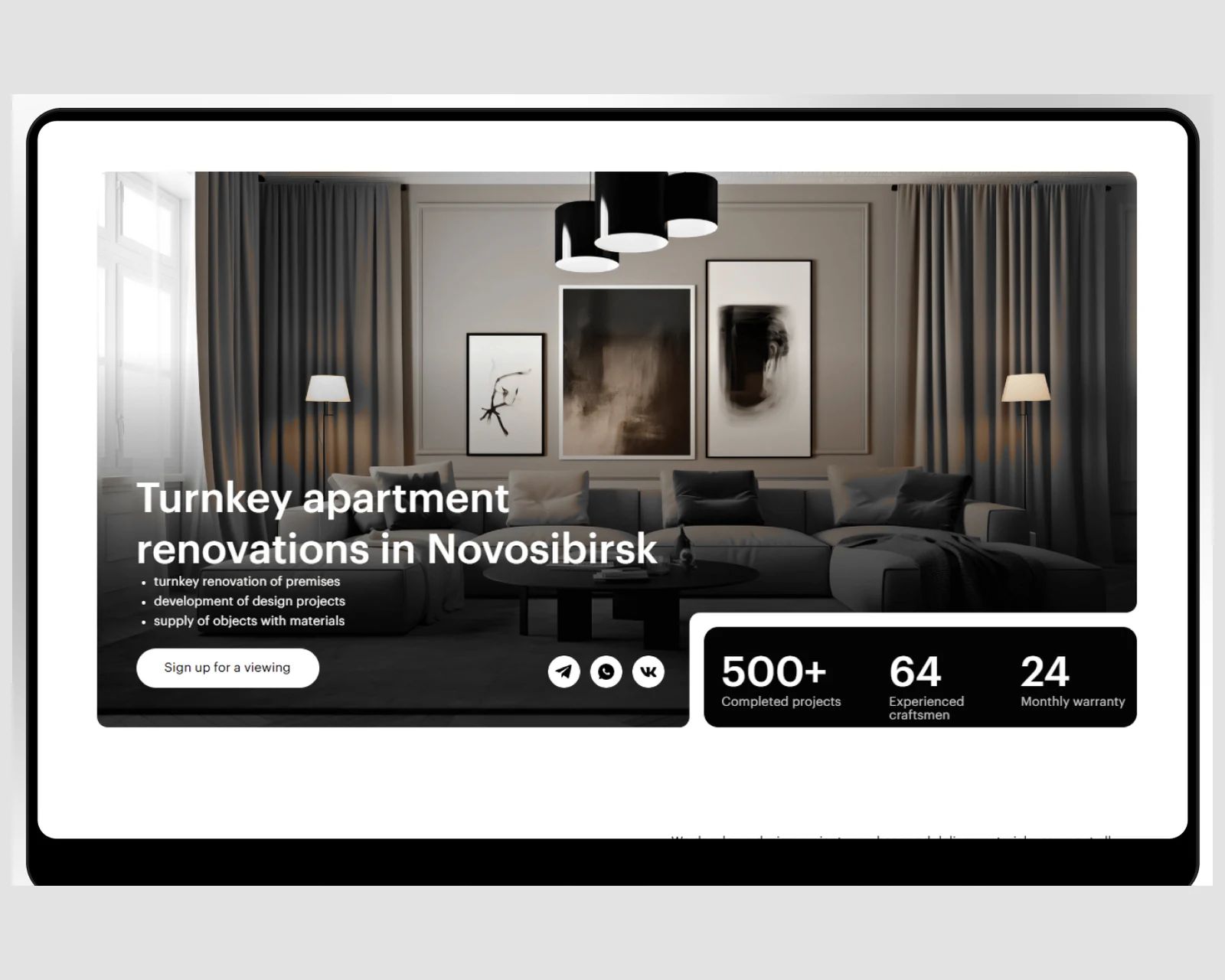
Redesigned, SEO-optimized Tilda website for an apartment renovation and design company — portfolio, blog, video, lead capture.
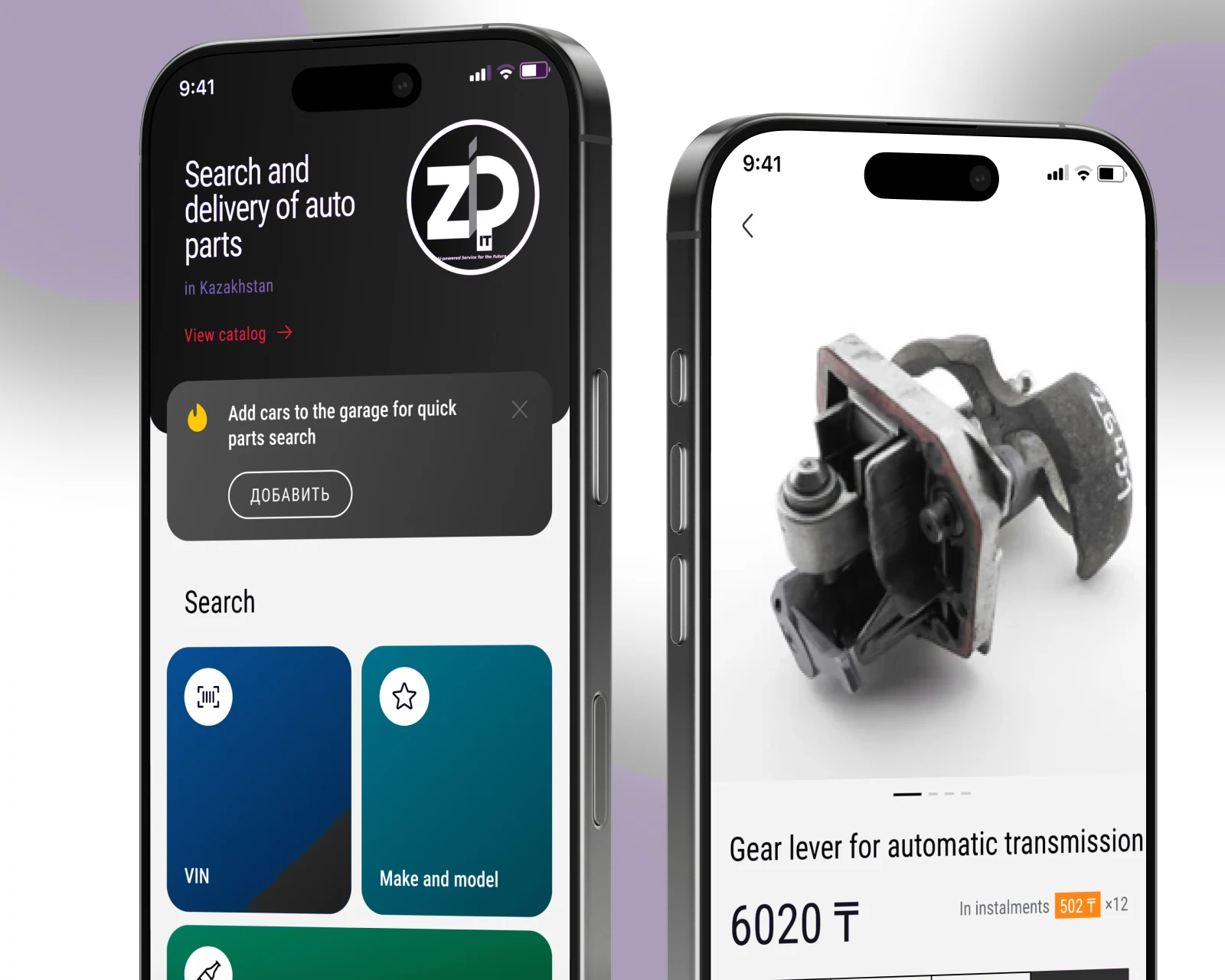
Auto-parts marketplace plus multi-tenant seller CRM — VIN search via Laximo, cross-location inventory, integrated delivery.
GDPR-aligned · SOC 2 Type II in progress · HIPAA-capable · CCPA-acknowledged
You ship a working product with real users, not a wireframe and a pitch deck. Architecture document, test coverage and security review are diligence-ready before your first investor email.
Fixed and all-in from $6,900, tiered by scope. IP transfers to the founding entity on creation under the MSA. You hold the GitHub org, the cloud accounts, the Stripe account and every credential.
GDPR-aligned by default, SOC 2 Type II in progress, HIPAA-capable architecture for HealthTech, CCPA-acknowledged for US consumer products. Compliance is in scope from week one, not bolted on later.
PCI DSS and HIPAA scoping are available for payments and HealthTech MVPs — we align directly with your QSA or BAA-ready vendors during discovery.
We had a concept and tight timelines. YuSMP converted a Flutter skeleton into a production-ready nutrition app with a calorie engine, meal plans, and App Store subscriptions in four months. 90-day retention exceeded our benchmark by 30%.
Prototyping before committing to a full mobile build is smart, but only if the prototype is honest. YuSMP delivered a high-fidelity prototype that gave us enough user feedback to cut 20% of planned scope before a single line of production code was written.
MVP scope, compliance requirements, and the definition of “ready to show investors” differ by sector. Here is how we approach the verticals we build for most often.
Consumer finance, lending, payments, and investment MVPs built PCI DSS-aware from week one. We wire Stripe, Plaid, Open Banking APIs, and KYC/AML SDKs into the MVP scope so you go live with a working payment loop — not a form that promises to handle payments later.
Typical FinTech MVPs include a user onboarding flow with identity verification, a core transaction or portfolio view, and a compliant data model that passes a seed-round technical due diligence audit.
Patient-facing apps, clinical decision-support tools, and digital therapeutics MVPs delivered HIPAA-capable by default. BAA-ready vendor stack, PHI-segregated architecture, and GDPR-aligned EU data residency where required.
We scope HealthTech MVPs around the regulated core first — audit logging, role-based access, and encrypted storage — so the pilot with a clinical partner is credible and the later FDA or CE mark path is not broken by early shortcuts.
Multi-tenant SaaS MVPs with authentication, workspace isolation, a billing integration (Stripe Billing or Paddle), and a basic admin panel — enough for your first paying design partners and a product-led growth loop.
We prioritise the one or two core differentiating workflows rather than building a feature-complete product. Everything else goes on the post-launch roadmap with sized estimates so the founding team controls what comes next.
Two-sided marketplace MVPs, D2C storefronts, and niche commerce platforms built to transact from launch day. We scope payment integration, seller/buyer flows, and a lightweight inventory or listing model inside the fixed MVP window.
For marketplace MVPs we make an explicit concierge vs. automated supply decision with you at discovery: many successful marketplaces start with a human-curated supply side and automate only after product-market fit is confirmed.
Fleet management, last-mile delivery, and route-optimisation MVPs built around a real-time tracking core and a dispatcher or operator view. We integrate mapping APIs (Google Maps, Mapbox, HERE) and push-notification layers inside the MVP scope.
Driver or courier mobile apps are typically scoped as part of the MVP+ tier to avoid splitting the build across two platforms without a validated core; we will recommend the right split on the discovery call.
Learning platforms, assessment tools, and HR workflow MVPs built for B2B pilots with enterprises or universities. We implement SCORM or xAPI wiring, SSO (SAML/OIDC), and a reporting layer inside the MVP scope so the pilot produces measurable outcomes from day one.
EdTech and HR Tech MVPs benefit from a B2B design-partner model: we scope the MVP around the workflows your first named enterprise customer has agreed to pilot, which both de-risks the build and accelerates the first revenue contract.
MVPs are fixed-scope and tiered by idea maturity, all-in and quoted in USD. A hypothesis check runs from $1,800 (2–3 weeks); a classic single-platform MVP from $6,900 (4–8 weeks); a multi-platform MVP+ with integrations, payments and roles from $13,800 (8–12 weeks). The exact number depends on integrations, regulated workloads and platform count (web only vs. web plus mobile). You see the line-item budget at the end of discovery and sign off before any code is written. There are no hidden fees, no recruitment markup and no tool surcharges.
A real product, not a demo. Typical 12-week MVPs include authentication and accounts, two or three core user flows, a billing or onboarding integration, an admin or operator view, and basic analytics and error reporting. That is enough to onboard your first 100 paying users, run a pilot with a design partner, or close a pre-seed or seed round. We deliberately cut anything that does not move that needle and put it on a post-launch roadmap with sized estimates.
You do, from day one. The master services agreement transfers all intellectual property to the founding entity on creation, and every engineer signs an individual IP assignment and NDA before they touch the repository. You hold the GitHub or GitLab organisation, the cloud accounts, the domain registrar, the Stripe account and every credential. We work inside your environment, not ours. At handover you receive an architecture document, a runbook and full credential rotation.
Scope is fixed by mutual sign-off at the end of week two and we hold to it. Real life happens, though, so we run a lightweight change-request process: anything you want to add gets sized in hours and USD within one business day and either swaps in (we drop something of equivalent size) or is added with a budget delta you approve in writing. We never silently extend timelines or invoices. The default answer to creep is the post-launch roadmap.
Yes, and most founders do. Roughly 80% of our MVP clients continue with the same squad on a time-and-materials or dedicated-team basis after week 12, which keeps product knowledge inside the team. Continuation requires no recontracting; we simply switch the SOW from fixed-price to T&M with monthly invoicing per named seat. If you raise a round and want to bring engineering in-house, we provide a 60-day knowledge-transfer window at no additional fee.
We build GDPR-aligned by default: lawful basis, DPA, data residency, deletion paths and consent flows are in scope from week one, not bolted on later. SOC 2 Type II is in progress at the firm level, so MVPs inherit aligned controls (SSO, MFA, encrypted disks, audit logging) out of the box. For HealthTech we deliver HIPAA-capable architecture with BAA-ready vendors. PCI DSS scoping is available for payments products. CCPA notice obligations are acknowledged for US consumers.
All three, and we recommend the right platform split at discovery. Most B2B SaaS MVPs start web-only because the sales motion requires a desktop dashboard and the first users are on laptops. Consumer-facing products often start on one mobile platform (iOS first for US/EU markets) and add web or Android in the post-MVP phase. Cross-platform (React Native or Flutter) is the right call when the MVP must work on both iOS and Android simultaneously — which typically adds four to six weeks versus single-platform and is scoped into the MVP+ tier. We will tell you our honest recommendation, not default to the more expensive option.
We use a single-question filter at discovery: does removing this feature make it impossible to validate the core hypothesis? If not, it goes on the post-launch roadmap with a sized estimate. In practice, scope converges around one to three core user flows, an auth layer, one or two integrations (payment, identity, or data), and a basic admin or operator view. Discovery deliverables include a feature list signed off by both sides — nothing is added mid-build without a change request that shows the cost and the trade-off.
Every MVP ships with event analytics (Mixpanel, PostHog, or Amplitude — your choice) wired to the core user flows so you have activation, retention, and conversion data from the first user. Application monitoring (Sentry for error tracking, Datadog or a cloud-native equivalent for infrastructure) is included in the MVP+ tier and optional in the Classic. We instrument the three or four metrics your investor pitch and product hypothesis depend on — not a 200-event schema you will never look at.
A PoC proves a technical assumption works — it is throwaway code and not user-facing. A prototype (Figma, InVision) proves a UX assumption — it is not executable and not deployable. An MVP is a live, deployable product that real users can sign up for, pay for, and use in production. Our MVPs include auth, data persistence, error handling, basic observability, and a handover package (architecture doc, runbook, credential rotation). The gap between prototype and MVP is typically eight to twelve weeks of real engineering.
Yes — that is the intended progression. A hypothesis check ($1,800, 2–3 weeks) is a no-code or minimal-code spike: a clickable Figma with a wait-list form, a Stripe payment link, or a wizard-of-oz backend. It validates demand before any real build. If the hypothesis check confirms a market signal, we convert it into a full Classic MVP SOW: you get a credit toward the Classic tier for work already completed, and the scope document is pre-populated from what we learned. Roughly 60% of hypothesis checks at YuSMP progress to a Classic MVP within 90 days.
Practical guides on MVP development, costs, and pre-launch validation for founders.





Share a few details and a senior consultant will reply within one business day.