A real squad, not a pool
Same engineers, every sprint. They learn your codebase, your customers and your business rules, and they stay long enough to compound that knowledge.

Services
Hire a dedicated development team that ships under your roadmap, not ours. YuSMP Group staffs senior, pre-vetted engineers from Yerevan on a CET workday with a guaranteed 9 AM–1 PM ET overlap for US East Coast standups. Fixed monthly, all-in USD pricing per named seat: a Mini team from $6,900 / month, a Standard team from $13,800 / month, a Product team from $27,600 / month — no recruitment markup, IP transferred on day one. Engagements are GDPR-aligned and ISO 27001 ready, with HIPAA-capable delivery for regulated products.

GDPR-aligned · ISO 27001 ready · SOC 2 Type II in progress · HIPAA-capable · CCPA-acknowledged · CET workday with 9 AM–1 PM ET overlap
A dedicated development team is an exclusive, long-running squad — full-stack engineers, QA, DevOps, and a delivery lead — that reports into your backlog and your priorities. We vet every hire through a four-stage process: CV screening, two technical interviews against your stack, a paid trial task, and a culture-fit check before placement. You see the same roster month over month, with monthly transparent invoices, named seats, and a no-questions replacement policy. Average tenure across our 80+ senior engineers exceeds three years, which keeps product knowledge inside your team. If you need to plug one specialist into an existing squad instead, our staff augmentation model does that; to validate a new product first, see MVP development. Every engagement runs on our nearshore delivery model. See it in practice in our Building JoyJet case study.
Same engineers, every sprint. They learn your codebase, your customers and your business rules, and they stay long enough to compound that knowledge.
Typical squad goes live in four to six weeks. We carry the recruitment cost and risk; you start shipping while your in-house pipeline catches up.
Engineers under EU contracts, region-locked hardware, EU data residency · US options on request. DPA on request, CCPA-acknowledged, HIPAA-capable, with full alignment to your ISO 27001 and SOC 2 Type II (in progress) obligations.
Weekly velocity reports, joint Jira boards and shared on-call rotations. You always know who is working on what and why.
Add a senior backend engineer in three weeks, scale down with thirty days notice. The team breathes with your roadmap, not the other way round.
Every dedicated team comes with an EM who runs delivery, mentoring and retention. Your CTO gets leverage, not another direct report.
We map your product, stack and team rituals, then agree on the squad shape, seniority mix and success metrics in a one-week kickoff.
We define onboarding paths, repo access, security model and definition of done so engineers ship real tickets in week one.
The squad joins your sprints, your CI and your on-call. We monitor cycle time and quality and adjust composition every quarter.
Quarterly business reviews, retention plans and roadmap alignment keep the team productive and aligned with your evolving product strategy.
For bounded workstreams inside a dedicated team setup, such as a migration or a regulated module with a deadline.
Default model. Monthly invoicing per role and seniority, with full visibility on hours, capacity and outcomes.
A long-running squad you treat as your own. We handle hiring, retention and HR. You own product, priorities and code.
Most vendors keep the rate for a sales call. Below are reference monthly formats for different squad sizes — we name the exact quote after a free scope assessment. Every seat is a flat, fully-loaded monthly fee — salary, taxes, equipment, paid time off, management and overhead sit inside one line item, quoted in USD, with no recruitment markup, no tool surcharges and no minimum team size beyond a single engineer. You see the line-item budget before any code is written and sign off on it.
Mini team
from $6,900
/ month · 2–3 seats
A focused squad reporting into your backlog — a senior engineer, a QA and a shared delivery lead. Flat monthly, all-in per named seat, live in four to six weeks.
Standard team
from $13,800
/ month · 4–5 seats
A cross-functional squad — full-stack engineers, QA and a delivery lead — taking a product from discovery to shippable releases. IP transferred on day one.
Product team
from $27,600
/ month · 6+ seats
A long-running multi-role team owning a production platform: engineering manager included, quarterly reviews, flex up or down as the roadmap moves. You own product, priorities and code.
What moves the number: the seniority mix (we staff senior-only, so seats price above a blended junior pool but ship from week one); the squad size and shape (add a senior backend engineer in three weeks, scale down with thirty days notice); the engagement model (a rolling monthly dedicated team by default, a bounded fixed-scope phase for a migration or regulated module with a deadline); the compliance scope (payments squads run inside PCI DSS and align with your QSA, health squads run HIPAA-capable, all against ISO 27001-aligned controls with SOC 2 Type II in progress); and the time-zone shift (West-Coast clients get two engineers moved to a late-CET schedule at no extra rate). GPU, third-party tooling, cloud and travel, when needed, run on your own accounts so you keep the cost lever. Prices are indicative and are fixed in a written monthly quote for your specific squad.
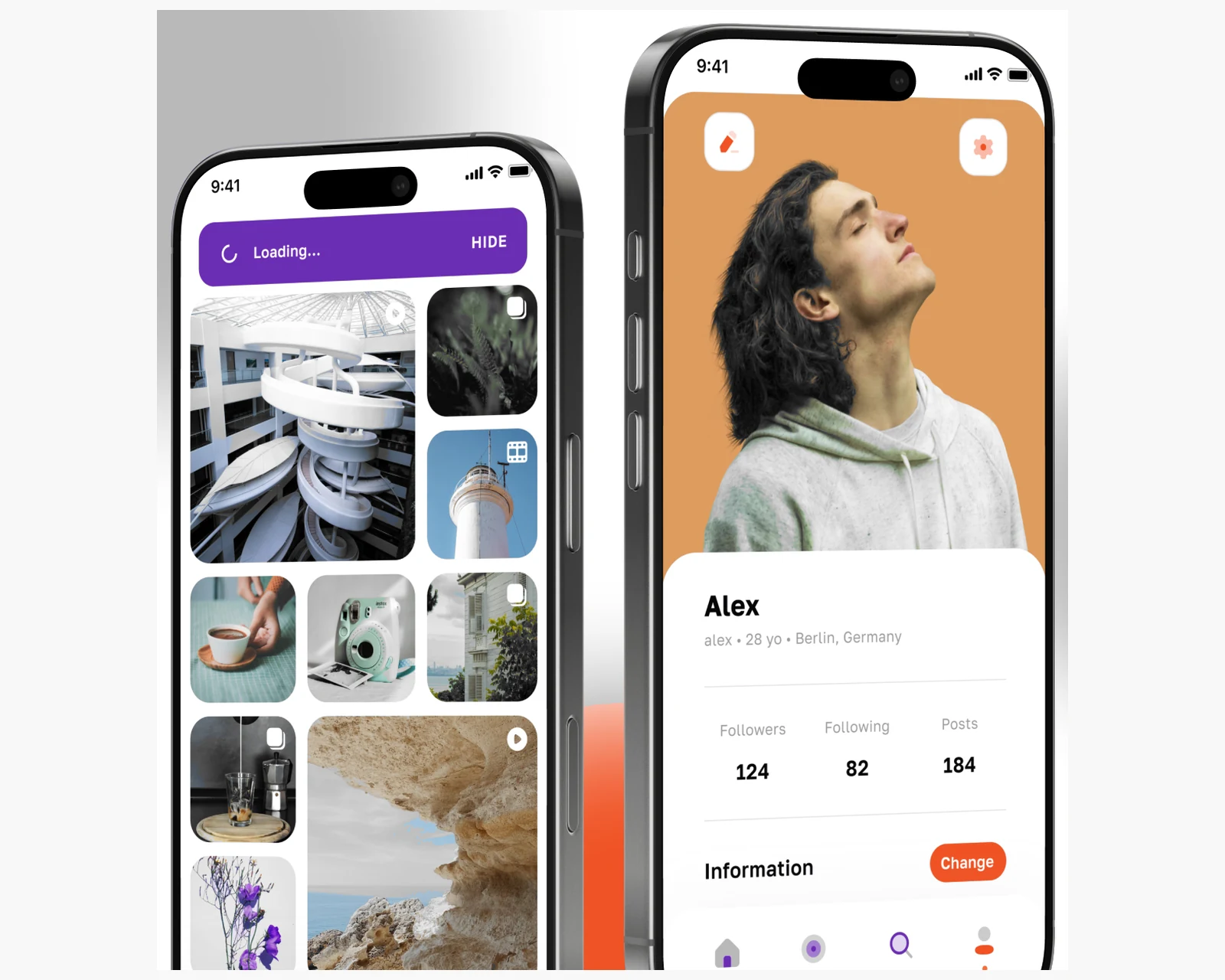
Production social platform — App Store + Google Play, live across the US and EU — with geo Radar, encrypted messaging and a virtual economy.
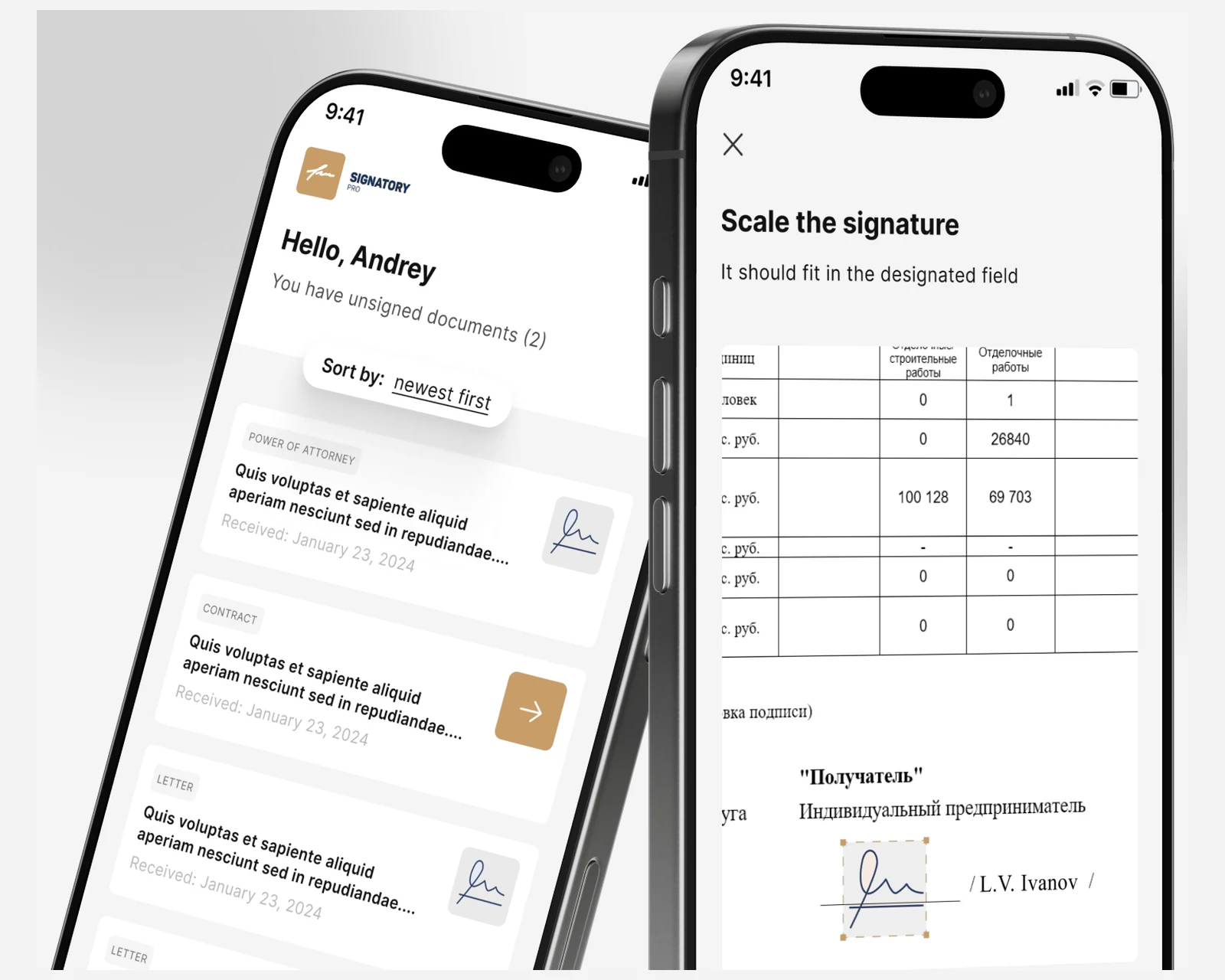
Native iOS and Android e-signature clients with a Symfony + React CRM for a cross-border law firm — KYC onboarding and a defensible evidence trail for US & EU matters.
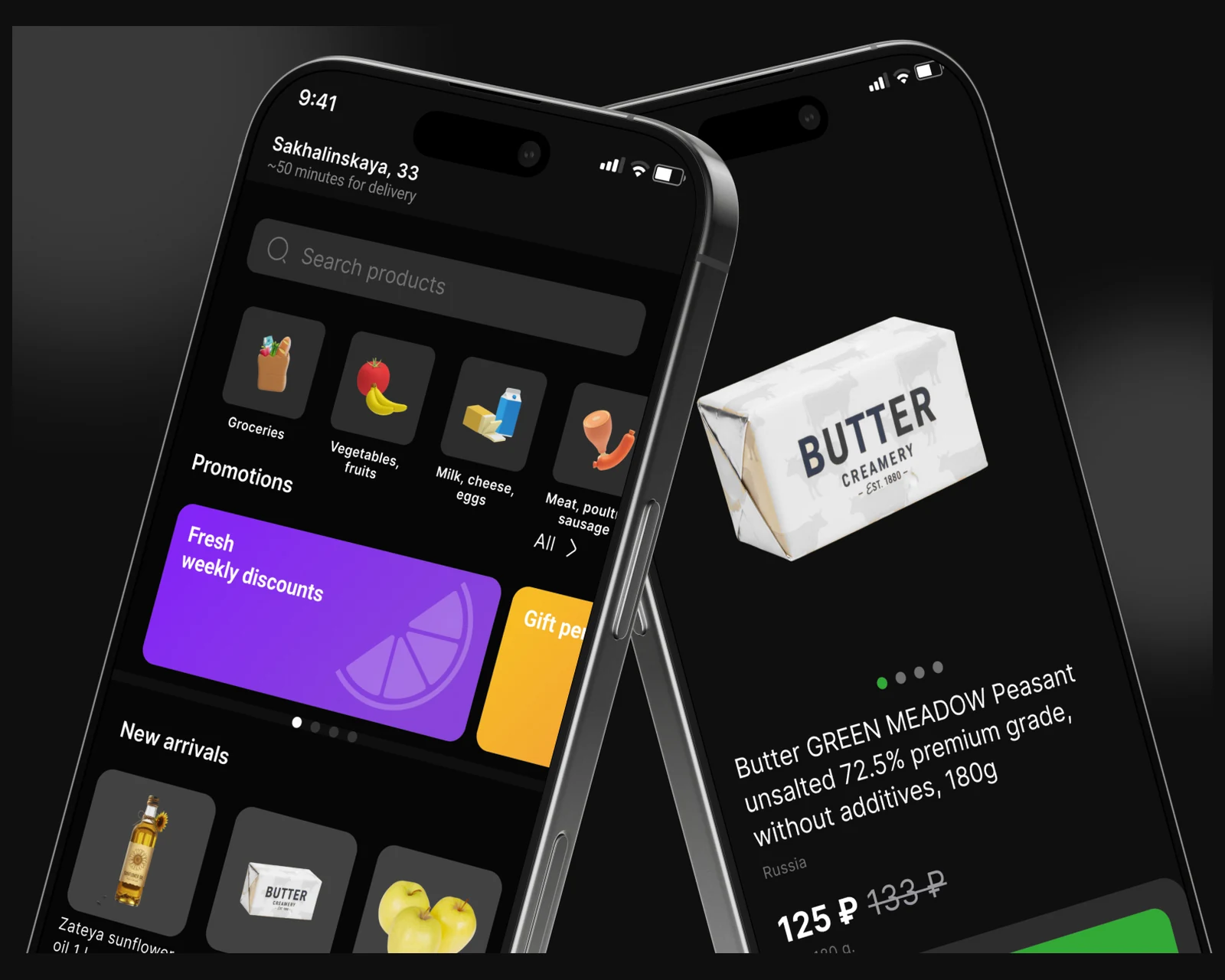
Four coordinated products on one Laravel backend — customer app, picker app, admin panel — with designed-from-scratch logistics.
Staff augmentation works best when the engineers understand the sector's integration landscape, compliance requirements and product context from day one. Our teams specialise by vertical.
Dedicated engineering teams for lending platforms, payment processors and embedded-finance products need to understand PCI DSS scope as a first principle, not a compliance afterthought. Engineers on FinTech squads are familiar with tokenisation patterns, idempotent payment API design, PSD2 SCA integration, and the documentation requirements your QSA will check.
On the data side, FinTech teams handle event-sourced ledger patterns, reconciliation pipelines and real-time fraud scoring integrations — the parts of the stack where a mistake costs money rather than just user experience. We do not place junior engineers on FinTech squads; every seat is senior or above.
Health engineering teams work inside HIPAA Business Associate Agreement scope by default. Engineers understand PHI handling constraints at the code level: what can be logged, what must be encrypted at rest versus in transit, how access audit trails are structured, and how to implement de-identification that satisfies Safe Harbor rather than just masking visible fields.
EU health products add GDPR Article 9 special-category data obligations. Teams building for the German or French markets understand the additional obligations under national health data laws (DSGVO supplementary legislation, HDS certification in France). These constraints shape API design, data storage architecture and vendor selection in ways that are invisible until an audit.
E-commerce dedicated teams deliver against a very specific set of integration targets: ERP systems (SAP, Dynamics, NetSuite), CRM platforms (Salesforce, HubSpot), PIM tools and payment processors. Engineers who have not built against these systems before will slow down at every integration point. Our retail squad engineers have built against the most common back-office systems and know where the undocumented edge cases live.
Retail has a second engineering challenge that pure-software sectors do not: peak-season traffic management. Teams that have built and operated Black Friday-scale autoscaling understand the difference between systems that are theoretically scalable and systems that actually survive a 10x traffic event without a war room.
Logistics engineering teams deal with event-driven systems, offline-first mobile clients and geospatial computation as core technical domains. Engineers who understand Kafka consumer groups, CRDT-based conflict resolution for offline sync, and geospatial indexing (PostGIS, H3) can be productive from the first sprint. Engineers who need to learn these patterns while on the clock take three to six months to reach full velocity.
Mobility and last-mile products add realtime requirements: sub-second dispatch assignment, ETA prediction under traffic variability, and live tracking with WebSocket or SSE delivery. We staff mobility squads with engineers who have operated these systems in production, not just designed them in theory.
SaaS dedicated teams face a structural challenge: every customer is a tenant, and the system must isolate their data, their configuration and their usage billing with no cross-contamination. Engineers who understand multi-tenancy patterns — silo, pool and bridge models — and their implications for database design, access control and cost-per-tenant tracking make better architectural decisions earlier.
B2B SaaS products also need to pass enterprise security reviews. Our engineers build OAuth 2.0 with PKCE, RBAC with attribute-based extensions, audit log export, rate limiting with customer-visible quotas and SAML/SCIM integrations as standard practice — not as add-on sprints when an enterprise prospect requires them.
Learning platforms and media products share a technical core: high-throughput content delivery at low cost, live synchronous sessions with quality guarantees, and usage analytics at the learner or viewer level. Dedicated teams for EdTech understand SCORM and xAPI integration for LRS reporting, adaptive bitrate video pipeline architecture, and the assessment engine patterns that distinguish a quiz from a fair assessment.
US EdTech platforms must handle FERPA obligations and COPPA consent flows. EU platforms add GDPR obligations specific to learner data and, for publicly funded platforms, interoperability requirements with national LMS standards. These are not checkbox compliance items — they shape the data model, the API design and the consent management architecture of the product.
GDPR-aligned · ISO 27001 ready · SOC 2 Type II in progress · HIPAA-capable · CCPA-acknowledged
Engineers join your morning standup, not yesterday's. CET workday with East-Coast US overlap (9 AM–1 PM ET). Reviews and decisions close inside one business day.
No silent juniors hiding behind senior contracts. Every CV is real, every engineer ships from week one.
EU data residency · US options on request, DPAs on request, ISO 27001-aligned controls with SOC 2 Type II in progress. PCI DSS and HIPAA-capable scoping available for fintech and health squads.
For payments and lending squads we run inside PCI DSS scope and align directly with your QSA on access, logging and segregation of duties.
Building a social platform from scratch is high-stakes work. YuSMP delivered the interest feed, geo Radar, Stories, and virtual coins economy on schedule, with a codebase our in-house team picked up on day one of handoff.
Our iOS and Android apps had diverged over years of separate development. YuSMP rebuilt a single unified solution with live camera feeds, smart-home device control, and role-based multi-user access. Zero critical defects in the first six months post-launch.
A dedicated team is not a commodity seat count. Here is how we think about composition, ramp time and what affects both.
A two-engineer squad (one senior + one mid) is the smallest configuration that can maintain code review standards and handle a sick day without stopping. A four-engineer squad adds a tech lead and a QA engineer, making it self-sufficient for most greenfield features. An eight-engineer squad supports two parallel workstreams with independent code review and on-call coverage.
Most clients start with the two-to-four engineer configuration and scale based on throughput signals rather than intuition. We track story cycle time and PR queue depth as leading indicators that a team needs more capacity — and we surface those numbers before a backlog jam becomes visible.
An experienced engineer joining a new codebase reaches full velocity in four to six weeks. The variables that extend this are undocumented architecture decisions, missing test coverage (no tests means no safe way to change things), and ambiguous domain language in the code. We run a ramp checklist at week one, two and four: architecture walkthrough, test coverage map, domain glossary review, and a first solo PR. Gaps in any of these are surfaced as risks, not surprises.
We keep an engagement-specific knowledge base in your repository — architecture decision records, runbooks, domain glossary and onboarding guide — that reduces ramp time for every subsequent engineer, whether from our team or yours. When you hire internally later, new joiners onboard to the same documentation rather than relying on institutional memory.
Dedicated means the engineers on your team work only on your product. They do not rotate between clients, they do not carry parallel client work behind the scenes, and they are not pulled to cover another account's incident. Your team's email addresses, Slack handles and GitHub usernames are theirs for the duration of the engagement — they show up in your team directory and your git history as members of your organisation.
This matters for two reasons beyond the obvious one of focused attention. First, context accumulation: an engineer who has worked on your system for 12 months makes faster, better decisions than one who rotated in last month. Second, trust: your customers interact with their names and faces in support contexts; a pool model with rotating engineers undermines that continuity. We do not run a pool model and we do not offer one.
Every candidate clears a four-stage process: CV and English screening, two technical interviews mapped to your stack, a paid trial task scored against your acceptance criteria, and a culture-fit interview with your team lead. You interview the shortlist and approve every hire — we never assign seats unilaterally. Failed trials are not billed. The same process applies to mid-level, senior, and lead roles, and we share scorecards on request.
You can request a replacement at any time with no penalty and no notice period beyond a two-week handover. We maintain a bench of pre-vetted candidates in matching stacks, so a replacement shortlist typically reaches you within five business days. Knowledge transfer is documented in your repository and runbooks during the overlap window, so the outgoing engineer is fully off-boarded before the new seat starts billing.
Delivery happens on CET hours from Yerevan, which gives a guaranteed four-hour synchronous overlap with US East Coast clients (9 AM–1 PM ET) and roughly seven hours of overlap with any EU office. That window covers daily standups, code reviews, design syncs, and incident response. For West Coast clients we shift two engineers per team to a late-CET schedule on request, at no extra rate.
We bill a flat monthly fee per named seat, fully loaded — salary, taxes, equipment, paid time off, management, and overhead are inside one line item. Pricing is fixed monthly and all-in in USD, tiered by squad size: a Mini team from $6,900 / month, a Standard team from $13,800 / month, and a Product team from $27,600 / month. There is no recruitment markup, no tool surcharges, and no minimum team size beyond one engineer. IP is transferred on day one, and cloud fees run on your own accounts, so you keep the cost lever. You see the line-item budget at the end of discovery and sign off before any code is written.
You do. The team works against your Jira, your sprint cadence, and your product owner. Our delivery lead reports into your engineering manager, not the other way around, and runs internal rituals — code review, pairing, demos — so you stay focused on the roadmap. We surface risks weekly through a written status note and a 30-minute review, and we do not push our own scope into your backlog.
All IP transfers to you on creation under the master services agreement; engineers sign individual IP assignment and NDA clauses. We are GDPR-aligned, ISO 27001 ready, HIPAA-capable for healthcare workloads, and SOC 2 Type II is in progress. Engineers work on managed endpoints with encrypted disks, SSO, MFA, and isolated repositories. CCPA notice obligations are acknowledged for US consumer data.
Yes. We support single-engineer engagements for codebases that need one strong generalist, or for clients who are validating the working relationship before committing to a larger team. The minimum billing unit is one seat at the hourly rate. The practical caveat is that a single engineer cannot safely cover vacation, sick leave and on-call simultaneously — for continuity we recommend a minimum of two engineers for any system that needs 24/7 reliability. When you are ready to scale, the process is the same as for new hires: a shortlist within five business days, your approval on every candidate, and a standard four-week ramp period that we reduce with documentation from the existing engineer.
We require a minimum three-month engagement. The first month is ramp, the second month is first full velocity, and the third month is the first meaningful throughput signal. Engagements shorter than three months rarely produce measurable output relative to the onboarding investment on both sides and are better served by a fixed-scope custom development project. Most engagements run 12 to 24 months; the longest active engagement at the time of writing is 38 months. We do not lock clients into annual contracts — billing is monthly with a 30-day termination notice after the initial three-month minimum.
Onboarding follows a four-week ramp checklist. Week one: access provisioning, architecture walkthrough, domain glossary review, read-only codebase exploration. Week two: first pair-programming session with your senior engineer, first PR (small, in a well-tested area). Week three: solo feature with code review from both sides. Week four: first cycle of ticket-to-merge-to-deploy independently, plus a ramp retro where we surface gaps. We do not bill week one at full capacity if the access provisioning is not ready on day one — the clock starts when the engineer can open the codebase, not when they join the Slack workspace.
We provide a delivery lead on every engagement. The delivery lead runs internal team rituals — daily standups, code review cadence, pairing sessions, sprint retrospectives — so you stay focused on the product rather than team hygiene. They also produce a weekly written status note covering velocity, blockers, risks and highlights, and they chair a 30-minute weekly review call with your product owner or engineering manager. You can choose to manage priorities and backlog directly (most clients do) or delegate that to us (we provide a PM for an additional seat). The delivery lead is not a project manager in the traditional sense — they do not generate Gantt charts or manage dependencies across teams; they are an engineering lead who also carries delivery accountability.
Yes. For greenfield products we run a one-week architecture workshop before the first sprint: your requirements, our recommended stack, alternatives considered, and a decision record documenting why we chose what we chose. The recommendation is driven by three criteria: fitness for the product's scale and performance requirements, maintainability by the largest pool of senior engineers you can hire into the stack in three years, and operational overhead given your team's likely DevOps maturity. We are not stack-agnostic in the sense of having no opinion — we have strong opinions backed by production experience — but we will always tell you when your existing stack preference is a reasonable one rather than pushing a preferred technology for its own sake.
Practical guides on outsourcing models, team selection, and development costs.
Share a few details and a senior consultant will reply within one business day.