Migration without downtime
We move production workloads to AWS, Azure or GCP using strangler patterns and parallel runs. Cutover happens during business hours, not at 3 am.

Services
YuSMP Group helps mid-market product and engineering teams move to AWS, Azure, and GCP — and run them well. Fixed-scope, all-in USD pricing: an infrastructure audit from $700, turnkey implementation from $1,800, managed DevOps from $1,100/month, or a dedicated DevOps engineer from $100/hour. Senior cloud architects and DevOps engineers handle migration, Kubernetes, Terraform-based infrastructure as code, CI/CD, SRE, and FinOps under GDPR-aligned, ISO 27001 ready, SOC 2 Type II in-progress controls. IP transferred on day one, no recruitment markup, no tool surcharges. Yerevan delivery with daily East-Coast overlap, 9 AM–1 PM ET.
Cloud-vendor neutral · GDPR-aligned · ISO 27001 ready · SOC 2 Type II in progress · HIPAA-capable · PCI DSS-scope capable · CET workday with 9 AM–1 PM ET overlap
We deliver end-to-end cloud and DevOps engagements: discovery and target-state architecture, lift-and-shift or replatform migration to AWS, Azure, or GCP, Kubernetes platform build-out, GitHub Actions and ArgoCD pipelines, Terraform-managed environments, Prometheus/Grafana and Datadog observability, and ongoing SRE. FinOps is built in from day one — tagging, rightsizing, savings plans, and unit-economic dashboards — so cost and reliability move together. Engineers join your standups, code in your repos, and ship against SLOs your business actually uses. See it in practice in our REHAU case study.
We move production workloads to AWS, Azure or GCP using strangler patterns and parallel runs. Cutover happens during business hours, not at 3 am.
EKS, AKS and GKE platforms with sane defaults: GitOps, network policies, autoscaling and cost guardrails. We refuse complexity that has no business case. For a deeper cluster engagement, see our dedicated Kubernetes consulting.
Trunk-based pipelines on GitHub Actions or GitLab CI, signed artifacts, SBOMs, automated promotion, and a path from commit to production in under fifteen minutes.
Tagged resources, per-team chargebacks, savings plans and idle-resource detection. Customers regularly cut bills by 20 to 40 percent in the first quarter.
CIS benchmarks, IAM least privilege, secrets management, runtime threat detection. ISO 27001 controls and SOC 2 evidence collection wired into the pipeline.
OpenTelemetry traces, structured logs, SLOs and meaningful alerts. On-call rotations stop being a tax once you can actually see your system.
Need a focused engagement rather than an end-to-end programme? Each track below is a dedicated YuSMP service with its own senior team, delivery playbook and dual US & EU compliance posture.
Assessment, landing zones and wave-based migration to AWS for US & EU workloads, with rollback at the first SLO breach.
AWS migration →Enterprise moves to Azure — identity, networking and governance designed as Terraform modules and documented as ADRs.
Azure migration →Data-heavy and ML-friendly workloads on Google Cloud, with region choices that respect EU and US data residency.
GCP consulting →EKS, AKS and GKE platforms with GitOps, network policies, autoscaling and cost guardrails — complexity only where it pays.
Kubernetes consulting →Two-week assessment of workloads, dependencies, costs, compliance and team skills, ending in a target architecture and migration plan.
Landing zones, network topology, identity, dual data residency (EU and US) and disaster recovery designs, all expressed as Terraform modules and ADRs.
Workloads migrated in waves, with feature flags and shadow traffic, GitOps deployment, and automated rollback at the first SLO breach.
Platform team enablement, on-call playbooks, monthly cost and reliability reviews, and a backlog of platform improvements your team can own.
For bounded migrations, landing-zone setups and FinOps audits with a clear scope and target deadline.
For ongoing platform work where priorities shift weekly. Senior squad, weekly demos, capacity reviewed monthly.
A long-running platform engineering squad embedded in your organization, owning reliability, security and developer experience.
Fixed-scope, all-in pricing quoted in USD, tiered by how much you want us to own. No recruitment markup, no tool surcharges, no hidden fees. You see the line-item budget at the end of discovery and sign off before any work starts — and cloud fees run on your own accounts, so you keep the cost lever.
Infrastructure audit
from $700
fixed scope · one-off
A review of your cloud estate, CI/CD, security and cost. Architecture and dependency map, top risks and quick wins, a prioritised remediation roadmap and a FinOps waste report.
Turnkey implementation
from $1,800
fixed scope · one-off
End-to-end setup you own: Terraform landing zone, CI/CD pipeline, observability, secrets and a security baseline, delivered as versioned infrastructure as code.
Managed DevOps
from $1,100
per month · retainer
Ongoing platform operation: SRE and on-call, monthly FinOps and reliability reviews, pipeline and infrastructure upkeep against SLOs your business actually uses.
DevOps engineer
from $100
per hour · staff aug
A senior DevOps or platform engineer embedded in your team on time-and-materials. No recruitment markup, ramp up or down as work demands.
What moves the number: estate size, the migration and refactor mix, compliance depth (GDPR, PCI DSS scope, HIPAA safeguards, EU data residency), and how long you keep the managed retainer. Cloud, GPU and third-party tool spend run on your own accounts, so you keep the cost lever. Prices are indicative and fixed in a written quote for your specific scope.
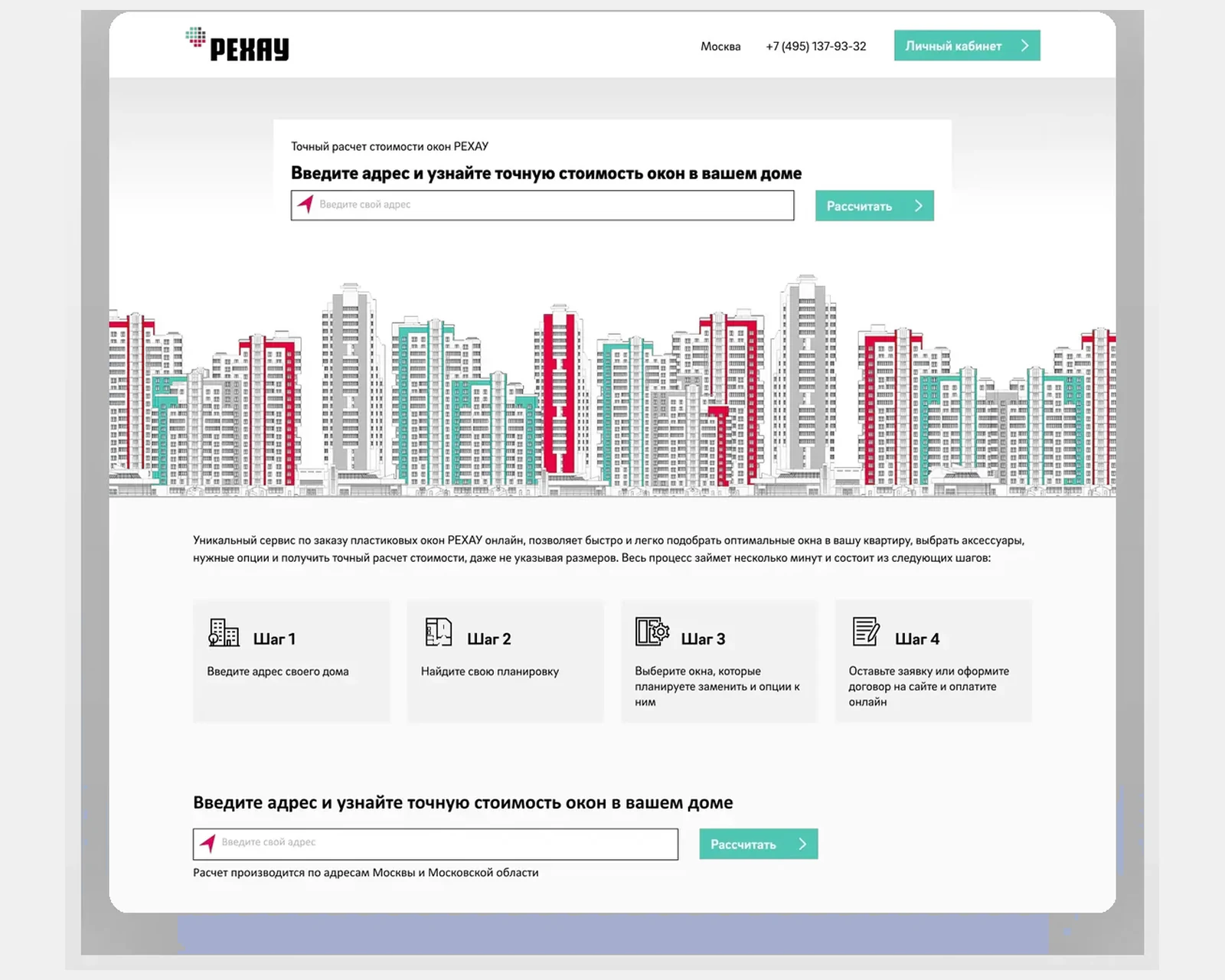
B2B e-commerce and product configurator for a global polymer manufacturer with multi-region pricing, stock and dealer workflows.
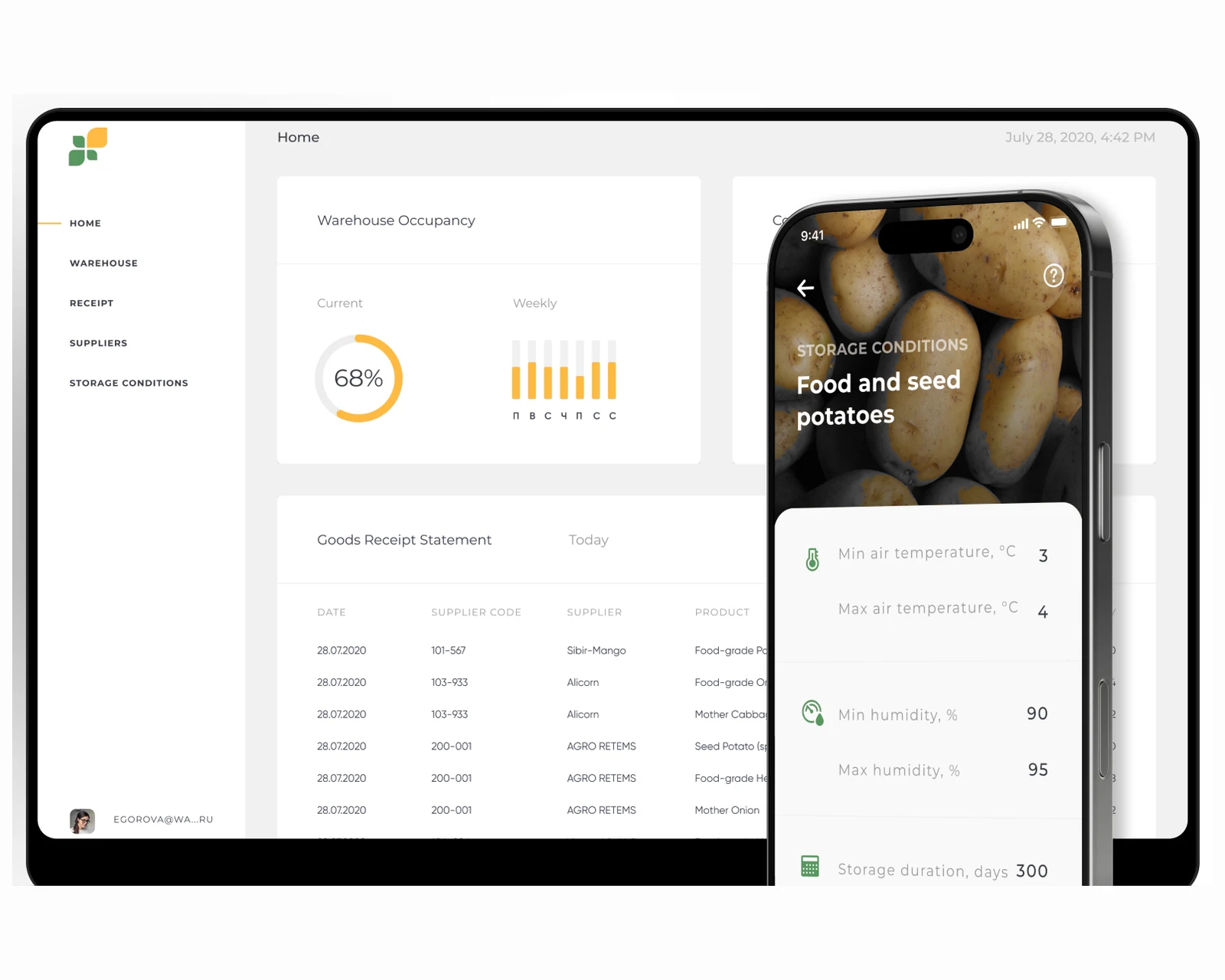
Warehouse management system with web dashboards and mobile scanners — throughput up 2×, errors down 78%, US & EU ready.
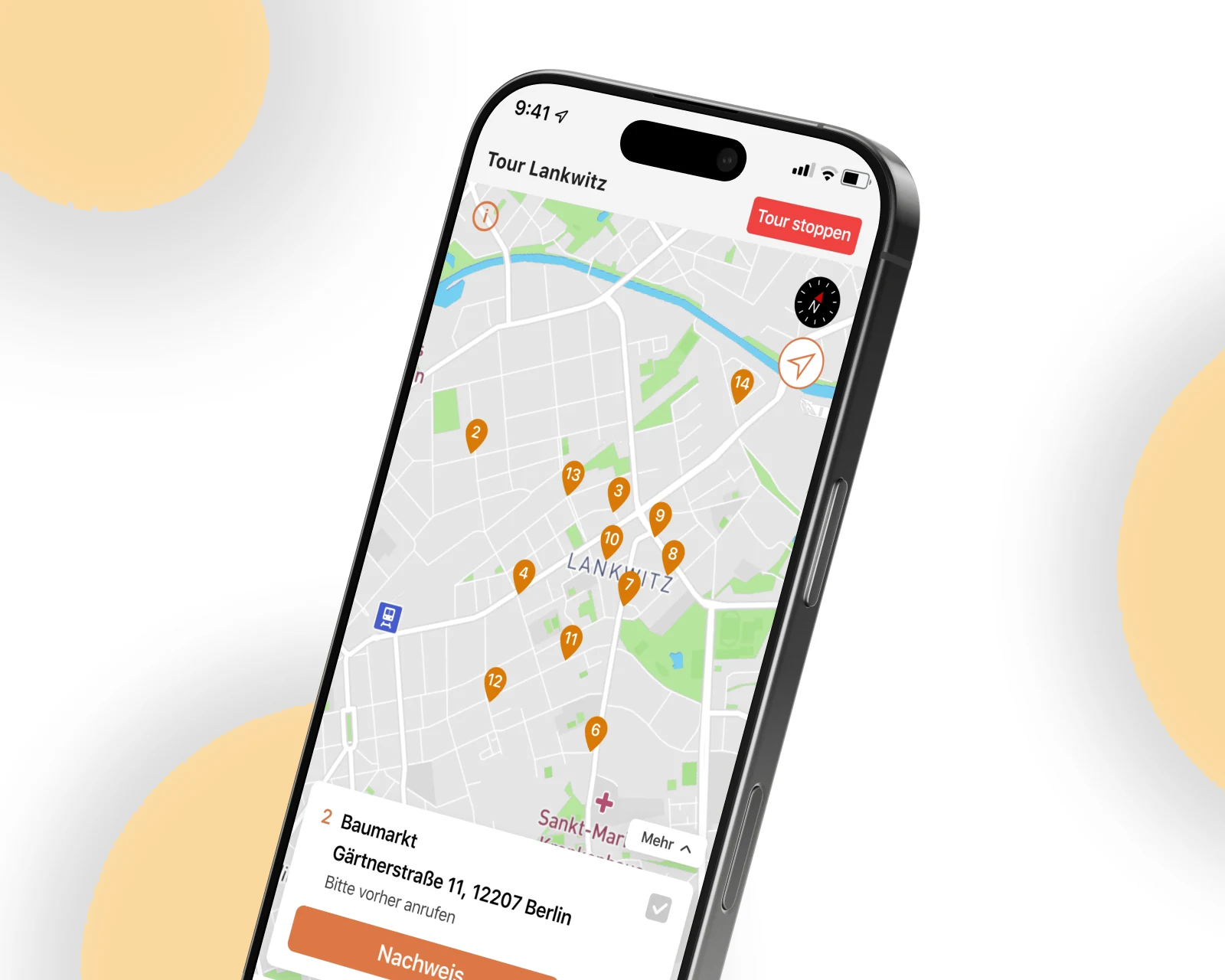
Android + iOS refactor and rebuild for a German last-mile logistics operator — multi-point route planning, real-time driver tracking and in-app invoicing live in the EU.
Reliability, cost and data residency mean different things in each sector. We pair platform engineering with industry-specific compliance across US & EU markets.
Financial platforms demand PCI DSS-compliant landing zones, network segmentation between cardholder and non-cardholder environments, and immutable release evidence that your QSA can audit.
We build tokenisation pipelines, key management hierarchies and WAF-plus-DDoS layers that satisfy acquirers, card scheme security programmes, and EU PSD2 SCA requirements without adding latency to payment flows.
Patient and clinical data carry the highest residency and access-control obligations in cloud. We set up HIPAA-capable environments with BAAs, EU-only data stores for GDPR Article 9 special-category data, and audit trails that satisfy both OCR and supervisory authorities.
Typical work includes HL7 FHIR API backends, de-identification pipelines, role-based PHI access with break-glass logging, and DR strategies tested to RPO/RTO thresholds your compliance team can sign off on.
Retail cloud lives and dies by two numbers: cost per order in steady state and page load time during peak. We architect autoscaling groups that absorb Black Friday spikes, multi-region CDN strategies for sub-100 ms asset delivery, and FinOps guardrails that surface unit cost regressions before they compound.
Beyond peak readiness, we handle PIM/OMS/ERP integration patterns, PCI DSS SAQ-D scoping for checkout flows, and zero-downtime deployment pipelines that let merchandising teams ship daily without a maintenance window.
Dispatch, routing and tracking systems are event-driven by nature: a missed Kafka message or a cold-start Lambda translates directly into a delayed delivery or a driver left without assignment. We build low-latency, high-throughput event pipelines on managed streaming services and back them with SRE practices that treat P99 latency as a first-class SLO.
Geographic coverage requirements push us toward multi-region active-active architectures. We size, place and connect regions using consistent-hashing and leader-election patterns that keep routing hot even when a cloud AZ goes dark.
Multi-tenant SaaS has a unique cloud problem: a noisy neighbour in shared infrastructure can breach SLA for every other tenant. We design tenant isolation at the compute, storage and networking layers — silo, pool and bridge models — calibrated to your pricing tier structure and your compliance posture with enterprise buyers.
As the platform scales, the cost per tenant becomes the metric that determines whether the business model works. Our FinOps practice tracks cost at the tenant level, models savings-plan allocations across account families, and flags anomalies before they hit the invoice.
Video streaming, live classrooms and large-file asset delivery share a common requirement: high-throughput egress at low cost. We architect media pipelines using managed transcoding, adaptive-bitrate delivery and regional CDN routing that keeps buffering ratios under 0.5 percent even during synchronous peak loads like live lectures or product launches.
COPPA and FERPA constraints on learner data require tenant-level isolation and consent-aware data flows distinct from general consumer GDPR patterns. We configure data residency, retention schedules and consent propagation as infrastructure controls rather than application-layer afterthoughts.
GDPR-aligned · ISO 27001 ready · SOC 2 Type II in progress · HIPAA-capable · CCPA-acknowledged
SREs on a CET workday with East-Coast US overlap (9 AM–1 PM ET), on your incident bridge, with shared Slack and shared on-call schedules.
Every cloud lead has run platforms in production. We do not pilot Kubernetes for the first time on your cluster.
EU regions / EU keys / EU support for EU clients; US regions / US-only KMS keys / US support for US clients on request. ISO 27001 controls baked in, SOC 2 Type II in progress, PCI DSS scoping for fintech estates, HIPAA-capable for health workloads.
For payment platforms we operate inside PCI DSS scope, work with your QSA on segmentation, key management and logging, and document evidence as part of every release.
Aggregating live prices across multiple exchanges while keeping latency under 500 ms is genuinely hard engineering. YuSMP built the multi-exchange feed, real-time token charts, and listing workflow into a coherent platform. We have not had an outage since launch.
Process control in a reactor environment cannot afford connectivity gaps. YuSMP delivered an offline-first MES that captures every step reliably and syncs to the central server without data loss. Audit readiness that once took days now takes minutes.
Every regulated cloud deployment starts with the right landing zone and ends with documented evidence. Here is how we approach the four frameworks our clients encounter most.
We deploy EU workloads inside EU regions only (AWS eu-central-1/eu-west-1, Azure West/North Europe, GCP europe-west) with customer-managed KMS keys that never leave the EU key-store. Sub-processor agreements are pre-signed with AWS, Azure and GCP under GDPR Article 28. Standard Contractual Clauses and a Data Processing Agreement are included in our master services agreement at no extra cost.
For cross-Atlantic data flows — analytics warehouses, support tools — we apply EU-US Data Privacy Framework compliance and data-minimisation patterns, and we document every controller-to-processor transfer in a data-flow register your DPO can use at audit time.
HIPAA does not certify clouds; it certifies controls. We scope every health-data workload through a Business Associate Agreement with the cloud provider, configure PHI encryption at rest (AES-256) and in transit (TLS 1.2+), enable CloudTrail/Azure Monitor/Cloud Audit Logs for access logging, and apply least-privilege IAM across all services that touch protected data.
BAAs with YuSMP are available for healthcare clients. Our standard health environment includes de-identification pipelines compliant with Safe Harbor (45 CFR §164.514(b)) and Expert Determination methods, VPC isolation for PHI stores, and break-glass procedures with mandatory incident reporting timelines mapped to the Breach Notification Rule.
We scope cloud environments to the minimum PCI DSS surface using network segmentation between cardholder data environment (CDE) and out-of-scope zones. The CDE runs in dedicated subnets with WAF, IDS/IPS, restrictive security groups and encrypted transit — generating the log evidence your QSA needs for Requirements 10 and 11.
We work with SAQ-A, SAQ-A-EP and SAQ-D scoping depending on how much card data your platform handles. For full merchants we assist with penetration test preparation, automated vulnerability scans and remediation tracking in the cadence your annual assessment requires.
SOC 2 Type II audits evaluate controls over a 6-to-12-month observation window. We help SaaS companies instrument those controls from day one: access management (CC6), change management (CC8), availability (A1) and confidentiality (C1) controls mapped to your specific trust service criteria and evidenced through automated policy-as-code rather than manual screenshots.
ISO 27001 work covers Annex A control implementation, Statement of Applicability drafting, ISMS documentation and internal audit support. Our ISO 27001-aligned baseline is applied to every client cloud environment as a default, which means companies pursuing certification start from a much higher baseline than greenfield implementations.
Pricing is fixed-scope and all-in, quoted in USD. An infrastructure audit runs from $700; a turnkey CI/CD and cloud implementation from $1,800; managed DevOps from $1,100 per month; and a dedicated DevOps engineer via staff augmentation from $100 per hour. The exact number depends on estate size, the migration and refactor mix, compliance scope and how long you keep the managed retainer. You see the line-item budget at the end of discovery and sign off before any work starts. There is no recruitment markup, no tool surcharges, and cloud fees run on your own accounts so you keep the cost lever.
We pick by workload, region availability (EU and US), existing skills and total cost of ownership over three years. EU SaaS typically land on AWS Frankfurt or Azure West Europe; US workloads land on AWS us-east-1/us-west-2 or Azure East US; data-heavy ML often goes GCP. We will not push a preferred logo.
A lift-and-shift of a mid-size SaaS lands in three to four months. A re-platform onto Kubernetes with rebuilt CI/CD, observability and IaC usually takes six to nine months including a parallel-run period.
Yes. A FinOps audit takes two to three weeks and typically uncovers 20 to 40 percent of waste through right-sizing, savings plans, storage tiering and idle workload retirement. We share the playbook so savings stick.
No. Kubernetes is great when you need multi-team isolation, complex networking or polyglot workloads. For smaller estates, ECS, App Service, Cloud Run or even managed PaaS stay cheaper and simpler. We recommend the smallest tool that fits.
We default to EU regions for EU clients (GDPR + data residency, EU-only KMS keys, EU support contracts, EU CDN edges); we deploy to US regions with US-only KMS keys for US clients (SOC 2 + CCPA + HIPAA where required), with US-resident support and US CDN edges. Where cross-Atlantic services are unavoidable, we apply DPF, SCCs and data-minimization patterns and document the decision. For a full vetting checklist and EU rate ranges, see our guide to choosing European DevOps consultants.
GitOps treats your Git repository as the single source of truth for infrastructure and application state: a push to main triggers a reconciliation loop (Argo CD or Flux) that brings the cluster in line with the declared state in the repo. The benefits are full auditability of every change, instant rollback via a git revert, and drift detection that alerts when someone applies a manual kubectl patch. We recommend GitOps for teams running Kubernetes who want strong change governance without a heavyweight ITSM process. For smaller estates on ECS or App Service, a conventional CI/CD push model is usually simpler and sufficient.
The technique depends on the architecture. For stateless services we use rolling updates with a configurable surge and max-unavailable, or blue-green deployments where the load balancer swaps targets after a smoke-test gate. Canary releases, managed by Argo Rollouts or a feature-flag layer, direct a small percentage of traffic to the new version and auto-rollback on error-rate breach. Database schema changes are the hardest part: we apply expand-contract migration patterns so old and new code both work against the schema during the transition window, removing the need for a maintenance page.
Our managed retainer includes a 99.9 percent platform uptime SLO (measured at the load-balancer health check, not the cloud provider's status page), a 15-minute SLA for P1 incident acknowledgement, and a four-hour SLA for P1 resolution. P2 incidents (service degraded, not down) are acknowledged within one hour and resolved within 24 hours. SLOs are reviewed quarterly and adjusted to match your product's actual reliability needs; we do not sell a blanket "five nines" figure without first understanding your traffic and failure modes.
Yes, and this is one of the most common engagement shapes. We typically augment an internal team in one of three ways: platform build (we design and implement the platform layer while your team owns application pipelines), specialist capability (we bring Kubernetes, FinOps or security depth that your team does not have in-house), or capacity extension (we carry on-call rotation to extend coverage to 24/7 without burning your engineers). In all cases we work in your Jira, your Slack and your runbooks, and we document everything so knowledge stays with your team.
We start with a business impact analysis: what does one hour of downtime cost versus what does it cost to achieve one-hour RTO? That calculation usually reveals that most small SaaS products need a warm-standby strategy (RTO 30–60 min, RPO 5–15 min) rather than an active-active multi-region setup, which costs three to five times more to run. We document recovery procedures, test them quarterly with game-day exercises, and measure actual RTO against target rather than assuming the runbook works. For regulated workloads (financial, health) we align DR test cadence and evidence to the framework requirement — SOC 2 A1.3, HIPAA contingency plan — so tests double as audit evidence.
Practical guides on cloud infrastructure, DevOps practices, and system architecture.



Share a few details and a senior consultant will reply within one business day.