Discovery & intake mapping
Operator workshop — every existing channel (phone, email, chat, showroom) mapped to a target intake form. Role taxonomy borrowed from Bitrix24. Data-handling scope sized against GDPR + CCPA-class obligations.

Case study · FinTech · Auto
A reference build for dealer-finance operators: a single-channel web platform that funnels every car-financing enquiry into one tracked queue, pre-fills credit applications from a national registry, and pushes signed deals straight into the CRM with idempotent retries and real-time voice alerts on the manager's phone. We build complex CRM-integrated web platforms for US and EU FinTech and dealer-finance operators; the AutoFinance build is one example.
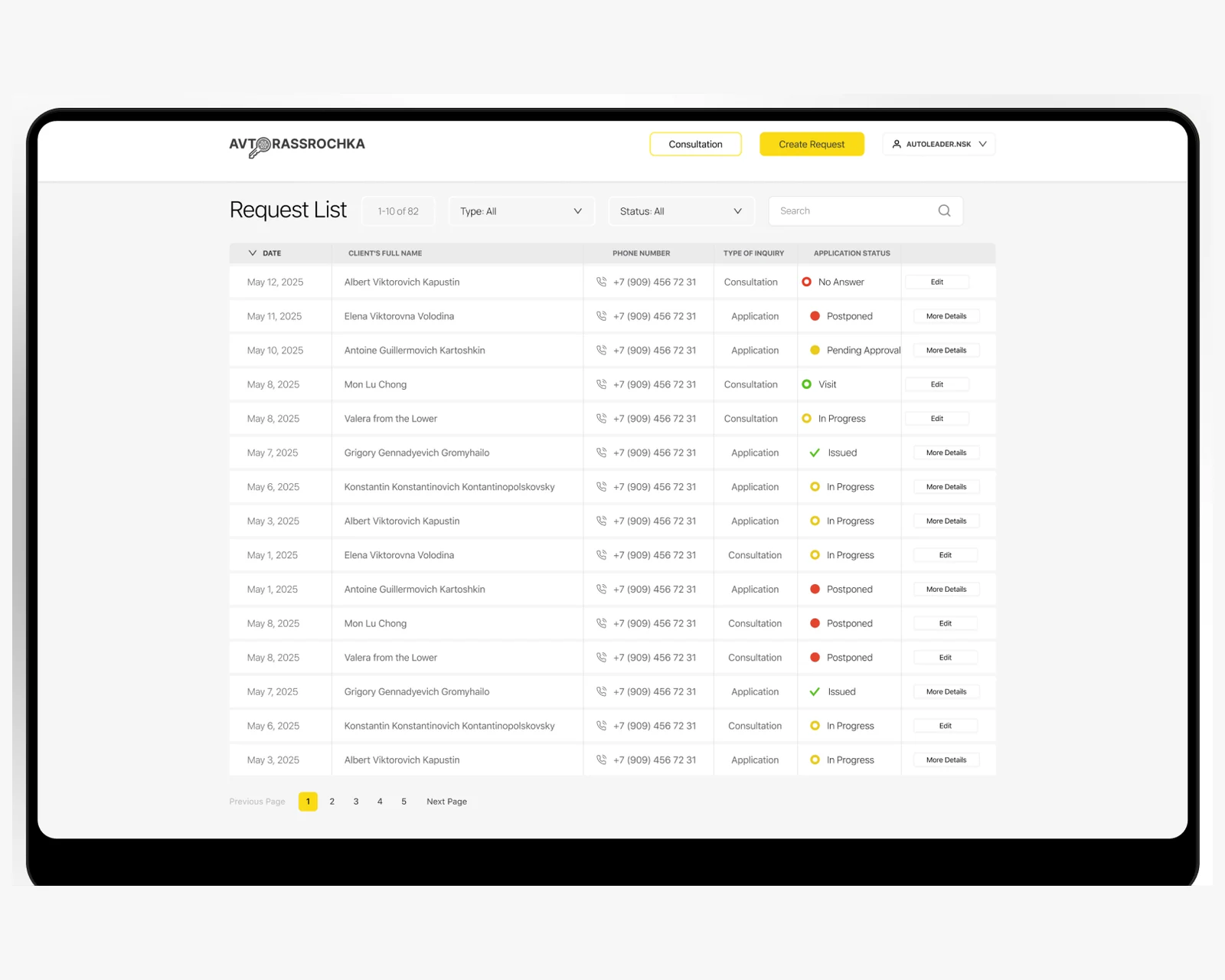
A regional auto-financing operator was losing deals because enquiries arrived through phone, email, and chat with no single owner. Sales staff re-typed the same buyer data into Bitrix24 manually, scoring took hours longer than necessary, and managers had no visibility into the queue. The same operational pain shows up at dealer-finance operators across the United States and the European Union — fragmented intake, dirty CRM data, no SLA visibility, and a buyer who has already gone elsewhere by the time the call-back happens. The client needed a web application that would serve as the exclusive intake channel for every dealership application, auto-populate form fields from external data sources, and push completed records to their CRM without a single keystroke of copy-paste. The platform also had to support short-form preliminary consultations — warm leads — and alert the responsible manager the moment a new record arrived, whether by chat or voice call. We approached it as a custom software development engagement: build the intake platform from first principles, integrate with the operator's existing CRM rather than replacing it, and design the architecture so the same pattern could be re-targeted for US and EU dealer-finance operators with adapter swaps rather than a rewrite.
What the AutoFinance build delivered as a production dealer-finance intake platform.
For a dealer-finance operator, the CRM is rarely the actual differentiator — the intake quality and the speed-to-call window are. The instinct to build a custom CRM from scratch is almost always a budget trap: pipeline stages, role permissions, reporting, mobile clients, calendar sync, and a hundred small workflow primitives that are table stakes in Bitrix24 or Salesforce represent a year of engineering on their own. We chose to treat the CRM as a vendor decision and the intake platform as the actual product. Bitrix24's REST API exposes deal creation, custom fields, role assignment, and pipeline transitions; Dadata's data-enrichment API standardizes addresses and employer records that would otherwise arrive as freeform garbage; Plusofon handles the voice-call fanout that turns a new lead into a ringing phone in under five seconds.
The same integration pattern ports directly to US and EU dealer-finance operators. Bitrix24 swaps for HubSpot or Salesforce; Dadata swaps for Smarty, Loqate, the USPS Address API, or Experian for employer enrichment; Plusofon swaps for Twilio Voice or Vonage. None of those swaps requires a platform rewrite — only an adapter change behind a single integration boundary. The comparison table below explains why an integrated SaaS stack wins decisively over a custom-built CRM for almost every dealer-finance operator we have advised, both in the US and EU.
| Dimension | Integrated SaaS stack (Bitrix24 + Dadata + Plusofon) | Custom-built CRM | HubSpot + Salesforce composite |
|---|---|---|---|
| Time to first production deal | 12–18 weeks — adapter layer is the only new code | 12–18 months — re-build commodity workflow primitives | 16–24 weeks — two vendors, two contracts, two object models |
| First-year all-in cost | $180k–$350k engineering + low-mid SaaS seat cost | $600k–$1.2M engineering + ongoing CRM maintenance team | $220k–$400k engineering + high enterprise seat cost |
| Pipeline / role customization | Configured in vendor UI — non-engineering operators can change | Fully custom — engineering ticket for every change | Mostly configured; cross-vendor flows require code |
| Data-enrichment integration | Direct Dadata / Smarty / Experian adapter — single boundary | Build address normalization + employer lookup from scratch | Both vendors have separate enrichment marketplaces |
| Telephony fanout (lead → ring) | Plusofon / Twilio Voice webhook — sub-5-second ring | Build a telephony bridge service + carrier contract | Salesforce Service Cloud Voice add-on; HubSpot via partner |
| Compliance posture (GDPR / CCPA) | Vendor handles bulk of DPA + sub-processor list | Operator inherits 100% of GDPR / CCPA scope | Both vendors enterprise-grade; cross-vendor data flow needs DPIA |
| Re-targeting to US / EU market | Adapter swap (Bitrix24→HubSpot, Dadata→Smarty) — no rewrite | Full localization of the proprietary CRM data model | Already US/EU native; vendor lock-in still applies |
Platform references: Bitrix24 REST API docs, Dadata API docs, Laravel framework docs.
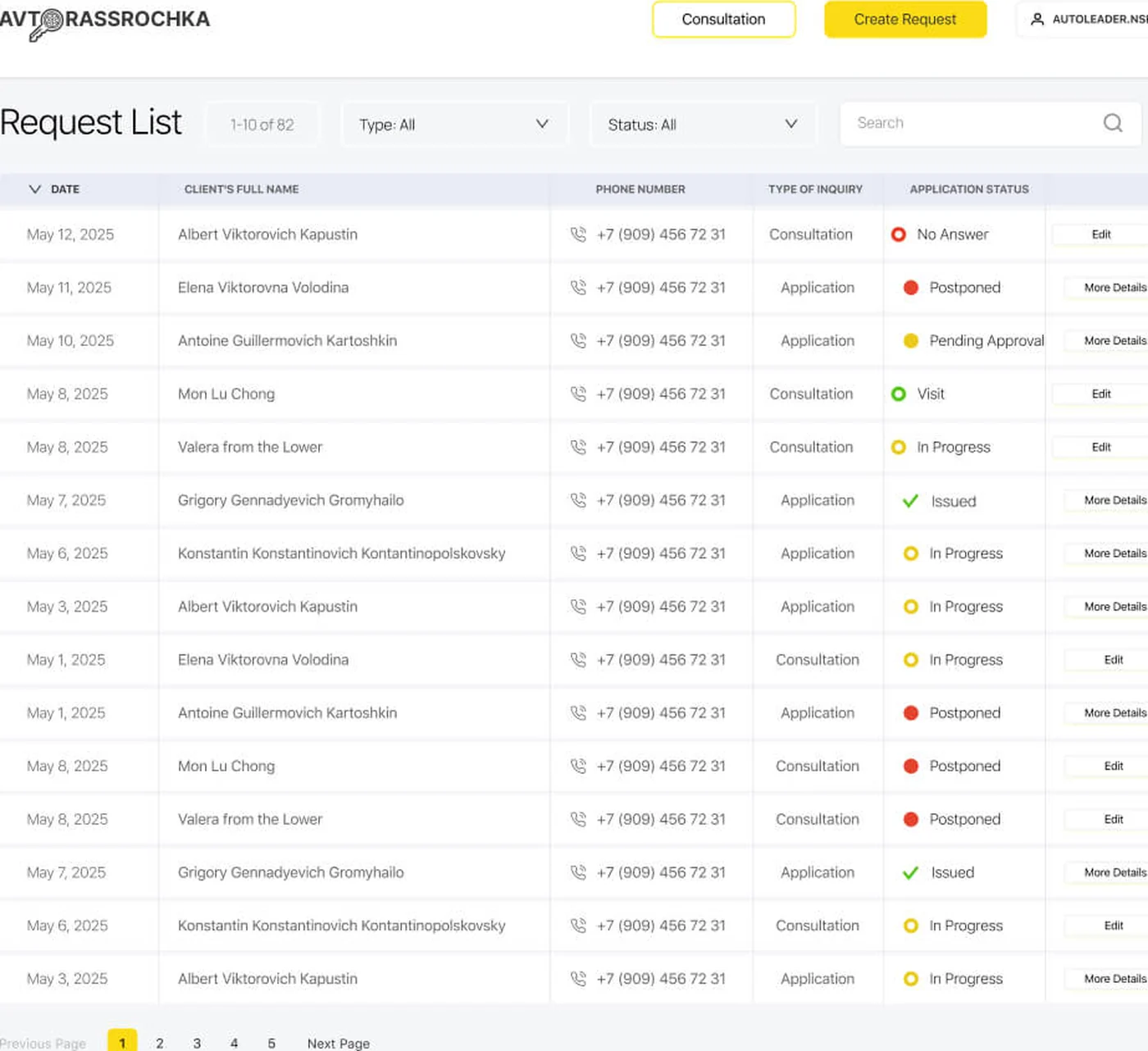
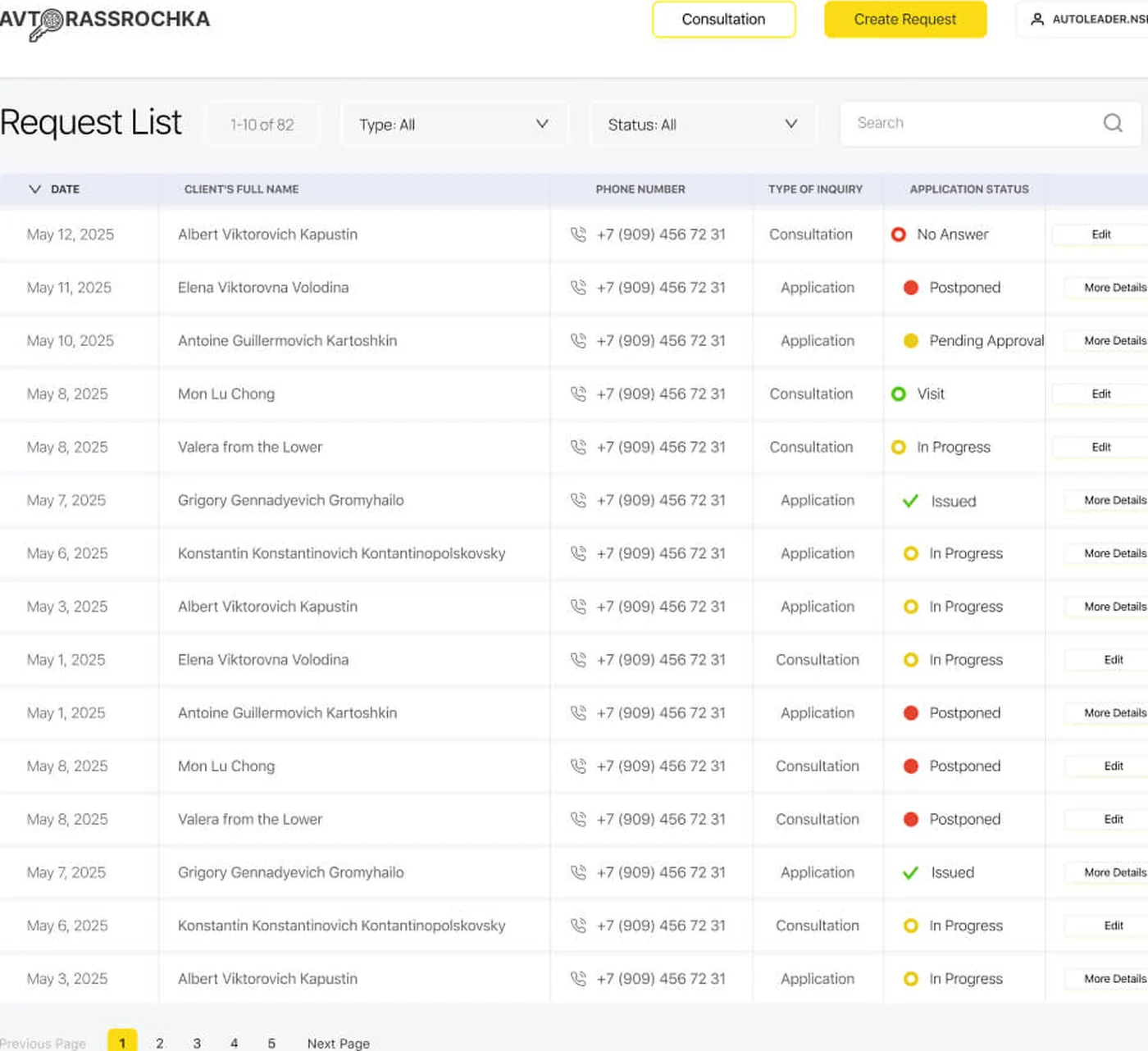
The dashboard is a React / TypeScript single-page application that lists every active record with status, assignee, vehicle, and timestamp. Inline search and multi-field filters resolve any record in seconds without leaving the screen. The underlying API is a Laravel backend exposing a REST surface with JWT-signed session tokens and PostgreSQL as the durable store; Redis holds the hot per-user notification queue and the SLA timer state so a manager refreshing the page sees the correct countdown without re-computing it. The same dashboard pattern is what we deliver across web application development engagements for FinTech operators in the US and EU.
Status transitions — new, in review, approved, declined — propagate in real time across every connected dashboard via server-sent events, so two staff members never work the same case simultaneously. A colour-coded SLA indicator flags applications that are at risk of ageing out, with the timer reset to a per-pipeline-stage SLA budget; the operator configures those budgets in Bitrix24 and the platform reads them through the REST API at session start. The role model is borrowed wholesale from Bitrix24 — admin, manager, agent, observer — so the platform inherits the operator's existing org chart instead of forking it.
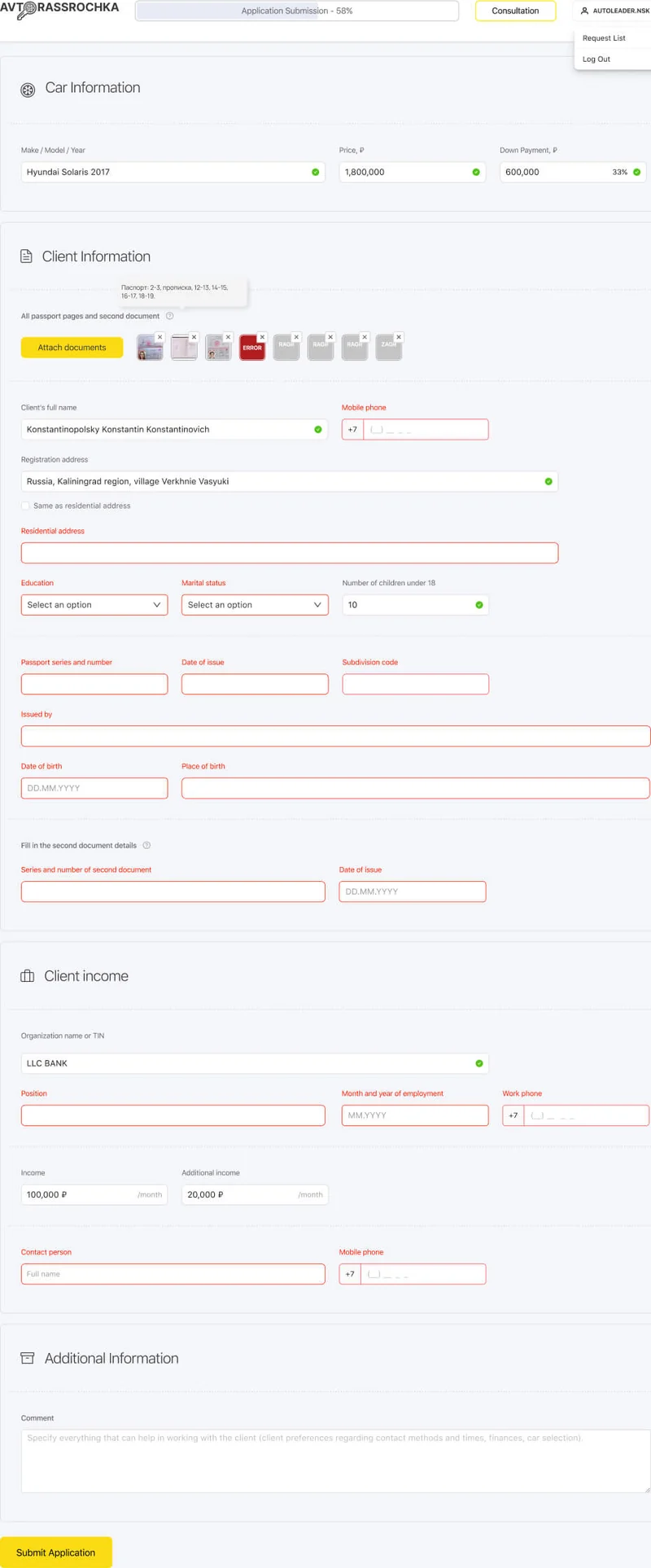
The credit application is a multi-step wizard that breaks a full underwriting submission into logical stages: identity, address, employer, vehicle, and the consent / disclosure step. Address and employer fields auto-complete through Dadata — buyers confirm with two keystrokes instead of typing seven fields by hand, cutting form time by roughly half on the production deployment. The same architectural slot accepts a US data-enrichment provider (Smarty for postal addresses, Experian or Equifax for employer / income enrichment) or an EU provider (Loqate, plus jurisdiction-specific employer registries) without changing the wizard code: the data-enrichment adapter is a single Laravel service class behind an interface.
Validation runs per step so errors surface before the final submit instead of after the buyer has spent fifteen minutes typing. Partially completed applications save automatically and reopen exactly where the customer left off, from any device — a session token plus a server-side draft record means a buyer who switches from showroom desktop to phone resumes mid-flow with no state loss. The wizard is the canonical pattern we reuse for any FinTech intake build, including consumer-credit, auto-lending, and SaaS subscription onboarding flows across US and EU clients.
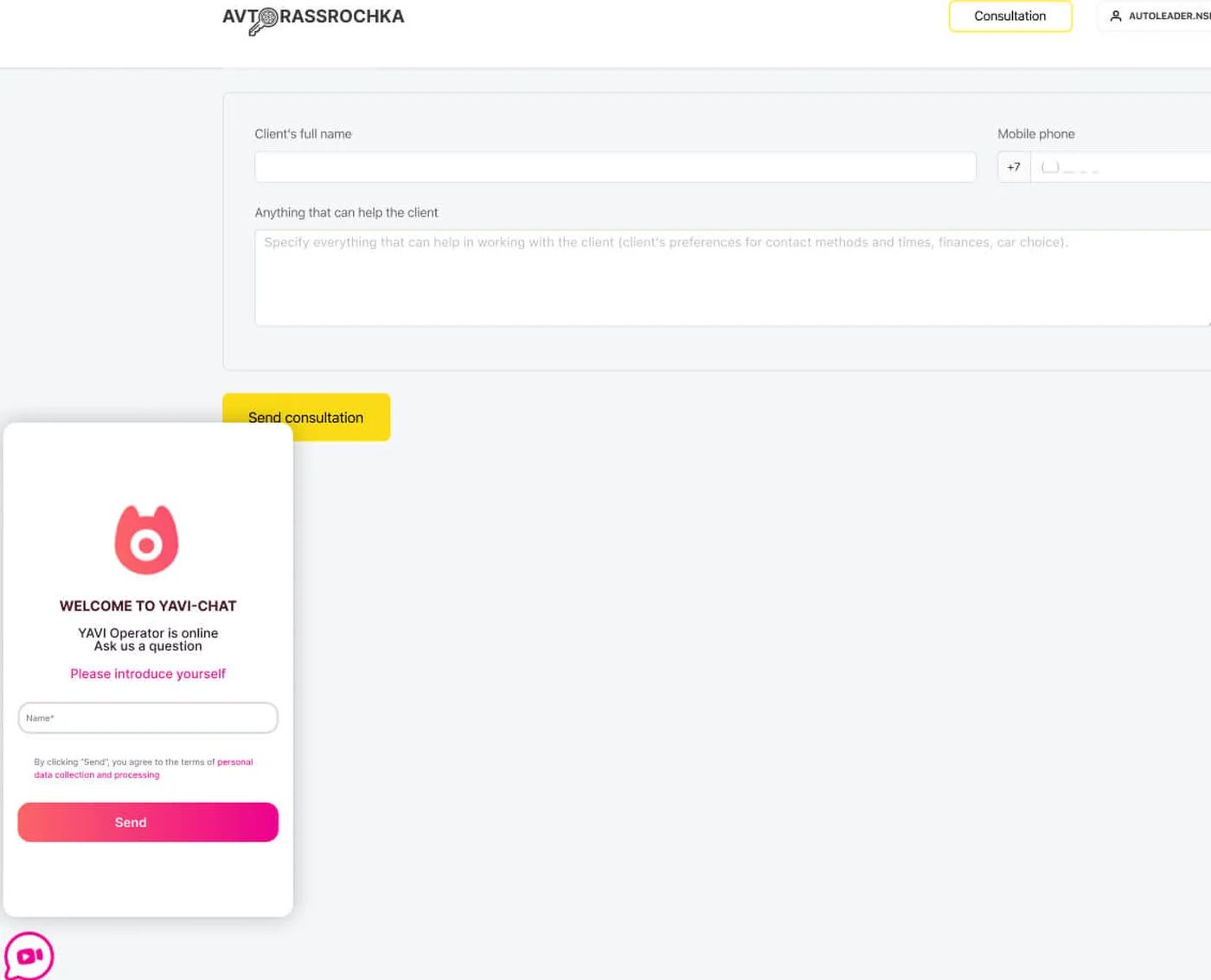
The platform's quick-consultation flow is a deliberately stripped-down sibling of the full credit application: name, phone, vehicle interest, and a free-text comment captured in under two minutes. It feeds the same Postgres queue as full applications, tagged as a warm lead so the assigned manager knows to call rather than wait for a full submission. Data handling for the consultation flow is identical to the full application: the record is created in Postgres, the assignee is computed via the role-routing service, a Bitrix24 deal is created over the REST API with an external_id token, and a Plusofon webhook fires a ringing voice call to the manager's handset within seconds. Managers promote a consultation to a full credit application with one click, pre-populating everything the buyer already entered — no data is re-typed, and the Bitrix24 deal record is updated rather than re-created so the original lead source is preserved.
The CRM sync is idempotent by design. Every outbound call is wrapped in a Laravel queued job carrying an external_id token; Bitrix24 rejects duplicate tokens at deal creation, so re-tries after network failure cannot create a second deal. Failed calls are re-enqueued with exponential backoff and surfaced in an admin sync log so operators can audit every outbound attempt — this is the closest the platform comes to exactly-once delivery semantics. Personal data (name, phone, address, employer) is encrypted at rest in PostgreSQL with column-level keys held in a separate KMS, retention is bounded by the operator's documented data-processing policy, and access to the admin sync log is role-gated through the same Bitrix24-mirrored role model. For a US or EU deployment, the consultation flow's consent screen is the natural place to attach a region-aware notice — a GDPR granular-consent toggle for users in the European Union, a CCPA / CPRA "Do Not Sell or Share My Personal Information" disclosure for users in California and the other US state-law jurisdictions.
Compliance posture: GDPR-aligned · ISO 27001 ready · SOC 2 Type II in progress · HIPAA-capable · CCPA-acknowledged.
A five-phase build that took AutoFinance from operator workshop to a production dealer-finance intake platform.
Operator workshop — every existing channel (phone, email, chat, showroom) mapped to a target intake form. Role taxonomy borrowed from Bitrix24. Data-handling scope sized against GDPR + CCPA-class obligations.
Laravel backend + React/TypeScript frontend baseline. Integration adapters scoped behind interfaces — Bitrix24 REST, Dadata enrichment, Plusofon telephony, YaviChat push — so each vendor is swappable.
Multi-step credit application wizard, quick-consultation flow, role-based dashboard, SLA timers via Redis, idempotent Bitrix24 deal push with external_id de-duplication and a queued retry log.
Column-level encryption of PII in PostgreSQL, JWT session rotation, role-gated admin sync log, telephony webhook signature verification, GDPR-aligned data-flow documentation for the operator's DPA template.
Dealership rollout, operator training, on-call rotation for the integration boundary, sync-log monitoring, and a documented adapter-swap playbook for re-targeting the platform at US and EU dealer-finance operators.
The platform was designed from day one to scale beyond a single regional operator. Every external dependency lives behind an interface — Crm, Enrichment, Telephony, Push — and a concrete adapter class. The Bitrix24 implementation is one Crm adapter; a HubSpot adapter and a Salesforce adapter share the same interface and require only a translation layer between the platform's canonical Deal object and the vendor's REST model. The Dadata Enrichment adapter is paired with a Smarty adapter (US postal addresses, planned), a Loqate adapter (EU postal addresses, planned), and an Experian / Equifax adapter slot for employer and income enrichment. The Plusofon Telephony adapter has a Twilio Voice sibling and a Vonage sibling drafted at the interface level. The forward-looking work — automated pre-scoring via a credit bureau API, a mobile-first buyer-facing form for showroom walk-ins, and a reporting module surfacing conversion by source and vehicle category — slots in behind the same adapter pattern. The end result is a custom software development asset that captures the dealer-finance intake workflow as code, with vendor identity treated as a configuration concern.
The live deployment of AutoFinance serves dealerships in the Yaroslavl region of Russia, where it is the exclusive intake channel for every car-financing enquiry those dealerships receive. The architecture is jurisdiction-honest about that footprint; the build is, however, fully replicable for dealer-finance operators in the United States and the European Union. For a US deployment, the platform's data-handling surface is aligned with the state-law patchwork: CCPA / CPRA (California), VCDPA (Virginia), CPA (Colorado), CTDPA (Connecticut), UCPA (Utah), TDPSA (Texas), and Oregon CPA — with auto-lending specific overlays from the Equal Credit Opportunity Act (ECOA) and Regulation B at the federal level. For an EU deployment, the platform aligns with GDPR for buyer personal data, plus jurisdiction-specific consumer-credit overlays in Germany, France, the Netherlands, Ireland, and Sweden. The consent screen on both the consultation and full-application flows is region-aware: an EU buyer sees a granular GDPR consent panel; a California buyer sees a CCPA "Do Not Sell or Share My Personal Information" disclosure with the linked privacy policy.
Engineering operations are time-zone-aligned for US and EU procurement: a CET workday with East-Coast US overlap (9 AM–1 PM ET) for stand-ups, demos, and incident response. The integration boundary — where Bitrix24, Dadata, and Plusofon currently sit — is the natural seam for a US adapter swap (HubSpot or Salesforce for CRM, Smarty / Loqate / USPS for postal, Experian or Equifax for employer enrichment, Twilio Voice or Vonage for telephony) or an EU adapter swap, with no change to the core platform code. The same approach extends to cloud & DevOps posture: the platform is containerized for either AWS or a managed European-Union region with data residency commitments documented in the operator's DPA. US and EU dealer-finance operators looking at this pattern get a build that is honest about its Russian production footprint and rigorous about its re-targeting story.
The active roadmap focuses on three streams. First, a mobile-first buyer-facing form for showroom walk-ins, designed to be opened from a QR code on a dealership floor card without an app install. Second, automated pre-scoring via a credit-bureau API so managers see a likely approval band before the call-back — Experian and Equifax adapters for US deployments, NBKI-class providers for the current Russian deployment, and an EU equivalent slot for German Schufa-class providers. Third, a reporting module that surfaces conversion rate by source, vehicle category, and dealership for monthly business reviews, paired with a webhook surface so the operator can stream events into a downstream data warehouse for cohort analysis.
If you are planning a dealer-finance intake platform, a custom CRM-integrated FinTech web build, or a SaaS surface that needs to push deals into HubSpot, Salesforce, Bitrix24, or Pipedrive without dropping data, we have shipped this stack end-to-end and can compress the build timeline meaningfully for operators in the US and EU. The engineering team behind AutoFinance sits inside YuSMP Group. We work fixed-price for well-scoped MVPs and on dedicated development teams for ongoing delivery, with a CET workday and a guaranteed East-Coast US overlap (9 AM–1 PM ET) window for stand-ups, demos, and incident response.
A focused MVP — single-channel intake queue, multi-step credit application wizard, Bitrix24 REST deal push, and one external data-enrichment integration (Dadata or a US equivalent like Experian / Plaid) — typically runs $80k–$180k. A full build adding role-based dashboards, SLA timers, voice-alert telephony (Plusofon-class), idempotent retry logic, and admin sync log generally lands at $180k–$350k. The dominant cost drivers are the CRM integration surface, the data-enrichment edge cases (foreign addresses, missing employer records), and the compliance posture required for US and EU auto-lending.
For a dealer-finance operator, the CRM is rarely the differentiator — the intake quality and the speed-to-call window are. Building on top of Bitrix24 lets a team ship a production deal-tracking surface in days instead of months, with role permissions, pipeline stages, and reporting already battle-tested across hundreds of thousands of accounts. The cost trade-off versus a custom CRM is sharp: Bitrix24 plus a thin integration layer typically saves 6–9 months of build time and 60–80% of the engineering budget over the first three years, with no loss of pipeline customization.
Every outbound call is wrapped in a Laravel queued job with an external_id token attached to the source application. The Bitrix24 REST endpoint is called with that token; on the CRM side, a duplicate-token check at deal creation rejects re-tries instead of creating a second deal. Failed calls are re-enqueued with exponential backoff and surfaced in an admin sync log so operators can audit every outbound attempt. The result is exactly-once delivery semantics from the platform's point of view, even across days-long outages or maintenance windows.
Dadata (and its US equivalents — Smarty, Loqate, the USPS API for address validation, plus Experian or Equifax for employer / income enrichment) collapses a 40-field credit form into a few keystrokes. The platform pre-fills postal address, employer identification, and standardized vehicle records from a single name or tax-ID lookup. That cuts buyer abandonment in half, eliminates the most common source of dirty CRM data, and gives the underwriting team a clean dataset to score against. The same architecture pattern ports directly to any North American or European data-enrichment vendor.
The platform is live at dealerships in the Yaroslavl region of Russia and is used as the exclusive intake channel for every car-financing enquiry those dealerships receive. The architecture — Laravel + React, role-based queue, idempotent CRM push, telephony-fanout alerts — is fully replicable for US and EU dealer-finance operators by swapping the integration adapters: Bitrix24 for HubSpot, Salesforce, or Pipedrive; Dadata for Smarty / Loqate / Experian; Plusofon for Twilio Voice or Vonage. The platform pattern, not the regional vendor list, is the reusable asset.
Related cases
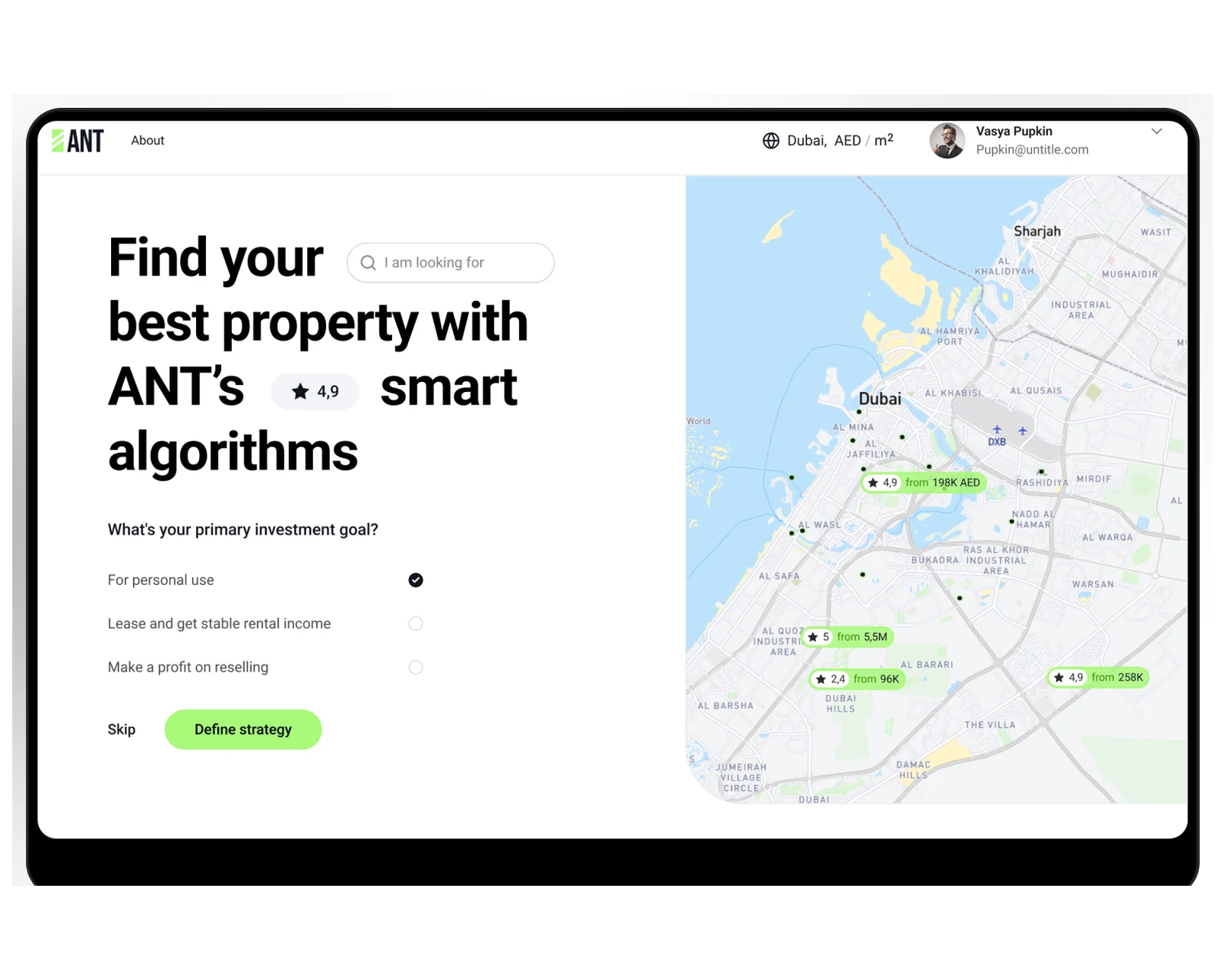
PropTech marketplace + admin for residential developers — apartment-level inventory grids, multi-role workflows, US + EU data residency.
View case →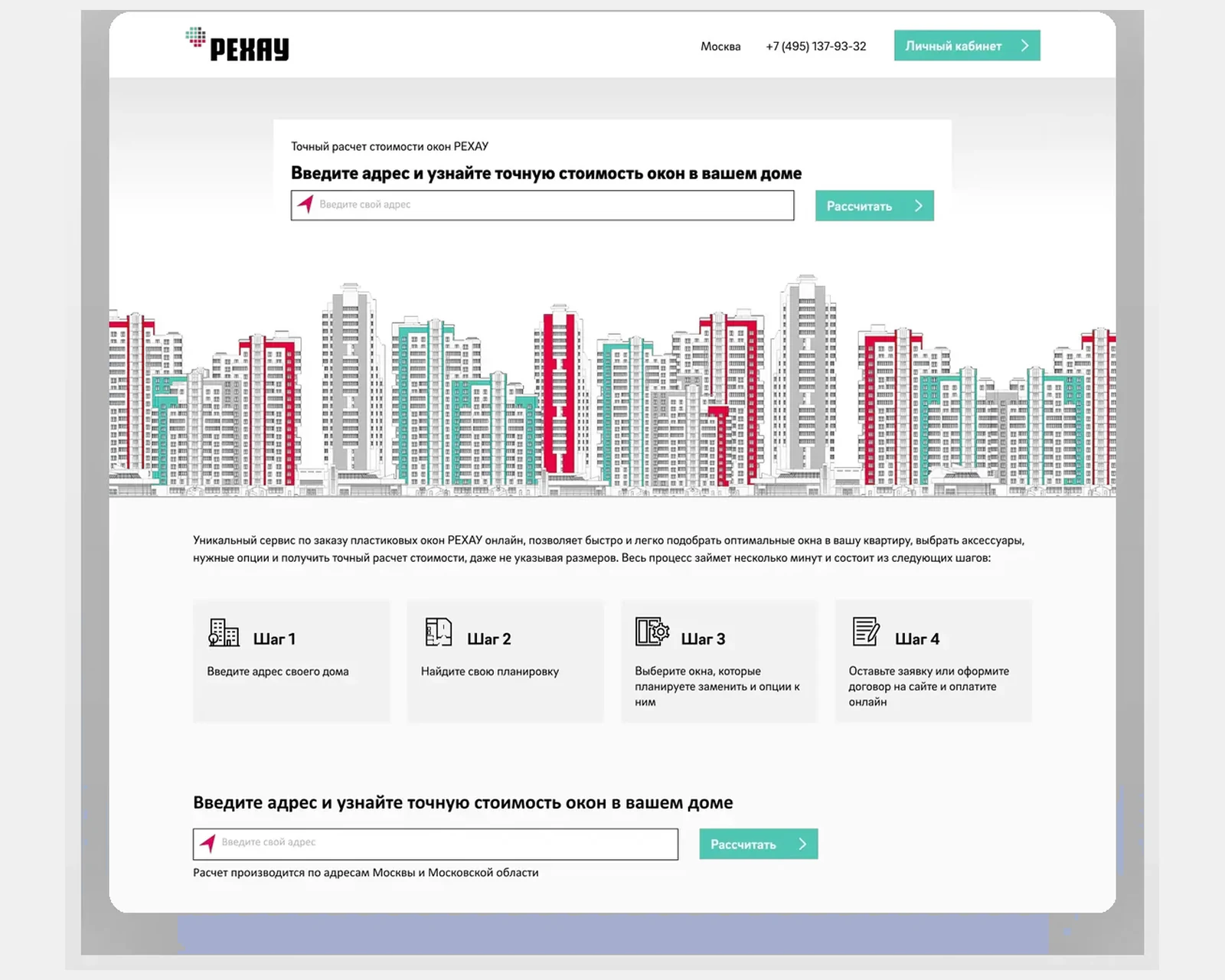
Industrial-grade web platform for a global polymer manufacturer — partner portals, role-based catalogs, and ERP-integrated workflows across the US and EU.
View case →
Native iOS and Android social platform with geo-radar discovery, real-time chat, JJPremium subscription, and a virtual coin economy for US and EU audiences.
View case →
Custom platforms engineered to your business model, scaling cleanly from MVP to millions of users.
Learn more →
Multi-tenant SaaS platforms with SSO, billing, region-pinned residency. SOC 2 in progress.
Learn more →
Senior engineers embedded into your Jira and standups in two weeks. CET workday with US East Coast overlap.
Learn more →Share a few details and a senior consultant will reply within one business day.