Architecture-first delivery
A solution architect joins on day one, owns the C4 model and ADR log, and runs an explicit threat-modelling pass before a line of production code is written. No surprise rewrites in month nine.

Services
YuSMP Group builds custom enterprise platforms for mid-market and Fortune 1000 operators — regulated workloads and multi-system integrations across ERP, CRM, and IDP, on fixed-scope, all-in USD pricing: an integration or enhancement from $9,200, a custom enterprise system from $28,700, an ERP or complex platform from $68,900. GDPR, SOC 2 Type II (in progress), and ISO 27001 controls are nailed down before kickoff, IP transfers to you on day one, and there is no recruitment markup and no tool surcharges. Senior engineers only, Yerevan delivery, CET hours.

GDPR-aligned · ISO 27001 ready · SOC 2 Type II in progress · HIPAA-capable · PCI DSS scope on request · CET workday with 9 AM–1 PM ET overlap
Enterprise-grade software is a different shape of work from a startup MVP. The platforms we build for mid-market and large operators run for three-to-five years and longer, carry regulated data (financial, health, energy, government), and live inside an integration sprawl — ERP, CRM, IDP, data lake, dozens of internal systems — with high SLA and availability targets. We staff senior engineers, a named solution architect, and a dedicated security lead, run inside your governance model rather than around it, and ship to compliance audit standards from day one. GDPR-aligned, ISO 27001 ready, SOC 2 Type II in progress, HIPAA-capable, PCI DSS scope on request. See it in practice in our REHAU case study.
A solution architect joins on day one, owns the C4 model and ADR log, and runs an explicit threat-modelling pass before a line of production code is written. No surprise rewrites in month nine.
SAP S/4HANA, Oracle EBS, Salesforce, Workday, ServiceNow, Okta, Active Directory / Entra ID, MuleSoft, Boomi. We respect freeze windows, your iPaaS standards, and your data contracts.
GDPR-aligned, SOC 2 Type II in progress, HIPAA-capable, PCI DSS scoped on request, ISO 27001 ready. Evidence flows directly into your auditor's workpapers without slowing the release train.
Stated RTO and RPO targets, multi-region active-active or active-passive deployments, tested DR runbooks on a quarterly cadence, 24/7 on-call with documented severities and post-incident reviews.
Formal change management, separation of duties between developers and approvers, signed commits, dual-approval production deploys, and traceable approvals from Jira ticket to artifact hash.
Standard MSA, written SLAs, GDPR DPA, BAA on request, completed CAIQ and SIG Lite, sub-processor register, professional indemnity and cyber insurance — everything your vendor risk team asks for.
"Enterprise software" is a category, not one product. Across mid-market and Fortune 1000 operators we build and re-platform the systems that run the business — each grounded in shipped work, not a brochure.
Bespoke line-of-business platforms that carry regulated data and run for three-to-five years and longer — the core of every engagement, built architecture-first with a named solution architect.
Custom modules, data contracts and event-driven integration around SAP S/4HANA, Oracle EBS and existing ERP estates. See our ERP software development guide and enterprise integration playbook.
Multi-region pricing, stock, configurator and dealer workflows behind B2B storefronts — as built for a global polymer manufacturer in our REHAU programme.
Offline-first operational systems that replace paper and manual control — web, mobile and controller dashboards, as in our CheckList reactor process-control ecosystem.
Data lakes, analytics and AI woven into existing enterprise software rather than bolted on — delivered by our AI, ML & data practice.
Phased re-platforming of ageing systems without a big-bang rewrite — see our software modernisation service and 2026 modernisation guide.
Six-to-eight week architecture pass: C4 model, integration map, threat model, compliance gap analysis against your SOC 2, ISO 27001, HIPAA, or PCI DSS scope, and a written delivery plan signed off by the steering committee.
CI/CD pipelines, security baseline (SAST, SCA, container and IaC scans), environments (dev, stage, pre-prod, prod), secrets management in Vault, observability with Datadog or Splunk, runbooks in place before feature work starts.
Quarterly release trains, mandatory code review with separation of duties, change management aligned to your CAB, freeze-window discipline, and audit evidence produced as a byproduct of normal delivery rather than as a fire drill.
SRE squad, 24/7 on-call, quarterly DR tests, capacity planning tied to your business forecast, support during external audits, and a feature stream that keeps shipping while the platform stays available.
For scoped modules with hard regulatory deadlines — SOX module, PCI DSS scoped service, GDPR data-subject portal — with audit gates and milestone-based invoicing.
Default model for enterprise build phases. Monthly invoicing per role and seniority, transparent timesheets, full visibility on capacity and outcomes through quarterly business reviews.
Long-running platform squad with an embedded engineering manager, solution architect, and security lead. The team you onboard at month one is the team you have at year three.
Most vendors keep the number for a sales call. Below are reference formats by engagement weight — we name the exact quote after discovery. Enterprise work is fixed-scope and all-in, quoted in USD, with no recruitment markup, no tool surcharges and no hidden fees. You see the line-item budget before any code is written and sign off on it.
Integration & enhancement
from $9,200
4–8 weeks · existing system
A scoped integration or extension of a system you already run. Custom modules and data contracts around SAP, Oracle EBS, Salesforce or your ERP, event-driven connectors, audit-ready change management.
Custom system
from $28,700
10–18 weeks · new platform
A bespoke line-of-business platform, architecture-first with a named solution architect. C4 model and threat model, CI/CD baseline, a first production release on quarterly release trains.
ERP / complex
from $68,900
20–32 weeks · multi-system
A complex, multi-system or ERP-class platform with regulated data and a run phase. Multi-region failover with stated RTO and RPO, 24/7 SRE on-call, compliance evidence for SOC 2, ISO 27001, HIPAA or PCI DSS audits.
What moves the number: the integration surface (how many ERP, CRM and IDP systems the platform touches, and how tight the data contracts are); the compliance scope (payments run inside PCI DSS with your QSA, healthcare runs HIPAA-capable, all against ISO 27001-aligned controls with SOC 2 Type II in progress); the availability target (single-region versus multi-region active-active with stated RTO and RPO); and the seniority mix (we staff senior-only, so seats ship from week one). Cloud fees run on your own accounts, so you keep the cost lever. Anything outside the signed scope goes on a roadmap with sized estimates rather than a silent timeline extension. Prices are indicative and are fixed in a written quote for your specific scope.
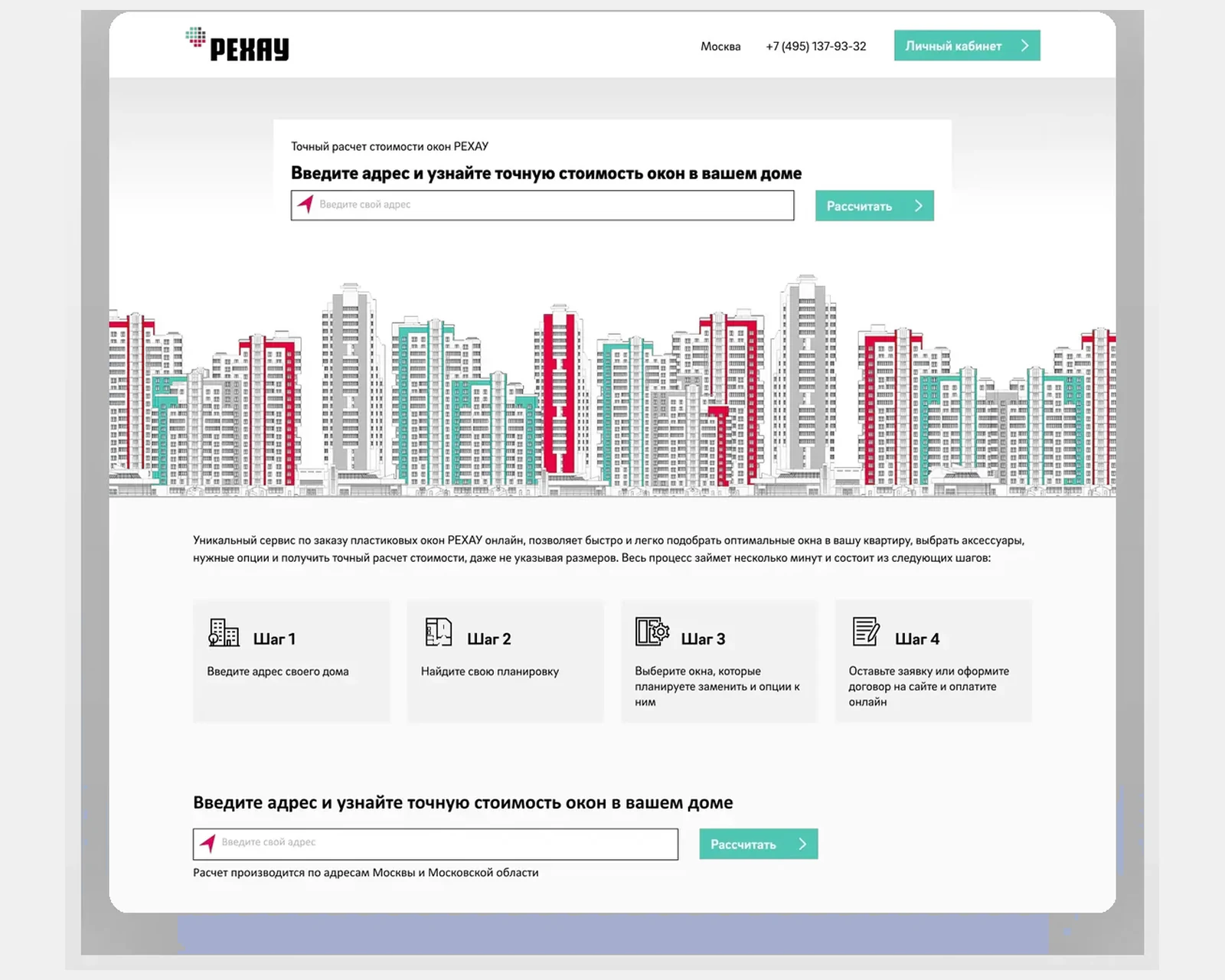
B2B e-commerce and product configurator for a global polymer manufacturer with multi-region pricing, stock and dealer workflows.

Unified crypto-ecosystem hub aggregating multiple tokens — live exchange data, search, charts, direct purchase entry point.
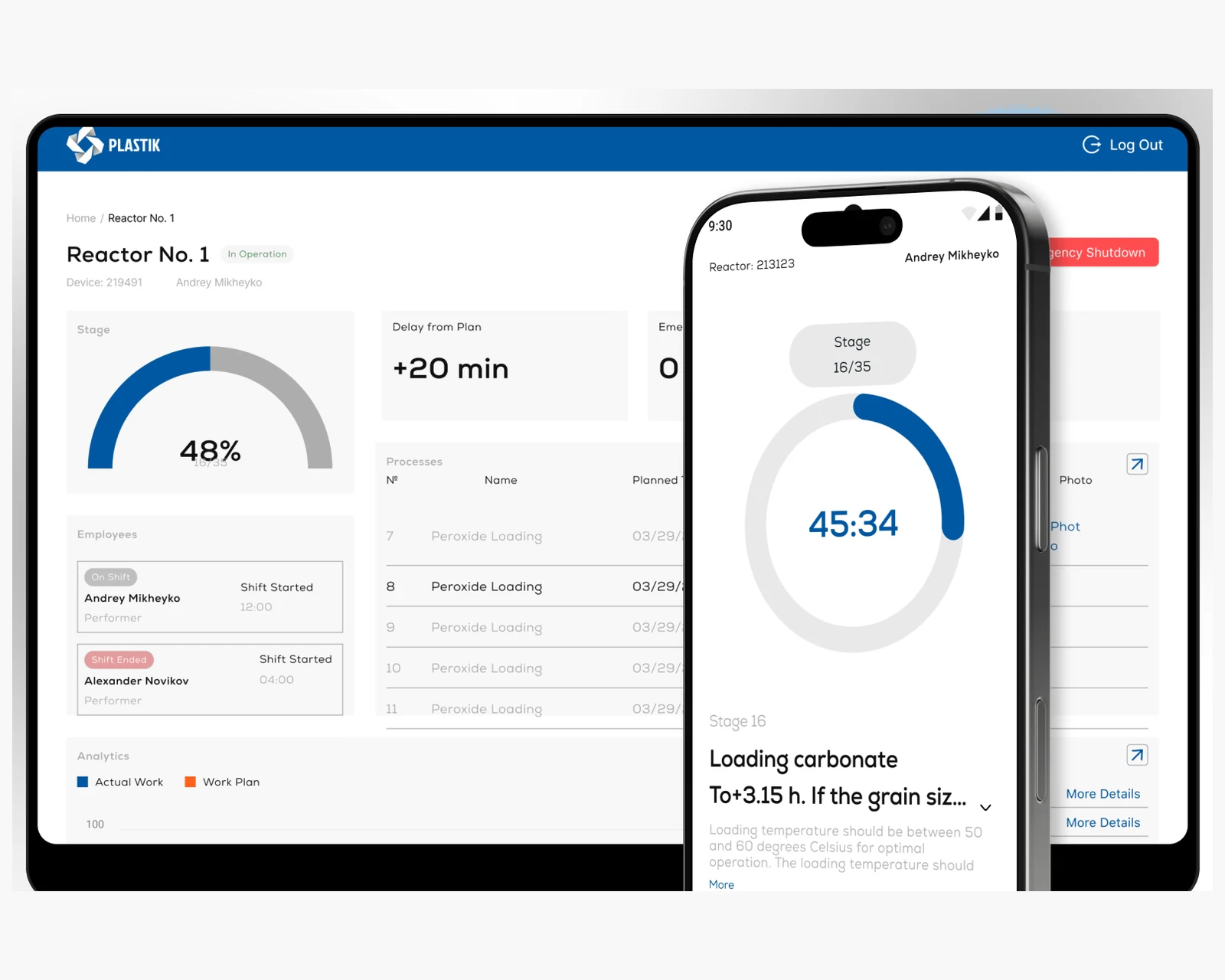
Offline-first ecosystem replacing paper journals for reactor process control — Android, admin, controller dashboard.
Enterprise risk lives in the regulatory and integration detail of a sector, not in a generic playbook. We build where compliance and legacy complexity are the hard part — and we have operated inside each of these verticals' audit and procurement processes, so the requirements are not a surprise to us.
Payments, lending, core banking, and capital markets platforms inside PCI DSS scope, aligned directly with your QSA on access, logging, and segregation of duties. We staff integration engineers with SAP FSCD, Temenos, Finastra, and core banking OData/IDoc/BAPI experience, and ship event-driven integration layers that survive vendor release cycles without manual adapter maintenance.
For Open Banking integrations (PSD2 / UK Open Banking), we implement the regulatory read/write API surface with TPP registration, consent management, and SCA-compliant redirect flows built into the architecture phase. SOX-traceable change management — signed commits, dual approval on production deploys, artifact hash in the change log — is wired into the CI/CD pipeline from the first sprint. See our FinTech practice and the EverCoin Bank case.
HIPAA-capable platforms with a BAA in place, EU data residency and US options on request for regulated patient, clinical, and trial data. We model the minimum-necessary boundary at the data tier and implement a PHI audit trail that covers authentication, data access, and configuration changes independently of the application session log — the pattern your privacy officer and BAA partner expect to see in an attestation package.
For clinical data management and device-adjacent software we apply IEC 62304 documentation discipline: requirements traceability, risk management records, and a software bill of materials produced as project deliverables. EU Medical Device Regulation (MDR 2017/745) scoping for SaMD classification is assessed in discovery so the development lifecycle matches the risk class before the first sprint. HL7 FHIR R4 and SMART on FHIR integrations for EHR interoperability are part of our standard HealthTech toolkit. See our HealthTech practice.
ERP/CRM-integrated B2B commerce platforms, product configurators, and dealer portals where the integration surface is the core engineering challenge. We build configurator engines that validate every product-and-accessory combination against headquarters' rulebook and output a deterministic SKU, so the dealer quote and the SAP invoice match line for line without a reconciliation step — the pattern in our REHAU multi-region commerce programme.
For multi-country rollouts we implement region-aware pricing, per-market catalogue isolation, and a streaming ERP integration that keeps dealer-visible stock within 60 seconds of ERP truth across six or more markets simultaneously. Consumer-law compliance across EU and US jurisdictions — right of withdrawal, VAT on digital goods, SCA under PSD2, CCPA notice obligations — is a checkpoint in the architecture phase. See our E-commerce & Retail practice.
Real-time WMS, fleet management, and manufacturing execution systems with offline-first mobile clients and high-frequency IoT data ingestion. We design the sync layer so barcode scans, weight reads, and picking confirmations captured on a plant floor with intermittent connectivity are queued locally and reconciled deterministically when the connection returns — without data loss or duplicate records in the WMS backend, as in our CheckList industrial build.
For manufacturing execution and process-control systems, we implement a time-series data layer capable of ingesting sensor and machine events at high frequency, with an alerting pipeline that escalates anomalies to operators in real time. Industrial hardware integrations — SCADA, PLC, industrial scales, QR/barcode terminals — are built with a hardware abstraction layer so the application is not coupled to a specific device SKU. See our Logistics & Manufacturing practice and the Warehouse WMS case.
Case management, document automation, e-signature, and practice management platforms for law firms, accountancies, and professional services firms where the evidence trail and chain of custody are the product. We implement identity-binding flows and immutable audit logs that survive a legal discovery request or a regulatory audit, and we design the data model so matter confidentiality is enforced at the row level, not by access policy alone.
For enterprise legal operations (enterprise legal management, contract lifecycle management), we integrate with procurement platforms — Coupa, Ariba — and eSignature layers — DocuSign, Adobe Sign — through idempotent adapters with a schema registry. GDPR Article 28 DPAs, eIDAS-aligned electronic signature levels, and SOC 2 evidence packs are available for enterprise procurement as standard project deliverables. See our Signatory Pro e-signature case.
Platform-layer engineering for media companies, SaaS operators, and technology firms that have outgrown their founding architecture and need to re-platform without losing a release cycle. We apply the Strangler Fig pattern to extract bounded contexts from legacy monoliths into independently deployable services, with a traffic-splitting layer that keeps the legacy path live for existing users until the new path handles 100% of traffic at full load.
For high-traffic media and content platforms, we design the caching and CDN strategy in parallel with the data model: edge-cached static output for public content, server-side rendering for personalised or gated content, and a publish pipeline that propagates changes to the edge within seconds without a full cache purge. Observability — distributed tracing, SLO dashboards, error budget reporting — is wired in from the first production deploy, so a latency regression surfaces in the next sprint review rather than in a customer complaint two weeks later.
Most enterprise modernisation projects fail not because the engineering is wrong, but because the migration strategy does not account for the operational reality of a live system with paying users and contractual SLAs. These are the four patterns we have run in production, with an honest account of when each one is the right choice.
New functionality is built in the target architecture behind a routing layer that intercepts requests from the legacy system. The legacy path continues to serve existing users with no disruption while the new path is built, tested, and traffic-shifted in increments. When the new path handles 100% of traffic at full load, the legacy component is deleted cleanly rather than left in place as a maintenance surface. This is the lowest-risk migration pattern for systems with a large user base and strict SLA commitments.
The routing layer doubles as a feature-flag boundary: you can send 1% of traffic to the new path, measure error rate and latency against the legacy baseline, roll back in under two minutes if the metrics diverge, and ship the next increment the following sprint. We have run this pattern on monolith-to-service migrations, database re-platformings, and legacy-to-cloud migrations; the disciplined approach means no big-bang cutover and no service window.
When the legacy system is a black box — vendor-managed, insufficiently documented, or too risky to modify — we insert an API gateway layer that presents a clean, versioned API surface to new consumers while the legacy system continues to operate behind it. The gateway handles authentication, rate-limiting, request routing, payload transformation, and observability so the legacy system's API defects do not propagate to the new integration surface.
This pattern is particularly effective for SAP, Salesforce, and Oracle systems where the native API surface is functional but not modern: SOAP, OData v2, or synchronous RPCs that block on large responses. The gateway wraps those calls in asynchronous consumers with a dead-letter queue, so a downstream vendor API timeout does not block a user-facing operation. Over time the gateway becomes the seam along which the legacy system is replaced service by service.
When the legacy system's data model is the constraint — a single-schema relational database shared across multiple applications, a denormalised analytics table used as a source of truth, or a proprietary data format that cannot support new product requirements — we plan the re-platforming in phases with dual-write: both the legacy and target systems are written to during the transition, with a reconciliation job that validates consistency on a defined sample. The legacy read path is retired only after the target read path has been validated at full production load.
We have re-platformed from Oracle to PostgreSQL, from MSSQL to Aurora, and from flat-file ERP exports to an event-sourced domain model — all without a service window. The migration is rehearsed against a production-scale data clone before the cutover date, so the actual cutover is a verified operation with a rehearsed rollback path, not a first run in production.
For mission-critical systems where a silent data error is a regulatory or financial event — a payment engine, a claims system, a regulatory reporting pipeline — we run the legacy and new systems in parallel on live production traffic, compare their outputs deterministically, and escalate divergences to a named owner before any cutover. The parallel run period is defined in the migration plan: typically four to eight weeks of side-by-side output on a statistically significant transaction volume.
This pattern requires the most engineering investment but provides the strongest correctness guarantee: you cutover to the new system on evidence, not assumption. The comparison harness is built as a first-class engineering deliverable with its own test suite and observability, and the divergence log becomes the input to the final remediation sprint before the legacy system is decommissioned.
GDPR-aligned · ISO 27001 ready · SOC 2 Type II in progress · HIPAA-capable · PCI DSS scope on request · CCPA-acknowledged
Evidence packs, control mappings, and audit support are part of the engagement, not an afterthought. We have walked auditors through SOC 2 and ISO 27001 reviews alongside client security teams.
Every enterprise engagement begins with a named solution architect, an explicit C4 model, ADR log, and threat model. Decisions are written down and reviewed by your steering committee before the build phase opens.
Delivery entities in Armenia, EU data residency, US options on request, CET workday with guaranteed 9 AM–1 PM ET overlap for US East-Coast steering meetings and incident response.
For payments, lending, and healthcare platforms we run inside PCI DSS and HIPAA scope and align directly with your QSA, security officer, or external auditor on access, logging, segregation of duties, and minimum-necessary data handling.
Real-time ERP sync for an auto-parts catalog is harder than it looks — prices shift hourly and the catalog changes constantly. YuSMP built a bidirectional 1C integration that just works, with a clean storefront customers navigate without friction.
Large-scale WMS projects fail when the mobile scanner experience is an afterthought. YuSMP built web and mobile scanner clients simultaneously, so pick accuracy and system latency targets were hit from day one. Inventory shrinkage dropped 31% in the first six months.
Yes. We sign Master Services Agreements with US and EU procurement teams as standard, including DPAs under GDPR Article 28, BAAs on request for HIPAA workloads, and standard contractual clauses for cross-border data. We complete vendor security assessments (CAIQ, SIG Lite, custom questionnaires), supply evidence packs for ISO 27001 controls, and accept enterprise-specific clauses on IP assignment, audit rights, sub-processor approval, insurance, and termination. Average legal cycle for a Fortune 1000 MSA is four to six weeks.
GDPR-aligned across all delivery: EU data residency, named DPO contact, breach notification SLAs in writing. ISO 27001 ready with an internal ISMS, asset register, access reviews, and quarterly risk assessment. SOC 2 Type II is in progress with a Big-Four-grade auditor. For your engagement we map controls one-to-one against your own SOC 2 or ISO scope, run engineers on managed endpoints with SSO, MFA, encrypted disks, and isolated repositories, and feed evidence directly into your audit workpapers.
We staff integration engineers who have shipped to SAP S/4HANA (OData, IDoc, BAPI), Salesforce (Apex, Platform Events, Connect), Workday (RaaS, REST), Okta (SCIM, SAML, OAuth2), and Active Directory / Entra ID. Standard pattern is an event-driven integration layer (Kafka or RabbitMQ) with idempotent consumers, schema registry, and a dedicated integration test suite that runs against vendor sandboxes. We respect change windows, freeze periods, and your existing iPaaS (MuleSoft, Boomi, Workato) where one is in place.
Yes. We design and operate platforms with stated RTO and RPO targets, multi-region active-active or active-passive deployments on AWS, Azure, or GCP, and DR runbooks tested on a quarterly cadence. Standard primitives: Kubernetes across two regions, managed Postgres or Aurora with cross-region replication, Kafka MirrorMaker 2, infrastructure as code in Terraform, secrets in Vault, observability via Datadog or Splunk. On-call coverage is 24/7 with documented incident severities and post-incident reviews.
Every change is traceable from ticket to production: signed commits, mandatory code review with separation of duties, automated security scans (SAST, SCA, container, IaC), CI/CD gates, and approvals recorded in Jira and Git. Production deploys require dual approval and are logged with timestamp, actor, and artifact hash. We integrate with your change advisory board, respect freeze windows, and produce evidence on demand for SOX, SOC 2, ISO 27001, PCI DSS, and HIPAA audits without slowing the release train.
Enterprise work is fixed-scope and quoted all-in in USD, tiered by weight. An integration or enhancement engagement runs from $9,200 (4–8 weeks); a custom enterprise system from $28,700 (10–18 weeks); an ERP or complex multi-system platform from $68,900 (20–32 weeks). What moves the number is the integration surface, the compliance scope (PCI DSS, HIPAA, ISO 27001, SOC 2), the availability target and the seniority mix. You see the line-item budget at the end of discovery and sign off before any code is written. There is no recruitment markup, no tool surcharges and no hidden fees; cloud fees run on your own accounts, so you keep the cost lever.
Multi-entity billing is an architectural concern that must be addressed in the data model, not bolted on later. We design the entity, legal entity, and cost-centre hierarchy in discovery and implement it as a first-class domain concept: transactions are tagged to a legal entity at creation, currency conversion is applied at a defined rate source (ECB daily rates, bank mid-market, or a treasury-managed rate table), and the revenue recognition output is partitioned by entity and currency for import into NetSuite, SAP FI, or Oracle Financials. Intercompany eliminations and cross-entity transfer pricing are handled at the reporting layer with documented rules, not manual journal entries. For subscription and usage-based billing we integrate Stripe Billing or Chargebee with a multi-entity accounting adapter so revenue is recognised against the correct legal entity without a manual reconciliation step. For enterprise procurement billing — purchase orders, invoices, 30/60/90 net terms, early payment discounts — we implement the accounts-receivable workflow as a domain module with configurable dunning, credit-hold rules, and an audit trail suitable for SOX or IFRS 15 compliance.
Zero-downtime database migrations require the migration to be backward-compatible with the running application version, which means the migration and the application deployment are planned and executed as a two-phase operation. Phase one: deploy the migration that is backward-compatible with the current application (add a column with a nullable default, add an index concurrently, backfill data in a background job with a configurable batch size). Phase two: deploy the application code that uses the new schema, then clean up the compatibility shim in a subsequent migration once the old application version is fully retired. We enforce this pattern through a migration review checklist in every sprint: no migration that locks a table for more than 50 milliseconds ships without a documented alternative, and long-running migrations are always run outside the deploy pipeline against a production-scale data clone before the production execution window. For PostgreSQL we use concurrent index creation, partial backfills, and the pg_repack extension for table rewrites; for MySQL/MariaDB we use gh-ost or pt-online-schema-change where table locks would otherwise block production traffic.
We treat your internal IT and security teams as stakeholders with sign-off authority at defined checkpoints, not as compliance reviewers at the end of the project. In discovery, we run a joint architecture review with your security officer, solution architect, and internal IT lead to validate the hosting topology, integration patterns, and access model before any code is written. During the build, we run managed endpoints for all engineers (encrypted disks, SSO, MDM), operate in isolated repositories with per-engineer access logs, and provide monthly evidence exports for your vendor security posture tracking. At the hardening phase, we run a joint security review against your internal security framework — whether that is NIST CSF, ISO 27001, CIS Controls, or a proprietary checklist — and resolve findings within the agreed remediation SLA. For vendor security assessments (CAIQ, SIG Lite, custom questionnaires), we complete them within the procurement window and escalate questions to our internal security officer within 24 hours. We have aligned with Fortune 1000 and FTSE 250 security teams on enterprise builds and understand that the internal security process is not a checkbox — it is a shared operating requirement.
Yes — structured knowledge transfer is a named phase in every enterprise engagement, not an afterthought. We plan the transfer sprint at the project scoping stage: the length and depth depend on the system complexity and your team's existing knowledge of the codebase. A typical transfer includes pair sessions between our engineers and your team on the three to five most operationally complex areas (typically the integration layer, the data migration tooling, and the observability runbooks), a recorded architecture walkthrough covering the C4 model and the key architecture decision records, and a handover checklist signed off by both parties before the engagement closes. For platforms where your team will own on-call from day one, we run a simulated incident exercise with your engineers before handover: we introduce a synthetic failure in a non-production environment and walk through the detection, diagnosis, and remediation process together. This is the same discipline that produced the Warehouse WMS handover, where the client's operations team ran the system independently from day one of post-handover production.
Engineering-led guides on modernizing, integrating and scaling enterprise software.

Each V-model phase paired with its test level, a worked traceability matrix, V vs waterfall vs agile, and how ISO 26262, IEC 62304 and DO-178C teams use it…
Read article →
Construction software types (CMS, ERP, BIM, field apps, estimating), core features, custom vs off-the-shelf, real 2026 cost tiers, hidden costs, timelines and the build process…
Read article →
EMS, SCADA, DERMS/VPP, smart metering and trading systems, the 2026 stack and protocols, NERC CIP & NIS2 compliance, real cost ranges and how to choose a partner…
Read article →
Upstream, midstream and downstream systems, the 2026 stack (SCADA, IoT, AI, digital twins), IEC 62443, real cost ranges, custom vs off-the-shelf and how to build…
Read article →
Software types, must-have features, FAA/EASA/DO-178C compliance, real 2026 cost ranges, build vs buy and how to choose an aviation software partner…
Read article →Share a few details and a senior consultant will reply within one business day.