Discovery & catalog modeling
Fitment-data structure, 1C extract sample, operator persona mapping for the storefront and admin tier, GDPR + CCPA posture decisions.

Case study · Automotive · E-commerce
The AutoParts operator needed an e-commerce platform that did not feel like a generic Shopify template bolted onto a 1C accounting back office. Auto parts is a category where buyers in the United States and the European Union expect to filter by vehicle make, model, model year, and engine code — and where stock accuracy decides whether the cart converts or the buyer leave
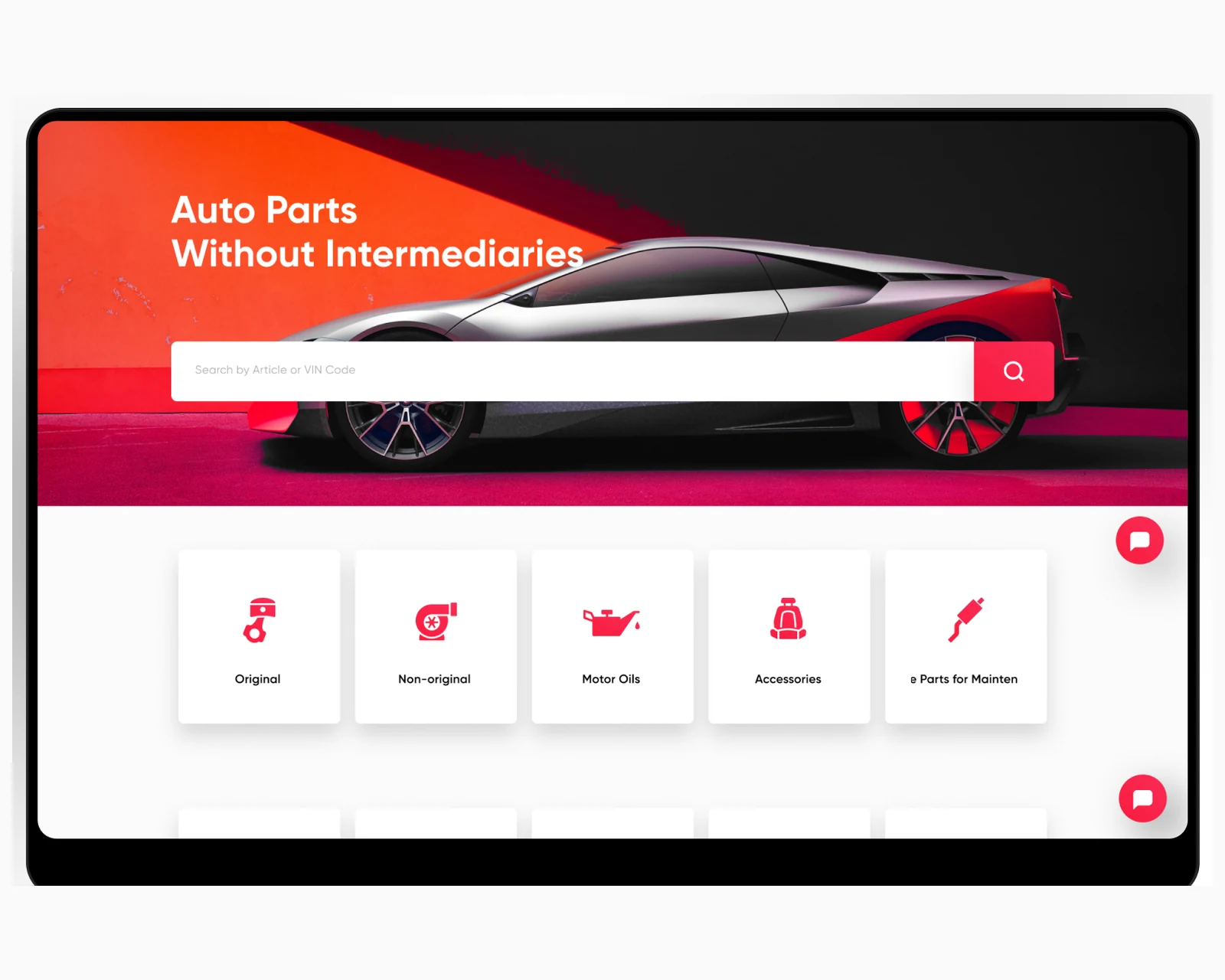
The AutoParts operator needed an e-commerce platform that did not feel like a generic Shopify template bolted onto a 1C accounting back office. Auto parts is a category where buyers in the United States and the European Union expect to filter by vehicle make, model, model year, and engine code — and where stock accuracy decides whether the cart converts or the buyer leaves for a competitor. The operator's pain was a familiar one: the 1C database is the source of truth, but the legacy storefront updated stock on a nightly batch, so overselling and customer-service back-and-forth were a daily cost. We built AutoParts from first principles as a Laravel 10 + React storefront with real-time 1C sync, GDPR- and CCPA-aligned consent flows, and a personal-account experience that gives buyers card payments, order status, and shipment tracking without an email-receipt scavenger hunt.
A snapshot of what the AutoParts build delivered across its first production cycle for the US and EU.
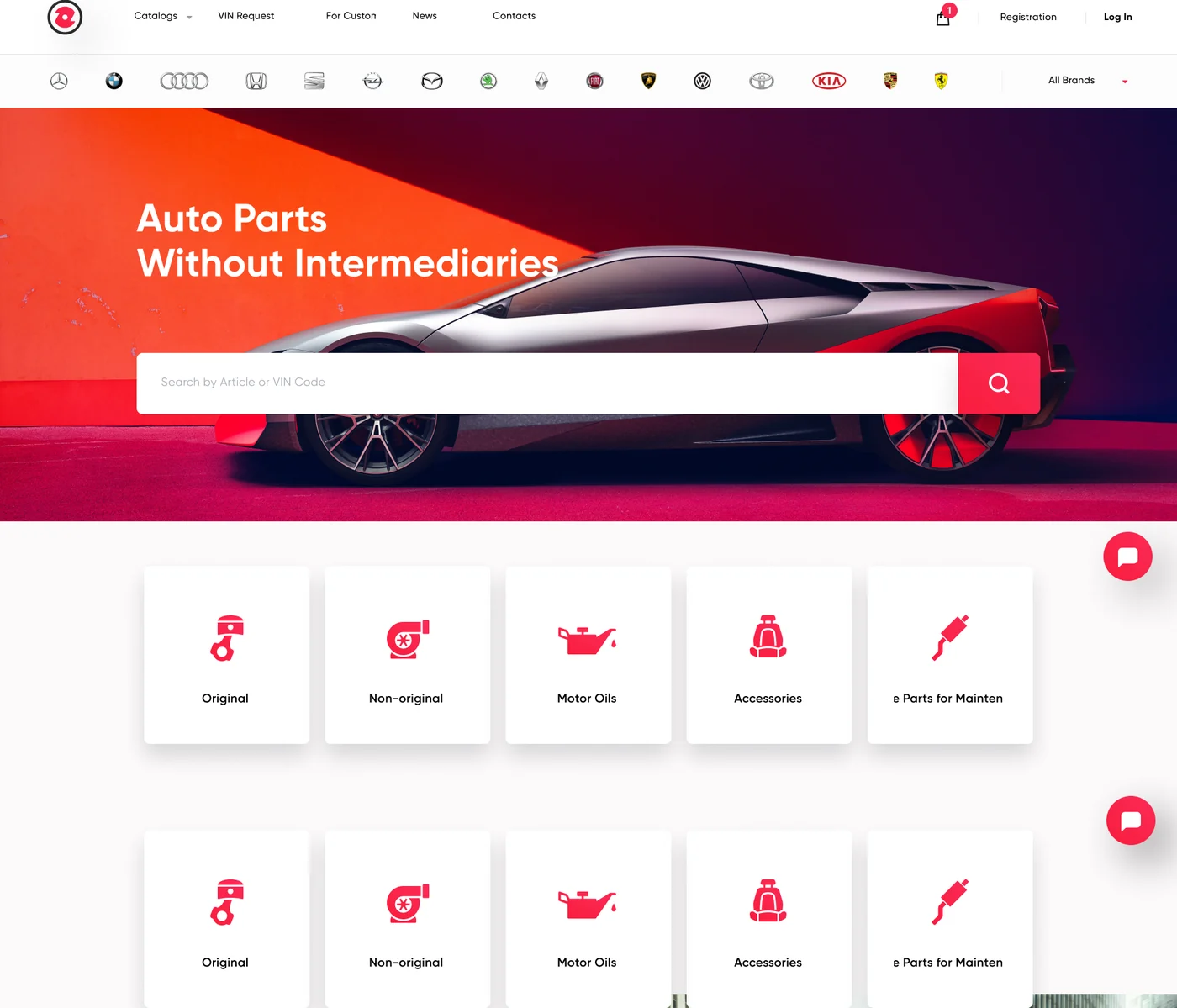
Off-the-shelf platforms were eliminated early in the AutoParts build. Magento brings a heavy operational footprint and a steep cost-per-extension curve for a catalog this structured; Shopify's vehicle-fitment workflow is an extension marketplace rather than a first-class data model; and a bare WooCommerce build does not handle the 1C bidirectional sync without a stack of brittle plugins. We chose a Laravel 10 + React build because the integration surface — 1C ERP for stock and pricing, a payment processor for card-not-present transactions, a logistics integration for shipments — is where the product earns its keep, and a custom backend gives us the room to make those integrations first-class without paying a per-transaction platform tax.
The front-end choice is equally deliberate. The auto-parts shopper's mental model is a faceted search across vehicle attributes, and a React + TypeScript front end makes that interaction feel instant: filters update the result set without a full page round-trip, and the parts catalog renders with structured data so the same listing surfaces cleanly in Google's organic results. The whole tier is delivered as part of our web application development practice.
| Dimension | Laravel + React (AutoParts) | Magento 2 Open Source | Shopify / WooCommerce |
|---|---|---|---|
| 1C ERP bidirectional sync | First-class — built into the domain model | Possible — via heavy extension | Brittle plugin chain |
| Vehicle / model / year fitment | Native data model | Custom attribute set | Third-party app per platform |
| Per-transaction tax | None — own infra | None — own infra | Platform fee on every sale |
| Operational footprint | Light — PHP-FPM + Postgres + Redis | Heavy — MariaDB + Elasticsearch + Varnish | Vendor-managed |
| Custom checkout UX | Unlimited — React all the way | Possible — theme override | Restricted on lower tiers |
| SEO ceiling | High — full control of markup | High — with extension work | Platform-bound |
| Multi-region pricing & tax | Custom — per-region tier | Native — complex config | Native — limited rule set |
References: Laravel documentation, React documentation, schema.org Product.
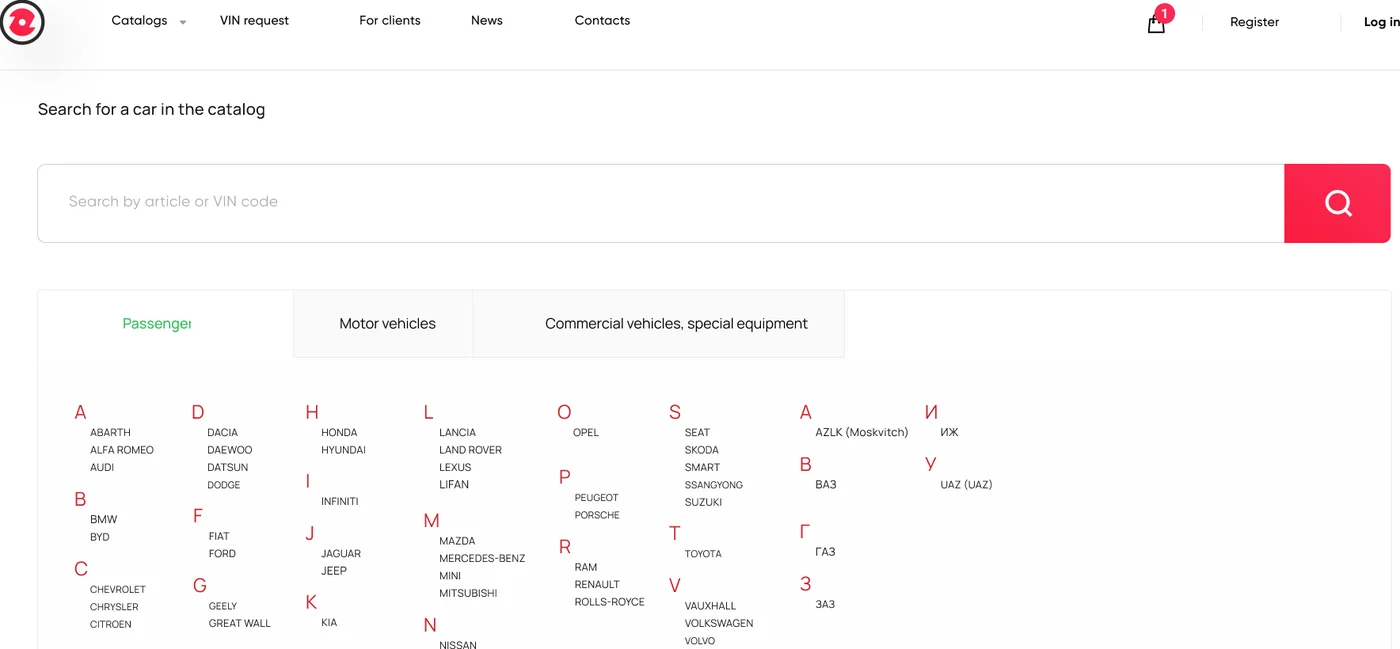
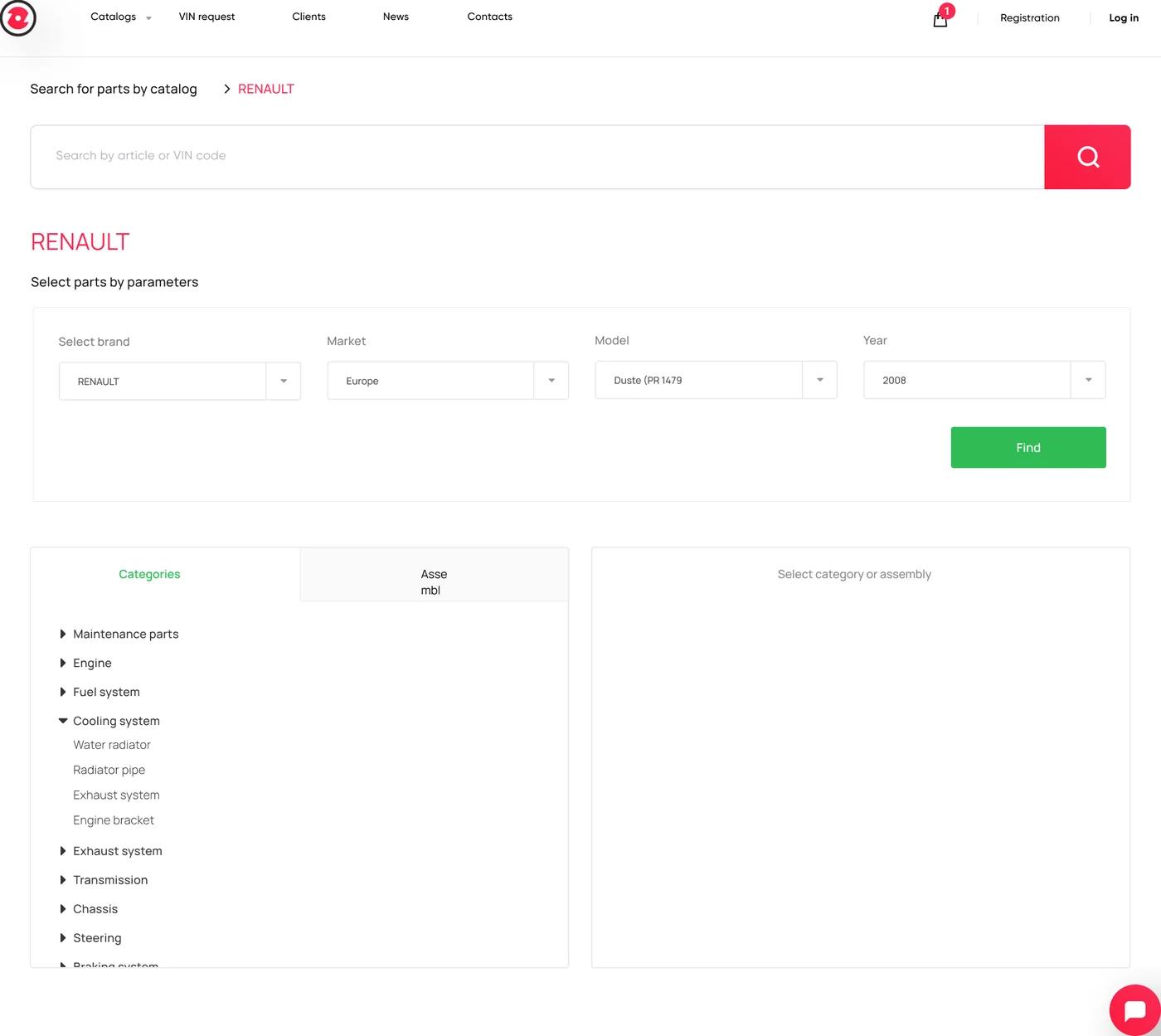
The catalog data model is the heart of the product. Every SKU carries the structured fitment metadata an auto-parts buyer actually filters on — vehicle make, model, model-year range, engine code, body style, and country-specific compliance flags — alongside the descriptive content the operator's team curates on top of the 1C import. Search runs against an inverted index with the fitment fields promoted into facets, and the result page renders a structured listing the same way an enthusiast forum would expect to see it. For US and EU buyers, the practical effect is that they can answer the question that matters — will this part fit my car — before they get near the cart.
The admin tier gives the operator's team a clean editorial workflow on top of the 1C import. Products flow in automatically with stock and price, but the catalog editor can override imagery, enrich descriptions, attach fitment notes, and pin promotional placements without touching the ERP. The whole admin layer is delivered as part of our custom software development practice and ships behind the same RBAC model that secures the storefront APIs.
The checkout surface was rebuilt to give the buyer the experience the modern US and EU shopper expects in 2024: card payments through a PCI-light flow, shipping options from the operator's logistics partners with live rate quotes, and an order-confirmation screen that becomes the entry point to a personal account rather than a dead end. Card capture is tokenized through the payment processor so the operator never holds raw PANs, and the entire checkout is one tracked funnel with structured drop-off events flowing into the analytics tier for the growth team to act on.
The personal account is where the post-purchase experience lives. Buyers see their order history, current shipment status pulled live from the logistics integration, and a re-order shortcut for consumable parts. Returns and warranty flows are first-class — the operator's customer-service team works from the same admin tier and can issue refunds, swaps, or partial credits against the original order without a separate ticketing tool. For buyers in California and the broader United States, the account screen also hosts the CCPA / CPRA data-rights disclosures the operator's privacy policy commits to.
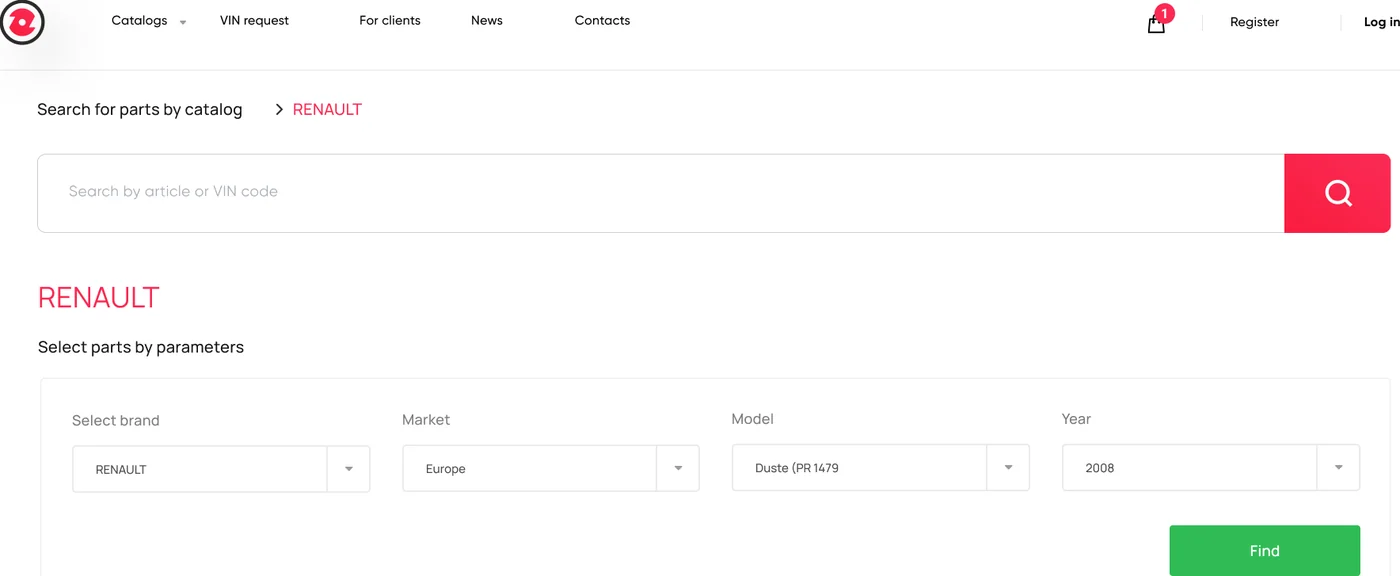
The 1C synchronization layer is the integration that decides whether the platform feels alive or stale. Stock and price changes in 1C surface in the storefront within seconds, and orders placed in the storefront flow back into 1C as documents the operator's accounting team already knows how to process. The bridge is implemented as a message-broker pattern — 1C events publish through an integration service, the Laravel application consumes them idempotently, and a reconciliation job runs nightly to catch any drift. Catalog imports, price-list rollouts, and bulk SKU adjustments are first-class operations against the same bus.
Privacy posture is enforced at the architecture layer. Customer accounts hold only what the order flow actually needs — name, billing address, shipping address, contact email and phone — and the payment record sits with the payment processor under a tokenized customer ID the storefront never sees. The posture is built to align with GDPR for European Union buyers and with CCPA / CPRA obligations for buyers in California and the broader United States. Right-of-access and deletion flows are wired into the admin tier so the operator's privacy team can serve a request without an engineer in the loop.
Compliance posture: GDPR-aligned · ISO 27001 ready · SOC 2 Type II in progress · HIPAA-capable · CCPA-acknowledged.
A five-phase build that took AutoParts from product specification to production across the US and EU.
Fitment-data structure, 1C extract sample, operator persona mapping for the storefront and admin tier, GDPR + CCPA posture decisions.
Laravel 10 + React skeleton, 1C integration service design, message-broker pattern selection, regional pricing and tax tier.
Faceted catalog and search, structured checkout with card / Apple Pay / Google Pay support, personal account, admin editorial layer over the 1C import.
1C bidirectional sync stress testing, logistics-rate validation against carrier sandboxes, PCI scope reduction through processor tokenization, audit-trail pass.
Storefront go-live, SEO structured data validation, conversion-funnel instrumentation, growth-team hand-off, and on-call rota.
AutoParts' commercial model is direct-to-consumer with the long-term option to spin up a marketplace tier alongside the operator's own catalog — and the architecture was deliberately structured to make that future change a configuration shift rather than a rebuild. SKUs carry an owner-of-record field, the order pipeline routes settlement against that field, and the entitlement and payout layer is already designed for multi-seller payouts even though the first release runs single-seller. Promotions, loyalty credits, and B2B price-list overrides ride the same model: each is a configuration value against the catalog or the customer record, not a code release. The whole subsystem was built with extensibility in mind: adding a B2B tier with company-level pricing, a wholesale tier with bulk-discount tiers, or a multi-seller marketplace mode is a configuration change against the catalog and entitlement services, not a rebuild against the storefront.
AutoParts launches as a single Laravel + React storefront serving buyers across the United States and the European Union. The English-language build is in production for buyers in California, New York, Texas, Florida, and Washington in the US, and is positioned for operators evaluating it in the Netherlands, Germany, France, Ireland, and Sweden in the EU. Region awareness is handled by the pricing and tax tier rather than by per-region forks of the code base. Consent flows are region-aware at the client layer: buyers in the EU and EEA receive a GDPR-style granular consent screen with separate toggles for any optional product analytics; buyers in California receive a CCPA-style “Do Not Sell or Share My Personal Information” disclosure in the same flow. Data-handling practices are aligned with GDPR for European buyers and with the US state-privacy patchwork — CCPA / CPRA (California), VCDPA (Virginia), CPA (Colorado), CTDPA (Connecticut), UCPA (Utah), TDPSA (Texas), and Oregon CPA.
The deployment story is operator-friendly. The application tier is stateless, horizontally scaled, and can be pinned to EU or US regions independently for future data-residency commitments. Payment processing is configured per region against the operator's chosen acquirers, and the logistics integration speaks each carrier's native API rather than a lowest-common-denominator middleware. The engineering team behind the build runs a CET workday with East-Coast US overlap (9 AM–1 PM ET) for stand-ups, store-merchandising sprints, and incident response — the timezone that lets a US product team and an EU engineering team share four hours of live overlap every day.
The active custom software development roadmap for AutoParts includes a marketplace tier so the operator can onboard third-party sellers under a unified storefront, a B2B pricing tier with company-level price lists and net-terms checkout, a parts-recommender that uses past orders and vehicle fitment to surface likely add-ons, and a native mobile companion app for fleet operators who need a fast re-order flow on a phone. Infrastructure plans include further regionalization across the EU and US, an internal performance-budget harness for the storefront's Core Web Vitals, and continued automation of the 1C sync bridge in the cloud & DevOps roadmap.
If you are planning an auto-parts e-commerce store, a 1C-integrated B2B storefront, or any custom-built shop where the catalog logic outgrows a Shopify or WooCommerce template for buyers in the US and EU, we have shipped this stack end to end and can compress the build timeline meaningfully. The engineering team behind AutoParts sits inside YuSMP Group. We work fixed-price for well-scoped MVPs and on dedicated development teams for ongoing delivery, with a CET workday and a guaranteed East-Coast US overlap (9 AM–1 PM ET) window for stand-ups, demos, and incident response.
A custom Laravel + React e-commerce MVP with a structured parts catalog, vehicle fitment search, card payments, and a basic 1C inventory sync typically costs $90k–$180k. Adding a logistics-integration layer with live rate quotes, a personal account with order tracking, returns and warranty workflows, and a CCPA / GDPR consent layer brings a full-featured product to $220k–$480k. The dominant cost drivers are the ERP bidirectional sync work, the fitment-data ingestion, and the checkout-UX polish that moves the conversion rate above platform-template baselines.
Off-the-shelf platforms work for catalogs that fit their assumptions. Auto parts does not: the buyer's mental model is a faceted search across vehicle make, model, model year, and engine code, and the operator's source of truth is typically a 1C accounting system that needs bidirectional sync rather than a one-way feed. Laravel + React lets the fitment data model and the ERP integration be first-class instead of plugin-chained, and the React storefront removes the platform's per-transaction tax from the unit economics.
Stock and price changes in 1C surface in the storefront within seconds through a message-broker pattern: 1C events publish through an integration service, the Laravel application consumes them idempotently, and a nightly reconciliation job catches any drift. Orders placed in the storefront flow back into 1C as documents the operator's accounting team processes through its existing workflow. Bulk catalog imports, price-list rollouts, and SKU adjustments are first-class operations against the same bus.
AutoParts is GDPR-aligned for European Union buyers and acknowledges the US state-privacy patchwork — CCPA / CPRA in California, VCDPA in Virginia, CPA in Colorado, CTDPA in Connecticut, UCPA in Utah, TDPSA in Texas, and Oregon CPA. Customer accounts hold only the data the order flow needs, payment records sit with the payment processor under a tokenized customer ID, right-of-access and deletion flows are wired into the admin tier, and the consent layer surfaces region-aware disclosures at the storefront.
A focused MVP with a structured catalog, fitment search, card checkout, a basic personal account, and a one-way 1C feed typically takes 12–20 weeks. Adding bidirectional 1C sync, a logistics-integration layer with live rate quotes, a returns and warranty workflow, and the readiness work for GDPR and CCPA disclosure brings the timeline to 22–30 weeks. The integration validation against the operator's actual 1C database, not the documentation, is frequently underestimated and should be budgeted at three to five weeks of dedicated work.
Related cases
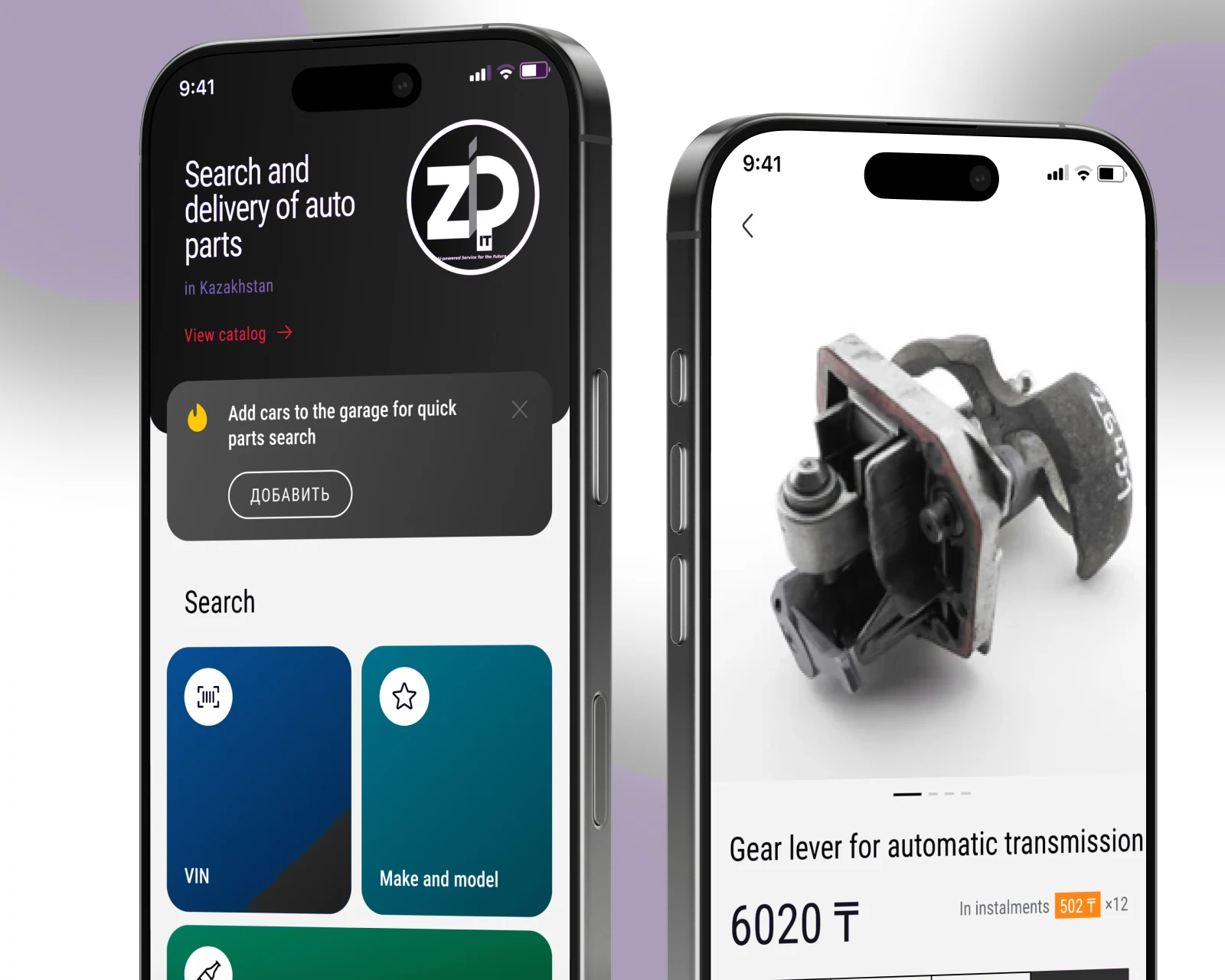
Auto-parts marketplace plus multi-tenant seller CRM — VIN search, cross-location inventory, integrated delivery for US and EU operators.
View case →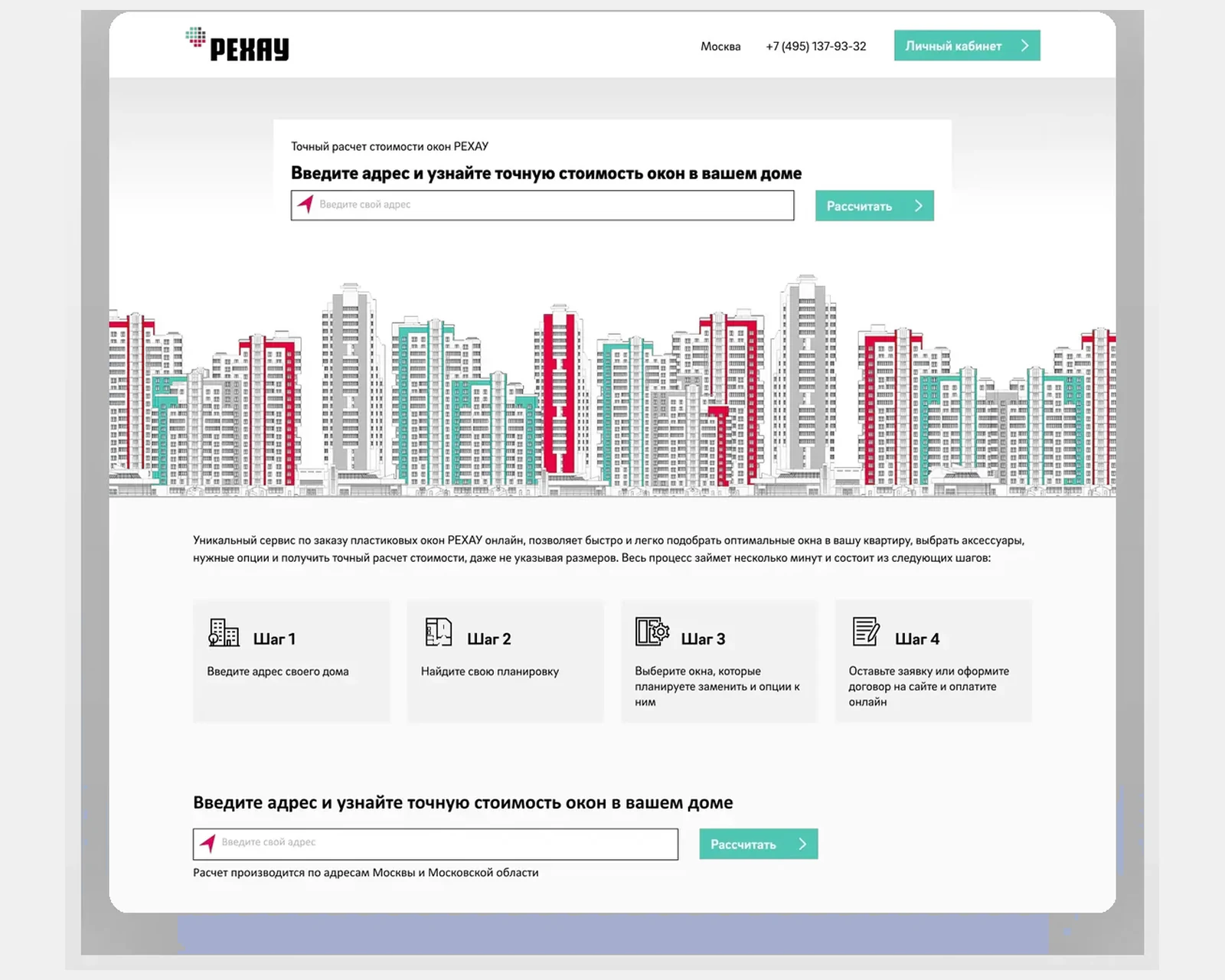
B2B e-commerce and product configurator for a global polymer manufacturer with multi-region pricing, stock and dealer workflows.
View case →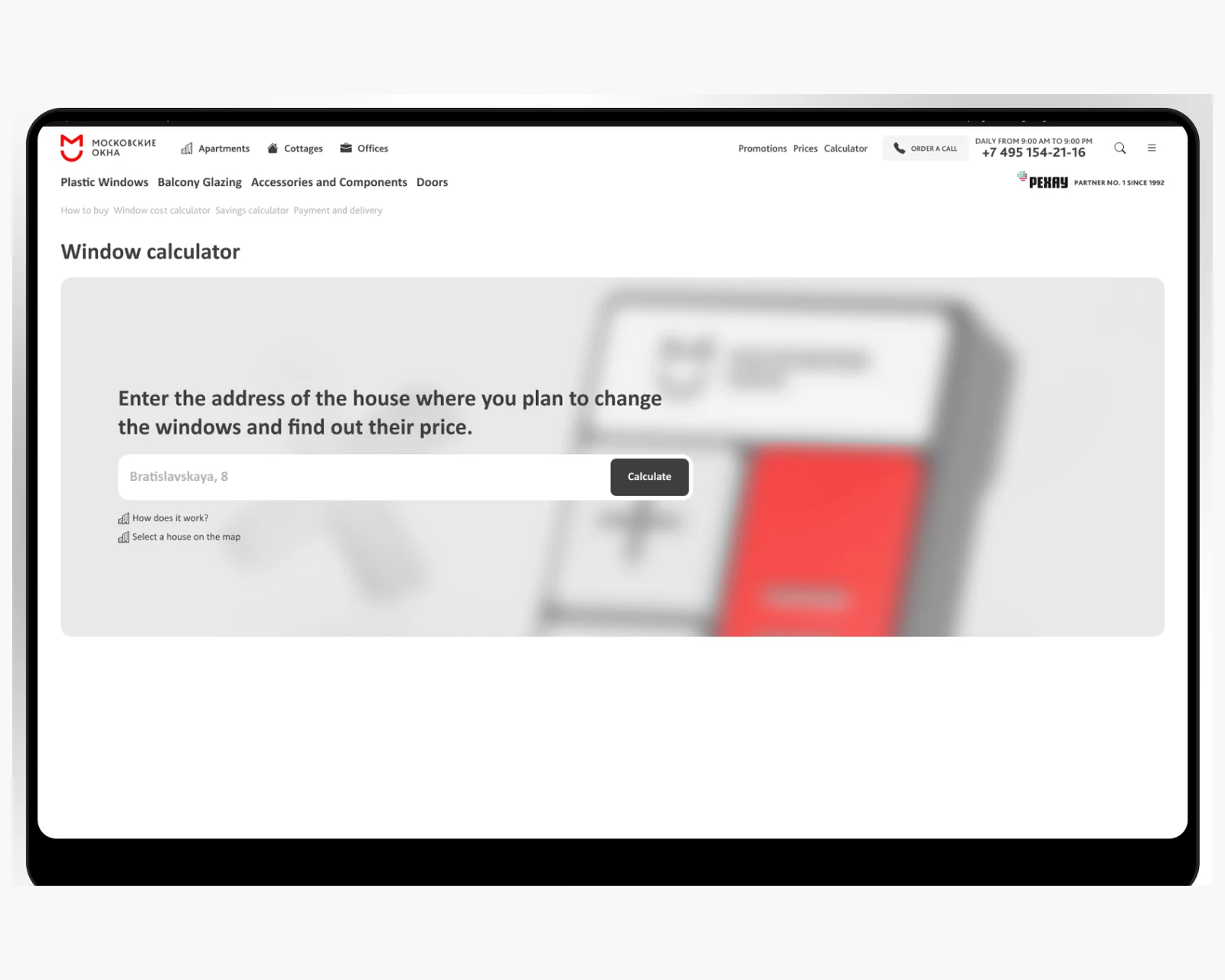
Unified online window calculator and CRM — address-based lookup, multi-tenant Laravel + React engine powering three brand sites.
View case →Share a few details and a senior consultant will reply within one business day.