Discovery & portfolio model
Token inventory, exchange surface map, freshness targets per page, US and EU compliance scoping under GDPR and CCPA, ops team workflow audit on the existing listing process.

Case study · Crypto · FinTech
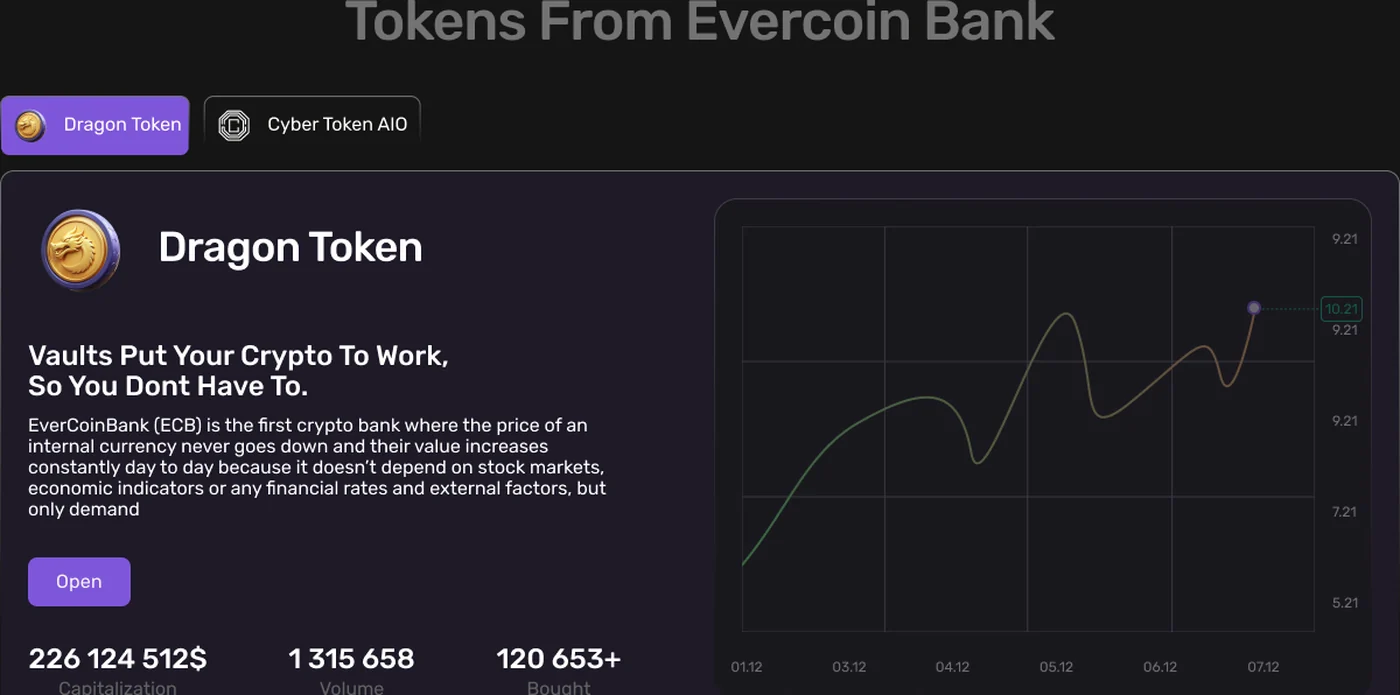
How we shipped a unified hub for a growing token portfolio — one consolidated entry point with real-time exchange aggregation, live price charts, cross-token search, and a streamlined exchange-listing workflow that holds up to US and EU audience expectations under GDPR and CCPA from day one.
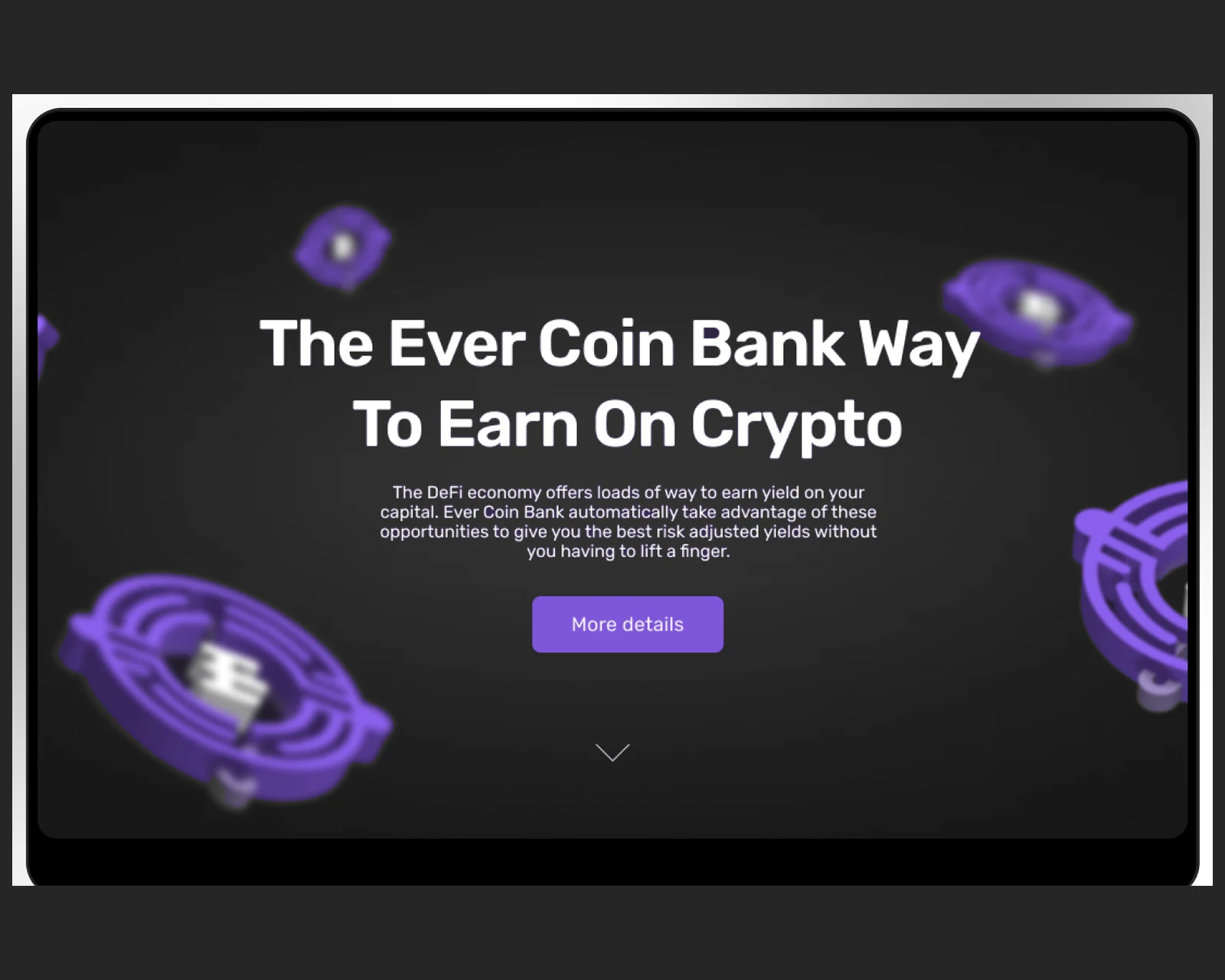
The EverCoin Bank product team came to us with a growing portfolio of tokens, each living on its own marketing site, each with its own chart, its own buy flow, and its own listing footprint across exchanges. Users in the United States and the European Union had to hunt across that scatter to find rates and navigate between brand sites, and the ops team was hand-rolling 50–70-point listing questionnaires for every new exchange. The brief was a single hub — one URL, one search, one chart layer, one place to start a purchase — engineered so that adding a token, a chart, or a new exchange feed never required re-engineering. Vendor white-label crypto portals were eliminated early because their licensing terms forced brand and integration constraints the client could not absorb, and a static-site option was eliminated because per-second exchange data freshness simply does not survive a build-time render. The result is EverCoin Bank: a Laravel API, a React + Redux hub front end, a Redis-backed real-time price layer, and an architecture that takes the ops team's listing workflow out of spreadsheets and into a typed pipeline. The hub is positioned for audiences across the US and EU under GDPR and CCPA expectations from launch, with a forward path to the EU's MiCA regime as the regulation lands.
A snapshot of what the EverCoin Bank build delivered across the hub, the real-time price layer, and the ops console in its first production cycle.
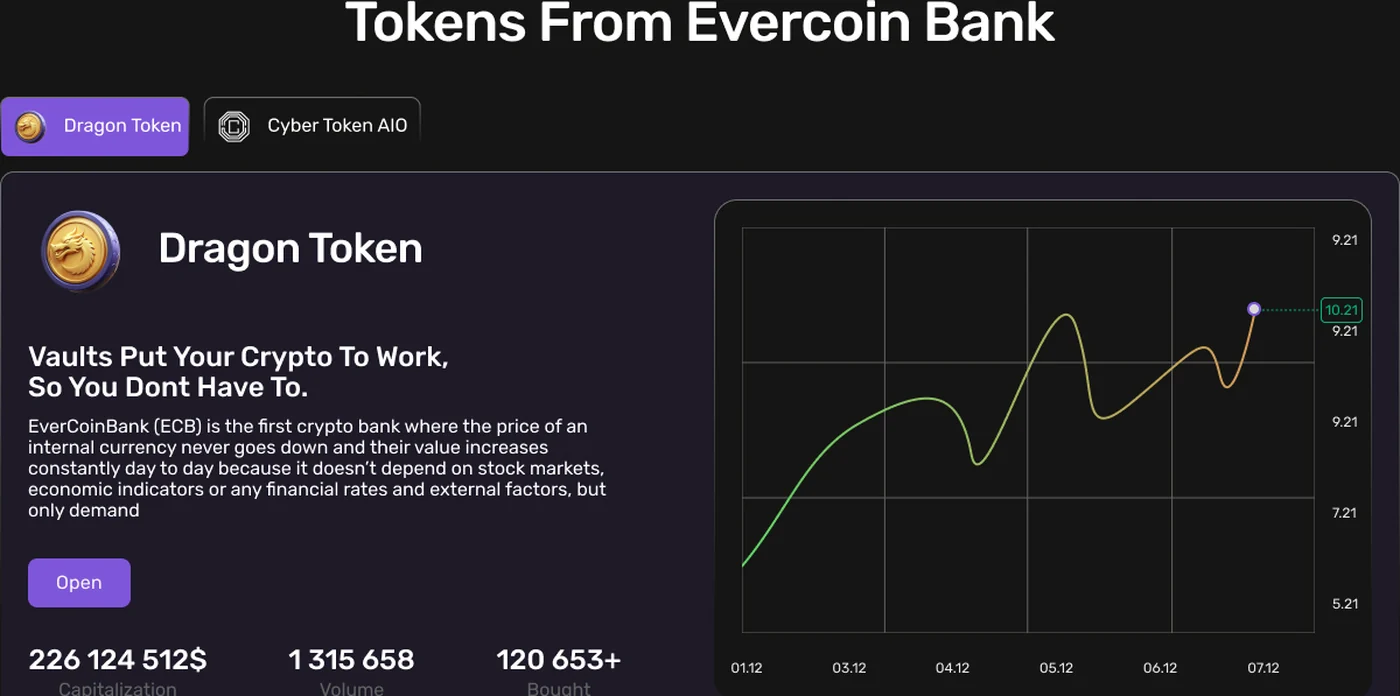
The platform decision dominates every other architectural choice on a multi-token crypto hub. We chose Laravel on the server with a React + Redux hub front end because the trade-offs line up cleanly with a portfolio that is expected to grow: typed-route REST controllers, predictable queue workers for exchange polling, first-class CSRF and session handling, and a clean migration story for new tokens, new charts, and new exchange adapters. Vendor white-label crypto portals were eliminated early — their licensing terms required server-side telemetry the no-custody posture cannot tolerate, and their theming surface is rarely flexible enough for a brand with its own visual system. A static-site generator with client-side fetches against exchange APIs was eliminated as well: per-second freshness simply does not survive a build-time render, and rate-limit budgets get burned on every refresh from every visitor.
The third candidate, a Node.js + Next.js hub, is a legitimate alternative — its real-time story is comparable — but it pushed more business logic into the same runtime as the chart UI, and the team's existing Laravel ops muscle memory was worth more than a switch to a less-familiar stack. The whole hub — REST API, queue workers, WebSocket gateway, React + Redux UI — is open and citable end-to-end, with no proprietary Redis or message-broker dependency that locks the ops team into a single vendor.
| Dimension | Laravel + React (EverCoin Bank) | Static site + client fetches | Vendor white-label crypto portal |
|---|---|---|---|
| Data freshness | Sub-second via WebSocket fan-out | Build-time + client polling — minutes | Vendor-defined SLO; usually 5–30 s |
| Adding a token | Config row + adapter — no redeploy | Full site rebuild + republish | Vendor ticket; turnaround weeks |
| Multi-exchange cost | Shared queue workers; rate-limit-aware | Each visitor burns rate-limit budget | Bundled — opaque markup |
| Security posture | First-party CSRF, sessions, secrets in vault | API keys leak via client-side fetches | Vendor-managed; opaque audit trail |
| Brand & theming | First-party React components | Full control | Constrained to vendor design system |
| Compliance fit (US & EU) | GDPR + CCPA banners + audit-ready logs | Cookie banner only — no server consent ledger | Vendor-controlled; varies by region |
| Scaling cost trajectory | Linear with workers and Redis nodes | Cliff at any real freshness target | Per-seat / per-token vendor pricing |
Platform references: Laravel documentation, React documentation, Redis documentation.
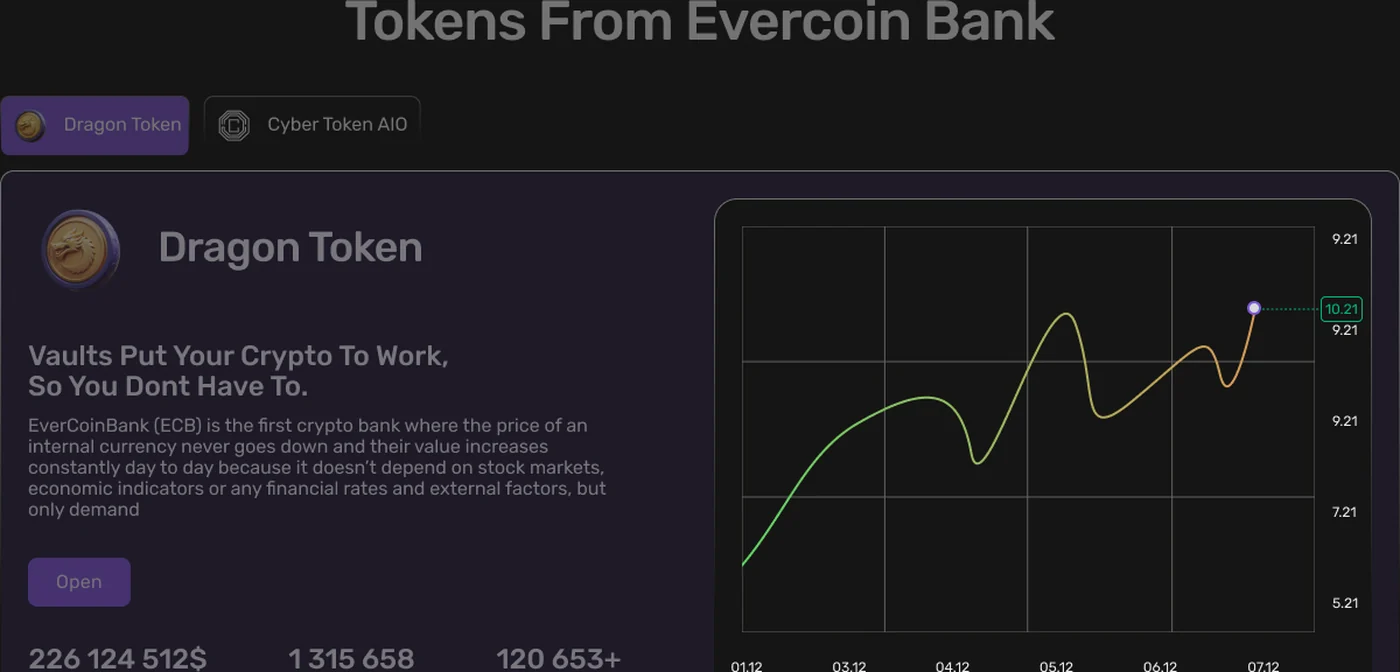
The hub front end is built in React with Redux Toolkit for state and Chart.js for the price-chart layer. The entire user-facing surface collapses around three primitives — search, token detail, and the direct-purchase entry point — and the home screen is one search field that resolves cross-portfolio in under 100 ms. Each token detail page renders a chart that streams in over WebSockets, a price card that highlights freshness and source-exchange agreement, and a "Go to token site" affordance that hands off to the brand-specific marketing surface with attribution preserved.
On the server, Laravel hosts the typed REST API with route-level validation, queue workers that poll each exchange on its own rate-limit budget, and a Redis layer that holds short-TTL price snapshots and the fan-out channels the WebSocket gateway subscribes to. Secrets — exchange API keys, signing tokens, third-party webhooks — live in an injected vault, never in the repo. The same hub carries the team's web application development patterns from prior fintech builds, so the security primitives (CSRF, session rotation, per-route rate limits, structured audit logs) are not re-invented per project.
The backend is where EverCoin Bank earns its keep. Each exchange has its own adapter — Binance-style, Coinbase-style, Kraken-style — implementing the same typed interface against the central price-aggregation service. Queue workers poll on per-exchange budgets, results land in Redis with explicit TTLs, and a second-pass reconciler computes median prices across venues so a single exchange outage cannot move the displayed number. Circuit breakers degrade gracefully: when a venue is unhealthy, the UI shows a freshness badge and the chart hides the missing series rather than silently freezing.
The exchange-listing pipeline replaces the 50–70-point questionnaire spreadsheet the ops team had been hand-rolling. Listing fields are typed, validated against the target exchange's known schema, and persisted with a versioned change history. A single "submit listing" action packages the validated payload for the target exchange and produces a copy-paste-ready bundle for human review. The same pipeline carries audit-relevant disclosure language for the US and EU markets — region-aware text variants live in the listing record itself, not in marketing-team Slack messages. The whole subsystem is delivered as part of our custom software development practice.
EverCoin Bank's privacy posture was an architecture decision before it was a banner. The hub never holds custody and never sees private keys; on-site purchase entry points route to regulated providers that handle KYC, sanctions screening, and settlement. Personal data on the hub itself is limited to what is necessary for sessions, communications, and audit — and is governed by a single consent ledger that records region-aware choices for users in the European Union and California in the same row.
Secrets handling is centralized. Exchange API keys, signing tokens, and provider webhooks live in an injected vault, never in source control, never in container environment exports, and never in browser-visible payloads. Access logs are structured and rotated; every change to the listing pipeline, every adapter rollout, and every consent decision is recorded with an immutable audit trail. The posture is built to align with GDPR obligations for users in the European Union and CCPA / CPRA obligations for users in California and the broader United States — and to make a future independent readiness review a documentation exercise rather than an architectural retrofit.
Compliance posture: GDPR-aligned · ISO 27001 ready · SOC 2 Type II in progress · HIPAA-capable · CCPA-acknowledged.
A five-phase build that took EverCoin Bank from portfolio sprawl to a single hub on Laravel + React with a real-time price layer.
Token inventory, exchange surface map, freshness targets per page, US and EU compliance scoping under GDPR and CCPA, ops team workflow audit on the existing listing process.
Laravel skeleton, typed REST API, exchange adapter interface, Redis-backed price store, WebSocket gateway design, consent-ledger schema, secrets vault wiring.
React + Redux hub UI, cross-token search, price card with freshness badge, Chart.js live series, direct-purchase entry points handing off to regulated providers.
Typed exchange-listing pipeline, region-aware disclosure variants, circuit breakers on adapters, structured audit logs, secrets rotation, third-party readiness scaffolding.
Production rollout across US and EU audiences, ops-console onboarding, freshness SLO dashboards in Grafana, and a roadmap for adding tokens without re-engineering.
EverCoin Bank's growth surface was the listing pipeline, because every new exchange means a new 50–70-point questionnaire, a new disclosure dialect, and a new vendor-specific schema. We treated the pipeline as its own product. Each exchange's listing form is encoded as a versioned schema in the backend; the ops team fills it out once in a structured React form, gets validation errors at the field level rather than at submission time, and emits a copy-paste-ready bundle that maps cleanly to the exchange's submission UI. The same record carries the disclosure text variants for the US and EU markets, so a single review pass covers both jurisdictions in the same flow. The ops console wraps the pipeline with role-based access — submitter, reviewer, approver — and an audit trail that survives team turnover. Adding a token to the hub is now a one-page configuration change against the same console: a config row, an adapter selection, a chart enablement, and the new token appears in the hub search and in the cross-portfolio navigation without a deploy.
EverCoin Bank launched as a single web hub serving audiences across the United States and the European Union from a single English-language build. The hub reaches users in California, New York, Texas, Florida, and Washington in the US, and users in the Netherlands, Germany, France, Ireland, and Sweden in the EU, without per-region forks of the codebase. Consent flows are region-aware at the React layer: users in the EU and EEA receive a GDPR-style granular consent screen with separate toggles for any optional product analytics; users in California receive a CCPA-style "Do Not Sell or Share My Personal Information" disclosure in the same flow. Data-handling practices are aligned with GDPR for European users and with the US state-privacy patchwork — CCPA / CPRA (California), VCDPA (Virginia), CPA (Colorado), CTDPA (Connecticut), UCPA (Utah), TDPSA (Texas), and Oregon CPA. Because the hub never holds custody and minimizes personal data by design, regional compliance reduces to honest disclosure and a clean consent ledger rather than per-jurisdiction data segregation.
Infrastructure was rolled out across EU and US regions in parallel — Netherlands, Germany, France, Sweden, and Ireland for EU coverage; US East and US West for North America — so the hub serves both markets with low latency and a forward-compatible posture for any future data-residency commitment. The in-app privacy policy was drafted to document the architecture above, citing GDPR obligations and California CCPA obligations directly. The engineering team behind the build sits across CET and runs a CET workday with East-Coast US overlap (9 AM–1 PM ET) for stand-ups, exchange-listing review choreography, and incident response — the timezone that lets a US product team and an EU engineering team share four hours of live overlap every day. The hub serves the US & EU audience as one unified surface.
The active custom software development roadmap for EverCoin Bank includes a portfolio dashboard that lets a user track holdings across tokens with privacy-respecting client-side storage, a MetaMask hand-off for direct purchase entry points where the regulatory posture allows it, a deeper integration with the listing pipeline so that submission status flows back into the hub, and a B2B tier for token issuers who want to embed a slice of the hub on their own brand sites. Infrastructure plans include further freshness-SLO automation, an internal exchange-API failure-injection harness, and a future independent readiness assessment scaffolded into the cloud & DevOps roadmap. The architecture is deliberately positioned to absorb the EU's MiCA regime and the US state-privacy patchwork as both continue to evolve.
If you are planning a multi-token crypto hub, a fintech portfolio portal, or any platform where real-time data freshness and a typed listing workflow have to scale across a growing surface for audiences in the US and EU, we have shipped this stack end-to-end and can compress the build timeline meaningfully. The engineering team behind it sits inside YuSMP Group. We work fixed-price for well-scoped MVPs and on dedicated development teams for ongoing delivery, with a CET workday and a guaranteed East-Coast US overlap (9 AM–1 PM ET) window for stand-ups, demos, and incident response.
A multi-token crypto hub with real-time exchange aggregation, live price charts, search, and a streamlined listing workflow typically costs $90k–$220k for an MVP on a Laravel + React stack. Adding direct on-site purchase entry points, MetaMask integration, KYC handoff, multi-exchange order routing, and a hardened admin console for the ops team brings a full-featured product to $260k–$520k. The dominant cost drivers are exchange API integrations, the price-feed reliability layer, and the security and compliance posture for the US and EU audience.
A static site cannot hold per-second exchange data freshness or a real-time chart layer without a heavy front-end runtime, and a vendor white-label crypto portal forces brand, theming, and integration constraints that fight a growing token portfolio. Laravel gives a typed-route REST API, predictable queue workers for exchange polling, and clean session and CSRF handling, while React + Redux carries the chart-heavy UI with predictable state. The pair is the lowest-risk choice for a multi-token hub that must extend cleanly.
A defensible real-time price layer is an architecture decision. We poll each exchange API on its own queue worker with per-exchange rate-limit budgets and circuit breakers; results land in Redis with short TTLs and a fan-out via WebSockets to connected browsers. A second pass aggregates median prices across exchanges so a single venue outage cannot move the displayed price. Stale-data thresholds are explicit and surfaced in the UI so users see a freshness badge, not silent staleness.
A US and EU crypto hub has to align with GDPR and CCPA on personal data, present clear cookie and analytics consent in a single flow, and be ready under the EU's MiCA regime on crypto-asset service providers. Direct token purchases require KYC handoff and sanctions screening through a regulated provider rather than in-house — the hub orchestrates the flow but never holds raw KYC documents. Honest no-custody framing, transparent fee disclosure, and an auditable consent ledger are the baseline.
A focused hub MVP with token search, a live price feed from two or three exchanges, a single chart per token, and the listing workflow typically takes 10–16 weeks. Adding direct token purchase entry points, MetaMask integration, multi-exchange aggregation, a portfolio dashboard, and a full admin console for the ops team adds 8–12 weeks. The audit-ready hardening pass — secrets handling, queue isolation, exchange-API failure injection, and a third-party readiness review — should be budgeted at 3–5 weeks of dedicated work.
Related cases
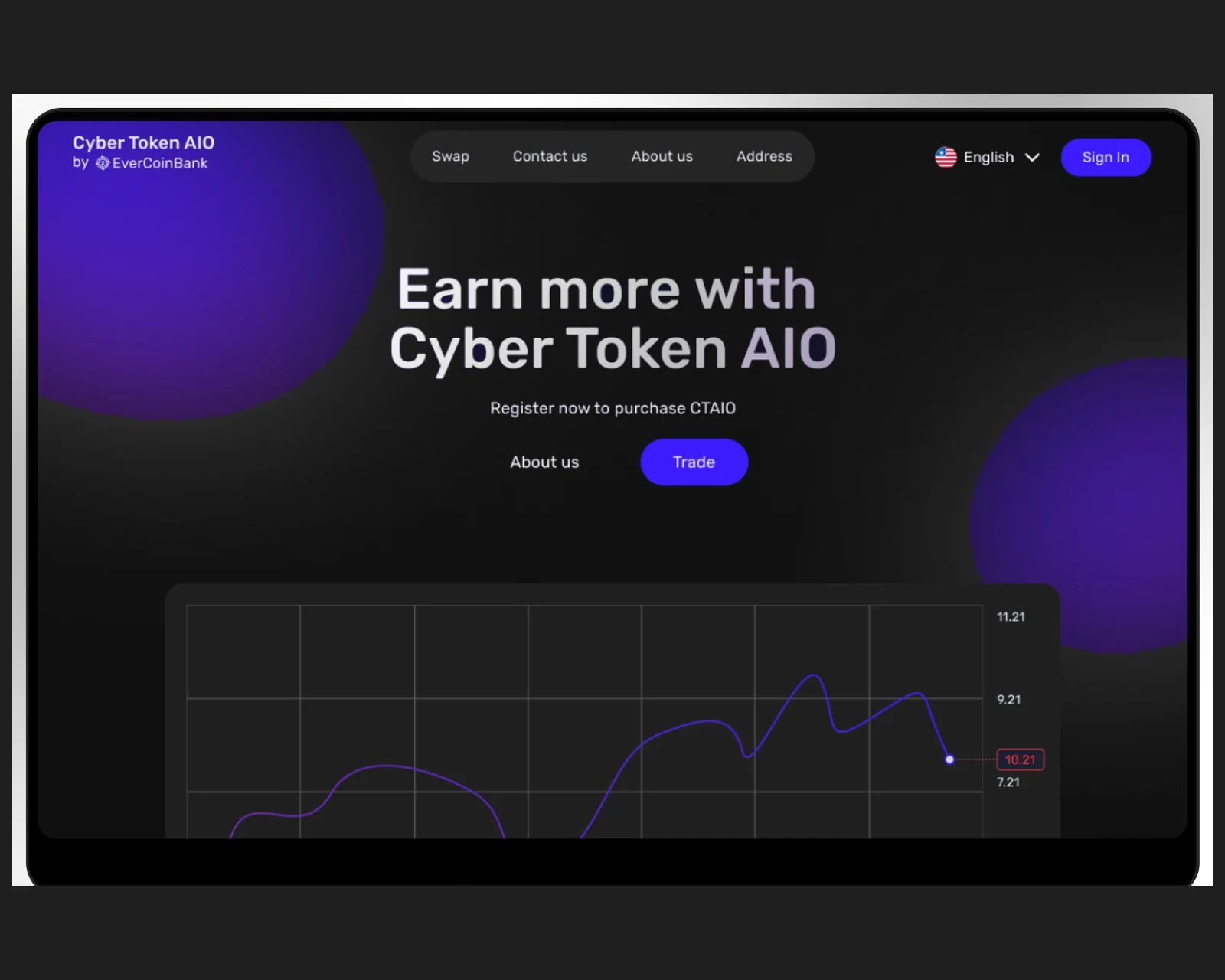
End-to-end ERC-20 launch — smart contract, security audit, listings, MetaMask checkout on the project site.
View case →
Tilda landing with Telegram-bot lead capture — fast inbound funnel for a service business.
View case →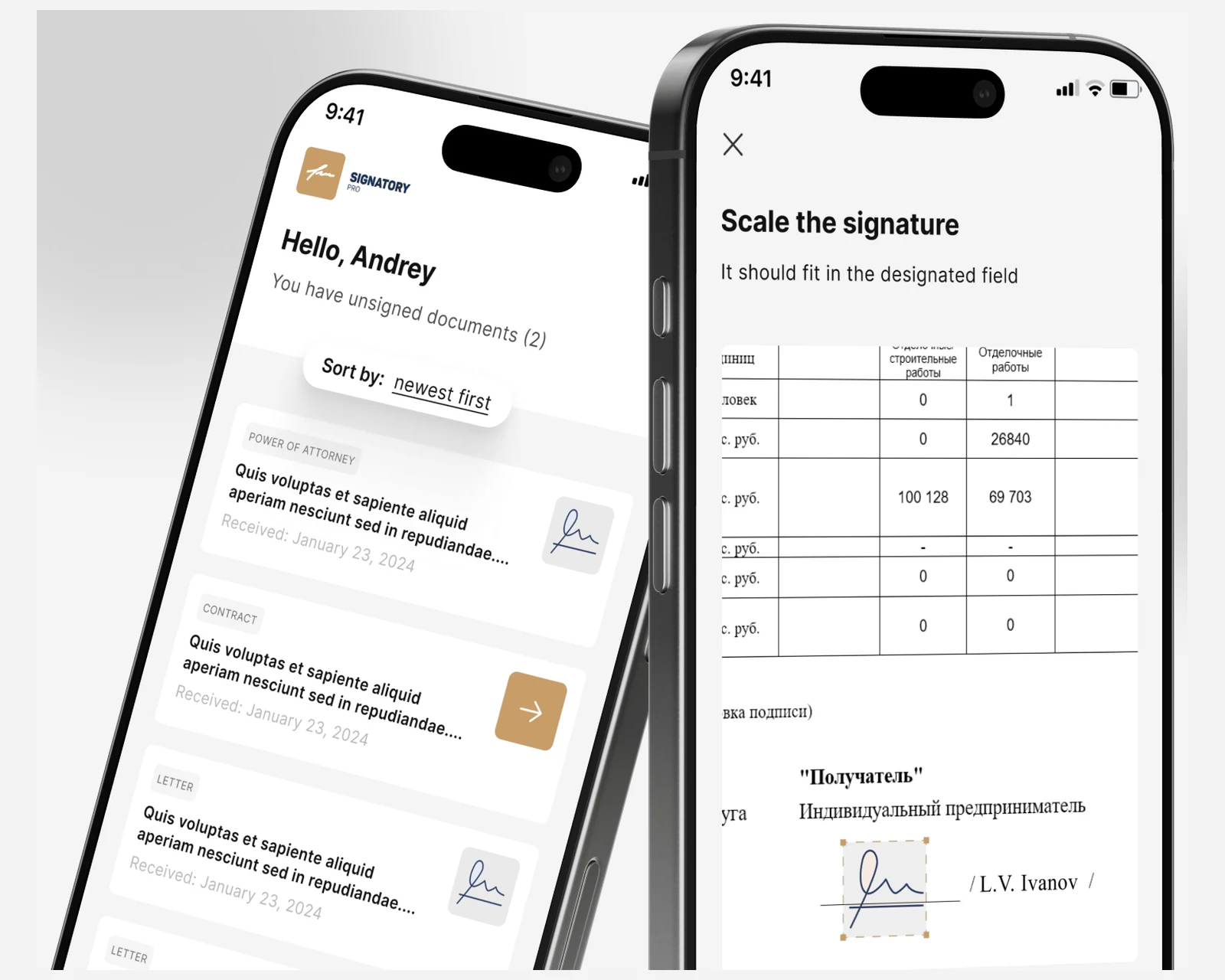
Native e-signature clients plus Symfony + React CRM for cross-border legal workflows.
View case →
Multi-tenant SaaS platforms with SSO, billing, region-pinned residency. SOC 2 in progress.
Learn more →
Architecture-first enterprise platforms with audit-ready compliance and integration to SAP, Salesforce, Workday, Okta.
Learn more →
AWS, Azure, GCP platforms with IaC, observability, and zero-downtime deploys.
Learn more →Share a few details and a senior consultant will reply within one business day.