Card scope creep
PCI DSS audit scope quietly grows with every new microservice. We tokenize early and isolate cardholder data to keep the audit boundary small.

GDPR PCI DSS AI-native
YuSMP Group builds production fintech software for payments, lending, wallets, neobanks and capital-markets desks across the US and EU. Eighty senior engineers ship inside PCI DSS software development scope, partner with QSAs on assessments, and deliver KYC/AML, open banking and real-time payment flows that satisfy regulator-grade scrutiny. xRouten payment routing improved auth rates by 4.1 points and cut latency 38%.

We deliver custom fintech engineering for four buyer profiles: payment processors and PSPs moving card, ACH, SEPA and FedNow volume; consumer and SMB lenders running KYC/AML, underwriting and servicing; wallet, BNPL and neobank teams building on banking-as-a-service rails; and capital-markets desks integrating market data, execution and post-trade workflows. Our delivery teams operate inside PCI DSS scope, coordinate assessments with partner QSAs, and design to PSD2, open banking, FedNow, SEPA and US state money-transmitter expectations. GDPR alignment, SOC 2 Type II progress and ISO 27001 readiness sit underneath every engagement. Explore how we deliver this through our Custom Software Development service.
Challenges
PCI DSS audit scope quietly grows with every new microservice. We tokenize early and isolate cardholder data to keep the audit boundary small.
Strong customer authentication kills conversion when applied bluntly. We tune risk-based exemptions and 3DS2 flows for measurable uplift.
Mainframe and aging core banking systems block product velocity. We wrap them with event-driven facades and progressive strangler patterns.
Rule-only monitoring drowns analysts in false positives. We add ML scoring and feedback loops to lift true-positive rate without breaking auditability.
ICT risk register, third-party concentration and resilience testing are now non-negotiable. We engineer them in, not bolt them on.
Multi-jurisdiction deployments need careful data residency and SCC handling. EU data residency by default, US options on request, with clear lawful basis.
Solutions
Acquiring, issuing and orchestration with token vaults, 3DS2, refunds and reconciliation across US & EU schemes.
Origination, decisioning, servicing and collections with explainable scoring models and regulatory reporting.
Core ledger, accounts, cards, FX and onboarding stacks for licensed EMIs and challenger banks.
Order management, market data, execution and post-trade for retail and pro investors under MiFID II.
Identity verification, sanctions and PEP screening, transaction monitoring, SAR/STR case management.
Banking-as-a-Service APIs, partner onboarding, white-label wallets and revenue-share reporting.
Stack
Java, Kotlin, Go, Node.js, TypeScript, Python, PostgreSQL, Kafka, Redis, Temporal, Kubernetes, Terraform, AWS, GCP, Vault, OpenSearch.
Compliance
GDPR-aligned · ISO 27001 ready · SOC 2 Type II in progress · HIPAA-capable · CCPA-acknowledged
Shared: PCI DSS v4.0 — tokenization, scope reduction, audit-ready logging.
On this page each regime is framed as a fintech delivery challenge. For the step-by-step control implementation and audit path, see our dedicated PCI DSS software development, GDPR compliance consulting and SOC 2 readiness services.
Integrations
Fintech products live or die on their connections. Our engineers build against the rails, schemes and data providers that US and EU financial products depend on — cleanly abstracted so a provider can be swapped without re-architecting.
Visa, Mastercard, American Express and Discover flows with EMV 3DS2, network tokenization and acquirer/processor connectivity for both issuing and acquiring.
ACH under NACHA, FedNow and TCH RTP in the US; SEPA Credit Transfer, SEPA Instant and SEPA Direct Debit plus SWIFT and Fedwire for cross-border payments and wires.
PSD2 account-information and payment-initiation flows through licensed AISP/PISP providers and aggregators such as Plaid, MX and Mastercard Open Banking for account verification and pay-by-bank.
Document and biometric identity verification, sanctions and PEP screening against OFAC, EU consolidated and UN lists, and transaction-monitoring feeds wired into SAR/STR workflows.
Core-banking and card-issuing processors, Banking-as-a-Service partner rails and a double-entry ledger of record for accounts, balances and reconciliation.
Market-data feeds, order-management and execution over FIX, plus custody, settlement and post-trade reconciliation for trading and brokerage desks under MiFID II.
Need a specific integration scoped? Our custom software development and cloud & DevOps teams own the build and the runtime.
Process
Every engagement is compliance-enforced from the first architecture decision, not audited into shape at the end.
We map the regimes in scope — PSD2, DORA and MiCA in the EU, or GLBA, SEC, FFIEC and BSA/AML under FinCEN in the US — and define PCI DSS boundaries before a line of code is written.
Token vaults and cardholder-data isolation keep the PCI audit boundary small; data residency is EU-default with US options, and lawful basis is decided up front.
Engineers ship inside PCI scope with KYC/AML controls, PSD2 SCA and 3DS2 flows, sanctions screening and threat models built into each increment.
We coordinate assessments with partner QSAs, run DORA-aligned resilience testing and certify integrations against scheme and rail requirements before launch.
Each release ships with traceable change records, SBOMs and threat-model deltas, plus incident classification and third-party monitoring to keep resilience evidence audit-ready.
We stay on as a long-term engineering partner — tracking regulatory change, tuning AML rules and evolving the platform as your licences and markets expand.
Cases
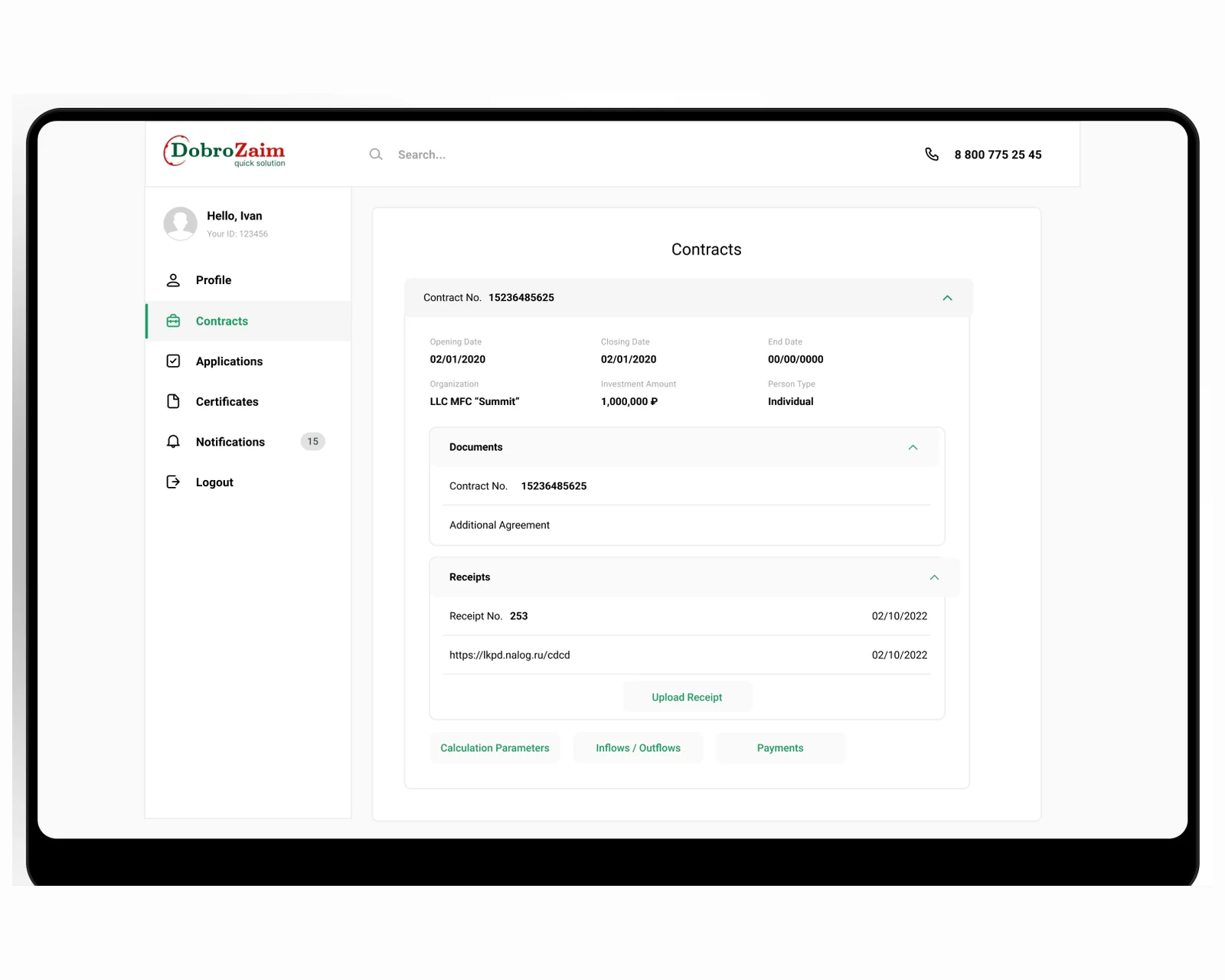
A high-throughput loan decision engine on Laravel — automated scoring, credit-bureau integration, and 10x faster decisions for US & EU lenders.
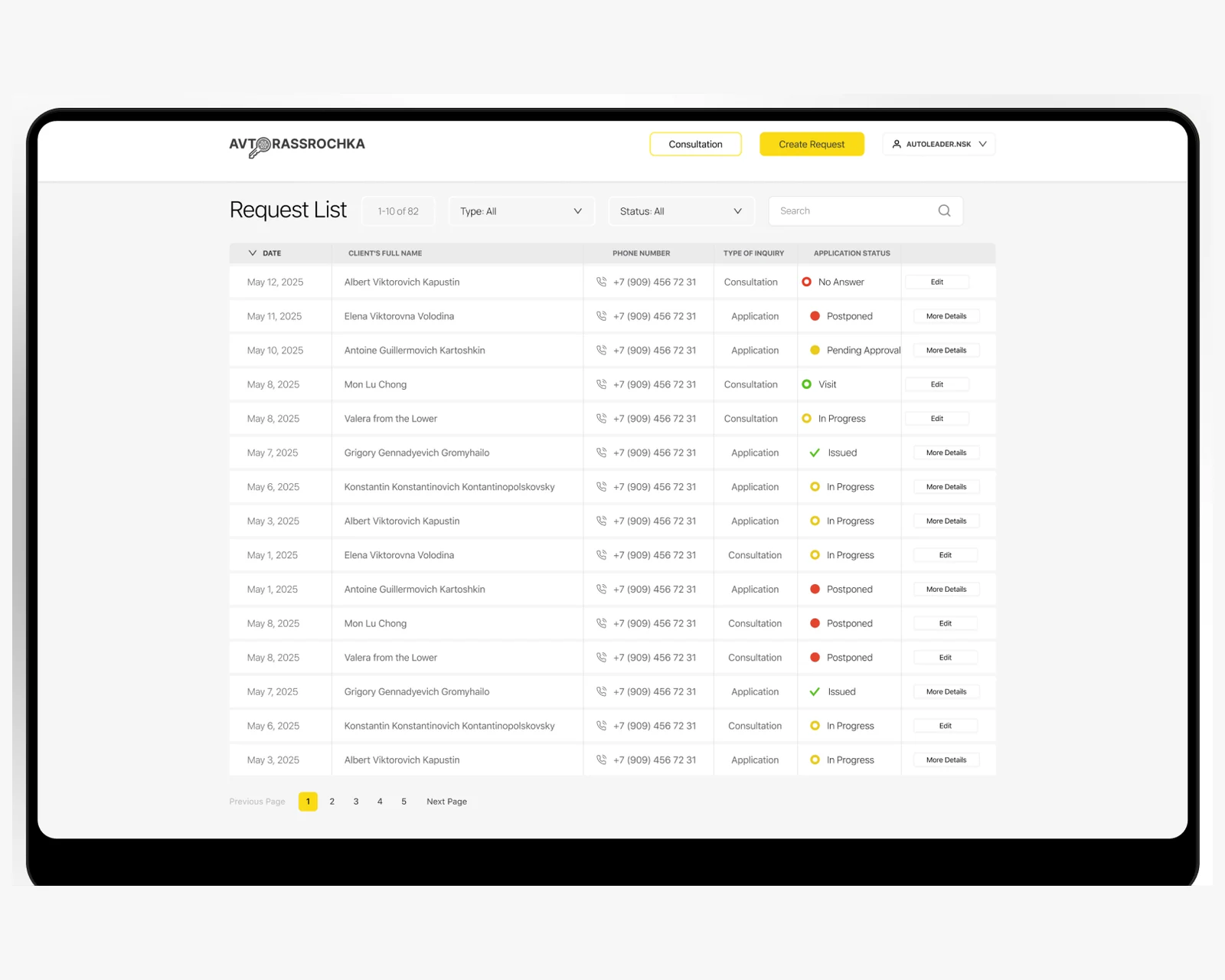
Dealer-facing web platform funneling every auto-financing enquiry into a single tracked queue with Bitrix24 CRM sync.
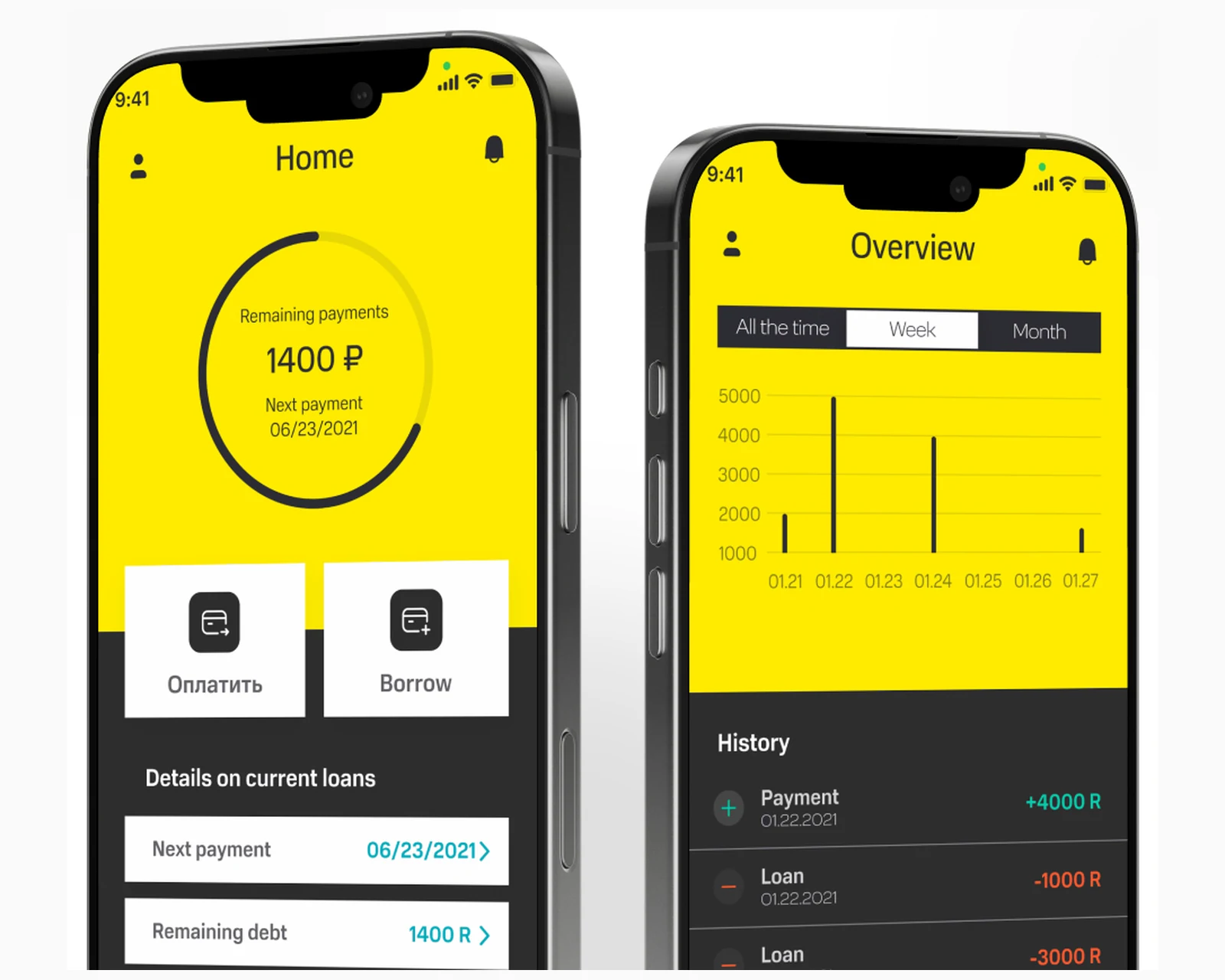
Laravel + React microloans platform — borrower dashboard with e-signature, underwriter workstation, collections, accounting, admin.
Why YuSMP
Senior engineers fluent in PSD2, DORA, MiCA (EU) and GLBA, SEC, FFIEC (US) — not learning on your audit.
EU data residency by default (Frankfurt, Dublin, Stockholm) · US options on request (us-east-1, us-west-2). SCCs only when truly needed.
Every release ships with traceable change records, SBOMs and threat-model deltas.
Aggregating live prices across multiple exchanges while keeping latency under 500 ms is genuinely hard engineering. YuSMP built the multi-exchange feed, real-time token charts, and listing workflow into a coherent platform. We have not had an outage since launch.
A loan decision engine that takes ten times less time to approve does not happen by accident. YuSMP built the scoring pipeline, integration with credit bureaus, and a back-office that our underwriters actually enjoy using. Approval turnaround went from two days to under four hours.
FAQ
Yes. We design card-handling architectures with tokenization, scope reduction and audit trails aligned with PCI DSS v4.0, and partner with QSAs for formal certification.
We implement PSD2 SCA with risk-based exemptions, 3DS2 flows and account information service connectivity through licensed AISP/PISP providers. For US flows we align with Reg E, NACHA WEB debit authentication and FFIEC multi-factor guidance.
We map ICT risk, set up incident classification, third-party register and resilience testing in line with DORA articles 5-15 from day one of architecture. For US clients we mirror the program against FFIEC IT examination guidance and SEC Reg S-P safeguards.
We implement GLBA Safeguards Rule controls, SEC Rule 10b-5 anti-fraud surveillance for trading, FFIEC-aligned IT exam readiness and BSA/AML programs under FinCEN — including CIP, SAR/CTR filings and OFAC sanctions screening.
Yes. We deliver custody, exchange and tokenization platforms with MiCA-aligned governance, market abuse controls and travel rule integration.
We integrate identity providers, sanctions and PEP screening, transaction monitoring with adjustable rule engines and ML scoring, and SAR/STR workflows.
PCI DSS Level 1 certification (required for merchants or processors handling more than 6 million card transactions annually) requires an onsite QSA assessment and typically takes 6–18 months from initial scoping to Attestation of Compliance (AOC), depending on your existing control posture. Cost ranges from $40,000–$200,000+ for the QSA assessment, plus internal remediation costs. Organizations starting with a strong security baseline and limited CDE scope typically achieve certification in 6–9 months; those with broad scope and legacy systems often take 12–18 months.
PSD2 (EU) mandates open banking via the Berlin Group NextGenPSD2 framework, requiring ASPSPs (banks) to provide free API access to licensed TPPs for account information (AISP) and payment initiation (PISP) services. FDX (Financial Data Exchange) is the US voluntary standard backed by major banks and fintechs, providing a common API schema for financial data sharing under CFPB's Section 1033 rulemaking. CDR (Consumer Data Right) is Australia's government-mandated open banking regime, now extending to energy and telecommunications. Multi-market open banking products need adapters for each standard's OAuth2 authentication scheme and data model variations.
A FinTech MVP timeline depends heavily on regulatory complexity and integration scope. A non-regulated FinTech tool (budgeting app using open banking data) can ship in 8–12 weeks. A licensed payment initiation service (PISP) requires regulatory approval first (2–6 months depending on jurisdiction), then 12–20 weeks of development. A neobank MVP with issuing and acquiring capabilities, compliant KYC, and SEPA payment connectivity realistically takes 6–12 months including licensing. The constraint is usually compliance readiness rather than engineering speed.
Effective real-time fraud prevention requires a multi-layer approach: device fingerprinting and behavioral biometrics at the client layer, velocity rule engines for pattern detection at the gateway layer, and ML-based anomaly scoring for the long-tail cases that rules miss. For account takeover, behavioral biometrics detect credential stuffing attacks that bypass password-based controls. For e-commerce, 3DS2 with risk-based authentication challenges only high-risk transactions. False positive rate is as important as detection rate — most fraud teams target less than 0.5% false positives to avoid degrading the customer experience for legitimate transactions.
For a neobank MVP with under 50,000 customers, a well-structured modular monolith with clear domain boundaries (accounts, payments, cards, compliance) is significantly faster to build and operate than microservices. The operational complexity of microservices — service discovery, distributed tracing, inter-service authentication, eventual consistency — consumes engineering capacity that early-stage neobanks need for product development and regulatory compliance. We typically recommend starting with a monolith that has clean internal module boundaries, then extracting the highest-traffic components into separate services as traffic validates the separation.
Payment systems require RPO of near-zero (seconds) and RTO under 60 seconds for transaction processing, requiring active-active multi-region deployments where transactions are processed simultaneously in two or more regions with synchronous replication of the authoritative ledger state. PostgreSQL with streaming replication and Patroni failover automation, or cloud-managed databases like Aurora Global or Spanner, provide the synchronous replication guarantees required. Payment gateway integrations need circuit breakers, retry logic with idempotency keys, and fallback routing to secondary providers when primary processors are degraded.
Response within 1 business day. NDA on request.
From regulated banking infrastructure to embedded finance APIs, we cover the full spectrum of financial technology development.
We build cloud-native core banking platforms with microservice-based account management, transaction processing, and product configurability that lets you launch new financial products in weeks instead of months. Our PSD2/Open Banking integrations implement OAuth2 TPP authorization flows, consent management UIs, and AISP/PISP API adapters that comply with EBA Regulatory Technical Standards.
Core banking API layers use event-sourced ledger systems with double-entry accounting, CQRS pattern for read/write separation, and idempotency controls for payment processing. We use Apache Kafka for event streaming, PostgreSQL with financial-grade ACID transactions, and Redis for real-time balance caching at banking scale.
ISO 20022 migration is mandatory for SWIFT cross-border and SEPA payments, requiring end-to-end message transformation and enriched data handling. We implement message translation layers, co-existence period strategies, and SEPA Instant Credit Transfer (SCT Inst) processing pipelines capable of sub-10-second settlement with 24/7/365 availability.
Payment processing pipelines handle millions of events per second through Kafka's distributed log architecture, enabling real-time fraud detection, payment routing, and audit trail generation without performance degradation under peak load. We build ISO 8583 adapters for card network connectivity and 3DS2 authentication flows for SCA compliance.
MiFID II requires suitability and appropriateness assessments for investment recommendations, transaction reporting (RTS 22/24), and best execution analysis. We build robo-advisory engines with risk profile questionnaires, goal-based portfolio optimization using Modern Portfolio Theory, and automated rebalancing workflows that satisfy MiFID II suitability documentation requirements.
Investment platforms need real-time market data ingestion, order management systems (OMS) with DMA capabilities, and portfolio performance attribution that satisfies GIPS standards. We integrate with market data providers (Bloomberg, Refinitiv, Quandl) and prime brokers via FIX protocol.
Financial crime compliance teams need ML-based behavioral analytics engines that reduce false positives in AML transaction monitoring while meeting FATF and 6AMLD requirements. We build automated KYC/KYB document verification integrations (Onfido, Jumio, Sumsub) and sanctions screening APIs that process customer records against OFAC, UN, and EU lists in real time.
Regulatory reporting automation reduces manual reconciliation work by 80%+ through structured data pipelines that aggregate transactional data into FCA/EBA/BaFin-format regulatory reports. We build audit trail systems with immutable append-only logging satisfying 7-year retention requirements for transaction monitoring evidence.
Parametric insurance products pay out automatically when predefined triggers are met (weather station data, flight delay APIs), eliminating manual loss adjustment. We build IoT telematics data pipelines for usage-based insurance (UBI), AI-powered first notice of loss (FNOL) processing, and automated claims adjudication workflows that reduce claims cycle time by 60–80%.
Insurance platforms require actuarial data models integrated with pricing engines, reinsurance treaty management, and regulatory reporting for Solvency II. We build insurance product configurators that let underwriting teams define new coverage products without engineering involvement.
Embedded finance allows non-bank businesses to offer financial services through APIs, creating new revenue streams and improving customer retention. We integrate Banking-as-a-Service platforms (Railsr, Solaris, Treasury Prime), implement BNPL lending decisioning models with credit bureau integrations, and build merchant-facing financial product widgets deployable in days.
BNPL decisioning models use alternative credit data sources (open banking transaction history, behavioral signals) to assess creditworthiness for thin-file customers, expanding addressable market while managing credit risk through ML-based approval thresholds and portfolio monitoring dashboards.
In-depth guides on building compliant fintech apps — cost, stack and security.





Share a few details and a senior consultant will reply within one business day.