Special-category data
Health data needs explicit Article 9 basis, tighter retention and clinical access controls. We design for it from the schema up.

GDPR MDR AI-native
We provide custom healthcare software development for clinics, payers, and digital-health vendors that need senior delivery without compliance gaps. YuSMP Group ships HIPAA-capable telehealth platforms, remote-patient-monitoring backends, and SaMD-aware applications — with FHIR-native data layers, audit-ready logging, and EU data residency on request. Yerevan teams overlap the US East Coast daily, so PHI questions get answered the same business day.

Our healthtech practice covers four product lanes: telehealth and virtual-care platforms, remote patient monitoring (wearables, device ingestion, alerting), EHR and EMR integration with Epic, Cerner/Oracle Health, Athenahealth and Meditech, and SaMD-aware clinical applications. We deliver under a dual-jurisdiction posture — HIPAA Security and Privacy Rules for US covered entities and business associates, plus GDPR, EU MDR awareness, and EU data residency for European patient cohorts. Engineering follows IEC 62304-aware lifecycle practices, ISO 13485 aware QMS habits, and FHIR R4 / HL7 v2 interoperability from day one. Explore how we deliver this through our HIPAA-compliant software development service. Budgeting a build? See our healthcare software development cost guide for 2026 price ranges by project type and compliance scope.
Challenges
Health data needs explicit Article 9 basis, tighter retention and clinical access controls. We design for it from the schema up.
Adding a single ML inference can reclassify your software as a medical device. We flag and document changes across the SDLC.
FHIR, HL7 v2, DICOM, IHE profiles and national variants pile up fast. We standardize on FHIR R4 and bridge legacy carefully.
Every extra click steals minutes from patient care. We co-design with clinicians and instrument task-time relentlessly.
Regulatory validation can crush velocity if bolted on. We separate GxP-relevant flows and keep the rest agile.
Multi-country deployments meet conflicting consent and prescription rules. We build country-aware policy layers.
Solutions
Video consultations, e-prescriptions, scheduling and patient messaging with end-to-end encryption.
Modular electronic health records with FHIR APIs, role-based clinical access and audit trail.
Companion software for medical devices, including data ingestion, dashboards and remote monitoring.
Onboarding, symptom tracking, adherence and care plans with accessibility WCAG 2.2 AA built in.
Decision support, triage and imaging assist with model risk controls and traceable training data.
Claims, prior authorization and provider directories integrated with existing payer cores.
Stack
TypeScript, React, Node.js, Python, FastAPI, Java, Spring, PostgreSQL, HAPI FHIR, DICOMweb, Kafka, Kubernetes, Azure Health Data Services, AWS HealthLake, Terraform, OpenSearch.
Compliance
GDPR-aligned · ISO 27001 ready · SOC 2 Type II in progress · HIPAA-capable · CCPA-acknowledged
Shared: ISO 13485 quality management · IEC 62304 software lifecycle classes A, B, C · ISO 14971 risk management.
This page frames these obligations as healthtech delivery challenges. For the controls, evidence and audit path in depth, see our dedicated HIPAA-compliant software development, GDPR compliance consulting and EU AI Act compliance services — the vertical challenge here, the compliance how-to there.
Interoperability
Health software is only as useful as the systems it talks to. We engineer directly against the EHR, standards, device and payer ecosystems US and EU care depends on — FHIR-native by default, with PHI kept to the clinical minimum so each integration stays inside the HIPAA and GDPR boundary.
Epic, Oracle Health (Cerner), Athenahealth, Meditech, Allscripts/Veradigm, eClinicalWorks and NextGen — through vendor APIs, SMART on FHIR apps and HL7 v2 bridges from legacy hospital systems.
HL7 FHIR R4, HL7 v2, C-CDA and IHE profiles, DICOMweb imaging, and terminologies (SNOMED CT, LOINC, ICD-10, CPT) validated against national implementation guides.
Remote-monitoring ingestion over Bluetooth LE and Continua, plus Apple HealthKit and Google Health Connect, streamed into custom-built alerting and dashboards.
NIST SP 800-63 IAL2/AAL2 patient verification (ID.me, Login.gov, Okta CIAM) in the US; eIDAS providers and the EU Digital Identity Wallet for European portals.
e-Prescribing via Surescripts-class networks, lab orders and results over HL7/LOINC, and diagnostic-imaging exchange for connected care pathways.
X12 EDI 837/835 claims and eligibility, prior-authorization workflows and provider-directory feeds wired into existing payer cores.
How we deliver
Compliance is designed into delivery, not audited in at the end. Every healthtech engagement moves through five stages, with HIPAA, GDPR and medical-device obligations treated as first-class engineering concerns from day one.
We map the applicable regime up front — HIPAA/HITECH in the US, GDPR Article 9, MDR and IVDR in the EU — and decide early whether the software is a medical device, fixing its IEC 62304 class and opening an ISO 14971 risk file.
A FHIR-native data layer, PHI minimized to the clinical minimum, audit-ready logging, and residency (EU by default, US on request) are fixed in the architecture — with BAAs and SCCs scoped only where care genuinely crosses borders.
Senior engineers build with HIPAA technical safeguards, encryption at rest and in transit, role-based clinical access and 21 CFR Part 11 electronic records as defaults — not retrofits — across our cloud & DevOps pipeline.
We connect EHR, HL7/FHIR and DICOM interfaces, validate against national IGs, and run design controls and GxP-relevant validation, coordinating with your QMS team or notified body where SaMD applies.
HITECH breach-detection and 60-day notification workflows, post-market surveillance and traceable change records go live with the product, and every release ships with SBOMs and threat-model deltas.
Post-launch we run regulatory-change tracking, resilience testing and iterative delivery as the product and its clinical obligations evolve.
Cases
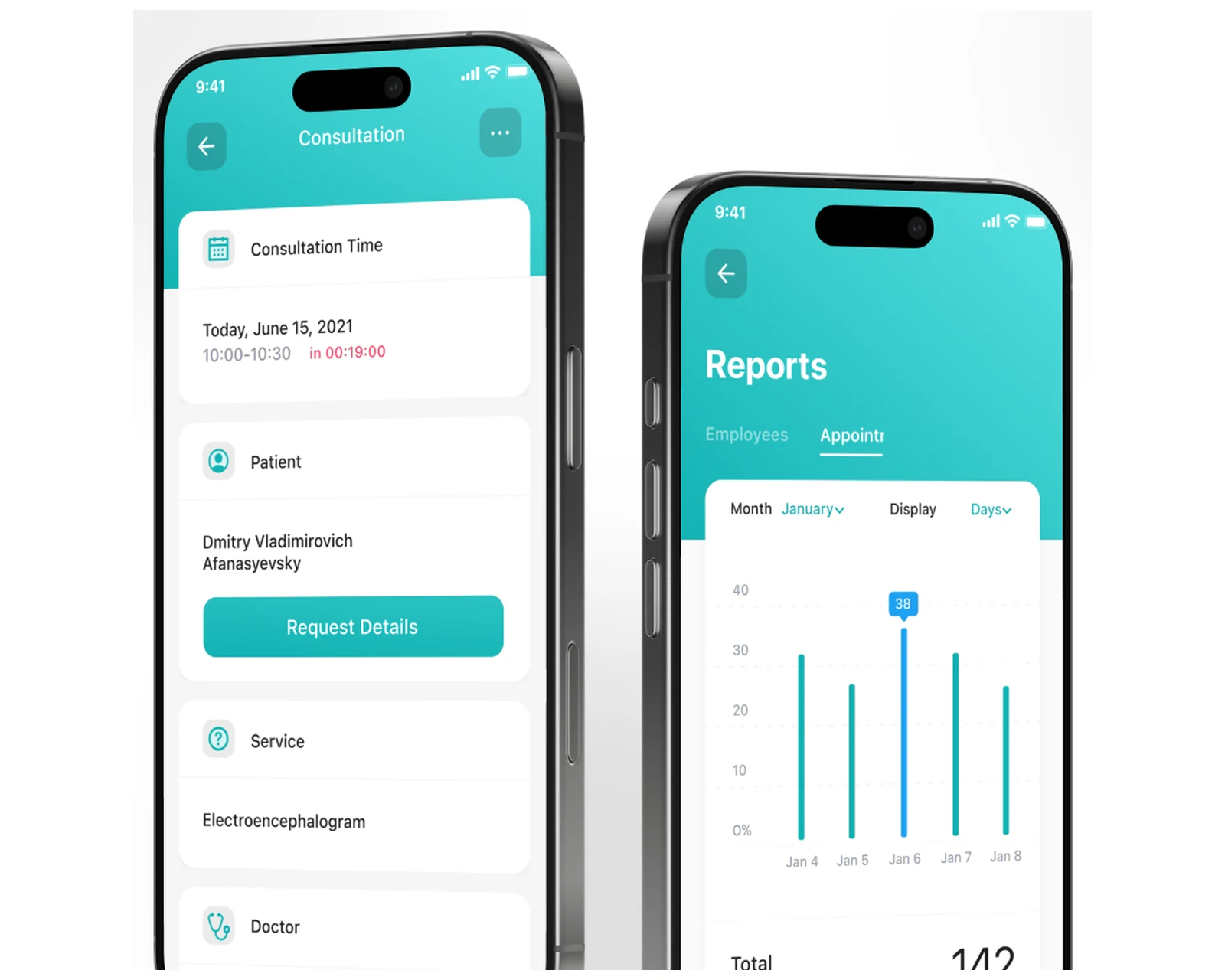
A patient app plus a role-based staff suite that unifies multiple clinics — appointments, records, and dashboards, HIPAA-capable for the US & EU.
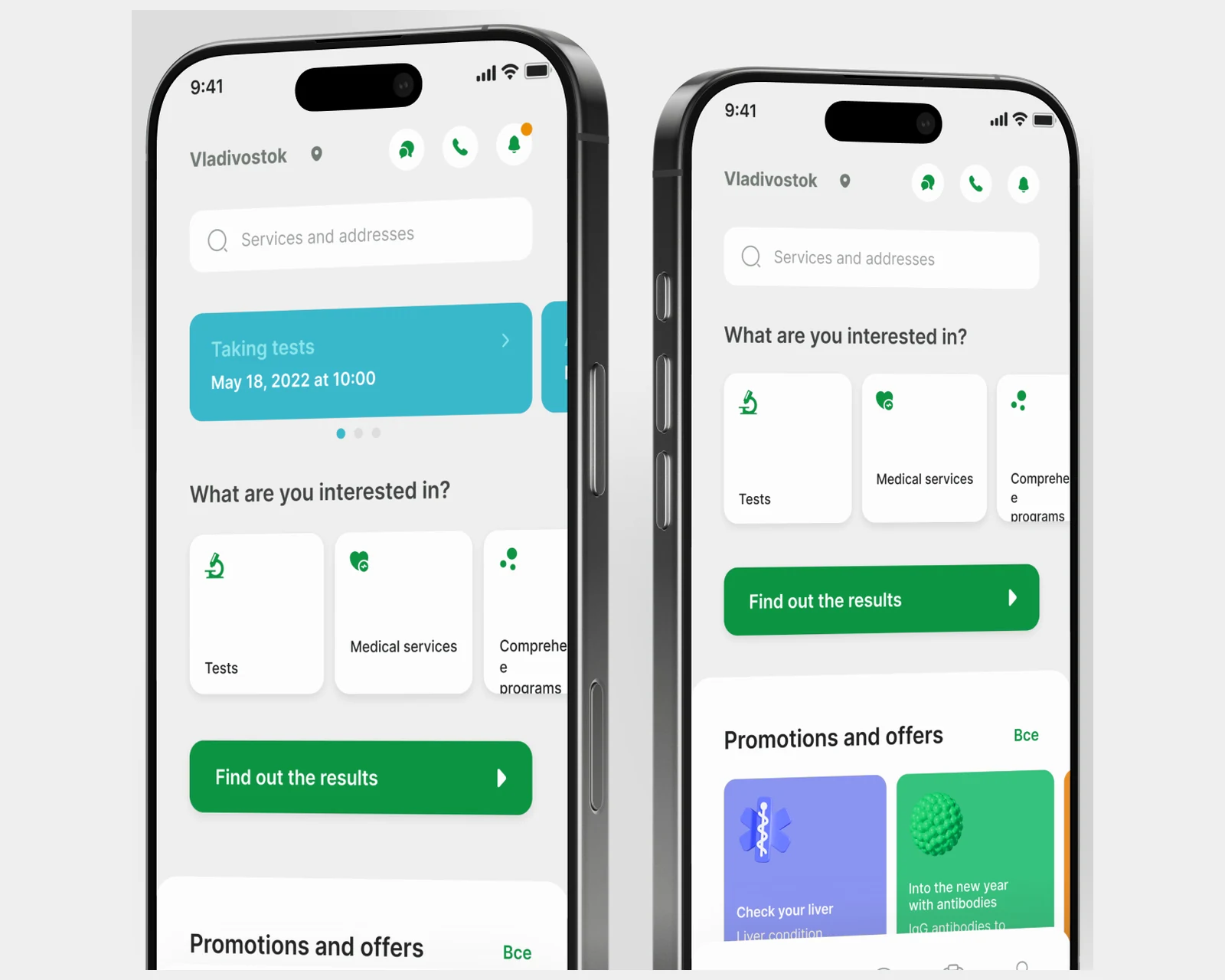
Patient app for a 40-city lab network — appointment booking, digital results, 2,500+ tests, scheduling and accounting integrations.
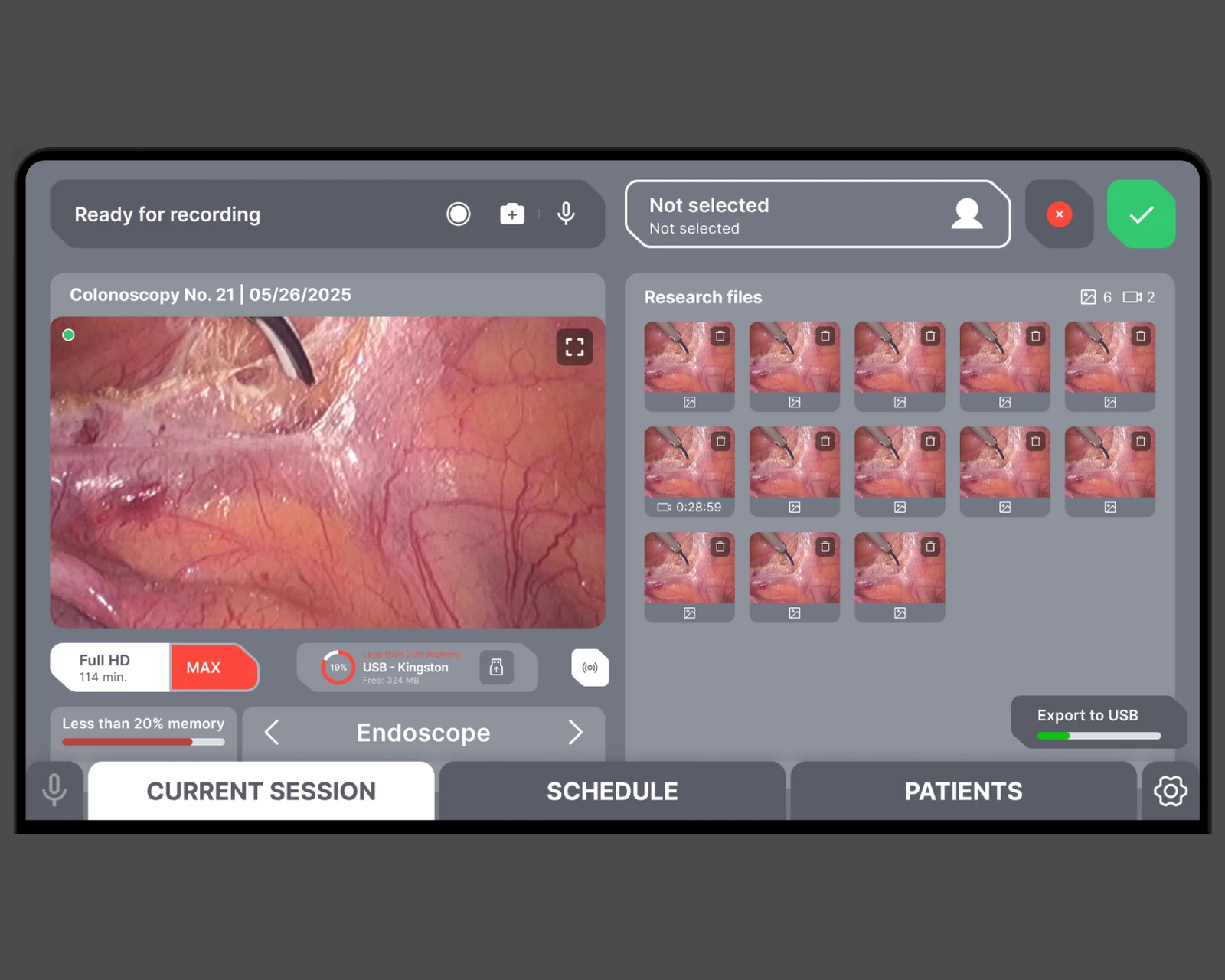
Tablet-first endoscopy recording, patient records, and DICOM/HL7 export — built on Laravel + React with browser-tier WebRTC capture for US & EU clinics.
Why YuSMP
Engineers and BAs who speak SNOMED, FHIR and clinician workflow — not just JIRA.
Lifecycle artifacts ready for both EU notified body review and FDA 21 CFR Part 820 design controls without slowing down product work.
EU data residency by default · US options on request. SCCs and BAAs only when there's a clinical reason to cross.
Clinical workflow software that hospitals actually adopt is rare. YuSMP built an iPad-first endoscopy platform with HD video capture, DICOM export, and HL7 integration. Medical staff needed almost no training because the UX is genuinely intuitive.
Medical staff adoption depends entirely on UX simplicity. YuSMP built a patient-facing app and a staff suite that share a single data model, meaning zero reconciliation lag between what the patient sees and what the clinician acts on. Onboarding a new clinic now takes one day.
FAQ
Yes. We work with manufacturers on Class I-IIa SaMD, supporting technical documentation, risk management per ISO 14971 and software lifecycle per IEC 62304.
Yes. We deliver SaMD under FDA 21 CFR Part 820 Quality System Regulation, design controls and 21 CFR Part 11 electronic records/signatures, with HIPAA technical safeguards baked into the device software.
We map Article 9 lawful basis, encrypt data at rest and in transit, minimize fields to the clinical minimum and implement DPIAs for any new processing.
We apply HIPAA Privacy, Security and Breach Notification rules to PHI handling, execute BAAs with downstream subprocessors, and run HITECH-compliant breach detection and 60-day notification workflows.
We build FHIR R4 APIs, ingest DICOM imaging, and bridge HL7 v2 from legacy hospital systems. Profiles validated against national IGs where applicable.
We align our SDLC artifacts to ISO 13485 quality records and 62304 software classes A-C, working alongside your QMS team or notified body auditor.
Yes. We integrate eIDAS-compliant identity providers, the EU Digital Identity Wallet and national eID schemes for patient authentication and consent.
Yes. We design US patient portals against NIST SP 800-63-3 IAL2/AAL2 identity assurance, with ID.me, Login.gov or Okta CIAM patterns for verified patient access.
Yes. For cross-Atlantic products we layer HIPAA technical safeguards on top of GDPR controls and execute BAAs with downstream subprocessors.
Yes — custom healthcare software development is core to this practice: telehealth, EHR integration, patient apps and SaMD-aware builds engineered under HIPAA and GDPR from day one. Pricing depends on software type and compliance scope; a typical EHR integration runs $20,000–$80,000 and a telemedicine platform $70,000–$350,000. See our healthcare software development cost guide for full 2026 price ranges and timelines.
The 21st Century Cures Act (ONC Final Rule, effective April 2021) prohibits information blocking by healthcare providers, health IT developers, health information exchanges, and health information networks. It requires certified health IT to implement HL7 FHIR R4 Patient Access APIs, Provider Directory APIs, and Payer-to-Payer Data Exchange APIs, giving patients the right to access their health data through third-party apps of their choice. For developers, this means: if you build software certified under the ONC Health IT Certification Program, your FHIR APIs must be publicly documented, freely accessible without unnecessary barriers, and cannot impose conditions that limit the interoperability of health information. Violations can result in civil monetary penalties up to $1 million per violation.
FDA expects DTx seeking regulatory clearance to demonstrate clinical evidence proportionate to the risk class and intended use. For De Novo and 510(k) submissions, FDA typically requires randomized controlled trial (RCT) data demonstrating the DTx's clinical benefit compared to a control condition (standard of care, waitlist control, or sham digital intervention). The primary endpoint must be a clinically meaningful outcome measure — not just engagement metrics or patient satisfaction. For Class I wellness apps (low risk, not medical claims), clinical evidence is not required but improves market credibility with payers and health systems. We design clinical study protocols, advise on primary endpoint selection, implement electronic clinical outcome assessment (eCOA) data collection within the app, and support statistical analysis plans in collaboration with your clinical and regulatory advisors.
Response within 1 business day. NDA on request.
From HIPAA-compliant telehealth infrastructure to FDA SaMD-cleared digital therapeutics, we cover the full spectrum of healthcare technology development.
Telehealth platforms require HIPAA-compliant video infrastructure with end-to-end encryption, waiting room workflows, and multi-party session support for clinical consultations with specialists, interpreters, and family members. We build on WebRTC with STUN/TURN infrastructure, integrate RPM devices through Bluetooth LE and cloud APIs (Validic, Rimidi), and implement asynchronous secure messaging with message retention policies that satisfy HIPAA §164.312(b) audit control requirements.
Remote patient monitoring integrations support Bluetooth LE medical device protocols (blood pressure monitors, glucometers, pulse oximeters, continuous glucose monitors) and push readings automatically to care team dashboards with configurable alert thresholds. We implement FHIR Observation resources for standardized vital sign storage and interoperability with EHR systems, enabling RPM data to flow into the patient's longitudinal health record.
Epic and Cerner EHRs control over 50% of US hospital market share, making integration with their APIs critical for health technology companies. We build SMART on FHIR app registrations for Epic App Orchard and Cerner Code marketplace, implement HL7 FHIR R4 RESTful APIs for clinical resource exchange (Patient, Observation, Condition, DiagnosticReport), and develop HL7 v2 ADT/ORM message processing pipelines for legacy hospital information system integration.
CMS interoperability rule compliance requires patient access APIs, provider directory APIs, and payer-to-payer data exchange built on HL7 FHIR R4, with the 21st Century Cures Act prohibiting information blocking by certified health IT. We design FHIR API implementations that satisfy CMS final rule requirements, implement Bulk FHIR for population health data export, and build data normalization layers that standardize terminologies across SNOMED, LOINC, ICD-10, and RxNorm coding systems.
Medical imaging AI for radiology triage, pathology slide analysis, and ophthalmology screening has demonstrated clinical validation in peer-reviewed literature and regulatory clearance by FDA. We develop DICOM-compliant imaging analysis pipelines using PyTorch with pre-trained models (TorchXRayVision, MONAI), build NLP engines for clinical note de-identification and ICD-10 coding automation, and create predictive risk stratification models for sepsis early warning, readmission prediction, and care gap identification.
Clinical decision support systems (CDSS) require evidence-based logic validated against clinical guidelines (ACC/AHA, NICE), explainability that satisfies clinician trust requirements, and integration into EHR workflows through CDS Hooks (a SMART on FHIR standard) that surfaces recommendations at the point of care without requiring clinicians to switch applications. We design CDSS architectures with audit logging for regulatory compliance and human-override mechanisms that satisfy FDA's perspective on AI/ML-based SaMD.
Patient engagement apps must balance clinical utility with consumer-grade UX to achieve meaningful adoption rates. We build iOS/Android patient apps with HealthKit/Health Connect integration, design patient-reported outcomes (PRO) collection workflows using validated instruments (PROMIS, EQ-5D), implement medication adherence reminder systems with personalization algorithms, and integrate with pharmacy benefit managers (PBMs) for prescription synchronization.
Digital patient education content management systems allow clinical content teams to create, review, and publish condition-specific educational materials, care plan instructions, and post-discharge instructions without IT involvement. We implement content versioning with clinical review workflows, localization for Spanish, Mandarin, and other high-prevalence language populations, and reading level optimization targeting Grade 6–8 comprehension for HIPAA-required notice of privacy practices and consent forms.
Hospital information systems manage complex operational workflows including bed management, OR scheduling, laboratory order routing, and pharmacy dispensing that must integrate with clinical documentation systems. We integrate with laboratory information management systems (LIMS) using HL7 interfaces, build AI-powered surgical scheduling optimization models that maximize OR utilization, and create bed management dashboards that reduce ED boarding time through predictive discharge planning and real-time capacity visibility.
Healthcare revenue cycle management (RCM) automation reduces claim denials and accelerates reimbursement through automated prior authorization APIs (FHIR CRD/DTR CDS Hooks), real-time eligibility verification, and AI-assisted medical coding that suggests ICD-10/CPT codes from clinical documentation with confidence scores. We integrate with major clearinghouses (Change Healthcare, Availity) and build denial management dashboards with root cause analysis for clinical and billing teams.
Digital therapeutics (DTx) are evidence-based software interventions that treat, manage, or prevent medical conditions, requiring clinical validation studies and FDA regulatory clearance through 510(k), De Novo, or PMA pathways. We design prescription digital therapeutics (PDT) with cognitive behavioral therapy (CBT) and behavior change technique (BCT) frameworks, integrate wearable SDK data (Garmin Health, Samsung Health Platform) for biometric-driven personalization.
We build Quality Management Systems (QMS) compliant with ISO 13485 for medical device software development, including design history file (DHF) documentation, software requirements specifications (SRS), and verification & validation (V&V) test protocol execution. Our development process implements IEC 62304 software lifecycle requirements for SaMD, including hazard analysis using IEC 14971 risk management methodology.
In-depth guides on building healthcare software — EHR integration, HIPAA and data compliance.
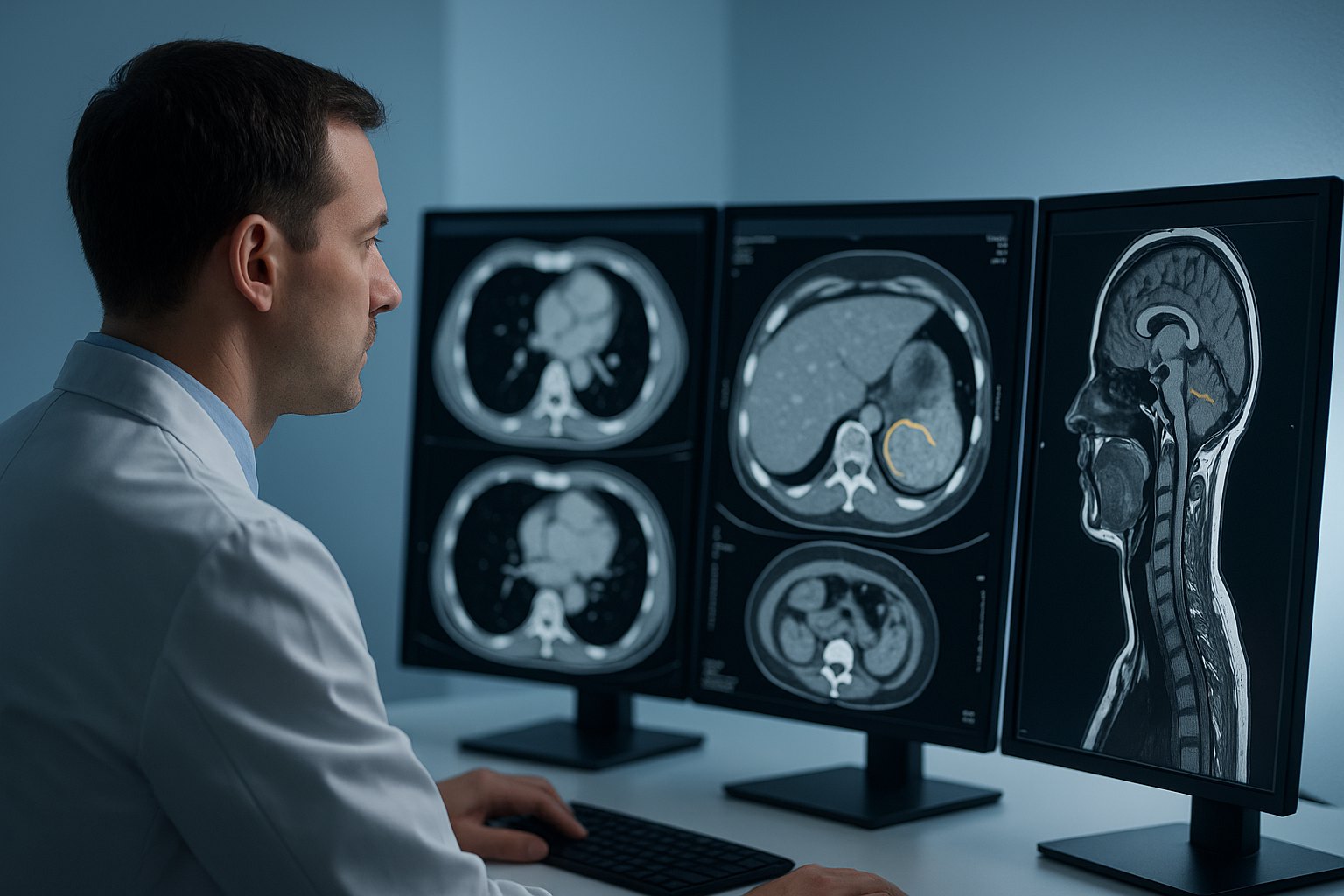



Share a few details and a senior consultant will reply within one business day.