LLM apps that earn their keep
Copilots, search, summarization and document workflows tied to measurable KPIs. We ship features that move metrics, not demos that stall in pilot.

Services
YuSMP Group builds production-grade GenAI applications, RAG systems, AI agents and the data pipelines that feed them — as lean, fixed-scope tiers, not a six-figure enterprise engagement. A PoC / pilot from $2,900 in 4–6 weeks, RAG over your knowledge base from $8,100, an autonomous AI agent from $10,400, an ML model in production from $13,800. 80+ senior engineers in Yerevan deliver in the CET / East-Coast US overlap on a model-vendor-neutral stack across OpenAI, Anthropic and Bedrock. Fixed-scope, all-in USD pricing, IP transferred to you on day one, GDPR-aligned and structured for EU AI Act readiness from day one — not retrofitted later.

Model-vendor neutral · GDPR-aligned · ISO 27001 ready · SOC 2 Type II in progress · HIPAA-capable · EU AI Act & NIST AI RMF conscious · CET workday with 9 AM–1 PM ET overlap
We deliver a connected scope: GenAI applications, retrieval-augmented generation, multi-step AI agents, classical machine learning, the data engineering that makes any of it trustworthy, and the MLOps that keeps it running. Our teams stay model-vendor neutral — Anthropic, OpenAI, open-weight via Bedrock or self-hosted — and pick the stack against your data residency, latency and cost envelope. Governance is built in: GDPR, ISO 27001 controls, SOC 2 Type II in progress, HIPAA-capable delivery, and an EU AI Act risk-classification step on every engagement. See it in practice in our ARIA case study.
Copilots, search, summarization and document workflows tied to measurable KPIs. We ship features that move metrics, not demos that stall in pilot.
Hybrid retrieval, reranking, evaluation and observability. We tune on your data, your queries and your acceptance criteria, not on toy benchmarks.
Reproducible training, model registries, shadow deploys and monitoring for drift and bias. Every model has a clear path from notebook to production.
Modern data stack on Snowflake, BigQuery or Databricks. ELT with dbt, contracts between teams, and lineage your auditors and analysts can both trust.
Risk classification, transparency notices, technical documentation and human oversight built into the product under both the EU AI Act and the NIST AI Risk Management Framework — not bolted on before an audit. State-law aware (Colorado AI Act 2026, NYC AEDT, CCPA ADM rules).
Golden datasets, automated regressions and offline evals on every prompt and model change. Quality is a number, not a feeling.
Need a focused engagement rather than an end-to-end build? Each capability below is a dedicated YuSMP service with its own senior team, delivery playbook and US & EU compliance posture.
Wire GenAI into your existing product — copilots, summarization and content workflows on a model-neutral stack.
GenAI integration →Hybrid retrieval, reranking and evaluation over your own knowledge base, with observability and guardrails.
RAG implementation →Multi-step agents that take actions across your tools, with human-in-the-loop on high-stakes paths.
AI agents →Detection, classification and OCR pipelines for industrial and product teams, trained and monitored on your data.
Computer vision →Fine-tuning, evals and the MLOps to ship and monitor models when RAG alone can’t hit your cost or latency targets.
Fine-tuning & MLOps →Risk classification, technical documentation and human-oversight design so your AI ships audit-ready in the EU.
EU AI Act compliance →We map use cases against business value, data readiness and dual risk classification — EU AI Act risk class plus NIST AI RMF Govern/Map/Measure/Manage profile — then pick the two or three with the strongest payoff.
Reference architecture, evaluation harness, data pipelines and human-in-the-loop boundaries are designed before any model is wired into the product.
Two-week sprints with offline evals, A/B tests on real users, prompt and model version control, and observability for cost, latency and quality.
Drift, bias and cost dashboards, scheduled re-evaluations, and a backlog tied to model and regulatory changes across the EU (AI Act), the US (NIST AI RMF, state laws) and the major providers.
For bounded AI proofs of value, RAG pilots and data platform builds with crisp acceptance criteria and a fixed deadline.
For evolving AI products where prompts, models and metrics change weekly. Senior squad, weekly demos, monthly capacity reviews.
A long-running AI and data squad embedded in your product organization, owning data quality, model lifecycle and compliance documentation.
Most vendors keep the number for a sales call. Here are our lean, fixed-scope tiers so you can budget before discovery. Everything is all-in, quoted in USD, with IP transferred to you on day one, no recruitment markup, no tool surcharges and no hidden fees. You see the line-item budget before any code is written and sign off on it. Cloud and GPU fees run on your own accounts, so you keep the cost lever.
PoC / pilot
from $2,900
4–6 weeks · one use case
A bounded proof of concept on your real data: one use case, a working end-to-end prototype, an eval set and a written go/no-go with a cost projection.
RAG over your knowledge base
from $8,100
grounded on your corpus
Retrieval-augmented generation on your own knowledge base: ingestion and chunking, hybrid retrieval and reranking, an eval harness in CI, guardrails and observability.
AI agent (autonomous)
from $10,400
multi-step, tool-using
A multi-step agent that takes actions across your tools, with human-in-the-loop on high-stakes paths, deterministic evals, output filters and a runbook your team owns.
ML model in production
from $13,800
notebook to serving
A custom ML model shipped to production: data pipelines, training and ablations, MLOps with drift and bias monitoring, and a documented path from notebook to serving.
What moves the number: how many use cases you ship and how deep each RAG corpus goes; the eval-set size needed to trust outputs; latency targets (p95 under 500 ms forces model and infra choices); and compliance scope — GDPR is in scope by default, but HIPAA-capable data flows, EU-only residency or zero-retention provider contracts add controls work. GPU, third-party tooling and cloud spend run on your own accounts. Anything outside the signed scope goes on a roadmap with sized estimates rather than a silent timeline extension. Prices are indicative and fixed in a written quote for your specific scope.

Single-page Tilda landing with Telegram-bot lead capture for an ad agency — shipped in two weeks, US & EU ready.
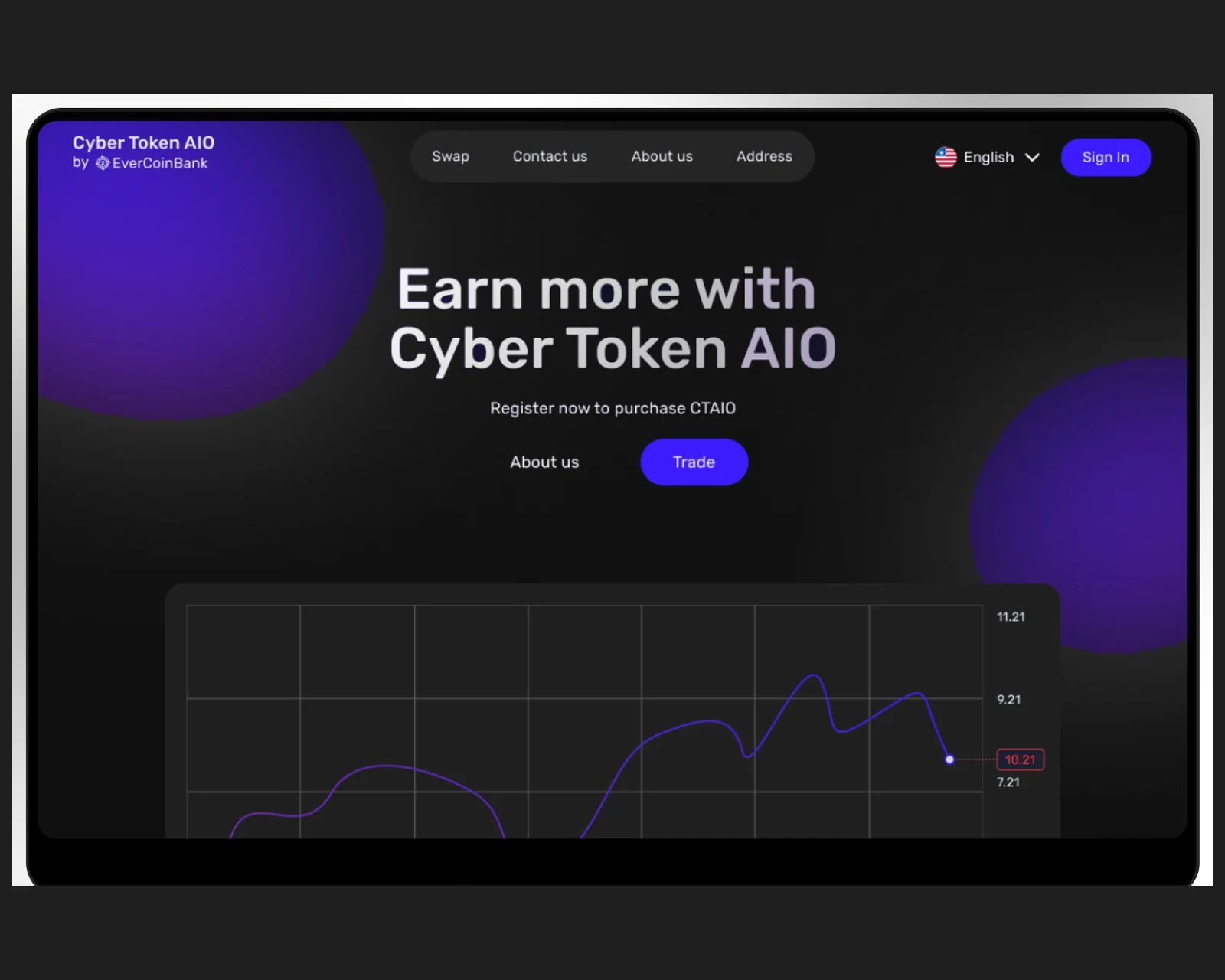
End-to-end ERC-20 token launch — Solidity contract, security audit, exchange listings, MetaMask checkout on the project site.
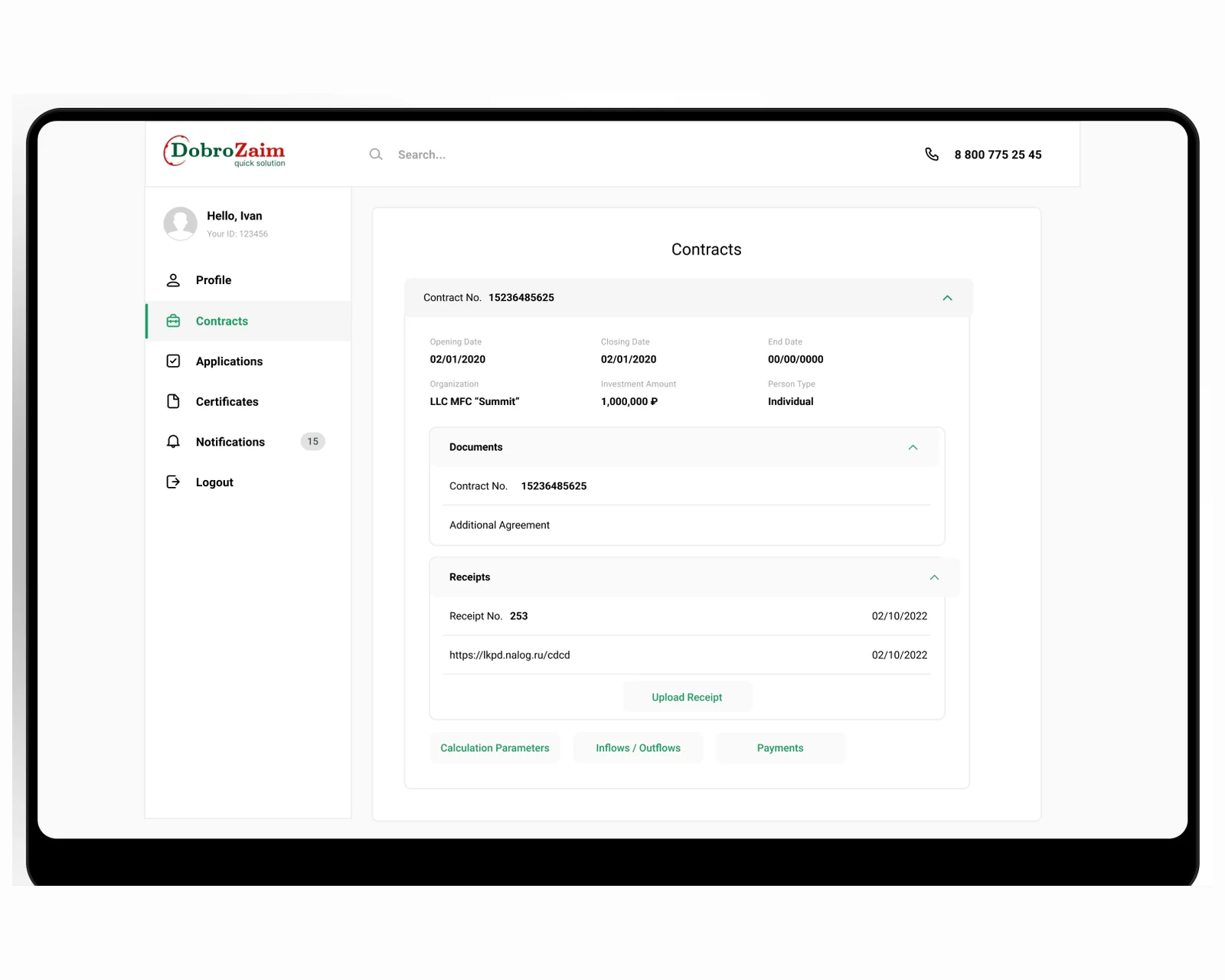
A high-throughput loan decision engine on Laravel — automated scoring, credit-bureau integration, and 10x faster decisions for US & EU lenders.
AI is only useful when it respects the data, latency and regulatory reality of your sector. We pair ML and data engineering with industry-specific compliance across US & EU markets.
Real-time fraud scoring requires ML models that evaluate 200+ features per transaction in under 50ms. We train gradient boosting models (LightGBM, XGBoost) and neural networks on transaction histories, device fingerprints, and behavioral biometrics, deploying them through feature stores (Feast) and low-latency inference servers (TorchServe, Triton) that meet financial institution SLA requirements.
Credit risk models for lending decisioning, CLV prediction for customer segmentation, and AML transaction monitoring models using graph neural networks to detect money laundering networks are all production AI applications we build and maintain for FinTech clients. We design model governance frameworks with model cards, bias evaluation on protected attributes, and regulatory explainability documentation for OCC and FCA model risk management requirements. See FinTech.
Medical imaging AI for radiology triage, pathology slide analysis, and ophthalmology screening requires DICOM-compliant data pipelines, FDA SaMD regulatory planning, and clinical validation studies before deployment. We build PyTorch imaging analysis pipelines using MONAI framework, implement de-identification workflows compliant with HIPAA Safe Harbor and Expert Determination methods, and design IRB-approved clinical study protocols for AI performance validation.
Clinical NLP systems extract structured data from unstructured clinical notes for ICD-10 coding, population health analytics, and clinical trial recruitment using domain-adapted models fine-tuned on clinical text (BioBERT, ClinicalBERT). We implement HIPAA-compliant NLP pipelines with de-identification pre-processing and audit logging, and design annotation workflows with clinical expert review for ground truth label quality. See HealthTech.
Recommendation systems driving 35–40% of e-commerce revenue require real-time inference on session behavior signals, not just historical purchase data. We build two-stage retrieval-and-ranking architectures: a fast Approximate Nearest Neighbor (ANN) retrieval layer using FAISS or ScaNN that retrieves 100 candidates in under 5ms, followed by a ranking model that scores candidates on business-aware features (margin, inventory, recency) before serving the final ranked list.
Dynamic pricing models optimize markdown timing for perishable inventory, promotional discount allocation across customer segments, and real-time competitive price matching using scraping pipelines and pricing elasticity models. We implement A/B testing infrastructure for pricing experiments with proper holdout groups and statistical significance testing, measuring incremental revenue impact rather than average selling price. See E-commerce.
Predictive maintenance models reduce unplanned downtime by 30–50% by detecting equipment failure signatures in sensor time-series data before they manifest as breakdowns. We build LSTM and Transformer-based anomaly detection models for vibration, temperature, and pressure sensor streams, deploy inference on edge devices (NVIDIA Jetson, industrial PCs) for sub-second alerting without cloud round-trip latency, and integrate with CMMS (Computerized Maintenance Management Systems) to auto-generate work orders when anomaly scores exceed thresholds.
Computer vision quality inspection systems replace manual visual inspection on production lines with camera arrays processing 100+ frames per second through defect detection models (YOLO, Detectron2) that catch surface defects, dimensional deviations, and assembly errors that human inspectors miss under fatigue conditions. We design training data collection workflows, annotation tooling, and active learning pipelines that continuously improve model accuracy as new defect types emerge.
Demand forecasting models for supply chain planning use hierarchical time-series techniques (Temporal Fusion Transformer, Prophet, ARIMA with exogenous variables) that account for promotional calendars, seasonality, and external demand signals (weather, economic indicators). We build forecasting pipelines that generate item-location-week demand forecasts at scale (millions of SKUs), integrated with ERP systems for automatic purchase order generation when inventory levels breach reorder points. See Logistics.
Route optimization using ML-enhanced graph algorithms reduces last-mile delivery cost per package by identifying optimal sequencing of delivery stops under real-world constraints (time windows, vehicle capacity, driver break requirements). We build route optimization APIs using OR-Tools and commercial solvers (Gurobi), augmented with ML prediction of address-level delivery time distributions that improve estimated time of arrival accuracy for customer-facing tracking interfaces.
Generative AI integration in SaaS products (AI-assisted writing, code completion, document Q&A, intelligent search) requires robust LLM orchestration, prompt versioning, and output validation infrastructure that goes beyond direct API calls. We build LLM orchestration layers using LangChain and LlamaIndex with structured output parsing, implement prompt management systems with A/B testing capabilities for continuous optimization, and design RAG pipelines with vector databases (Pinecone, pgvector) that ground LLM responses in company knowledge bases.
Enterprise AI product features must address data privacy (customer data must not be used for model training by third-party LLM providers), latency (generative AI response time must not degrade perceived product speed), and cost (LLM API costs at scale can exceed infrastructure costs). We design cost-optimized LLM architectures with intelligent routing between GPT-4-level models for complex tasks and smaller models (Llama 3, Mistral) for routine tasks, with semantic caching to avoid redundant expensive API calls.
GDPR-aligned · ISO 27001 ready · SOC 2 Type II in progress · HIPAA-capable · CCPA-acknowledged
Data engineers and ML leads on a CET workday with East-Coast US overlap (9 AM–1 PM ET), on your standups, with same-day decisions on prompts, models and rollouts.
ML engineers and data platform leads with shipped US & EU production systems. We do not learn vector databases on your roadmap.
Region-locked hosted endpoints (EU data residency · US options on request), zero-retention configurations, signed DPAs and BAAs, ISO 27001-aligned controls with SOC 2 Type II in progress. PCI DSS scoping where ML touches payments; HIPAA-capable where ML touches PHI.
Dual AI governance is part of every architecture decision: in the EU we apply the AI Act (classify each use case, document the system, set human-oversight points, prepare evidence for high-risk scenarios such as hiring, credit scoring and biometric processing); in the US we apply the federal AI executive orders, NIST AI RMF (Govern / Map / Measure / Manage), OMB M-24-10 expectations, and state-law screens — Colorado AI Act (effective 2026), NYC AEDT (Local Law 144), the NY AI Bill of Rights and CCPA / CPRA automated-decision-making rules.
A loan decision engine that takes ten times less time to approve does not happen by accident. YuSMP built the scoring pipeline, integration with credit bureaus, and a back-office that our underwriters actually enjoy using. Approval turnaround went from two days to under four hours.
Aggregating live prices across multiple exchanges while keeping latency under 500 ms is genuinely hard engineering. YuSMP built the multi-exchange feed, real-time token charts, and listing workflow into a coherent platform. We have not had an outage since launch.
The right AI infrastructure decision depends on your data sensitivity, query volume, latency requirements, and organizational capability to manage AI systems in production.
Using GPT-4 API is the right choice for general-purpose tasks where domain-specific accuracy is not critical, time-to-market is paramount, and per-query costs are acceptable at your expected volume. Fine-tuning open-source models (Llama 3 70B, Mistral 7B) becomes economically justified when you process more than 1 million tokens per day (API cost exceeds GPU hosting cost), need sub-500ms inference latency, require data to remain on-premise for compliance reasons, or need consistent output format that prompt engineering alone cannot reliably achieve.
LoRA and QLoRA parameter-efficient fine-tuning techniques reduce the GPU memory and training time required for fine-tuning large models by 80–90%, making fine-tuning accessible on single A100 GPUs or cloud spot instances. We design fine-tuning pipelines, curate domain-specific training datasets, and run systematic benchmark evaluations comparing the fine-tuned model against GPT-4 baseline on your specific task before committing to the infrastructure investment.
Open-source LLMs (Llama 3, Mistral, Falcon, Qwen) give you complete control over data handling, enable offline and air-gapped deployments, eliminate per-token API costs at scale, and can be customized without vendor permission. Proprietary models (GPT-4, Claude, Gemini Ultra) offer state-of-the-art performance on complex reasoning tasks, require no infrastructure management, and provide faster time-to-pilot.
The decision depends on your data sensitivity requirements, inference volume, performance benchmarks on your specific tasks, and organizational AI capability. For healthcare and financial services with strict data residency requirements, open-source models deployed on private infrastructure are often mandatory. For product teams building AI-assisted features quickly, proprietary APIs with strong rate limits and consistent performance are usually the pragmatic starting point.
Cloud GPU inference (AWS SageMaker, GCP Vertex AI, Azure ML) is optimal for variable workloads, pilot projects, and teams without GPU cluster management expertise, with costs ranging from $2–8/hour per A100 GPU. On-premises inference becomes cost-effective when GPU utilization exceeds 60% consistently, when regulatory requirements prohibit sending data to cloud providers, or when inference latency targets cannot be met over cloud API round-trips.
We analyze your workload profile, data residency requirements, and cost projection over 3 years to recommend the right infrastructure strategy. For most enterprise AI applications, a hybrid approach — cloud GPUs for model training and batch inference, on-prem or dedicated cloud instances for real-time serving of production models — balances cost efficiency with latency requirements and regulatory compliance.
Engagements are fixed-scope and lean, all-in and quoted in USD. A PoC / pilot runs from $2,900 (4–6 weeks); RAG over your knowledge base from $8,100; an autonomous AI agent from $10,400; an ML model in production from $13,800. The exact number depends on how many use cases you ship, corpus depth and eval-set size, latency targets and compliance scope. You see the line-item budget at the end of discovery and sign off before any code is written. There is no recruitment markup and no tool surcharges, and cloud and GPU fees run on your own accounts, so you keep the cost lever.
We benchmark candidate models on your real tasks before recommending. Region-locked Mistral / Claude / OpenAI on Bedrock, Vertex or Azure OpenAI (EU-hosted for EU clients, US-hosted for US clients), and open-source models on EU or US clusters, often beat the obvious choice on cost and data residency once you measure end-to-end latency and accuracy.
For most knowledge-bound use cases, retrieval-augmented generation with strong evals beats fine-tuning. We move to fine-tuning or LoRA only when style, latency or cost targets cannot be met by RAG, and we measure the gain.
Prompt versioning, deterministic evals, red-team prompts, output filters and human-in-the-loop on high-stakes paths. Every release ships with a measurable quality and safety dashboard, not just a vibe check.
Most SaaS products use AI in limited-risk or minimal-risk roles, requiring transparency notices and basic logging. We help classify your use cases, document the system, and prepare for high-risk obligations if hiring, credit or biometrics are in scope.
For US deployments we map controls against the NIST AI Risk Management Framework (Govern / Map / Measure / Manage), align with the federal AI executive orders and OMB M-24-10 expectations, and pre-screen use cases against state-level laws — the Colorado AI Act (effective 2026), NYC AEDT (Local Law 144), the NY AI Bill of Rights and CCPA / CPRA automated-decision-making rules. We document risk class, transparency notices, human oversight and impact assessments in a single AI system card per deployment.
Yes. We use region-locked endpoints from Bedrock, Vertex, Azure OpenAI and Mistral — EU-hosted for EU clients (EU data residency), US-hosted for US clients (US options on request, BAAs available for HIPAA-capable workloads). Self-hosted open models on EU or US clusters when residency is critical. DPAs, BAAs and zero-retention configurations are part of every architecture review.
Prompt engineering (optimizing instructions and examples in the LLM context) should always be the first approach — it requires no infrastructure, costs only API calls, and can dramatically improve accuracy with well-designed system prompts and few-shot examples. RAG (Retrieval-Augmented Generation) is appropriate when the LLM needs to answer questions from a large knowledge base that exceeds the context window, when answers need to be grounded in specific documents with citations, or when knowledge must be updated frequently without model retraining. Fine-tuning is justified when you need consistent output format the model won't follow even with instructions, when domain-specific terminology or reasoning patterns require adaptation, or when the task is well-defined and you have labeled training data. In practice, many production AI applications layer all three: a fine-tuned model with optimized system prompts, augmented by RAG for knowledge retrieval.
A100 80GB GPU instances run approximately $2.50–$4.50/hour on AWS (ml.p4d.24xlarge), GCP (a2-highgpu), and Azure (NC A100 v4), or $1.50–$2.50/hour on spot/preemptible instances. H100 instances (AWS p5.48xlarge, GCP a3) run $12–$18/hour on-demand, reflecting their 3x training throughput advantage over A100 for transformer models. Training cost estimates: a 7B parameter model fine-tune (LoRA, 3 epochs on 50,000 examples) typically takes 2–4 hours on a single A100 ($10–$20 total); a 70B parameter full fine-tune on 8xA100 might cost $200–$500; pre-training a 1B parameter model from scratch takes days to weeks on 32–128 GPUs ($5,000–$50,000+). We provide training cost estimates before project scoping to ensure GPU budget is planned alongside engineering costs.
Hallucination mitigation in business applications requires a defense-in-depth approach. First, use RAG to ground the LLM in retrieved documents — models hallucinate significantly less when they can quote a source rather than generating from parametric memory. Second, implement structured output parsing (JSON schema validation, Pydantic models) that forces the model to produce verifiable structured data rather than free text that's harder to check. Third, add a fact-checking layer for high-stakes outputs: a second LLM call verifying claims against retrieved sources, or programmatic verification of factual claims (dates, numbers, names) against a knowledge base. Fourth, implement confidence thresholds that escalate to human review when the model signals uncertainty through low confidence scores or explicit "I don't know" responses. Finally, define clear scope boundaries: hallucination is a larger risk when the model is asked questions outside its training distribution; constrain the use case to tasks where the model has demonstrable accuracy in evaluation.
The EU AI Act (effective August 2024, high-risk provisions applying from August 2026) defines "high-risk AI systems" across Annex III categories including AI used in credit scoring, employment decisions, biometric identification, education assessment, and medical devices. For high-risk AI, the Act requires: technical documentation (design specifications, training data description, validation results), conformity assessment before market deployment, human oversight mechanisms that allow a human to override or disable the AI, robustness and accuracy requirements with ongoing monitoring, registration in the EU AI database (for providers), and post-market monitoring with incident reporting obligations. High-risk AI providers must also implement quality management systems similar to ISO 9001/13485. Prohibited AI practices (real-time remote biometric identification in public spaces, social scoring) were banned from February 2025. We provide EU AI Act readiness assessments, technical documentation support, and implementation of required human oversight controls for AI systems deployed in EU markets.
Model drift occurs when the statistical distribution of production input data diverges from the training data distribution (feature drift) or when the relationship between inputs and the target variable changes (concept drift). Detection requires continuous monitoring of prediction distributions (are fraud scores still normally distributed around the historical mean?), feature distributions (is the average transaction amount shifting?), and business outcome metrics (is fraud detection recall dropping?). We implement Evidently for open-source drift monitoring, configure alerts when Population Stability Index (PSI) exceeds 0.2 on key features, and set up automatic retraining triggers when model performance metrics fall below defined thresholds. Response strategy: for feature drift, retrain on a rolling window of recent data; for concept drift, investigate whether the business environment has changed enough to require redefining the target variable or retraining with new labels. We build automated retraining pipelines with champion-challenger evaluation that requires the new model to outperform the production model on a holdout test before automatic promotion.
Practical guides on AI, machine learning, and data engineering for enterprise teams.



Share a few details and a senior consultant will reply within one business day.