Discovery + 7Rs assessment
AWS Application Discovery Service agents on the estate, Migration Hub Strategy Recommendations run, dependency map, license entanglement review, written 7Rs decision matrix per application with cost model and risk score.
Services
End-to-end AWS migration for regulated and growth-stage companies: 7Rs assessment with AWS Migration Hub, Terraform-codified landing zones on Control Tower, replatform onto ECS Fargate / EKS / Aurora, MGN-based rehost for COTS, and DMS + SCT for Oracle and SQL Server. Senior cloud architects on CET with East-Coast US overlap, GDPR-aligned Frankfurt and Ireland regions by default. Fixed-scope, all-in USD pricing: individual services from $200, lift-and-shift from $1,800, re-platform from $4,100, a full exit off AWS/Azure/GCP from $5,800. IP transferred on day one, no recruitment markup, no tool surcharges.
AWS-certified cloud architects · Well-Architected delivery · GDPR-aligned · ISO 27001 ready · SOC 2 Type II in progress · HIPAA-capable · CET workday with 9 AM–1 PM ET overlap
Most AWS migrations fail not in execution but in framing. Teams rehost everything on EC2, claim "we are on AWS" at the board meeting, then watch the cloud bill exceed the on-prem TCO by month nine. We frame migration as a portfolio decision: each application gets one of the 7Rs based on dependency, license, blast radius and runtime economics, and the decision is defensible against AWS Migration Hub Strategy Recommendations data. Landing zone is Terraform on Control Tower from day one — never ClickOps. EU data stays in eu-central-1 / eu-west-1 with SCP-enforced region pinning. FinOps is built into the cutover, not added six months later when the bill arrives. See it in practice in our REHAU case study. AWS migration is one track within our broader Cloud & DevOps practice — teams also engage us for Azure migration and Kubernetes consulting.
AWS Application Discovery Service agents on the estate, Migration Hub Strategy Recommendations run, dependency map, license entanglement review, written 7Rs decision matrix per application with cost model and risk score.
Control Tower with custom OUs, IAM Identity Center federated to Okta / Entra ID, Transit Gateway hub-spoke, centralized AWS Network Firewall, KMS CMK strategy, SCP guardrails — all in versioned Terraform modules you own.
Stateless tiers onto ECS Fargate, App Runner or EKS with Karpenter. Databases via DMS + Schema Conversion Tool to Aurora PostgreSQL (Babelfish for SQL Server). Queues to SQS/EventBridge, batch to AWS Batch on Spot.
For applications without a reasonable replatform path, AWS Application Migration Service (MGN) block-level replication, automated test waves, cutover runbooks with rollback, and 90-day "replatform candidate" review baked into the contract.
CUR + Athena + QuickSight dashboards, mandatory cost-allocation tags enforced by Terraform Sentinel/OPA, Savings Plans + Reserved Capacity strategy, weekly anomaly review, Graviton migration on stateless tiers.
CloudWatch + X-Ray + Managed Prometheus + Managed Grafana, OpenTelemetry-instrumented services, SLO-based alerting, runbooks in your wiki, 30-day shadow period before your team owns on-call.
Migration Hub agents deployed, dependency map produced, 7Rs decision matrix per application, landing zone design, cost model, written migration waves plan with go/no-go gates.
Control Tower deployment, Terraform landing zone, IdP federation, networking, KMS keys, observability baseline. Penetration test against the empty landing zone before any workload lands.
Waves of 5–20 applications each: replatform in non-prod, automated test pass, performance baseline, cutover window with rehearsed rollback, post-cutover validation, decommission of source.
FinOps optimization sprint, Graviton/Spot adoption where applicable, Savings Plans purchase, runbooks finalized, 30-day shadow on-call before your team owns it solo.
Individual services
from $200
one-off · à la carte
Focused, à la carte cloud work: a landing-zone module, a single DMS pipeline, a FinOps waste report or a Terraform review, scoped and priced on its own.
Lift-and-shift
from $1,800
one-off · rehost
Rehost an application onto AWS with minimal change: MGN replication, a Terraform landing zone, cutover runbook with rollback and a post-move validation.
Re-platform
from $4,100
one-off · managed services
Move onto managed AWS services: ECS Fargate / EKS / Aurora, DMS + SCT database migration, rebuilt CI/CD and observability, FinOps from day one.
Exit AWS/Azure/GCP
from $5,800
one-off · portable exit
A clean, portable exit off a cloud you are leaving: containerised, IaC-defined workloads and data extracted to your target platform with no lock-in.
What moves the number: estate size (server and database count), the rehost-vs-replatform mix, compliance scope (GDPR / HIPAA / PCI DSS), and how much data has to move. Cloud fees run on your own accounts, so you keep the cost lever. You see the line-item budget before any work starts. Prices are indicative and fixed in a written quote for your scope.
All engagements include NDA, DPA aligned to GDPR with SCCs, and a contractual no-vendor-lock-out clause — you own the Terraform on day one.
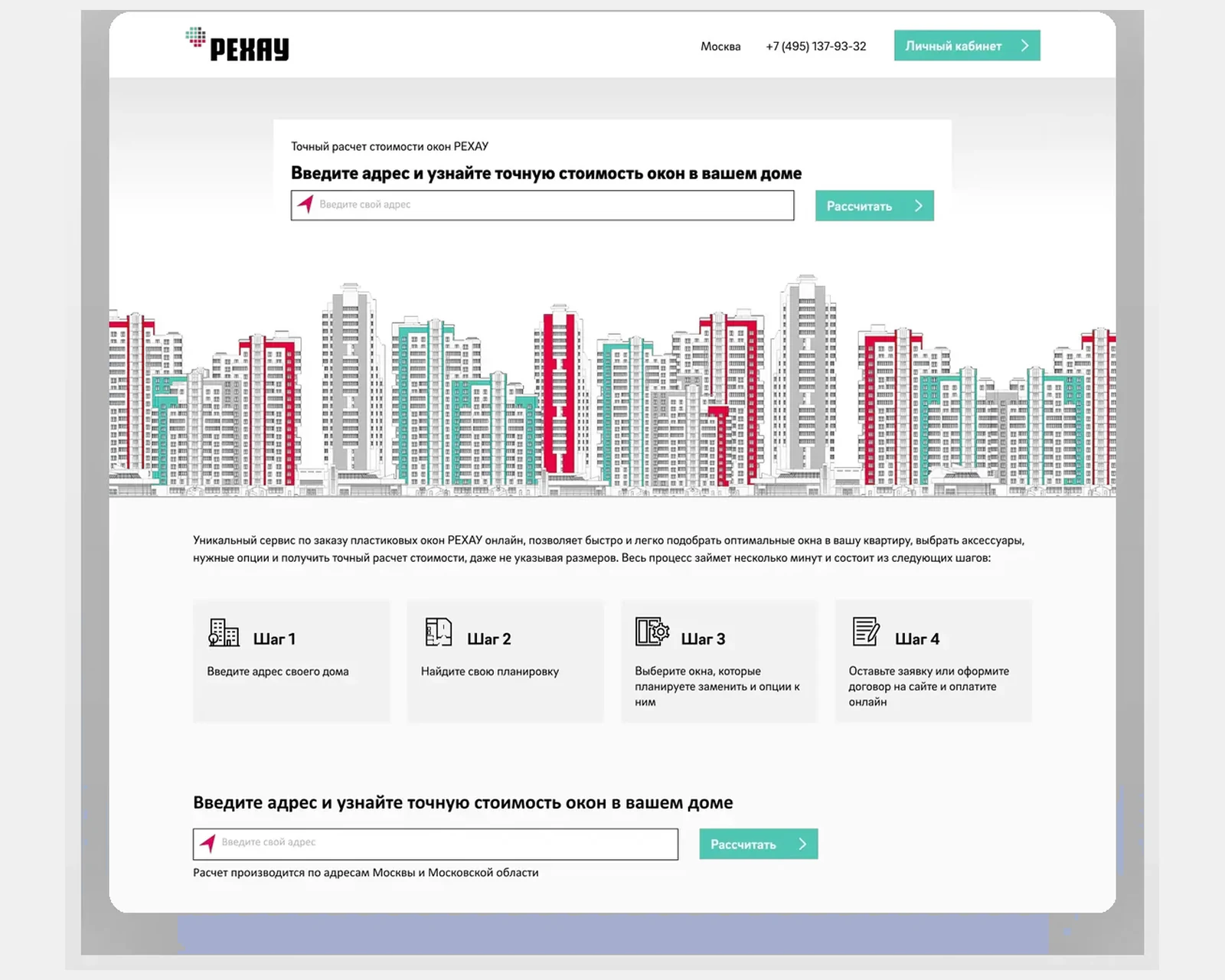
B2B e-commerce and product configurator for a global polymer manufacturer with multi-region pricing, stock and dealer workflows.

Unified crypto-ecosystem hub aggregating multiple tokens — live exchange data, search, charts, direct purchase entry point.
Data residency, uptime and compliance mean different things in each sector. We pair AWS migration engineering with industry-specific controls across US & EU markets.
PCI DSS-scope landing zones, segmented VPCs, KMS key management and release evidence your QSA can sign off — the rigour behind our EverCoin Bank platform.
FinTech on AWS →HIPAA-capable, GDPR-aligned architectures with EU or US data residency, documented data flows, encrypted PHI stores and BAAs.
HealthTech on AWS →Autoscaling for peak-season traffic, multi-region CDNs and FinOps guardrails — the workload profile behind our REHAU B2B commerce build.
Retail on AWS →Real-time event pipelines, low-latency regions and resilient SRE for dispatch, tracking and routing systems migrated to AWS.
Logistics on AWS →Multi-tenant isolation on AWS, per-tenant cost attribution via CUR tagging, Aurora and EKS autoscaling for uneven load, and a landing zone that survives a SOC 2 or ISO 27001 audit as you move upmarket.
SaaS on AWS →Data-sovereignty-first architectures on eu-central-1 or the AWS European Sovereign Cloud, SCP-enforced region pinning, full CloudTrail audit trails and Well-Architected evidence packs for procurement and accreditation reviews.
GovTech on AWS →GDPR-aligned · ISO 27001 ready · SOC 2 Type II in progress · HIPAA-capable · CCPA-acknowledged
Every cloud engineer on the engagement has 8+ years of production AWS — multiple migrations of 100+ server estates, multi-region failover events handled in production, not just a Solutions Architect Professional badge.
eu-central-1 / eu-west-1 / AWS European Sovereign Cloud, SCP-enforced region pinning, KMS XKS for sovereignty-critical keys, Schrems II-aligned DPA with SCCs, CloudTrail and Config logs replicated inside EU only.
Terraform is in your repo from day one. We pair-program with your engineers. By cutover your team is reviewing our PRs. Contractual no-lock-out clause — you can fire us tomorrow and run the estate unchanged.
For regulated workloads (financial services, healthcare, public sector) we deliver against the AWS Well-Architected Framework with Security, Reliability and Cost Optimization pillars reviewed quarterly by an independent partner architect.
Aggregating live prices across multiple exchanges while keeping latency under 500 ms is genuinely hard engineering. YuSMP built the multi-exchange feed, real-time token charts, and listing workflow into a coherent platform. We have not had an outage since launch.
Real-time ERP sync for an auto-parts catalog is harder than it looks — prices shift hourly and the catalog changes constantly. YuSMP built a bidirectional 1C integration that just works, with a clean storefront customers navigate without friction.
All seven (Retire, Retain, Relocate, Rehost, Repurchase, Replatform, Refactor) but we explicitly resist defaulting to Rehost. Decision input is an AWS Migration Hub Strategy Recommendations run plus our own dependency map from Application Discovery Service agents. We score each workload on five axes: blast radius, change frequency, runtime cost on EC2 vs managed equivalent, license entanglement, and team familiarity. Stateless web tiers usually Replatform onto ECS Fargate or App Runner. Oracle/SQL Server with heavy PL/SQL go Refactor to Aurora PostgreSQL via Babelfish or DMS + SCT. COTS without an exit goes Rehost via MGN, then revisited 12 months later.
Terraform by default, occasionally Pulumi when the client team prefers TypeScript end-to-end. We never use ClickOps for foundation. The landing zone is AWS Control Tower with customizations: separate OUs for Security, Audit, Log Archive, SharedServices, Workloads (dev/stage/prod), and Sandbox. Identity is IAM Identity Center federated to your IdP (Okta, Entra ID, Google Workspace). Network is a Transit Gateway hub-spoke with centralized inspection VPC running AWS Network Firewall. Everything is in Terraform modules versioned in your repo — you own the code on day one, not us.
Workloads with EU personal data land in eu-central-1 (Frankfurt), eu-west-1 (Ireland), or the AWS European Sovereign Cloud where appropriate. We pin services to those regions via SCPs at the OU level — a developer cannot accidentally spin up a Bedrock model in us-east-1. For Schrems II compliance we use AWS Nitro Enclaves where attestable confidential compute is required, KMS with customer-managed CMKs (and XKS / external key store for sovereignty-critical workloads), and SCCs in the DPA. CloudTrail and Config logs are encrypted with separate keys and replicated cross-region inside the EU only.
We instrument Cost and Usage Reports into Athena + QuickSight on day one and tag every resource with cost-center, environment, and service via Terraform-enforced policy. The FinOps cadence is weekly: anomaly detection via AWS Cost Anomaly Detection, rightsizing recommendations from Compute Optimizer, Savings Plans coverage tracking, and a monthly written report. Typical savings on a lift-and-shift baseline are 28–35 percent within 90 days (Graviton migration on stateless tiers, S3 Intelligent-Tiering on cold data, Aurora I/O-Optimized on write-heavy databases, Spot for batch on EKS via Karpenter).
Yes — co-delivery is our default model. Your team owns business logic, application changes and final cutover decisions. Our team owns landing zone, network, security baseline, MGN/DMS pipelines, observability stack and the runbooks. We pair-program the Terraform, run weekly architecture review with your tech leads, and hand off via a 30-day shadow period. By the end of the engagement your engineers are reviewing our PRs, not the other way round. No vendor lock-in to YuSMP after the sprint ends — that is contractual.
Fixed-scope, all-in USD pricing: individual services from $200, a lift-and-shift from $1,800, a re-platform from $4,100, and a full exit off AWS/Azure/GCP from $5,800. You see the line-item budget at the end of discovery and sign off before any code is written — no recruitment markup, no tool surcharges, and cloud fees run on your own accounts so you keep the cost lever. Timelines scale with estate size: a 200-server estate typically moves in 4–6 months end-to-end, with re-platform and refactor work quoted per wave.
For most workloads, minutes — not hours. MGN keeps a continuous block-level replica of the source running in AWS, so the cutover is a short final sync plus a DNS or load-balancer switch inside a planned window. Databases move with DMS in CDC (change-data-capture) mode: we replicate the bulk load ahead of time, then keep it in sync until the switch, which cuts the actual downtime to the time it takes to stop writes and flip the endpoint. Every wave has a rehearsed rollback path, so if a validation check fails we revert to the source with no data loss. Truly zero-downtime cutovers are possible for stateless tiers behind a load balancer; we tell you upfront which workloads can and cannot achieve it.
Not necessarily. Where the schema and workload allow, we refactor SQL Server to Aurora PostgreSQL using Babelfish (which speaks the TDS wire protocol, so many applications connect unchanged) and Oracle to Aurora via DMS + Schema Conversion Tool, retiring the commercial license entirely. Where a refactor is not viable in this phase — heavy PL/SQL, third-party COTS dependencies — you can bring your own license (BYOL) onto EC2 dedicated hosts or run RDS for Oracle/SQL Server under license-included pricing, and we flag it as a refactor candidate for a later wave. The database strategy, license-cost delta and effort estimate are part of the discovery deliverable, so the trade-off is a decision you make with numbers, not a surprise.
Layered safety. The source database is never decommissioned until post-cutover validation passes — DMS replicates rather than moves, so the original stays intact and writable as a fallback. We run row-count and checksum reconciliation between source and target before every cutover, keep the CDC stream live through the switch, and snapshot both sides immediately before and after. For high-stakes systems we do a full rehearsal against a clone first. Nothing is deleted on the source estate until you sign off that the AWS target is correct and stable.
Per workload, driven by traffic shape and operational fit, not fashion. Spiky or event-driven workloads with clean statelessness go to Lambda or App Runner, where you pay per request and scale to zero. Steady services with container images and a team that wants Kubernetes go to EKS with Karpenter; teams that want containers without cluster ops go to ECS Fargate. EC2 stays for licensing-bound COTS, GPU workloads, or software that assumes a persistent host. We model the three-year runtime cost of each option during discovery, so the choice is defensible on both engineering and FinOps grounds — and nothing forces one pattern across the whole estate.
DR is part of the landing-zone design, not an afterthought. We set an RPO/RTO target per workload tier and implement to it: AWS Backup with cross-region (and, in the EU, EU-only) vaults, Aurora automated backups plus point-in-time recovery, and cross-region read replicas or pilot-light/warm-standby topologies for tier-1 systems. Recovery runbooks are written and, for critical workloads, DR is game-day tested so the RTO is a measured number rather than a hope. Backup policies and retention are codified in Terraform, so they apply automatically to new resources instead of relying on someone remembering to enable them.
Yes, and it is a common starting point. We begin with an assessment of the existing landing zone and any in-progress waves: what is Terraform vs ClickOps, whether the account structure and guardrails are sound, and where technical debt has already accumulated. You get an honest written read — sometimes we adopt and extend what exists, sometimes we recommend re-laying specific foundations, and we tell you which and why. Because everything we build lands as Terraform in your repo, there is no lock-in on our side either: the next team after us inherits code, not a black box.
Practical guides on cloud migration, modernization, and AWS architecture.
Share a few details and a senior consultant will reply within one business day.