Discovery & role model
Customer interviews across multi-zone properties, threat model (forged commands, scope escalation, lost devices), GDPR + CCPA posture mapping, App Store and Google Play security-app entitlement review.

Case study · Physical security · Mobile
How we shipped Grom Security — a native iOS and Android app for a physical-security operator whose customers across the United States and the European Union were juggling three separate apps to arm a house, watch a camera and switch on a light. Built on a single entitlement model, a zonal arm and disarm flow, embedded video and a smart-home control surface — with an audit-ready architecture that holds up to GDPR and CCPA scrutiny from day one.

The Grom Security product team came in with a specific operational pain. Their customers — property owners across the United States and the European Union — already paid for guard service, video surveillance and a connected smart-home ecosystem, but each subsystem shipped its own mobile app, its own login and its own notification stream. A homeowner who wanted to arm the house, watch the front-yard camera and turn on the porch light at dusk had to open three icons, juggle three sessions, and reconcile three separate audit trails when something went wrong. We rebuilt the entire surface from first principles as a single native iOS and Android application: a zonal entitlement model where each property splits into independent zones (house, sauna, garage, plot), a unified arm and disarm flow, embedded live video, and a smart-home control surface integrated with the customer's existing ecosystem. The result is a unified security app that ships across the US and EU under GDPR and CCPA / CPRA expectations from day one, sits inside YuSMP Group's portfolio of mobile app development work, and gives the property owner a single source of truth for what is currently armed.
A snapshot of what the Grom Security build delivered across iOS, Android, and a hardened back office in its first production cycle.
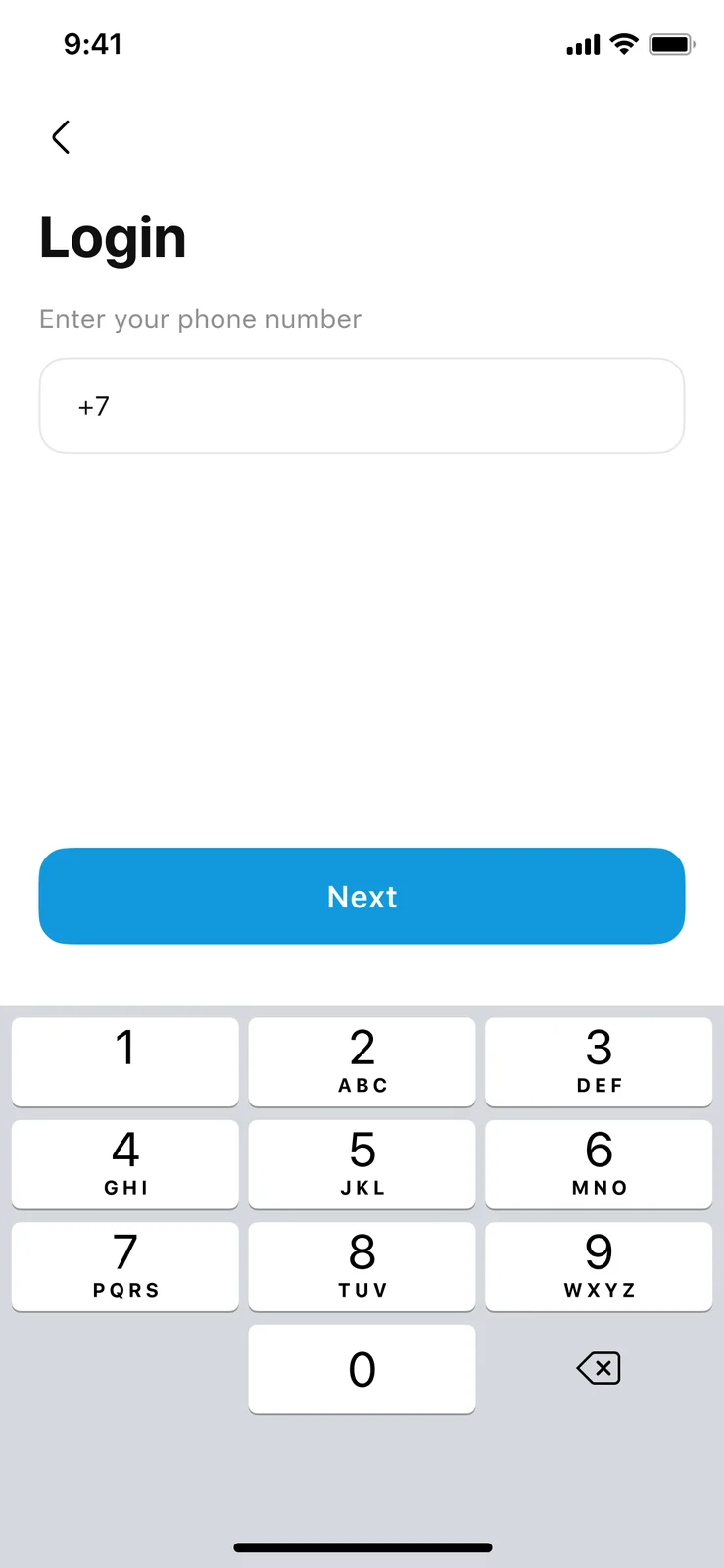
The entitlement decision dominates every other architectural choice in a multi-tenant security app. We chose a zonal entitlement model — where each property splits into independent zones and each zone holds its own arm state, its own role assignment and its own audit log — over the more common single-property toggle for one reason: it is the only model that honestly describes what a property owner actually wants. A homeowner who arms the house at night usually leaves the garage disarmed because a family member is still in the shop. A vacation-rental operator wants to arm the plot perimeter but disarm the cottage for an incoming guest. The single-toggle model forces the user to choose between accuracy and convenience; the zonal model gives them both.
Single-property toggle models — the kind bundled with first-generation white-label alarm SDKs — were eliminated early. Their data shape could not represent "house armed, garage disarmed" without storing one of them in client-side state that the back office could not audit. Going zonal meant the entire stack — client UI, entitlement service, audit log, push pipeline — is owned per zone and citable end-to-end against the operator's own dispatch records.
| Dimension | Zonal model (Grom) | Single-property toggle | Vendor white-label SDK |
|---|---|---|---|
| Independent arm state per zone | First-class — house and garage separately | Workaround via "modes" | Vendor-defined; often opaque |
| Role-based access per zone | Owner / family / employee / guest | Property-wide only | Vendor-limited role catalog |
| Audit log granularity | Per-zone, per-user, per-event | Property-level only | Vendor-controlled export |
| Smart-home integration | First-class — per zone | Bolt-on — often a separate app | Vendor-bundled ecosystem only |
| Embedded video | Native player, role-gated | Deep-link to vendor app | Vendor SDK player only |
| App Store / Play Store fit | Thin wrapper over native APIs | Larger bundle; legacy patterns | SDK-heavy; review friction |
| Data minimisation | Role-scoped reads — no over-collection | Property-wide reads | Vendor-controlled — opaque |
Platform references: Apple UserNotifications documentation, Android notifications reference.
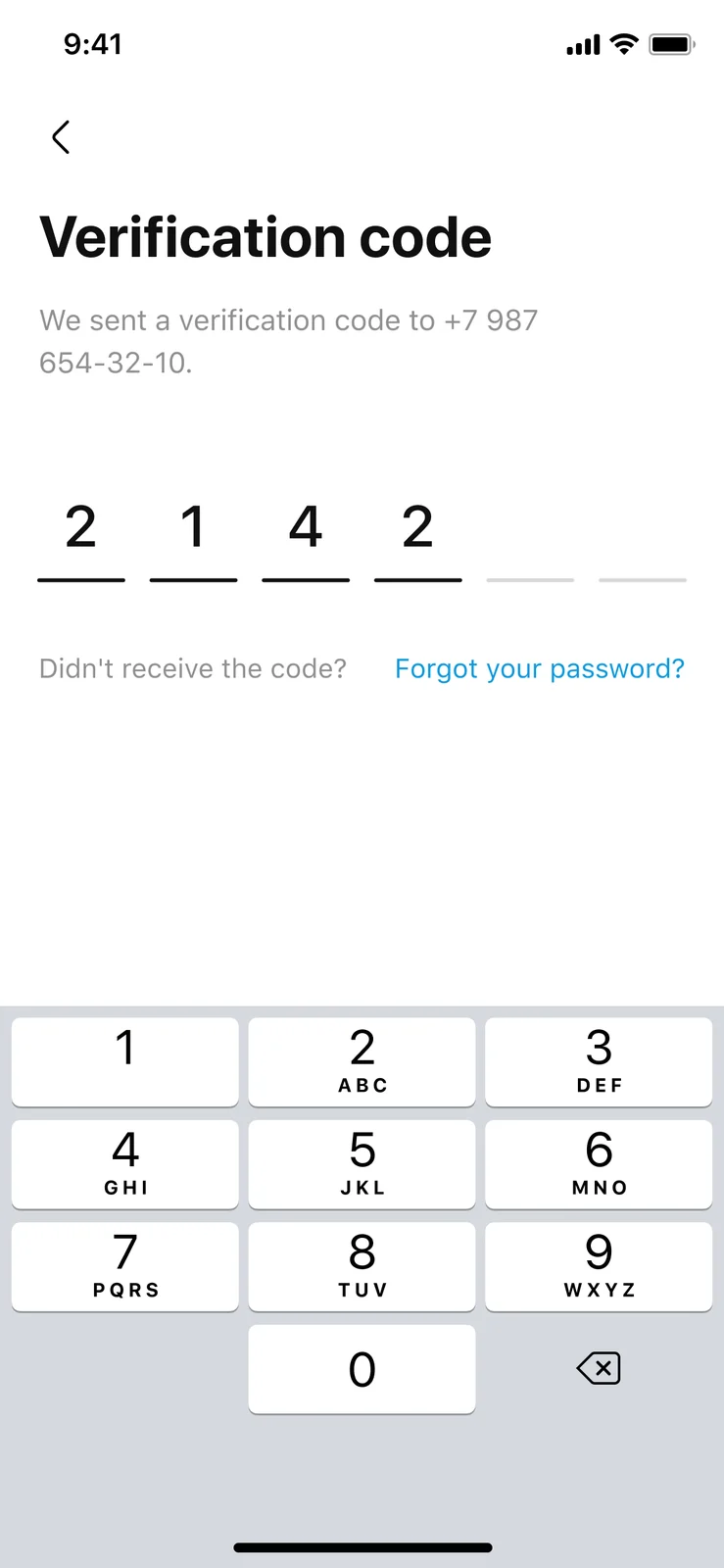
The iOS client is built in Swift with SwiftUI for the UI layer and a capability-gated rendering layer that only draws the controls the current user is entitled to operate on the current zone. The entire arm and disarm surface collapses into a single state machine — disarmed, arming, armed, disarming, alarming — and the home screen is a list of zones the user has access to, each with a one-tap toggle that drives the state machine. Push delivery runs against UserNotifications and APNs with critical-alert entitlement for alarm events, so a triggered alarm reaches the property owner even with the device on Do Not Disturb.
The tap-to-arm path is where most security apps leak time and trust, and where we spent disproportionate engineering effort. The flow is: tap, validate the user's role-on-zone capability against the locally cached entitlement (no network round-trip if valid), issue the signed arm command over TLS to the back office, write the request to the audit log, and let the dispatcher receive the state change in real time. On typical US and EU mobile networks the entire path completes in under a second from the user's perspective, and the audit log entry — who armed which zone from which device at what time — is committed before the UI returns to idle. The end-to-end iOS surface is delivered as part of our iOS and Android engineering practice.
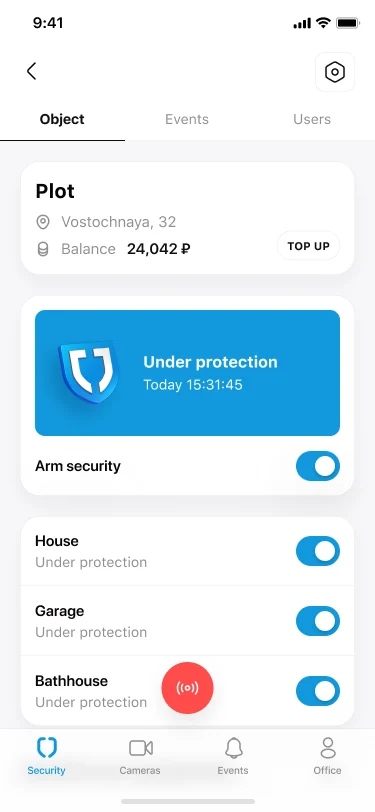
The Android client is written in Kotlin with Jetpack Compose for the UI and a foreground service for long-lived push delivery — on Samsung, Xiaomi, OnePlus, and Pixel device families, aggressive battery optimizers terminate background-only push handlers within minutes, breaking the alarm-delivery contract the user implicitly signs up for. The foreground service displays a minimal persistent notification that keeps the push pipeline alive across Doze mode cycles, and WorkManager handles non-urgent operations — entitlement refresh, audit-log replay, certificate rotation — with backoff semantics that respect battery saver states across Android 10 through Android 14.
The smart-home control surface is where the Android client earns its keep. The app integrates with the customer's existing smart-home ecosystem through a thin protocol-adapter layer — third-party security protocols on the alarm side, smart-home APIs on the automation side — so the property owner can turn on the porch light from the same screen that shows the front-yard camera feed and the current arm state. The embedded video player streams cleanly over LTE and Wi-Fi without forcing the user to bounce out to a vendor app, and role-gated playback enforces who can watch which camera. After a Wi-Fi to LTE carrier handoff the client restores the video session automatically. The same engineering team carries iOS and Android in lockstep as part of our mobile app development practice.
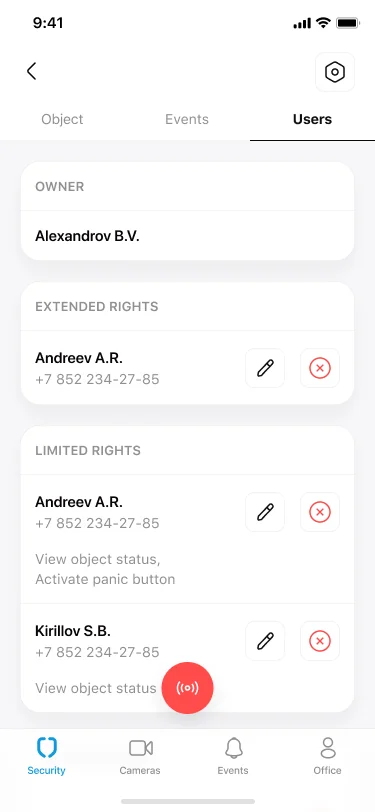
Grom Security's stated multi-user posture was an architecture decision before it was a marketing claim. Each property is the root entitlement object; each zone inherits from it; and each user receives a role per zone — owner, family, employee, guest — with capabilities mapped per role. The mobile clients render only the controls the user is entitled to operate on the current zone, and the back office enforces the same capability matrix on every API call so a forged or replayed request from the client cannot escalate scope. There is no per-user location track, no continuous-listen capture from the device microphone, and no metadata pipe to a third-party observability vendor outside the operator's own dispatch system.
The audit log is the heart of the model. Every arm, disarm, video-view and configuration change writes an immutable record keyed by zone, user, device and event type. The 90-day default retention window is extendable per local regulation, and the property owner can export the log in JSON or CSV at any time. Infrastructure-as-code policies enforce the access invariants — any pull request that would broaden a role's read scope or introduce a per-zone untrace fails CI. The posture is built to align with GDPR obligations for users in the European Union and CCPA / CPRA obligations for users in California and the broader United States — and to make a future independent readiness review a documentation exercise, not an architectural retrofit.
Compliance posture: GDPR-aligned · ISO 27001 ready · SOC 2 Type II in progress · HIPAA-capable · CCPA-acknowledged.
A five-phase build that took Grom Security from product specification to production across iOS, Android, and a unified entitlement back office.
Customer interviews across multi-zone properties, threat model (forged commands, scope escalation, lost devices), GDPR + CCPA posture mapping, App Store and Google Play security-app entitlement review.
Zonal entitlement schema, role-capability matrix, third-party security protocol adapter, smart-home protocol adapter, audit-log immutability contract, push pipeline design.
Swift / SwiftUI iOS client with capability-gated rendering and critical-alert push; Kotlin / Jetpack Compose Android client with foreground service for push reliability; embedded video player on both.
Infrastructure-as-code policies that block role-scope regressions, push-delivery reliability QA across Apple and Google networks, audit-log immutability tests, third-party readiness scaffolding.
App Store + Google Play submission across US and EU storefronts, dispatcher-side real-time event feed cutover, per-zone audit-log retention configuration per local regulation.
Grom Security's smart-home layer was built to keep alarm identity and home-automation identity provably aligned, because the unified-app promise falls apart the moment a property owner has to log into a separate ecosystem account to turn on a light. The smart-home control surface integrates with the customer's existing ecosystem through a thin protocol-adapter layer that maps role-gated capabilities — turn on / turn off / dim — to the ecosystem's own command schema. Server-side, the integration is a stateless mapping; the back office holds no persistent copy of the ecosystem credentials beyond the rotating OAuth refresh token, and a property owner who revokes the integration sees the smart-home tile disappear from their app within seconds. The dispatcher view, used by the operator's on-call response team, reads from the same audit-log stream the customer sees in-app — so a triggered alarm reconciles cleanly between the customer's mobile screen, the dispatcher's console, and the eventual incident report. The whole subsystem was built with extensibility in mind: adding a new ecosystem adapter, a per-zone schedule engine, or a B2B multi-property tier with team management is a configuration change against the entitlement service, not a code release.
Grom Security launched on Apple App Store and Google Play with storefronts active across the United States and the European Union. The English-language build serves users in California, New York, Texas, Florida, and Washington in the US, and users in the Netherlands, Germany, France, Ireland, and Sweden in the EU, without a separate codebase per region. Consent flows are region-aware at the client layer: users in the EU and EEA receive a GDPR-style granular consent screen with separate toggles for any optional product analytics; users in California receive a CCPA-style "Do Not Sell or Share My Personal Information" disclosure in the same flow. Data-handling practices are aligned with GDPR for European users and with the US state-privacy patchwork — CCPA / CPRA (California), VCDPA (Virginia), CPA (Colorado), CTDPA (Connecticut), UCPA (Utah), TDPSA (Texas), and Oregon CPA. Because the zonal entitlement architecture minimises per-user data collection, regional compliance reduces to honest disclosure rather than per-jurisdiction data segregation.
The back-office fleet was rolled out across EU and US regions in parallel — Netherlands, Germany, France, Sweden, and Ireland for EU coverage; US East and US West for North America — with each region's stateless workers provisioned identically. The dispatcher feed that routes alarm events to the on-call response team runs stateless workers that can be pinned to EU or US regions independently for future data-residency commitments. Both the App Store age rating and the Google Play content rating were calibrated for the security feature set, and the in-app privacy policy was drafted to document exactly the architecture above, citing GDPR obligations and California CCPA obligations directly. The engineering team behind the build sits across CET and runs a CET workday with East-Coast US overlap (9 AM–1 PM ET) for stand-ups, store-review choreography, and incident response — the timezone that lets a US product team and an EU engineering team share four hours of live overlap every day.
The active custom software development roadmap for Grom Security includes Matter-protocol smart-home integration for cross-ecosystem control, a per-zone schedule engine so the garage can self-arm at midnight, a critical-alert push tier with optional escalation to a paid response team, and a desktop client built on Tauri to share business logic with the mobile codebase. A B2B tier with bring-your-own-property-portfolio, team management, and SSO is planned for US and EU mid-market operators, with the entitlement subsystem already structured for multi-property assignment. Infrastructure plans include further cloud & DevOps automation of the regional-rollout pipeline, an internal continuous-verification harness for the role-scope contract, and a future independent readiness assessment scaffolded into the operations cadence.
If you are planning a unified security app, a remote-monitoring product, or any mobile app where physical safety, embedded video and smart-home control have to live behind one icon for audiences in the US and EU, we have shipped this stack end-to-end and can compress the build timeline meaningfully. The live product is operated by the security provider at yusmpgroup.ru/cases/gromsecurity (case page), and the engineering team behind it sits inside YuSMP Group. We work fixed-price for well-scoped MVPs and on dedicated development teams for ongoing delivery, with a CET workday and a guaranteed East-Coast US overlap (9 AM–1 PM ET) window for stand-ups, demos, and incident response.
A remote-alarm mobile app with iOS and Android clients, zonal arm and disarm, push notifications, and an entitlement back office typically costs $120k–$280k for an MVP. Adding embedded video feeds, smart-home protocol integrations (Matter, Zigbee, Z-Wave or vendor SDKs), multi-user role-based permissions, and an audit log brings a full-featured rollout to $320k–$680k. The dominant cost drivers are the third-party security-protocol integration work and the multi-user permission model.
A property owner who already pays for guard service does not want three icons on their home screen, three logins, and three notification streams from the same vendor. Consolidating alarm, video and smart-home into one app eliminates the cognitive overhead of remembering which app controls which subsystem, lets us share a single user identity and a single permission model across all three surfaces, and gives the property owner a single source of truth for what is currently armed, who has access, and what just happened.
A defensible multi-user model is a role decision, not a feature toggle. The property is the root entitlement object; each zone (house, garage, plot, sauna) inherits from it; and each user receives a role per zone — owner, family, employee, guest. Roles map to capabilities — arm, disarm, view-video, configure — and the mobile clients render only the capabilities the user holds. Audit log entries record who armed, disarmed, or reconfigured each zone, with a 90-day retention window the owner can extend per local regulation.
Grom Security is the single mobile front end a property owner carries across multiple addresses. It lists every site they own with a one-tap arm and disarm control per zone, shows embedded live video from the cameras integrated at each site, surfaces smart-home actions for lighting, climate, and outlets through the connected ecosystem, and routes alarm events as push notifications with optional escalation to the on-call response team. Family members and employees receive scoped access through the role-based permission model.
A focused MVP with iOS and Android clients, zonal arm and disarm, push notifications, and an entitlement back office typically takes 14–22 weeks. Adding the embedded-video integration, the smart-home protocol layer, the multi-user role-based permission model, and the audit log adds 8–12 weeks. The hardening pass — push reliability across Apple and Google networks, role-permission QA, audit-log immutability, third-party readiness assessment — is frequently underestimated and should be budgeted at 4–6 weeks of dedicated work.
Related cases
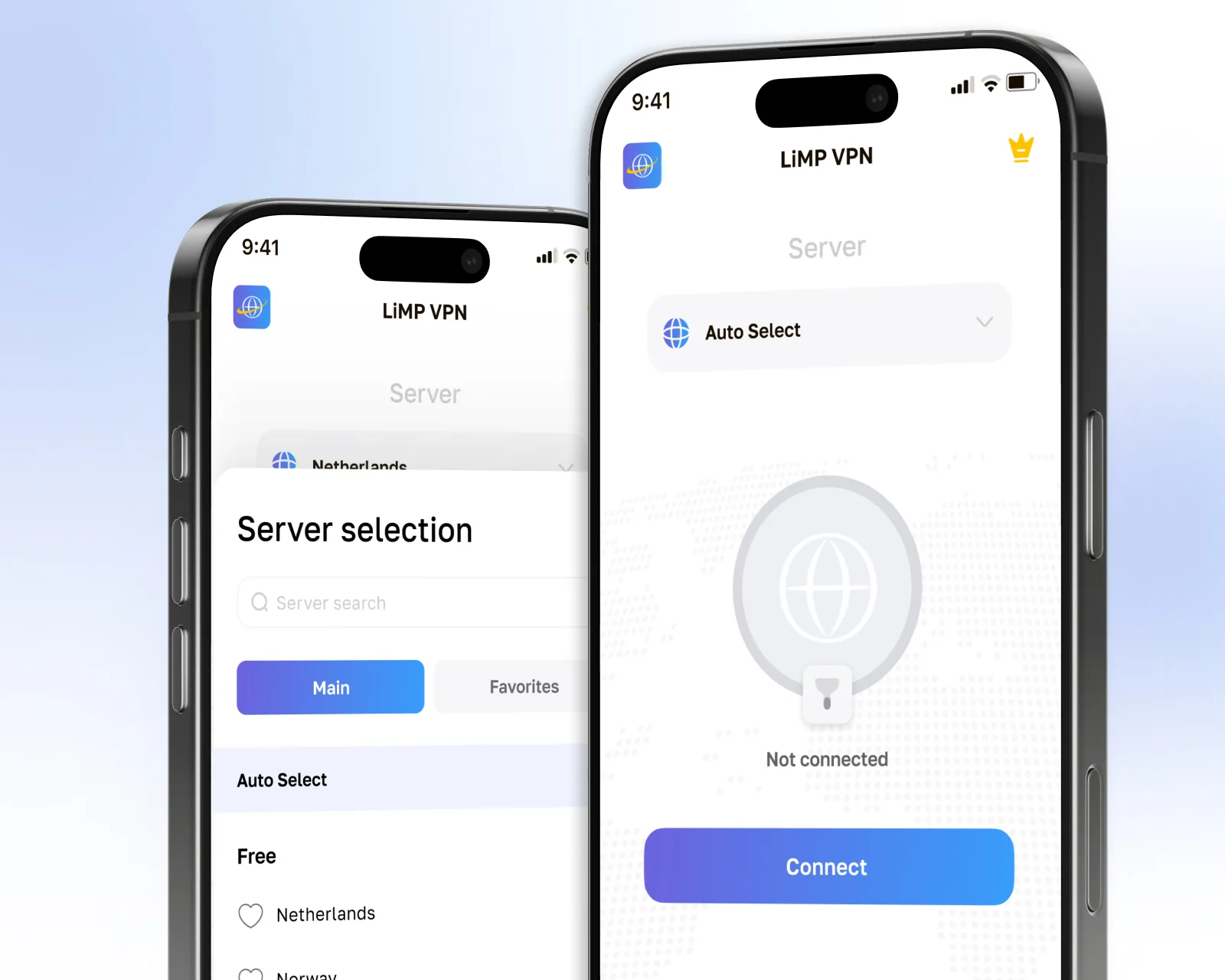
WireGuard consumer VPN for iOS & Android with a no-logs control plane and audit-ready posture across the US & EU.
View case →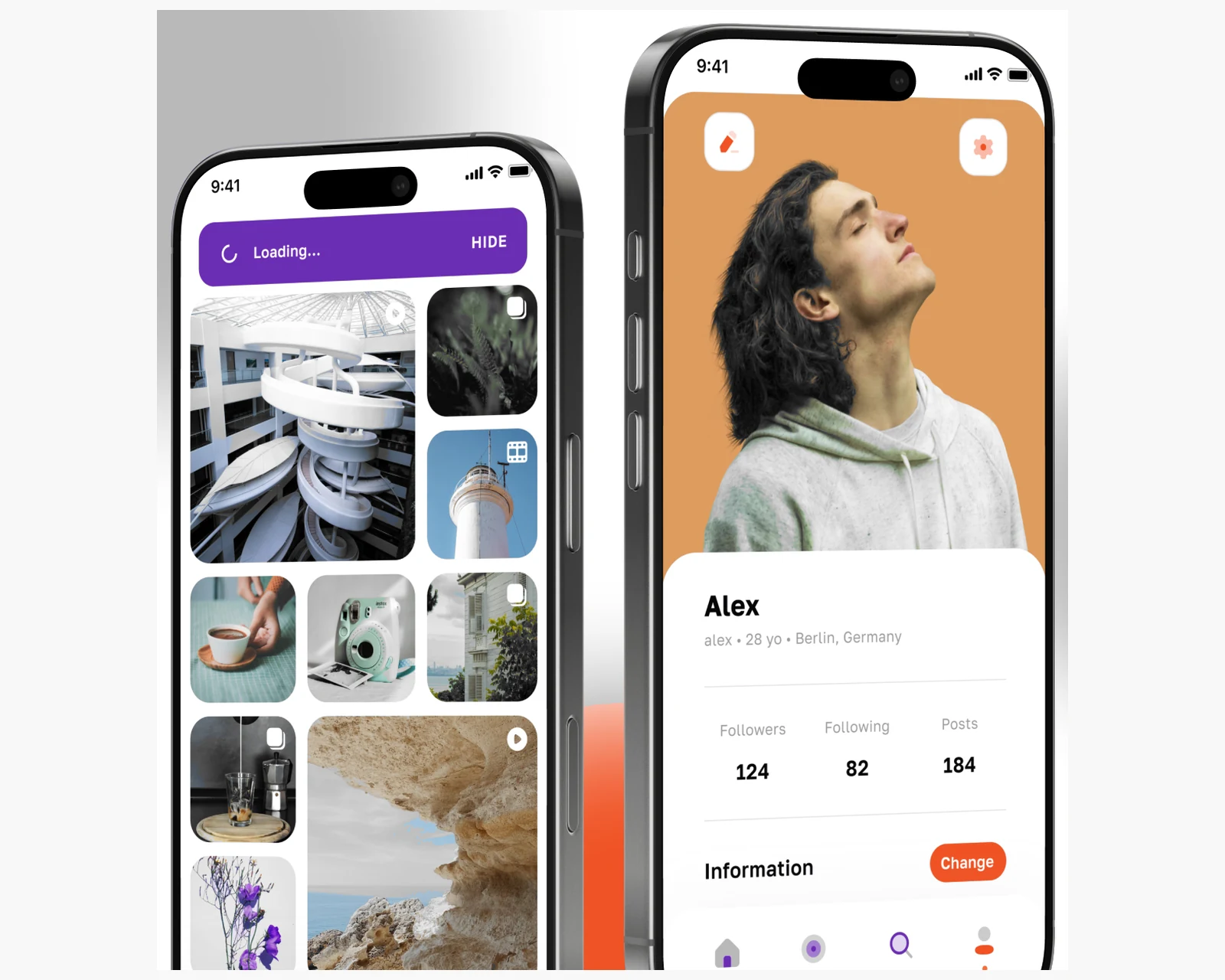
Native iOS + Android social platform with geo-radar discovery, real-time chat, and a virtual coin economy across US & EU.
View case →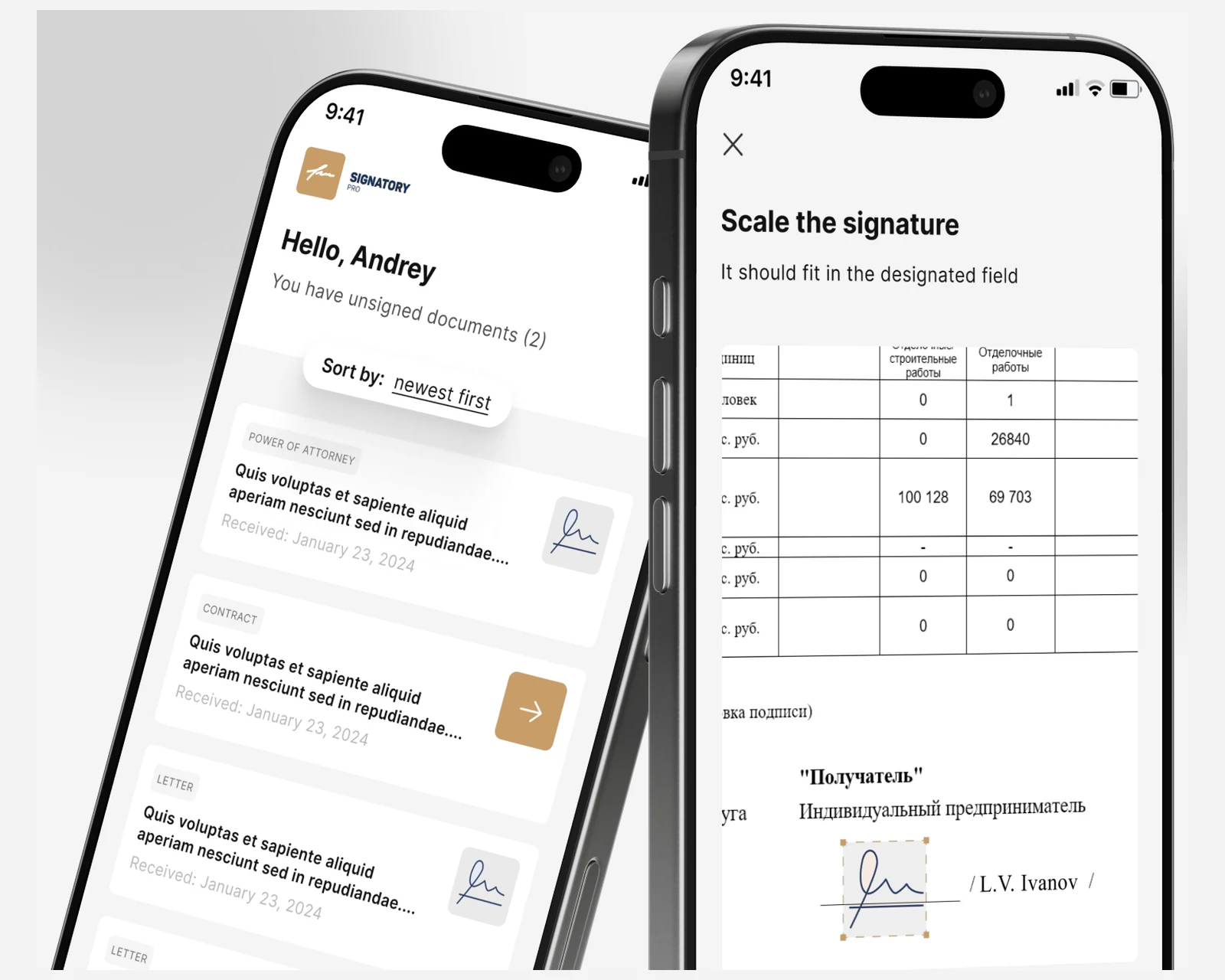
Audit-ready electronic-signature mobile workflow with strict role-scoped access and a tamper-evident audit log.
View case →Share a few details and a senior consultant will reply within one business day.