Discovery & learning model
Floor research, mapping the catalog taxonomy and training curriculum, designing the points-and-rank economy, and GDPR + CCPA data-ownership posture mapping.
Case study · Retail · Staff enablement
How we shipped a production staff-enablement app for a nationwide household-appliances retailer — native iOS and Android clients, certificate and points-based learning, ranked leaderboards, a filterable product catalog with smart matching, a corporate news feed, and internal messaging — used daily by tens of thousands of employees and built for retail teams across the United States and the European Union under GDPR and CCPA expectations from day one.

The client runs a large household-appliances chain where the quality of an in-store conversation decides the sale. For retail operations and learning teams in the United States and the European Union, that creates a hard problem: a sprawling product range changes constantly, frontline staff turn over quickly, and there is no time to pull associates off the floor for classroom training. Knowledge lived in PDFs and a manager's head, so consultation quality drifted store to store. The brief was to put a mobile-first learning and reference tool in every employee's pocket — short lessons and tests tied to the actual product catalog, a reward system that motivates people to keep learning, and a single source of truth for specifications across the US and EU. Off-the-shelf learning management systems failed the first acceptance test: they assume desk-bound, course-completion learning and could not model a gamified points economy, ranked leaderboards, or a live product catalog. We built the system from first principles at YuSMP Group as a unified platform — native iOS and Android clients, a certificate-and-points learning engine, a filterable catalog, a news feed, and team messaging — engineered with our custom software development practice for the US and EU markets.
A snapshot of what the staff-enablement build delivered across two native platforms, a gamified learning engine, and a content-managed catalog in production.
The platform decision dominates every other choice in a staff-enablement build. We chose a custom app over a packaged learning management system because a nationwide retail floor needs the opposite of what an LMS assumes. Off-the-shelf LMS products are built for desk-bound, course-completion learning; a store associate needs short mobile lessons tied to a live product catalog, a reward economy that makes learning feel worth it, and a ranked leaderboard that turns mastery into status. The configuration tax of bending a packaged platform to a gamified, catalog-linked model typically exceeds a clean custom build, and it leaves the most commercially important behavior — the points economy and the catalog logic — locked behind a vendor's roadmap. A custom app let us own the data end to end, which matters for US and EU companies that answer to GDPR and CCPA obligations.
The trade-off most teams underweight is the back office. A retail catalog and training library change weekly, so the head office needs to author content, retune point values, and publish new product lines without shipping an app update. Building the system ourselves meant the catalog, the scoring rules, and the rank thresholds were first-class, content-managed concerns served through an API — and the entire stack, two native clients plus the authoring tools, stays open and maintainable for the long run.
| Dimension | Custom app (this build) | Off-the-shelf LMS | PDFs / classroom |
|---|---|---|---|
| Learning model | Mobile-first micro-lessons + tests | Desk-bound course completion | Static documents, scheduled sessions |
| Gamification economy | Points, certificates, ranks, leaderboard | Limited badges, if any | None |
| Product catalog link | Live, filterable, smart-matched | Not catalog-aware | Separate price lists |
| Content updates | Head-office authoring, no app release | Vendor-gated workflow | Manual redistribution |
| Frontline reach | Native iOS + Android in pocket | Often web-only | Tied to back-room PC |
| Data ownership (GDPR / CCPA) | Full ownership and residency control | Vendor-hosted, shared tenancy | Uncontrolled |
| Engagement signal | Per-employee progress, ranks, points | Completion reports only | None |
Platform references: React documentation, Laravel documentation, Swift documentation.
The iOS client is built in Swift and is the tool an associate actually opens between customers. The core loop is deliberately small: pick a product line, work through a short sequence of lessons — platform, cooling system, heating system, air distribution, cleaning — then take the test. Each lesson carries a progress indicator and a point value, and passing the test mints a certificate and rolls points up into the employee's rank. The screen design assumes a busy, on-the-floor user: large tap targets, one primary action per screen, and a clear sense of what is done, in progress, and still locked. Turning training into a visible game of points and rank is the single largest driver of daily engagement across the workforce.
The scoring rules, point values, and rank thresholds all live server-side so the head office can retune the economy without shipping an app update, and every award is logged so the system stays auditable and resistant to gaming. The iOS surface is delivered as part of our mobile app development practice, with the learning content authored centrally and synced to the device for fast, reliable access even on a spotty in-store network.
The Android client is built in Kotlin and mirrors the iOS experience so every associate, whatever device they carry, runs the same learn-test-earn loop and sees the same profile. The profile is where the gamification pays off: an employee sees accumulated reward points, their certificates organized by level — Beginner, Advanced, Expert — and their rank against the rest of the workforce. Reward points are redeemable, so learning has a tangible payoff that keeps people coming back. The same engineering team carries iOS and Android in lockstep as part of our iOS and Android engineering practice, so a feature lands on both platforms in the same release cycle.
Behind both clients sits a React-and-Laravel back office. The head office authors lessons and tests, manages the product catalog, publishes news, and tunes the points economy through a control plane backed by a Laravel API. A single catalog edit propagates to every device on next sync rather than requiring an app update, and content, scoring, and rank rules are all data rather than code. The whole back office is engineered on our cloud & DevOps foundation so the API, the content services, and the sync workers scale together as the workforce grows.
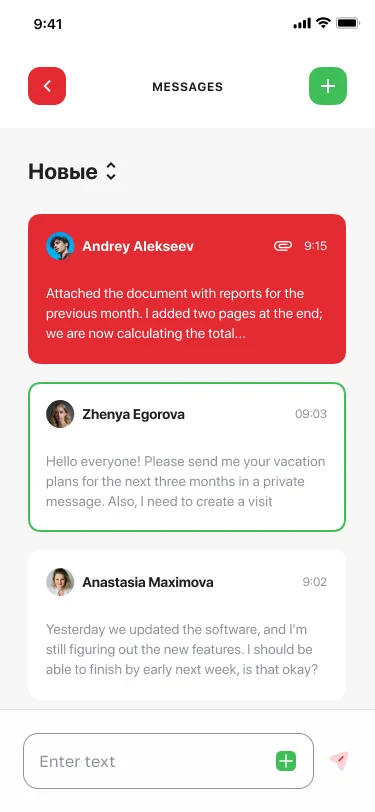
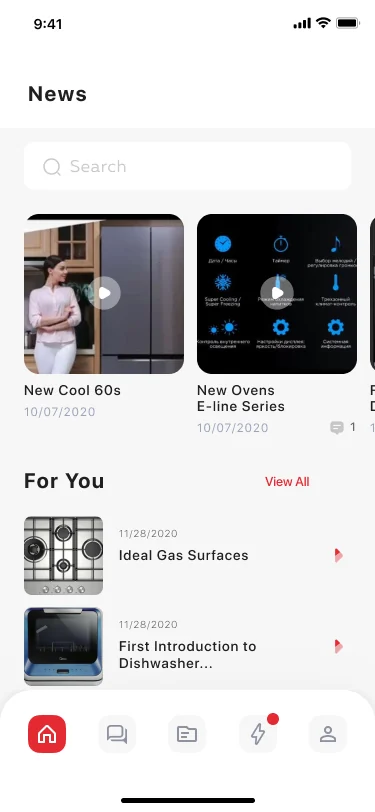
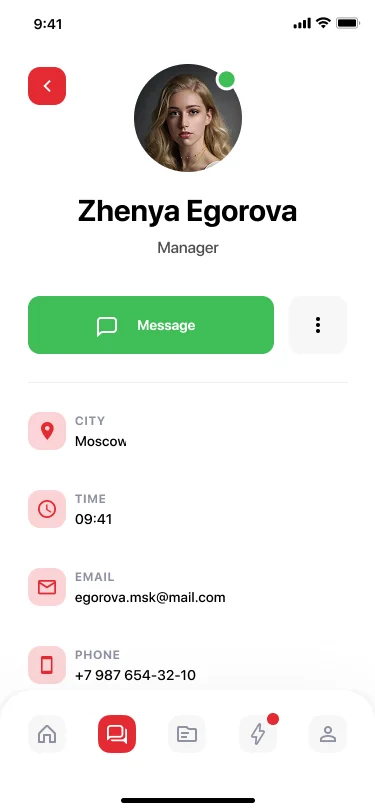
The internal messaging and news layer turns the app from a solo learning tool into a connected workplace. Associates and managers exchange direct messages with attachments, react and comment on the corporate news feed, and pull up a colleague's profile with city, contact details, and rank in one tap. Because messaging carries personal data, it was built with the same discipline as the rest of the platform: role-based access separates associate, manager, and admin views, message history is owned by the client rather than a third-party chat vendor, and personal fields are minimized to what the workflow actually needs.
Because the client owns its own deployment, data ownership and residency are design choices rather than vendor defaults. Operational and learning data can be pinned to US or EU infrastructure for future data-residency commitments, and the system aligns with GDPR obligations for users in the European Union and CCPA / CPRA obligations for users in California and the broader United States — making a future readiness review a documentation exercise rather than an architectural retrofit.
Compliance posture: GDPR-aligned · ISO 27001 ready · SOC 2 Type II in progress · HIPAA-capable · CCPA-acknowledged.
A five-phase build that took the chain from PDFs and classroom sessions to a live, gamified mobile platform used daily across the workforce.
Floor research, mapping the catalog taxonomy and training curriculum, designing the points-and-rank economy, and GDPR + CCPA data-ownership posture mapping.
React + Laravel control-plane skeleton, the content-managed catalog and lesson schema, the server-side scoring rules, and the sync contract for native clients.
Swift iOS and Kotlin Android clients in lockstep — learning engine, profiles, filterable catalog, news feed, and internal messaging — on a two-week sprint cadence.
Tuning point values and rank thresholds, anti-gaming audit logging, role-based access testing, and validation against real in-store network conditions.
Nationwide staff onboarding, head-office content training, engagement telemetry across US and EU deployments, and a continuing feature roadmap.
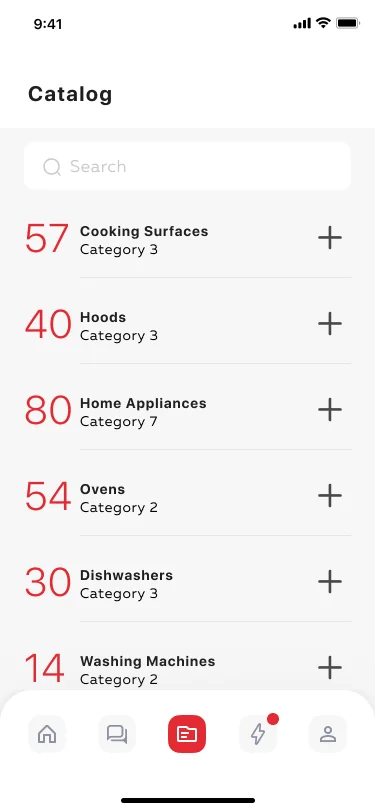
Beyond the learn-and-track core, the platform carries a product-matching subsystem that turns the catalog into a live consultation aid. The catalog is more than a browsable list of categories and item counts — it encodes specifications, pricing tiers, and the intelligent matching rules that help an associate narrow a sprawling appliance range to the right model for a specific customer need. Those rules are content, not code, so the head office can retune them as inventory turns over across the US and EU without shipping an app release. The subsystem feeds the same sync pipeline as the rest of the app: a catalog edit propagates to every device on next sync, and a staffer reasoning through cooking surfaces, hoods, ovens, dishwashers, or washing machines always works from current specifications. The result is that the app a new hire opens to learn is the same app a veteran opens to close a sale — the layer that turns a training tool into an operational asset on the floor, and where the platform earns its keep for retail operations leaders who measure success in conversion, not course completions.
The platform is built as a single mobile codebase per platform serving retail teams across the United States and the European Union, without a separate build per region. It serves associates in California, New York, Texas, Florida, and Washington in the US, and associates in the Netherlands, Germany, France, Ireland, and Sweden in the EU. Because the client owns its own deployment, data-handling practices are aligned with GDPR for users in the EU and with the US state-privacy patchwork — CCPA / CPRA (California), VCDPA (Virginia), CPA (Colorado), CTDPA (Connecticut), UCPA (Utah), TDPSA (Texas), and Oregon CPA. Role-based access separates associate, manager, and admin views, and learning and personal data can be pinned to US or EU infrastructure for future data-residency commitments — so regional compliance reduces to honest disclosure and access discipline rather than per-jurisdiction rework.
The app is built to roll out across EU and US store networks in parallel, with each region's catalog, curriculum, and points economy authored from the same back office and synced identically to every device. The matching between training content and product lines runs the same way in every region, so a multi-market operator gets one consistent picture of workforce capability across geographies. The engineering team behind the build runs a CET workday with East-Coast US overlap (9 AM–1 PM ET) for stand-ups, content choreography, and incident response — the window that lets a US operations team and an EU engineering team share four hours of live overlap every day. Data-handling references are documented directly against GDPR obligations and California CCPA obligations.
The active custom software development roadmap for the platform includes richer analytics that tie training completion to floor performance, an expanded reward marketplace for redeeming points, and adaptive learning paths that surface the lessons each associate most needs. A manager console with team-level capability dashboards is planned for US and EU operators running many stores, and the catalog subsystem is already structured for multi-region pricing and inventory. Infrastructure plans include deeper content-authoring automation, a continuous data-integrity harness, and regional deployment scaffolded into the cloud & DevOps roadmap.
If you are planning a retail staff training app, a gamified enablement platform, or any field app where a mobile workforce has to stay current on a fast-changing catalog for audiences in the US and EU, we have shipped this stack end-to-end and can compress the build timeline meaningfully. The product overview is available at yusmpgroup.ru (iOS and Android), and the engineering team behind it sits inside YuSMP Group. We work fixed-price for well-scoped MVPs and on dedicated development teams for ongoing delivery, with a CET workday and a guaranteed East-Coast US overlap (9 AM–1 PM ET) window for stand-ups, demos, and incident response.
A custom retail training app covering native iOS and Android clients, certificate and points-based learning modules, and an employee profile with rank typically costs $90k–$200k for an MVP. Adding a filterable product catalog with smart matching, a corporate news feed, internal messaging, and back-office content authoring brings a full-featured platform to $230k–$520k. The dominant cost drivers are the two native clients, the gamification economy, and the content and catalog tooling the head office uses to keep material current.
Off-the-shelf learning management systems assume desk-bound, course-completion learning. A nationwide retail floor needs the opposite: short, mobile-first lessons tied to a live product catalog, a reward economy that motivates frontline staff, and a ranked leaderboard that makes mastery visible. Bending a packaged LMS to that model usually costs more than a clean custom build, and it leaves the gamification and catalog logic locked behind a vendor roadmap. A custom app lets you own the data, which matters for US and EU companies with GDPR and CCPA obligations.
The economy has to reward learning that translates to the sales floor, not just clicks. Employees earn points by completing lessons and passing tests, points roll up into certificates and a visible rank, and rank feeds a leaderboard that surfaces top performers. The scoring rules, point values, and rank thresholds live server-side so the head office can retune the economy without an app release, and every award is logged so the system stays auditable and resistant to gaming.
The catalog is content-managed from a central back office and served through an API, so a single edit propagates to every device on next sync rather than requiring an app update. Categories, item counts, specifications, and the smart-matching rules are all data, not code. The mobile clients cache the catalog for fast browsing and offline reference on the floor, then reconcile against the server so a staffer always sees the latest models, pricing tiers, and training material tied to each product line.
A focused MVP with native iOS and Android clients, certificate and points-based learning, and an employee profile typically takes 14–20 weeks. Adding the filterable product catalog with smart matching, a news feed, internal messaging, and the back-office authoring tools adds 10–16 weeks. The documented build for the nationwide appliance chain ran about nine months end to end, delivered in two-week sprints with regular client demos, followed by ongoing support and feature work.
Related cases
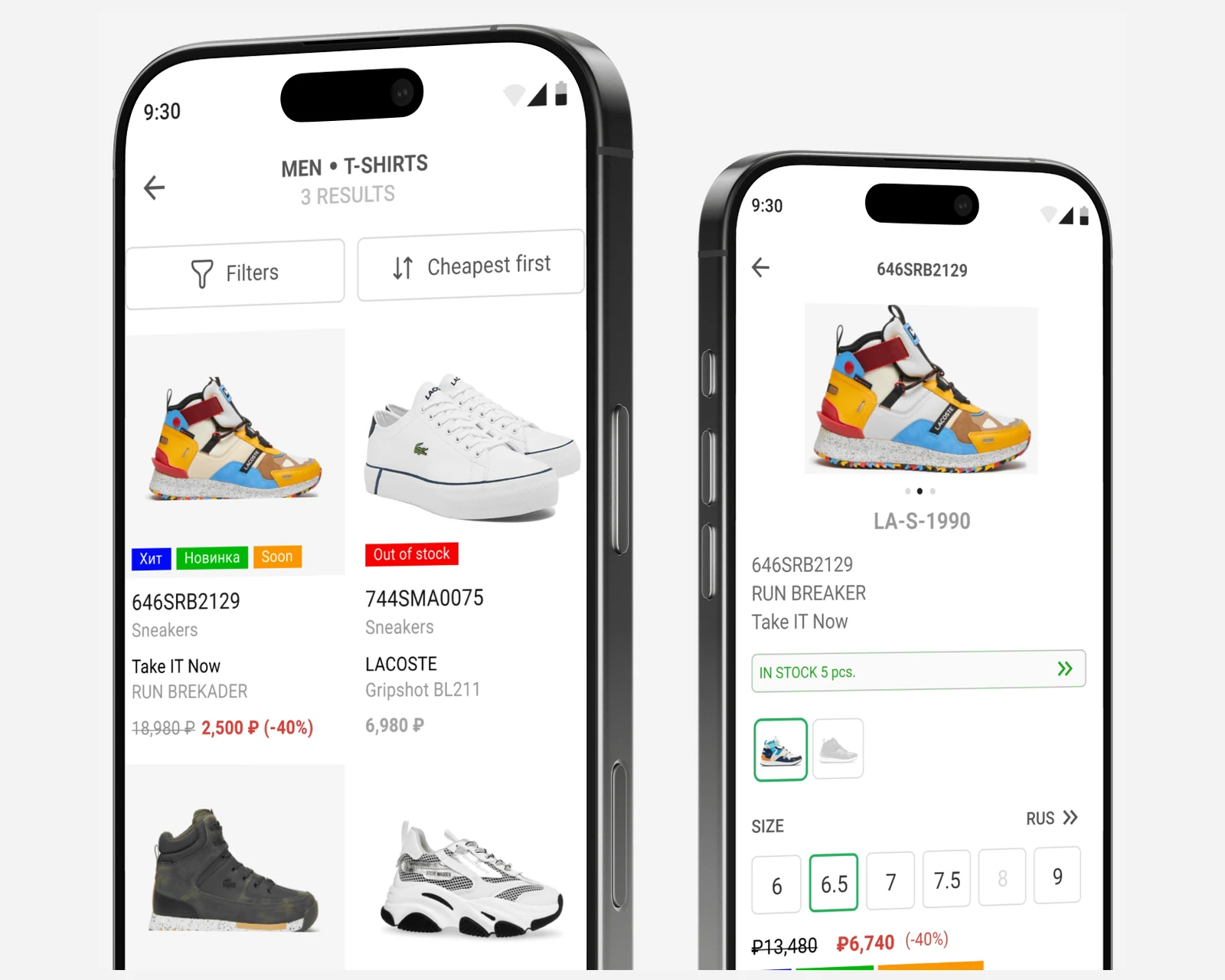
Retail training, knowledge base, and performance tracking for store teams across US & EU.
View case →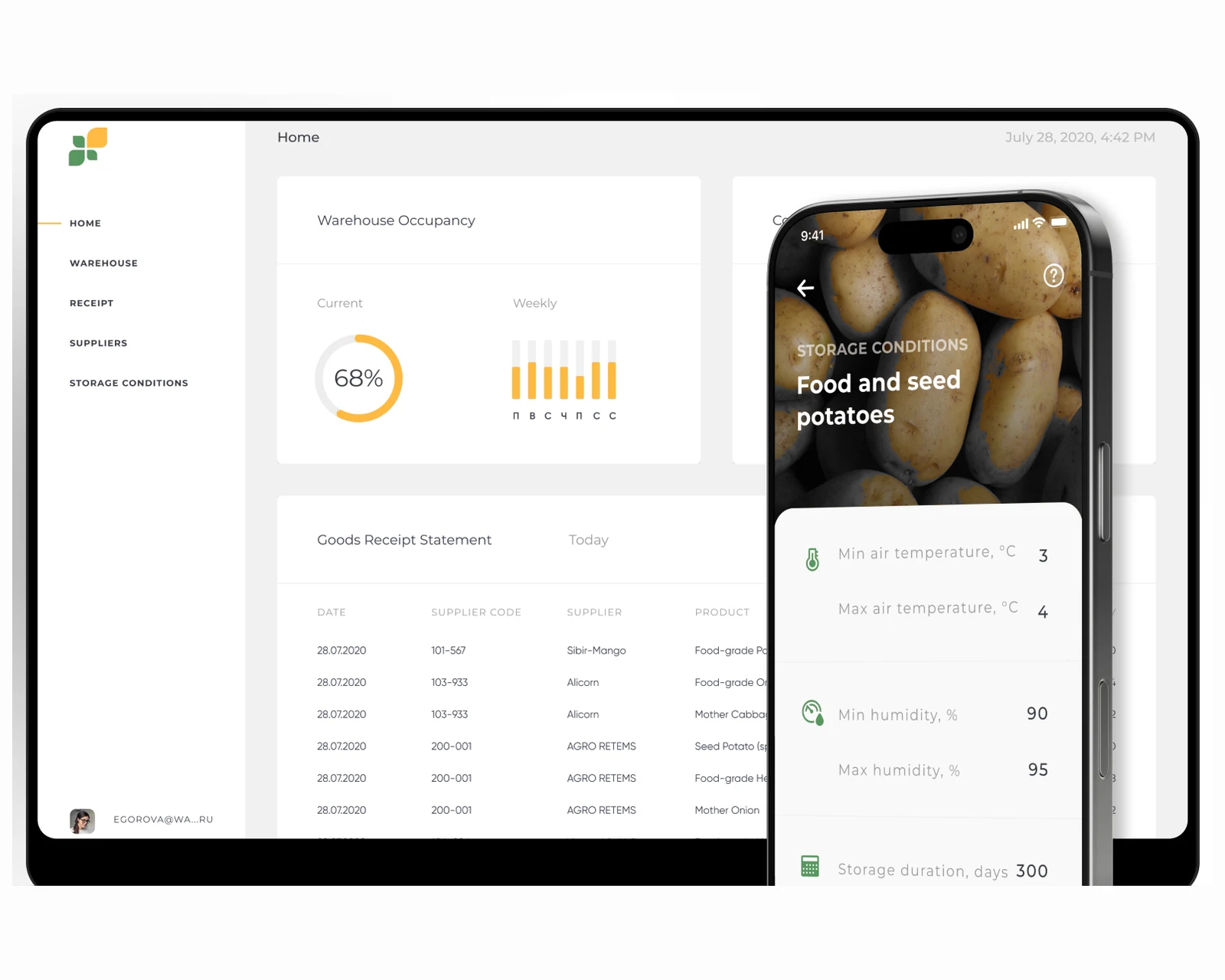
React control plane and native scanner apps with QR tracking and offline-first sync across US & EU.
View case →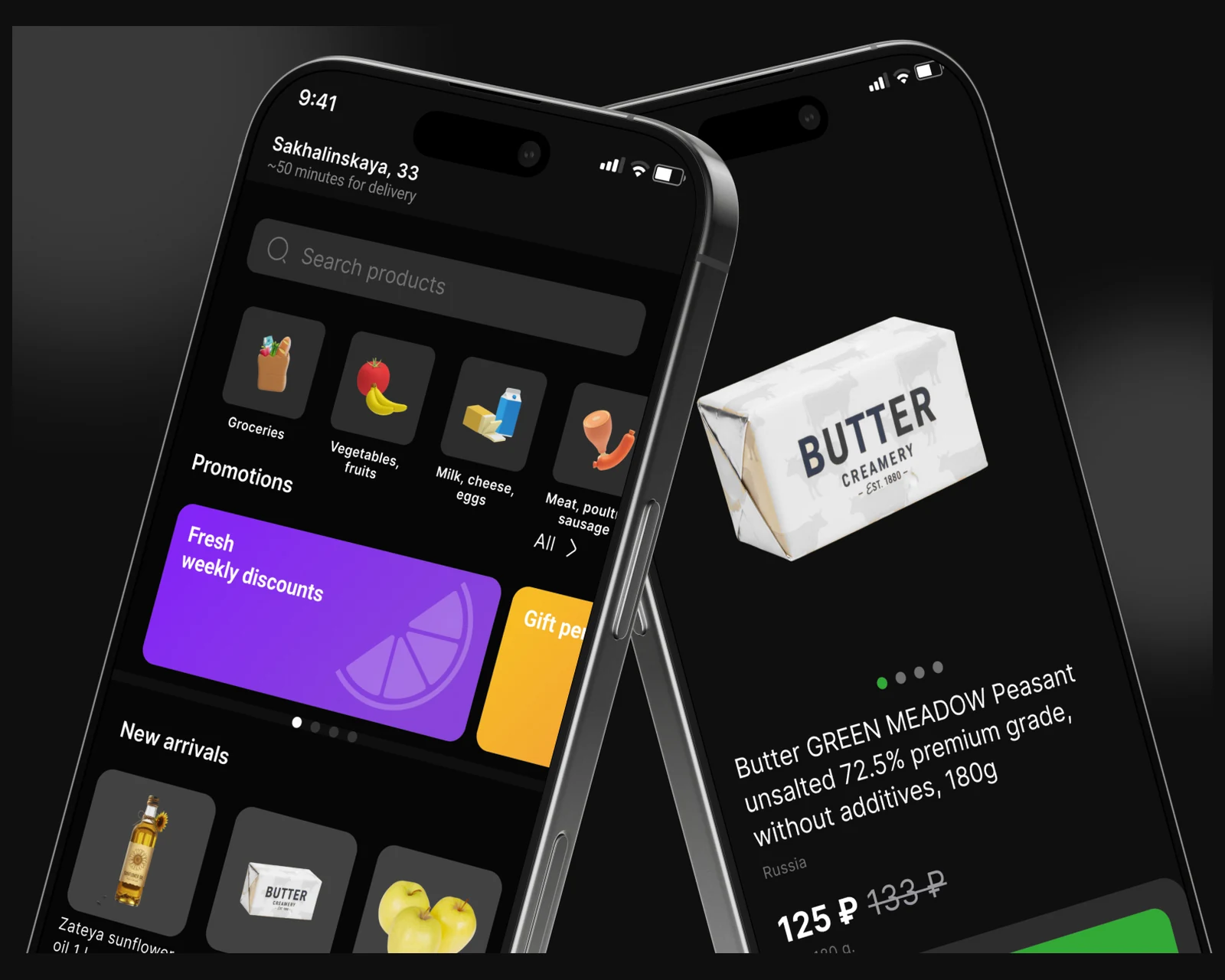
Filterable catalog, courier app, and ops console for a fast retail delivery operation across US & EU.
View case →
Custom platforms engineered to your business model, scaling cleanly from MVP to millions of users.
Explore custom software development →
Native iOS, Android, and cross-platform apps with store-ready release pipelines.
Explore mobile app development →
Containerized infrastructure, CI/CD pipelines, and Terraform-managed deployments across US & EU regions.
Explore cloud & DevOps →Share a few details and a senior consultant will reply within one business day.