
The short version
Mistral AI closed a €3 billion Series D on September 8, 2026, at a post-money valuation above €21 billion (about $24 billion) — the largest equity round ever raised by a European technology company. Samsung Electronics led, with EQT's Scaleup Europe Fund and PSG Equity co-leading, and the capital is earmarked for compute, infrastructure and commercial expansion. The strategic signal for anyone building on Mistral models or weighing one: Europe now has a deep-pocketed, independent AI vendor that markets data residency and region control as first-class features — a genuine option for teams that do not want their whole AI stack sitting inside a single US hyperscaler.
What Mistral announced
On September 8, 2026, Mistral AI said it had raised €3 billion in a Series D round led by Samsung Electronics, at a post-money valuation above €21 billion — roughly $24 billion in dollar terms. Multiple outlets described it as the largest equity fundraising round ever completed by a European technology company, and it roughly doubles the valuation the Paris-based lab carried a year earlier. Co-leading alongside Samsung were the Scaleup Europe Fund, managed by EQT, and existing backer PSG Equity.
The investor list is a map of who wants exposure to a non-US frontier lab. New money came from Advent, funds managed by BlackRock and the Grand Duchy of Luxembourg, joining returning investors including Andreessen Horowitz and NVIDIA. Mistral said the proceeds will go to scaling compute capacity, building infrastructure, accelerating commercial growth and expanding its international footprint — the four line items every capacity-constrained model maker is spending on in 2026. For teams already weaving generative AI into products, the relevant part is not the cap table; it is that a European alternative to the US labs just secured the balance sheet to keep pace.
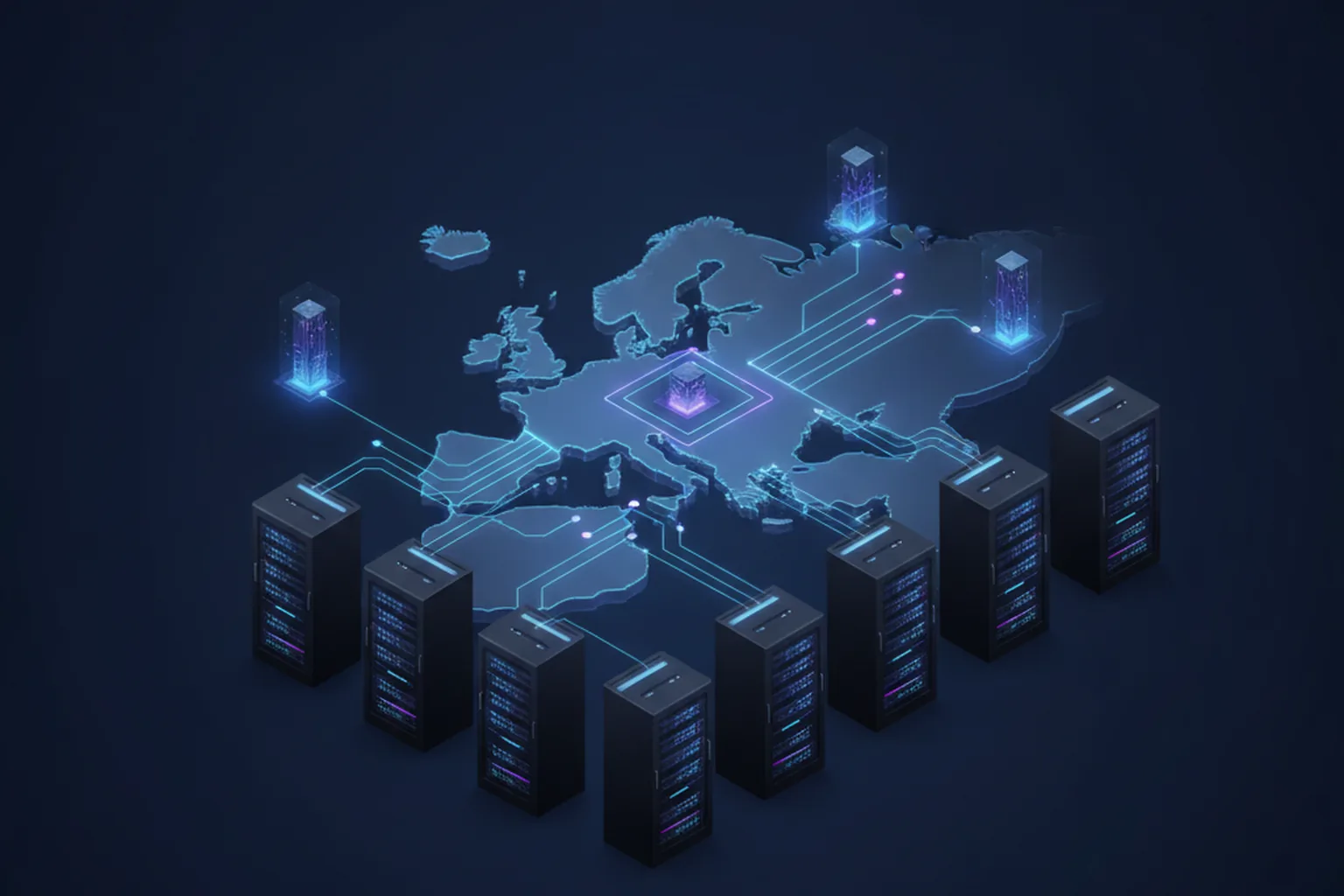
The framing Mistral leaned on is “sovereign AI”: capability that European governments and companies can run under their own control rather than renting entirely from foreign providers. The company has pointed to plans to build 1 GW of compute capacity in Europe by 2030 and to let customers choose which regions their AI queries are processed in. That is a deliberate contrast with the default assumption that serious AI means routing data to a handful of US clouds.
Why €3B changes the vendor math
Frontier AI is a capital-intensive business, and the fear with any non-incumbent vendor is simple: will it still be here, and still competitive, in three years? A €3 billion round at a €21 billion valuation is a direct answer to that question. Compute, not cleverness, is the binding constraint on keeping models current, and this round is explicitly about buying more of it. For an engineering leader doing due diligence on a model provider, funding runway and compute commitments are legitimate technical criteria — not just finance trivia — because they determine whether the API you build on will keep improving or quietly stagnate.
The second-order effect is competitive pressure. A credible third pole alongside the dominant US labs is good for buyers: it pushes on price, on terms, and on features like regional processing that a sole-source vendor has little reason to offer. The lesson from every prior platform shift is that concentration is a risk you pay for later. A financed European option makes it realistic to treat model providers the way mature teams already treat cloud regions and databases — as substitutable components, chosen per workload, rather than a single strategic marriage.
Sovereign AI: data residency as a feature
Strip away the geopolitics and “sovereign AI” is, for most software teams, a data-governance feature. The question that actually shows up in an architecture review is: where are my prompts, my documents and my customers' data processed, and under whose jurisdiction? For anything touching EU personal data under GDPR, or regulated inputs in FinTech and HealthTech, being able to pin inference to a known European region — and prove it — is a concrete advantage over an opaque, US-default endpoint.
That is why the region-selection and European-compute commitments matter more than the valuation to a practitioner. They convert a compliance argument that used to end in “we'll have to accept the risk” into a design decision with a real option behind it. It does not remove the work: you still need a lawful basis, a data-processing agreement, and controls over what you send. But it widens the set of providers that can plausibly satisfy an EU data-residency requirement, which is exactly the kind of constraint that used to force teams toward self-hosting or away from the best models entirely.
What it means for US & EU software teams
For US teams, the practical takeaway is diversification. Betting an entire AI roadmap on one provider concentrates risk — pricing changes, capacity limits, deprecations, terms shifts all land at once. A financed, capable Mistral makes multi-provider design cheaper to justify: abstract the model endpoint, benchmark two or three providers on your actual tasks, and route by cost and capability. The engineering cost of that flexibility is modest if you build it in early and painful if you retrofit it later.
For EU teams and anyone selling into Europe, the takeaway is compliance leverage. A European model vendor with explicit region control is a strong card when a customer's security review asks where data is processed, and it pairs naturally with the discipline regulated builds already demand. It also intersects with the EU AI Act obligations arriving on a phased timeline: knowing your provider, your data flows and your ability to document them is becoming table stakes, not a nice-to-have. Choosing a provider that makes those answers easy reduces friction on every future enterprise deal.
The honest caveat cuts both ways. This is a funding milestone, not a benchmark result — capital does not guarantee that any single model tops a leaderboard for your use case, and you should still test on your own workloads rather than on marketing. The durable move is architectural: design for a world with several serious model providers, keep your data-residency requirements explicit, and make the provider a configuration choice rather than a foundation you cannot move off.
Should you add a European model to your stack?
- Write down your data-residency requirement first. If EU processing is mandatory for some data, that constraint — not the model leaderboard — should drive provider shortlisting.
- Abstract the model endpoint. Put a thin interface in front of inference so a feature can call Mistral, a US provider, or a self-hosted model without a rewrite.
- Benchmark on your own tasks. Compare providers on your real prompts, latency budget and cost per request, not on public demos.
- Treat funding and compute as diligence inputs. A vendor's runway and capacity commitments are fair signals of whether its API will keep improving.
- Route per workload. Use the provider that fits each job — jurisdiction-sensitive work in-region, cost-sensitive bulk work on the cheapest capable model.
- Document the data flow. Record where each request is processed and under what agreement; you will need it for GDPR and EU AI Act evidence.
- Avoid a single point of dependence. Keep at least one tested fallback provider so a pricing or capacity shock is a config change, not a fire drill.
Frequently asked questions
How much did Mistral AI raise and at what valuation?
Mistral AI announced a €3 billion Series D on September 8, 2026, at a post-money valuation above €21 billion (roughly $24 billion). Reporting described it as the largest equity fundraising round ever completed by a European technology company, roughly doubling the valuation the Paris-based startup carried a year earlier.
Who led the Mistral Series D round?
Samsung Electronics led the round, with the EQT-managed Scaleup Europe Fund and PSG Equity as co-leads. New backers included Advent, funds managed by BlackRock, and the Grand Duchy of Luxembourg, alongside returning investors such as Andreessen Horowitz and NVIDIA. Mistral said it will use the money to scale compute capacity, build infrastructure, accelerate commercial growth and expand internationally.
What is “sovereign AI” and why does it matter for regulated teams?
Sovereign AI refers to AI capability that an organization or country can run under its own legal and physical control rather than depending on a foreign hyperscaler. Mistral markets European data processing and region selection, and has said it plans to build 1 GW of compute capacity in Europe by 2030. For teams under GDPR or building in FinTech and HealthTech, keeping model inputs inside a known jurisdiction is a concrete compliance and data-residency advantage.
Should software teams add a European model like Mistral to their stack?
It depends on your constraints. A well-capitalized independent vendor reduces single-provider lock-in and offers a credible option when data residency or EU AI Act alignment matters. The practical move is to abstract the model endpoint so a feature can call Mistral, a US provider, or a self-hosted model without a rewrite, then choose per workload based on cost, latency, capability and where data must live.
Sources
TechCrunch — Mistral raises €3B as sovereign AI becomes big business (September 8, 2026)
CNBC — Mistral bags $24 billion valuation as Samsung leads funding for Europe's AI champion (September 8, 2026)
Bloomberg — Mistral AI Boosts Valuation to €21 Billion in Samsung-Led Round (September 8, 2026)