
TL;DR — key facts at a glance
Telemedicine software development means building telehealth software — secure video visits, scheduling, e-prescribing, patient monitoring and EHR integration — for your exact clinical workflow. In 2026 the deciding factors are HIPAA and the DEA prescribing rules (extended through December 2026), the number of EHR integrations, and secure real-time video. Budgets run from about $50k for a HIPAA-ready MVP to $300k+ for enterprise, multi-specialty platforms.
What is telemedicine software development?
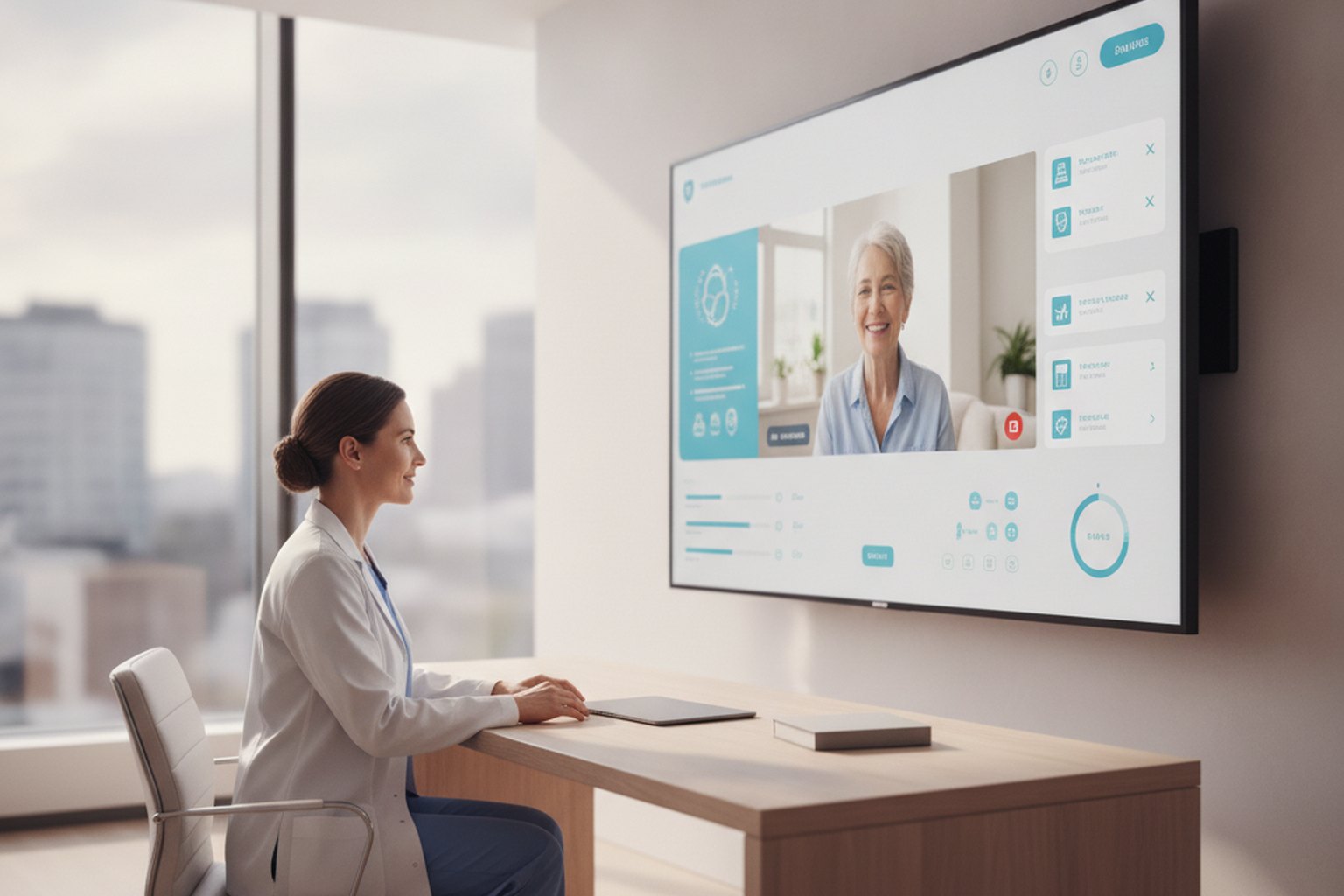
Telemedicine software development is the design and engineering of telehealth software that lets clinicians and patients consult remotely — secure video and audio visits, scheduling, e-prescribing, patient intake, remote monitoring and payments, wired into a clinical system of record. A telemedicine software development company builds these platforms for a specific clinic, health system or healthtech product rather than shipping a one-size-fits-all app. What ties every build together is one constraint the rest of software rarely faces: each session moves protected health information (PHI), so privacy, security and interoperability shape every decision from the first sprint.
What sets telehealth software apart from a generic video app is the regulated data model and the live clinical stakes. A consumer video call can drop a frame; a telemedicine visit has to stay encrypted end to end, fall back to audio on a weak connection, verify who the patient is, and write the encounter back into the record. That is why experienced healthcare software development company teams build the compliance and integration layer first, then treat the consultation UI as what sits on top. Most projects are scoped the other way round, and it shows in the second-round rebuild.
Organizations commission custom telemedicine software development services for a handful of reasons: no off-the-shelf product supports their specialty workflow or payer mix, per-visit licensing has grown more expensive than owning the platform, or the software itself is the product they intend to sell to other providers. If a standard telehealth point-solution fits your workflow, buying is usually right. When it does not — and for most multi-specialty or product plays it does not — the sections below map what a build actually involves.
The main types of telemedicine software
Most telemedicine projects fall into a few recognizable categories, and real platforms usually combine several of them on one shared, standards-based data layer. Knowing which types you are building tells you the integrations you will need, the regulatory class you land in, and the cost that follows.
- Real-time (synchronous) video visits — live audio-video consultations over WebRTC, the core of most telemedicine application software development.
- Store-and-forward (asynchronous) — the patient submits images, data or a questionnaire and a clinician reviews it later; common in dermatology, radiology and second opinions.
- Remote patient monitoring (RPM) — connected devices stream vitals between appointments, with dashboards and alerts for the care team.
- mHealth & patient-facing apps — scheduling, intake, results, secure messaging and reminders that patients use directly on mobile.
- Telemental & specialty platforms — behavioral health, chronic-care and other workflows with their own consent, licensure and prescribing rules.
Where these systems talk to each other or to an EHR, the interoperability standards do the heavy lifting — our EHR integration guide covering HL7, FHIR and APIs goes into the detail behind most of these categories.
Build vs. buy: is custom telemedicine software right for you?
Not every clinic needs a custom build. Off-the-shelf telehealth platforms cover single-specialty, low-volume video visits well, and buying is usually the right call when your workflow is standard, your patient volume is modest, and you do not need to differentiate on the experience. Licensing costs less upfront than a build and gets you live in weeks, not months.
Custom telemedicine software development earns its cost in three situations: your specialty or payer mix does not fit any packaged workflow (multi-specialty systems, RPM-heavy chronic care, or a payer-specific prior-authorization flow), per-visit or per-seat licensing has grown more expensive than owning the platform at your volume, or the telehealth software is itself the product you plan to sell to other providers. A useful signal either way: if you are configuring an off-the-shelf platform's settings without hitting a wall, buying is working. If you are requesting features the vendor's roadmap will never ship, or paying per-seat fees that scale faster than your patient volume, that is the point to scope a custom build.
Hybrid paths exist too — some organizations license a commercial video and scheduling core, then build only the specialty workflow, EHR write-back or RPM layer around it, which can cut months off a full custom build while still solving the part generic software cannot.
What features does a telemedicine app need?
A production telemedicine app needs eight things before anything else: secure video, patient identity, scheduling, e-prescribing, messaging, EHR integration, payments and audit-logged PHI storage. Everything beyond that list is a differentiator, not a baseline. The mistake teams make is treating the video call as the product and the rest as "later" — in a regulated build, the rest is the product.
- Secure video & audio consultations — HIPAA-compliant, end-to-end encrypted, with adaptive bitrate and audio-only fallback for low-bandwidth patients.
- Patient registration & identity verification — onboarding and identity checks that satisfy telehealth and prescribing rules.
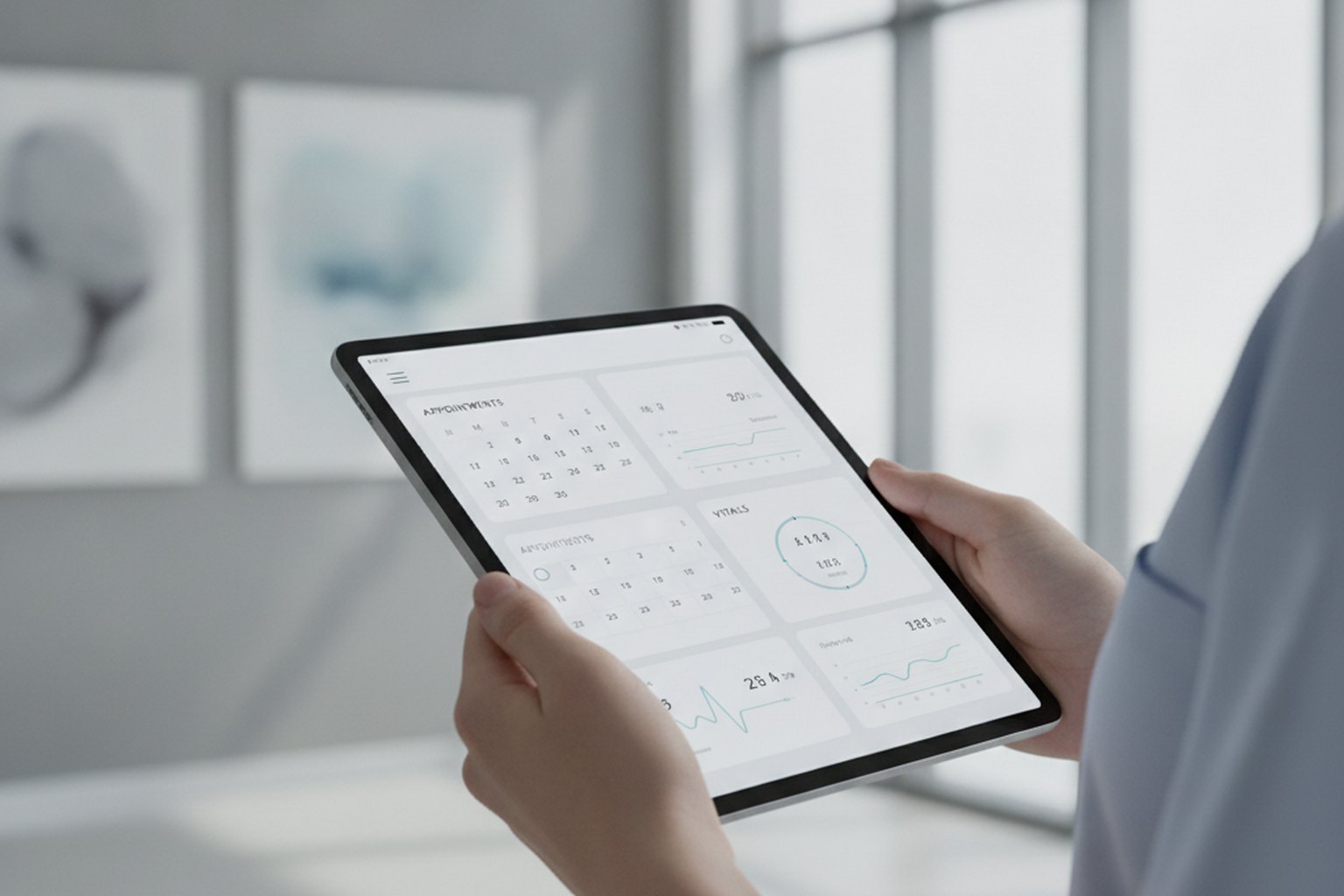
- Appointment scheduling & virtual waiting room — booking, reminders and a queue that hands the patient to the right clinician.
- E-prescribing (eRx) — medication ordering, with controlled-substance support aligned to the 2026 DEA rules where relevant, plus PDMP checks.
- Secure messaging & file sharing — asynchronous communication and document exchange inside the PHI boundary.
- EHR/EMR integration — reading and writing encounters over HL7 and FHIR so telehealth is not a data island.
- Payments & billing — copays, insurance eligibility and claims support.
- Encrypted storage & audit logging — PHI encrypted at rest with a full, tamper-evident log of every access.
Remote patient monitoring, AI triage and multi-language support are common add-ons that ride on this foundation rather than replace it. A patient-facing telehealth app is also a serious mobile app development effort in its own right — offline resilience, push notifications and app-store review all add scope.
AI in telemedicine software development
AI has moved from a telemedicine add-on to a default line item in 2026 builds, and the return is now measurable rather than speculative: industry surveys put AI adoption across healthcare organizations at roughly 85%, with about 82% of adopters reporting measurable ROI. The value shows up in four places that matter for a telemedicine platform specifically, not in AI as a general slogan.
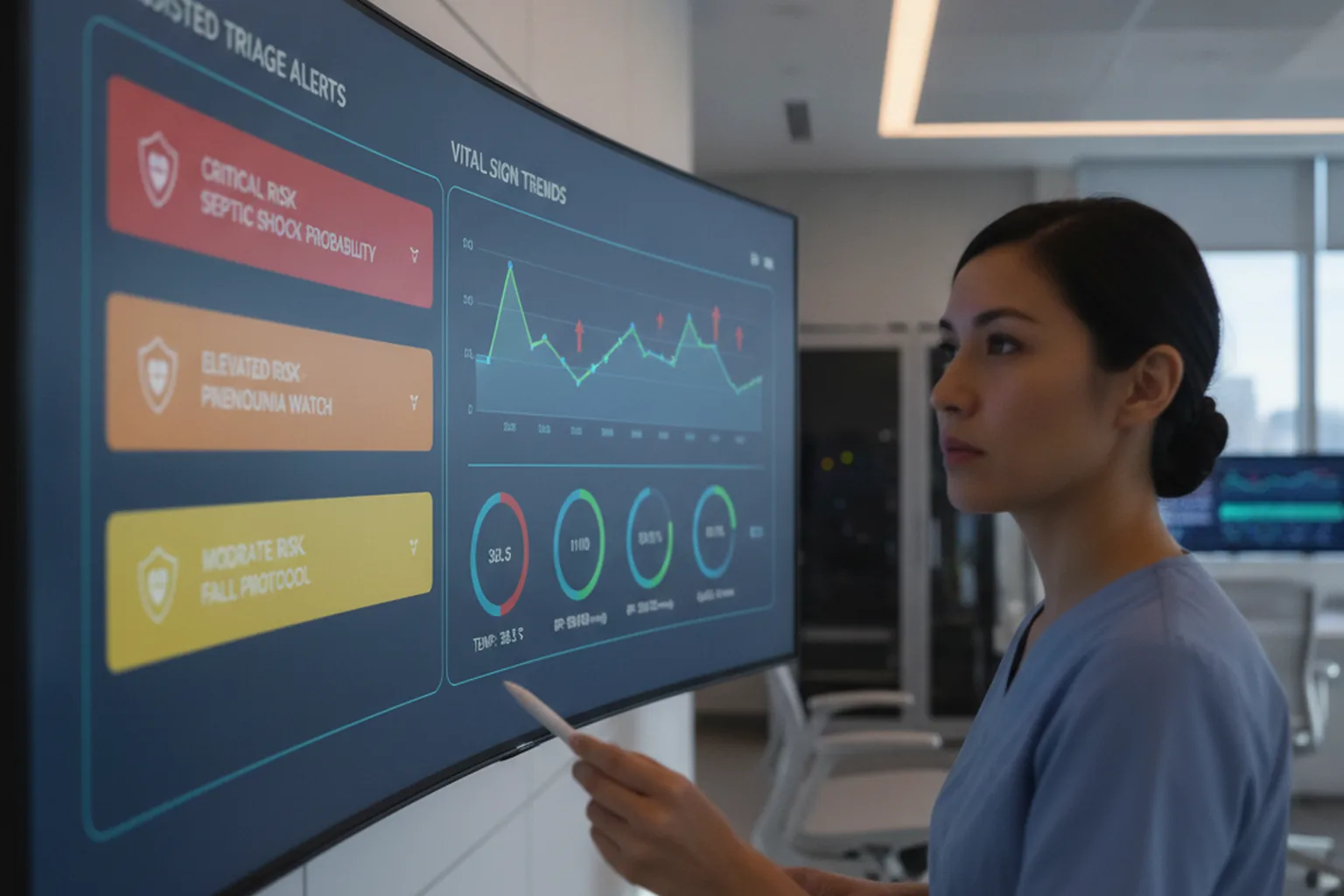
- AI-assisted triage and intake — a chatbot or structured intake flow that routes patients to the right specialty or urgency level before the video call starts, cutting no-shows and misrouted visits.
- Ambient clinical documentation — AI scribes that listen to the encounter and draft the note and coding suggestions, cutting clinician documentation time so more visits fit in a shift.
- RPM analytics and early-warning alerts — models that flag deteriorating vitals from remote-monitoring streams before a scheduled follow-up, which is what turns RPM from a data feed into a clinical intervention.
- AI-supported diagnostics and decision support — image or symptom-based triage aids in dermatology, radiology and store-and-forward workflows, always as a clinician-reviewed suggestion, never an autonomous diagnosis.
None of this replaces the compliance work covered below — an AI vendor that touches PHI needs its own signed BAA, and any model influencing a clinical decision needs an audit trail and a human in the loop, the same standard the FDA and most health systems already apply to clinical decision support software.
Telemedicine tech stack and architecture
The standard 2026 telemedicine stack pairs WebRTC for real-time video with a HIPAA-eligible cloud and an FHIR-mapped data layer. The exact frameworks matter less than three architectural choices: how you handle video, how you isolate PHI, and how you integrate the EHR. Get those right and the rest is ordinary product engineering.
- Real-time video: WebRTC directly, or a BAA-backed managed SDK such as Twilio Video or Daily.co. Managed SDKs cut months off the build; direct WebRTC gives you control and lower per-minute cost at scale.
- Frontend: React Native or Flutter for cross-platform mobile, React or Next.js on the web.
- Backend: Node.js, Python or Java handling authentication, session orchestration, notifications, analytics and EHR integration.
- Infrastructure: a HIPAA-eligible cloud (AWS or Azure) with geographic load distribution, auto-scaling for appointment peaks, and low-latency WebRTC routing.
- Interoperability: HL7 v2 and FHIR R4 for EHR data exchange, DICOM for imaging, and SMART on FHIR for third-party app integration.
Architecturally, an EHR-embedded telehealth workflow usually needs five connected layers: clinical launch context, video infrastructure, a virtual waiting room, encounter note write-back, and a compliance layer covering every vendor and data path that touches PHI. Standing that up cleanly is core Cloud & DevOps work — the same discipline behind any regulated real-time platform.
EHR and EMR integration
EHR integration is the single biggest scope driver in telemedicine software development, and it is where projects overrun. A telehealth visit that does not write back to the record forces double data entry and breaks clinician trust, so integration is a baseline requirement, not a phase-two nice-to-have. The good news is that the standards are now mature enough to plan around.
Modern telemedicine platforms integrate with EHR systems such as Epic, Oracle Health and athenahealth through supported APIs and interoperability standards — chiefly HL7 v2 for legacy interfaces and FHIR R4 for modern, USCDI-aligned data exchange. Prioritize a clean, FHIR-mappable data model early, even when it adds upfront cost: retrofitting interoperability after launch is far more expensive than designing for it. Each new EHR connection is a distinct integration with its own sandbox, security review and go-live, which is why the number of EHRs you support — not the number of screens — sets much of the budget.
Integrations beyond the EHR: pharmacy, payers and devices
EHR integration gets most of the attention, but a production telemedicine platform typically wires into three more systems, and each is its own scoped integration with its own review cycle — which is why "how many EHRs" is only part of the real integration count.
- Pharmacy and e-prescribing networks — Surescripts or an equivalent network for routing prescriptions and running PDMP checks, on top of the EHR-level e-prescribing feature described above.
- Payers and insurance — real-time eligibility checks (X12 270/271) and claims submission, so a visit does not end with a billing surprise; this is usually the integration clinics underestimate most.
- Remote-monitoring devices and wearables — Bluetooth LE and cellular RPM devices streaming vitals through a device-management layer, increasingly modeled as FHIR Device and Observation resources rather than a vendor-proprietary feed.
- Lab and imaging systems — HL7 ORM/ORU or FHIR DiagnosticReport for ordering and receiving results inline with the telehealth encounter, common in store-and-forward specialties.
Each of these adds its own sandbox, security review and go-live — the same pattern as an additional EHR connection — so scoping "which systems, not just which EHR" during discovery is what keeps the integration budget from growing mid-build.
HIPAA compliance and 2026 telehealth regulations
Compliance is the defining constraint of telemedicine software, and designing it in costs far less than retrofitting it. Any system that touches electronic protected health information (ePHI) is in scope for the rules below, and 2026 brought one change every team must plan around: the extended DEA prescribing rules. Treat all of this as architecture, not paperwork.

- HIPAA (US): the Security and Privacy Rules require encryption in transit and at rest, role-based access control, unique user IDs, audit logging of every PHI access, and minimum-necessary scoping. Every party that handles PHI — cloud provider, video SDK, AI vendor — needs a signed Business Associate Agreement (BAA). For the engineering-level list, use our HIPAA software development checklist.
- DEA controlled-substance prescribing (2026): HHS and the DEA extended the COVID-era telemedicine prescribing flexibilities through 31 December 2026, so DEA-registered practitioners can prescribe Schedule II–V medications over an audio-video visit without a prior in-person exam. More than 7 million controlled-medication prescriptions were issued via telemedicine in 2024, and a proposed special-registration regime may apply to prescribing platforms later — so build identity verification and PDMP checks in now.
- State licensure & telehealth law: clinicians generally must be licensed where the patient is located, and telemental-health and consent rules vary by state. The software has to know the patient's location and enforce the right rules per visit.
- Interoperability & GDPR: HL7 and FHIR under ONC rules govern data exchange; for EU patients, GDPR treats health data as special-category. Our GDPR guide for US founders covers the cross-Atlantic case.
Security here is not something you bolt on before launch. End-to-end encryption, audit logging and least-privilege access have to sit in the foundation, and running the whole platform — including the video layer — on HIPAA-eligible infrastructure under signed BAAs is simply the baseline.
How much does telemedicine software development cost in 2026?
In 2026, a telemedicine build ranges from about $50,000 for a focused MVP to $300,000 or more for an enterprise platform, driven by integrations and compliance far more than feature count. The ranges below reflect delivery-complete builds by an experienced team, not a prototype that mocks the hard parts.
| Scope | Typical cost (2026) | Timeline |
|---|---|---|
| HIPAA-ready MVP (video, scheduling, portals) | $50k–$90k | 3–5 months |
| Full platform (EHR integration, multi-specialty, e-prescribing) | $150k–$200k | 9–14 months |
| Enterprise / multi-specialty with RPM & AI triage | $300k+ | 14–18 months |
| Each additional EHR connection (add-on) | +$20k–$40k | +3–8 weeks |
These are blended engagements including compliance, integration and QA, not just the visible feature set. For how build cost works across software generally, see our custom software development cost guide for 2026.
Where the budget actually goes
- Compliance & security (25–35%): HIPAA engineering adds $15k–$40k on its own — encryption, audit logging, RBAC, BAA negotiation and penetration testing ($5k–$15k).
- Integrations (20–35%): EHR, e-prescribing, PDMP, payers and devices — the cost scales with the number of sources.
- Real-time video (10–20%): a managed BAA-backed SDK or a custom WebRTC layer, plus per-minute usage at scale.
- The application itself (25–35%): the clinician and patient workflows on top.
Budget separately for ongoing compliance: annual HIPAA risk assessments and maintenance typically run $10k–$30k per year after launch.
Reimbursement and ROI: how insurance and Medicare pay for telemedicine
Reimbursement, not just build cost, decides whether a telemedicine program pays for itself. Medicare has continued covering many telehealth services following the pandemic-era expansion, with permanent coverage for behavioral and mental telehealth visits, and other telehealth flexibilities extended alongside the DEA prescribing rules through 31 December 2026 pending permanent legislation. Commercial payer coverage varies by state and by payer, and most states require parity between in-person and telehealth reimbursement for at least some service categories.
For a platform to actually collect on these codes, real-time eligibility and claims integration (see the integrations section above) is not optional — a visit that cannot verify coverage before the call or submit a clean claim after it turns a covered service into unbilled revenue. Budget for a billing specialist or RCM partner alongside the engineering team; a compliant platform that cannot bill correctly still fails the ROI case.
The development process and timeline
A compliant telemedicine build follows a predictable sequence, and the early steps are exactly the ones teams are tempted to rush — which is where the time and money go. The stages below separate a smooth delivery from a stalled one.
- Discovery & regulatory scoping: map clinical workflows, the EHRs you integrate with, the states you operate in, prescribing needs and the PHI you touch. This is where the real budget is set.
- Architecture & compliance foundation: design a FHIR-mappable data model, choose the video approach, and stand up encryption, access control, audit logging and BAA-covered infrastructure before feature code.
- Core build: deliver the consultation workflow — scheduling, virtual waiting room, secure video, notes — as the working spine of the product.
- Integrations: layer EHR write-back, e-prescribing, PDMP, payments and any devices — the part that scales with the number of sources.
- Validation & QA: functional, security, load and clinical-workflow testing, with documentation kept audit-ready as you go.
- Launch, onboarding & support: per-organization go-live, clinician training, monitoring and a maintenance plan for rules that keep moving.
The compliance foundation and the integration work are core backend and cloud engineering — the same discipline behind our wider custom software development practice, extended for regulated healthcare data.
How to choose a telemedicine software development company
General software competence is necessary but not sufficient for regulated telehealth. The real differentiator is demonstrated healthcare and telemedicine experience. This checklist separates a telemedicine software development company that can ship a compliant, integrated platform from one that will learn HIPAA and FHIR on your budget.
1. Proven telehealth and compliance experience
Ask for specific HIPAA-compliant telemedicine systems shipped, EHR integrations delivered and real-time video handled in production. A partner who has done it before will save you months; one who hasn't will discover the hard parts on your project, on your budget.
2. Security and video engineered in by default
Look for end-to-end encrypted video, audit logging, least-privilege access and BAA-aware cloud as standard practice — including a BAA with the video SDK vendor. Compliance baked into the architecture costs a fraction of compliance bolted on before an audit.
3. Interoperability and standards fluency
A partner fluent in FHIR R4, USCDI, HL7 v2 and the current DEA and state prescribing rules will ask better questions and build the right thing. Domain fluency shortens discovery and avoids costly rework.
4. An engagement model that fits
Telemedicine platforms are long-lived and evolve with each regulation and integration. A dedicated development team that owns the system over time usually beats a one-off handoff for anything beyond a contained pilot.
5. Discovery discipline
Insist on a paid discovery that scopes integrations, states, prescribing and PHI before any fixed-price commitment — our guide on how to choose a software development company covers the full vetting process.
Green flags vs. red flags when vetting a partner
| Signal | Green flag | Red flag |
|---|---|---|
| Compliance | Names specific BAAs signed and HIPAA risk assessments completed on past projects | Says compliance will get "figured out during development" |
| EHR & interoperability | Names the EHR systems and standards (FHIR R4, HL7 v2) they have integrated | Treats every EHR integration as identical, undifferentiated scope |
| Discovery | Insists on a paid discovery before any fixed price | Quotes a fixed price and go-live date on the first call |
| Engagement model | Offers a dedicated team that owns the system after launch | Only offers a fixed-scope handoff with no ongoing ownership |
FAQ
What is telemedicine software development?
Telemedicine software development is building telehealth software — secure video visits, scheduling, e-prescribing, patient intake, remote monitoring and payments, wired into an EHR — for a specific clinic or healthtech product instead of buying an off-the-shelf app. Because every session moves protected health information, it is engineered to HIPAA, HL7/FHIR interoperability and state telehealth rules from day one; the compliance and integration layer is the hard part, not the video call.
How much does telemedicine software development cost in 2026?
A HIPAA-ready MVP typically runs $50k–$90k, a full platform with EHR integration $150k–$200k, and an enterprise, multi-specialty system $300k or more. HIPAA-specific engineering adds $15k–$40k and each new EHR connection adds $20k–$40k, so integrations and compliance drive the budget more than feature count.
What features does a telemedicine app need?
A production telemedicine app needs secure HIPAA-compliant video and audio, patient registration with identity verification, appointment scheduling, e-prescribing (with the 2026 DEA controlled-substance rules where relevant), secure messaging, EHR/EMR integration, payments and billing, and encrypted PHI storage with full audit logging. Remote patient monitoring and AI triage are common add-ons rather than a baseline.
What tech stack is used for telemedicine software development?
Most 2026 platforms use WebRTC (directly or through a BAA-backed SDK such as Twilio Video or Daily.co) for encrypted video, React Native or Flutter for mobile, React or Next.js on the web, and Node.js, Python or Java on the backend, running on a HIPAA-eligible cloud (AWS or Azure) and integrating with EHRs over HL7 v2 and FHIR R4.
Can you prescribe controlled substances via telemedicine in 2026?
Yes. HHS and the DEA extended the telemedicine prescribing flexibilities through 31 December 2026, so DEA-registered practitioners can prescribe Schedule II–V controlled medications over an audio-video visit without a prior in-person exam while permanent rules are finalized. Telemedicine software supporting controlled-substance e-prescribing should implement identity verification, state licensure checks and PDMP lookups.
How long does it take to build a telemedicine platform?
A HIPAA-ready MVP typically takes 3–5 months, and a full-featured, HIPAA-compliant platform with EHR integration usually takes 9–18 months from discovery to launch. Integrations, the compliance surface and each provider organization's security review drive the timeline more than feature count.
How is telemedicine reimbursed by insurance and Medicare in 2026?
Medicare covers many telehealth services following the pandemic-era expansion, including permanent coverage for behavioral and mental telehealth visits, with other flexibilities extended through 31 December 2026 alongside the DEA prescribing rules. Commercial payer coverage varies by state and payer, and most states require some level of payment parity with in-person visits. A platform still needs real-time eligibility checks and clean claims submission to actually collect on covered codes — compliant software that cannot bill correctly still fails the ROI case.
How is AI used in telemedicine software in 2026?
In 2026, AI in telemedicine mainly shows up as AI-assisted triage and intake routing, ambient clinical documentation that drafts notes from the encounter, RPM analytics that flag deteriorating vitals between visits, and AI-supported diagnostic decision support in specialties like dermatology and radiology — always reviewed by a clinician rather than acting autonomously. Any AI vendor touching protected health information needs its own signed BAA, and clinically influential models need an audit trail, the same standard applied to other clinical decision support software.
Last updated 27 September 2026. Cost and timeline ranges reflect delivery-complete builds for US and EU healthtech clients and will vary by scope, integrations, states served and regulatory class. AI and healthcare-AI adoption figures reflect 2026 industry survey data; Medicare and payer reimbursement notes are general and vary by state and plan. Regulatory references — including the DEA prescribing extension through December 2026 — are general guidance, not legal advice; consult qualified counsel and your target EHR vendors for current requirements. Request a scoped proposal for your specific product.