

The short answer
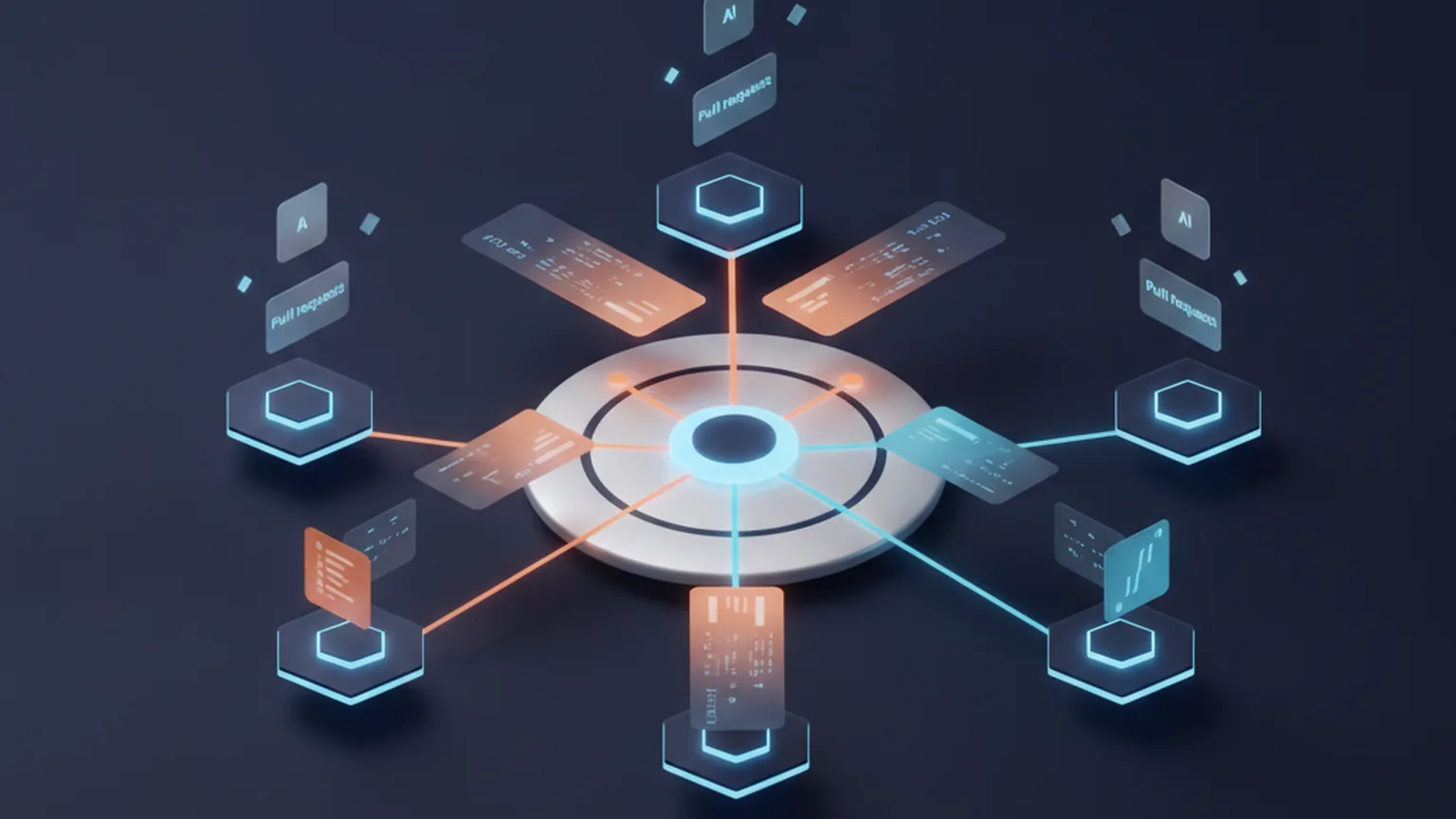
On 15 July 2026 Atlassian repositioned Jira from a tracker into an orchestration hub for AI coding agents. Paid Jira Cloud customers can now assign a work item directly to Claude Code, Cursor or GitHub Copilot — with OpenAI Codex coming — at no additional cost, and every paid plan includes a built-in Jira Coding Agent that converts a ticket into a ready-to-review pull request without a local dev environment.
The strategic point is bigger than a feature list: the place where AI development work is assigned, tracked and governed is moving from the IDE into the project-management tool. That is convenient, but it does not remove the need to review, test and secure agent-written code. The teams that win here run a scoped pilot with human review and cost controls, not a wholesale switch.
What did Atlassian actually ship?
Atlassian’s announcement centres on one idea: Jira should be where AI development work is dispatched and supervised. From the development panel on any work item, a developer can now open the ticket — pre-loaded with its context — in Claude Code, Cursor, GitHub Copilot or VS Code, no copy-paste required. More significantly, paid Jira Cloud customers can assign the work item itself to a third-party coding agent at no additional cost, so the agent picks up the task the way a teammate would. OpenAI’s Codex was named as forthcoming.
For teams without a local setup, a built-in Jira Coding Agent — included in every paid plan — takes a bounded work item and returns a ready-to-review pull request in the cloud. Around it sits a small system: Jira Planner turns a rough idea into a technical specification using the codebase and documentation as context; an Agentic Engineering template wires up a board that assigns work to agents automatically; Jira for Slack converts conversations into structured work items; Loom video prompts translate a screen recording into agent-ready instructions; and an agent-visibility dashboard shows the status of active sessions. Building this kind of orchestration into a delivery workflow is exactly the sort of AI-agent engineering that separates a demo from a system teams can actually run.
Atlassian is explicit that the target is not raw code-generation speed. “We need a solution rather than a tool,” said Ming Wu, the company’s head of engineering for its developer-AI effort, framing the value as pulling scattered AI tools together rather than adding one more. The stated aim is to address the “work that surrounds work” — requirements clarity, context, handoffs, setup, assignment, review and governance.
Why move the agents into the system of record?
For the past two years the centre of gravity for AI-assisted development sat inside the editor — Copilot in the IDE, an agent in the terminal, a chat window off to the side. That is fine for a single developer, but it scatters the evidence: who asked for what, which agent did the work, what was reviewed, and whether it shipped. Atlassian’s move pulls that evidence back into the board that engineering managers, product owners and auditors already watch.
Industry analysts read it as a land-grab for the layer above the code. “The control-plane contest for agentic development has moved into the system of record,” observed Mitch Ashley of the Futurum Group, describing Jira as a bid to be the governance layer for AI-assisted work rather than ceding that role to standalone coding tools. That framing matters because governance — not autocomplete — is where enterprise buyers feel the pain. A pull request that appears in Jira with a traceable link to the work item, the requester and the agent that produced it is far easier to review, attribute and defend than an agent run that happened on someone’s laptop.
There is a competitive subtext, too. Anthropic, OpenAI, Microsoft and a wave of startups are all pushing coding agents; whoever owns the assignment-and-review surface shapes how those agents are adopted at scale. By making the orchestration free for paid plans while leaving the agent subscriptions and model usage as separate costs, Atlassian is trying to become the neutral hub — the place you route work regardless of which vendor’s agent you prefer.
What are the risks teams keep underestimating?
The first is the quiet assumption that an agent-produced pull request is lower-risk because it came through a governed tool. It is not. The code still needs the same review, test coverage and security scrutiny as anything a human writes — arguably more, because reviewers tend to skim confidently-formatted output. A governed workflow makes the review visible; it does not make it optional.
The second is cost. Assigning work to agents is easy, and easy fan-out is how token bills blow past budgets. The orchestration is free; the model usage behind Claude Code, Cursor, Copilot or the built-in agent is not. Teams that turn on agent assignment without spend limits and per-project visibility can discover the number at the end of the month rather than manage it during.
The third is accountability. When an agent opens a pull request, someone still has to own the merge, the regression it might cause, and the security posture of the dependencies it pulls in. Clear ownership — a named human accountable for merged agent output — is the control that keeps “agentic engineering” from becoming diffuse responsibility. None of these risks argue against adopting the workflow; they argue for adopting it deliberately.
What it means for US & EU software teams
For teams that already live in Jira, this lowers the friction of using coding agents to near zero — and that is the point to be careful about. The productive path is to treat the orchestration hub as a way to make AI work visible and reviewable, not as a licence to auto-assign large swathes of the backlog. The single system of record is a real gain for audit trails, especially for regulated FinTech and healthcare teams that must show who authored and approved a change; it is a liability only if it lulls reviewers into rubber-stamping.
The practical work is process design, not tool adoption. Decide which classes of work item are eligible for agent assignment (well-scoped, low-blast-radius tasks first), make human review and passing tests non-negotiable merge gates, and put cost visibility on model usage from day one. Because the built-in agent produces cloud pull requests without a local environment, it is tempting to hand it broad tasks; resist that until you have data on quality for the narrow ones. This is the same discipline that any serious custom software delivery already applies to human contributors — scope, review, accountability — extended to non-human ones.
There is a strategic read for engineering leaders as well. If the system of record becomes the control plane for agents, then investing in clean, well-structured work items, specifications and documentation pays off twice: once for humans and once for the agents that now consume the same context. Teams with messy backlogs and thin docs will get messy agent output; teams that treat their Jira hygiene as an engineering asset will get more from every agent they route through it.
How to pilot it this quarter
Treat the announcement as a prompt to run a controlled experiment, not to rewire delivery overnight. Here is the shippable version.
- Pick a narrow slice. Choose one team and a class of well-scoped, low-risk work items — small bug fixes, mechanical refactors, test scaffolding — as the only tickets eligible for agent assignment.
- Make review a hard gate. Require human review and passing CI on every agent-produced pull request before merge, with no exceptions for “it looks fine.”
- Name an owner per merge. Assign a human who is accountable for each merged agent change and any regression it causes.
- Turn on cost visibility. Track model usage per project from the first day; set spend limits so agent fan-out cannot surprise you at month-end.
- Measure quality, not usage. Compare defect rate, review time and rework on agent tickets against comparable human ones — Atlassian’s own framing is to bring value, not boost usage.
- Invest in work-item hygiene. Tighten specs, acceptance criteria and docs; the same context that helps agents helps your people, and improves every future run.
Used well, Jira-as-control-plane is a sensible consolidation: fewer tools, one audit trail, agents that show their work. Used carelessly, it is a fast way to merge code no one really reviewed. The difference is entirely in the process you wrap around it.
Frequently asked questions
What did Atlassian announce for Jira on 15 July 2026?
Atlassian repositioned Jira as an orchestration hub for AI-assisted development. Paid Jira Cloud customers can assign work items directly to Claude Code, Cursor and GitHub Copilot at no additional cost, with OpenAI Codex forthcoming, and every paid plan includes a built-in Jira Coding Agent that turns a work item into a ready-to-review pull request without a local environment. Jira Planner, an Agentic Engineering template, Jira for Slack, Loom video prompts and an agent-visibility dashboard round out the release.
Which AI coding agents does Jira support?
At launch: Anthropic’s Claude Code, Cursor and GitHub Copilot, with the option to open a work item pre-loaded with context in those tools or in VS Code. OpenAI’s Codex was announced as forthcoming. Assigning work to these third-party agents is included for paid Jira Cloud customers at no additional cost.
Is the Jira coding-agent capability free?
The orchestration is. Assigning work items to third-party agents such as Claude Code, Cursor and GitHub Copilot is available to paid Jira Cloud customers at no additional cost, and the built-in Jira Coding Agent ships in every paid plan. You still pay separately for the underlying coding-agent subscriptions and their model usage — the hub is free, not the compute.
What does “agentic engineering” in Jira mean for a team?
The project-management system, not the IDE, becomes where AI work is assigned, tracked and governed. A work item can be routed to an agent, produce a pull request, and stay visible in the same board a human reviewer already uses — keeping an audit trail instead of scattering agent runs across separate tools. Atlassian frames it as handling the “work that surrounds work.”
Should teams change their workflow because of this?
Not overnight. The upside — fewer context switches, one system of record for AI work — is real, but an agent that opens a pull request is still generating code that needs full review, testing and security scrutiny. Start with a scoped pilot on low-risk work items, mandatory human review, clear ownership of merged output and cost controls on model usage, then decide whether to expand.
Sources
SiliconANGLE — Atlassian evolves Jira into an orchestration hub for developers and AI agents, 15 July 2026
DevOps.com — Atlassian Extends AI Reach of Jira Into Agentic Engineering Workflows, 15 July 2026
Atlassian — Introducing Claude Agent for Jira (primary source)