

The short answer
Oracle is not walking away from Stargate. It is protecting itself in case one of its biggest AI data centers is late. The force majeure notice would let Oracle push back rent on Project Jupiter by up to three years if power problems keep the campus from opening in 2028. Oracle and the developer, Blue Owl Capital, both say nothing has changed. Investors still reacted, and Oracle shares fell more than 3% on Thursday.
For teams that buy compute rather than build it, the lesson is practical. The gigawatt-scale capacity behind many AI roadmaps now depends on pipelines, permits and local politics, not only on GPUs. When you plan cloud and DevOps architecture around capacity that doesn’t exist yet, delivery risk belongs in the design, not in a footnote.
What did Oracle actually do?
Force majeure clauses excuse a party from obligations when events outside its control get in the way. According to Bloomberg, Oracle used one on Project Jupiter, the campus where it is the main tenant. The notice doesn’t end the lease. It starts a process: if Oracle and Blue Owl agree that a force majeure event tied to power commitments has happened, Oracle could delay the start of rent by up to three years. It would still cover other costs in the meantime and pay rent for the full term once payments begin.
Oracle’s public line is firm. The company told CNBC that “Project Jupiter remains on our planned schedule” and that it is “fully committed to New Mexico.” Bloomberg quoted Oracle saying that force majeure notices are commonplace and often used to preserve contractual rights. Blue Owl said the notice does not change the financial commitments to the project. Both readings can be true: the schedule is officially intact, and the tenant has quietly secured an exit ramp for the timeline.
Why is Project Jupiter running into trouble?
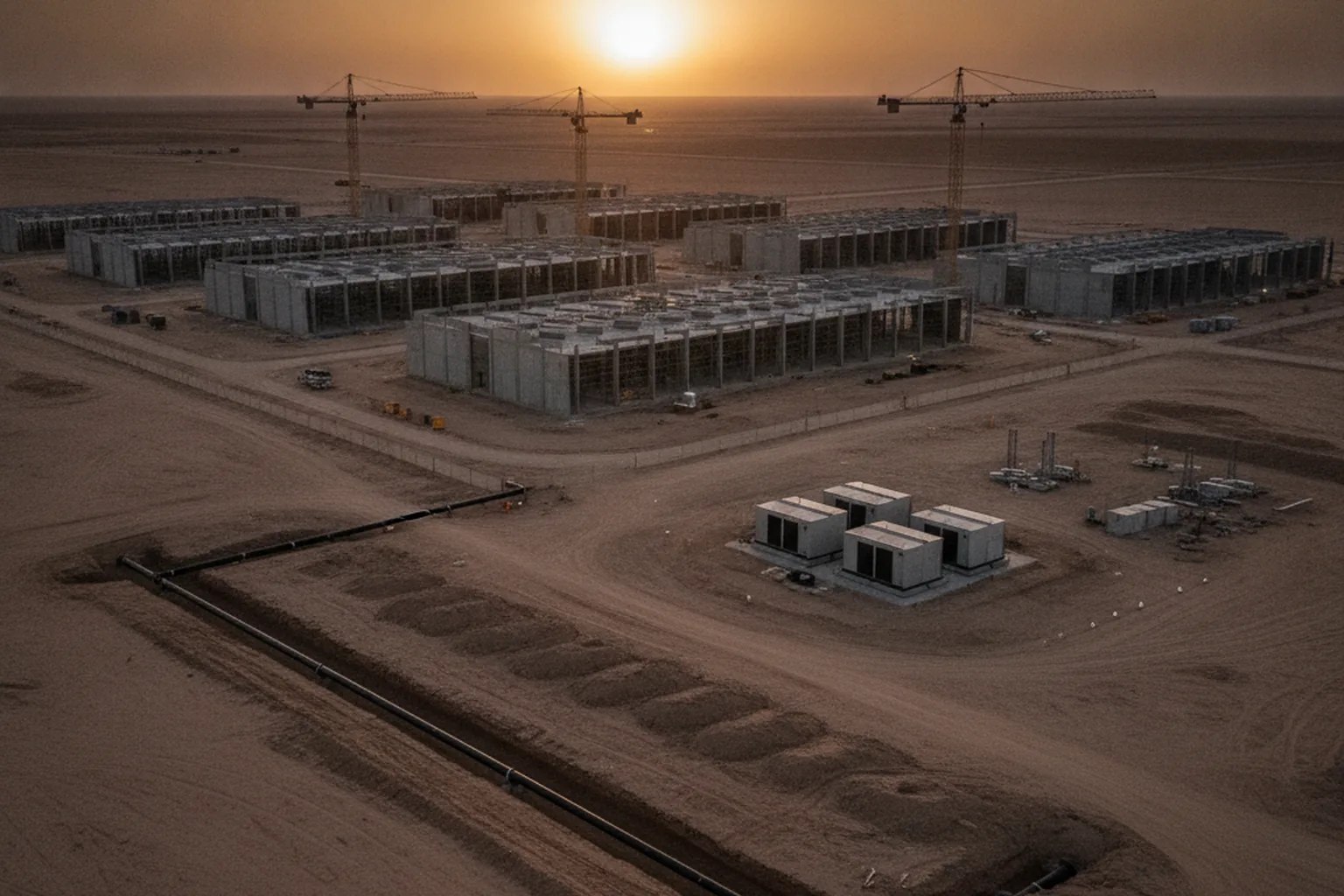
The constraint is energy, not silicon. The campus is designed to run on gas-powered fuel cells from Bloom Energy rather than draw everything from the grid. The Energy Transfer pipeline that would feed those cells was due to start service this month. It has now been pushed to February 1, 2027, after the New Mexico State Land Office repeatedly denied permits for its route. A separate air-quality permit for the fuel cell system is still pending, and the state environment department has until November 23 to decide.
The project has also become politically exposed. Bloomberg describes growing local opposition and says data centers are becoming a flashpoint ahead of the midterm elections. Jupiter is one of the sites tied to the Stargate buildout, which Bloomberg describes as a roughly $400 billion deal between OpenAI, Oracle and SoftBank covering five US data center developments. When a site of this size slips, the capacity it was meant to add to the market slips with it.
What it means for US & EU software teams
First, “available in 2028” is a forecast, not a promise. Most product teams never sign a data center lease, but they do rely on vendors that have. If your roadmap assumes cheaper or larger GPU capacity from a specific provider or region, ask what physical buildout that depends on. Jupiter shows that one delayed pipeline permit can move a timeline by months, and that contracts are already being written to share out that risk.
Second, portability is what protects you from capacity risk. Workloads that run only on one provider’s accelerators, in one region, through one managed AI and data platform, are the ones hurt most when capacity arrives late or gets rationed. Containerized inference, infrastructure as code that isn’t tied to one vendor, and model access that can fail over between providers cost a little more up front. They let you move when a region runs short.
Third, the contract terms your vendors use apply to you too. Oracle is using a clause that exists in most infrastructure agreements, including many cloud and AI service terms that buyers accept without negotiation. Check what your provider can call force majeure, whether capacity reservations and committed-spend discounts survive a delay, and what service credits you actually get. In the EU, financial entities under DORA already have to document exit strategies and ICT concentration risk for critical third-party providers. A single-vendor AI dependency is exactly what those reviews are meant to catch.
What to do now
- Map your capacity dependencies. List which AI and GPU workloads depend on a specific provider, region or instance family, and which of those are expected to grow in the next 12–24 months.
- Reserve for the near term only. Commit to capacity you will use within a year, and keep options open beyond that rather than locking multi-year spend to one region’s buildout.
- Build a tested fallback. Keep at least one alternative region or provider for inference and batch jobs, and rehearse the switch, not just document it.
- Review contract clauses. Read force majeure, capacity and SLA exclusions in your cloud and AI agreements, and raise them at renewal.
- Update risk registers. For regulated workloads, record AI capacity and vendor concentration as a named risk with an owner and an exit plan.
Frequently asked questions
What did Oracle do on Project Jupiter?
According to Bloomberg, on September 24, 2026 Oracle sent a force majeure notice to Blue Owl Capital, the developer of Project Jupiter, a Stargate AI data center campus in southern New Mexico where Oracle is the main tenant. Oracle is not exiting the lease. The notice preserves its right to delay rent if the campus misses its 2028 target because of power-supply problems outside its control.
Why is the New Mexico Stargate campus delayed?
The problem is energy. The 2.45-gigawatt campus is designed to run on gas-powered fuel cells from Bloom Energy. The Energy Transfer pipeline that would deliver the gas was pushed from September 2026 to February 1, 2027 after the New Mexico State Land Office repeatedly denied permits, and a separate air-quality permit for the fuel cells is still pending, with a state decision due by November 23.
Does this mean Stargate capacity for OpenAI is cancelled?
No. Oracle told CNBC that Project Jupiter remains on its planned schedule and that it is fully committed to New Mexico, and Blue Owl said the notice does not change the financial commitments to the project. The notice is a contractual hedge, not a cancellation. It does show that the timing of new AI capacity depends on power and permits, not just on chips and capital.
How much could the delay change Oracle’s payments?
Bloomberg reports that if both parties agree a force majeure event tied to power commitments has occurred, Oracle could win up to a three-year delay before rent payments begin. It would still pay other costs in the interim and owe rent for the full lease term once payments start. The project is backed by an $18 billion construction loan from about 20 banks, and that debt has traded below 90 cents on the dollar.
What should software teams do about AI capacity risk?
Treat future capacity as a risk, not a given. Keep AI and GPU workloads portable across regions and providers, reserve capacity for what is actually launching in the next 12 months, read the force majeure and capacity clauses in your own cloud and AI contracts, and keep a tested fallback for model and inference providers. Regulated EU financial firms should fold this into DORA exit and concentration-risk planning.
Sources
Bloomberg — Oracle Cites ‘Force Majeure’ to Shield Itself on Controversial Data Center
CNBC — Oracle sends ‘force majeure’ notice about data center project
TechCrunch — Oracle sends force majeure notice on its New Mexico Stargate data center