

What is Scrum in software development?
Scrum is a lightweight Agile framework for delivering complex products in short, fixed-length iterations called sprints. Each sprint — typically one to four weeks — ends with a working, tested increment of the product that could, in principle, be shipped. The framework is grounded in empiricism: transparency (everyone can see the work), inspection (the team regularly checks progress) and adaptation (the plan changes based on what is learned).
Scrum was first formalised by Ken Schwaber and Jeff Sutherland in the 1990s. The authoritative reference is the Scrum Guide, last updated in 2020. That update deliberately stripped away prescriptive rules — the guide is now just 13 pages — and reframed roles as accountabilities, added formal commitments to each artifact and removed the sub-team concept, making Scrum a single, whole team. These changes matter practically: a "Scrum team" is not the developer group plus a PM overhead; it is one cross-functional unit accountable for outcomes, not outputs.
Scrum software development is the same discipline behind our product engineering services, where cross-functional squads ship a working increment every sprint, giving clients early feedback and predictable delivery cadence.
Agile vs Scrum: how they relate
Agile is a mindset. Scrum is one concrete way of living it. The 2001 Agile Manifesto describes four values and twelve principles — it is deliberately abstract, describing what to prioritise, not how to organise a team. Scrum gives that how: specific accountabilities, time-boxed events and defined artifacts.
This distinction matters when an organisation says “we do agile scrum software development” without actually running sprints or holding retrospectives — they have the label but not the structure. For a more complete picture of where Scrum sits within the wider landscape, the Agile software development guide covers the manifesto values, Kanban, XP and the common reasons Agile adoption fails.
In numbers (Digital.ai State of Agile, 2026 edition):
- ~97% of software organisations report using Agile in some form.
- ~58% of organisations use Scrum as their primary framework.
- ~70% of individual Agile practitioners work in Scrum.
- ~50% of teams also use Kanban elements — often alongside Scrum.
- ~74% of teams describe their approach as a hybrid or blended method.
Scrum is not the only option among software development methodologies — but it is the most widely adopted starting point for product delivery teams.
The 5 Scrum values
The 2020 Scrum Guide names five values Scrum teams are expected to live by, not just recite. They sit underneath the three empirical pillars (transparency, inspection, adaptation) and determine whether the events described below produce real learning or become box-ticking meetings.
- Commitment. The team commits to achieving the Sprint Goal and to supporting each other. Without it, sprint planning is a wish list.
- Courage. The team has the courage to say a deadline is unrealistic, to flag a design flaw, and to do the right thing even when it’s uncomfortable.
- Focus. Everyone focuses on the work of the Sprint and the Sprint Goal, rather than splitting attention across unrelated requests.
- Openness. The Scrum team and its stakeholders are open about the work and the challenges — a sprint that’s slipping is surfaced early, not hidden until the Review.
- Respect. Scrum team members respect each other as capable, independent people, including disagreements about approach.
In practice, teams that struggle with Scrum rarely have a process problem first — they have a values problem: a Product Owner who won’t commit to a Sprint Goal, or a Scrum Master too polite to name a blocker at the Retrospective. Fixing the ceremony schedule doesn’t help if the values underneath it aren’t there.
The 3 Scrum roles (accountabilities)
The 2020 Scrum Guide renamed “roles” to “accountabilities” to emphasise that these are areas of responsibility, not job titles. A single person holds one accountability; one person cannot hold two (e.g., being both Product Owner and Scrum Master creates a conflict of interest).

Product Owner
The Product Owner is accountable for maximising the value of the product resulting from the Developers’ work. In practice this means owning the Product Backlog: creating and ordering items, making sure the team understands what is needed and why, and deciding what gets built in which sprint. The Product Owner is one person, not a committee — final call on backlog priority is theirs. They represent the business and users; without a decisive, engaged Product Owner, sprint planning degrades into opinion polls.
Scrum Master
The Scrum Master is accountable for the effectiveness of the Scrum team. They coach the team on the Scrum framework, facilitate events, remove impediments and protect the team from external disruption. Crucially, the Scrum Master is a servant-leader, not a project manager: they have no authority over what gets built or when, and they do not manage team members. Organisations that hire a Scrum Master to replace a project manager usually end up with a process coordinator who blocks rather than enables.
Developers
The Developers are the people on the Scrum team who actually create each sprint’s Increment. The term “Developers” in the Scrum Guide covers everyone who contributes to building the product — engineers, QA, UX designers, data engineers — not just programmers. They are cross-functional by design so the team can complete work from concept to tested increment without waiting on other teams. For guidance on how to staff and size these teams in practice, see the full software development team structure guide.
A healthy Scrum team has five to ten people in total across all three accountabilities. Smaller teams lose the diversity of skills needed to be self-managing; larger teams generate coordination overhead that erodes the benefits of the framework.
The 5 Scrum events
Scrum defines five events. Four of them happen inside the Sprint; the Sprint itself is the fifth and outermost container. Each event has a maximum time-box and a specific purpose — running them as formalities without real inspection and adaptation defeats the point.
Sprint (the container)
The Sprint is a fixed-length period of one month or less in which the team creates a “Done”, usable Increment. All work happens within a Sprint; there is no work “between” sprints. Once a Sprint starts, its length does not change. If the Sprint Goal becomes obsolete, the Product Owner can cancel the Sprint — a rarely exercised option that exists to prevent teams from building something they know is wrong.
Sprint Planning
Sprint Planning opens the Sprint. The whole Scrum team attends and agrees on three things: why this Sprint matters (the Sprint Goal), what can be done from the Product Backlog to achieve it, and how the Developers will accomplish the selected work. Time-box: up to eight hours for a one-month sprint (proportionally shorter for shorter sprints).
Daily Scrum
The Daily Scrum is a 15-minute event, held at the same time each day, for Developers to inspect progress toward the Sprint Goal and adapt the Sprint Backlog as needed. The traditional three-question format (“what did I do, what will I do, what blocks me”) was removed from the 2020 Guide; the Developers can structure it however serves them best, as long as the 15-minute limit holds and the focus is on the Sprint Goal, not general status reporting.
Sprint Review
The Sprint Review happens at the end of the Sprint. The Scrum team presents the Increment to stakeholders, demonstrates what was built, collects feedback and updates the Product Backlog based on what was learned. This is an inspection-and-adaptation event, not a sign-off ceremony. Time-box: up to four hours for a one-month sprint.
Sprint Retrospective
The Sprint Retrospective closes the Sprint. The team inspects how it worked — processes, tools, relationships, Definition of Done — and identifies the most useful improvement to implement in the next Sprint. Time-box: up to three hours for a one-month sprint. The Retrospective is the single most skipped Scrum event in practice, and also the one most responsible for long-term team performance improvement when done consistently.
The 3 Scrum artifacts and their commitments
The 2020 Scrum Guide added a formal commitment to each artifact. The commitments answer the question “what are we optimising for?” — without them, artifacts become documentation for its own sake.
Product Backlog → commitment: Product Goal
The Product Backlog is an ordered list of everything needed to improve the product. The Product Owner is accountable for it. Items at the top are refined, sized and ready; items lower in the backlog are intentionally vague until they get closer to the top. The Product Goal is the long-term objective the team is working toward — it gives the backlog direction and makes individual sprint decisions easier (does this item advance the Product Goal?).
Sprint Backlog → commitment: Sprint Goal
The Sprint Backlog is the subset of Product Backlog items selected for this Sprint, plus the Sprint Goal and the plan for delivering the Increment. The Sprint Goal is the single objective for the Sprint, agreed in Sprint Planning, which gives the Developers flexibility in how they achieve it. A weak Sprint Goal (“do the tasks we planned”) removes that flexibility and turns Scrum into a mechanical ticket-grinding exercise.
Increment → commitment: Definition of Done
The Increment is the sum of all completed Product Backlog items in a Sprint, plus the value of all previous increments. An Increment must meet the Definition of Done to count. The Definition of Done is a shared standard of quality — typically: coded, peer-reviewed, unit-tested, integration-tested, documented enough to maintain, and deployed to a staging environment. Without a clear Definition of Done, “done” means different things to different people, and technical debt accumulates silently every sprint.
How the Scrum process works: a sprint from start to finish
The scrum software development process follows a repeating cycle. Here is what a typical two-week sprint looks like in practice, applying the scrum software development model to a B2B SaaS product:
- Backlog refinement (ongoing, before Sprint Planning). The Product Owner and Developers discuss upcoming backlog items, break large items into smaller ones, add acceptance criteria and estimate effort. This typically takes one to two hours per week and should happen continuously, not in a single marathon session the day before planning.
- Sprint Planning (day 1, up to 4 hours for a two-week sprint). The team agrees on the Sprint Goal and pulls enough backlog items to fill the sprint without overcommitting. Developers own the estimate of how much they can deliver; the Product Owner owns what is most valuable.
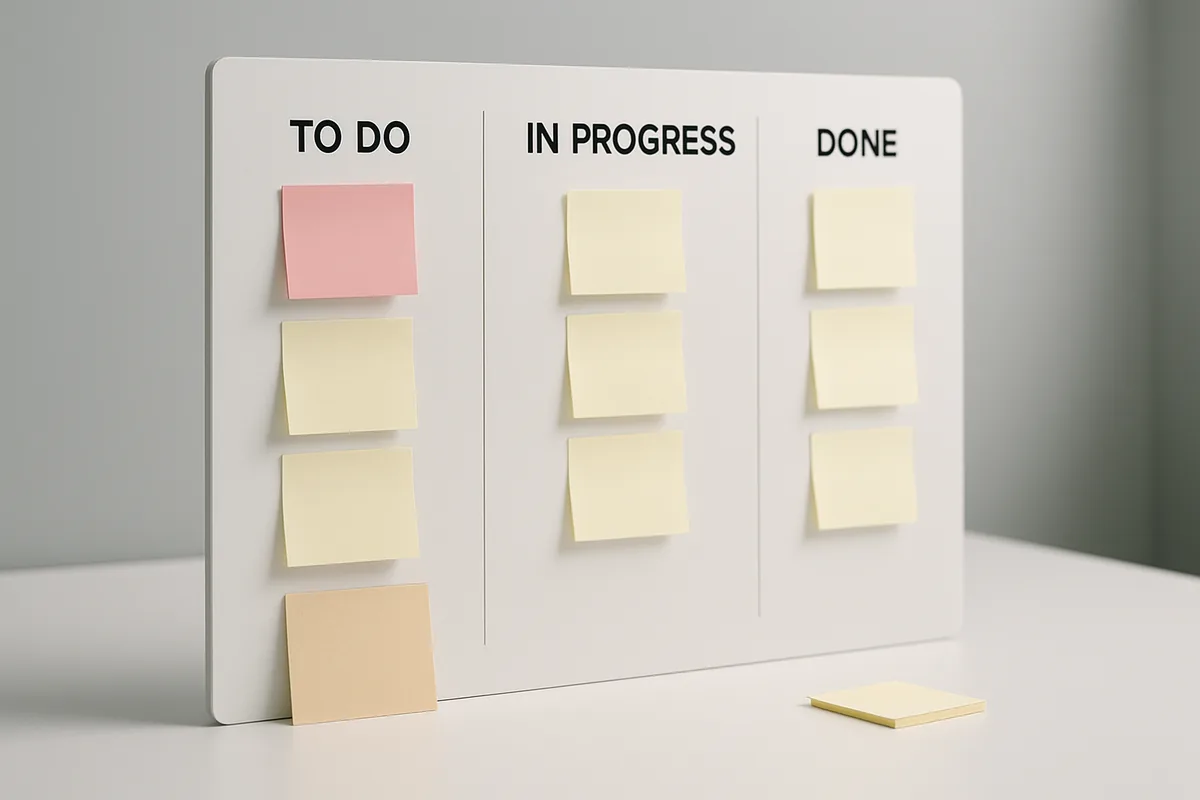
- Sprint execution (days 1–10). Developers build, test and integrate the selected items. The board shows work moving from “To Do” to “In Progress” to “Done” (meeting the Definition of Done).
- Daily Scrum (15 minutes each morning). The team inspects its own progress toward the Sprint Goal and adjusts the plan for the day. Blockers are surfaced, not problem-solved in the Daily — follow-up conversations happen after.
- Sprint Review (day 10, up to 2 hours). The team demonstrates the Increment. Stakeholders give feedback. The Product Owner updates the backlog based on what was learned. Real feedback from real users or stakeholders — not internal opinions — is what makes this event valuable.
- Sprint Retrospective (day 10, after Review, up to 90 minutes). The team discusses what went well, what slowed them down and what one concrete change to make in the next sprint. One actionable improvement, committed to and tracked, beats a list of twelve good intentions.
- Repeat. The next sprint starts immediately — there is no gap. The improved plan, updated backlog and carried-forward learning compound over time.
This cycle mirrors the broader software development life cycle compressed into short, repeating loops rather than stretched across a linear project timeline.
Scrum vs Kanban vs Waterfall: which to choose
Scrum is the right default for most product teams, but it is not universally correct. The table below maps the key dimensions to help engineering leads and product managers make an honest choice rather than defaulting to whatever the team tried last.
| Dimension | Scrum | Kanban | Waterfall |
|---|---|---|---|
| Cadence | Fixed sprints (1–4 weeks) | Continuous flow; no sprints | Sequential phases; single delivery |
| Prescribed roles | Yes (PO, SM, Developers) | No (uses existing roles) | Yes (PM, BA, Dev Lead, QA) |
| Change mid-cycle | Backlog changes; sprint scope protected | New items enter the queue any time | High change cost; formal change requests |
| Best for | Products with evolving requirements; dedicated teams | Support, ops, maintenance; unplanned work | Fixed-scope, fully known, regulated deliveries |
| Key metric | Sprint velocity; burndown | Lead time; cycle time; WIP | Milestone adherence; earned value |
| 2026 adoption | ~58% of orgs (Digital.ai 2026) | ~50% of orgs (often alongside Scrum) | Still dominant in regulated / fixed-scope contracts |
About 74% of teams describe their approach as “hybrid” (Digital.ai 2026), blending Scrum’s sprint cadence with Kanban’s WIP limits and flow metrics — sometimes called Scrumban. This is not a failure of discipline; it is a rational adaptation to the reality that most teams have both planned product work (Scrum) and incoming unplanned requests (Kanban).
Benefits and limitations of Scrum
Agile projects deliver on time and within budget roughly 75% of the time, compared to around 56% for traditional approaches (Digital.ai / ProProfs Project Management, 2026 industry data). Scrum accounts for much of that improvement — but it also creates specific challenges that are worth naming before committing to it.
Benefits
- Faster feedback loop. Working software every sprint means problems surface in weeks, not after a year-long build.
- Transparency. The board, the backlog and the Sprint Goal make the state of the work visible to everyone — team, stakeholders and clients.
- Predictability. Consistent sprint velocity makes release forecasting genuinely data-driven rather than guesswork.
- Adaptability. Requirements can change between sprints without derailing an entire project — only the backlog order changes.
- Team ownership. Developers who decide how to achieve the Sprint Goal take more pride and accountability in the result than those given a task list to execute.
- Continuous improvement. The Retrospective embeds a learning loop into the process itself, compounding team performance over time.
- Risk reduction. A potentially shippable Increment each sprint limits the risk of discovering fundamental problems late in the cycle.
Limitations
- Requires genuine commitment. Scrum only works if all three accountabilities are filled by capable, dedicated people. A part-time Product Owner or a Scrum Master doing two other jobs will break the process.
- Scope creep risk. A weak Product Owner who can’t say no to mid-sprint requests erodes the sprint goal and makes velocity meaningless.
- Poor fit for fixed-bid, one-off projects. Scrum’s value comes from learning over multiple sprints; a single-sprint project gains little from the full ceremony overhead.
- Meeting overhead. A two-week sprint generates around six to eight hours of ceremonies per team member. This is worthwhile for ongoing product work; it is burdensome for short or one-off engagements.
- Scaling is not built in. Scrum is designed for one team. Multi-team programs need SAFe, LeSS or Nexus layered on top — and those frameworks add significant process complexity.
Scaling Scrum for multi-team programs
Scrum, as written in the Scrum Guide, is designed for a single team of five to ten people. It says nothing about coordinating ten, twenty or fifty teams building the same product — that gap is filled by a handful of scaling frameworks layered on top of vanilla Scrum, not by Scrum itself:

- Scrum of Scrums. The lightest option: each team keeps running its own Scrum, and a representative from each team meets regularly (often daily or a few times a week) to surface cross-team dependencies and blockers. No new roles, no new artifacts — just an extra sync layer.
- LeSS (Large-Scale Scrum). Extends single-team Scrum to multiple teams sharing one Product Backlog, one Product Owner and (usually) one Sprint. Deliberately minimal — LeSS adds almost nothing to the base framework, on the principle that most scaling problems are organisational, not process problems.
- SAFe (Scaled Agile Framework). The most prescriptive option, adding Program Increments, Release Trains and dedicated coordination roles (Release Train Engineer, Product Manager) on top of team-level Scrum. Popular in large enterprises and regulated industries that need portfolio-level planning across many teams.
- Nexus. A lighter alternative to SAFe from Scrum.org, adding one integration team and a small set of extra events to coordinate three to nine Scrum teams sharing a single product.
The practical rule: don’t adopt a scaling framework before you have a working single-team Scrum. Most “Scrum doesn’t scale” complaints turn out to be a single team that never got the base framework working, given a second and third team before the first one was healthy.
When should you use Scrum (and when not to)?
Scrum is the right choice when three conditions are met: requirements will evolve as the product is built, the team can be dedicated and cross-functional, and the product can be delivered incrementally so that each sprint produces genuine user value. Most SaaS products, consumer apps, internal platforms and marketplaces fit this profile.
Scrum is the wrong choice when:
- The scope is genuinely fixed and fully specified upfront — a regulatory submission, a government contract with locked requirements, or a one-time data migration.
- The Product Owner role cannot be filled: no single person can represent the business and commit to sprint planning and review attendance.
- The team is too small (one or two engineers) or part-time — ceremony overhead is disproportionate to output.
- Work arrives unpredictably with no planning horizon — support queues and infrastructure operations are better served by Kanban.
The honest test: if your team runs sprints but the plan never changes, the Sprint Goal is always “do all the tickets”, and the Retrospective is a pro-forma 15-minute meeting — you are not doing Scrum, you are doing waterfall in two-week batches. The framework’s discipline only creates value when inspection and adaptation are real.
How to implement Scrum: first steps and tools in 2026
Starting Scrum does not require a certification course or a new project management tool. The minimum viable setup is a team, a backlog, a Sprint Goal and a willingness to hold the five events. Here is a practical sequence for a team new to Scrum:
- Assign the three accountabilities. Identify who is the Product Owner, who is the Scrum Master and who are the Developers. Ensure no one holds more than one accountability. If no one on the team has run Scrum before, the Scrum Master should invest in learning the 2020 Guide before the first sprint, not after.
- Build the first Product Backlog. The Product Owner creates a rough list of user stories or jobs to be done ordered by value. It does not need to be complete — just enough for two to three sprints of work at the top, refined and estimated.
- Choose a sprint length and stick to it. Two weeks is the most common default for product development teams. Pick one length and do not change it for the first three sprints — consistency is what builds the rhythm that makes velocity meaningful.
- Run a proper first Sprint Planning. Agree on the Sprint Goal (why this sprint matters) and let Developers pull what they can realistically complete. Resist the urge to load the sprint to 120% of capacity.
- Protect the Daily Scrum. Fifteen minutes, same time, same place. No reporting to management; this is the Developers’ event. If it runs long, it is covering ground that belongs in a separate conversation.
- Hold the Retrospective even if things went well. The temptation to skip it when the sprint is “fine” is exactly when the Retrospective is most valuable — you can bank improvements rather than wait for a crisis to force them.
- Review and evolve your tooling at sprint 3, not sprint 1. Any board tool — a physical whiteboard, a shared spreadsheet or a purpose-built backlog manager — works to start. Evaluate whether more specialised tooling is actually needed once the team has a real baseline of how they work.
The most common early mistake is treating Scrum ceremonies as status-reporting mechanisms for stakeholders rather than inspection-and-adaptation events for the team. The second most common is not investing in the Product Owner role — Scrum without an empowered, decisive PO degrades into engineering-led ticket work with no business connection.
If you are evaluating whether to build an in-house Scrum team or partner with a team that already operates this way, the tradeoffs in hiring model, ramp time and cost are covered in our product engineering services overview.
FAQ
What is Scrum in software development?
Scrum is a lightweight Agile framework that delivers software in fixed-length sprints of one to four weeks. Each sprint produces a working Increment. The framework defines 3 accountabilities (Product Owner, Scrum Master, Developers), 5 events (Sprint, Sprint Planning, Daily Scrum, Sprint Review, Sprint Retrospective) and 3 artifacts (Product Backlog, Sprint Backlog, Increment), each with a formal commitment. It is the most-used Agile framework in 2026, adopted by around 58% of organisations and 70% of Agile practitioners globally (Digital.ai 2026).
What is the difference between Agile and Scrum?
Agile is a mindset defined by the 2001 Agile Manifesto: values and principles about how to build software collaboratively and iteratively. Scrum is one concrete framework that implements those Agile values through specific roles, time-boxed events and defined artifacts. Agile without a framework is philosophy; Scrum is one structured way of putting it into practice. Around 97% of organisations report using Agile; Scrum is the single most popular Agile method within that group.
What are the three roles in a Scrum team?
The 2020 Scrum Guide calls them accountabilities: the Product Owner (owns the Product Backlog and maximises product value), the Scrum Master (coaches the team, removes impediments, is a servant-leader not a project manager) and the Developers (the cross-functional group — engineers, QA, designers — who build the Increment each sprint). One person holds one accountability; no doubling up. A Scrum team typically has five to ten people total.
What are the five Scrum events (ceremonies)?
The Sprint (up to one month, the container for all work); Sprint Planning (agree on Sprint Goal and select backlog items, up to 8 hours); Daily Scrum (15-minute daily developer sync, inspect progress toward the Sprint Goal); Sprint Review (demonstrate the Increment to stakeholders, collect feedback, up to 4 hours); and Sprint Retrospective (team inspects its own process and commits to one improvement, up to 3 hours). Four events happen inside the Sprint; the Sprint is the fifth container event.
Scrum vs Kanban — which should a software team use?
Use Scrum when building a product with evolving requirements and a dedicated cross-functional team that benefits from a predictable sprint cadence. Use Kanban when work arrives unpredictably — support, operations, maintenance — or when sprint-length commitments do not reflect how the work actually flows. Around 74% of teams in 2026 run a hybrid (Digital.ai 2026), blending Scrum’s sprint discipline with Kanban’s WIP limits and flow metrics.
Is Scrum still relevant in 2026?
Yes. Scrum remains the dominant Agile framework in 2026. About 58% of organisations use it as their primary method and around 70% of Agile practitioners work in Scrum (Digital.ai State of Agile 2026). The 2020 Scrum Guide update made the framework more flexible, not more prescriptive — removing specific formats for events and focusing on the empirical principles (transparency, inspection, adaptation) that underpin it. Teams that have “graduated beyond Scrum” typically run a Scrumban hybrid that preserves the sprint rhythm while adding Kanban flow practices.
What is the 3-5-3 rule in Scrum?
The 3-5-3 rule is an informal mnemonic, not an official Scrum Guide term, for the shape of the framework: 3 accountabilities (Product Owner, Scrum Master, Developers), 5 events (Sprint, Sprint Planning, Daily Scrum, Sprint Review, Sprint Retrospective) and 3 artifacts (Product Backlog, Sprint Backlog, Increment). It’s a fast way to check whether a team has implemented the whole framework or just part of it.
What Scrum tools do teams use in 2026?
Most Scrum teams run their Product Backlog, Sprint Backlog and burndown on a dedicated tool — Jira, Azure DevOps, Linear and Trello are the most common choices in 2026. None of these tools are required by the Scrum Guide: a whiteboard and index cards can run a fully compliant process. Teams new to Scrum should pick tooling once they have a working rhythm, typically around the third sprint, rather than before the first one.
Last updated 27 September 2026. Adoption statistics reference the Digital.ai State of Agile 2026 report and aggregated 2026 industry data from echometerapp.com and ProProfs Project Management. The Scrum Guide (2020) is the authoritative source for all framework definitions. Treat methodology choice as a starting point to validate with your specific team, product and constraints.