Fragmented LMS, SIS & tool sprawl
Districts and campuses run a patchwork of LMS, SIS, rostering and point tools that don't talk to each other. We unify them behind LTI 1.3 Advantage, OneRoster 1.2 and Ed-Fi instead of brittle one-off exports.

Industries FERPA AI-native
YuSMP Group is an EdTech software development company building learning platforms, adaptive engines, proctoring suites and student-data systems for K-12 districts, universities and corporate training providers in the US and EU. Senior engineers ship FERPA-, COPPA- and GDPR Article 8-aware products with WCAG 2.2 AA accessibility, LTI 1.3 Advantage integrations and SIS connectivity from PowerSchool to Ellucian. Adaptive content pipelines, xAPI analytics and SCORM packaging are first-class deliverables, not afterthoughts.
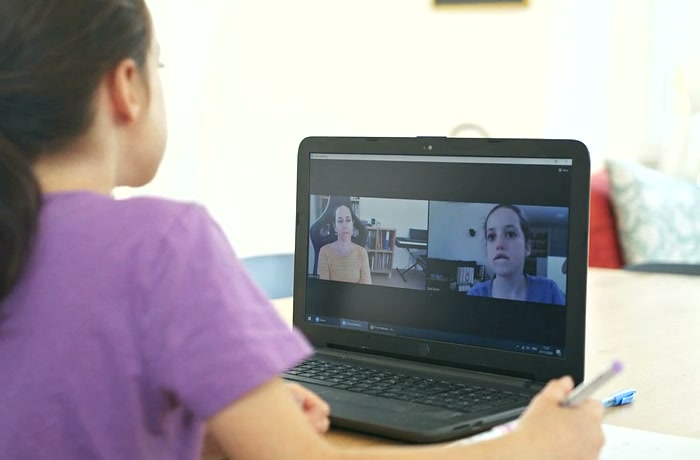
Our EdTech practice serves four buyer profiles: K-12 districts and edtech vendors selling into them, who live under FERPA, COPPA, state student-privacy laws and IDEA accessibility duties; higher-education institutions integrating LMS, SIS and library systems with strict accreditation reporting; corporate training and workforce-skilling providers needing SCORM, xAPI and LXP capabilities; and assessment, proctoring and credentialing vendors with high-stakes integrity requirements. We deliver under WCAG 2.2 AA, Section 508 and EN 301 549 from day one, integrate via LTI 1.3, QTI 3, OneRoster 1.2 and Caliper, and treat student data minimization as a default — not a feature flag. Explore how we deliver this through our Custom Software Development service.
Challenges
Districts and campuses run a patchwork of LMS, SIS, rostering and point tools that don't talk to each other. We unify them behind LTI 1.3 Advantage, OneRoster 1.2 and Ed-Fi instead of brittle one-off exports.
FERPA, COPPA, GDPR Article 8 and a moving target of US state student-privacy laws all apply at once. We bake data minimization, consent flows and DPAs into the schema, and defer the deep how-to to our GDPR compliance consulting.
WCAG 2.2 AA, Section 508 and EN 301 549 aren't nice-to-haves — failing them blocks public-sector procurement and invites complaints. We ship VPAT 2.4 evidence and automated plus manual screen-reader gates.
High-stakes testing needs proctoring, item security and audit-grade evidence without excluding disabled candidates. We build QTI 3 item banks, secure-browser lockdown and defensible retention.
Adaptive engines and AI tutors touch minors, so transparency, no-PII prompting and teacher-visible logs are mandatory. We align builds to our EU AI Act compliance guidance from design onward.
Rosters change every term and identities live across Clever, ClassLink and district IdPs. We wire SAML 2.0, OIDC and LTI Names and Role Provisioning so access follows enrollment automatically — including on mobile learning apps.
What we build
Modern LMS and LXP platforms with SCORM 2004, AICC, xAPI, video streaming, discussions and gradebooks. LTI 1.3 tools and platforms both directions.
Adaptive engines that branch on QTI-aware item response, knowledge-tracing models and AI tutors with teacher-visible decision logs.
Secure browser, AI invigilation, identity verification and item-banking with QTI 3 import/export, multi-attempt control and audit-grade evidence retention.
Caliper and xAPI ingestion, learning-record stores, early-warning dashboards and Ed-Fi reporting with district- and school-level access controls.
Offline-first iOS and Android apps for K-12, higher-ed and corporate learners, with accessibility audits and parental-control flows where applicable.
OneRoster, Ed-Fi, Clever, ClassLink and direct integrations with PowerSchool, Infinite Campus, Skyward, Banner, Workday Student and SAP SLcM.
Compliance
GDPR-aligned · ISO 27001 ready · SOC 2 Type II in progress · WCAG 2.2 AA · Section 508 · VPAT 2.4 on request
FERPA COPPA (US K-12) GDPR Art. 8 (EU children) WCAG 2.2 AA Section 508 EN 301 549 LTI 1.3 QTI 3 xAPI SCORM 2004 Caliper OneRoster 1.2 Common Cartridge Ed-Fi SPPA (state student-privacy laws) IDEA Section 504 CCPA / CPRA
Integrations
Standards-native connectors and certified test suites — not hand-rolled approximations.
Canvas, Moodle, Blackboard Learn, Brightspace (D2L), Schoology and Open edX — as LTI 1.3 Advantage tools and platforms, with Common Cartridge import/export both directions.
PowerSchool, Infinite Campus, Skyward, Ellucian Banner, Workday Student and SAP SLcM — via OneRoster 1.2 REST, Ed-Fi and direct SOAP/REST integrations for roster and grade sync.
Clever, ClassLink, Google Workspace for Education and Microsoft Entra ID — SAML 2.0, OIDC and LTI Names and Role Provisioning so access follows enrollment each term.
SCORM 2004, AICC, xAPI, cmi5, QTI 3 and IMS Caliper — packaged and validated against certified conformance suites, not best-effort guesses.
Item banks, secure-browser lockdown, live and AI invigilation, identity verification and QTI 3 import/export with multi-attempt control and audit-grade evidence.
Learning-record stores, Caliper and xAPI pipelines, Ed-Fi ODS and early-warning dashboards — deployed on scalable, observable infrastructure via Cloud & DevOps.
Process
Stakeholder interviews with academic leadership, IT, accessibility and legal. We map data flows, integration points and privacy obligations per jurisdiction.
FERPA/COPPA/GDPR data model, LTI/OneRoster/SIS contracts, accessibility design tokens, and a security threat model reviewed before sprint one.
Two-week sprints with automated axe-core, NVDA/VoiceOver checks, LTI compliance test suite runs and pilot-school feedback loops every release.
District rollout playbook, teacher training assets, VPAT 2.4 documentation, on-call SLAs and quarterly privacy and accessibility reviews.
Tech stack
Framework choices are driven by accessibility, scale and interoperability requirements — not fashion.
React, Next.js and TypeScript for accessible web clients; React Native and Flutter for offline-first mobile learning. Design tokens encode WCAG 2.2 AA contrast and focus states so accessibility survives every redesign.
Node.js, Python, Laravel/PHP and .NET behind REST and GraphQL. Event-driven services handle roster syncs, grade passback and xAPI statement volumes without blocking the learner experience.
PostgreSQL, learning-record stores, Ed-Fi ODS and warehouse pipelines (Kafka, dbt). Caliper and xAPI events flow into early-warning dashboards with school- and district-level row security.
Knowledge-tracing models, retrieval-augmented LLM tutors and vector search over curriculum — wrapped in no-PII prompting, content moderation and teacher-visible decision logs.
IMS-certified LTI 1.3 Advantage, QTI 3 item handling, SCORM 2004 and xAPI packaging, OneRoster 1.2 and Common Cartridge — validated against conformance suites, not hand-rolled approximations.
AWS, Azure and GCP with infrastructure-as-code, encryption in transit and at rest, least-privilege IAM and SOC 2-aligned controls. CI gates run axe-core, LTI compliance suites and dependency scanning on every release.
Custom vs off-the-shelf
Not every edtech roadmap needs a platform written from scratch. We help you draw the line honestly, then deliver on whichever side of it fits — custom engineering, extension of an open platform, or systems integration around a commercial LMS.
When Canvas, Moodle or Open edX already cover most of the need, we build LTI 1.3 tools, plugins and integrations around them instead of rebuilding the core — the fastest path to a pilot and the lowest maintenance surface.
When the product is the differentiator — a novel adaptive engine, a proctoring suite, a district data platform — off-the-shelf tools constrain you. Custom gives you the data model, UX and compliance posture you actually need.
Siloed SIS, disconnected point tools and manual CSV exports are the real cost. Wiring OneRoster, Ed-Fi and SSO across the estate so data follows enrollment is often the highest-ROI first project.
Cases
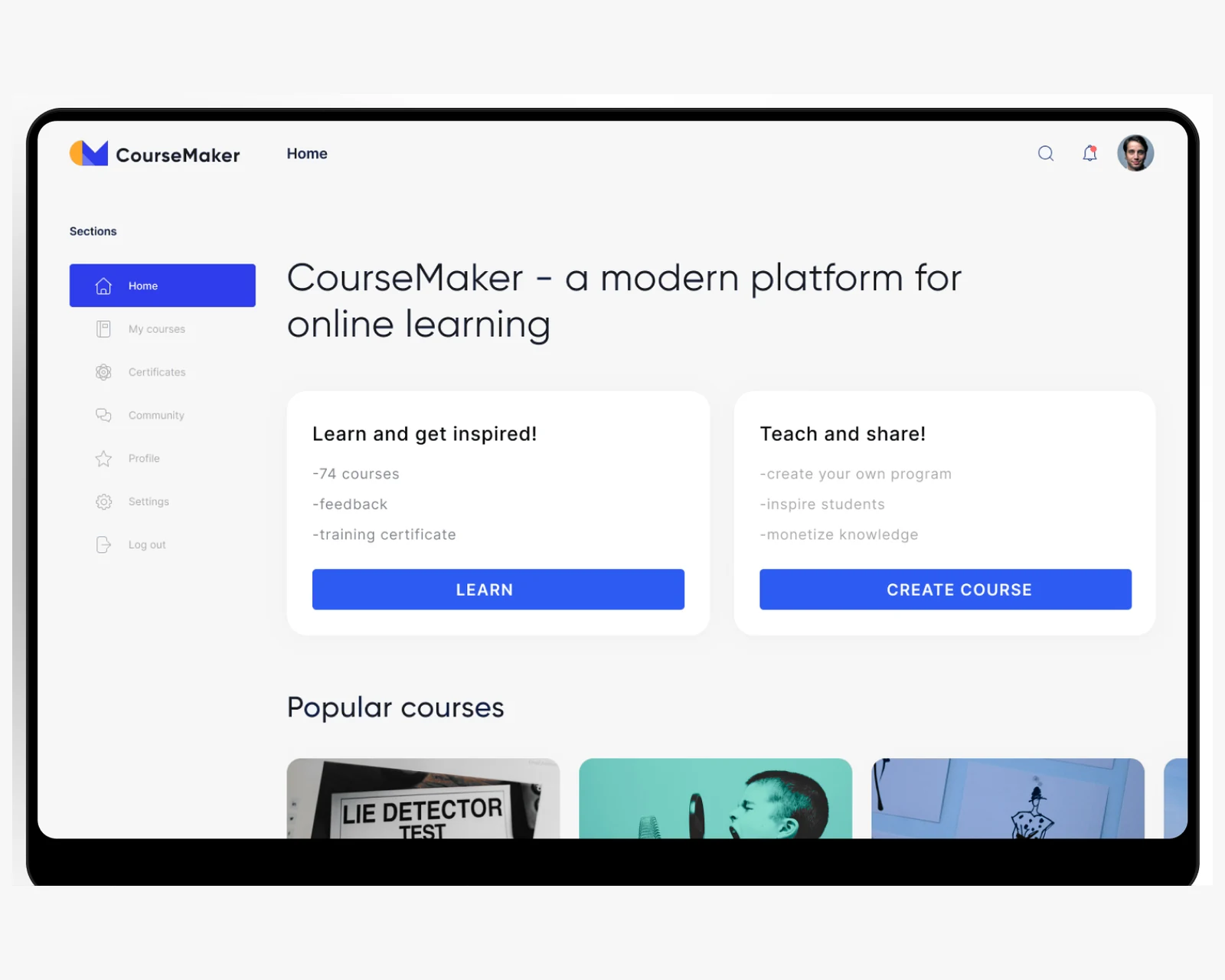
Laravel + React EdTech platform — three role-isolated workspaces, certificates engine, InfoProtector content gating, creator payouts.
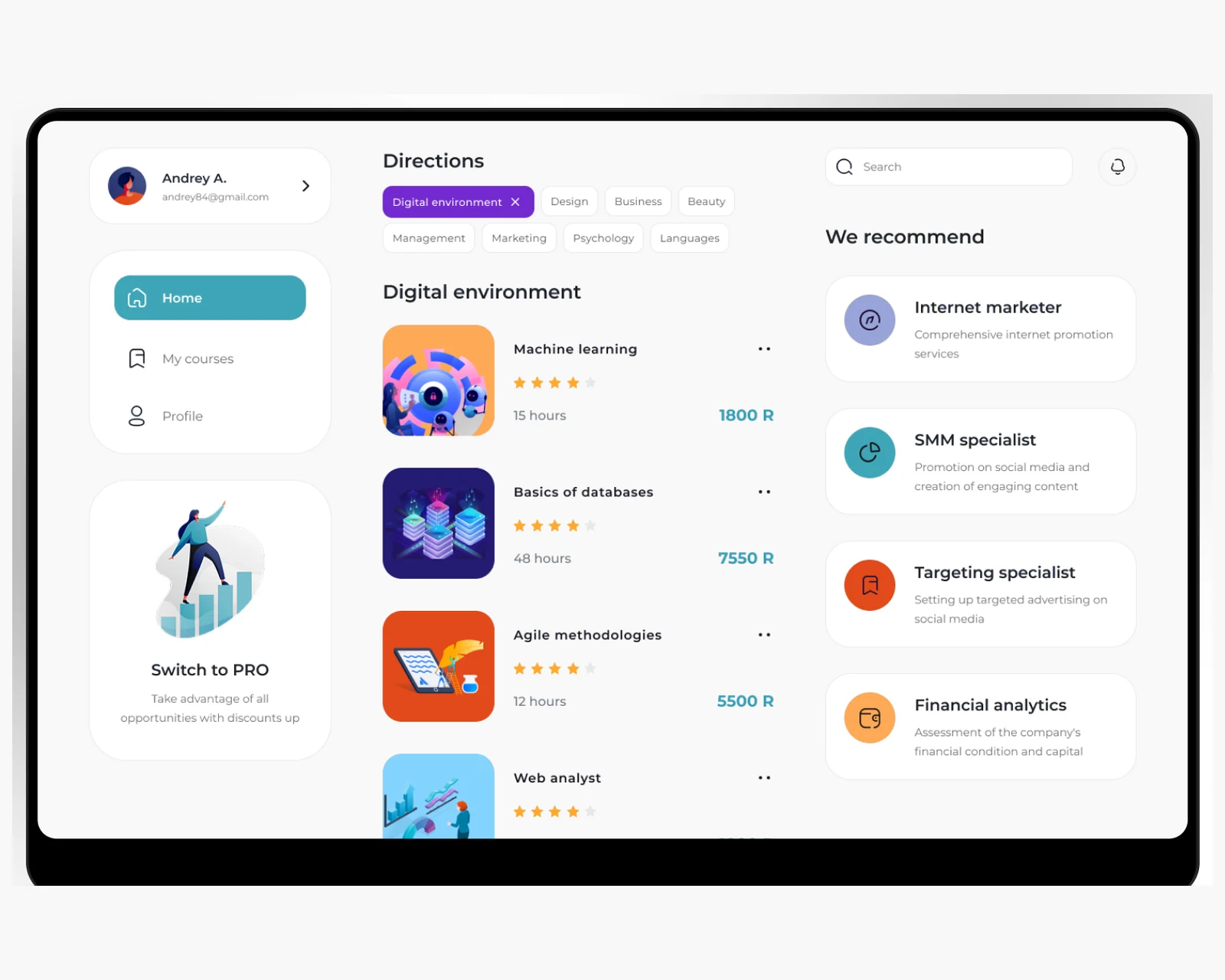
A two-sided coaching marketplace — coach rooms, live webinars, mentor-set pricing and payouts — for online educators across the US & EU.
Why YuSMP
Senior engineers who understand FERPA school-official exceptions, COPPA verifiable parental consent and GDPR Article 8 — and design schemas accordingly.
WCAG 2.2 AA, Section 508 and EN 301 549 in the definition of done. VPAT 2.4 documents delivered on request.
LTI 1.3 Advantage, QTI 3, OneRoster 1.2, Caliper, xAPI and SCORM 2004 — certified test suites, not hand-rolled approximations.
Compliance posture: GDPR-aligned · FERPA-ready · COPPA-aware · WCAG 2.2 AA · Section 508 · SOC 2 Type II in progress · ISO 27001 ready.
Building an e-learning platform on Laravel and React sounds straightforward until you need progress tracking, certificates, and payment flows that actually convert. YuSMP made it look easy. Course completion rates on our platform consistently beat industry averages.
Running live webinars, private coach rooms, and mentor payouts on one platform is complex infrastructure. YuSMP delivered a stable streaming layer and a payout engine that handles multi-currency disbursements without manual reconciliation. Our coaches now focus on content, not admin.
FAQ
We implement FERPA directory-information controls, parental-consent flows for COPPA under-13 users, and district-level audit logging. Data sharing with third parties runs through DPAs that mirror the school official exception.
Yes. We deliver LTI 1.3 Advantage tools (Deep Linking, Names and Role Provisioning, Assignment and Grade Services) for Canvas, Moodle, Blackboard, Brightspace and Schoology, plus LTI 1.1 fallback where required.
Accessibility lives in our definition of done: semantic HTML, keyboard paths, ARIA only where needed, color-contrast tokens, and automated axe-core gates plus manual NVDA/JAWS/VoiceOver passes. We deliver VPAT 2.4 documents on request.
We treat under-16 users under GDPR Article 8 with verifiable parental consent, age-gating logic, and Member-State age-of-consent variations (13-16). DPIAs cover profiling and adaptive learning flows.
Yes. We use OneRoster 1.2 REST and CSV for roster sync, Ed-Fi for analytics, and direct SOAP/REST integrations for PowerSchool, Infinite Campus, Skyward, Ellucian Banner, Workday Student and SAP SLcM.
We build adaptive engines with IMS Caliper analytics, transparent rule + ML scoring, and content-moderation guardrails. AI tutors run with model-risk controls, no PII in prompts, and teacher-visible decision logs.
Both. Where an open platform covers most of the requirement we build LTI 1.3 tools, plugins and integrations around it; where the product itself is the differentiator we build custom. We help you decide honestly before a line of code is written.
Yes. A typical first phase is a scoped MVP or one-institution pilot in 8–12 weeks, with accessibility and privacy controls in from day one, then a district- or campus-wide rollout once the pilot data holds up.
Automated axe-core gates catch regressions, but we also run manual NVDA, JAWS and VoiceOver passes, keyboard-only journeys and color-contrast token audits, and deliver VPAT 2.4 documentation to support Section 508, IDEA and Section 504 obligations.
Yes. Education-facing AI that affects minors carries transparency and risk-management duties. We align adaptive engines and AI tutors to those obligations — documented logic, human oversight, no-PII prompting and teacher-visible decision logs — through our EU AI Act compliance guidance.
We deploy to region-pinned infrastructure so EU learner data stays in the EU and US data stays in-country, with separate encryption keys, access policies and DPAs per jurisdiction. Cross-border flows run under documented transfer mechanisms only where lawful.
Fixed-scope MVPs and discovery engagements, dedicated cross-functional teams for ongoing product work, and staff augmentation to extend an in-house team. Most edtech clients start with a fixed-scope pilot and move to a dedicated team once the roadmap is proven.
Response within 1 business day. NDA on request.
In-depth guides on building compliant edtech — student-data privacy, FERPA, COPPA and AI rules.
Share a few details and a senior consultant will reply within one business day.