Outcome-owned pod
We staff a pod, not a pool of seats. The pod is measured on product KPIs you care about — activation, retention, conversion, NPS — not on hours, tickets or lines of code shipped.

Services
End-to-end product engineering — discovery, design, build, operate — delivered by a senior cross-functional pod. Each engagement is staffed with a PM, a product designer, full-stack engineers, QA, DevOps and SRE, and is measured on product outcomes rather than hours billed. We embed inside US and EU software companies that need a partner to own a product surface, ship to a measurable KPI and stay on the codebase long after launch. Fixed-scope, all-in USD delivery tiered by build type: a landing or small build from $1,100, a corporate system from $2,900, an online store or marketplace from $5,800 and a portal or web service from $10,400. GDPR-aligned, SOC 2 Type II in progress, IP assigned before kickoff.

GDPR-aligned · ISO 27001 ready · SOC 2 Type II in progress · HIPAA-capable · CCPA-acknowledged · CET workday with 9 AM–1 PM ET overlap
Product engineering is an engineering team that owns a product surface — or an entire product — from discovery to operate. It is different from staff augmentation, where the client manages priorities and our engineers fill seats: in a product engineering pod, we own the slice of roadmap we are accountable for and ship against measurable outcomes such as activation, retention, NPS and engineering cycle time. The common starting points we see are predictable: an in-house team that has stalled and needs a senior pod to restart velocity; a new product line that needs to ship without distracting the core team; or a six-plus-year codebase that needs to be modernised while staying live for paying customers. See it in practice in our ANT case study.
We staff a pod, not a pool of seats. The pod is measured on product KPIs you care about — activation, retention, conversion, NPS — not on hours, tickets or lines of code shipped.
PM, product designer, full-stack engineers, QA and SRE sit inside one pod from kickoff. No handoffs to a separate design or ops vendor, no waiting for cross-team scheduling.
Every engagement opens with a one-to-two-week product discovery: north-star metric, target users, scope of release one, success criteria and risk log, before a single sprint is planned.
After launch the pod owns SRE, on-call, analytics, A/B testing and continuous discovery. The product keeps improving on the same team that built it — no separate maintenance vendor.
Shared Figma library, codified design tokens, weekly demos to your stakeholders. Design runs one sprint ahead of engineering so the pod never blocks itself waiting on screens.
We track DORA-style metrics per pod — lead time for changes, deploy frequency, change-failure rate, MTTR — and tune team composition and architecture so velocity compounds instead of decays.
One to two weeks of product discovery: narrative, north-star metric, target users, scope of release one, success criteria, architecture sketch and risk log. Output is a signed engagement charter.
Architecture decisions, design system and tokens, CI/CD, observability stack, environments and access. The pod ships its first user-visible feature inside sprint two, on top of foundations that will scale.
Two-week sprints, weekly demos to your stakeholders, design one sprint ahead of engineering, automated test coverage growing every release. Product KPIs and DORA metrics reported monthly.
Post-launch the pod owns SRE, on-call and incident response, A/B testing, analytics, and continuous discovery. New roadmap items are co-prioritised with your product leadership every quarter.
Scoped milestones with fixed deliverables — typically a discovery package, an MVP release, or a migration with a hard deadline. Best when scope and acceptance criteria are stable.
Default model. Monthly invoicing per role and seniority, transparent capacity and burn, scope flexes sprint by sprint with your product leadership.
Pod fee tied to product KPIs — activation, retention, conversion, MTTR — with a bonus-malus mechanic. For mature products where outcomes are measurable from day one.
Most vendors keep the number for a sales call. Below are reference formats for different build types — we name the exact quote after a free scope assessment. Builds are fixed-scope and all-in, quoted in USD, with no recruitment markup, no tool surcharges and no hidden fees. You see the line-item budget before any code is written and sign off on it.
Landing / small build
from $1,100
one goal · single page or small site
A focused landing page or small site. One goal, clean design, lead capture, analytics and launch — enough to test a message or ship a campaign fast.
Corporate system
from $2,900
several sections · roles
A corporate site or internal system. Several sections and roles, a CMS or admin panel, form and analytics integrations, and a hardened release.
Online store / marketplace
from $5,800
catalogue · checkout
An online store or marketplace. Catalogue, cart and checkout, payment and delivery integrations, and a seller or admin console.
Portal / web service
from $10,400
multiple modules · integrations
A portal or full web service. Multiple modules, external integrations, complex business logic, CI/CD and real-device QA.
What moves the number: the number of sections and roles (a single page versus a multi-module portal); the integration count (payments, delivery, CRM, ERP, third-party APIs); the complexity of business logic (a brochure site versus a marketplace with settlement); and the compliance scope (GDPR by default, HIPAA-capable for health, PCI DSS for payments — each adds controls and audit work). Cloud and third-party fees run on your own accounts, so you keep the cost lever. Prices are indicative and are fixed in a written quote for your specific scope.
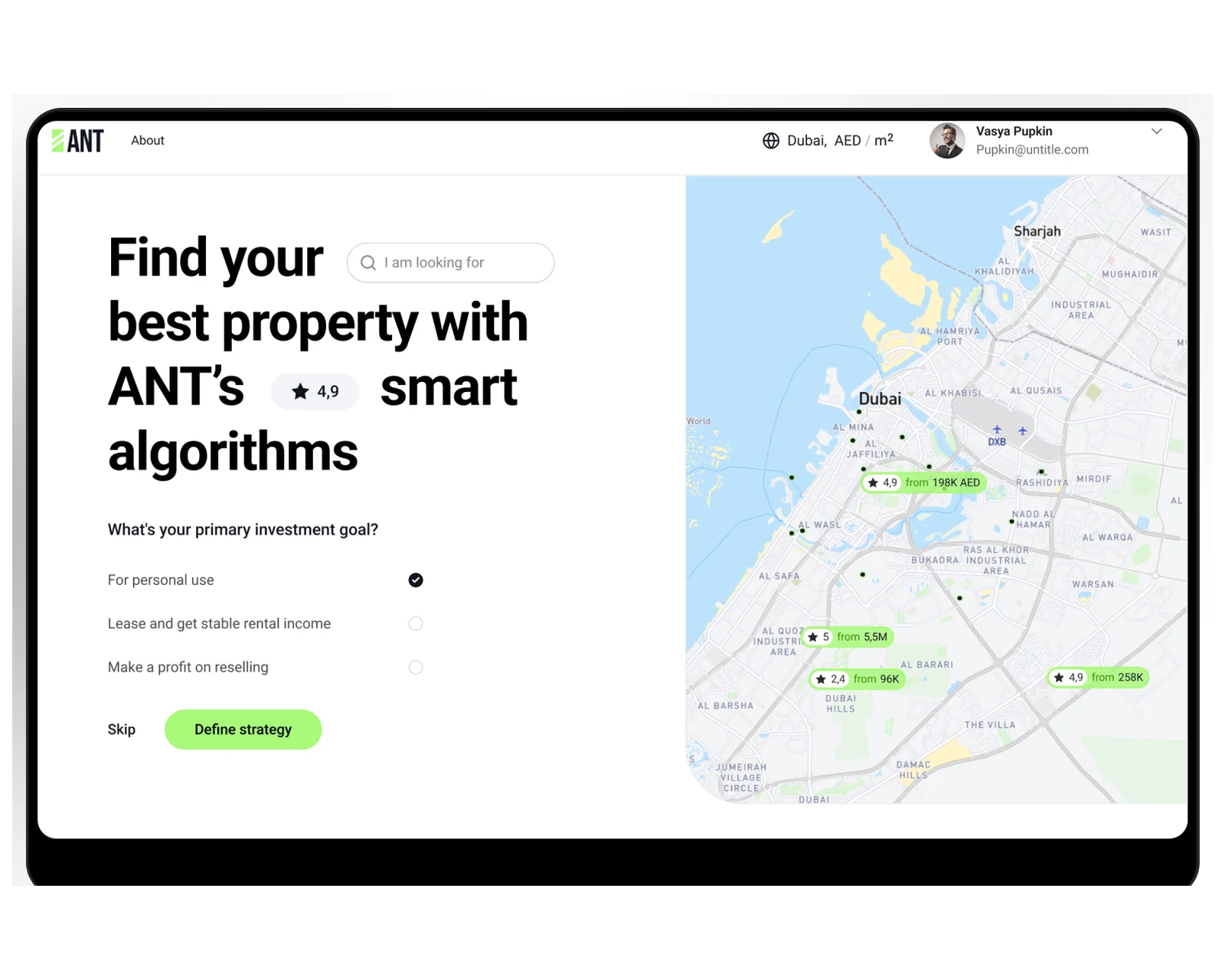
Property marketplace web platform with listing CMS, search and B2B admin console for US and EU operators.
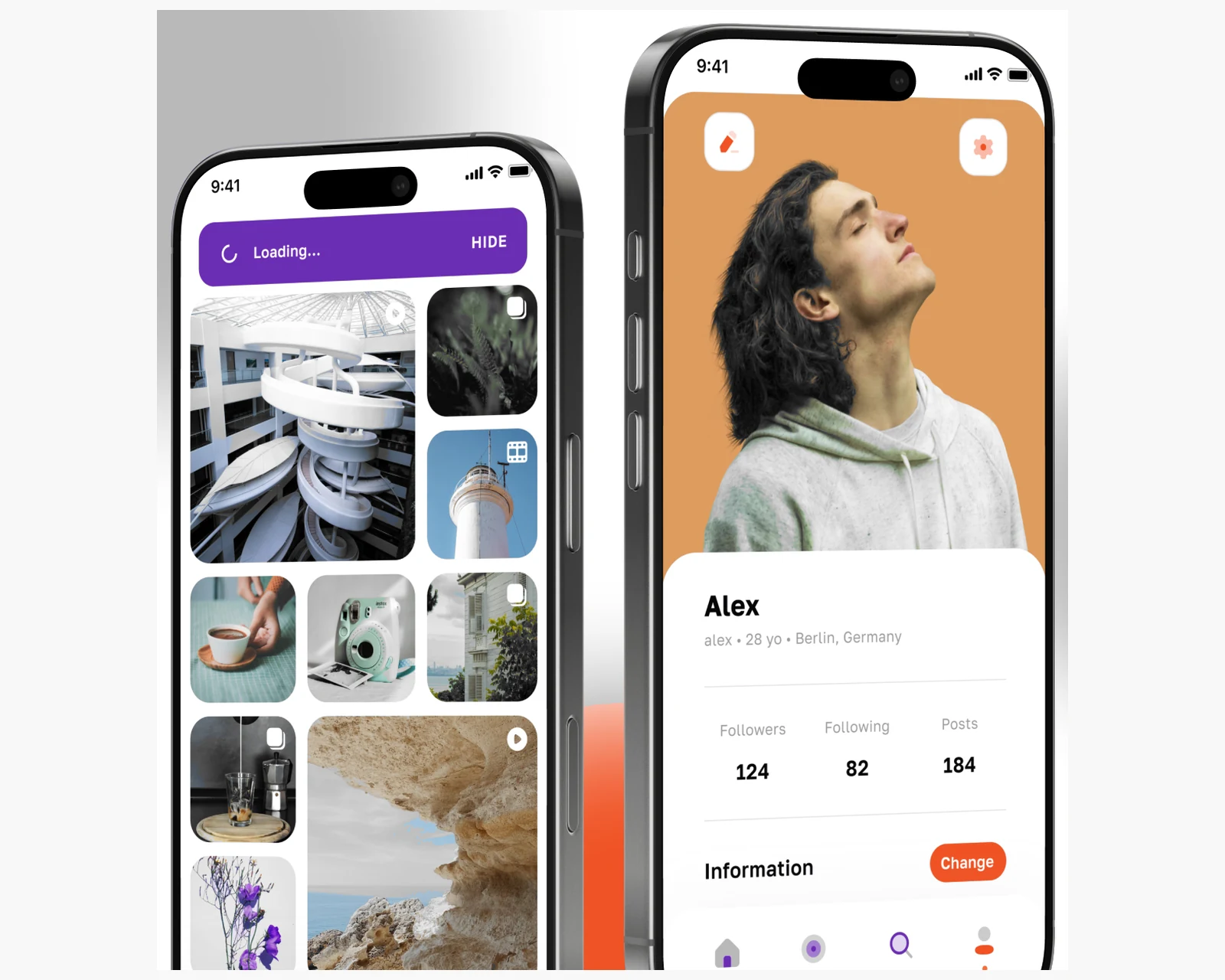
Production social platform — App Store + Google Play, live across the US and EU — with geo Radar, encrypted messaging and a virtual economy.
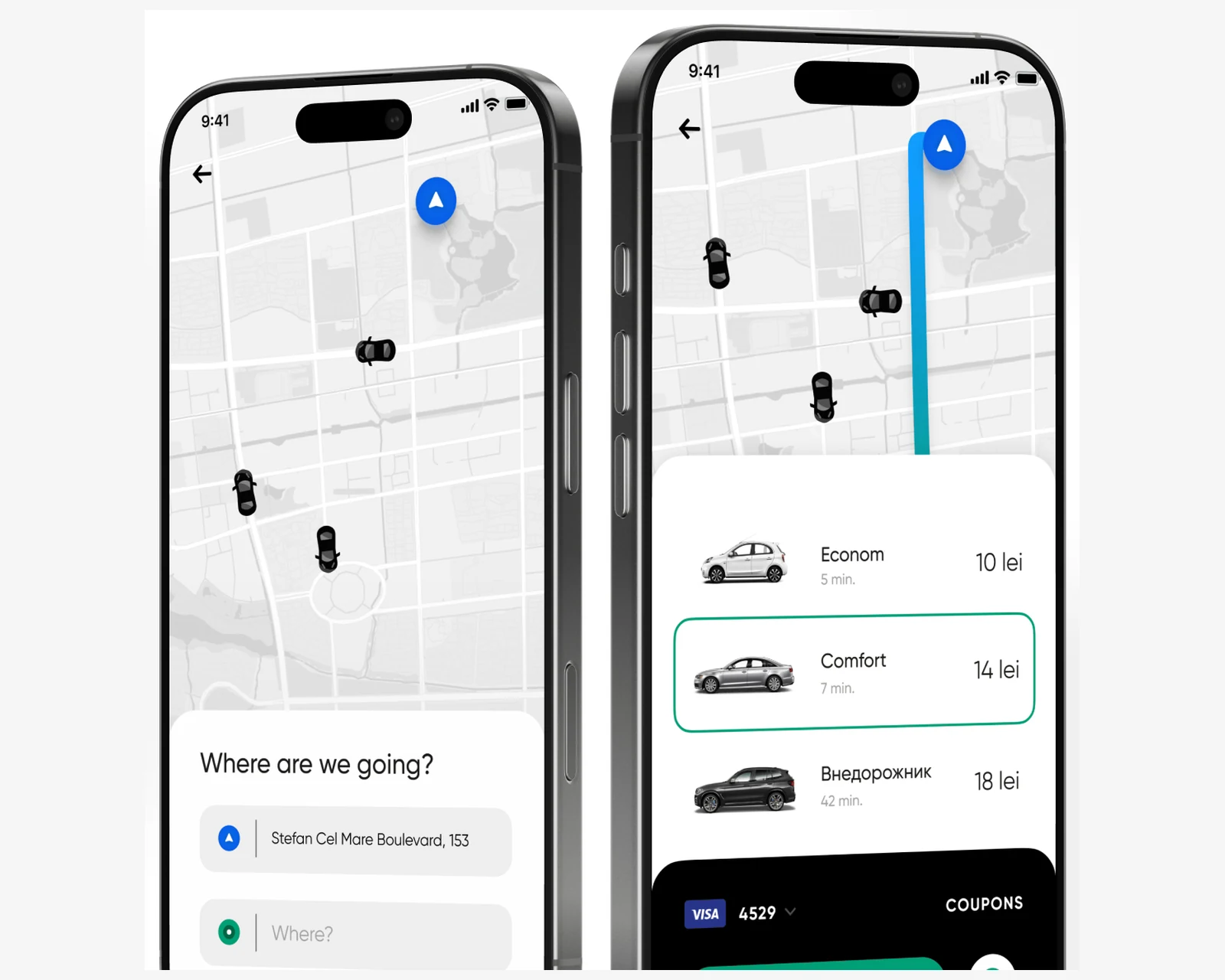
Three-app ride-hailing platform — driver, passenger, dispatcher — with real-time GPS, document verification, dual cash/card payments.
Product risk lives in the regulatory and integration detail of a sector. We build where compliance and real-world complexity are the hard part — and stay on the codebase after launch.
Lending, payments and embedded-finance platforms operate inside strict PCI DSS scope, with end-to-end traceability from card data entry to settlement. We build the compliance architecture into the product from day one: tokenised card storage, 3DS 2.x integration, PSD2 SCA flows, and the network segmentation evidence your QSA and card scheme security review need.
Beyond compliance, the engineering challenge in FinTech is latency and correctness under concurrent writes. We design idempotent payment APIs with exactly-once semantics, event-sourced ledger patterns that give full transaction audit history, and reconciliation pipelines that catch discrepancies before end-of-day settlement.
B2B commerce platforms, product configurators and dealer portals share a common problem: deeply integrated back-office complexity that most off-the-shelf commerce solutions cannot handle. We build against ERP and CRM APIs (SAP, Dynamics, Salesforce) as first-class integration targets, with eventual-consistency patterns that keep the storefront fast even when the back office is slow.
Multi-region, multi-currency and multi-language requirements are not afterthoughts in our commerce builds. We ship with correct locale-aware pricing, VAT calculation, regional payment method coverage and GDPR-aligned consent flows from the first release, so launching into a new market is a configuration change rather than an engineering sprint.
Real-time routing, dispatch and driver applications have unusual uptime requirements: the system has to be available offline on a device with intermittent connectivity, sync reliably when connectivity returns, and never lose a confirmed delivery event. We build offline-first mobile clients with CRDT-based conflict resolution and server-side event sourcing that treats the device as a projection, not the source of truth.
The platform side handles geospatial computation at scale: routing graph updates, ETA prediction under traffic variability, and polygon-based coverage zone logic. We integrate HERE, Google Maps Platform, Mapbox and custom OSRM deployments depending on cost profile, and we build the observability to track ETA accuracy as a product KPI, not just a technical metric.
HIPAA-capable product builds require more than an AWS BAA: every service that touches PHI needs access-level audit logs, encryption key rotation schedules, a de-identification pipeline compliant with Safe Harbor or Expert Determination, and a contingency plan tested to a documented RTO. We scope and build these controls into the product architecture before the first sprint, not as a pre-launch compliance pass.
EU digital health products face Medical Device Regulation (MDR) software classification and must document SOUP (Software of Unknown Provenance) in their technical file. We work with CE-marking consultants and build the traceability artefacts (design history file, risk register, test protocols) into the delivery process so regulatory submission is not a separate project.
Multi-tenant SaaS products must solve isolation, billing, onboarding and upgrade paths simultaneously. We design the tenancy model early — silo, pool or bridge — because it determines the data architecture, the cost structure and the enterprise buyer's security review outcome. Silo models satisfy the strictest enterprise requirements but cost more per tenant; pool models invert that trade-off. The right choice depends on your ICP and target contract size.
B2B products live or die by the onboarding experience and the API surface exposed to enterprise integrations. We build self-serve onboarding flows with usage-based activation metrics, webhook infrastructure for real-time event delivery, and an API design that passes enterprise security reviews (OAuth 2.0, RBAC, audit log export, rate limiting with customer-visible quotas) without requiring a custom integration engagement every time.
Learning platforms span a wide product surface: content delivery, live synchronous sessions, assessment engines, progress tracking and credentialing. The key engineering challenge is maintaining engagement quality (video buffering under 0.3 percent, interactive exercise latency under 200 ms) while the learner cohort grows from hundreds to hundreds of thousands without a proportional cost increase.
US learner data brings FERPA obligations; platforms targeting under-13s must manage COPPA consent flows. EU learners require GDPR Article 6 lawful basis documentation and data-retention schedules aligned with educational record obligations. We treat these as architecture constraints, not documentation tasks, so compliance scales with the product rather than lagging behind it.
GDPR-aligned · ISO 27001 ready · SOC 2 Type II in progress · HIPAA-capable · CCPA-acknowledged
The pod commits to product KPIs in writing during discovery and reports against them every month. Roadmap, composition and architecture decisions are tied to the metric that matters — not to ticket throughput.
PM, designer, engineers, QA, SRE in one pod, all senior, all vetted, all on CET hours with a guaranteed 9 AM–1 PM ET overlap. No silent juniors, no shadow contractors, no scheduling games across vendors.
EU data residency · US options on request, DPAs on request, GDPR-aligned by default, SOC 2 Type II in progress, HIPAA-capable scoping for health, CCPA-acknowledged for US consumer data, PCI DSS for payments.
Compliance scope is agreed in the discovery charter and audited every quarter against the product surface the pod owns.
Building a social platform from scratch is high-stakes work. YuSMP delivered the interest feed, geo Radar, Stories, and virtual coins economy on schedule, with a codebase our in-house team picked up on day one of handoff.
Our consultants were losing 15 minutes per customer on manual inventory checks. YuSMP built native apps backed by ElasticSearch, wired to our 1C system in real time. Time-per-customer dropped 40% across all locations within a week of launch.
Product engineering is not staff augmentation with a PM attached. The pod is a self-organising delivery unit with its own operating rhythm — here is what that looks like in practice.
Before any code is written, the pod runs a structured discovery: product narrative, north-star metric, target users, scope of the first release, success criteria, architecture sketch and risk log. The output is an engagement charter both sides sign. Discovery is fixed-price. If you decide not to proceed, you keep all artefacts with no obligation to continue.
Design runs ahead of engineering by one sprint throughout the engagement, using a shared Figma library with design tokens and a component system that your brand team can maintain after handoff. Every design decision is traced to a user story and a metric hypothesis — "this change should lift activation by X percent" — so the pod knows when to ship and when to iterate.
The pod works in two-week sprints. Each sprint opens with planning against the prioritised backlog (owned by our PM in lockstep with your product leadership) and closes with a demo and retrospective. Velocity is tracked in story points and in lead time for changes — we report both, because story points without lead time hide the difference between fast-moving and stuck sprints.
You have a standing slot to change priorities between sprints. Anything that lands in scope inside a sprint is evaluated for impact-to-effort and either absorbed (if it displaces lower-priority work) or queued for the next sprint. We do not accept scope changes inside a sprint as a policy, because mid-sprint pivots destroy flow and inflate defect rates.
Once per month we run a product review that goes beyond sprint velocity: product KPI movement (activation, retention, conversion, NPS), engineering KPIs (deploy frequency, change-failure rate, MTTR), cost-per-feature trend, and a forward roadmap review. This is the meeting where we surface whether the product is moving toward its north-star metric or drifting.
The monthly review is also where pod composition is adjusted. If the product is in a performance-optimisation phase, we rotate in a specialist; if it is in a build phase, we expand the engineering headcount. Pod size is not fixed for the engagement — it tracks the work, not the contract.
We do not hand off and disappear. After each major release the pod transitions to an operate phase: SLO definition, on-call runbook authoring, incident response playbooks, and a 90-day reliability review. The SRE function tracks error budgets and feeds burn-rate alerts back into the product backlog — if reliability is consuming budget, new feature work pauses until the error budget is restored.
The operate phase is also when we instrument the product KPI telemetry that drives the next discovery cycle: funnel analytics, feature flags for controlled rollouts, and A/B test infrastructure. By the end of the first 90 days of operate, the pod has a data-informed roadmap for the next major build phase rather than a priorities list assembled from stakeholder requests.
Builds are fixed-scope and tiered by type, all-in and quoted in USD. A landing or small build runs from $1,100; a corporate site or internal system from $2,900; an online store or marketplace from $5,800; a portal or web service from $10,400. The exact number depends on the number of sections and roles, the integration count (payments, delivery, CRM, third-party APIs), complexity of business logic and compliance scope. You see the line-item budget after a free scope assessment and sign off before any code is written — no recruitment markup, no tool surcharges, and cloud and third-party fees run on your own accounts.
Product engineering is an outcome-owned engagement: a cross-functional pod (PM, designer, full-stack engineers, QA, DevOps, SRE) takes accountability for a product surface or a whole product and is measured on product KPIs — activation, retention, NPS, lead time, deploy frequency. Staff augmentation is the opposite: you rent named seats and your team owns priorities, design, QA and ops. Product engineering reduces handoffs and management load on your side; staff aug gives you more direct control over each engineer's day.
During discovery we agree on two layers of metrics. Product KPIs are tied to the product's north-star — activation, retention, conversion, NPS, revenue per user, time-to-value. Engineering KPIs cover delivery hygiene — lead time for changes, deploy frequency, change-failure rate, MTTR. We report both monthly and tie pod composition and roadmap decisions to those numbers. The KPI set is co-owned with your product leadership and revisited every quarter.
Default model: our PM leads the pod and works in lockstep with your product leadership; our designer owns UX and design system; our tech lead owns architecture. You keep final say on roadmap, scope and release. If you already have a strong PM in-house, we can drop our PM role and run the pod under your PM — in that case we replace the PM seat with an additional engineer or designer at the same fully-loaded rate.
Every engagement opens with a one-to-two-week discovery: product narrative, north-star metric, target users, scope of the first release, success criteria, architecture sketch and risk log. The output is a written engagement charter that we both sign. Design runs ahead of engineering by one sprint in a shared Figma library with design tokens. Discovery is fixed-price; if you decide not to proceed after discovery, you keep all artefacts and there is no obligation to continue.
Most product engineering engagements run 9–24 months. The shortest are 6-month new-product builds — discovery, MVP, public launch, first 90 days of operate. The longest are multi-year platform partnerships where the pod owns a product surface across several major releases. We do not take engagements shorter than six months, because product KPIs cannot be moved meaningfully in less time, and a shorter engagement is better served by our dedicated team or custom development offering.
All pods are GDPR-aligned by default: EU data residency, EU-based contracts, DPAs on request, sub-processor register. SOC 2 Type II is in progress. HIPAA-capable scoping is available for health workloads — BAAs, encrypted PHI handling, audit trail. CCPA notice obligations are acknowledged for US consumer data and we align with your privacy notice. ISO 27001 controls are applied to repos, endpoints and access. For payments we run inside PCI DSS scope and align with your QSA.
Scope changes are normal in product engineering; the process for handling them is what matters. Between sprints, you can reprioritise the backlog freely — the pod plans the next sprint against whatever is at the top. Inside a sprint, we do not accept scope changes as a rule: mid-sprint pivots destroy flow, inflate defect rates and make velocity measurement meaningless. For genuinely urgent changes that cannot wait one to two weeks, we use a controlled sprint-interrupt process: the PM evaluates impact-to-effort, drops equivalent-weight items from the sprint, and the change is tracked as a sprint interrupt in the retrospective so patterns can be addressed in planning.
The minimum viable pod for a product engineering engagement is four people: a PM, a designer, two engineers. Below that headcount, a pod cannot maintain the discovery-one-sprint-ahead rhythm, run meaningful code review, or handle on-call rotation. If you need one or two engineers to work against your existing PM and design, that is better served by our dedicated development team offering. The most common starting pod is five to six people, scaling to eight to twelve at peak build phases.
We do not impose a stack. If you have an existing codebase or a strong technology preference, we build on it. Our default recommendation for new products starts with the technology that the largest pool of senior engineers can maintain, and that has the lowest operational overhead for the product's scale. In practice: React or Next.js for web frontends, React Native for cross-platform mobile, Node.js or Python for APIs where speed of iteration matters, Go for services where throughput matters, and PostgreSQL as the default relational store. We avoid framework churn; the stack the pod ships in year one should be the stack a new engineer can hire into in year three.
Handoff is a structured process, not a file dump. We allocate the final 6 to 8 weeks of an engagement to knowledge transfer: architecture decision records documented in the repository, runbooks tested by your team against live systems, on-call shadowing where your engineers carry pagers alongside ours, and a final architecture review where your team leads ask the hard questions. All IP transfers to you on creation under the master services agreement — we hold no retention rights on code, data or documentation. The goal is that on day one after handoff, your team can ship, respond to incidents and make architectural decisions without calling us.
Both, but the engagement shape differs. With early-stage startups, discovery is longer and the charter is lighter — we help define what the first release should be, not just how to build what is already specified. The pod starts at the minimum four-person configuration and scales as funding and product-market fit signal determine. With established companies, we typically step into an existing product with a defined backlog, existing infrastructure and a team to complement. The most common reason an established company brings in a product engineering pod is to accelerate a specific product surface while keeping the internal team focused on core-platform work.
Practical guides on product development, MVP strategy, and team building.




Share a few details and a senior consultant will reply within one business day.