
The short answer
On August 6, 2026, researchers Hedi Ingber and Aviyam Ivgi of Stealth presented CoreBreak at Black Hat USA. They showed that AWS Bedrock AgentCore, Google ADK for Python and Vercel AI SDK harnesses all accepted data shaped like a model-generated tool call and dispatched it without verifying that the model had actually produced it. In several attack paths, the LLM never ran. System prompts were irrelevant. Content filters and model-level guardrails saw nothing. Three vendors, five CVEs, and patches already available — here is what teams building AI agents need to do.
What CoreBreak actually does
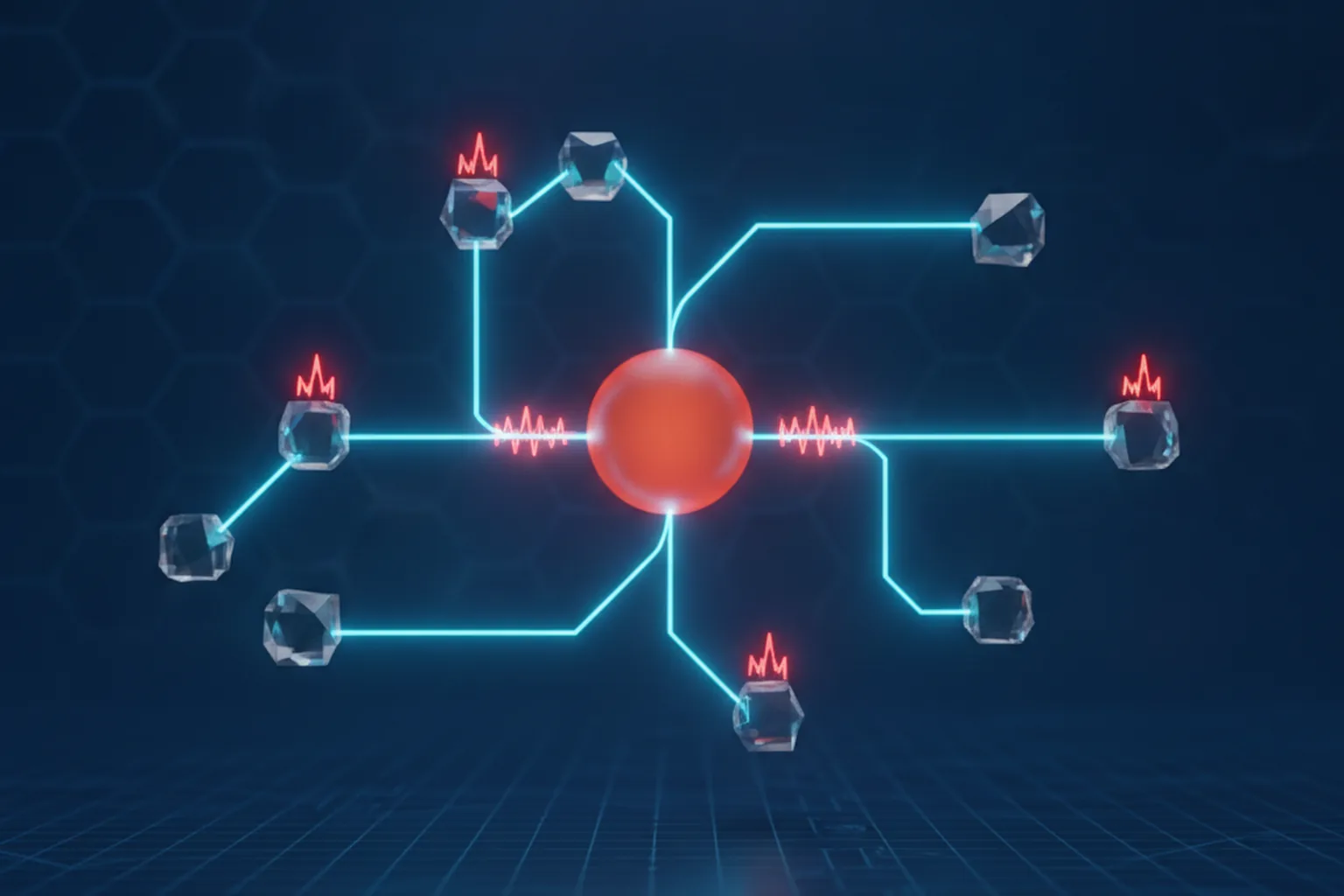
In the normal flow of an AI agent, the model receives a user request, reasons about it, and returns a structured response that may include tool calls. The agent harness reads those tool calls and executes registered tools — reading files, calling APIs, writing records. CoreBreak demonstrates that in the affected AWS, Google and Vercel implementations, the dispatch step could be reached by an attacker without the model ever running.
Teams building products on AI agent development foundations using AWS Bedrock, Google ADK, or Vercel AI SDK should treat this as an immediate patch action. The researchers' central insight is that the execution layer verified the shape of a tool call — whether it looked like a model-authorized instruction — but not its provenance: whether a legitimate, verified model inference had actually produced it.
The researchers named the pattern CoreBreak because it breaks the core authorization contract between the model and the tools it is allowed to invoke. An attacker did not have to persuade the model to act against its instructions. The attacker simply reached the dispatch path without a model turn at all.
The three vendors and five CVEs
AWS — CVE-2026-18830, CVSS v4.0 8.6
The flaw resided in the InvokeHarness API of Amazon Bedrock AgentCore. An authenticated remote user could inject tool-use blocks into the final message of a harness invocation request. The harness dispatched the tool without a model turn, meaning any registered tool — including those with write access to databases or external services — could be invoked directly by an attacker who held a valid API credential.
AWS fixed the managed service server-side on July 31, 2026. No client-side update is required for teams using Bedrock AgentCore through the standard managed API. However, teams running the AWS Strands Python SDK to build custom harnesses should audit their pinned version independently, as reporting at time of disclosure indicated the SDK had not received the same remediation.
Google — CVE-2026-18236, CVSS v4.0 9.3
Google ADK for Python carried two separate vulnerable paths, both fixed in ADK 2.5.0 released July 16. The first path involved forged confirmation-approval events that could resume an agent session and authorize tool execution without a genuine model turn. The second, specific to resumable-mode flows, allowed user-authored messages containing function-call parts to be interpreted as model-authorized instructions to execute registered tools. Google's fix explicitly rejects function calls embedded in user-authored messages and binds approval events to verified model turns.
The resumable-mode path is particularly relevant for long-running agent workflows — a common pattern in data engineering, document processing and multi-step business automation pipelines.
Vercel — CVE-2026-64650 and CVE-2026-64651, CVSS v4.0 6.3 each
Two Vercel AI SDK harness packages were affected. @ai-sdk/harness-codex through version 1.0.28 (patched in 1.0.29) and @ai-sdk/harness-opencode through version 1.0.27 (patched in 1.0.28) both allowed untrusted code running inside a Linux sandbox to exploit process-path trust checks to invoke host tools without model authorization. The lower CVSS scores reflect the narrower attack surface — exploitation requires code already executing inside the sandbox — but teams running AI coding agents in environments where user-supplied code executes within the sandbox should treat this as a priority update.
Why this is different from prompt injection
Prompt injection attacks work by persuading the model to act against its instructions — they require the LLM to process malicious content and make a decision to comply. CoreBreak bypasses the model entirely. The attacker does not need to craft a clever prompt or hope the model will follow injected instructions. The model simply never runs.
This makes CoreBreak structurally different from the Check Point Research findings disclosed at the same Black Hat 2026 event, which focused on classic software vulnerabilities — deserialization, SSRF, path traversal — inside popular open-source agent frameworks like LangChain, LangGraph, and CrewAI. Both classes of risk are real. But they operate at different layers and require different mitigations. Patching your LLM guardrails or improving your system prompt does nothing against CoreBreak-class flaws. The fix has to live at the harness level: execution-time authorization bound to verified model events.
What it means for US & EU software teams
Coverage is broad. AWS Bedrock AgentCore, Google ADK and Vercel AI SDK collectively cover a large share of production AI agent deployments in 2026. If your team shipped an agent to production in the last twelve months, there is a real probability it ran on one of these foundations during the vulnerability window before patches shipped in July.
The AWS managed service patched silently. AWS fixed AgentCore on July 31 without requiring client action on the managed service. This is correct behavior for a cloud-managed runtime — but it also means retrospective forensics are harder. If you need to produce compliance evidence that your agents were not exposed, you will need to reconstruct this from your own AgentCore call logs rather than from a client-side patch timestamp.
The Strands Python SDK may have a gap. Reporting at the time of Black Hat disclosure indicated the AWS Strands Python SDK had not received the same remediation as the managed service. Teams that use Strands to build custom harnesses should verify their SDK version against current AWS security bulletins before deploying or continuing production workloads.
Google's patch was available three weeks before public disclosure. ADK 2.5.0 shipped July 16. If your team is on a later version, you were already protected before Ingber and Ivgi presented at Black Hat. If you are pinned to an older release — a common situation in Python environments where requirements.txt pins get stale — update now.
EU compliance implications. For teams operating under GDPR or DORA, a pre-patch CoreBreak exploitation scenario involving agent access to customer records or financial system data would constitute a personal data breach requiring 72-hour DPA notification. NIS2 entities running AI agent infrastructure should treat these CVEs as a prompt to formally document AI component patch management in their security management systems and, where applicable, record the patching evidence as part of their technical security controls inventory.
The structural lesson. As cloud vendors productize AI agent runtimes, those runtimes become security-critical infrastructure analogous to API gateways or identity providers. The tool dispatch layer needs the same authorization rigor: verify not just the shape of the instruction, but its provenance — whether a legitimate, verified model turn produced it. Vendors are now implementing exactly this, but the incident is a signal that agent runtime security has not historically received the same hardening attention as traditional API infrastructure.
What to do now
| Action | Priority | Notes |
|---|---|---|
| Update Google ADK to ≥2.5.0 | Immediate | Covers both CVE-2026-18236 paths |
| Pin Vercel @ai-sdk/harness-codex to ≥1.0.29 | Immediate | CVE-2026-64650 |
| Pin Vercel @ai-sdk/harness-opencode to ≥1.0.28 | Immediate | CVE-2026-64651 |
| Confirm AWS AgentCore uses managed service (not self-hosted harness) | This sprint | Managed service patched July 31 |
| Audit AWS Strands Python SDK version if used | This sprint | Check against latest AWS security bulletins |
| Add AI SDK packages to CI dependency scanning | This sprint | Catch future CVEs before deploy |
| Inventory registered agent tools and their data access scope | This sprint | Minimize blast radius |
| Document remediation evidence for SOC 2, DORA, EU AI Act records | Within 30 days | Required for regulated environments |
For FinTech and HealthTech teams, add a structured review of agent tool registrations to the remediation process: map which tools each harness can invoke, what databases or external systems those tools reach, and confirm that no unintended tool execution occurred during the vulnerability window.
Sources: The Hacker News — AWS, Google, and Vercel Agent Flaws Let Attackers Trigger Tools Without Running the Model (August 6, 2026); TechTimes — AWS Fixed Its Managed Agent Service but Left Strands Python SDK Unpatched (August 6, 2026).
FAQ
What is the CoreBreak vulnerability?
CoreBreak is a vulnerability class disclosed at Black Hat USA 2026 by researchers Hedi Ingber and Aviyam Ivgi of Stealth. It describes a design gap where the tool execution layer in AI agent runtimes dispatches tool calls without verifying that a legitimate model turn authorized them. The model never runs; system prompts, content filters, and guardrails are bypassed entirely. The name refers to breaking the core authorization contract between the model and the tools it is allowed to invoke.
Which products are affected and do I need to update?
Three platforms are affected across five CVEs. AWS Bedrock AgentCore (CVE-2026-18830, CVSS v4.0 8.6) was patched server-side on July 31 — no action needed for the managed service, but audit your Strands Python SDK version. Google ADK for Python (CVE-2026-18236, CVSS v4.0 9.3) is patched in version 2.5.0 released July 16 — update immediately if on an earlier version. Vercel @ai-sdk/harness-codex (CVE-2026-64650, CVSS 6.3) is patched in 1.0.29; @ai-sdk/harness-opencode (CVE-2026-64651, CVSS 6.3) is patched in 1.0.28.
Is CoreBreak the same as the Check Point agent framework flaws at Black Hat 2026?
No. The Check Point Research findings targeted open-source orchestration frameworks — LangChain, LangGraph, CrewAI, AutoGen — with classic software bugs like deserialization, SSRF, and path traversal. CoreBreak targets cloud-managed and SDK-based harnesses from AWS, Google, and Vercel, and operates at a different layer: instead of exploiting a software bug inside the framework, CoreBreak bypasses the model authorization step so that tool calls are dispatched without the LLM ever running. Both classes of risk are real and require separate mitigations.
What should engineering teams building AI agents do now?
Update to patched versions immediately: Google ADK 2.5.0+, Vercel harness-codex 1.0.29+, harness-opencode 1.0.28+. Confirm AWS Bedrock AgentCore uses the managed service (patched July 31), and audit your Strands SDK version. Then inventory all registered agent tools, assess their data access scope, and add AI SDK packages to your CI dependency scanning pipeline. For regulated environments — FinTech, HealthTech, logistics — document the remediation as evidence for SOC 2, DORA, and EU AI Act governance records.