
TL;DR — media software development in one paragraph
Media software development builds the custom systems that studios, streaming and OTT platforms, broadcasters and publishers use to ingest, manage, protect, deliver and monetize video and audio at scale — OTT and VOD apps, DAM/MAM, CMS, DRM, ad and subscription monetization, recommendations and analytics. In 2026, projects range from about $25k for a lean VOD MVP to $1.5M+ for enterprise OTT, with encoding, egress, CDN and DRM driving cost more than features. The video streaming software market reaches roughly USD 13.8 billion in 2026, with media and entertainment about 48% of it.
What is media software development?
Media software development is the custom design, engineering and integration of the software systems that studios, streaming and OTT platforms, broadcasters, publishers and sports or live operators use to ingest, manage, protect, deliver and monetize video and audio content at scale. It spans consumer-facing OTT and video-on-demand (VOD) apps across smart TVs, mobile, web and consoles; the behind-the-scenes digital asset management (DAM) and media asset management (MAM) libraries that store and version huge media files; content management and metadata systems; digital rights management (DRM) and anti-piracy; ad insertion and subscription monetization; recommendation and personalization engines; and the audience analytics that measure engagement and quality of experience. Because so much of this software has to move very large files, deliver low-latency streams to millions of concurrent viewers, and respect the format and rights complexity of licensed content, media and entertainment software development is treated as its own engineering discipline rather than ordinary app development.
The defining trait is that media platforms live or die on delivery: a viewer will abandon a stream that buffers, and a studio can lose a licensing deal if content leaks. That is why streaming architecture, transcoding, adaptive bitrate, CDN delivery and DRM are engineered in from the first sprint, not bolted on later. At their core, these are complex, real-time systems that demand the same architecture, data-model and integration discipline you would bring to any mission-critical build, plus domain knowledge of how a mezzanine file becomes dozens of streaming renditions, how an entitlement maps to a subscription tier, and how a viewing event must (and must not) be tracked. Operators that need this rarely get it from a generic template, which is why they lean on experienced partners in enterprise software development services to model their exact catalog, rights, monetization and audience instead of bending their business to fit an off-the-shelf product.
In practice, media and entertainment software development sits at the intersection of real-time delivery, deep systems integration and content security. Entertainment software development services combine the cloud, API and data-engineering skills familiar from any modern platform with an understanding of video pipelines, codecs, DRM licensing and audience behavior. This is a large and fast-growing market: the video streaming software market reaches roughly USD 13.8 billion in 2026 and is forecast to hit USD 26.13 billion by 2031 at about a 13.6% CAGR, with media and entertainment accounting for around 48% of it, according to MarketsandMarkets (2026). The broader OTT market is valued at about USD 264.85 billion in 2026 and projected to reach USD 551.19 billion by 2030 (~20.1% CAGR), per The Business Research Company (2026). Those numbers are why media company software development budgets keep rising even as competition intensifies.
Types of media and entertainment software
Media and entertainment software falls into around ten core categories, from consumer OTT apps to the DRM and analytics systems that protect and measure them — and most operators build or integrate several at once around a shared content and delivery backbone. The table below maps each type to what it does and who uses it; strong media software development services usually start with the delivery core (OTT/VOD plus DAM and DRM), then expand into monetization, personalization and analytics as the catalog and audience grow.
| Software type | What it does | Typical users |
|---|---|---|
| OTT & streaming apps | Deliver video across smart TVs, mobile, web and consoles | Streaming services, broadcasters |
| VOD & live streaming | Serve on-demand libraries and real-time live events | Studios, sports, event operators |
| DAM & MAM | Store, organize and version large media libraries | Media ops, post-production |
| CMS & metadata | Publish editorial content, artwork and metadata | Publishers, editorial teams |
| DRM & content security | Protect licensed content and prevent piracy | Rights holders, studios |
| Monetization & AdTech | Run SVOD, AVOD and FAST models with SSAI | Commercial, ad-sales teams |
| Audience analytics | Measure engagement, retention and QoE | Product, growth, data teams |
| AR/VR & interactive | Build immersive and interactive experiences | Studios, live entertainment |
| Social & engagement | Drive community, chat and audience engagement | Creators, community teams |
| Event & ticketing | Manage live events, access and ticketing | Venues, live-event operators |
A recurring theme across all ten categories is monetization and identity: the value of the catalog is only realized when viewers can be identified, entitled and billed correctly across devices. Building that subscription and entitlement layer well draws on the same discipline described in our guide to SaaS software development, applied to media's multi-device, multi-tier subscription and ad-supported models. The entertainment software development company that gets this right treats the content library and the billing system as one connected product, not two.
Key features of a modern media & entertainment platform
A modern media and entertainment platform is defined by six or seven capabilities that turn a raw content library into a product viewers return to, and getting all of them working together is what separates a real streaming service from a video website. The features below are the baseline that entertainment software development services build toward; the sections after this explain the architecture and stack that make them possible.
- Content ingestion & DAM. A pipeline that ingests mezzanine files, transcodes them into streaming renditions, and stores and versions everything in a searchable digital asset management library with clean metadata.
- Multi-platform delivery. One content backbone serving consistent playback across smart TVs, mobile, web and consoles, so a title added once appears everywhere without re-engineering each app.
- Identity, profiles & entitlements. User accounts, household profiles, watch history and the entitlement logic that maps each viewer to the content their subscription or purchase unlocks.
- AI-powered discovery & search. Recommendation and personalization engines plus fast, metadata-rich search that surface the right title quickly — the single biggest driver of watch time and retention.
- Subscription & ad monetization. Flexible billing for SVOD, AVOD and FAST models, with server-side ad insertion (SSAI) and support for tiers, bundles, promotions and free trials.
- Analytics & QoE. Real-time audience analytics and quality-of-experience monitoring that measure engagement, retention and playback health so product and operations teams can act on live data.
Architecture for scalable streaming platforms
Scalable streaming architecture separates the heavy, high-volume delivery of video from the logic that controls it, so millions of viewers can watch at once without the control systems becoming a bottleneck. In practice that means splitting a data plane from a control plane, favoring modular microservices over a monolith, and choosing the right protocols, codecs and content delivery approach for your audience. The subsections below cover each decision in the order you will face it.
Data plane vs control plane
The most important architectural split in a streaming platform is between the data plane — the CDN, edge caches and packagers that actually move video bytes to viewers — and the control plane, the APIs and services that handle authentication, entitlements, catalog, recommendations and billing. Separating them lets the data plane scale horizontally with traffic spikes (a live sports event, a hit release) while the control plane stays stable and secure. It also isolates failure: a surge in playback should never take down billing, and a control-plane deploy should never interrupt in-flight streams.
Modular (microservices) vs monolith
A modular, microservices-based backend is the default for streaming platforms at scale because the workloads are so different: transcoding is compute-heavy and bursty, recommendations are data-heavy, and playback authorization must be fast and always-on. Splitting these into independent services lets each scale, deploy and fail independently, and lets specialist teams own ingestion, DRM, monetization or personalization without stepping on each other. A monolith can be the right starting point for an MVP, but most platforms migrate to services as concurrency and catalog grow.
Streaming protocols (HLS, MPEG-DASH, LL-HLS)
HLS and MPEG-DASH are the two adaptive-streaming protocols nearly every 2026 platform packages, because between them they cover virtually all devices and let the player switch quality on the fly. Low-Latency HLS (LL-HLS) extends HLS for live and interactive use cases — sports, auctions, watch-alongs — where multi-second delay breaks the experience. The pragmatic choice is to package both HLS and DASH from the same encoded renditions and add LL-HLS where live latency matters, rather than betting on a single protocol.
Codecs (H.264/AVC, HEVC/H.265, AV1)
Codec choice trades off compatibility, quality and bandwidth cost. H.264/AVC remains the universal-reach baseline that plays everywhere; HEVC/H.265 roughly halves the bitrate for 4K and HDR on devices that support it; and AV1 offers the best compression and royalty-free licensing, making it increasingly attractive for high-scale, bandwidth-sensitive delivery as device support matures. Most platforms encode multiple codecs and renditions and let adaptive bitrate (ABR) select the best stream per device and network, balancing picture quality against CDN egress costs.
Cloud, edge & multi-CDN delivery
Cloud origins, edge caching and a multi-CDN strategy are what let a platform deliver smooth video globally and survive the failure of any single provider. Serving content from edge locations close to viewers cuts startup time and rebuffering, while routing across two or more CDNs improves resilience and lets you optimize cost and performance per region. Designing this delivery layer well is a cloud-engineering problem as much as a media one, which is why it draws on the same practices covered in our guide to cloud software development, applied to high-throughput video and unpredictable traffic peaks.
Tech stack for media software development in 2026
The 2026 media software stack is organized in layers — capture and transcode, storage, streaming and packaging, DRM, CDN, backend, data and AI — and the art is choosing proven components at each layer rather than reinventing the video pipeline. The table below maps each layer to representative technologies and the job it does; the goal is a stack where each part is best-in-class and the integration between them is where your team adds value.
| Layer | Technology | Use case |
|---|---|---|
| Capture & transcode | FFmpeg, cloud transcoders, GPU encoding | Turn mezzanine files into multi-bitrate renditions |
| Storage & DAM | Object storage (S3-class), DAM/MAM systems | Store, version and manage large media libraries |
| Streaming & packaging | HLS, MPEG-DASH, LL-HLS, CMAF | Package and adaptively deliver streams to any device |
| DRM | Widevine, FairPlay, PlayReady | Encrypt and license protected content per platform |
| CDN & edge | Multi-CDN, edge caching, edge compute | Deliver video globally with low latency and resilience |
| Backend | Microservices (Node.js, Go, Python), APIs | Catalog, auth, entitlements, billing, orchestration |
| Data & analytics | Streaming pipelines, data lakes, warehouses | Ingest events for engagement, QoE and reporting |
| AI/ML | Recommenders, vision/NLP models, LLMs | Personalization, auto-metadata, moderation, dubbing |
The stack is deliberately modular so you can swap a transcoder or CDN without rebuilding the platform, but that flexibility only pays off if the integration between layers is disciplined. Building that shared backbone well — clean APIs between ingestion, DRM, delivery and analytics — is where a specialist media company software development team earns its keep, because a stack of great components glued together badly still buffers.
How is AI reshaping media & entertainment software?
AI is reshaping media and entertainment software fastest in four places: content discovery, content operations, audience retention and production assistance. It has moved from an experimental add-on to a core part of the stack, because the economics are direct — better recommendations lift watch time, automated metadata cuts operational cost, and churn prediction protects revenue. The list below covers where AI delivers the most value in 2026.
- Recommendations & personalization. Machine-learning models that tailor the home screen, rows and search results to each viewer are the single biggest driver of engagement, and the reason a large share of watch time on mature platforms comes from algorithmic discovery rather than direct search.
- Content operations. AI automates the expensive manual work behind the catalog: generating and enriching metadata and tags, moderating user-generated and live content, and localizing and dubbing titles for new markets far faster than human-only pipelines.
- Predictive churn analytics. Models that spot the early behavioral signals of a viewer about to cancel let growth teams intervene with the right content or offer before the subscription lapses.
- Generative production assists. Generative tools accelerate editing, artwork and promo generation, subtitle creation and rough-cut assembly, compressing post-production timelines while keeping humans in creative control.
Realizing these capabilities depends on two things: unified, high-quality event and content data, and a disciplined way to bring models into a production pipeline without breaking playback or privacy. That is where teams pair media engineering with dedicated GenAI integration, wiring recommendation, moderation and localization models into the content and delivery backbone so AI improves the product rather than becoming a science project. The platforms getting value from AI in 2026 are the ones that invested first in clean data and a modular stack, not the ones that bolted a model onto a monolith.
Quality of experience (QoE) & low-latency streaming
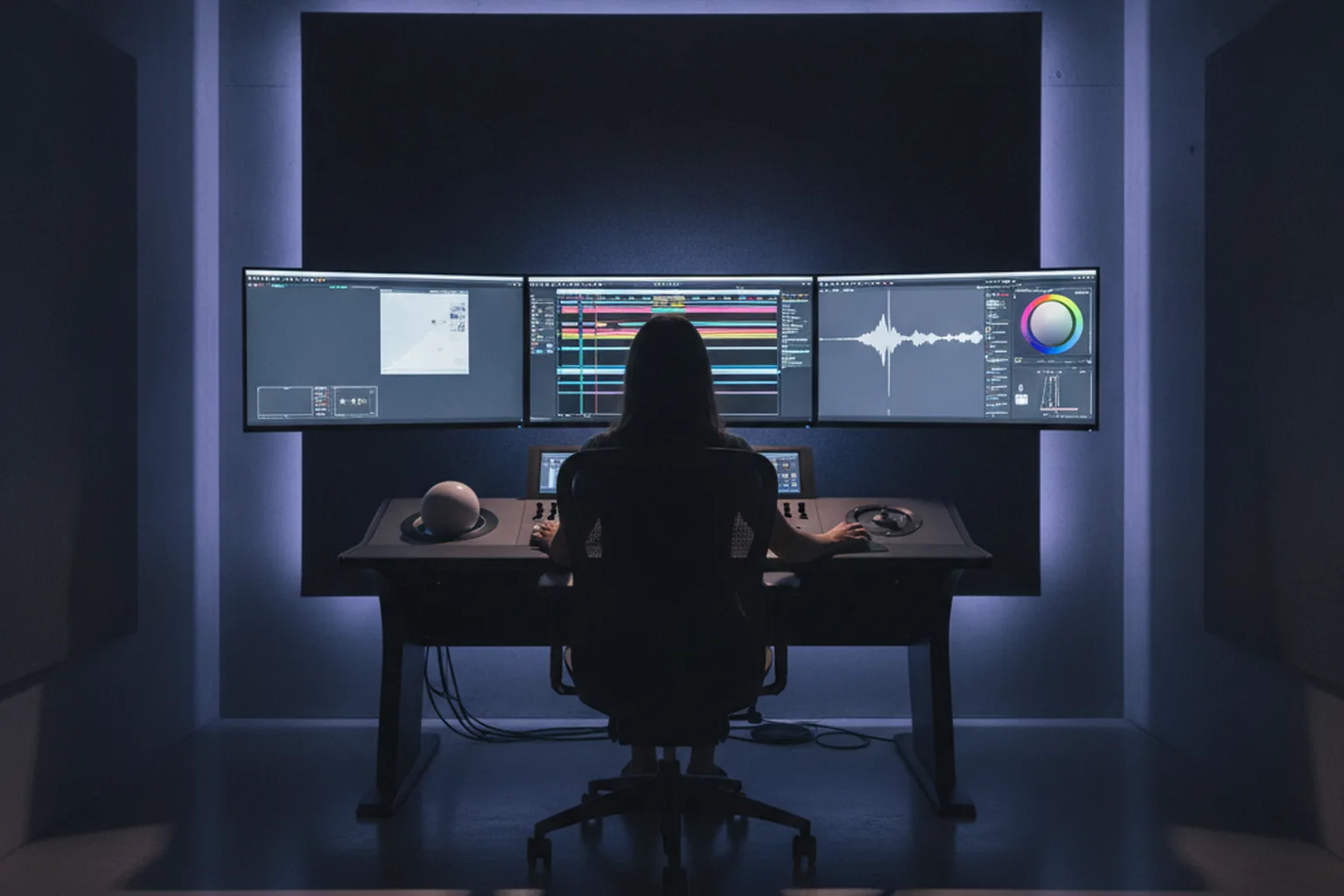
Quality of experience (QoE) is the metric that most directly drives retention in streaming, because viewers judge a service on how fast it starts and whether it stalls, not on catalog size alone. A platform can have the best content and still lose subscribers to slow startup and rebuffering, which is why QoE and low-latency streaming deserve first-class engineering attention rather than being treated as an afterthought. This is the differentiator most competitor guides skim over — and where a specialist media build pulls ahead.
Two numbers dominate the QoE conversation. Startup time — how long from pressing play to the first frame — should target under three seconds, because abandonment climbs sharply beyond that. Rebuffer ratio — the share of a session spent waiting rather than watching — must be kept near zero, since even brief stalls measurably reduce watch time and increase churn. Hitting these targets is an architecture problem: it depends on the right ABR ladder, edge caching close to viewers, fast manifests, and multi-CDN routing that avoids congested paths.
Getting there requires observability, not guesswork. Real-time QoE monitoring instruments the player to report startup time, rebuffering, bitrate, errors and completion per session, so engineering and operations teams can see problems as they happen — a CDN degrading in one region, a device family failing to play a codec — and route around them. For live and interactive experiences, LL-HLS and tuned encoding keep latency low enough that a goal or a live reaction reaches viewers close to real time. In practice, QoE observability is what turns streaming from best-effort into an engineered, measurable product.
U.S. compliance & security for media platforms
Media platforms must be built to a stack of content-security and privacy obligations, and getting them wrong risks piracy losses, class-action lawsuits and lost licensing deals — not just a failed audit. Because media software handles both valuable licensed content and sensitive viewing data, security and compliance are first-class engineering concerns designed into the data model and player from the start. The table below summarizes what matters most for U.S. platforms, with a GDPR note for EU viewers, and the subsections explain how the pieces fit.
| Standard / area | Applies to | Why it matters |
|---|---|---|
| DRM & anti-piracy | Licensed content | Widevine, FairPlay, PlayReady plus watermarking protect content and licensing deals |
| VPPA | Viewer privacy | Restricts sharing video-watching data; frequent source of class actions |
| CCPA / CPRA | Consumer data (California) | Data-rights, disclosure and opt-out obligations |
| COPPA | Children under 13 | Special rules for kids' content and data collection |
| CVAA | Accessibility | Captioning and accessible video experiences |
| GDPR | EU viewers | Consent, data rights and transfer rules for European audiences |
DRM, watermarking and anti-piracy
DRM is the foundation of content security in media software, and most platforms must support three systems — Google Widevine, Apple FairPlay and Microsoft PlayReady — because each covers a different set of devices and browsers. DRM encrypts the content and licenses playback per device, while forensic watermarking embeds an invisible per-session identifier that lets rights holders trace a leak back to its source, and anti-piracy monitoring hunts for stolen streams. Studios increasingly make robust DRM and watermarking a contractual condition of licensing premium content, so getting this layer right is often what unlocks the catalog itself.
VPPA, CCPA/CPRA and COPPA
Viewer privacy is the compliance area most likely to generate litigation in 2026. The Video Privacy Protection Act (VPPA) restricts disclosing what a person watches, and a wave of lawsuits has targeted platforms whose analytics or advertising pixels leaked viewing history to third parties — making careful, consent-based event tracking a design requirement, not an afterthought. The CCPA as amended by the CPRA governs California consumers' data rights and opt-outs, and COPPA imposes strict rules on any service directed at or knowingly serving children under 13. The safe pattern is to treat viewing data as sensitive by default, build consent and opt-out into the data pipeline, and keep kids' experiences walled off with their own data rules.
CVAA accessibility and GDPR for EU viewers
Accessibility and cross-border privacy round out the obligations. The Twenty-First Century Communications and Video Accessibility Act (CVAA) requires accessible video experiences, including accurate captioning and support for assistive technology — which also improves discovery and reach. Any platform serving EU viewers must additionally meet GDPR, with lawful-basis consent, data-subject rights and careful handling of international data transfers. Designing accessibility and consent into the player and data model early is far cheaper than retrofitting them under legal pressure, and both intersect with the secure-by-design practices any serious media build should already follow.
How much does media software development cost in 2026?
Media software development costs roughly $25,000 for a lean VOD MVP to $1.5 million or more for an enterprise OTT platform in 2026, with content delivery (encoding, egress and CDN), DRM licensing and ongoing operations — not the feature list — driving the number. The table below gives 2026 planning ranges by platform complexity; treat every figure as a scoping starting point rather than a quote. These ranges are synthesized from published 2026 media and streaming cost analyses and are consistent with what we see in delivery.
Cost by platform complexity
| Platform complexity | Typical 2026 cost | Timeline |
|---|---|---|
| Lean MVP (single-platform VOD, basic auth) | $25,000–$70,000 | 6–10 weeks |
| Standard V1 (multi-device streaming + subscriptions) | $60,000–$150,000 | 12–20 weeks |
| Mid-complexity OTT (DRM, recs, analytics) | $200,000–$600,000 | 20–28 weeks |
| Enterprise OTT (multi-CDN, AI, global scale) | $600,000–$1,500,000+ | 28–40 weeks |
| Large-scale global platform | $2,000,000+ | 15–30 months |
What drives the cost — and the hidden ones
The feature list is rarely the biggest cost line; delivery and operations are. The main build drivers are the number of client platforms (each TV, mobile and console app adds work), DRM and content-security depth, the sophistication of recommendations and monetization, and global scale. But the costs that surprise teams are the running ones: encoding, egress and CDN bandwidth scale directly with viewership and can dwarf the build over time; DRM licensing carries per-stream or platform fees; and ongoing operations — QoE monitoring, catalog and metadata work, security updates and 24/7 reliability for live — are continuous. Plan for annual maintenance and operations that can rival or exceed the initial build for high-traffic platforms. For broader benchmarks across software types and how team location moves the number, see our guide to custom software development cost in 2026. The DRM market alone reaches about USD 4.75 billion in 2026, rising to USD 9.56 billion by 2030, per The Business Research Company (2026) — a sign of how central content security has become to the cost base.
Build vs buy: custom platform vs managed video APIs
The right choice between a custom platform and managed video APIs depends on how much streaming is your differentiator and how unusual your catalog, rights and monetization are — and for many media companies the answer is a hybrid. Managed video APIs and platforms package transcoding, storage, DRM and CDN behind an API and win on speed and lower upfront cost; custom software wins on exact fit, data ownership, control of the viewer experience and long-run economics. The table below scores each approach on the factors that decide it.
| Factor | Custom build | Managed video API / platform |
|---|---|---|
| Upfront cost | Higher ($200K–$1.5M+) | Lower; usage/subscription pricing |
| Time-to-launch | Slower; months to build | Fast; integrate and go |
| Fit & differentiation | Exact — own the viewer experience | Constrained to the vendor's product |
| Data ownership | Full ownership of audience data | Shared with or limited by the vendor |
| Economics at scale | Better once traffic is high | Per-usage fees grow with viewership |
| Control & lock-in | You own the roadmap and IP | Vendor controls roadmap; lock-in risk |
| Best for | Differentiated experience, scale, data | Fast launch, commodity VOD, early stage |
As a rule of thumb, buy for a fast launch and commodity delivery — a managed API is the sensible way to ship a VOD product quickly — and build where personalization, monetization, data ownership or quality of experience create competitive advantage. Many media companies run a hybrid: a managed API for commodity delivery early, then custom modules where their catalog, audience or business model is genuinely different. The full decision framework, including how to keep a managed core from becoming lock-in, is in our guide to enterprise software build vs buy.
How to choose a media & entertainment software development company
Choose a media and entertainment software development company on proven media-workflow expertise, a track record of scalable and secure streaming architecture, DRM and compliance experience, and a real quality-of-experience and observability practice — not on price or generic development skill. Media is a specialist discipline: a team that ships clean web apps but has never handled transcoding, multi-CDN delivery, DRM integration or sub-3-second startup will stall exactly where retention and licensing risk live. Before that, know the common mistakes to avoid — underestimating delivery scale, ignoring latency and rebuffering, letting rights and metadata fragment across systems, and losing control of encoding and CDN costs — because they are what a good partner is hired to prevent. Use the checklist below when evaluating a media software development company or its services.
- Media-workflow expertise. Ask for references in OTT, VOD or live streaming, and confirm the team can talk fluently about transcoding, ABR, packaging, DAM and metadata — not just cite the acronyms.
- Scalable, secure architecture. Look for a demonstrated data-plane/control-plane split, microservices at scale, and multi-CDN delivery that has handled real concurrency, not slideware.
- DRM & compliance experience. Insist on hands-on Widevine/FairPlay/PlayReady integration plus working knowledge of VPPA, CCPA/CPRA, COPPA, CVAA and GDPR.
- QoE & observability practice. Confirm the partner instruments and monitors startup time, rebuffer ratio and playback health in production — and acts on it — rather than shipping and hoping.
- References & delivery track record. Prefer a partner that scopes a paid discovery, ships in phases and stays for continuous operations over one that disappears at launch.
On process, a serious engagement follows a disciplined SDLC — discovery and architecture, design, iterative development and QA, then launch and continuous support — with delivery scale, DRM and QoE scoped during discovery rather than discovered mid-build. For custom media and entertainment software development, the safest first step is that paid discovery covering the integration and delivery audit, the security and compliance mapping and the streaming architecture before committing to the full build. A serious enterprise software development partner will insist on that groundwork, because in media it is what separates a platform that scales and retains viewers from one that buffers and leaks.
FAQ
What is media software development?
Media software development is the custom design, engineering and integration of the software systems that studios, streaming and OTT platforms, broadcasters and publishers use to ingest, manage, protect, deliver and monetize video and audio content at scale. It spans OTT and video-on-demand (VOD) apps, digital asset management (DAM) and media asset management (MAM), content management, digital rights management (DRM) and anti-piracy, ad insertion and subscription monetization, recommendation and personalization engines, and audience analytics. What sets it apart from generic app development is that it handles very large files, real-time low-latency delivery to millions of concurrent viewers, and the format and rights complexity of licensed content, so streaming architecture, transcoding, CDN delivery and DRM are engineered in from day one rather than added later.
How much does it cost to build a media or streaming platform in 2026?
In 2026, a media or streaming platform typically ranges from about $25,000 for a lean single-platform VOD MVP to $1.5 million or more for an enterprise OTT platform with multi-CDN, AI and global scale, with encoding, egress and CDN, DRM licensing and ongoing operations driving the number more than the feature list. A rough scope ladder is: a lean MVP at $25,000–$70,000 over 6–10 weeks; a standard multi-device streaming V1 with subscriptions at $60,000–$150,000 over 12–20 weeks; a mid-complexity OTT with DRM, recommendations and analytics at $200,000–$600,000 over 20–28 weeks; and an enterprise OTT at $600,000–$1.5M+ over 28–40 weeks. The largest ongoing costs are content delivery (encoding, egress and CDN), DRM licensing and continuous operations, so total cost of ownership matters more than the build price alone.
What types of media and entertainment software can be built?
Media and entertainment software covers around ten core categories. OTT and streaming apps deliver video across smart TVs, mobile, web and consoles. VOD and live-streaming platforms serve on-demand and real-time events. Digital asset management (DAM) and media asset management (MAM) organize and version large media libraries. Content management systems (CMS) publish editorial and metadata. DRM and content-security systems protect licensed content. Monetization and AdTech platforms run SVOD, AVOD and FAST models with server-side ad insertion. Audience analytics measures engagement and quality of experience. AR/VR and interactive tools build immersive experiences. Social and audience-engagement features drive community. Event and ticketing systems handle live entertainment. Most operators build or integrate several of these at once around a shared content and delivery backbone.
Build vs buy — should I use a managed video API or custom development?
The right answer depends on how much streaming is your differentiator and how unusual your catalog, rights and monetization model are. Managed video APIs and platforms win on speed and lower upfront cost and are the sensible default for standard VOD or a fast launch, because they package transcoding, storage, DRM and CDN behind an API. Custom media software wins on exact fit, deep integration with your existing systems, full control over the viewer experience and data, and long-run economics at scale, but it costs more upfront and takes longer. Many media companies run a hybrid: use a managed API for commodity delivery early, then build custom where personalization, monetization or quality of experience create competitive advantage. As a rule of thumb, buy for a fast launch and commodity delivery, and build where control, data ownership and differentiation matter.
What compliance rules apply to U.S. media and streaming apps? (VPPA, CCPA, COPPA, CVAA)
U.S. media and streaming apps face a stack of privacy, accessibility and content-security obligations. The Video Privacy Protection Act (VPPA) restricts sharing viewers' video-watching data and is a frequent source of class-action lawsuits when tracking pixels leak viewing history. The California Consumer Privacy Act as amended by the CPRA (CCPA/CPRA) governs consumer data rights and opt-outs. The Children's Online Privacy Protection Act (COPPA) applies to platforms directed at or knowingly serving children under 13. The Twenty-First Century Communications and Video Accessibility Act (CVAA) requires captioning and accessible video experiences. Platforms serving EU viewers must also meet GDPR. On top of privacy, DRM (Widevine, FairPlay, PlayReady), forensic watermarking and anti-piracy protect licensed content. These obligations should be designed into the data model and player from the start, not retrofitted.
How do I choose a media software development company?
Choose a media software development company on proven media-workflow expertise, a track record of scalable and secure streaming architecture, DRM and compliance experience, and a quality-of-experience and observability practice, not on price or generic development skill. Media and entertainment is a specialist discipline: a team that ships clean web apps but has never handled transcoding, multi-CDN delivery, DRM integration or sub-3-second startup will stall exactly where retention and licensing risk live. Ask for references in OTT, VOD or live streaming, confirm hands-on experience with HLS, DASH, ABR, codecs and DRM, and insist on a partner that scopes a paid discovery, ships in phases and measures QoE in production rather than one that disappears at launch.
Which streaming protocol and codec should I use in 2026?
For most 2026 media platforms, HLS and MPEG-DASH remain the default adaptive-streaming protocols, with Low-Latency HLS (LL-HLS) for live and interactive use cases that need sub-second-class latency. On codecs, H.264/AVC stays the universal-compatibility baseline, HEVC/H.265 improves compression for 4K and HDR where devices support it, and AV1 delivers the best compression and royalty-free licensing for bandwidth-sensitive, high-scale delivery as device support matures. Most platforms encode multiple renditions and let adaptive bitrate (ABR) pick the best stream per device and network. The practical answer is to package HLS and DASH, offer H.264 for reach plus HEVC or AV1 for efficiency, and choose based on your audience's devices, quality targets and CDN egress costs rather than picking a single winner.
Last updated 22 September 2026. Cost figures are 2026 market planning ranges synthesized from published media and streaming software cost analyses (2026) and YuSMP delivery experience; actual costs depend on scope, platform count, delivery scale and compliance requirements. Market-size figures (video streaming software ~USD 13.8B in 2026 with media & entertainment ~48% share, per MarketsandMarkets; OTT ~USD 264.85B in 2026, per The Business Research Company; DRM ~USD 4.75B in 2026, per The Business Research Company) are drawn from 2026 industry market reports. All figures are planning references, not quotes.