
What is SaaS software development?
SaaS software development is the practice of building software that is delivered over the internet as a subscription rather than installed per machine. One cloud codebase serves many customers at once — usually on a multi-tenant architecture — while the provider runs hosting, updates, security and scaling centrally. Because the product is continuously operated for a whole customer base, billing, tenancy and uptime are part of the build, not afterthoughts.
SaaS software development means building software as a service: an application that lives in the cloud, that customers reach through a browser or API, and that they pay for by subscription instead of a one-off licence. The head term people search — SaaS software development — describes this whole discipline of designing, building, shipping and operating a subscription product, not a single feature or framework.
What separates it from ordinary custom software is that a SaaS product is never really "finished" — it is operated. One running instance serves your entire customer base, so the work includes tenancy, billing, uptime, security and a steady release cadence from day one. That operational reality is exactly why SaaS sits at the centre of SaaS product engineering: someone has to own the product end to end — architecture, delivery and the roadmap after launch — rather than hand over a codebase and walk away. Treat a SaaS build as a one-time project and it stalls; treat it as a product you run and it compounds.
The prize is a business model with attractive economics. The global SaaS market is projected at roughly $375–466 billion in 2026, and there are now more than 33,200 SaaS companies worldwide — about 17,000 of them in the United States — up around 32 percent since 2021. That scale is why "how do I build a SaaS product" has become one of the most common questions founders bring to an engineering partner, and it is what the rest of this guide answers.
Why companies build SaaS in 2026
Companies build SaaS because it turns software into a recurring-revenue business that scales cheaply to each new customer. Instead of selling a licence once, a SaaS provider earns predictable subscription income, ships improvements to everyone at once, and grows margin as the same platform serves more tenants — which is why software as a service has become the default delivery model for new products.
The market backs this up. SaaS is a $375–466 billion category in 2026 and still growing, and the fastest-growing slice is vertical SaaS — software built for one industry — which now represents around $157 billion in revenue, roughly 35 percent of total SaaS spending, and is outpacing horizontal tools by about two to one. For a founder, that means a focused product for a specific niche is often a stronger bet than a general-purpose tool competing with incumbents.
The trade-off is that SaaS front-loads engineering and operating cost. You are not just building features; you are committing to run infrastructure, secure customer data, meet compliance obligations and support users for years. That is a good deal when the product earns recurring revenue — but only if the build is scoped realistically, which is where an honest read on cost and timeline (covered below) matters more than optimism.
Types of SaaS products
SaaS products fall into a few recognisable types, and knowing which one you are building shapes almost every later decision about features, pricing and go-to-market. The main axes are the audience (business or consumer) and the breadth (one industry or many).
- Horizontal SaaS. Tools that serve many industries — project management, CRM, analytics, communication. Large addressable market, but crowded and competing on breadth.
- Vertical SaaS. Software built for one industry's workflow — clinics, law firms, logistics operators, dealerships. Smaller market but deeper fit, higher willingness to pay, and the fastest-growing segment in 2026.
- B2B SaaS. Sold to businesses, usually with roles, permissions, admin controls, SSO and procurement or security review built in. Longer sales cycles, higher contract values.
- B2C SaaS. Sold to individuals, where self-serve onboarding, speed and price sensitivity dominate and the product has to prove value in minutes.
- AI-native SaaS. Products designed around AI at the core — not a bolt-on feature — where the model drives the workflow. AI-native startups are setting the pace for new categories in 2026, at the cost of extra data and model-operations work.
Most real products are a blend — a vertical B2B tool with an AI feature, say — but naming the dominant type early keeps the roadmap honest. A vertical B2B SaaS needs deep workflow and compliance; a B2C tool needs frictionless onboarding. Trying to be all of them at once is the most common way an MVP loses focus.
What features does a SaaS product need?
Every SaaS product needs a core set of platform features beyond its headline functionality, and underestimating them is the most common reason a "simple" SaaS build runs over budget. These are the parts users rarely see on a landing page but always expect to work.
| Feature area | Why it's non-negotiable in a SaaS |
|---|---|
| Authentication & roles | Sign-up, login, password reset, SSO for B2B, and role-based permissions per tenant |
| Multi-tenancy | Clean data isolation between customers on shared infrastructure |
| Billing & subscriptions | Plans, trials, upgrades, proration, invoices and dunning — often via a payments provider |
| Admin & account management | A place for customers to manage users, settings and their own data |
| Onboarding | Getting a new user to first value fast — the single biggest driver of activation and retention |
| Integrations & API | Connecting to the tools customers already use, and often a public API |
| Security & compliance | Encryption, audit logs, backups and the controls behind SOC 2, GDPR or HIPAA |
| Analytics & monitoring | Product usage data for you and uptime/error monitoring for the platform |
The lesson from that list is that the cost drivers are roles, billing, integrations and compliance — not the number of screens. Getting a new user to value quickly deserves special attention, because activation decides whether a trial becomes a paying customer; our guide to B2B SaaS onboarding patterns goes into how the best teams design it. Everything else on the list is table stakes users assume before they will trust you with their data.
SaaS architecture and multi-tenancy
The defining architectural decision in SaaS is multi-tenancy: how one running system serves many customers while keeping their data separate. Get it right and each new customer costs almost nothing to add; get it wrong and you are re-platforming a live product under load, which is one of the most expensive fixes in software.
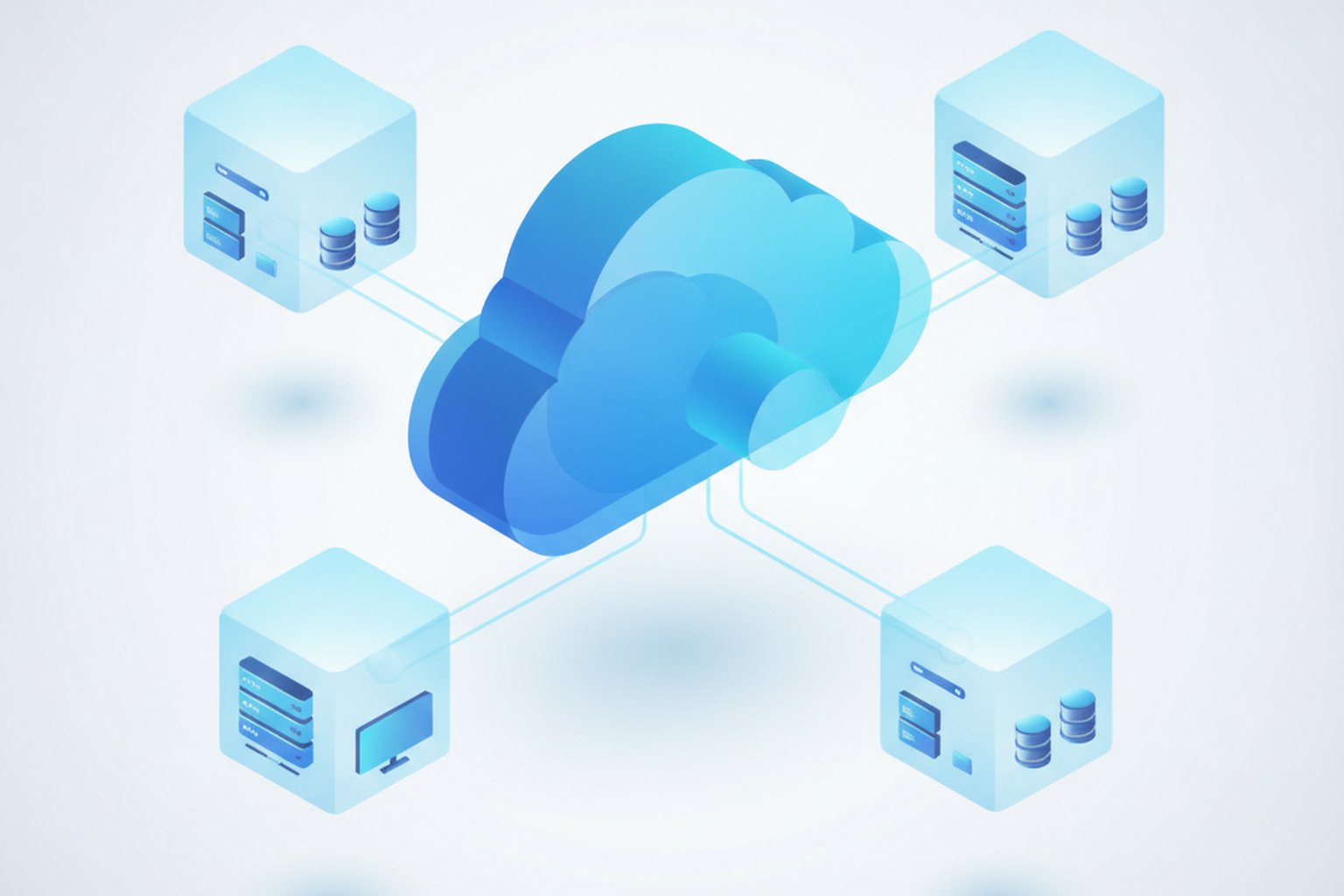
There are three broad tenancy models, and the right one depends on your customers' size and compliance needs:
- Shared everything (pooled). All tenants share the same database and schema, separated by a tenant ID. Cheapest to run and simplest to update; the default for most B2C and SMB products.
- Shared app, separate schema or database. Tenants share the application but get their own schema or database. Stronger isolation for larger or regulated customers, at higher operating cost.
- Single-tenant (siloed). A dedicated instance per customer. Maximum isolation and control — sometimes required in enterprise or healthcare — but the most expensive to run and update at scale.
Two facts should anchor the decision. First, multi-tenancy typically adds 20 to 40 percent to backend development effort compared with a single-tenant app, so it is a real, budgeted cost — not free. Second, the tenancy model is cheap to choose before you build and ruinous to change after launch, because it touches data, security and billing all at once. Pick it deliberately at the start; if you want the engineering detail, our walkthrough on how to build a multi-tenant SaaS covers the patterns in depth.
The SaaS tech stack in 2026
There is no single correct SaaS tech stack, but in 2026 a small set of technologies has become the safe, well-supported default because they combine strong tooling with the largest talent pools. Choosing mainstream tools is not a lack of ambition — it is what keeps a SaaS maintainable and hireable for years.
| Layer | Common 2026 choices | Why |
|---|---|---|
| Frontend | React (~45% adoption) with Next.js, Tailwind CSS | Largest ecosystem and talent pool; server rendering for speed and SEO |
| Backend | Node.js or Python; Go for high-throughput services | Fast to build, huge library support, easy to hire for |
| Database | PostgreSQL (~56% adoption), with Redis for caching | The most-used database among professional developers; reliable and multi-tenant-friendly |
| Cloud & hosting | AWS, Google Cloud or Azure; containers and managed services | Scale on demand without running your own hardware |
| Payments | A subscription-billing provider | Avoid rebuilding invoicing, tax and dunning from scratch |
| AI layer (if needed) | Hosted model APIs or open models plus a vector store | Add intelligence without training models from scratch |
The through-line is boring-on-purpose: React, Node or Python, PostgreSQL and a major cloud are popular precisely because they are easy to hire for and well-documented, which lowers long-term risk. Reserve novelty for the part of the stack that is genuinely your product's edge — usually the AI or domain logic — and keep the foundations conventional so a new engineer can be productive in days, not months.
How to build a SaaS product, step by step
Building a SaaS product follows a repeatable path from idea to launch and then into continuous operation. The single biggest predictor of success is resisting the urge to build everything at once: ship a focused first version, learn from real users, then expand. Here is the sequence most successful teams follow.

- Discovery and validation. Define the problem, the segment and the one job your product does better than the alternatives. Confirm there is real demand before writing code — most failed SaaS never had a market, not a codebase problem.
- Scope the MVP. Cut to the smallest product that delivers real value to one segment. Decide the tenancy model and the must-have platform features now, because they are expensive to retrofit. A tight MVP scope is where budgets are won or lost — our MVP cost guide for 2026 shows how to size it.
- Design and architecture. Design the user flows and the system: multi-tenancy, data model, auth, billing and the API. This is the moment to make the decisions that are hard to reverse.
- Build in iterations. Develop in short cycles with continuous integration, shipping working software you can demo. Estimate honestly and re-forecast as you learn — see our software project estimation guide for how.
- Test, secure and harden. Automated tests, security review, and the controls behind SOC 2, GDPR or HIPAA if your market needs them. For B2B, buyers will ask — our note on SOC 2 Type II for SaaS startups explains what that involves.
- Launch and operate. Deploy, monitor uptime and errors, onboard real customers and support them. In SaaS, launch is the start of the work, not the end.
- Measure and iterate. Track activation, retention and churn, and let real usage drive the roadmap. The product improves continuously for the whole customer base.
Notice that only steps three and four are "building" in the traditional sense; the rest are product and operating decisions. That balance is exactly why SaaS rewards teams who think like product owners, not just coders — and why the tenancy, billing and onboarding choices made early outlast any individual feature.
How much does SaaS software development cost?
In 2026, SaaS software development costs roughly $15,000 for a bare prototype and $280,000 to $600,000 or more for an enterprise-grade platform, with most startups spending $40,000 to $150,000 on their first production release. The spread is wide because cost is driven by roles, billing, integrations and compliance — not by how many features you list.
| Stage | Typical 2026 cost | Typical timeline |
|---|---|---|
| Validation prototype | from ~$15,000 | weeks |
| Lean MVP | ~$75,000–$140,000 | 3–6 months |
| Market-ready product | ~$140,000–$280,000 | 6–9 months |
| Enterprise-grade platform | ~$280,000–$600,000+ | 9–12+ months |
Two adjustments matter in 2026. Multi-tenancy adds 20 to 40 percent to backend effort, and adding AI or machine learning raises the total by roughly 15 to 30 percent because of data pipelines, model licensing or training, and ongoing monitoring. FinTech and healthcare products also run longer and cost more because compliance and security testing extend the timeline. Treat these figures as planning references, not quotes — the honest way to a real number is a scoped estimate against your actual feature set, tenancy model and compliance needs.
Pricing and monetisation
How you price a SaaS is a product decision, not just a finance one, and in 2026 it is increasingly built into the product itself. Pure per-seat subscriptions are declining, especially for AI-heavy products where cost scales with usage rather than headcount — around 85 percent of SaaS companies now use some usage-based pricing element.
The common models are per-seat (simple, but weakens as AI features make "seats" a poor proxy for value), usage-based (aligns price with consumption — API calls, events, compute), tiered (good/better/best plans that segment customers), and hybrid (a base fee plus usage or value-linked components), which is where most 2026 SaaS is heading. The right choice depends on what your customers actually value and what scales with their success. Because pricing shapes billing, metering and the data you must capture from day one, it belongs in the architecture conversation, not a launch-week afterthought — our deep dive on SaaS pricing models in 2026 maps the options and the trade-offs.
How to choose a SaaS development company
Choose a SaaS software development company on proven SaaS experience specifically, not general software work — building and, crucially, operating a multi-tenant subscription product is a distinct skill. The strongest partners talk about your tenancy model, billing and time-to-first-value early, because those product decisions shape the build far more than the choice of language or framework.
When you evaluate SaaS software development services, look for a few concrete signals:
- Shipped and operated SaaS. Ask to see multi-tenant products they built and ran in production, not just prototypes handed off.
- Platform fluency. Clear answers on multi-tenancy, billing, security and compliance (SOC 2, GDPR, HIPAA) relevant to your market.
- Product thinking. They push back on scope, focus the MVP and care about activation and retention — not just closing tickets.
- Run-it capability. They can operate, monitor and evolve the product after launch, because SaaS is continuous.
- Clean commercials. A written scope, transparent status you can see for yourself, and code and IP you own outright.
Whether you build in-house or with a partner, keep the product ownership — the "what and why" — firmly on your side while the partner supplies the delivery and engineering. For larger platforms that must integrate with finance, operations and external systems, that governance needs building in from day one, which is where an enterprise software development practice earns its place. A good partner welcomes those non-negotiables, because they are how trust is built and kept.
FAQ
What is SaaS software development?
SaaS software development is the process of designing, building and running software that is delivered over the internet as a subscription service rather than installed on each customer's own machines. One codebase runs in the cloud and serves many customers at once, usually on a multi-tenant architecture, and the provider handles hosting, updates, security and scaling centrally. It differs from ordinary custom software because the product is continuously operated and improved for a whole customer base, so billing, tenancy, uptime and a steady release cadence are part of the build, not afterthoughts.
How much does SaaS software development cost in 2026?
In 2026 a validation prototype starts around $15,000, a lean MVP runs roughly $75,000 to $140,000, a market-ready product runs about $140,000 to $280,000, and an enterprise-grade platform with single sign-on, audit trails and compliance runs $280,000 to $600,000 or more. Most startups spend $40,000 to $150,000 on their first production release. The real cost drivers are user roles, billing, integrations and compliance rather than feature count, and adding AI or machine learning typically raises the total by 15 to 30 percent.
How long does it take to build a SaaS product?
A SaaS MVP typically takes three to six months to build, while a full-scale platform with integrations, billing and multi-tenancy usually takes six to twelve months. FinTech and healthcare SaaS often take longer because compliance and security testing extend the timeline. The fastest route to market is to ship a focused MVP that solves one problem for one segment, then expand once real users validate the direction.
What is the best tech stack for SaaS in 2026?
There is no single best stack, but a common, well-supported 2026 choice is React with Next.js on the frontend, Node.js or Python on the backend, PostgreSQL as the primary database, and a major cloud (AWS, Google Cloud or Azure) with containers and managed services for hosting. React leads frontend adoption at around 45 percent and PostgreSQL is the most-used database among professional developers at around 56 percent, so the stack is chosen as much for the size of the talent pool and ecosystem as for raw features.
What is multi-tenant architecture in SaaS?
Multi-tenancy is an architecture where a single running instance of the software serves many customers (tenants) at once, keeping each tenant's data isolated while sharing the underlying application and infrastructure. It is the standard model for SaaS because it scales cheaply per new customer and lets the provider update everyone at once. It costs more upfront — typically 20 to 40 percent more backend effort than a single-tenant build — and the tenancy model is cheap to decide early but expensive to change after launch, so it should be settled before the first line of production code.
How do I choose a SaaS software development company?
Choose a SaaS software development company on proven SaaS experience, not general software work: ask to see multi-tenant products they have shipped and operated, how they handle billing, security and compliance, and whether they can run the product after launch, not just build it. Insist on a written scope, transparent status you can see for yourself, and code and IP you own outright. The strongest signal is a partner who talks about your tenancy model, pricing and time-to-first-value early, because those product decisions shape the build far more than the choice of programming language.
Last updated 3 August 2026. Market-size, cost, timeline and technology-adoption figures reflect widely reported 2026 industry sources and are directional rather than exact. Treat every benchmark here as a planning reference, not a quote — the right scope, architecture and cost for your product depend on its segment, tenancy model and compliance needs.