
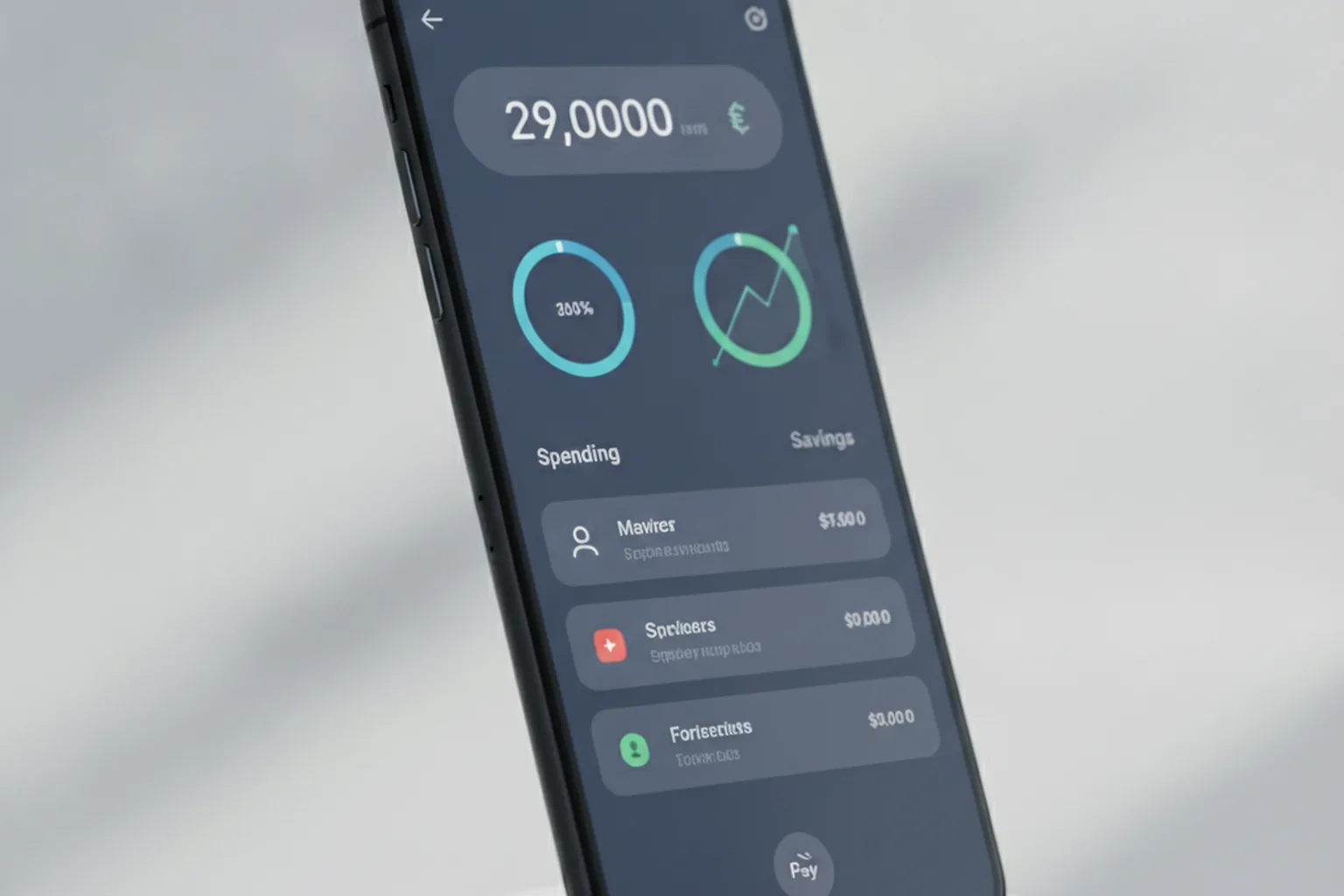
Why banking app quotes range from $8,000 to $1 million
The spread is not vendor greed. It reflects four different scopes sold under one name.
The market these quotes compete for keeps growing regardless of who wins the build: global mobile banking platform revenue is projected to rise from $1.76 billion in 2026 to $4.86 billion by 2034, a 13.6% CAGR (Fortune Business Insights). That growth is exactly why the price spread below matters — more capital chasing the category means more vendors quoting radically different scopes as if they were the same product.
| Price level | What you get | Who it suits | The catch |
|---|---|---|---|
| $8,000 – $30,000 | A UI shell: screens, navigation, maybe a mock API. No ledger, no KYC, no real money movement | Investor demo, design validation | It is not a banking product and cannot become one without a rebuild |
| $120,000 – $250,000 | MVP on rented rails: BaaS provider supplies accounts, cards and KYC; you build the app and orchestration layer | Fintech launching fast on someone else’s licence | Provider fees, limited product control, migration pain later |
| $350,000 – $800,000 | Launch-ready product: own backend and ledger orchestration, direct integrations with card processor, KYC vendor and payment rails, compliance tooling, admin back office | Banks modernising, EMIs, funded neobanks | 8–12 months before first customer |
| $1M+ | Multi-market platform: several jurisdictions, localisation, multiple rails, regulatory reporting per market | Scaling institutions | Complexity compounds with each market |
The dividing line is not screen count. It is how much of the financial infrastructure you own versus rent. A $30,000 quote and a $500,000 quote can show identical mockups; what differs is everything behind them.
When comparing proposals, ask one question that separates the levels instantly: which ledger holds the balance, and who is liable for it? If the vendor cannot answer, they are quoting on the shell.
Cost by development stage
Regardless of which price level you land in, the budget does not split evenly across the project. On a launch-ready build, backend orchestration and integrations reliably claim the largest share — which lines up with the 20–30% figure for the mobile client noted below. Treat the ranges as a planning tool, not a quote: a BaaS-based MVP compresses design and integration time, while a multi-market platform pushes compliance and testing well past 15%.
| Stage | Typical share of budget | What drives it |
|---|---|---|
| Discovery & regulatory scoping | 8–12% | Licence model decision, target market analysis |
| UX/UI design | 10–15% | Compliance-safe onboarding flows, accessibility work done up front |
| Mobile app development (iOS + Android) | 20–25% | Native vs cross-platform choice, biometric and secure-storage work |
| Backend, orchestration & integrations | 30–40% | Number of integrations — KYC vendor, card processor, payment rails, core banking |
| QA, security testing & certification | 10–15% | Penetration testing, card scheme certification, remediation cycles |
| Launch & post-launch stabilization | 5–10% | Pilot rollout, monitoring, first-release bug fixes |
What you are actually building
A mobile banking app is the visible surface of a regulated financial system. The app itself is typically 20–30% of the engineering effort.
| Layer | What lives here |
|---|---|
| Mobile clients | iOS development and Android development apps, biometric auth, offline states |
| API gateway | Rate limiting, request signing, versioning |
| Orchestration services | Business logic, limits, product rules, idempotency |
| Ledger or core banking | Balances, postings, reconciliation |
| Payment rails | Card processor, ACH/SEPA/Faster Payments, instant rails |
| Compliance stack | KYC, AML screening, transaction monitoring, case management |
| Back office | Operations dashboards, manual review, dispute handling |
| Observability | Logging, audit trails, alerting, regulatory reporting |
Two related products get confused with this one. A digital wallet stores value or card credentials but does not hold regulated accounts. A fintech software development app solves one financial job such as lending or investing. A mobile banking app combines account holding, money movement and card issuance in one regulated product.
Types of mobile banking apps
“Mobile banking app” covers several distinct products with different regulatory paths and architectures. Knowing which one you are building before scoping prevents the most common vendor conversation mismatch — a retail-banking quote and a neobank quote are not comparable.
| Type | Core users | What is different in the build |
|---|---|---|
| Retail / direct banking app | Existing customers of a licensed bank | Integrates with a legacy core; the orchestration layer described in integrating with core banking is the dominant cost driver |
| Neobank / challenger app | Digitally-native consumers | Usually built on BaaS from day one; product differentiation has to happen in UX and features, not infrastructure |
| Corporate / business banking app | SMEs and enterprise finance teams | Multi-user roles, payment approval workflows, bulk and batch payments — features consumer apps do not need |
| Payment & digital wallet app | Users who need to move or store value, not hold a regulated account | Lighter compliance scope; often the first step before adding full account-holding features |
| Investment / wealth banking app | Retail investors and wealth clients | Adds brokerage integrations, market data feeds and suitability checks on top of the banking stack |
| Embedded banking module | Customers of a non-financial product (marketplace, gig platform, SaaS) | White-label BaaS surfaced inside an existing app; the host product owns UX, the provider owns compliance |
Four ways to launch
Most cost overruns trace back to picking the wrong launch model, not to bad engineering.
| Model | Time to market | Control | Best for | Main risk |
|---|---|---|---|---|
| Build on your own licence | 12+ months | Full | Licensed banks and EMIs | Longest path, highest capital requirement |
| Banking-as-a-Service | 4–6 months | Limited by provider | Fintechs testing a market | Provider dependency; changes to their terms become your problem |
| Sponsor bank partnership (US) | 6–9 months | Shared | US fintechs without a charter | Sponsor’s risk appetite constrains your roadmap |
| White-label platform | 2–4 months | Minimal | Fast entry, standard product | Differentiation is hard; you compete on brand alone |
A pattern worth considering: launch on BaaS to validate the product, but design your orchestration layer so the provider sits behind an internal abstraction. Teams that call provider APIs directly from the app pay for that shortcut when they migrate. Teams that put a thin interface in between can swap rails without touching the client.

MVP scope that survives compliance review
An MVP in banking is not “the smallest thing we can ship.” It is the smallest thing a regulator will let you operate.
Non-negotiable in v1:
- Registration and strong authentication
- KYC onboarding with document and liveness checks
- Account opening tied to a real ledger entry
- Balance and transaction history in real time
- At least one money-out rail and one money-in rail
- Card issuance and basic controls, if cards are in the model
- Transaction alerts
- Audit logging and a back office that lets operations investigate anything
Safe to defer: Budgeting and analytics, savings goals, multi-currency, rewards, account aggregation, AI insights, family accounts, in-app chat.
The temptation is to build the differentiating features first because they are what the pitch deck promises. In practice, onboarding is where the product lives or dies: complex flows routinely lose more than half of applicants before account activation, and every percentage point recovered there is worth more than any feature added later.

The build process, step by step
Every launch model above runs through the same eight-step sequence — only the depth of each step changes with the model you pick.
- Discovery & regulatory scoping. Confirm the licence path (own licence, BaaS, sponsor bank) and the priority order of target markets before any architecture decision.
- Vendor & provider selection. Shortlist and start due diligence with the BaaS provider, KYC vendor, card processor and, in the US, a sponsor bank — these run on their own timelines, so start early.
- Architecture & compliance design. Design the ledger, the event pipeline and the Strong Customer Authentication flows as one piece — retrofitting any of them later is the most expensive mistake in this list.
- UX/UI design for compliance-safe flows. Onboarding, KYC capture and accessibility get designed together, since each affects how the others can work.
- Core development. Mobile clients, orchestration services and ledger integration are built in parallel against the provider sandboxes secured in step 2.
- Third-party integrations & certification. Wire up KYC, card issuing and payment rails, and start card scheme certification as soon as the integrations are stable, not after the app is feature-complete.
- Security testing & audit. Penetration testing against the OWASP Mobile Application Security Verification Standard, plus remediation of anything it finds.
- Pilot, regulatory sign-off & staged rollout. A limited pilot cohort validates the compliance stack under real usage before a full release.

Where the timeline actually goes
| Phase | Duration | What determines it |
|---|---|---|
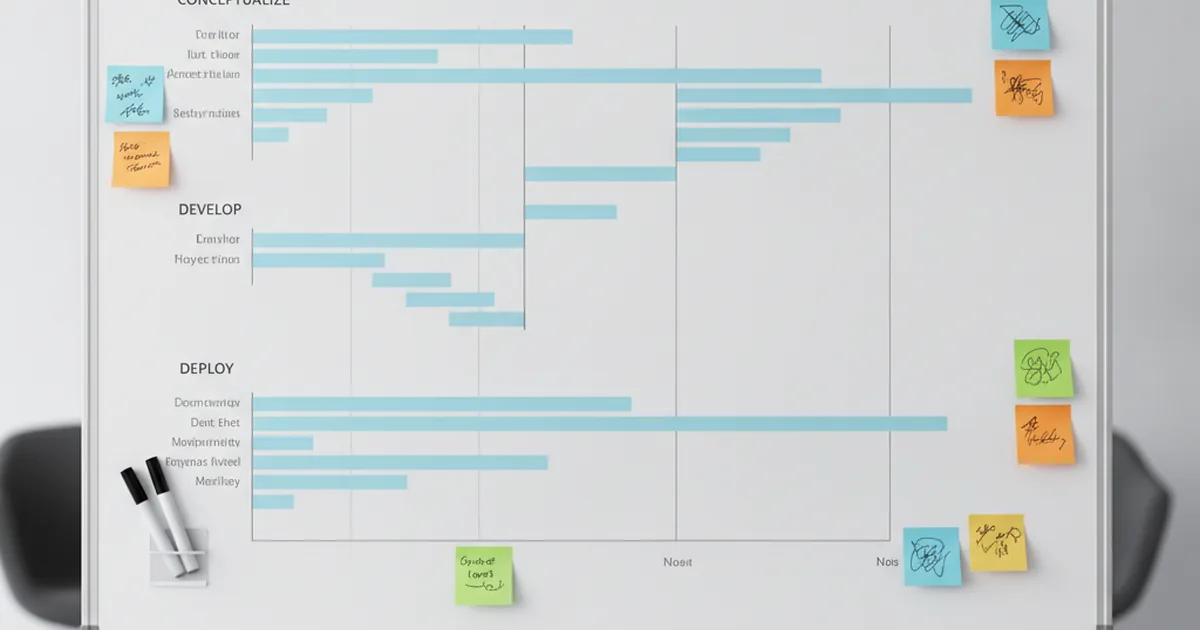
| Discovery and regulatory scoping | 3–6 weeks | Clarity on licence model and target market |
| Architecture and vendor selection | 4–6 weeks | Availability of provider sandboxes and contract negotiation |
| Core development | 12–20 weeks | Number of integrations, not number of screens |
| Integration and certification | 6–12 weeks | Card scheme certification, provider timelines |
| Security testing and audit | 3–5 weeks | Penetration test findings and remediation cycles |
| Pilot and rollout | 4–8 weeks | Regulator engagement, staged release |
Note the shape: roughly half the calendar sits in work you do not fully control. Card scheme certification, KYC vendor onboarding, sponsor bank due diligence and provider sandbox access run on someone else’s schedule. Projects slip because of those queues far more often than because of engineering.
Start vendor conversations during discovery, not after architecture is signed off. It is the single most effective schedule intervention available.
Compliance by jurisdiction
Every guide lists KYC, AML, PCI DSS and GDPR as one undifferentiated block. The obligations that actually shape your build differ substantially by market.
United States
There is no single federal banking app regime. What applies depends on your structure: a sponsor bank arrangement pulls you into the bank’s examination scope under FFIEC guidance, GLBA governs customer data handling, and money transmission may require state-level licensing unless you operate under a partner’s authority. BSA/AML obligations attach to the programme regardless of who holds the charter. Practical consequence: your sponsor’s compliance team becomes a stakeholder in your roadmap, with review cycles that need calendar time.
European Union
PSD2 shapes both authentication and access. Strong Customer Authentication requirements determine how your login and payment confirmation flows work — this is a design constraint, not a checkbox, and retrofitting it is expensive. GDPR governs personal data throughout. Open banking access rules affect aggregation features.
United Kingdom
Broadly aligned with EU authentication principles but administered separately under FCA supervision, with its own authorisation route and reporting expectations. Teams assuming EU compliance transfers automatically to the UK discover the gap during authorisation.
This section is general information, not legal advice. Confirm obligations with counsel licensed in your target market.

Mobile-specific security
Here is what most banking development guides miss. They cover MFA, encryption and biometrics — the checklist for any application — and stop. A banking client running on a device you do not control needs a further layer, benchmarked against the OWASP Mobile Application Security Verification Standard.
| Control | What it prevents |
|---|---|
| Certificate pinning | Interception of traffic through a compromised or attacker-supplied CA |
| Root and jailbreak detection | Execution on devices where OS-level protections are already defeated |
| Secure credential storage | Token extraction from device storage; use Keychain and Keystore, never local files or shared preferences |
| Anti-tampering and integrity checks | Repackaged clones of your app distributed outside the stores |
| Screen protection | Overlay attacks, screenshots and screen recording of sensitive views |
| Runtime application self-protection | Live instrumentation and hooking frameworks attaching to a running session |
Two further points teams underestimate. First, step-up authentication should be tied to risk, not to fixed rules: a new device attempting a first-time payee transfer deserves different friction from a routine balance check. Second, penetration testing on a banking client is a recurring cost, not a launch gate — budget for it at least annually and after significant releases.
Accessibility is now a banking requirement
Banking services fall within the scope of the European Accessibility Act, which has applied since 28 June 2025. Through 2026, enforcement has moved from preparation to action: national authorities have opened market surveillance cases, and in France a court ordered a major retailer to make both its website and its mobile app development accessible, with a deadline and daily penalties attached. Penalty ceilings vary widely by member state.
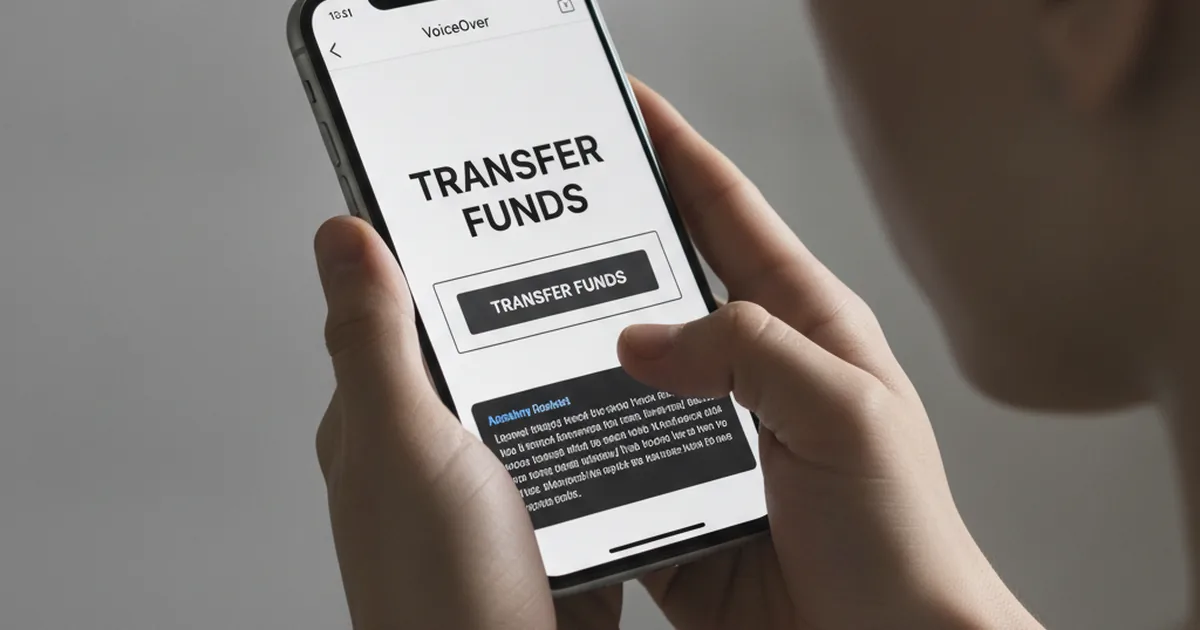
For a banking app sold into the EU, the practical implications are concrete: screen reader support in transaction flows, touch target sizes, text scaling without layout breakage, sufficient contrast on financial data, and authentication that does not depend solely on a gesture or a timed input. The technical baseline is EN 301 549, which references WCAG.
The cheapest moment to handle this is during design. Retrofitting accessibility into a shipped banking client, where every flow is regulated and change-controlled, costs several times more.
Integrating with core banking
If you are a bank rather than a startup, this section is where your budget lives.
Legacy cores were not designed for a mobile client expecting sub-second responses. Common realities: batch processing windows during which balances are stale, no event stream to subscribe to, limited or undocumented APIs, and hard concurrency limits. The work is not “connect to the core” — it is building an orchestration layer that presents a real-time experience over a system that is not real-time.
Three requirements that are cheap to design in and expensive to add later:
- Idempotency. Every money-moving request needs a client-generated key so a retry after a timeout cannot create a duplicate transfer. Mobile networks guarantee you will need this.
- Reconciliation. Your orchestration layer and the core will disagree at some point. Decide in advance which is authoritative and how discrepancies surface to operations.
- Graceful degradation. When the core is in a maintenance window, the app should degrade to read-only with a clear message rather than fail unpredictably.

What it costs to run after launch
| Cost line | Typical annual range |
|---|---|
| Engineering maintenance and platform updates | 15–25% of build cost |
| Cloud and infrastructure | Scales with transaction volume |
| Third-party fees | KYC per check, card processing, monitoring, messaging |
| Security testing and audit | Annual penetration test plus remediation |
| Compliance operations | Staffing for review queues and reporting |
Two lines surprise teams. Per-check KYC and per-transaction processing fees scale with growth, so unit economics need modelling before launch rather than after. And mobile platform updates are non-optional: app stores raise their minimum requirements annually, and an unmaintained banking client stops being installable by new users within roughly a year.

How to brief a vendor
Bring these to the first conversation and you will get comparable proposals instead of unusable ones:
- Your licence position — own licence, sponsor bank, BaaS provider, or undecided.
- Target markets, in priority order.
- Whether cards are in scope for v1.
- Which core or ledger holds balances, if one already exists.
- Expected first-year customer volume.
- Existing vendor relationships for KYC, processing or monitoring.
- Your internal capacity — do you have compliance and operations staff, or does the vendor supply them?
Ask every vendor to price the same scope and to show the split between mobile, backend, integrations and compliance work. Proposals that arrive as a single number cannot be compared to anything.

Recommended tech stack for 2026
Technology choices in banking carry long tails: whatever you select for the ledger and payment orchestration will still be running in seven years. The table below reflects what teams building on BaaS rails or their own licence are actually shipping in 2026, not what looks good on a pitch deck.
| Layer | Common choices | Why |
|---|---|---|
| Mobile (cross-platform) | Flutter, React Native | Single codebase compiling to native code; both support the biometric and secure enclave APIs banking requires |
| Mobile (native) | Swift (iOS), Kotlin (Android) | Maximum access to OS security APIs; preferred when hardware-backed attestation or UX parity with system apps matters |
| Backend / orchestration | Node.js, Java (Spring Boot), Go | Java for ledger-adjacent services where thread safety and audit trails are non-negotiable; Go for latency-critical payment paths; Node.js for high-concurrency API layers |
| Database | PostgreSQL, Oracle (enterprise) | ACID guarantees are required for double-entry accounting; NoSQL works for event logs and analytics but not as the ledger of record |
| Authentication | FIDO2 / WebAuthn, TOTP | Phishing-resistant by design; satisfies PSD2 SCA requirements without friction on step-up authentication flows |
| Card issuance & payments | Marqeta, Galileo, Stripe Treasury | Purpose-built card-issuing APIs reduce programme management complexity; direct processor relationships become cheaper at scale |
| KYC / AML | Onfido, Jumio, ComplyAdvantage | Accredited document and liveness check vendors reduce regulatory exposure; AML screening via API avoids building rules in-house |
| Cloud | AWS, GCP, Azure (or regulated cloud for EU) | Data residency and sovereignty requirements in some EU markets constrain provider choice; confirm before finalising architecture |
| Observability | Datadog, Grafana, ELK | Audit logs must be tamper-evident and retained for periods regulators specify — observability tooling is compliance infrastructure here, not just ops |
A note on low-code platforms: vendors such as OutSystems and Mendix market aggressively into banking and can reduce time to first screen. They rarely reduce compliance work or integration complexity, and migration costs if you outgrow them are high. Evaluate them against the same scope questions you would apply to a BaaS provider: what do you own versus rent, and what does migration cost?
2026 trends reshaping mobile banking development
Three shifts are large enough to affect architecture decisions today, not only roadmaps.
AI-powered personalisation and fraud detection
AI in banking apps splits into two distinct tracks. The visible one — spending insights, financial coaching, hyper-personalised home screens — is valuable but can be deferred. The invisible one — real-time fraud scoring on each transaction and anomaly detection on account behaviour — is increasingly a competitive baseline and a regulatory expectation in several markets. The invisible track requires a clean event stream and low-latency inference, which is an architecture constraint, not a feature team decision. Build the event pipeline early; the models can improve incrementally as transaction volume grows.
Open banking and account aggregation
PSD2 in the EU and Open Banking in the UK created regulated API access to bank accounts. In 2026 this has matured from compliance obligation to product feature: account aggregation lets users see all their financial relationships in one place, and Payment Initiation Services enable account-to-account transfers that bypass card rails entirely. If your product targets the EU or UK market and you are not designing for open banking data flows, you are already behind the baseline your regulated competitors offer. In the US, the CFPB’s Section 1033 rule is establishing similar rights to financial data portability.
Embedded finance and contextual banking
The distribution assumption of “build an app, acquire users” is being supplemented by “embed financial features where users already are.” Banking-as-a-Service infrastructure has made it feasible for non-financial companies to offer accounts, cards and lending inside their own products. For teams building dedicated banking apps, this is a competitive signal: the onboarding experience and feature depth of a dedicated app need to be meaningfully better than what an embedded offering delivers, or the market share case for building one weakens.
How mobile banking apps make money
Understanding the revenue model shapes the architecture. The fee structures you choose determine your payment rails, your card programme design and your compliance scope. Most neobanks launch with interchange as the primary revenue source and layer in subscription tiers around 100,000 active customers.
| Revenue model | How it works | Architecture implication |
|---|---|---|
| Interchange fees | Revenue from each card transaction, shared from the merchant’s interchange | Requires a card programme and BIN sponsorship; interchange rates vary by card type, merchant category and geography |
| Subscription / premium tiers | Monthly or annual fee for higher limits, additional accounts, or premium features | Requires entitlement management in the orchestration layer and billing integration |
| FX margin | Spread on currency conversion, either hidden in rate or as explicit fee | Requires a multi-currency ledger and live FX feed integration; EU transparency rules govern disclosure requirements |
| Lending | Overdrafts, credit lines, or buy-now-pay-later offered within the app | Requires a separate consumer credit authorisation in most jurisdictions; changes KYC and affordability assessment requirements materially |
| Interest income | Margin between deposit rate offered to customers and return earned on float | Requires your own or partner bank balance sheet; heavily regulated in all markets |
| Cross-sell referrals | Revenue share from partner products (insurance, investment, crypto) embedded in the app | Requires disclosure and, in most markets, appropriate financial promotion registration for each product category |
FAQ
What is mobile banking software development?
It is the process of building a secure mobile application connected to regulated financial infrastructure, allowing customers to open accounts, hold balances, move money and manage cards. The mobile client is typically 20–30% of the work; the rest is backend orchestration, payment and KYC integrations, compliance tooling and back office systems.
How much does a mobile banking app cost?
Realistically, $120,000–$250,000 for an MVP built on banking-as-a-service rails, and $350,000–$800,000 for a launch-ready product with your own backend and direct integrations. Quotes under $30,000 buy a UI prototype without a ledger, KYC or real money movement — useful for a demo, not for a product.
How long does it take to build a mobile banking app?
Four to six months on BaaS rails, eight to twelve months for a launch-ready product on your own infrastructure. Roughly half of that calendar depends on external parties: card scheme certification, KYC vendor onboarding and sponsor bank due diligence all run on schedules you do not control.
Can a fintech launch a banking app without a banking licence?
Yes. The common routes are a banking-as-a-service provider, a sponsor bank partnership in the US, or an e-money licence in the EU and UK. Each trades a degree of product control for speed to market, and each shapes your architecture differently, so the decision belongs at the start of the project.
Should a banking app be native or cross-platform?
Both are viable in 2026. Cross-platform frameworks compile to native code and support the security controls banking requires, while saving roughly a third of the budget across two platforms. Native remains preferable where you need immediate access to new OS security APIs or have unusual performance requirements.
What security standard should a banking app be tested against?
The OWASP Mobile Application Security Verification Standard is the practical benchmark for the client itself, covering credential storage, code integrity, network security and platform interaction. It complements rather than replaces PCI DSS and jurisdiction-specific requirements, which govern the wider system.
Do accessibility rules apply to banking apps?
In the EU, yes. Banking services fall within the scope of the European Accessibility Act, applicable since June 2025, with enforcement escalating through 2026. Requirements cover screen reader support, contrast, text scaling and accessible authentication, benchmarked against EN 301 549.
What tech stack is recommended for mobile banking apps in 2026?
For cross-platform mobile: Flutter or React Native. For native: Swift (iOS) and Kotlin (Android). Backend orchestration commonly uses Java/Spring Boot, Node.js, or Go. Databases require ACID-compliant options such as PostgreSQL or Oracle for the ledger of record. FIDO2/WebAuthn handles authentication with PSD2 SCA compliance, and purpose-built card-issuing APIs (Marqeta, Galileo, Stripe Treasury) reduce payment integration complexity compared to building direct processor relationships from scratch.
How do AI features change mobile banking development?
AI in banking splits into two tracks with different implementation timelines. Customer-facing features — spending insights, financial coaching, personalised home screens — can be added incrementally and do not require upfront architecture changes. Real-time fraud detection and transaction scoring need to be designed into the event architecture from the start: they require a clean event stream, feature store, and low-latency inference pipeline. Retrofitting real-time scoring into a batch-oriented architecture after launch is expensive and time-consuming. Design the event pipeline first; the models can improve as transaction volume and labelled data accumulate.
Published 22 August 2026. Updated 24 September 2026 with cost-by-stage breakdown, a banking app types comparison, and the step-by-step build process. Previous update (5 September 2026) added the tech stack table, 2026 trends (AI, open banking, embedded finance), and monetization models. Cost ranges reflect YuSMP delivery data and 2026 market rates. Always verify regulatory requirements with qualified legal counsel in your jurisdiction.