Choosing a Python software development company is a decision about the engine room of a modern product: the web applications, APIs, data pipelines and AI/ML systems that everything else depends on. Python has quietly become the default language of the data-driven internet — in 2026 it is the dominant choice for artificial intelligence, machine learning and data engineering, and one of the most popular for backend APIs. The right partner brings genuine framework and data depth, disciplined delivery and an engagement model that fits how your team actually works. It is the same discipline that underpins broader custom software development services — architecture first, delivery second.
This guide is deliberately not another "top 12 vendors" list. Instead it gives you the decision framework: what a Python company delivers, the modern 2026 stack signals that separate specialists from generalists, honest cost ranges by region, how to run the selection, the engagement models available, the red flags to watch for, and where Python fits best. By the end you should be able to scope a build, brief a shortlist and read a proposal critically — whether you engage YuSMP or anyone else.
One clarification up front, because it shapes everything below: Python's superpower is breadth. The same language and hiring pool can serve a Django web app, a FastAPI microservice, a pandas data pipeline and a PyTorch model, so a Python software development company can own a data-to-product journey end to end in one coherent stack. That breadth is why buyers reach for Python — and why evaluating a partner's depth in your specific slice of it matters so much.
TL;DR — hiring a Python software development company in 2026
A Python software development company builds web apps, APIs, AI/ML systems, data pipelines and automation in Python, using Django, FastAPI and Flask plus the data and ML ecosystem. In 2026 Python is the leading language for AI, machine learning and data engineering. Choose a partner on framework, data and cloud depth, not price alone; expect blended rates of roughly $35–$120/hour by region and a typical mid-size build of $80k–$250k.
What is a Python software development company?
A Python software development company designs, builds, integrates and maintains software written in Python — most often web applications, APIs, AI/ML systems, data pipelines and automation. Beyond writing code, a good Python partner owns architecture, performance, security, testing and cloud deployment, delivering a production system rather than a notebook or a prototype. This is the core of custom software development in a Python idiom: bespoke systems modelled on your business logic and data, instead of forcing your processes into off-the-shelf packages.
The value a specialist adds over a generalist agency is concentrated in Python's data and framework ecosystem. A dedicated Python team knows when Django's batteries-included model beats a lean FastAPI service, how to move data reliably with pandas and Airflow, how to serve a model without melting your latency budget, and how to package and deploy Python to the cloud — knowledge that is expensive to acquire and easy to fake in a sales call. Because Python spans web, data and AI, the strongest companies can staff a single team that carries a feature from raw data to a shipped product.
What "full-cycle Python development" means
Full-cycle Python development means one partner owns the work from discovery through architecture, build, QA, deployment and long-term support — not just a burst of coding. In practice that includes requirements and solution design, implementation in Django, FastAPI or Flask, automated testing, containerized cloud deployment with CI/CD, and post-launch maintenance such as dependency patching, model monitoring and performance tuning. Full-cycle ownership matters most on data and ML systems, where the hand-offs between "who built the model" and "who runs it in production" are exactly where projects fail.
What Python software development services do they offer?
A Python software development company typically offers a spread of services covering web, AI/ML, data, automation and product work — all on one language. The categories below are the Python software development services you will see on most credible partners' menus; a strong company can explain how it delivers each one, not just list it.
Custom web & API development (Django, FastAPI, Flask, DRF)
Web and API work is the most common Python engagement: server-side web apps, REST and GraphQL APIs, and integration layers. In 2026 the default choices are Django (with Django REST Framework) for full applications that need an admin, ORM and auth out of the box, and FastAPI for high-performance, async, type-hinted APIs and microservices; Flask remains popular for small, unopinionated services. A capable team picks the framework to fit the workload rather than defaulting to one tool for everything.
AI/ML, data science & data engineering
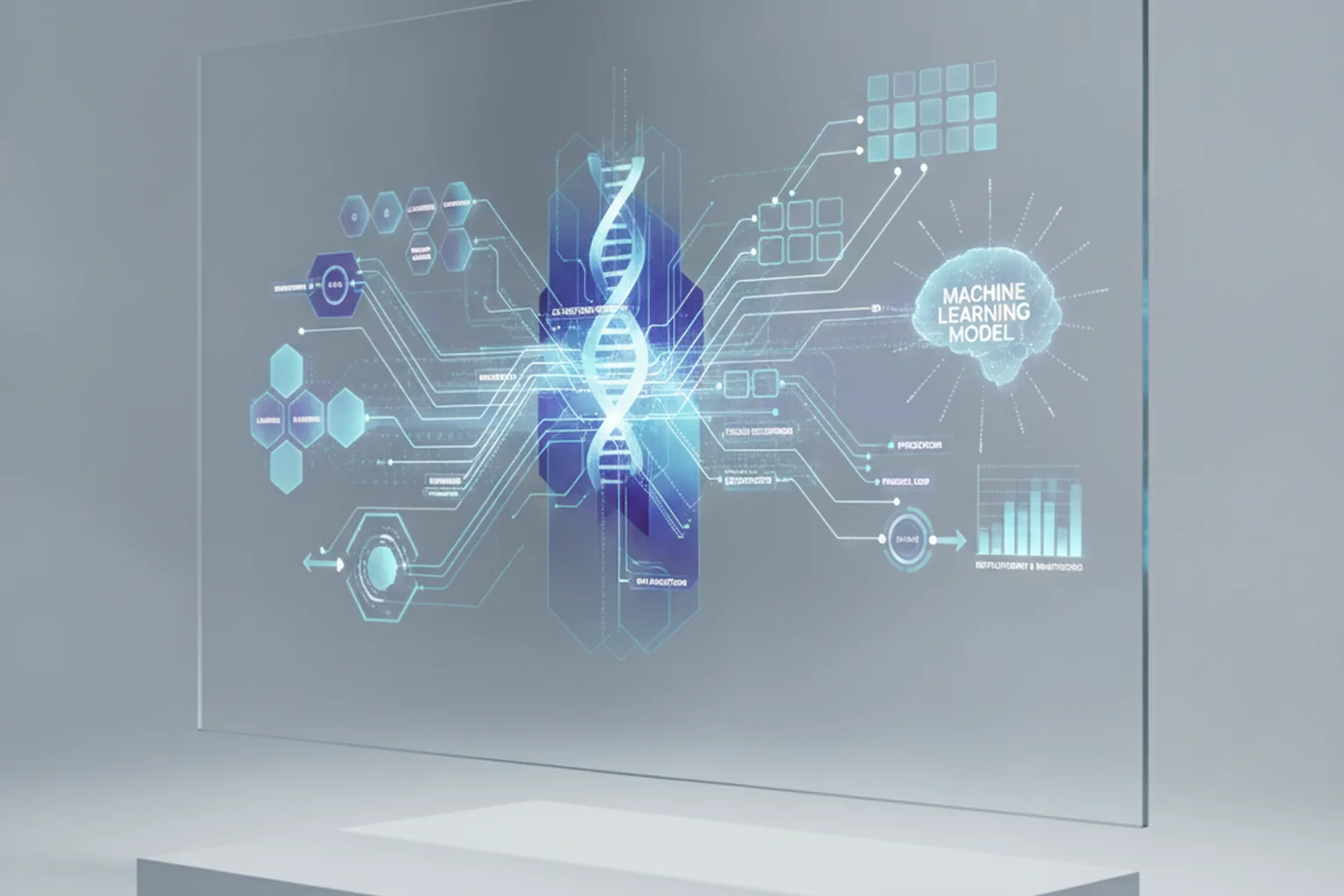
AI, machine learning and data engineering are Python's 2026 stronghold and the fastest-growing reason companies hire Python partners. A specialist builds data pipelines (pandas, Apache Airflow, Spark), trains and evaluates models (PyTorch, TensorFlow, scikit-learn), integrates large language models (LangChain and the major LLM SDKs), and wraps the result in production APIs with monitoring. Because the entire ecosystem is Python-first, one team can carry a project from raw data to a served model — the same discipline covered in our guide to machine learning software development.
Automation, scripting & DevOps/cloud
Automation is where Python earns its keep quietly. Python software development companies build scraping and ETL jobs, back-office automation, internal tooling, and DevOps glue — infrastructure scripts, CI/CD steps and cloud automation on AWS, GCP and Azure. These engagements are often small in scope but high in leverage, removing manual work that quietly costs a team days every month.
MVP & rapid prototyping for startups
Python is an excellent MVP language because its concise syntax and vast library ecosystem let a small team ship a working product fast. A partner can stand up a Django or FastAPI backend, wire in payments, auth and a data model, and deliver something investors and early users can touch in weeks rather than months. The same codebase then scales into the real product, which avoids the costly rewrite that afflicts throwaway prototypes.
Legacy modernization & Python version migration
Modernization is a distinct, high-value service: migrating from Python 2 or an ageing Python 3 codebase, replacing unmaintained libraries, breaking a monolith into services, and re-platforming onto containers and the cloud. Done well it cuts security exposure and infrastructure cost and unlocks modern language features; rushed, it produces a fragile hybrid that is harder to maintain than the original — which is why an experienced partner earns its fee here.
Why choose Python for your project in 2026?
Choose Python in 2026 when your project involves data, AI/ML, rapid iteration, or a backend that must integrate with all of the above — it is the safest default for that entire class of work. Python's strengths are a huge, mature library ecosystem, readable syntax that speeds delivery and onboarding, and an unmatched data and machine-learning stack. Its classic weakness is raw CPU-bound speed relative to compiled languages, which is exactly what the 2026 language release starts to address.
Python 3.14, free-threading and the JIT
Python 3.14, released in October 2025, is the most consequential release in years because it makes the Global Interpreter Lock (GIL) optional — the first officially supported free-threaded build — and adds an experimental just-in-time (JIT) compiler. Removing the GIL lets Python use true multi-threaded parallelism, and the single-thread penalty of the free-threaded build has dropped to roughly 5–10%, down from 20–40% in 3.13 (per Python.org's free-threading HOWTO and reporting from DZone and Open Source For You in early 2026).
What this means for your project is specific, not universal. Free-threading helps CPU-bound work — data pipelines, ML inference and compute-heavy APIs — where multiple cores can now share memory without multiprocessing overhead. It offers little benefit to I/O-bound asyncio applications, which were never GIL-limited in the first place. And because third-party ecosystem support was still described as "mixed" through 2026, no-GIL should be treated as a deliberate architectural decision, not a default switch. A strong Python software development company will tell you when it is worth adopting and when to wait — which is itself a useful test of their depth.
Python development use cases & industries
Python concentrates in industries and use cases where data, automation and machine learning drive value — but its breadth means it shows up almost everywhere. The list below covers the domains where a specialist Python software development company is most often worth the premium.
- Fintech & banking. Fraud detection, risk scoring, algorithmic analytics and data-heavy APIs use Python for its ML libraries and fast iteration. This is a flagship domain; our fintech software development practice builds exactly these systems.
- Healthtech. Diagnostic models, medical imaging pipelines, and health-data platforms rely on Python's scientific stack and its dominance in machine learning.
- E-commerce & retail. Recommendation engines, dynamic pricing, demand forecasting and inventory analytics are natural Python territory.
- Logistics & supply chain. Route optimization, forecasting and real-time tracking systems process large data volumes on Python services and pipelines.
- SaaS platforms. Many B2B SaaS products run a Django or FastAPI backend with a Python data layer feeding analytics and AI features.
- Data platforms & analytics. ETL, warehousing glue, dashboards and internal data products are frequently Python end to end.
- AI-native products. Any product whose core value is a model — search, generation, classification, prediction — is almost always built in Python because that is where the ecosystem lives.
Python tech stack & tools to look for in 2026
Before you sign, check the tech stack a Python software development company actually runs in production — the table below is what a credible 2026 team should recognize and be able to justify, not just list on a slide. Use the "what to ask" column as a live diligence checklist on your first call.
| Layer | Core tools (2026) | What to ask |
|---|---|---|
| Web & API frameworks | Django, Django REST Framework, FastAPI, Flask | Which one for this workload, and why not the others? |
| AI/ML & data science | PyTorch, TensorFlow, scikit-learn, pandas, NumPy, LangChain | How does a model reach production and get monitored, not just a notebook? |
| Data engineering | Apache Airflow, Spark, dbt | How are failed pipeline runs detected, retried and alerted on? |
| Testing & code quality | pytest, tox, mypy, Ruff | What does CI actually block a merge on? |
| Cloud & DevOps | Docker, Kubernetes, Terraform, AWS/GCP/Azure SDKs | Who owns the infrastructure code after handover? |
| Python version policy | Python 3.12–3.14, free-threaded build where relevant | Are they upgrading deliberately, or still stuck on an EOL version? |
A partner who can walk through this table without reaching for a sales deck is telling you something real about their delivery maturity. One that only mentions "Python" without naming a testing tool, a CI gate or an infrastructure-as-code approach is likely staffing generalists, not a specialist team.
How much does a Python software development company cost in 2026?
In 2026, engaging a Python software development company costs roughly $35–$120 per hour depending on region and seniority, with a typical mid-size application landing between $80,000 and $250,000. The single biggest variable is where the team sits; the second is how data- and ML-heavy the system is. Treat every figure here as a 2026 market estimate for planning, not a quote — actual pricing depends on scope, seniority mix and engagement model.
| Region | Typical 2026 hourly rate (Python) | Notes |
|---|---|---|
| United States (onshore) | ~$71 median (strong seniors $77–$94) | Highest rates; maximum time-zone overlap for US clients (Lemon.io 2026) |
| Western Europe | $70–$120 | Strong overlap with EU clients; deep enterprise and data talent |
| Eastern Europe | $40–$70 (senior) | Strong engineering pool; staff augmentation saves ~40–65% vs US |
| Latin America (nearshore) | $35–$60 | Balance of cost and US-hours overlap; nearshore time-zone fit |
Rate data above is drawn from Lemon.io, Arc.dev and Uvik's 2026 developer-rate research. On a whole-project basis, budgets cluster into three bands:
- MVP or single service: $30,000–$80,000 — a focused Django or FastAPI backend with a clear, bounded scope.
- Mid-size application: $80,000–$250,000 — multiple services, real integrations, authentication, a data layer and a production-grade cloud deployment.
- Large platform: $250,000+ — multi-team, multi-year systems with complex data or ML pipelines, high availability and compliance requirements.
Pricing models also move the number. Fixed-price suits well-specified projects with stable requirements; time-and-materials fits exploratory or evolving scope; a dedicated team or retainer amortizes onboarding over months and is the usual choice for ongoing product work. Eastern-European staff augmentation typically saves 40–65% versus US domestic hiring while keeping strong engineering quality. For a language-agnostic breakdown of these drivers, see our custom software development cost guide for 2026.
Engagement & hiring models
The engagement model determines who owns delivery, how much you manage day to day, and how costs scale — pick it deliberately, because it shapes the relationship as much as the technology does. Most Python software development companies offer some combination of the three models below.
| Model | Best when | Trade-off |
|---|---|---|
| Dedicated team | Outsourcing a whole product or module; you want the partner to own architecture and velocity | Delivery ownership in exchange for some day-to-day control |
| Staff augmentation | You have a strong in-house team and a clear architecture, and simply need capacity or a specific skill (e.g. ML) | Maximum control and low overhead, but you lead the work |
| Project outsourcing (fixed-price) | Well-specified project with stable requirements and a defined scope | Predictable cost, but poorly suited to exploratory work where scope changes |
A capable partner can offer all three, layer onshore, nearshore or offshore delivery on top, and switch models as your needs change; rigid commercial structures are a warning sign. If a dedicated unit is the direction you're leaning, our guide on how to hire a dedicated software development team covers the operating model in depth.
How to choose a Python software development company
Choose a Python software development company on demonstrated depth in your slice of the ecosystem — web, data or ML — backed by relevant case studies, not on the lowest hourly rate. The wrong partner shows up as missed deadlines, fragile pipelines and a codebase your own team dreads inheriting; the right one behaves like an extension of your engineering org. Work through this seven-point checklist when you evaluate Python software development companies.
- Vet the right specialization. Python spans web, data and AI. Confirm the team is deep in your area — a brilliant Django shop is not automatically an ML shop, and vice versa. Ask which frameworks and libraries they run in production and why.
- Review portfolio and case studies. Look for delivered Python systems in your domain — fintech, healthtech, logistics, SaaS — at similar scale and complexity, and ask for references you can call. (You can browse YuSMP's own delivery record as one example of what to expect from a case-study page.)
- Check security & IP. Confirm secure coding, dependency scanning, and clear intellectual-property and data-ownership terms — especially critical when models are trained on your data.
- Probe the delivery process. A team that can walk you through its testing pyramid, code review, CI/CD and (for ML) model versioning and monitoring will hand you a maintainable system.
- Assess communication & time zone. Clarify working-hours overlap, cadence and who you talk to day to day; nearshore and Eastern-European teams often balance cost and overlap well.
- Confirm post-launch support. Clarify SLAs, response times, dependency and CVE patching, and — for data products — how models are retrained and monitored over time.
- Test their judgement. Ask when they would not use Python, or when they'd wait on Python 3.14 free-threading. A partner who can name the limits of their favourite tool is more trustworthy than one who says yes to everything.
If you want a language-agnostic version of this evaluation to reuse across vendors, our guides on the Java software development company and .NET software development company decisions cover the broader diligence process; the Python-specific items above sit on top of it.

Red flags & common pitfalls when hiring
Most failed Python engagements are predictable from the sales process — the warning signs below separate a genuine specialist from a generalist who happens to know some Python. Treat any two or more of these as a reason to keep looking.
- One framework for every job. A partner who answers "we always use Django" (or always FastAPI) regardless of the problem is optimizing for their comfort, not your outcome.
- Data-science theatre. Impressive notebooks and demos with no story for how a model reaches production, gets monitored, or is retrained — the hard 80% of ML work.
- No testing or CI/CD. If they can't describe their automated tests and deployment pipeline in concrete terms, you will inherit the QA debt.
- Vague IP and data terms. Ambiguity about who owns the code, the models and the training data is a serious risk, not a detail to sort out later.
- Lowest bid, unclear scope. A price far below the regional bands above usually signals junior staffing, hidden change fees, or both.
- Rigid commercials. Inability to move between dedicated-team, staff-augmentation and fixed-price models as your needs change.
- No senior on the call. If you never speak to the engineers who will actually build the system, you are buying a sales pitch, not a team.
FAQ
What does a Python software development company do?
A Python software development company designs, builds, integrates and maintains software written in Python. In practice that means custom web applications and REST APIs (Django, FastAPI, Flask), AI/ML and data-science systems, data engineering pipelines, automation and DevOps tooling, MVPs for startups, and the modernization of older Python 2 or legacy Python 3 codebases. A specialist brings deep framework, data and cloud-deployment expertise that a generalist agency typically cannot match, and usually offers dedicated teams, staff augmentation or fixed-price projects.
How much does it cost to hire a Python software development company in 2026?
In 2026, Python developer hourly rates vary widely by region. US senior rates cluster around a $71/hour median, with strong seniors at $77–$94 (Lemon.io 2026); Western Europe runs roughly $70–$120; Eastern Europe seniors sit around $40–$70; and Latin America nearshore is about $35–$60 (Arc.dev and Uvik 2026 data). Eastern-European staff augmentation typically saves 40–65% versus US domestic hiring. On a project basis, a Python MVP or single service usually runs $30,000–$80,000, a mid-size application $80,000–$250,000, and a large platform $250,000 and up. Treat these as 2026 market estimates, not fixed quotes.
Django vs FastAPI vs Flask — which framework should a Python company use?
There is no single winner; a strong Python company picks the framework to fit the workload. Use Django when you want a batteries-included framework for a full web application with an admin panel, ORM and auth out of the box. Use FastAPI for high-performance, async, type-hinted REST APIs and microservices, especially those serving ML models — in 2026 FastAPI plus Django REST Framework are the default choices for scalable APIs. Use Flask for small services and prototypes where you want minimal, unopinionated scaffolding. The right partner explains the trade-off rather than defaulting to one tool for every job.
Is Python good for AI and machine learning projects?
Yes — in 2026 Python is the dominant language for AI, machine learning and data science, and this is its single biggest stronghold. The ecosystem (PyTorch, TensorFlow, scikit-learn, pandas, NumPy, LangChain and the major LLM SDKs) is Python-first, so almost every model, tutorial and hiring pool assumes Python. A Python software development company can therefore build data pipelines, train and serve models, and wrap them in production APIs in one coherent stack, which is why teams building AI features usually standardize on Python.
Should I outsource Python development or hire in-house?
Outsource to a Python software development company when you need to move fast, lack in-house Python or ML depth, or want to convert a fixed hiring cost into a flexible project cost; hire in-house when Python is core intellectual property you will iterate on for years and you can attract and retain the talent. Many teams blend the two: an in-house lead sets direction while an outsourced dedicated team or augmented engineers supply capacity and specialist skills. The decision is about speed, access to skills and long-term ownership rather than cost alone.
What is Python 3.14 free-threading and does it matter for my project?
Python 3.14, released in October 2025, is the first officially supported release to make the Global Interpreter Lock (GIL) optional through a free-threaded build, and it adds an experimental just-in-time (JIT) compiler. This matters for CPU-bound workloads — data processing, ML inference and compute-heavy APIs — where true multi-threaded parallelism can now help; the single-thread penalty has dropped to roughly 5–10% (down from 20–40% in 3.13, per Python.org and DZone 2026 reporting). It matters far less for I/O-bound asyncio applications. Because ecosystem support was still mixed in 2026, no-GIL should be treated as a deliberate architectural decision, not a default — a good partner will advise when it is worth it.
Last updated 27 September 2026. Python 3.14 free-threading and JIT facts are drawn from the Python.org free-threading HOWTO, DZone and Open Source For You (early 2026). Cost figures are 2026 market estimates for planning, drawn from Lemon.io, Arc.dev and Uvik 2026 developer-rate research; actual pricing depends on scope, seniority, region and engagement model.