

TL;DR — best software development practices in one paragraph
The best software development practices in 2026 are a connected set of habits, not one rule: keep everything in version control, review every change with small pull requests, automate your tests, ship through CI/CD, write clean and consistent code, build security in from day one, document as you go, manage technical debt deliberately, work in short iterations, and use AI coding assistants with review and CI gates. Adopt the lightweight essentials first, then add rigour as your team and codebase grow.
What are the best software development practices?
The best software development practices are the engineering habits that, taken together, let a team turn ideas into working, maintainable software without accumulating risk. That list runs to ten: disciplined version control, mandatory code review, automated testing, continuous integration and delivery, clean and consistent code, security built in from the start, living documentation, deliberate technical-debt management, short iterative delivery, and the careful use of AI coding assistants. No single one is enough on its own. "What are the best software development practices" is really a question about assembling a system where each habit makes the next one easier and safer.
Whether you build in-house or partner with a custom software development company, the principle holds: good practices exist to reduce the cost of change. Software gets read and modified far more often than it gets written. So the practices that pay off most are the ones that keep a codebase understandable, testable and safe to change months or years later. The table below summarises the ten software development best practices most teams standardise on in 2026 and why each matters; the sections that follow explain how to apply and adopt them.
| # | Practice | What it means | Why it matters |
|---|---|---|---|
| 1 | Version control | Everything in Git, small commits, clear branching | A safe, revertible history and the base for review and CI |
| 2 | Code review | Small pull requests, at least one reviewer per change | Catches defects early and spreads knowledge |
| 3 | Automated testing | A unit-heavy test pyramid, fast feedback | Confidence to change code without breaking it |
| 4 | CI/CD | Every commit built, tested and deployed automatically | Fast, low-risk, repeatable releases |
| 5 | Clean code | Shared style guide, linters, readable names | Lower cost of change and easier onboarding |
| 6 | Security by design | DevSecOps, dependency scanning, secrets hygiene | Vulnerabilities caught before they ship |
| 7 | Documentation | READMEs, decision records, API docs | Knowledge survives people leaving |
| 8 | Technical debt management | Track debt, budget refactoring | Speed stays sustainable over time |
| 9 | Short iterations | Small scope, frequent feedback (agile) | Less waste, faster course correction |
| 10 | AI with guardrails | Assistants plus review and CI gates | Speed without shipping fast defects |
One useful frame before the details. These practices map onto the stages of the software development life cycle, and several of them are enabled by the toolchain covered in our guide to the best software development tools in 2026. Adopt the practices and the tools together. A tool without the habit behind it is shelfware, and a habit with no tool to back it rarely sticks.
1. Keep everything in version control
Version control is the foundation every other best practice is built on, and in 2026 that means Git, used by well over 90% of professional developers. The practice isn't just "use Git", though. It's using it well: commit small and often with meaningful messages, keep a clear branching model (trunk-based development or short-lived feature branches), and put everything under version control. That means application code, infrastructure definitions, configuration and even documentation. A clean history you can read, bisect and revert is what turns a mistake from a crisis into a two-minute rollback.
Why does this rank first? Leverage. Nothing else on this list works without it — code review, CI/CD and safe collaboration all sit on top of a versioned history. The anti-pattern to avoid is the long-lived branch that drifts for two or three weeks, then lands as a merge nobody wants to touch. Integrate small changes into the main branch daily instead, each one gated by review and automated checks. Merging stops being an event you schedule around and becomes something that happens a dozen times a day without anyone noticing.
2. Review every change
Every change should be reviewed by at least one other engineer before it merges. After version control itself, it's the highest-leverage quality practice you have. Code review catches defects early, when they are cheapest to fix. It also does something no test can. It spreads knowledge across the team, keeps a shared sense of the codebase, and quietly enforces your standards on every commit. The point isn't gatekeeping. It's a second pair of eyes and a shared understanding.
What makes review actually work comes down to size and speed. Keep pull requests small, roughly 100–300 lines of change, because large PRs get rubber-stamped rather than genuinely read. Review promptly so authors aren't left blocked. Focus on logic, edge cases, readability and adherence to standards, not style nitpicks a formatter should handle, and give specific, constructive feedback. Let automation carry the mechanical load. Static-analysis tools running on each pull request catch a meaningful share of issues (commonly cited industry figures put it around 30–40% of what reviewers would otherwise flag), which frees human reviewers to think about design and correctness.

3. Automate your tests
Tests are what let a team change code fast without breaking it — no test suite, no confidence, and change slows to a crawl. The proven shape is the test pyramid: a broad base of fast unit tests, a thinner layer of integration tests, and a handful of end-to-end tests that walk real user journeys. Load the weight at the unit layer and the suite stays quick. Keep the core feedback loop under roughly ten minutes; a suite that is slow or flaky is one developers quietly learn to ignore, and an ignored suite protects nothing.
Beyond the pyramid, two habits raise the payoff. Write tests as you build, not as an afterthought. Approaches like test-driven development (TDD) and behaviour-driven development (BDD), where scenarios are written in plain "Given–When–Then" language, keep tests close to intent and readable by non-engineers. Then run the whole suite automatically on every change through CI, so a regression gets caught in minutes by the pipeline rather than days later by a user. As AI assistants generate a larger share of code, this safety net matters more, not less. Tests are how you verify that generated code actually does what it claims.
4. Ship through CI/CD
Continuous integration and continuous delivery (CI/CD) turn a commit into a tested, deployable release automatically. More than any single practice here, this is what separates the fast, reliable teams from the slow, fragile ones. Continuous integration means every change merges into the main branch often and gets built and tested the moment it lands. Continuous delivery means those validated changes can reach production whenever you want them to — in small increments, at the push of a button. The DORA research programme has spent years linking frequent, small deployments and low change-failure rates to both higher delivery performance and more stable systems; the pattern holds across thousands of teams.
A few things make CI/CD actually work. Define the pipeline as code, so it is version-controlled and reproducible like everything else. Keep it fast, so running on every commit never becomes the reason people batch their work. Wire the quality gates — tests, linting, static analysis, security scans — straight into the pipeline, so nothing merges or ships until it passes. And favour many small releases over the rare big-bang deployment: a small change is easier to review, safer to roll out, and trivial to roll back when something slips through. If you are just starting, don't shop for a platform. Use whatever CI/CD ships with your code host and grow from there.

5. Write clean, consistent code
Code gets read far more often than it gets written, and the reader is usually your own team six months on. That asymmetry is the whole argument for clean code: the minutes you spend making a function obvious now save hours for whoever opens the file later. In practice it comes down to small, single-purpose functions, names that say what they do, short files, error handling you can actually see, and no copy-paste duplication. The bar to clear is simple — could another engineer, or an AI assistant, change this code safely in a year without an archaeological dig first?
Consistency matters as much as cleanliness, and the way to get it is to automate it. Agree a shared style guide per language and enforce it with a linter and an auto-formatter that run in CI, so formatting is never a matter of taste or a review argument. This is the code-level counterpart to the good coding practices in the FAQ below. Let tools handle style mechanically, and human reviewers can spend their attention on design, correctness and edge cases, the things only a person can judge.
Four naming conventions do most of the heavy lifting behind "clean code" in practice. They are shorthand a reviewer can invoke in a single comment instead of re-explaining the reasoning each time:
| Principle | What it says | What it catches |
|---|---|---|
| DRY — Don't Repeat Yourself | Every piece of knowledge or logic should exist in one place | Copy-pasted logic that drifts out of sync when only one copy gets fixed |
| KISS — Keep It Simple, Stupid | Prefer the simplest design that solves the actual problem | Clever abstractions nobody but the author can follow six months later |
| YAGNI — You Aren't Gonna Need It | Don't build flexibility for a requirement that doesn't exist yet | Speculative configuration options and plugin systems that add cost and are never used |
| SOLID | Five object-oriented design rules (single responsibility, open/closed, Liskov substitution, interface segregation, dependency inversion) | Classes that do too much and break unrelated features when one thing changes |
None of these four are best practices to memorise for their own sake. They're a shared vocabulary. A reviewer who writes "this violates DRY" or "YAGNI here" is invoking a whole argument in three words, which is exactly why they show up so often in the code review practice above.
6. Build security in from day one
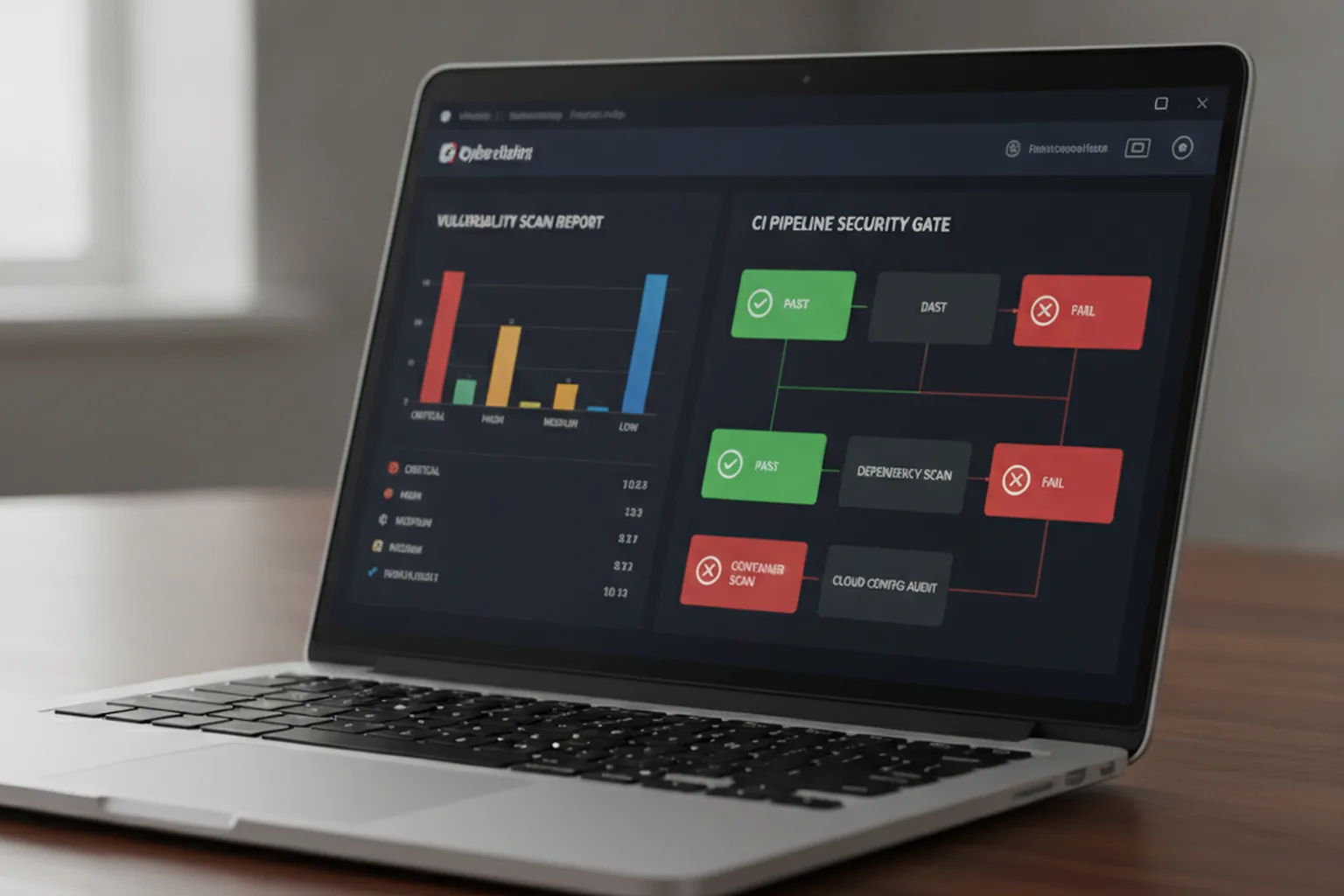
Security is cheapest and most effective when it is built into development from the start rather than bolted on before launch. The practice usually goes by DevSecOps or "shift-left" security. It means threat-modelling meaningful features early, scanning dependencies for known vulnerabilities on every build, keeping secrets out of source code (using a secrets manager, not committed config), validating input, and running automated security checks as part of CI so a vulnerable change is blocked before it merges. Waiting for a pre-release audit is slower, more expensive and far more likely to let something through.
For teams in regulated domains this practice deepens into a formal, auditable process, the discipline covered in our secure software development life cycle guide. Even a small team, though, gets most of the benefit from a few automated habits: a dependency and supply-chain scanner on every pull request, static application security testing in the pipeline, and a simple rule that secrets never live in the repository. Security folded into the daily workflow beats a heroic audit at the end.
7. Document as you go
Knowledge that lives only in one person's head walks out the door the day they do — and on any team past two or three people, someone always eventually does. That is the case for writing things down. The pragmatic 2026 version favours lightweight docs that sit next to the code over the heavy manuals nobody opens: a README clear enough that a new developer can run the project, architecture decision records (ADRs) that capture why a big choice went the way it did, and API docs generated from the code so they can't quietly go stale. Good names and structure — self-documenting code — carry most of the load. Prose is for the parts code can't explain: intent and rationale.
The test of documentation is simple. Can a new engineer become productive without interrupting a teammate? Write for that reader. Keep docs next to the code and update them in the same pull request as the change, so documentation drift never gets a chance to open up (that drift being the gap between what the docs say and what the system actually does). Docs you maintain in the flow of work stay true. Docs you promise to write "later" almost never do.
8. Manage technical debt deliberately
Technical debt isn't inherently bad. Taking a shortcut to hit a deadline is a legitimate trade-off. What quietly grinds a team to a halt is leaving that debt unmanaged. The best practice is to make debt visible and deliberate: record it as a tagged backlog item or a code comment linked to a ticket, and set aside a regular, protected share of capacity to pay it down. Many teams reserve something like 10–20% of each cycle for exactly this. Debt you name and budget for is a tool. Debt you ignore is a tax that compounds.
There's an opposite failure mode worth naming too. Chasing a perfect codebase and refactoring endlessly delivers no value either. The right posture is pragmatic: take on debt consciously when speed genuinely matters, keep a list, and repay the pieces that slow the team down most. This is where clean code, tests and review pay compound interest. A well-tested, well-reviewed codebase is far cheaper to refactor safely once you decide the debt is worth clearing.
9. Plan and deliver in short iterations
Short iterations — the beating heart of agile — earn their place by shrinking the cost of being wrong. Ship in small increments and real users and stakeholders start reacting early, so you can change course before you've poured three months into the wrong feature. The unit of progress here is a small, working, shippable slice. It is not a big untested batch that lands all at once and forces you to find out, on launch day, everything you got wrong.
In practice this means breaking work into small pieces, prioritising ruthlessly, and keeping a fast feedback loop through regular demos and reviews. The mechanics matter less than the principle. Whether you run Scrum, Kanban or a lightweight blend, our agile software development guide covers the models in depth. Every effective version shares the same core anyway: small scope, frequent delivery, real feedback, and the willingness to adjust the plan as you learn. Short iterations also compound with CI/CD, since frequent, small releases are exactly what a good pipeline is built to deliver.
10. Use AI assistants with guardrails
Using AI coding assistants is now a best practice in its own right. The practice, though, is using them with guardrails, not instead of engineering discipline. Adoption is effectively universal: around 85% of developers report using AI tools somewhere in their workflow and roughly half use them daily (Stack Overflow Developer Survey 2026). Assistants genuinely speed up boilerplate, tests, refactoring and unfamiliar APIs, so skipping them entirely leaves real productivity on the table.
Discipline is what keeps that speed from turning into risk. Treat generated code as a first draft to review, not an answer to accept. Developer trust in AI output stays deliberately cautious, with only about a third fully trusting it, and that caution is healthy: assistants raise both output and the chance of subtle, confident-looking defects. The guardrails are the practices already on this list, code review, automated tests, CI gates and security scanning, and they matter more once a machine is writing more of your code. Our guide to AI in software development goes deeper on adopting AI without shipping worse software.
Which best practice matters most?
If you can adopt only one software development best practice, choose version control with mandatory code review on every change. It's the foundation the rest depend on. Git plus small, reviewed pull requests gives you a safe, revertible history, a natural place to run automated tests and static analysis, and a built-in quality gate where a second engineer catches problems before they reach production. Get this one habit right and you have the platform to layer CI/CD, testing and security on top. Skip it and the other practices have nothing to attach to.
That said, the honest answer is that these practices deliver their value as a system. Version control enables review. Review is where tests and analysis run. CI/CD automates those gates, clean code and documentation keep it all maintainable, and short iterations plus AI guardrails keep it fast and safe. Adopt them in that dependency order (foundation first, automation next, refinement last) rather than trying to do everything at once.
How to adopt best practices in your team
The right way to adopt software development best practices is incrementally and through automation, not with a big-bang mandate that asks everyone to change ten habits on Monday. Start from where your team actually loses time and quality. Fix the highest-leverage gap first, and make each new practice the path of least resistance by wiring it into the pipeline. Use this sequence:
- Start with the foundation. If it isn't already solid, get version control and mandatory pull-request review right before anything else. Everything else attaches to these.
- Automate the checks. Add a CI pipeline that runs tests, linting and static analysis on every change, and make those checks block merging when they fail so the pipeline, not a person, is the gatekeeper.
- Write it down. Capture a short, explicit engineering standard (a definition of done, a style guide, a branching model) so expectations are shared rather than assumed.
- Add security and delivery gates. Bring in dependency scanning and CI/CD so validated changes ship in small, low-risk increments.
- Budget for debt and docs. Reserve regular capacity for technical debt and keep documentation in the same pull request as the change, so neither is left for a "later" that never comes.
- Layer in AI with guardrails. Adopt AI assistants once the review, test and CI gates above are in place, so the safety net exists before the machine writes more of your code.
Not every practice costs the same to adopt, and not every practice returns the same value. The table below is a quick reference for prioritising, ranked roughly by effort to set up against the quality payoff:
| Practice | Effort to adopt | Quality payoff | Adopt when |
|---|---|---|---|
| Version control + PR review | Low | Very high | Day one, every team, no exceptions |
| Basic CI (tests + lint on every push) | Low | High | As soon as there's a shared repo |
| Dependency / security scanning | Low | High | Before you handle any real user data |
| Automated test pyramid | Medium | High | Once critical paths are stable enough to test |
| Continuous delivery to production | Medium | High | Once CI and tests are trusted enough to gate a release |
| Technical-debt budgeting | Low | Medium (compounds) | As soon as the backlog has a "someday" pile |
| Formal ADRs and API docs generation | Medium | Medium | Once the team is too big for tribal knowledge |
| AI assistants with guardrails | Low to adopt, ongoing to govern | High (with review/CI in place) | Once review, tests and CI gates already exist |
Most teams don't need every practice at maximum rigour on day one. Adopt the minimal starter set, automate it so it sticks, and add depth only where a real bottleneck justifies it. Want an outside read on which practices would move the needle most for your team, codebase and delivery risk, and in what order to adopt them? That's exactly the kind of review our engineering leads run.
FAQ
What are the best software development practices?
The best software development practices in 2026 are a connected set of engineering habits rather than a single rule: keep everything in version control (Git), review every change with small pull requests, automate your tests with a unit-heavy test pyramid, ship through CI/CD, write clean and consistent code enforced by linters, build security in from day one (DevSecOps), document as you go, manage technical debt deliberately, plan in short iterations, and use AI coding assistants with review and CI gates rather than instead of them. Adopted together, these practices are what let a team ship quality software quickly and safely.
What are good coding practices?
Good coding practices are the code-level subset of software development best practices: write small, single-purpose functions with clear, descriptive names; follow a shared style guide enforced automatically by a linter and formatter; keep functions and files short and readable; avoid duplication (DRY); handle errors explicitly; and cover important logic with automated tests. The goal is code that another engineer, or an AI assistant, can read, change and review safely months later. That's why readability and consistency matter more than cleverness.
What is the single most important software development best practice?
If you can only adopt one software development best practice, make it version control with mandatory code review on every change. Git plus small, reviewed pull requests underpins almost everything else. It creates a safe history you can roll back, a natural point to run automated tests and static analysis, and a built-in quality gate where a second engineer catches defects before they reach production. Teams that get this one right have the foundation to add CI/CD, testing and security on top. Teams that skip it struggle to make the rest stick.
How do you enforce software development best practices in a team?
Enforce software development best practices by automating them rather than relying on discipline: require pull requests and at least one approving review before merge, run linters, formatters, tests and static analysis as CI checks that block merging when they fail, and make the pipeline (not a person) the gatekeeper. Pair the automation with a short, written engineering standard (a definition of done, a style guide, a branching model) so expectations are explicit, and lead by example in code review. Automation makes the right thing the easy thing, which is the only enforcement that scales.
Do software development best practices differ for startups and enterprises?
The core software development best practices are the same for startups and enterprises. Version control, review, testing, CI/CD, clean code and security are universal. What differs is the weight. A small startup should adopt the lightweight essentials first (Git, PR review, a basic CI pipeline, automated tests on critical paths) and avoid heavy process. A large enterprise adds governance on top: formal security and compliance gates, architecture decision records, stronger release controls and audit trails. Start with the minimum viable set of practices for your size and add rigour as team, codebase and risk grow.
What do DRY, KISS, YAGNI and SOLID mean in software development?
DRY (Don't Repeat Yourself), KISS (Keep It Simple, Stupid), YAGNI (You Aren't Gonna Need It) and SOLID are the shorthand design principles behind clean code. DRY says every piece of logic should live in one place so a fix doesn't need to happen twice. KISS says prefer the simplest design that solves the real problem over a clever one. YAGNI says don't build flexibility for a requirement you don't have yet. SOLID is a set of five object-oriented design rules that keep classes focused so a change to one feature doesn't break another. Together they're a shared vocabulary reviewers use to flag over-engineering and duplication quickly.
Last updated 25 September 2026. Adoption and performance figures are drawn from 2026 industry research (including the Stack Overflow Developer Survey and the DORA / Accelerate State of DevOps programme) and are cited as general guidance, not precise benchmarks. Which practices matter most, and how much rigour each needs, depends on your team, codebase, domain and risk — treat this as a starting point, not a mandate.