Discovery & subscriber-journey mapping
Operator workflow audit, tariff-catalog modeling, payments choices (card / Apple Pay / Google Pay), GDPR + CCPA posture decisions.

Case study · Telecom · Mobile
The operator behind the Personal Account app wanted self-service that did not feel like the 2010-era IVR voice menu transcribed onto a phone screen. Telecom subscribers in the United States and the European Union expect to change their tariff, top up their balance, toggle a roaming bundle, and get a real human in 24/7 chat without bouncing into a call center. The operator's leg
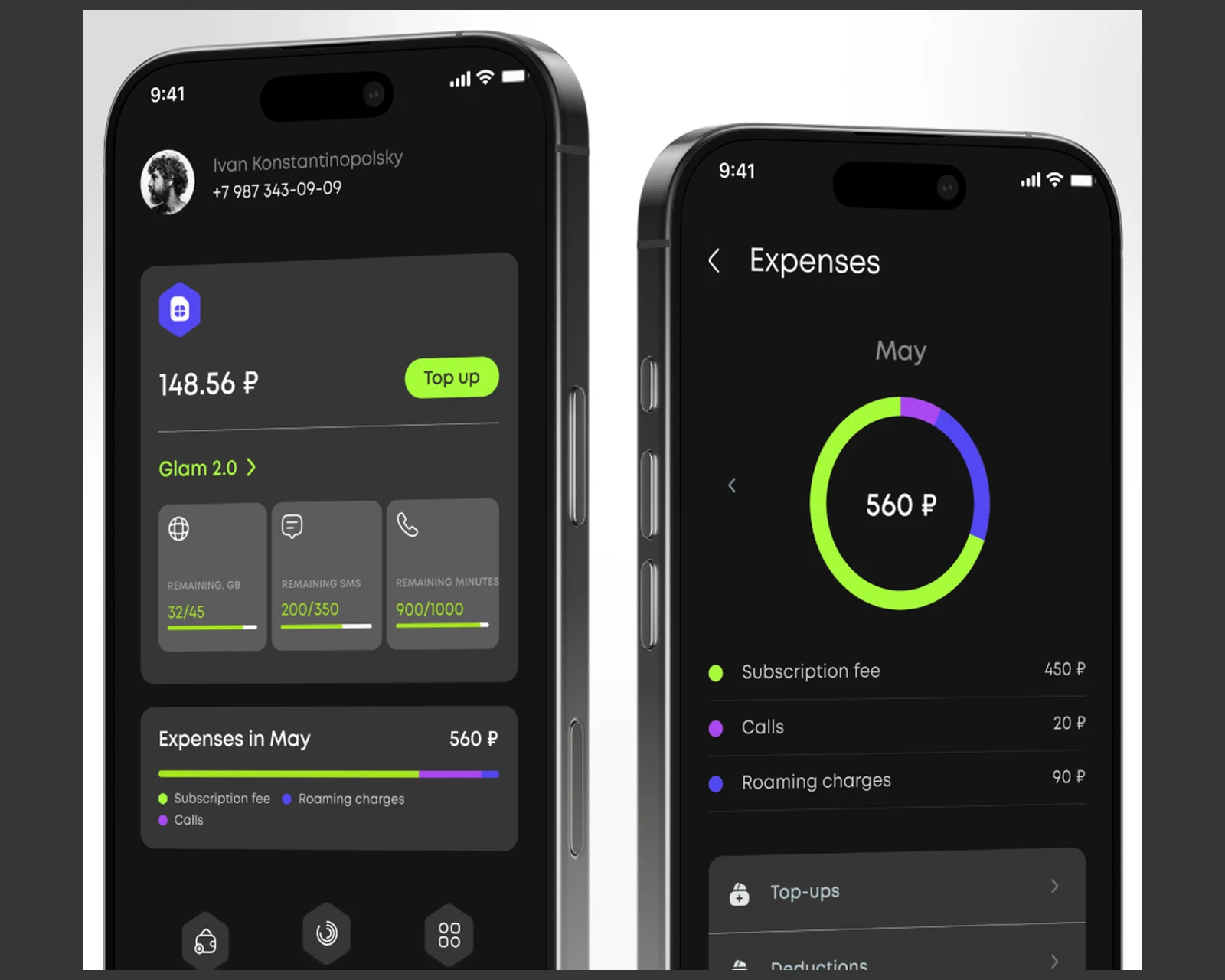
The operator behind the Personal Account app wanted self-service that did not feel like the 2010-era IVR voice menu transcribed onto a phone screen. Telecom subscribers in the United States and the European Union expect to change their tariff, top up their balance, toggle a roaming bundle, and get a real human in 24/7 chat without bouncing into a call center. The operator's legacy self-service was a thin WebView wrapper that competed badly with native subscriber apps from the regional incumbents — slow first paint, no Apple Pay or Google Pay support, and no offline shell for the times the subscriber was exactly the audience that needed self-service (no signal, no money, no app). We built the Personal Account app from first principles as two native applications: Swift on iOS, Kotlin on Android, sharing a Laravel 10 backend. The result is a self-service app that lives at App Store and Google Play for the operator's subscriber base, and that is positioned for GDPR and CCPA expectations across the US and EU from day one.
A snapshot of what the Personal Account build delivered across its first production cycle for the US and EU.
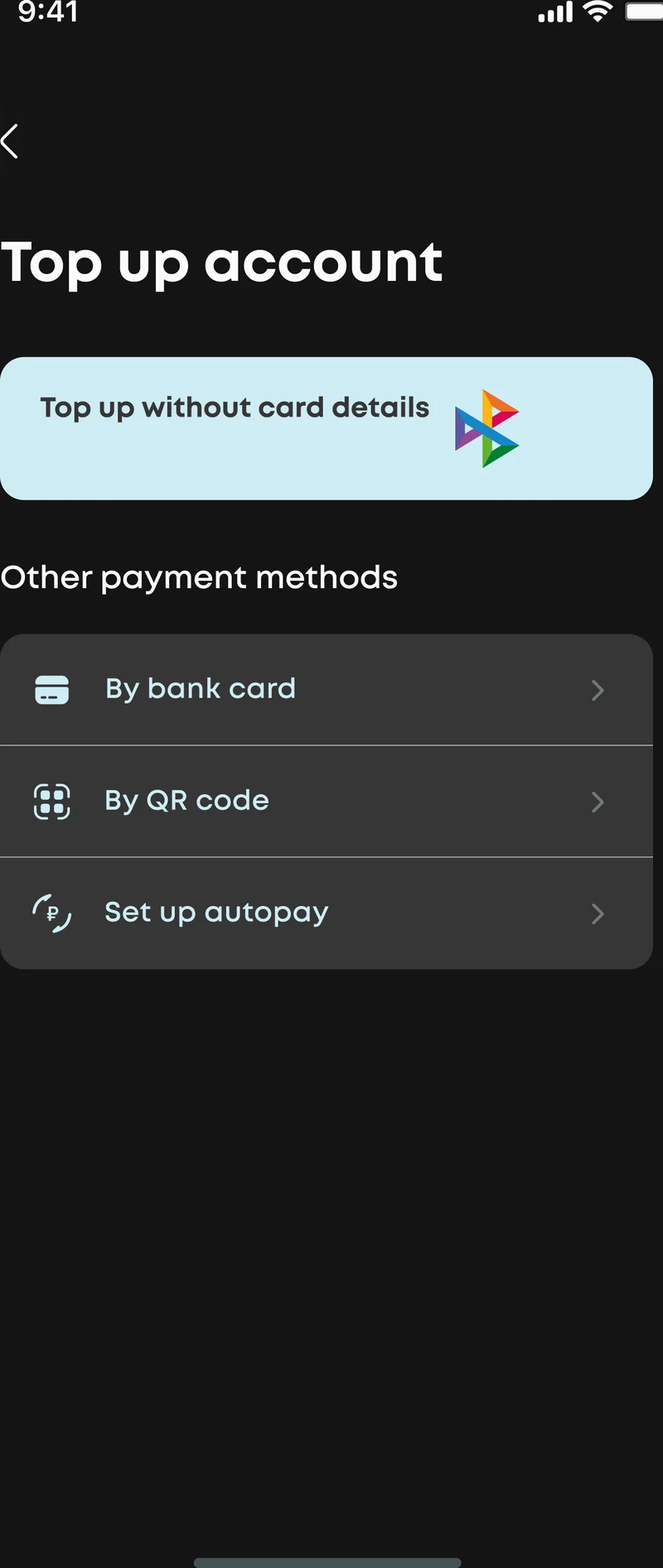
The platform choice dominated every other architectural decision on the Personal Account build. A cross-platform stack — React Native, Flutter, or a Kotlin Multiplatform front end — reduces engineering cost in theory but loses two things in practice that the operator cared about: a first-class Apple Pay / Google Pay flow, and the native push-notification reliability subscribers expect when an outage or a high-roaming-charge alert lands on their phone. We chose Swift on iOS and Kotlin on Android because the integration surface — Apple Pay with PassKit, Google Pay, native APNs and Firebase Cloud Messaging delivery semantics — pays back the per-platform investment over a five-year app lifecycle.
For an operator serving subscribers in the United States and the European Union, the second-order benefit is independent release cadence. The iOS team can ship an Apple-Pay polish without coupling to the Android side's WorkManager rework, and vice versa — which matters because Apple's and Google's review timelines and policy updates do not move together. The whole effort is delivered as part of our mobile app development practice, with shared API contracts owned by the Laravel backend team.
| Dimension | Native (Personal Account) | React Native | Flutter |
|---|---|---|---|
| Apple Pay / Google Pay UX | First-class PassKit / GPay sheets | Bridge module — lag in OS updates | Plugin — lag in OS updates |
| Push reliability under Doze | Native FCM + APNs + WorkManager | Bridge to native — OEM-quirk-prone | Plugin to native — similar |
| App-size budget | Minimal — per-platform binary | +~10–15 MB JS runtime | +~7–10 MB engine |
| Cold-start time | ~500 ms typical | ~1–2 s with JS bridge warm-up | ~800 ms–1.2 s |
| Independent release cadence | Yes — full team per platform | Coupled JS bundle | Coupled Dart bundle |
| OS-new-feature lag | None — ship same week | Weeks to months | Weeks to months |
| Engineering cost (5-year) | Two stacks — pays back via reliability | One stack — bridge maintenance cost | One stack — engine upgrade cost |
References: Apple Pay PassKit documentation, Google Pay for Android, Android Doze documentation.
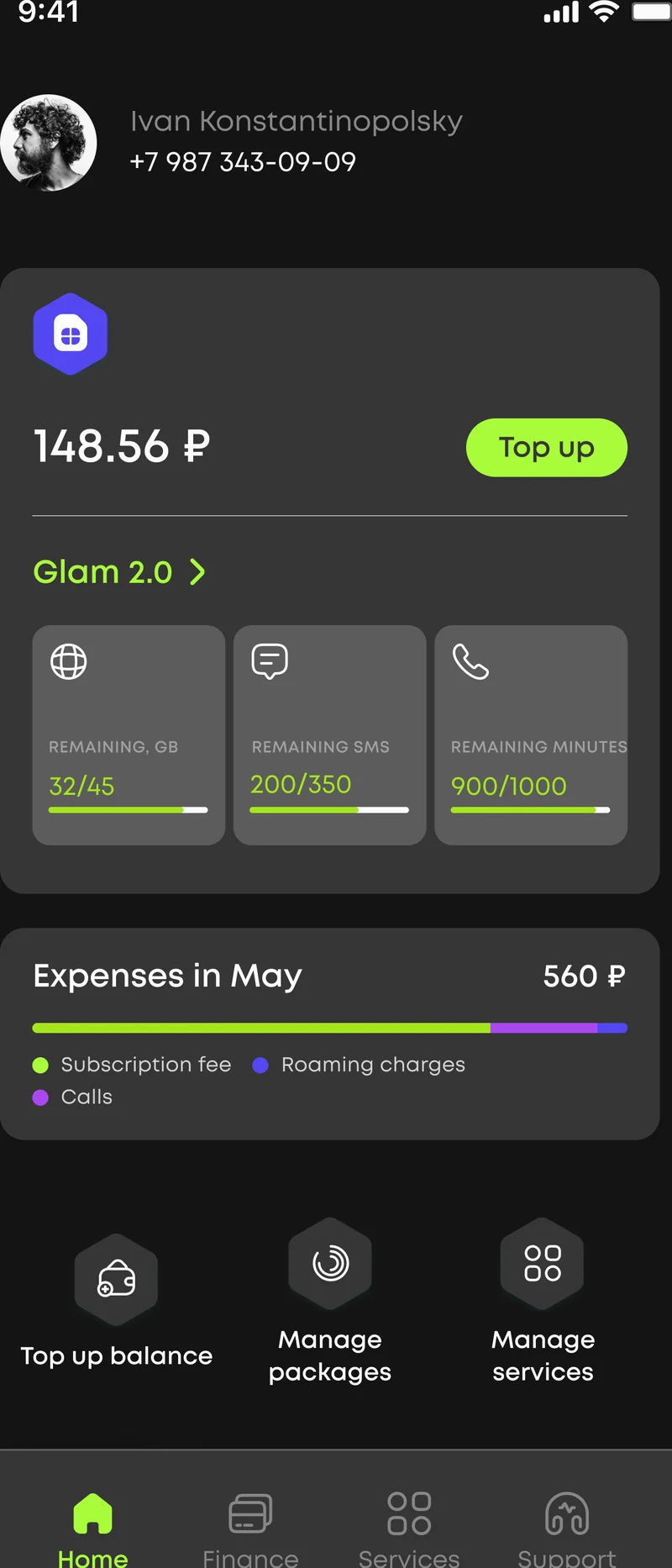
The iOS client is built in Swift with SwiftUI for the UI layer and Combine for the asynchronous data flow. The tariff picker is the most interaction-dense screen in the product: a vertical list of available plans, a per-plan visual breakdown that updates as the subscriber drags between options, and a confirmation sheet that shows exactly which line items on next month's bill will change. The flow is one tap to compare, one tap to confirm, and a Face ID / Touch ID step for the actual change — with the entire path completing inside the app process instead of bouncing to Safari or a WebView.
The billing wallet is where Apple Pay actually earns its place. Card top-ups are a single PassKit sheet against a stored payment method, and balance display updates immediately on the home screen through the Combine pipeline. For US subscribers, the iOS client surfaces the operator's CCPA / CPRA disclosures inside the account settings; for EU subscribers, the consent screen for optional product analytics ships ahead of the first launch under GDPR rules. The entire iOS surface is delivered as part of our iOS engineering practice.
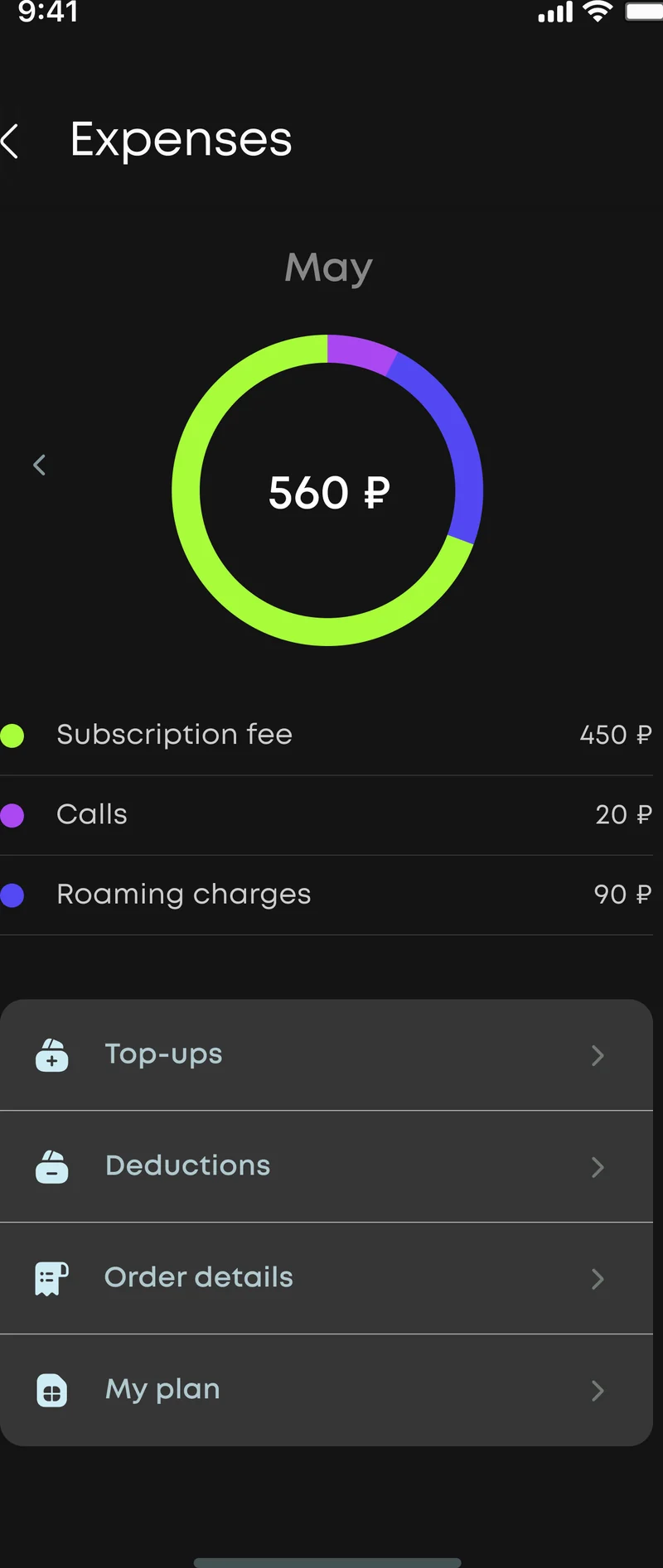
The Android client is written in Kotlin with Jetpack Compose for the UI and a foreground service for the parts of the app that need to survive aggressive battery optimizers. The service toggle screen — roaming bundles, SMS packages, data add-ons — is the daily-use surface for subscribers who travel: each toggle previews its billing impact before commit, and the resulting bill-impact summary writes to the account history so the subscriber can audit the change later. The foreground service is also where push reliability lives: on Samsung, Xiaomi, OnePlus, and Pixel device families, aggressive battery managers terminate background-only processes within minutes, so a high-roaming-charge alert that the subscriber actually needs to see is delivered through a foreground-service-backed FCM payload rather than a stock notification.
WorkManager handles non-urgent operations — balance refresh, tariff-catalog sync, account-event flush — with backoff semantics that respect battery saver states across Android 10 through Android 14. After a Wi-Fi to LTE carrier handoff the client restores cached state automatically, so the subscriber lands back on the screen they left without a forced re-login. The same engineering team carries iOS and Android in lockstep as part of our iOS and Android engineering practice.
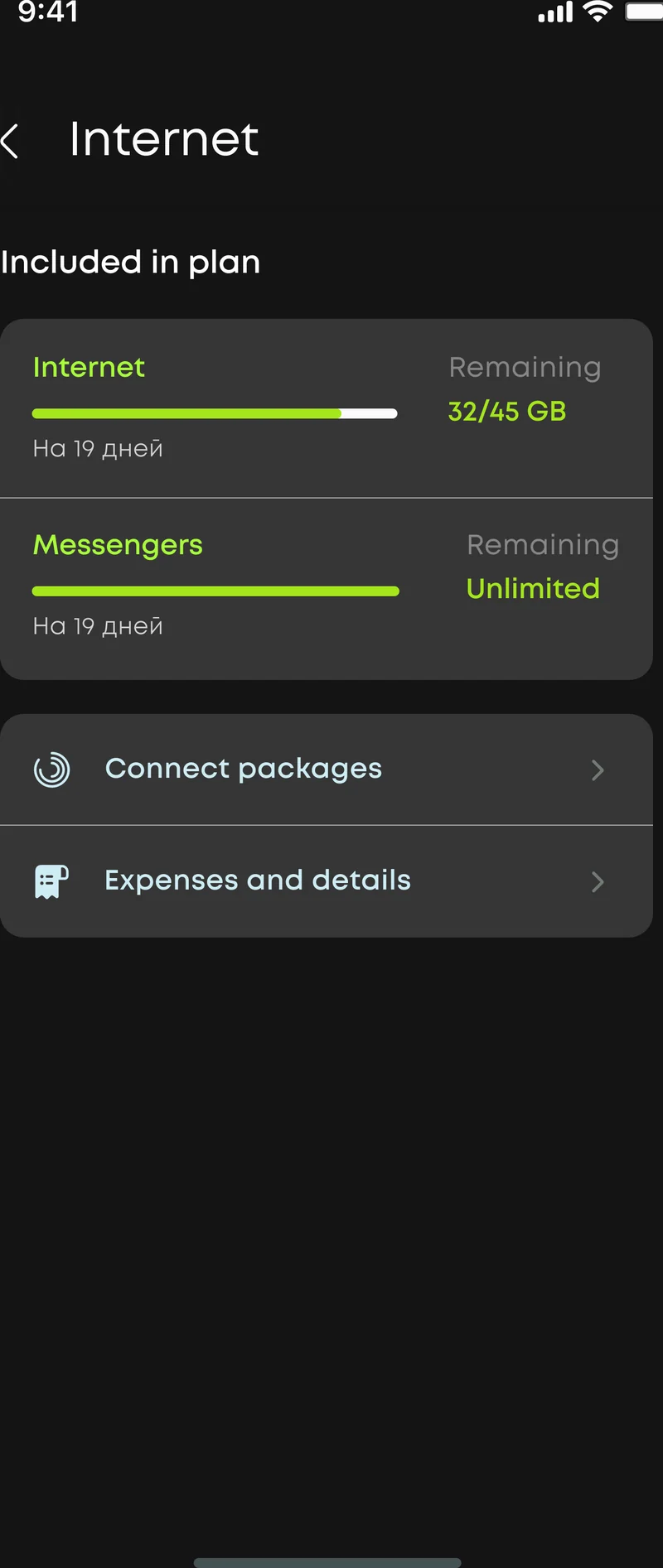
The in-app support chat is the surface that decided whether the app replaced the call center or competed with it. Subscribers tap a Support button, get into a queue routed by tariff tier and language, and reach a human agent without leaving the app context. The chat runs over WebSocket with TLS 1.3 transport, ephemeral keys for the session, and a typing indicator that respects message-confidentiality settings the operator's agents configure on the agent side. Conversation history is retained according to the operator's published policy and is deletable on request through the same GDPR-aligned data-rights flow that surfaces account deletion.
Privacy posture is enforced at the architecture layer. Subscriber identifiers are stored separately from billing identity — the billing record sits with the payment processor under a tokenized customer ID the mobile clients never see, and the chat surface treats every message as PII by default. Storage encryption is on by default, every read of an account record writes to the audit trail, and the operator's privacy team can serve a right-of-access or deletion request through the admin tier without an engineer in the loop. The posture is built to align with GDPR for European Union subscribers and with CCPA / CPRA obligations for subscribers in California and the broader United States.
Compliance posture: GDPR-aligned · ISO 27001 ready · SOC 2 Type II in progress · HIPAA-capable · CCPA-acknowledged.
A five-phase build that took Personal Account from product specification to production across the US and EU.
Operator workflow audit, tariff-catalog modeling, payments choices (card / Apple Pay / Google Pay), GDPR + CCPA posture decisions.
Laravel 10 backend, entitlement-service design, push reliability strategy across iOS APNs and Android FCM, regional data-tier choices.
Swift / SwiftUI iOS client with Combine pipelines; Kotlin / Jetpack Compose Android client with Doze-safe service; in-app support-chat surface.
Apple Pay / Google Pay validation, OEM push-reliability QA, encrypted transport pass, infrastructure-as-code policies, store-submission rehearsals.
App Store + Google Play submission across US and EU storefronts, support-team hand-off, push-delivery monitoring, on-call rota.
The subscription-state model behind the Personal Account app was built to keep account identity and payment identity provably separate, because the privacy claim falls apart the moment a single database joins a payment processor's customer ID directly to a subscriber's MSISDN. The tariff is sold through the operator's billing platform; in-app purchases for one-off bundles are sold through Apple StoreKit on iOS and Google Play Billing on Android, with server-side receipt validation against each store's verification endpoint and a single entitlement record keyed by an opaque rotated identifier — never by Apple ID, Google account, or phone number. Inside the application tier, the only thing visible is a short-lived bearer token that maps to entitlement and expires aggressively; the API has no path back to a payment identity even if compromised. Roaming add-on toggles, SMS-bundle purchases, and the eventual family-plan tier all read from the same entitlement record, so subscription state resolves cleanly across reinstalls, device swaps, and the eventual desktop or web-portal client. The whole subsystem was built with extensibility in mind: adding a family plan, a B2B account-team tier, or a prepaid-conversion flow is a configuration change against the entitlement service, not a code release.
The Personal Account app launched on Apple App Store and Google Play with storefronts active across the United States and the European Union. The English-language build serves subscribers in California, New York, Texas, Florida, and Washington in the US, and subscribers in the Netherlands, Germany, France, Ireland, and Sweden in the EU, without a separate codebase per region. Consent flows are region-aware at the client layer: subscribers in the EU and EEA receive a GDPR-style granular consent screen with separate toggles for any optional product analytics; subscribers in California receive a CCPA-style “Do Not Sell or Share My Personal Information” disclosure in the same flow. Data-handling practices are aligned with GDPR for European subscribers and with the US state-privacy patchwork — CCPA / CPRA (California), VCDPA (Virginia), CPA (Colorado), CTDPA (Connecticut), UCPA (Utah), TDPSA (Texas), and Oregon CPA.
The deployment story is operator-friendly. The backend tier is stateless, horizontally scaled, and can be pinned to EU or US regions independently for future data-residency commitments. Both the App Store age rating and the Google Play content rating were calibrated for the self-service feature set, and the in-app privacy policy was drafted to document exactly the architecture above. The engineering team behind the build runs a CET workday with East-Coast US overlap (9 AM–1 PM ET) for stand-ups, store-review choreography, and incident response — the timezone that lets a US product team and an EU engineering team share four hours of live overlap every day.
The active custom software development roadmap for the Personal Account app includes a tablet-optimized iPad layout for the operator's enterprise-tier customers, a desktop companion built on Tauri to share business logic with the mobile codebase, a SIM-management surface for eSIM activation and transfer, and a family-plan tier with per-line spend controls. Infrastructure plans include further automation of the App Store and Google Play release pipeline, an internal continuous-compliance harness, and continued work on push-reliability monitoring across OEM device families in the cloud & DevOps roadmap.
If you are planning a telecom self-service app, a subscriber-facing native mobile build, or any iOS and Android product where billing, payments, and live support have to coexist for users in the US and EU, we have shipped this stack end to end and can compress the build timeline meaningfully. The engineering team behind the Personal Account app sits inside YuSMP Group. We work fixed-price for well-scoped MVPs and on dedicated development teams for ongoing delivery, with a CET workday and a guaranteed East-Coast US overlap (9 AM–1 PM ET) window for stand-ups, demos, and incident response.
A native self-service MVP covering iOS and Android with tariff management, card payments, balance top-up, and an in-app support chat typically costs $130k–$260k. Adding Apple Pay and Google Pay, a roaming-add-on toggle surface, push-reliability work across OEM device families, and a CCPA / GDPR consent layer brings a full-featured product to $300k–$620k. The dominant cost drivers are the payment integrations, the push-reliability hardening, and the App Store and Google Play review choreography for a telecom-branded app.
Cross-platform stacks save engineering hours up front and lose two things in practice that a telecom operator cares about: a first-class Apple Pay and Google Pay flow that tracks every OS update from week one, and the push-notification reliability subscribers need when an outage alert or a high-roaming-charge warning lands on their phone. Native Swift and Kotlin remove that lag, give independent release cadence per platform, and pay back the per-platform investment over a five-year app lifecycle.
Aggressive OEM battery optimizers terminate background-only processes within minutes on Samsung, Xiaomi, OnePlus, and other Android device families, breaking the alert contract subscribers implicitly sign up for. Critical notifications are delivered through a foreground-service-backed FCM payload that displays a minimal persistent indicator, and WorkManager schedules non-urgent operations with backoff semantics that respect Doze cycles across Android 10 through Android 14. The same iOS path is handled through APNs with a delivery-receipt audit trail.
The Personal Account app is GDPR-aligned for European Union subscribers and acknowledges the US state-privacy patchwork — CCPA / CPRA in California, VCDPA in Virginia, CPA in Colorado, CTDPA in Connecticut, UCPA in Utah, TDPSA in Texas, and Oregon CPA. Account identity is stored separately from payment identity, payment records sit with the payment processor under a tokenized customer ID, right-of-access and deletion flows are wired into the admin tier, and consent screens surface region-aware disclosures at first launch.
A focused MVP with tariff management, card payments, balance top-up, and a basic in-app support chat typically takes 12–18 weeks across iOS and Android. Adding Apple Pay and Google Pay, a roaming-add-on toggle surface, OEM push-reliability work, and a CCPA / GDPR consent layer adds another 6–10 weeks. The four-month end-to-end delivery on this engagement reflected a focused scope and an experienced backend integration team already familiar with the operator's billing platform.
Related cases
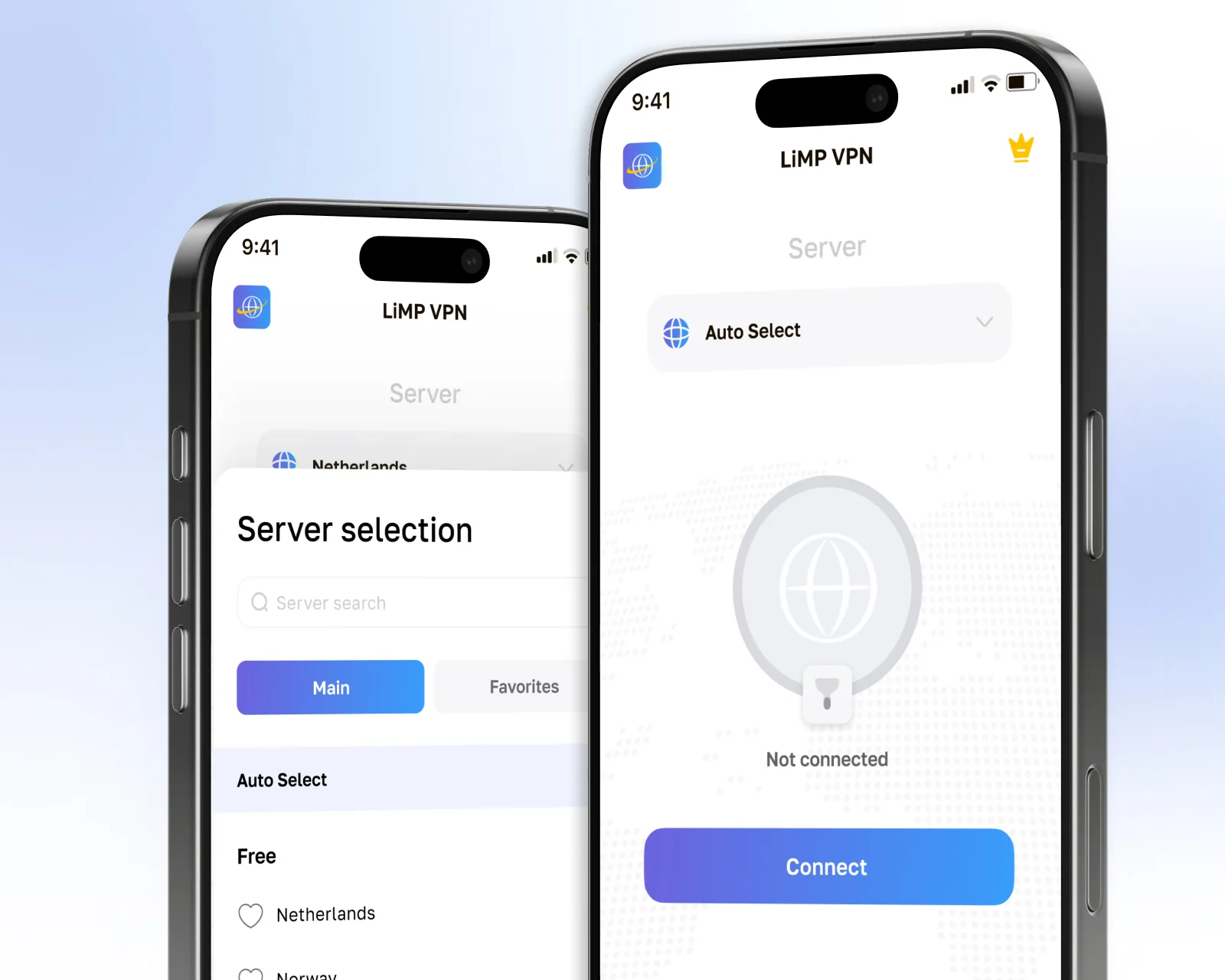
Consumer WireGuard VPN app for iOS and Android with no-logs architecture, launched across the US and EU.
View case →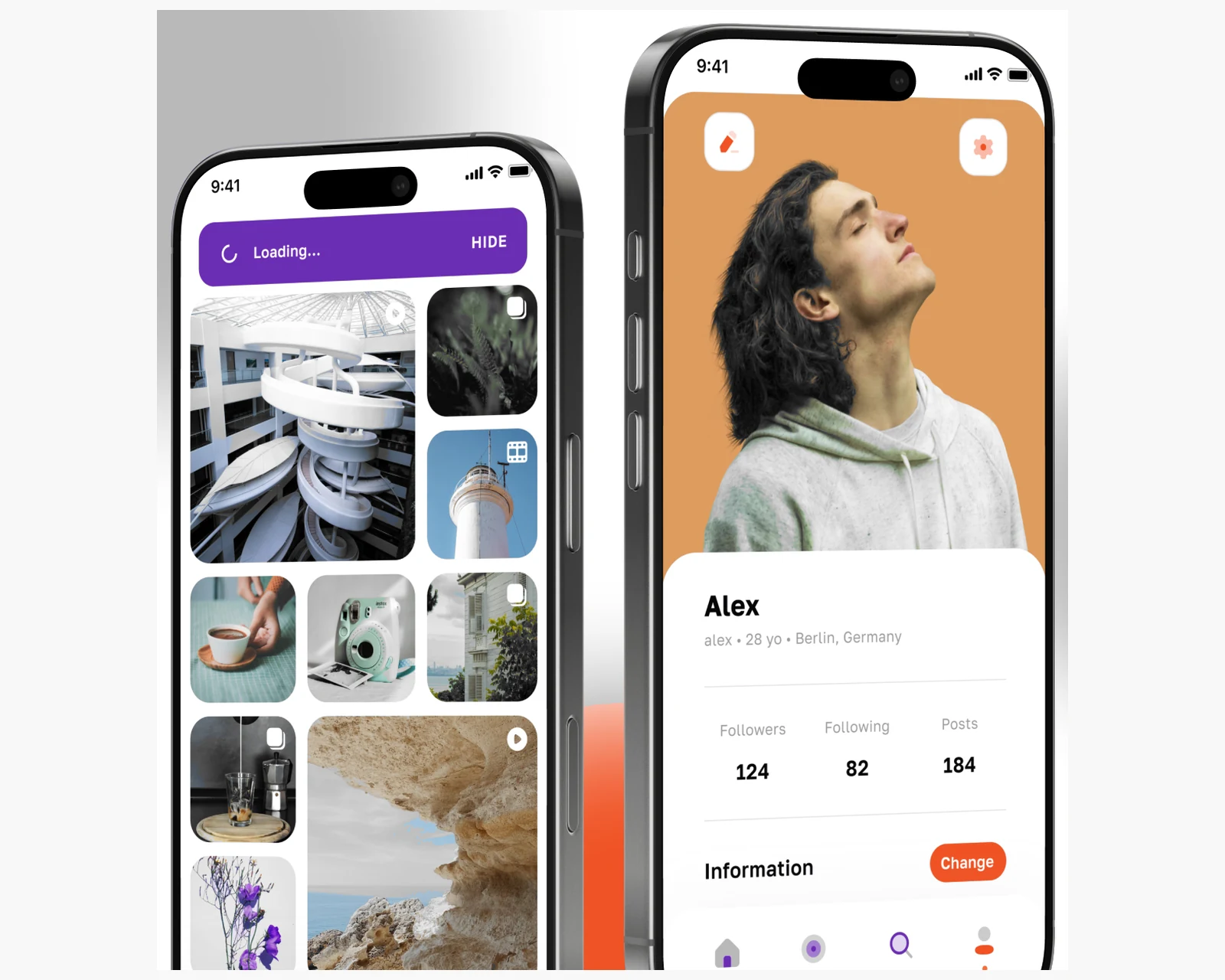
Production social platform — App Store + Google Play, live across the US and EU — with geo Radar, encrypted messaging, and a virtual economy.
View case →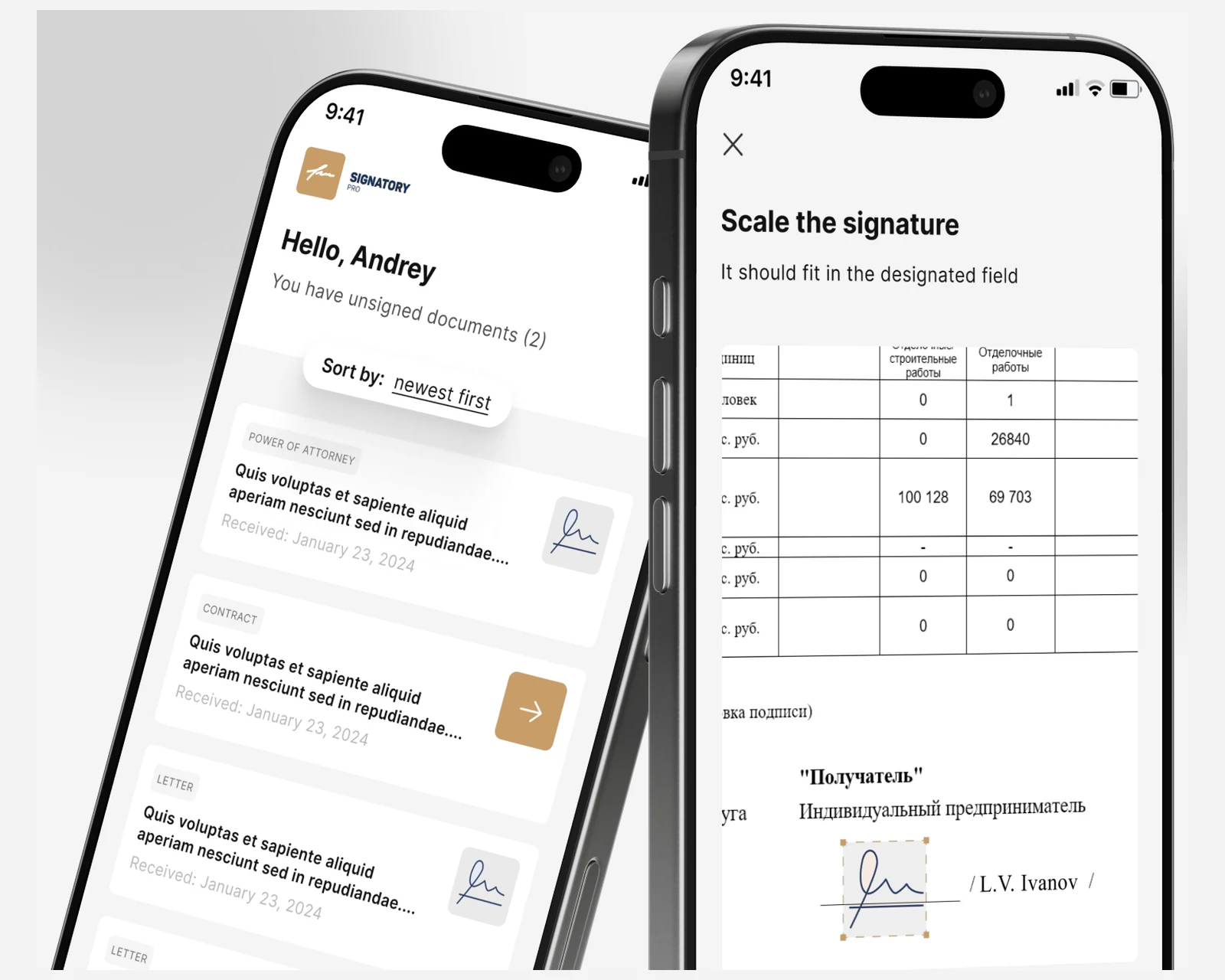
Native iOS and Android e-signature clients with a Symfony + React CRM — KYC onboarding and an evidence trail for US & EU matters.
View case →Share a few details and a senior consultant will reply within one business day.