

The short answer
On 4 August 2026 CISA added CVE-2026-34486 — a flaw in Apache Tomcat's clustering that bypasses the EncryptInterceptor protecting node-to-node traffic — to its Known Exploited Vulnerabilities catalog, meaning it is being used in attacks. The bug is an incomplete fix for an earlier issue (CVE-2026-29146): cluster messages that fail to decrypt are processed instead of rejected, letting an attacker inject traffic into the Tomcat Tribes channel. It is rated CVSS 7.5, has public proof-of-concept code, and affects Tomcat 11.0.20, 10.1.53 and 9.0.116 — fixes are in 11.0.21, 10.1.54 and 9.0.117.
The reason this matters beyond one advisory is reach. Tomcat sits under a large fraction of Java web apps — often invisibly, embedded inside Spring Boot services — so "we don't run Tomcat" is frequently wrong. If any of those apps use clustering for session replication, the vulnerable channel may be live in your estate right now.
What CVE-2026-34486 is
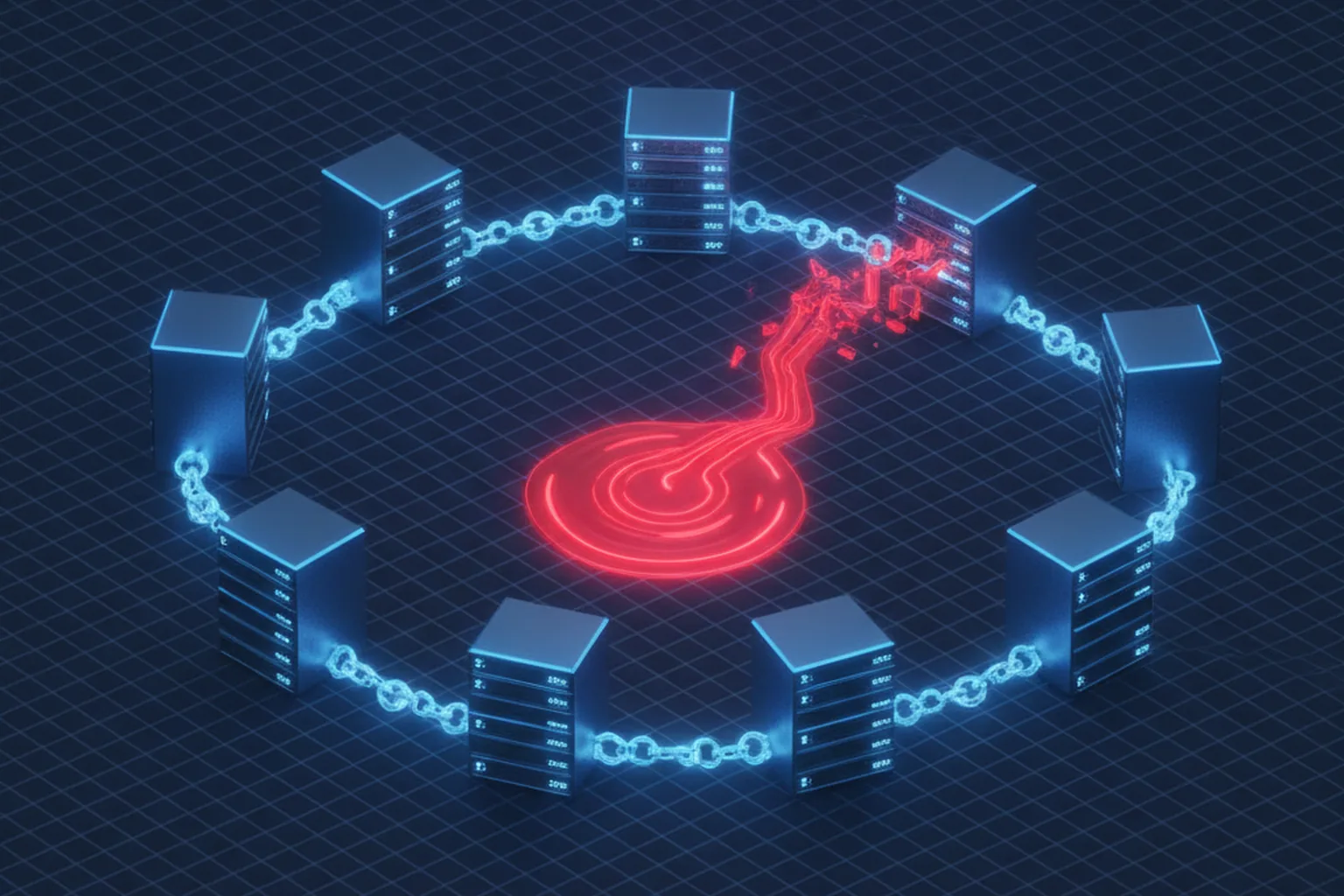
Apache Tomcat's clustering support lets multiple Tomcat instances replicate HTTP sessions to one another so a user stays logged in even if a node fails. That replication runs over Tomcat Tribes, a group-communication layer, and can be wrapped with the EncryptInterceptor to encrypt the traffic between nodes. CVE-2026-34486 — which CISA labels a missing-encryption-of-sensitive-data flaw and which was reported by Bartlomiej Dmitruk of striga.ai — defeats that protection.
Crucially, it is a regression from an incomplete previous fix. Remediation for CVE-2026-29146 changed how the EncryptInterceptor handled decryption errors, and in doing so caused Tomcat to keep processing messages even when decryption failed rather than dropping them. The net effect is that messages which were never properly decrypted can still be accepted and passed on through the cluster, undoing the guarantee the interceptor was supposed to provide. It carries a CVSS base score of 7.5 and affects Tomcat 11.0.20, 10.1.53 and 9.0.116.
How the cluster bypass works
Because improperly decrypted messages are no longer rejected, an attacker who can send traffic to the cluster's Tribes receiver — TCP port 4000 by default — can push crafted messages into the replication channel that Tomcat will process. On its own that is a serious integrity failure. The danger sharpens when those messages carry serialized Java objects: if the target application has usable deserialization gadgets on its classpath, the injected data can move, as one analysis put it, "from garbage traffic to code execution." That is the route by which a clustering flaw becomes an unauthenticated remote-code-execution risk.
Two facts raise the urgency. First, proof-of-concept exploit code is already public, which shortens the gap between "known flaw" and "mass scanning." Second, CISA only lists a vulnerability in its exploited-vulnerabilities catalog when it has reliable evidence attackers are already using it — and it added CVE-2026-34486 on 4 August 2026, alongside flaws in N-able N-central and Langflow. Treat it as an active threat, not a theoretical one.
Why the blast radius is wide
Tomcat is one of the most widely deployed Java application servers in the world, and much of that footprint is invisible: frameworks such as Spring Boot ship an embedded Tomcat by default, so teams run it without ever installing "Tomcat" as a standalone product. That makes inventory the first challenge — the vulnerable version can be baked into a service's dependencies rather than sitting on a server someone patches directly.
The saving grace is that only deployments using Tomcat clustering for session replication expose the vulnerable Tribes channel; a single-node service or one that keeps session state in a shared store such as Redis is not affected by this specific path. But large, high-availability estates — exactly the enterprise Java systems most likely to hold regulated data — are the ones most likely to use clustering. The combination of broad deployment, embedded distribution and a high-availability feature is what turns a CVSS 7.5 into an estate-wide patching exercise.
What it means for US & EU software teams
If you run Java services at scale, the first task is not patching but discovery: finding every place a vulnerable Tomcat is running, including the copies embedded in Spring Boot and other frameworks, and identifying which of them actually use clustering. Software composition analysis and a dependency inventory make that tractable; guessing does not. Once you know where clustering is enabled, the Tribes receiver port becomes the thing to lock down — it should never be reachable from application traffic, other tenants or the internet, only from trusted cluster peers.
For regulated sectors the framing is familiar. Under SOC 2, DORA and the GDPR, an unpatched, actively exploited flaw that can reach code execution is a control gap you are expected to find and close on a defined timeline — and a KEV listing is exactly the kind of signal auditors expect you to act on. The pragmatic response is to fold this into normal security-audit and patch-management practice: inventory the exposure, patch to the fixed release, verify the network segmentation that should have been the real boundary all along, and review your Java services for the deserialization gadgets that turn message injection into code execution.
How to respond right now
This is a patch-and-verify item, not a rip-and-replace. The steps below take a clustered Tomcat estate from exposed to contained.
- Patch to the fixed release. Upgrade to Tomcat 11.0.21, 10.1.54 or 9.0.117; for embedded Tomcat, bump the version your framework (for example Spring Boot) pulls in rather than assuming it is unaffected.
- Inventory embedded Tomcat. Use software composition analysis to find every service shipping 11.0.20, 10.1.53 or 9.0.116, including transitive dependencies — the standalone servers are the easy part.
- Find where clustering is on. Only deployments using Tomcat session-replication clustering expose the vulnerable Tribes channel; identify those first and prioritise them.
- Lock down the Tribes port. Ensure TCP/4000 (or your configured receiver port) is reachable only from trusted cluster members via firewall rules and security groups — never from application or public networks.
- Reduce deserialization exposure. Review the classpath of clustered apps for known Java deserialization gadgets, since those are what let injected messages reach code execution.
- Wire KEV into your patch SLA. Track CISA's exploited-vulnerabilities catalog and give KEV-listed flaws in your stack an accelerated, defined remediation deadline.
The strategic signal from CVE-2026-34486 is a familiar one worth relearning: an encrypted internal channel is a layer of defence, not a substitute for keeping that channel off untrusted networks. Teams that inventory their embedded Tomcat, patch to the fixed release, and confirm the Tribes port is segmented behind the network boundary close this off cleanly — and come away with a cluster architecture that would have resisted the flaw even before the patch shipped.
Frequently asked questions
What is CVE-2026-34486 in Apache Tomcat?
CVE-2026-34486 is a vulnerability in Apache Tomcat's clustering support that lets an attacker bypass the EncryptInterceptor, the component meant to encrypt traffic between clustered nodes. It stems from an incomplete fix for CVE-2026-29146: that earlier change altered how encryption errors were handled so that messages which failed to decrypt were still processed rather than rejected, meaning improperly decrypted cluster messages can be accepted. It carries a CVSS score of 7.5 and affects Apache Tomcat 11.0.20, 10.1.53 and 9.0.116, with fixes in 11.0.21, 10.1.54 and 9.0.117.
Can CVE-2026-34486 lead to remote code execution?
Yes, but under specific conditions rather than automatically. Because the flaw lets an attacker inject messages into the Tomcat Tribes cluster communication channel, exploitation can escalate to remote code execution if the attacker can reach the Tribes receiver port (TCP/4000 by default) and the target application has usable Java deserialization gadgets on its classpath. Public proof-of-concept exploit code has been published, and CISA added the flaw to its Known Exploited Vulnerabilities catalog based on evidence of active exploitation.
Which Tomcat versions are affected and how do we fix it?
The flaw affects Apache Tomcat 11.0.20, 10.1.53 and 9.0.116. Upgrade to 11.0.21, 10.1.54 or 9.0.117, which fix the issue. Teams running Spring Boot or other frameworks that embed Tomcat should update the bundled Tomcat version rather than assume the framework is unaffected. Because CISA has listed the flaw as exploited, US federal agencies face a remediation deadline under Binding Operational Directive 22-01, and every other organisation should treat it as a priority patch.
We do not expose Tomcat clustering to the internet — are we safe?
Not automatically. The real control is that the Tomcat Tribes cluster channel and its receiver port (TCP/4000 by default) must be reachable only from other trusted cluster members, never from application traffic, other tenants or the wider network. The EncryptInterceptor was intended as defence in depth for that channel, and this flaw shows why it cannot be the only safeguard. Confirm that firewall rules, security groups and network segmentation isolate cluster traffic, and remember that a compromised host inside the same network segment could still reach the port.
Why does this matter beyond one CVE?
Apache Tomcat runs a large share of the world's Java web applications, directly or embedded inside frameworks such as Spring Boot, so a flaw in its clustering path has broad reach. The incident is a reminder that session-replication and cluster channels are privileged internal interfaces: they should be segmented off the application network, patched on a defined SLA, and reviewed for Java deserialization exposure. Encryption on a cluster link is not a substitute for keeping that link off untrusted networks.
Sources
CISA — Adds Three Known Exploited Vulnerabilities to Catalog (4 August 2026)
Apache Tomcat — Security advisories (Tomcat 11), CVE-2026-34486
SOCRadar — CVE-2026-34486: Apache Tomcat Tribes Regression Creates Unauthenticated RCE Path