Actuator endpoint exposure
Spring Boot's default Actuator configuration exposes /actuator/env, /actuator/heapdump and other sensitive endpoints. We restrict all actuators to a management port on an internal network and require authentication.

Spring Boot Java Microservices Kafka
Spring Boot's auto-configuration, embedded server, Actuator health checks and Spring Security integration eliminate boilerplate and let teams focus on business logic from day one. We build Spring Boot microservices, event-driven systems with Kafka and cloud-native deployments on Kubernetes for US and EU clients — with a focus on observability, security and regulatory compliance.

Spring Boot's auto-configuration, embedded server, Actuator health checks and Spring Security integration eliminate boilerplate and let teams focus on business logic from day one. We build Spring Boot microservices, event-driven systems with Kafka and cloud-native deployments on Kubernetes for US and EU clients — with a focus on observability, security and regulatory compliance.
Challenges
Spring Boot's default Actuator configuration exposes /actuator/env, /actuator/heapdump and other sensitive endpoints. We restrict all actuators to a management port on an internal network and require authentication.
Conflicting auto-configurations cause silent behaviour changes when adding Spring Boot starters. We review the auto-configuration report on every dependency upgrade and write integration tests that assert configuration-sensitive behaviour.
Without distributed tracing, debugging a latency spike across 5 microservices requires log-file correlation by hand. We instrument every service with Micrometer Tracing + Zipkin or Tempo for end-to-end trace visibility.
A Flyway migration that is not backward-compatible can break the old application pod during a rolling deployment. We enforce a two-phase migration strategy: additive migrations first, removal in a subsequent release.
Blocking database or HTTP calls on a fixed thread pool cause thread starvation under load. We use Spring WebFlux (Project Reactor) for reactive endpoints or Java 21 virtual threads (Spring Boot 3.2+) to handle high concurrency with minimal threads.
Istio/Linkerd configuration for mTLS, traffic policies and retries can diverge from application-level logic. We co-design service mesh policies with Spring Boot retry and circuit-breaker (Resilience4j) settings to avoid double-retry storms.
Solutions
Auto-configured Spring Boot services with Spring MVC or WebFlux, Spring Security OAuth2, Flyway migrations and Docker + Kubernetes deployment.
Custom SecurityFilterChain with method-level security, OAuth2 Resource Server, JWT validation, CORS policy and CSRF protection — audited against OWASP Top 10.
Repository pattern with query optimisation, Flyway schema management, PostgreSQL row-level security and Testcontainers integration tests.
Spring Kafka producers and consumers with schema registry, Outbox pattern, dead-letter topic and consumer-group offset management.
Micrometer metrics → Prometheus → Grafana, distributed tracing with Micrometer Tracing + Zipkin, structured JSON logging and Sentry error capture.
Automated migration from Spring Boot 2.x to 3.x (javax → jakarta) using OpenRewrite, Spring Security DSL migration and Actuator configuration review.
Stack
Spring Boot 3.x, Spring Security 6, Spring Data JPA, Flyway, Apache Kafka, PostgreSQL, Redis, Docker, Kubernetes, Gradle, JUnit 5, Testcontainers, Micrometer, Prometheus.
Compliance
GDPR-aligned · HIPAA-ready · Spring Security · SOC 2 structured logging
Cases

Unified crypto-ecosystem hub aggregating multiple tokens — live exchange data, search, charts, direct purchase entry point.
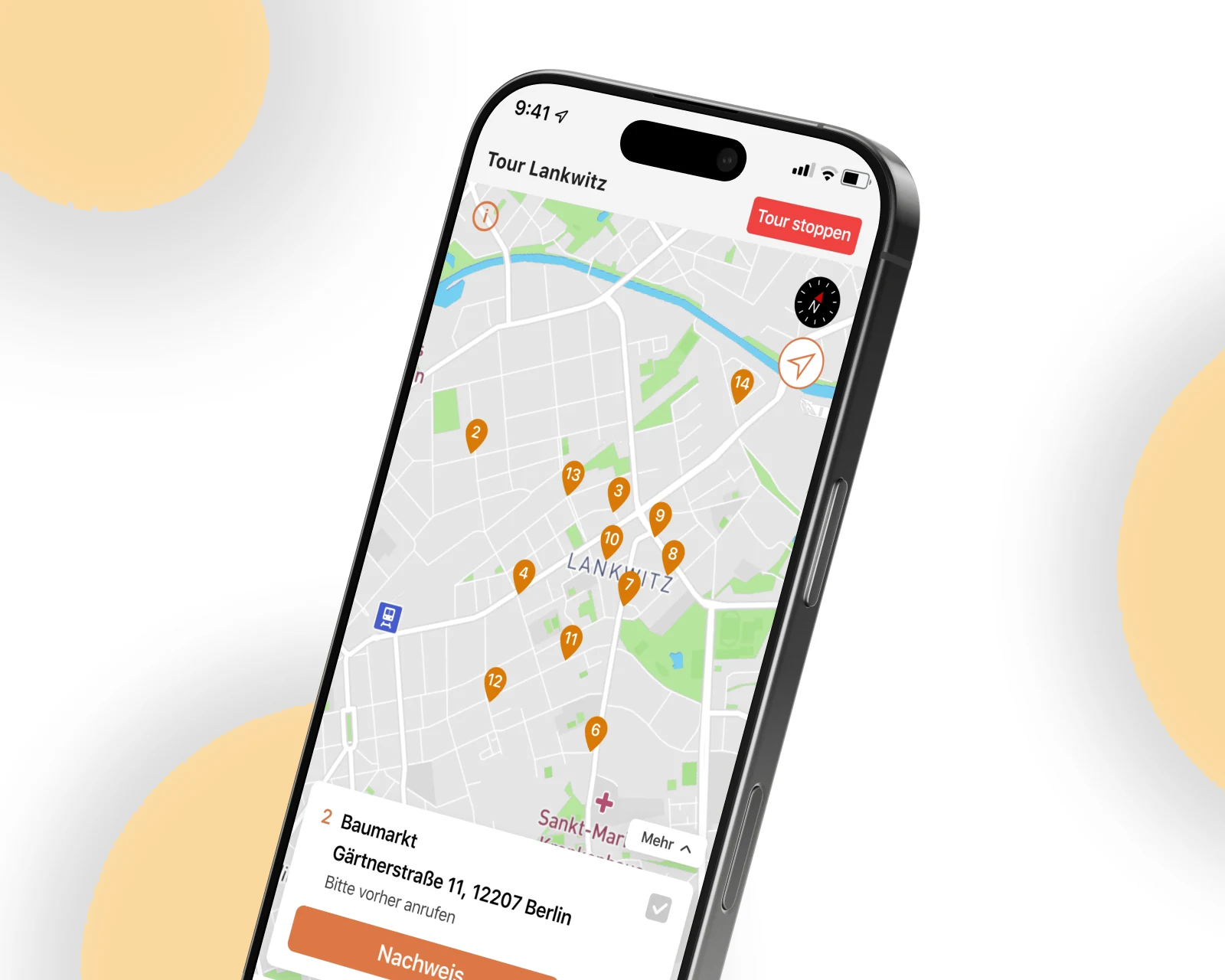
Android + iOS refactor and rebuild for a German last-mile logistics operator — multi-point route planning, real-time driver tracking and in-app invoicing live in the EU.
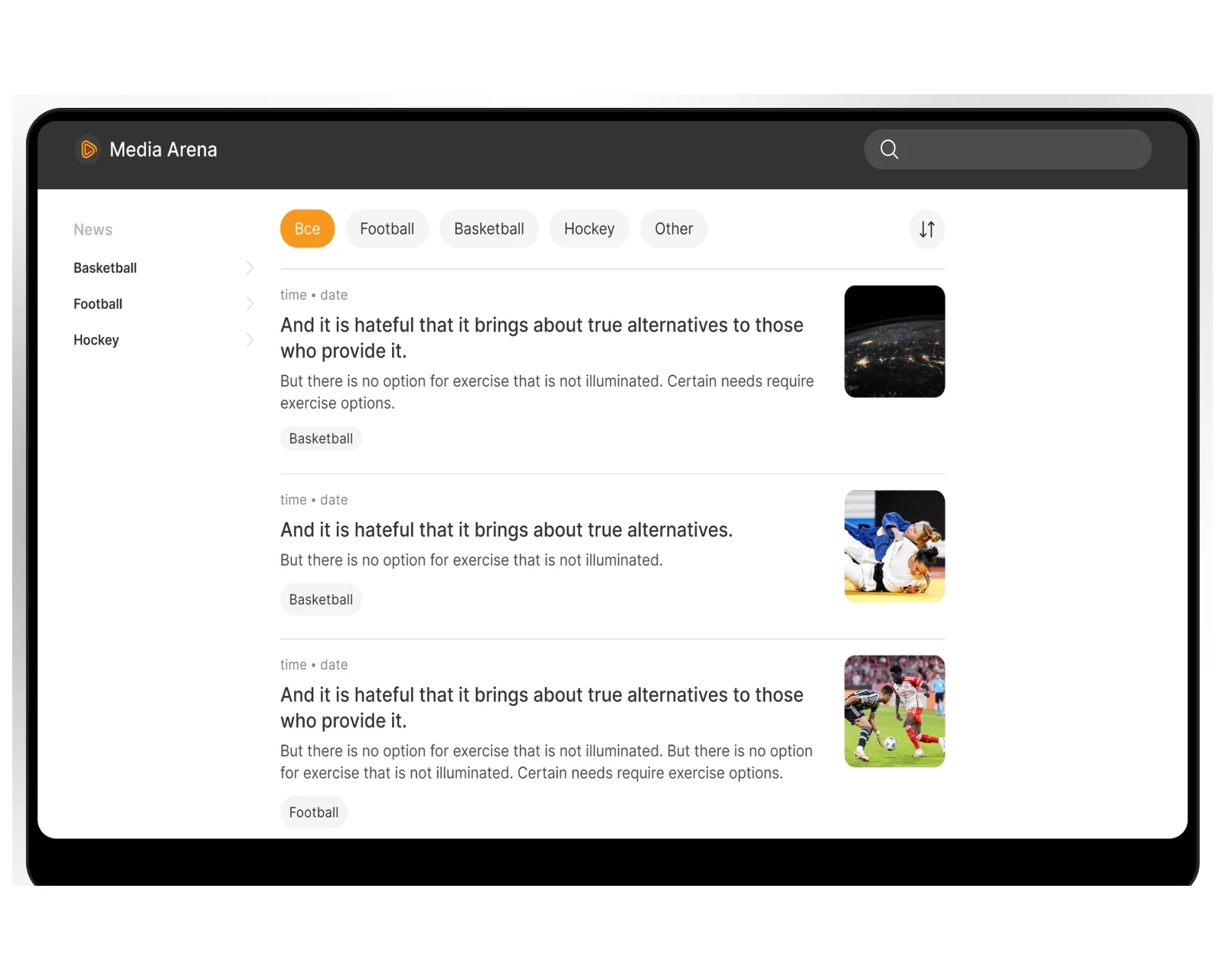
Cross-platform sports news app and web portal — Telegram-bot CMS instead of a custom admin, Markdown publishing pipeline.
Why YuSMP
We review the auto-configuration report on every project and override defaults explicitly — no hidden behaviour that surfaces under load.
Every Spring Boot service gets a custom SecurityFilterChain from day one — no default permitting all, no actuator endpoints exposed to the internet.
Micrometer, Prometheus and distributed tracing are wired at project creation — not added as an afterthought when a production incident occurs.
FAQ
Spring MVC (servlet-based, thread-per-request) is the right choice for most services — simpler to reason about, familiar to most Java developers and well-supported by JDBC-based persistence. Spring WebFlux (reactive, event-loop-based) is the right choice when you need very high concurrency with many slow I/O operations, or when integrating with reactive data stores (R2DBC, MongoDB Reactive). With Java 21 virtual threads (Spring Boot 3.2+), the concurrency gap between MVC and WebFlux narrows significantly.
Spring Boot auto-configures HikariCP, the fastest JDBC connection pool. We tune maxPoolSize to the database's max_connections divided by replica count, minIdle to reduce cold-connect latency and connectionTimeout to fail fast under overload. For Kubernetes, we add a pre-stop hook that drains connections before pod termination.
Three levels: unit tests with Mockito (fast, no context); @WebMvcTest / @WebFluxTest slices (controller layer only, no full context); @SpringBootTest with Testcontainers (full integration, real PostgreSQL and Kafka). We enforce a test-pyramid shape — majority unit tests, integration tests for critical paths, and Testcontainers for external dependency contracts.
We use Resilience4j (the Spring Boot starter) with CircuitBreaker, Retry and RateLimiter annotations or programmatic API. Circuit breakers are configured per downstream service with appropriate failure-rate thresholds and wait-duration-in-open-state. We expose the circuit-breaker state via Actuator and Micrometer metrics for real-time monitoring.
Spring Boot 3 includes the Spring AOT engine that generates GraalVM native image hints at compile time. Native images start in under 100 ms and use significantly less memory — useful for Lambda and short-lived batch jobs. Tradeoffs: longer build time, reflection and dynamic class loading must be pre-declared in hints, and some auto-configurations are not native-compatible. We evaluate native image compatibility per project.
We configure readinessProbe to check /actuator/health/readiness (Spring Boot 2.3+ Kubernetes probes), livenessProbe to check /actuator/health/liveness, and preStop hooks to drain connections before SIGTERM. Pod Disruption Budgets ensure at least one pod is healthy during rollout. Flyway runs as a Kubernetes Job in the deploy pipeline before the Deployment rollout starts.
We expose Actuator on a separate management.server.port (not the application port), restrict access to an internal Kubernetes Service (ClusterIP), require HTTP Basic or Bearer auth on all actuator endpoints, and include only health, info and metrics in the exposed set. /actuator/env, /actuator/heapdump and /actuator/loggers are disabled in production.
Response within 1 business day. NDA on request.
Share a few details and a senior consultant will reply within one business day.