

The short answer
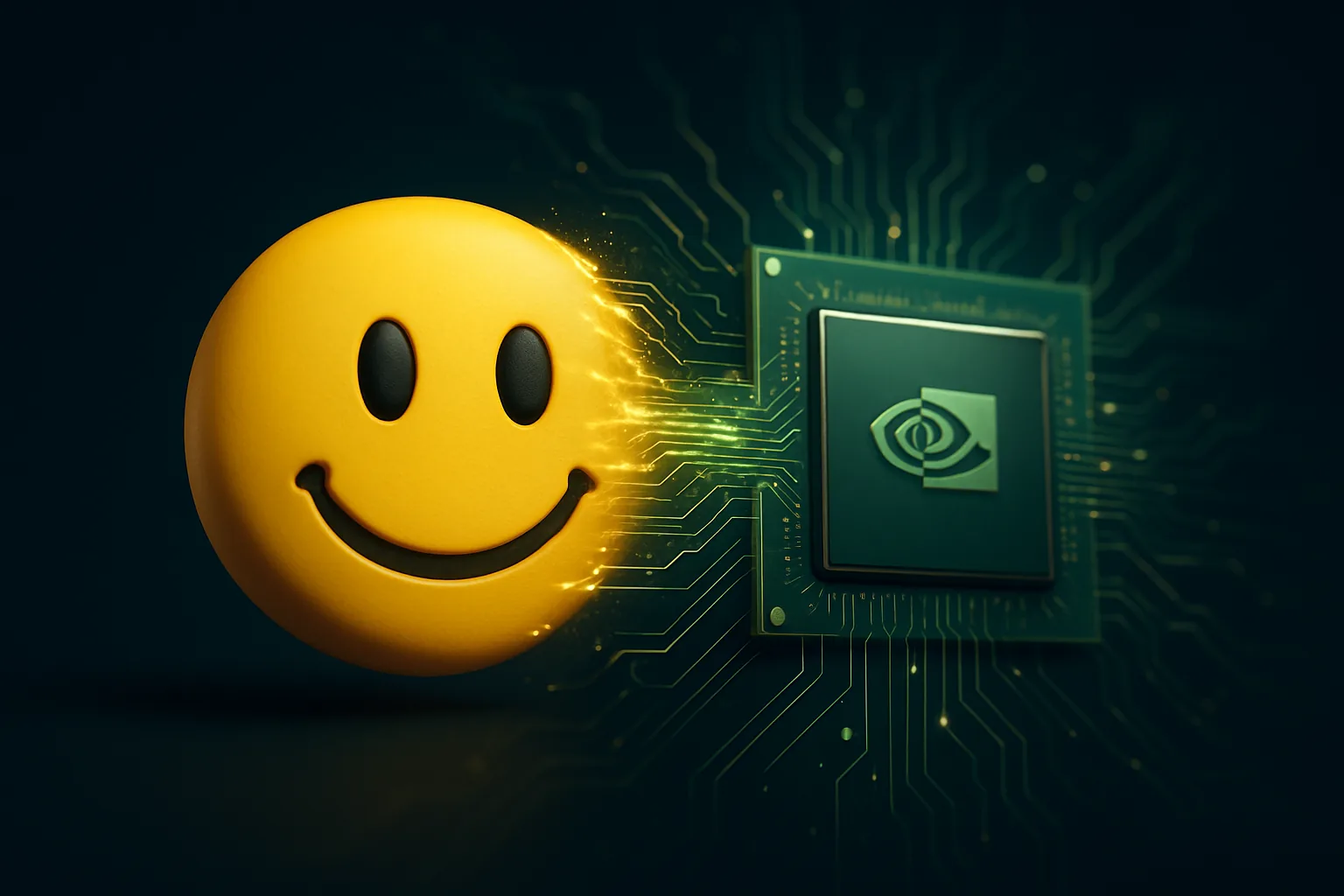
Nvidia is reportedly buying the world's largest open-source AI model hub. According to The Information, TechCrunch, and CNBC (27 August 2026), Nvidia has agreed to acquire Hugging Face for approximately $12.9 billion — a near-tripling of the company's $4.5 billion valuation from its 2023 Series D. Business Insider cautioned that no signed agreement existed at time of reporting and talks could still fail. Both companies have declined to comment.
For teams building AI and machine-learning products, the practical question is not whether to panic — nothing changes today — but whether to rethink how tightly your ML pipeline is coupled to a platform whose ownership and incentives are about to shift.
What Hugging Face is and why this matters
Hugging Face, founded in 2016, runs the most-used platform for sharing, discovering, and downloading open-weight AI models. Its Hub hosts over one million models — from commodity text classifiers to frontier language models like Llama 4, Mistral Large, Qwen 3, and hundreds of task-specific fine-tunes. The company's Transformers library is a de facto standard; it powers model loading in virtually every enterprise ML pipeline that does not use a fully proprietary inference stack.
Unlike a cloud model API, Hugging Face operates as a commons: researchers publish weights, anyone downloads them, and teams run inference wherever they want — on their own GPUs, on managed inference providers, or on cloud ML services. This neutral position is why Hugging Face commands trust from both the open-source research community and enterprise AI teams. Its CEO, Clement Delangue, has publicly argued that restricting open models "would hurt first cybersecurity defenders, startups, small companies, researchers."
Nvidia's reported interest makes strategic sense. The chipmaker already sells the hardware that runs most of the world's AI training and inference workloads. Owning the platform where teams discover and download models means Nvidia gains a direct channel into the software decisions — model selection, quantization format, inference runtime — that determine which GPU architecture a team needs. It is vertical integration one layer up from silicon.
What the reports say — and what remains uncertain
The story broke on 26–27 August 2026. The Information, citing a person familiar with the matter, reported that Nvidia had agreed to acquire Hugging Face for $12.9 billion. TechCrunch, CNBC, and Forbes covered the report the same day, all with sourcing hedges ("reportedly," "according to reports"). Bloomberg confirmed it had discussed the deal but reported the talks were still ongoing. Business Insider added that no signed agreement existed at publication time and that the deal could still fall through.
Nvidia invested $235 million in Hugging Face's August 2023 Series D at a $4.5 billion valuation. The reported $12.9 billion price — nearly three times that valuation in three years — reflects both Hugging Face's revenue growth (approximately $150 million annually as of mid-2026, approaching profitability) and the strategic premium Nvidia is willing to pay for a software distribution asset of this scale and centrality.
Jensen Huang has publicly championed open-source AI, stating that "open models strengthen safety and cybersecurity, accelerate innovation and diffusion, and enable sovereignty." If the acquisition closes, Nvidia would control that open commons — which makes its governance commitments considerably more consequential.
What changes for software teams
In the short term: nothing. Models remain downloadable, the Transformers library does not change ownership of its weights, and inference can still run on any hardware. No teams need to migrate, retrain, or replatform today.
The medium-term scenario worth planning for is a gradual tilt. Nvidia has strong incentives to make Hugging Face more commercially integrated with its own NIM (Nvidia Inference Microservices) product, which packages optimised model containers designed specifically for Nvidia GPUs. This could manifest as: premium access tiers for high-throughput model downloads on non-Nvidia infrastructure; deeper integration between Hub model cards and Nvidia's enterprise support; or governance changes that slow the publication of model formats optimised for AMD ROCm or CPU-based inference.
None of those scenarios are disasters on their own, but together they represent a shift from a neutral commons to a platform with a hardware vendor's incentives baked in. Teams that rely on Hugging Face as their sole model registry, and who run inference on non-Nvidia hardware, face the highest exposure to this shift.
For teams already committed to the Nvidia stack — using A100s, H100s, or GB200s for training and inference — the acquisition may deliver real value: faster access to NIM-optimised model containers, better integration between Hub and enterprise licensing, and a single support channel for model and hardware issues. The deal is not uniformly negative; it depends heavily on your current infrastructure choices.
EU AI Act and open-source model governance
EU-regulated teams face a specific dimension that US-only teams can ignore for now. The EU AI Act's General-Purpose AI (GPAI) provisions — which came into force in August 2026 — require providers of GPAI models above certain capability thresholds to publish technical documentation, safety evaluations, and adversarial testing results. Hugging Face has been a central repository for this compliance documentation through its model cards.
If Nvidia acquires Hugging Face, the legal entity responsible for maintaining and updating that documentation changes. For high-risk AI applications — as defined by the EU AI Act Annex III — teams must be able to trace the provenance of the models they deploy. An ownership change does not invalidate existing model cards, but it does mean teams should verify that compliance documentation continues to be maintained and updated under the new entity, particularly for models they put into production after the acquisition closes.
GDPR implications are narrower. Hugging Face-hosted inference (via their Inference API or Endpoints service) involves data processing by Hugging Face as a sub-processor. If Nvidia becomes the legal entity, GDPR Article 28 sub-processor agreements need to be updated. Teams processing EU personal data through Hugging Face's managed inference service should flag this for their next DPIA review cycle.
What to do now
No immediate action is required. The deal is not confirmed, and even if it closes, Hugging Face's platform will not change on day one. What is worth doing this quarter:
- Cache your critical model versions locally. If you depend on specific Hugging Face Hub models in production — pinned by commit hash — download and store those weights in your own artifact registry (S3, GCS, Artifactory, or a self-hosted registry). Access policies can change; your own storage does not.
- Evaluate at least one alternative model registry. Options include Ollama's model library, your cloud provider's model catalogue (Amazon Bedrock, Google Vertex AI Model Garden, Azure AI Model Catalog), or a self-hosted Hugging Face Enterprise Hub deployment. Having a tested fallback is inexpensive now and valuable later.
- Audit hardware coupling in your inference stack. If you run inference on non-Nvidia hardware — AMD MI300X, Intel Gaudi, custom ASIC, or CPU-only — verify that the model formats you depend on (GGUF, ONNX, SafeTensors) remain portable and are not being deprecated in favour of Nvidia-only TensorRT-LLM formats.
- EU teams: flag for DPIA review at close. Mark the Hugging Face acquisition as a pending sub-processor change in your data protection register. Review it when the deal officially closes and the legal entity in your DPA changes.
- Track EU AI Act model documentation. If you use open-weight models in high-risk AI applications, add a step to verify that model cards and GPAI technical documentation continue to be maintained post-acquisition.
Frequently asked questions
What is Hugging Face and why does it matter to developers?
Hugging Face is a platform hosting more than one million open-weight AI models, datasets, and demo applications. It is where most engineering teams go to download base models like Llama, Mistral, Qwen, and hundreds of fine-tuned variants — avoiding the cost and complexity of training from scratch. Its Transformers library is used in virtually every enterprise ML pipeline. If Nvidia acquires it, the neutral hub becomes part of a hardware vendor's product portfolio.
Is the Nvidia–Hugging Face deal confirmed?
As of 27 August 2026, the deal is reported — not officially confirmed. The Information reported that Nvidia agreed to acquire Hugging Face for approximately $12.9 billion. TechCrunch and CNBC covered the story the same day; Business Insider noted that no signed agreement existed at time of reporting and that talks could still break down. Neither Nvidia nor Hugging Face has issued an official statement.
What happens to open-source model access if Nvidia owns Hugging Face?
In the short term, nothing is expected to change. Models already published remain available, and the Hub's open-weight distribution model is not threatened on day one. The structural risk is longer-term: Nvidia could prioritise models optimised for its own hardware, tie premium download bandwidth to NIM licensing, or make governance changes that shift Hugging Face from a neutral commons to a hardware-vendor-aligned platform.
Should EU teams worry about EU AI Act implications?
Yes, selectively. The EU AI Act's GPAI provisions require transparency documentation for models above certain capability thresholds. If Hugging Face comes under Nvidia's ownership, the entity responsible for model cards, safety evaluations, and incident reporting changes. EU-regulated teams using open-weight models in high-risk AI applications should track how model governance documentation and provenance chains change post-acquisition, and update DPIA records when the legal entity in their GDPR data-processor agreements changes.
What should teams using open-source models do right now?
No immediate action is needed. Continue using Hugging Face Hub and the Transformers library as normal. What is worth doing now: (1) download and locally cache specific model versions your production workloads depend on; (2) evaluate at least one alternative model registry as a contingency; (3) review your inference stack for hardware coupling — if you run on non-Nvidia GPUs, verify that model formats remain portable; (4) EU teams: flag the ownership change for your next DPIA review cycle.
Sources
TechCrunch — Nvidia closes in on Hugging Face acquisition, 26 August 2026
Forbes — Nvidia Has Reportedly Agreed To Buy Hugging Face For $13 Billion, 27 August 2026
CNBC — Nvidia agrees to buy Hugging Face for $12.9 billion, report says, 27 August 2026
PYMNTS — Nvidia Nearing $13 Billion Deal For Hugging Face, 27 August 2026