Request validation drift
Mismatched validation rules between docs and code cause integration bugs in consuming services. FastAPI's Pydantic models are the single source of truth — validation is the schema.

FastAPI Python OpenAPI Async
FastAPI generates OpenAPI documentation automatically, enforces Pydantic validation at the boundary, and runs async I/O natively — three properties that eliminate entire classes of bugs before they reach production. We build FastAPI services backed by async SQLAlchemy, Redis, Celery and PostgreSQL for US and EU clients who need documented, typed APIs and GDPR-compliant data handling.

FastAPI generates OpenAPI documentation automatically, enforces Pydantic validation at the boundary, and runs async I/O natively — three properties that eliminate entire classes of bugs before they reach production. We build FastAPI services backed by async SQLAlchemy, Redis, Celery and PostgreSQL for US and EU clients who need documented, typed APIs and GDPR-compliant data handling.
Challenges
Mismatched validation rules between docs and code cause integration bugs in consuming services. FastAPI's Pydantic models are the single source of truth — validation is the schema.
Mixing sync ORM calls inside async endpoints silently blocks the event loop under load. We use async SQLAlchemy 2 throughout and enforce async-safety in code review.
API schema drift breaks consumers silently in polyglot environments. We generate JSON Schema and OpenAPI snapshots in CI and treat schema changes as breaking changes.
Python cold starts on AWS Lambda and similar runtimes can reach 2–4 s. We use connection pooling via PgBouncer and lazy initialisation patterns to cut cold-start overhead.
In-process background tasks (FastAPI BackgroundTasks) lose work on pod restart. We offload durable work to Celery + Redis with retry policies and dead-letter queues.
EU–US data flows require SCCs or adequacy decisions. We isolate EU-resident data in separate PostgreSQL schemas with async row-level security and document the data flow map.
Solutions
Full async FastAPI services with auto-generated OpenAPI docs, Pydantic v2 models and async SQLAlchemy — ready to integrate with any consumer.
JWT with PKCE, refresh-token rotation, role-based and attribute-based access control — wired into FastAPI dependency injection.
SQLAlchemy 2 async ORM, Alembic migrations, PgBouncer pooling, PostgreSQL row-level security for multi-tenant data isolation.
Celery workers backed by Redis with retry, priority queues and dead-letter queues — deployed alongside the FastAPI service in the same Docker Compose / Kubernetes stack.
GitHub Actions pipeline with pytest, mypy, ruff, schema snapshot tests, Sentry integration and structured JSON logs.
Ready-to-wire endpoints for access, rectification and erasure requests — documented in OpenAPI and backed by async DB transactions.
Stack
FastAPI, Python 3.11+, Pydantic v2, SQLAlchemy 2 (async), Alembic, PostgreSQL, Redis, Celery, Docker, GitHub Actions, pytest, Sentry.
Compliance
GDPR-ready · async data isolation · OpenAPI audit trail · HIPAA-compatible async encryption
Cases
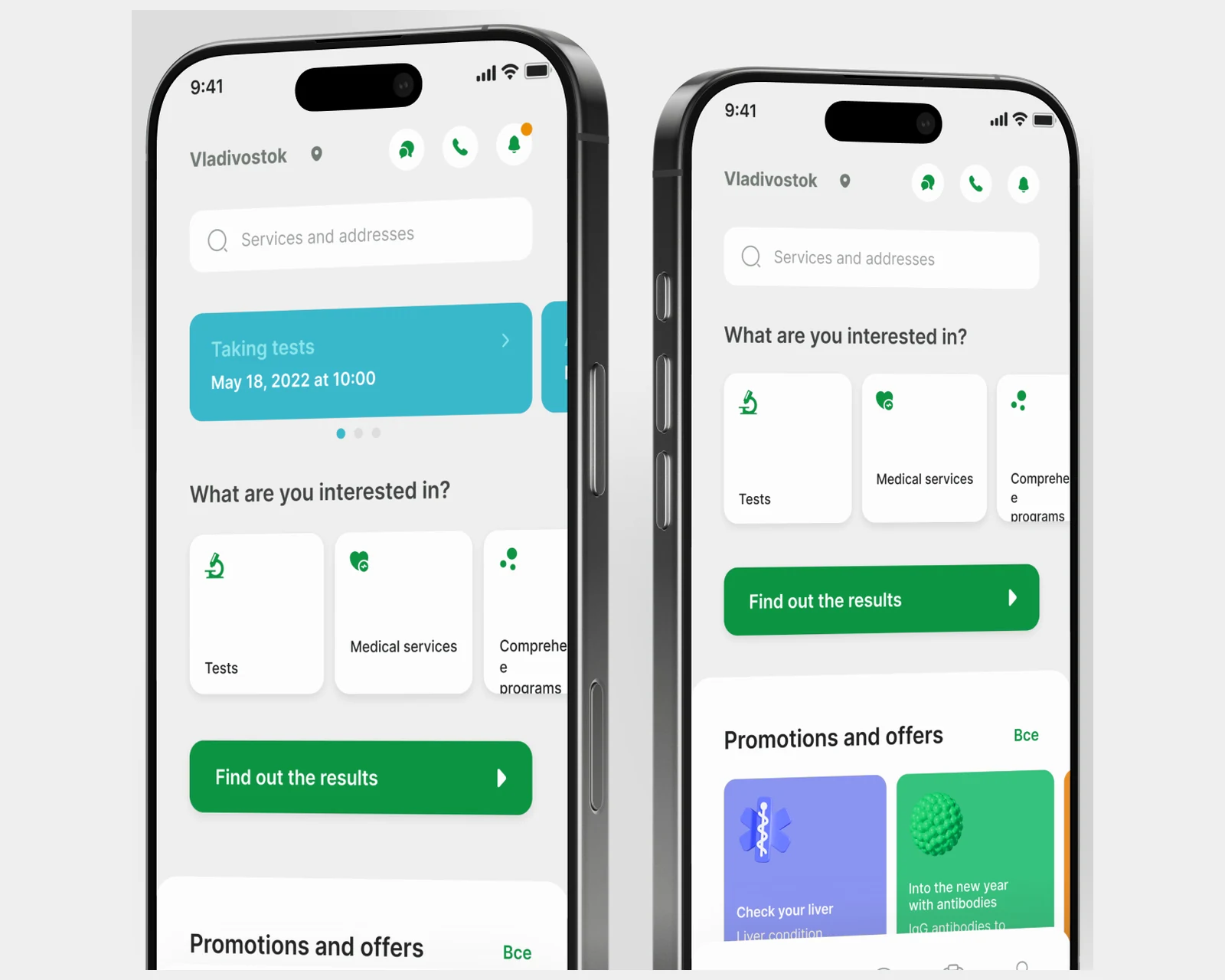
Patient app for a 40-city lab network — appointment booking, digital results, 2,500+ tests, scheduling and accounting integrations.

Unified crypto-ecosystem hub aggregating multiple tokens — live exchange data, search, charts, direct purchase entry point.
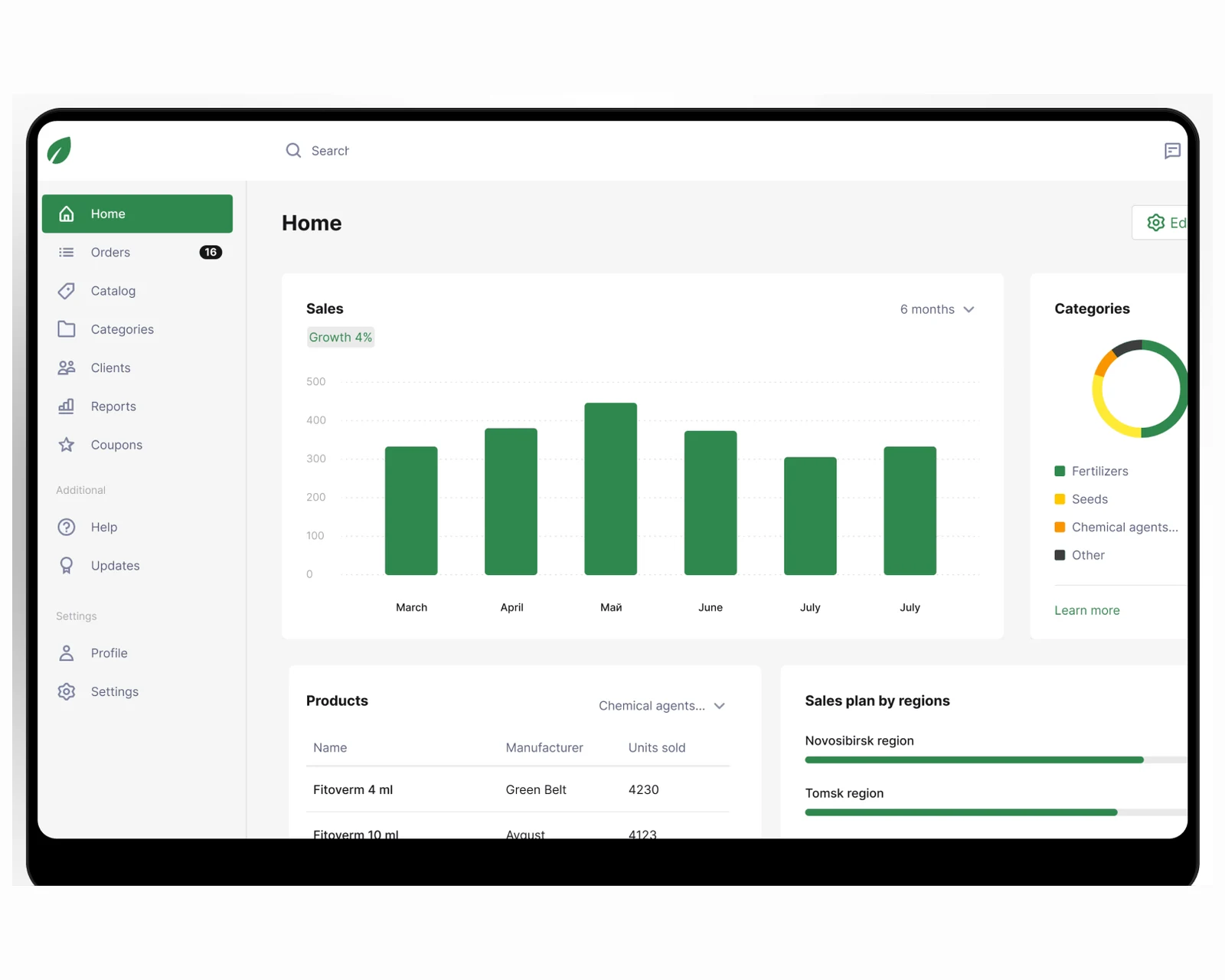
Offline-first iOS & Android field-sales app for an agricultural distributor — structured catalog, deal reporting, plan vs actual.
Why YuSMP
FastAPI generates OpenAPI from code — docs and behaviour are always in sync. We enforce schema snapshots in CI so consumers are never surprised by breaking changes.
Every endpoint, ORM query and background task runs async — no silent event-loop blocking under production load.
Typed models, auto-docs and dependency injection reduce ramp-up time. New engineers contribute safely from week one.
FAQ
FastAPI is complementary, not a replacement. Django excels at full-stack monoliths with ORM, admin and templates. Flask suits lightweight synchronous services. FastAPI is the right choice when you need native async, auto-generated OpenAPI docs and Pydantic data validation — typical in microservices, ML inference APIs and data pipelines.
FastAPI has no built-in ORM or migration tool. We use SQLAlchemy 2 (async) as the ORM and Alembic for schema migrations. Alembic generates migration scripts from model changes and applies them in a separate step in the deployment pipeline — safe for blue-green and rolling deployments.
Yes. FastAPI itself is a framework — HIPAA compliance depends on the infrastructure and data-handling decisions around it. We implement PHI encryption at rest (AES-256), row-level security in PostgreSQL, audit-log middleware, least-privilege IAM and encrypted transit (TLS 1.2+). All configuration is documented in a HIPAA compliance matrix.
We use URL-prefix versioning (/v1/, /v2/) with explicit deprecation headers. OpenAPI snapshot tests in CI catch accidental breaking changes. Consumers receive a deprecation timeline before a version is removed, and we maintain both versions in the same FastAPI app during transition.
Yes. FastAPI's WebSocket support shares the same async event loop as REST endpoints. We build real-time notification systems, live-data feeds and collaborative features on FastAPI WebSockets backed by Redis pub/sub for horizontal scaling.
FastAPI uses Python's UploadFile abstraction backed by Starlette. We stream uploads directly to S3 (or compatible object storage) using async multipart upload — files never touch the application server disk, keeping memory usage flat under concurrent uploads.
FastAPI endpoints enqueue tasks via Celery's apply_async — the request returns immediately with a task ID. Celery workers (separate processes/pods) process the job and write results to Redis or PostgreSQL. Clients poll a status endpoint or receive a webhook callback on completion.
Response within 1 business day. NDA on request.
Share a few details and a senior consultant will reply within one business day.