ASP.NET Core APIs
Minimal APIs and MVC controllers, OpenAPI 3.1 with NSwag or Microsoft.OpenApi, FluentValidation, MediatR for CQRS, vertical slice architecture, output caching, rate limiting middleware.

Services
Senior .NET engineering for enterprise and regulated SaaS: .NET 9 (and .NET 10 LTS from Nov 2025) with ASP.NET Core minimal APIs and MVC, EF Core 9 on SQL Server or Postgres, MassTransit on RabbitMQ or Azure Service Bus, Blazor Server and WebAssembly, MAUI for cross-platform, and clean migration off .NET Framework 4.x onto modern cross-platform .NET. We ship enterprise-grade C# without enterprise-grade bureaucracy. Fixed-scope, all-in USD pricing: a web app MVP or dashboard from $4,100, a CRM or B2B portal from $8,100, a SaaS platform from $13,800, a marketplace or highload build from $28,700. Evaluating the stack first? See our .NET capabilities and when to choose it for enterprise.

GDPR-aligned · ISO 27001 ready · SOC 2 Type II in progress · HIPAA-capable · CCPA-acknowledged · CET workday with 9 AM–1 PM ET overlap
.NET is the right call when your customers are enterprises with Azure or on-prem Windows commitments, when your domain has rich types and long lifetimes (insurance, banking, healthcare, logistics, manufacturing), and when you want a stack where async/await, source generators, AOT compilation and a serious JIT all come standard. We build ASP.NET Core APIs, Blazor and MAUI clients, MassTransit-based event-driven services, EF Core 9 against SQL Server and Postgres, and Azure-native workloads on App Service, Container Apps, AKS and Functions. Our .NET engineers average 10+ years in C# and have shipped systems regulated under PCI DSS, HIPAA and EU DORA. We are GDPR-aligned · ISO 27001 ready · SOC 2 Type II in progress.
Minimal APIs and MVC controllers, OpenAPI 3.1 with NSwag or Microsoft.OpenApi, FluentValidation, MediatR for CQRS, vertical slice architecture, output caching, rate limiting middleware.
MassTransit on RabbitMQ, Azure Service Bus, or Amazon SQS. Saga orchestration, outbox pattern, exactly-once semantics, dapr for cross-language polyglot estates.
Blazor Server, Blazor WebAssembly, and Blazor United (.NET 8+) for component-driven web. MAUI for iOS, Android, Windows and macOS desktop from one C# codebase.
Microsoft Entra ID (Azure AD), Duende IdentityServer, Auth0, Okta. OIDC, SAML 2.0, OAuth 2.1, B2B and B2C tenants, SCIM provisioning, fine-grained authorisation with OpenFGA or built-in policy authorisation.
EF Core 9 with SQL Server, Postgres (Npgsql) or Azure SQL, Dapper for hot paths, Marten or EventStoreDB for event sourcing, ClickHouse or Synapse for analytics.
Migrating .NET Framework 4.5/4.7/4.8 and WCF/WebForms onto .NET 8/9/10 cross-platform. .NET Upgrade Assistant, then manual cleanup of System.Web, AppDomain, remoting and WCF dependencies.
1–2 weeks: read the .csproj / sln, identify .NET Framework versus .NET Core / 6/8/9 mix, profile EF Core or NHibernate queries, decide vertical-slice vs onion architecture, and write the ADR before any code lands.
Sprint 1–2: SDK-style projects, Central Package Management, .editorconfig + analyzers (StyleCop, Roslynator), Azure DevOps or GitHub Actions pipelines, container builds, OpenTelemetry to Application Insights / Datadog, blue/green deploys.
Two-week sprints, trunk-based, feature flags via Microsoft.FeatureManagement or LaunchDarkly, xUnit + FluentAssertions + Testcontainers for integration tests, NBomber for load testing, contract tests with Pact.
On-call handoff (PagerDuty / Azure Monitor alerts), SLO dashboards, EF Core slow-query review monthly, Azure / AWS cost review quarterly, NuGet upgrades via Renovate or Dependabot.
Default for most clients. Scope and price locked at the end of discovery, then we ship it: a web app MVP or dashboard, a CRM or B2B portal, a SaaS platform, or a marketplace. All-in USD, no scope creep without a written budget delta.
Post-launch growth on the same squad, same repo, same CI and on-call — no recontracting. Ship weekly against a rolling backlog once the fixed-scope build is live, and add capacity as the roadmap grows.
One or two senior C# / .NET engineers slotted into your existing squad, your stand-up, your process. Best for filling a known capability gap without disturbing team structure.
Fixed scope, fixed price, signed off before any code is written. NDA, DPA, and IP assignment signed before kickoff; IP transfers to you on day one.
Most agencies keep the number for a sales call. Below are reference formats for the common kinds of .NET build — we name the exact quote after a free scope assessment. Every build is fixed-scope and all-in, quoted in USD, with no recruitment markup, no tool surcharges and no hidden fees. You see the line-item budget before any code is written and sign off on it.
Web app MVP / dashboard
from $4,100
4–8 weeks · one surface
First working ASP.NET Core web app or internal Blazor dashboard. Core flows, auth, an EF Core 9 data layer, deploy and source handover — a real product, not a demo.
CRM / B2B portal
from $8,100
8–12 weeks · multi-role
Multi-role CRM or B2B portal. Roles and permissions, an admin panel, external integrations, reporting and an event-driven .NET backend on MassTransit.
SaaS platform
from $13,800
12+ weeks · multi-tenant
Multi-tenant SaaS on ASP.NET Core. Subscription billing, tenant isolation, SSO, background jobs and a production observability stack — investor-ready.
Marketplace / highload
from $28,700
scoped · event-sourced
Marketplace or highload system. Event-sourced services, saga orchestration and outbox, horizontal scale on AKS, and PCI DSS / HIPAA / EU DORA compliance depth.
What moves the number: how much legacy you carry (a greenfield ASP.NET Core service sits well below an incremental .NET Framework 4.7 / WCF / WebForms migration of a 500k-LOC monolith behind a YARP side-by-side host); how many client surfaces you need (an API-only backend vs Blazor United web plus MAUI iOS/Android/desktop from one codebase); your data and messaging complexity (a single EF Core 9 database vs event-sourced services on MassTransit with saga orchestration and the outbox pattern); and domain compliance depth (PCI DSS, HIPAA BAAs, or EU DORA ICT third-party registers and resilience testing raise the bar and the evidence workload). A clean greenfield build under a standard DPA sits at the bottom of a band; a regulated system writing to production financial or health data sits at the top. Azure / AWS cloud fees are billed on your own accounts, so you keep the cost lever. Prices are indicative and are fixed in a written quote for your specific scope.
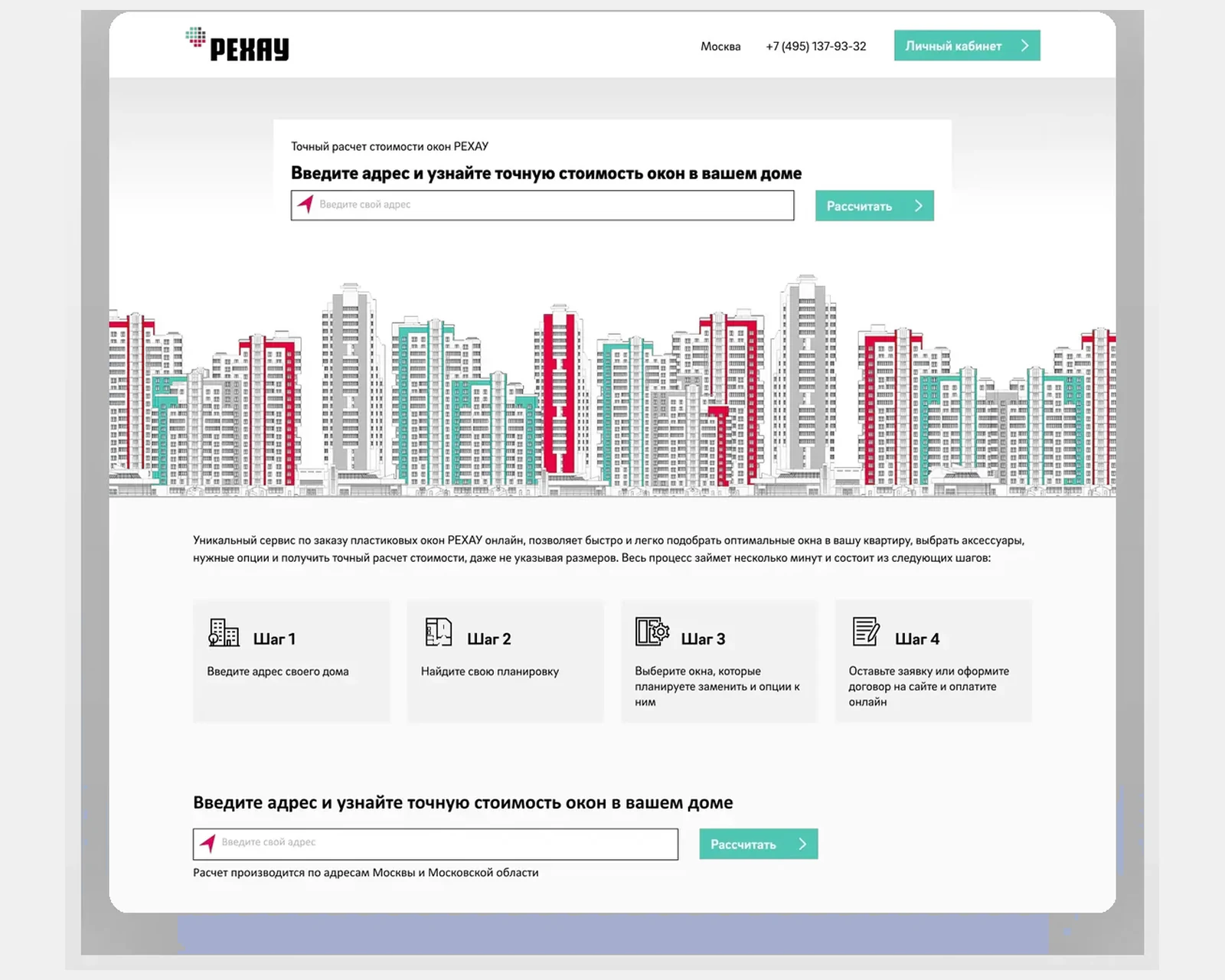
B2B e-commerce and product configurator for a global polymer manufacturer with multi-region pricing, stock and dealer workflows.
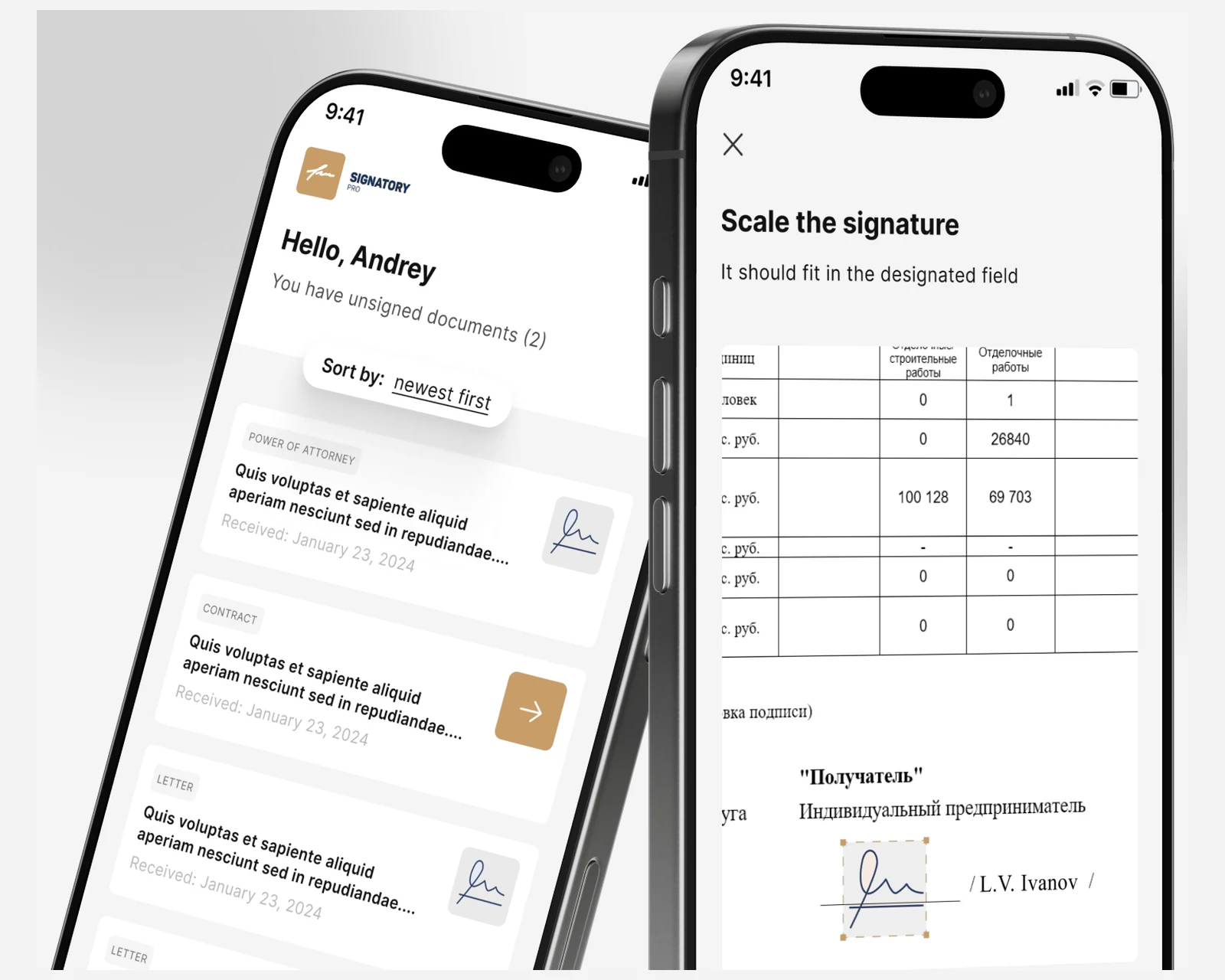
Native iOS and Android e-signature clients with a Symfony + React CRM for a cross-border law firm — KYC onboarding and a defensible evidence trail for US & EU matters.
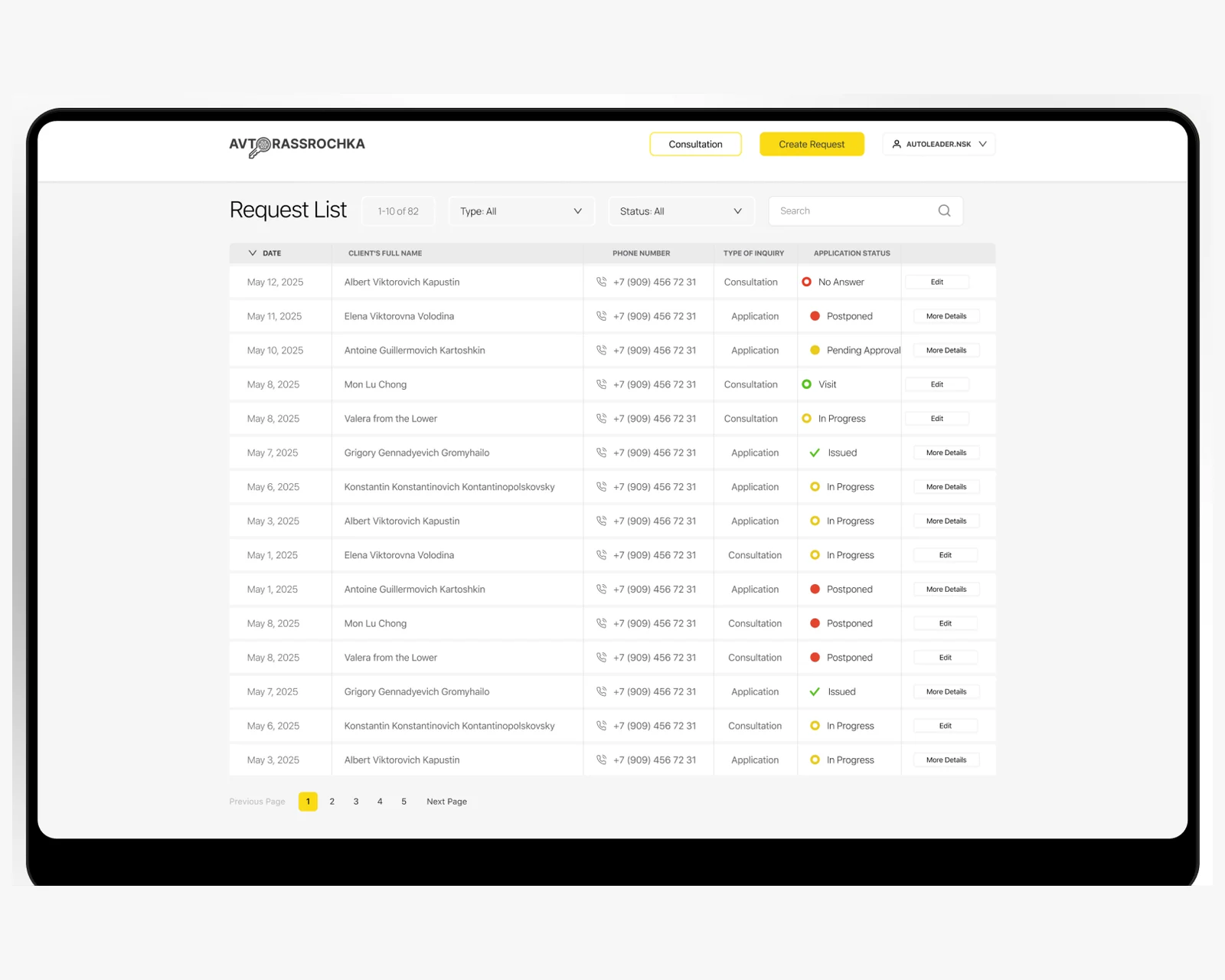
Dealer-facing web platform funneling every auto-financing enquiry into a single tracked queue with Bitrix24 CRM sync.
.NET earns its slot in domains with rich types, long lifetimes and a regulator in the room. We pair senior C# engineering with domain-specific conformance across US & EU markets, and share delivery with our enterprise software and cloud & DevOps teams when the system fronts legacy .NET Framework estates or Azure-native infrastructure.
Lending, payments and dealer-finance platforms on ASP.NET Core with PCI DSS controls and EU DORA ICT third-party registers and resilience testing — the kind of tracked, CRM-synced queue behind our AutoFinance dealer build.
FinTech →HIPAA-capable .NET services with BAAs via Azure HIPAA-eligible services, EU-region data residency, PII encrypted with customer-held Key Vault or KMS keys, and documented data flows for the auditor your reviewer expects.
HealthTech →Route-planning, real-time tracking and in-app workflows over constantly changing state — the kind of EU-hosted backend behind our xRouten last-mile build for a German operator, delivered on event-driven .NET services.
Logistics →B2B commerce, product configurators and ERP integration — multi-region pricing and dealer workflows as on our REHAU build, and bidirectional 1C sync for a live auto-parts catalog where prices shift hourly.
Retail →Policy administration, quote-and-bind and claims workflows where the domain is rich and the rules change with every regulator. C# records and pattern matching model policy states cleanly; event-driven .NET keeps underwriting, rating and claims decoupled, with a full audit trail your compliance team can hand to the FCA, BaFin or a US state insurance department.
InsurTech →Case-management, licensing and citizen-facing portals with long lifetimes and hard on-prem constraints — exactly where .NET on Windows Server or RHEL earns its slot. We ship WCAG 2.2 AA accessible Blazor front-ends, data residency inside the national border, and the documented data flows and audit logging a public-sector procurement review expects.
GovTech →GDPR-aligned · ISO 27001 ready · SOC 2 Type II in progress · HIPAA-capable · CCPA-acknowledged
Every engineer on your account has 8+ years of production C# / .NET experience. No bait-and-switch from the senior who sold the deal to a junior who actually ships.
CET-aligned squads with a guaranteed 9 AM–1 PM ET overlap for US clients — four hours of synchronous work per day, async docs for the rest. No 3 AM standups for anyone.
GDPR DPAs, SOC 2 Type I/II readiness, EU DORA for financial services, HIPAA controls for US healthtech, CCPA notices, EU AI Act for AI features. The compliance work is built into the sprint, not bolted on at audit time.
For regulated workloads we work directly with your auditor or fund's technical advisor and prepare evidence to the standard the reviewer expects — not the standard a generalist consultant assumes.
Real-time ERP sync for an auto-parts catalog is harder than it looks — prices shift hourly and the catalog changes constantly. YuSMP built a bidirectional 1C integration that just works, with a clean storefront customers navigate without friction.
A retail chain with dozens of locations needs document workflows that non-technical staff can follow without training. YuSMP built an internal DMS with approval chains, versioning, and role-based access that our compliance officer called the cleanest system we have ever deployed.
.NET wins when your customers live in Azure or run on-prem Windows, when your domain is rich and benefits from C# records, pattern matching and source generators, and when you want first-class native AOT, async/await and ValueTask without the runtime tax of the JVM. Pick Java when your operations team is already on JVM observability and the talent pool locally favours it. Pick Node.js for I/O-heavy web BFFs. Pick Go for static binaries you ship to edge or CLI. We run polyglot teams and recommend .NET only when it earns the slot.
.NET 9 (STS, supported through May 2026) is current default. .NET 10 LTS lands November 2025 and becomes our new-build default by December 2025, supported through November 2028. C# 13 with collection expressions and primary constructors. We migrate STS-pinned codebases to the next LTS before STS support expires — never let an unsupported runtime sit in production. EF Core 9 default, EF Core 10 once the .NET 10 ecosystem catches up Q1 2026.
Yes. Default deployment is Azure West Europe, North Europe, Germany West Central or France Central; AWS eu-central-1 / eu-west-1 for cross-cloud; on-prem Windows Server / RHEL where the regulator requires it. PII encrypted with Azure Key Vault or AWS KMS keys held in customer tenant. We ship GDPR Article 28 DPAs, DPIAs for high-risk, Article 30 records. For DORA (EU financial services, Jan 2025) we provide ICT third-party register documentation, incident classification, and resilience testing artefacts. HIPAA-capable for US healthtech with BAAs in place via Azure HIPAA-eligible services.
Incremental, never big-bang. Step 1: .NET Upgrade Assistant for low-risk projects (class libraries, console apps). Step 2: side-by-side host — new ASP.NET Core endpoints behind YARP reverse proxy in front of the legacy IIS app, route by URL. Step 3: replace WCF with gRPC or REST + MediatR contracts. Step 4: replace WebForms screens one bounded context at a time with Blazor or React. Typical 500k-LOC enterprise monolith takes 9 to 14 months with no customer-visible downtime and no feature freeze.
Yes. Blazor United from .NET 8 (and refined in .NET 9/10) is now the default for new internal-tools and B2B SaaS UIs — one component model, render-mode chosen per route (Server, WASM, SSR, or auto). Blazor Server still wins for low-latency LAN apps with rich state. Blazor WebAssembly with AOT for offline-capable B2C. We have shipped a 240-screen Blazor United B2B SaaS with sub-100 ms TTI on cached routes and full keyboard-driven UX for power users.
.NET builds are fixed-scope and all-in, quoted in USD, tiered by what you are building. A web app MVP or internal client dashboard runs from $4,100 (4–8 weeks); a CRM or B2B portal with roles, admin and integrations from $8,100 (8–12 weeks); a multi-tenant SaaS platform from $13,800 (12+ weeks); a marketplace or highload system from $28,700. The exact number depends on how much legacy you carry, how many client surfaces you need, your data and messaging complexity, and domain compliance depth (PCI DSS, HIPAA, EU DORA). You see the line-item budget at the end of discovery and sign off before any code is written. No recruitment markup, no tool surcharges and no hidden fees. Cloud fees run on your own Azure or AWS accounts, so you keep the cost lever.
We pick the isolation model to fit your compliance and cost envelope: shared database with a tenant discriminator and EF Core global query filters for the many-small-tenants case; schema-per-tenant when a regulator wants logical separation; database-per-tenant for enterprise customers who demand their own encryption keys and backup cadence. Tenant resolution runs in ASP.NET Core middleware (host, path or JWT claim), with per-tenant configuration, feature flags and rate limits. Background work is tenant-aware on MassTransit so one noisy tenant never starves the rest. We ship the onboarding, billing-hook and per-tenant observability from day one, not as a retrofit.
Yes, integration is usually the hard 40% of an enterprise build and we scope it explicitly. We run bidirectional 1C sync in production (a live auto-parts catalog where prices shift hourly), talk to SAP over OData or BAPI/IDoc, drive Salesforce and Dynamics through their REST APIs, and wrap legacy SOAP/WCF endpoints behind clean REST or gRPC contracts so the rest of your estate never sees the SOAP. Messaging goes through MassTransit on RabbitMQ or Azure Service Bus with the outbox pattern for exactly-once semantics, and every external call is wrapped in Polly retries, circuit breakers and timeouts so a flaky third party cannot take your system down.
Every service ships with OpenTelemetry traces, metrics and structured logs into Azure Monitor / Application Insights, Grafana + Prometheus or Datadog — your stack, not ours. Health checks feed Kubernetes or App Service probes; alerts route to your on-call. We agree SLAs up front (typical target 99.9% for business apps, 99.95%+ for revenue-critical systems) and back them with load-tested capacity headroom measured on NBomber. Post-launch we offer tiered support — from business-hours maintenance to 24/7 on-call with a named engineer — and a warranty window on defects introduced by us.
Yes. We use the Microsoft.Extensions.AI abstractions and Semantic Kernel to add retrieval-augmented generation, structured extraction and agent workflows to existing .NET systems without bolting on a separate Python service. Vector search runs on Azure AI Search, pgvector on PostgreSQL or Qdrant; models can be OpenAI, Azure OpenAI, Anthropic Claude or a self-hosted open model where data residency or cost demands it. We keep the AI layer behind an interface so you can swap providers, and we ship guardrails — input validation, output grounding against your own data, and cost/latency budgets — so an LLM feature is production-safe, not a demo.
Practical guides on .NET development, cost estimation, and technology choices.
Share a few details and a senior consultant will reply within one business day.