
TL;DR — key facts at a glance
Generative AI software development is building an application around a generative model — usually an LLM — so it produces text, code or answers as a core feature. In 2026 a focused API-based MVP costs about $15k and most custom builds land between $40k and $150k, taking roughly 2 to 8 months. Start by prompting an API, add RAG for your own data, and fine-tune only a narrow, stable, high-volume task.
What is generative AI software development?
Generative AI software development is the design and engineering of applications built around a generative model — most often a large language model — so the software can produce text, code, images or structured answers on demand. Instead of hard-coding every rule, you wrap a foundation model in a real product: connect it to your own data, add guardrails and evaluation, and integrate it with the systems your users already work in. The generative model is the feature, not a convenience for the developers building it.
That distinction matters, because "AI in software development" is used two very different ways. One is using AI assistants to help engineers write ordinary software faster; we cover that in our guide to AI in software development for 2026. This article is about the other meaning — building the generative capability into the product itself, which is the work our generative AI integration services exist to deliver. The engineering discipline is genuinely different: a GenAI product needs retrieval, prompt orchestration, output evaluation, safety controls and cost management that a normal CRUD application never has to think about.
The reason generative AI software development is its own discipline is that a generative model is probabilistic, not deterministic — it can be fluent and confidently wrong in the same sentence. Everything that makes these products trustworthy sits in the layers around the model: the data you ground it on, the checks you run on its answers, and the boundaries you place on what it is allowed to do. Get those right and generative AI is transformative; skip them and you ship a demo that impresses in a meeting and fails with real users.
What can you build with generative AI?
Generative AI software falls into a handful of proven patterns, and picking the right one keeps scope honest. Most real products are a specific instance of one of these, not an open-ended "AI that does everything."
- Assistants and copilots — a chat or in-app helper that answers questions and takes actions grounded in your product and documentation. Our guide to AI chatbot development cost covers this pattern in depth.
- Knowledge and document Q&A — systems that answer questions over private documents, contracts, policies or a knowledge base, with citations back to the source.
- Content and code generation — drafting marketing copy, reports, summaries, emails or code snippets inside an existing workflow.
- Extraction and structuring — turning messy inputs (PDFs, tickets, transcripts) into clean, structured data your other systems can use.
- Agents and workflow automation — multi-step systems that plan and act across tools; see AI agents for enterprise for the production stack this needs.
The common thread is that each pattern is narrow enough to evaluate. A good first generative AI project targets one high-value, well-bounded task where a wrong answer is recoverable — a drafting assistant a human reviews, not an unattended system making irreversible decisions. That scoping discipline is what separates products that ship from proofs of concept that stall.
How generative AI software works: the architecture
A production generative AI application is a small number of layers around a model, and understanding them is how you reason about cost, latency and quality. The model itself is rarely the whole system; it is the engine inside a car that also needs a fuel line, brakes and a dashboard.
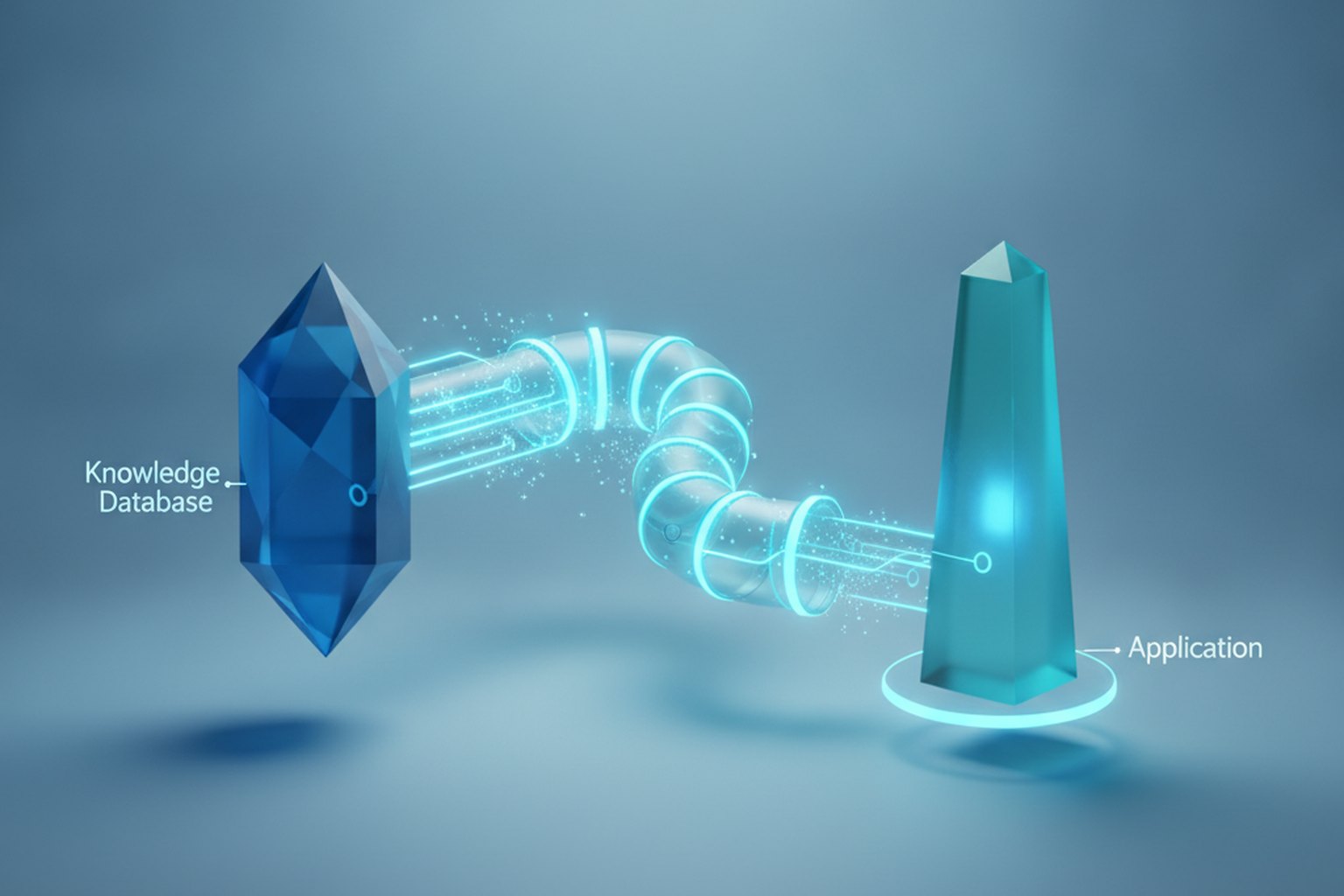
- The model layer — a hosted foundation model reached through an API, or an open model you host yourself. This is where the raw generation happens.
- The retrieval layer — a vector database and search that fetch the right pieces of your private data and feed them to the model at query time, so answers are grounded in your facts, not the model's training data.
- The orchestration layer — the prompts, context assembly, tool calls and business logic that turn a raw model into a product feature.
- The evaluation and safety layer — the checks, tests and guardrails that measure output quality and block unsafe or off-policy responses before users see them.
- The observability layer — logging, tracing and cost monitoring, because generative systems drift and inference spend can surprise you without it.
Roughly 70% of organizations now use vector databases and retrieval-augmented generation to customize models with their own data, and vector databases supporting RAG grew 377% year over year, according to 2026 industry data. That is the clearest signal of where the engineering effort actually goes: not into the model, but into the retrieval and evaluation scaffolding that makes it reliable.
API, RAG or fine-tuning: choosing your model strategy
Start by prompting a hosted model through an API, add retrieval-augmented generation (RAG) when the model needs your private or changing knowledge, and reserve fine-tuning for a narrow, stable task at high volume. This is the single most important decision in generative AI software development, because it sets your cost, your timeline and how much data work you sign up for. The three approaches are not rivals; most production systems layer them.
| Approach | What it does | Best when |
|---|---|---|
| Prompting (API) | Instruct a hosted model directly; fastest to ship | General tasks, drafting, classification; the default starting point |
| RAG | Retrieve your data and feed it to the model at query time | Answers must reflect private, current or frequently changing knowledge |
| Fine-tuning | Adjust the model's weights on your examples | A narrow, stable, high-volume task where tone or format must be exact |
The 2026 adoption data makes the pecking order concrete: in enterprise production, prompt design leads, RAG follows at around 51%, and fine-tuning sits near 9%. RAG wins for most teams because it lets you fix the quality of the model's knowledge without paying to re-encode it into weights every time it changes — and the per-query economics favor it heavily, with a retrieval-grounded query costing roughly $0.006 against about $0.40 for stuffing a full long-context prompt. Fine-tuning earns its place only at the extreme, above roughly 100,000 queries a day on a stable, narrow task; below that, RAG almost always delivers lower total cost of ownership. For the full decision framework, see our dedicated comparison of RAG vs fine-tuning in 2026, and for the economics of the fine-tuning path specifically, the LLM fine-tuning cost benchmark.
The generative AI software development process
Generative AI software is built in the same disciplined phases as any serious product, with two phases that ordinary software doesn't have: a feasibility assessment up front and an evaluation loop throughout. Skipping either is where most GenAI projects quietly fail — either building something the model can't actually do, or shipping something nobody measured.

- Discovery & AI feasibility. Define the task precisely, confirm a generative model can actually do it well enough, and set what "good" means before any code. Roughly 2–4 weeks.
- Data audit & preparation. Find, clean and structure the knowledge the system will retrieve or learn from; this is usually the longest and most underestimated phase. About 3–6 weeks.
- Model selection & RAG architecture. Choose the model, design the retrieval pipeline and prompt strategy, and prototype against real examples. Around 2–4 weeks.
- Application development & integration. Build the product around the model and wire it into your existing systems and UI. Typically 6–12 weeks.
- Evaluation & safety review. Measure output quality on a held-out test set, add guardrails, and red-team for failure modes before launch. About 2–4 weeks.
- Deployment, monitoring & iteration. Ship, watch quality and cost in production, and improve on real usage — generative systems are tuned after launch, not finished at it.
The through-line is that data readiness and evaluation cycles, not front-end screens, decide the timeline. A team that treats a GenAI build like a normal web app — front end first, "add the AI later" — almost always discovers too late that the model can't hit the quality bar on the data it was given.
Generative AI tech stack in 2026
A modern generative AI application looks like a normal web application with an AI subsystem bolted into the middle, so most of the stack is familiar and only a few pieces are new. The goal is a boring, well-supported combination your team can operate for years, not a collection of the latest frameworks.

- Model access — a hosted foundation-model API for most teams, or a self-hosted open model when data residency, cost at scale or customization demand it.
- Vector database & retrieval — a vector store (such as pgvector, Pinecone or a managed equivalent) plus an embedding and search pipeline; the heart of any RAG system.
- Orchestration — an application framework or your own thin layer to assemble context, call tools and manage prompts; keep it simple enough to debug.
- Backend & frontend — Python or Node.js/TypeScript for the service layer and React or Next.js for the interface, exactly as in a normal multi-tenant SaaS build.
- Evaluation & observability — tooling to score outputs, track regressions and monitor token spend and latency in production — the piece teams most often skip and most regret skipping.
The tools matter less than the shape: a clean retrieval pipeline, a measurable evaluation harness, and cost controls around inference. Enterprises now put around 40% of their generative AI budget into data infrastructure, versus 30% into talent and 30% into models, application development and governance combined — a useful reminder that the stack's center of gravity is data, not the model brand.
How much does generative AI software development cost in 2026?
In 2026, building a generative AI application typically costs from about $15,000 for a focused, API-based MVP to $500,000 or more for a complex enterprise platform, with most custom business applications landing between $40,000 and $150,000. Where a project lands is driven mostly by model strategy, data infrastructure and integration complexity rather than raw development hours. Independent 2026 pricing analyses put the bands at these levels:
| Scope | Typical 2026 cost | Timeline |
|---|---|---|
| Focused MVP (API + light RAG) | $15,000–$40,000 | 2–3 months |
| Mid-complexity production app (RAG + integrations) | $40,000–$150,000 | 4–8 months |
| Complex enterprise platform | $150,000–$500,000+ | 9–18 months |
| Ongoing inference & maintenance | Usage-based; scales with users/queries | Ongoing |
The cost lever unique to generative AI is inference: unlike ordinary software, every query costs money, so a popular product's running cost scales with usage in a way that a traditional app's does not. This is exactly why model strategy is a budget decision — RAG's roughly 60x per-query saving over brute-force long-context prompting compounds across millions of calls. Budget too for the surprises: data preparation and pipelines (often the single largest line), each integration, and the evaluation and safety work that a serious product cannot skip. Weigh all of it against the value of the task; generative AI pays back when it automates expensive, high-volume knowledge work, not when it is added because it is fashionable.
How long does it take to build?
A focused generative AI MVP takes about 2 months, a mid-complexity production application 4 to 8 months, and a complex enterprise platform 18 months or more — the same bands as the cost table, because time and money move together on a GenAI build. What stretches a timeline is rarely the interface; it is data preparation and the number of evaluation cycles the team runs before the output is trustworthy enough to ship.
The fastest route to production is to narrow the first release hard: one task, one data source, a human in the loop, and a concrete quality bar you measure from week one. Teams that try to specify every capability up front and disappear for a year usually return with something impressive in a demo and unreliable in the wild. Ship a bounded version, prove it clears the bar on real usage, then expand — generative AI rewards iteration far more than big-bang launches.
Risks and challenges to plan for
The failure modes of generative AI software are well understood by 2026, which means they are plannable rather than surprising. Naming them early is what separates a team that ships a dependable product from one that is firefighting after launch.
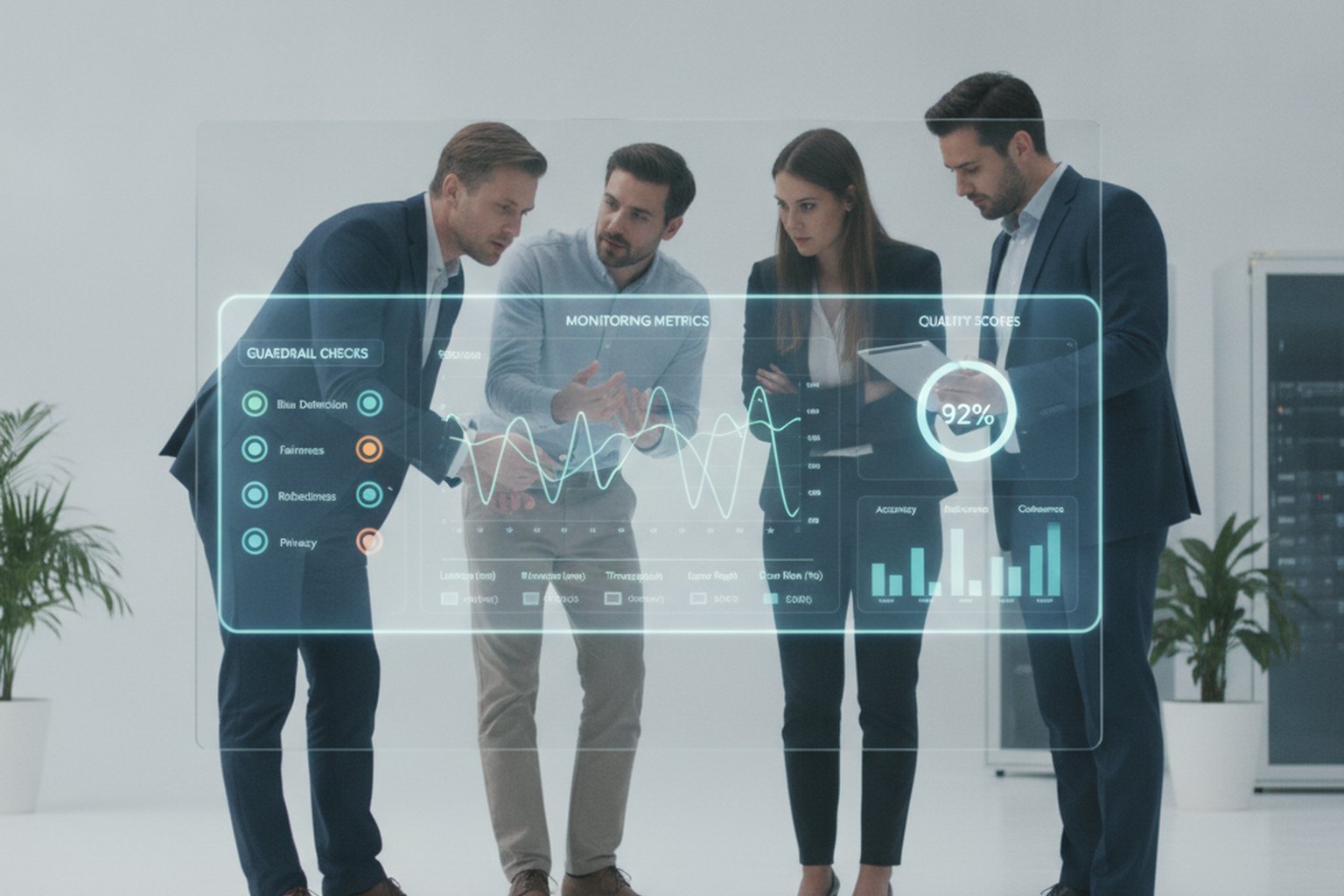
- Hallucination and wrong answers. Models produce fluent, confident text that can be false. Grounding with RAG, citing sources, and keeping a human in the loop for high-stakes outputs are the standard mitigations.
- Evaluation is hard. "Is this answer good?" has no unit test by default. You need a held-out test set and scoring — automated where possible, human where necessary — or you are flying blind.
- Runaway inference cost. Usage-based pricing means a viral feature can produce a shocking bill. Caching, retrieval over long context, model right-sizing and spend monitoring keep it in check.
- Data privacy and governance. Sending sensitive data to a model raises real compliance questions under GDPR and the EU AI Act; data residency, redaction and access controls have to be designed in, not added later.
- Security. Prompt injection and data exfiltration are genuine attack surfaces unique to these systems, and guardrails belong in the architecture from day one.
None of these is a reason to avoid generative AI; they are the reasons it is an engineering discipline rather than a prompt. A partner who talks openly about evaluation, cost and safety before talking about features is one who has shipped this before.
How to choose a generative AI development company
Choose a generative AI development company on shipped production systems, not slick demos — anyone can wire a prompt to an API, but very few can make it reliable, safe and affordable with real users. This checklist separates a partner who will hand you a system you can trust from one who will learn generative AI on your budget.
1. Production GenAI experience, not prototypes
Ask to see generative AI applications they have taken to production and kept running, with real users and real data. A team that has shipped GenAI will talk fluently about retrieval quality, evaluation and inference cost — the parts that only show up once a product is live.
2. A real evaluation and safety plan
Insist on how they will measure output quality and handle guardrails, privacy and prompt-injection risk. If the answer is "the model is really good now," keep looking; a serious partner treats evaluation as core engineering, not an afterthought.
3. Honest model strategy
Prefer a company that will start with prompting and RAG and fine-tune only when the data justifies it, rather than one that reaches for the most complex, most billable approach first. Their willingness to recommend the cheaper path is a strong signal of trustworthiness — the same test we apply in our guide to how to choose a software development company.
4. A feasibility-first engagement
The best partners begin with a paid feasibility assessment that tells you honestly whether a generative model can meet your quality bar on your data — and what it will cost to run. If the only deliverable on offer is a finished product from a single prompt, you are being sold to, not advised.
Generative AI development trends in 2026
The defining shift in 2026 is that generative AI has moved from experiment to production baseline: roughly 65% of large enterprises now run at least one significant generative AI application in full production, up from an estimated 15% in early 2024. For teams commissioning generative AI software, three trends matter most:
- RAG is the default architecture. Retrieval, not fine-tuning, is how most teams inject proprietary knowledge — cheaper to run, easier to keep current, and the reason vector-database adoption is climbing fast.
- Agents move toward production carefully. Multi-step, tool-using systems are the frontier, but the teams succeeding with them wrap agents in tight guardrails and human checkpoints rather than turning them loose.
- Governance becomes a build requirement. With the EU AI Act phasing in through 2026, evaluation logs, data controls and transparency are shifting from nice-to-have to procurement checklist — designed in from the start, not retrofitted.
Underneath the trends, the fundamentals hold: a generative AI product succeeds on data quality, disciplined evaluation and a model strategy matched to the task. The technology gets more capable every quarter, but the difference between a product users trust and a demo that disappoints is still the engineering around the model — which is precisely why thoughtful generative AI software development matters more in 2026, not less.
FAQ
What is generative AI software development?
Generative AI software development is the design and engineering of applications built around a generative model — most often a large language model — so the software can produce text, code, images or structured answers on demand. In practice it means wrapping a foundation model in a real product: grounding it in your own data through retrieval, adding guardrails, evaluation and monitoring, and integrating it with the systems your users work in. It is distinct from using AI coding assistants to write ordinary software; here the generative model is the product feature itself.
How much does it cost to build generative AI software in 2026?
Building a generative AI application in 2026 typically costs from about $15,000 for a focused, API-based MVP to $500,000 or more for a complex enterprise platform, with most custom business applications between $40,000 and $150,000. The biggest cost drivers are model strategy, data infrastructure and integration complexity rather than development hours, and you also pay ongoing inference costs that scale with how many users and queries the product serves.
Should you use an API, RAG or fine-tuning?
Start by prompting a hosted model through an API, add retrieval-augmented generation (RAG) when the model needs your private or frequently changing knowledge, and reserve fine-tuning for a narrow, stable task at high volume. In 2026 enterprise practice, prompt design leads, RAG follows at around 51% adoption and fine-tuning sits near 9%, because RAG fixes knowledge quality without re-encoding it into weights every time it changes. Most production systems combine prompting and RAG.
How long does it take to develop a generative AI application?
A focused generative AI MVP takes about 2 months, while a complex enterprise platform can take 18 months or more. A realistic mid-complexity production build runs roughly 4 to 8 months: 2–4 weeks of discovery and feasibility, 3–6 weeks of data preparation, 2–4 weeks on model selection and RAG architecture, 6–12 weeks of development and integration, and 2–4 weeks of evaluation and safety review. Timeline is driven mostly by data readiness and evaluation cycles.
What is the difference between generative AI software and AI-assisted coding?
AI-assisted coding uses generative AI as a productivity tool that helps engineers write ordinary software faster. Generative AI software development builds the generative capability into the product itself — a support assistant, a document generator, a copilot inside your app — where the model's output is a core feature users rely on. The engineering discipline differs: generative AI products need retrieval, prompt orchestration, evaluation, guardrails and cost controls that a normal application never has to think about.
How do you choose a generative AI development company?
Choose on shipped production GenAI systems, not demos: ask to see applications they have taken to production with real users, and how they handled retrieval, evaluation, guardrails and inference cost. The hard parts of generative AI software are data pipelines, measuring output quality, and keeping the system safe and affordable at scale. Prefer a partner who starts with a feasibility assessment and a clear evaluation plan over one who promises a finished product from a single prompt.
Published 19 July 2026, last updated 26 September 2026. Cost, timeline and adoption figures reflect independent 2026 generative AI development pricing analyses and enterprise adoption surveys for US and EU clients; actual pricing varies by scope, model strategy, data readiness, integrations and usage. Figures are general guidance, not a quote — request a scoped proposal for your specific situation.