Cloud migration
Lift-and-shift, replatform, or refactor — on AWS, Azure, or GCP. We choose the mode per workload based on TCO, regulatory scope, and product roadmap, and we own the migration end-to-end from landing zone to cutover.

Services
Pragmatic digital transformation and business automation that actually ships — systems integration, process automation, ERP/CRM rationalisation, and data platform builds, delivered as a single continuous engagement rather than a strategy hand-off. The differentiator is simple: we are engineers, not management consultants. Fixed-scope and all-in USD, priced by automation scope: a systems integration from $1,400, one automated process from $1,800, a department automated from $4,600, and end-to-end automation up to $10,400. You see the line-item budget at the end of discovery and sign off before any code is written.

GDPR-aligned · ISO 27001 ready · SOC 2 Type II in progress · HIPAA-capable · CCPA-acknowledged · CET workday with 9 AM–1 PM ET overlap
Most transformation programmes fail because strategy and execution sit in different buildings — a senior partner sells the deck, a different and usually less senior team implements it twelve months later, and by then the assumptions have shifted. We compress that gap. A small joint team — an architect, two engineers, and a product lead — starts by mapping your current state, then identifies the highest-ROI bets (typically a legacy application to modernise, a cloud migration, an AI integration into a real workflow, or a data platform that unlocks two downstream use cases) and ships a thin end-to-end slice in 8–12 weeks before any scale-phase budget is committed. Strategy and delivery are the same engagement, with the same people, from week one. See it in practice in our REHAU case study. Depending on where the value sits, a programme leans on our software modernization, cloud & DevOps, or AI, ML & data teams — staffed from the same bench, under one accountable lead.
Lift-and-shift, replatform, or refactor — on AWS, Azure, or GCP. We choose the mode per workload based on TCO, regulatory scope, and product roadmap, and we own the migration end-to-end from landing zone to cutover.
COBOL, Delphi, classic ASP, and .NET Framework moved onto modern stacks. Monolith decomposition into bounded services where it pays back, not by default. Strangler-fig migrations that keep the lights on through the cutover.
Data lakes, warehouses, governance, and BI on Snowflake, Databricks, or BigQuery. Pipelines on Fivetran and dbt. We design for the two or three concrete use cases that unlock value, not a generic platform that lands without consumers.
LLM features, RAG pipelines, and AI agents wired into your real systems — CRM, ERP, ticketing, knowledge bases — not standalone chatbot demos. Eval suites, guardrails, and human-in-the-loop where the operating risk requires it.
SAP, Salesforce, and Workday consolidation across business units after M&A or organic sprawl. We work alongside your prime SI on the configuration side and own the custom integrations, data migration, and adoption tracking.
CI/CD overhaul, platform engineering, internal developer platforms, and DORA-metric baselines. Faster, safer deployments and a measurable lift in lead time and change-failure rate within one quarter.
Four to six weeks. Current-state architecture and integration map, value-stream map of the top business processes in scope, and a ranked list of transformation bets scored on ROI, time-to-value, risk, and dependency.
Eight to twelve weeks. The same team ships the highest-ROI slice end-to-end — production deployment, real users, measurable outcomes — under a fixed-price statement of work agreed at the end of discovery.
Apply the pilot pattern to the rest of the portfolio. We expand the squad, codify the playbook, and train your in-house engineers and product team to run the same pattern without us on the next wave.
Managed delivery on the rolled-out workloads, or a clean staff handover with runbooks, ADRs, and a 90-day support window. You choose — we have no incentive to stay longer than you need us.
Fixed price, 4–6 weeks. Current-state map, ranked bets, 12–18 month roadmap, and a fixed-price pilot statement of work. Defensible to a CFO, not just a CIO.
Fixed price, 8–12 weeks. The highest-ROI slice shipped end-to-end into production with measurable adoption metrics tracked for the first eight weeks after go-live.
Time-and-materials or a long-running dedicated team. Scale the pilot pattern across the rest of the portfolio, co-deliver with your internal team, or hand over cleanly.
The Big Four keep the number for a sales call. We publish it: fixed-scope, all-in USD pricing, tiered by automation scope. IP is assigned on day one, with no recruitment markup and no tool surcharges. You see the line-item budget at the end of discovery and sign off before any code is written; cloud fees run on your own accounts, so you keep the cost lever.
Systems integration
from $1,400
1–2 weeks · two systems
Wire two systems together so data stops being re-keyed by hand — a bounded integration with idempotency, retry, and a clear owner.
One process
from $1,800
2–3 weeks · one process
Automate a single end-to-end business process — map the current steps, remove the manual handoffs, and ship the automation with adoption tracked.
Department / function
from $4,600
4–6 weeks · a whole function
Automate a whole department or function — several linked processes, the integrations between them, dashboards, and an operator view.
End-to-end automation
from $10,400
8–12 weeks · the operation
End-to-end automation across the operation — cross-function processes, ERP/CRM rationalisation, a data platform, and monitoring you can reason about.
What moves the number: the scope (how many processes and systems sit inside the automation slice); the integration surface (the legacy systems, ERP/CRM and data sources the work has to touch); the compliance scope (payments run inside PCI DSS with your QSA, healthcare runs HIPAA-capable with a BAA, all against ISO 27001-aligned controls with SOC 2 Type II in progress); and the depth of each process. Prices are indicative and fixed in a written quote for your specific scope — the exact figure comes out of discovery, sized to your estate.
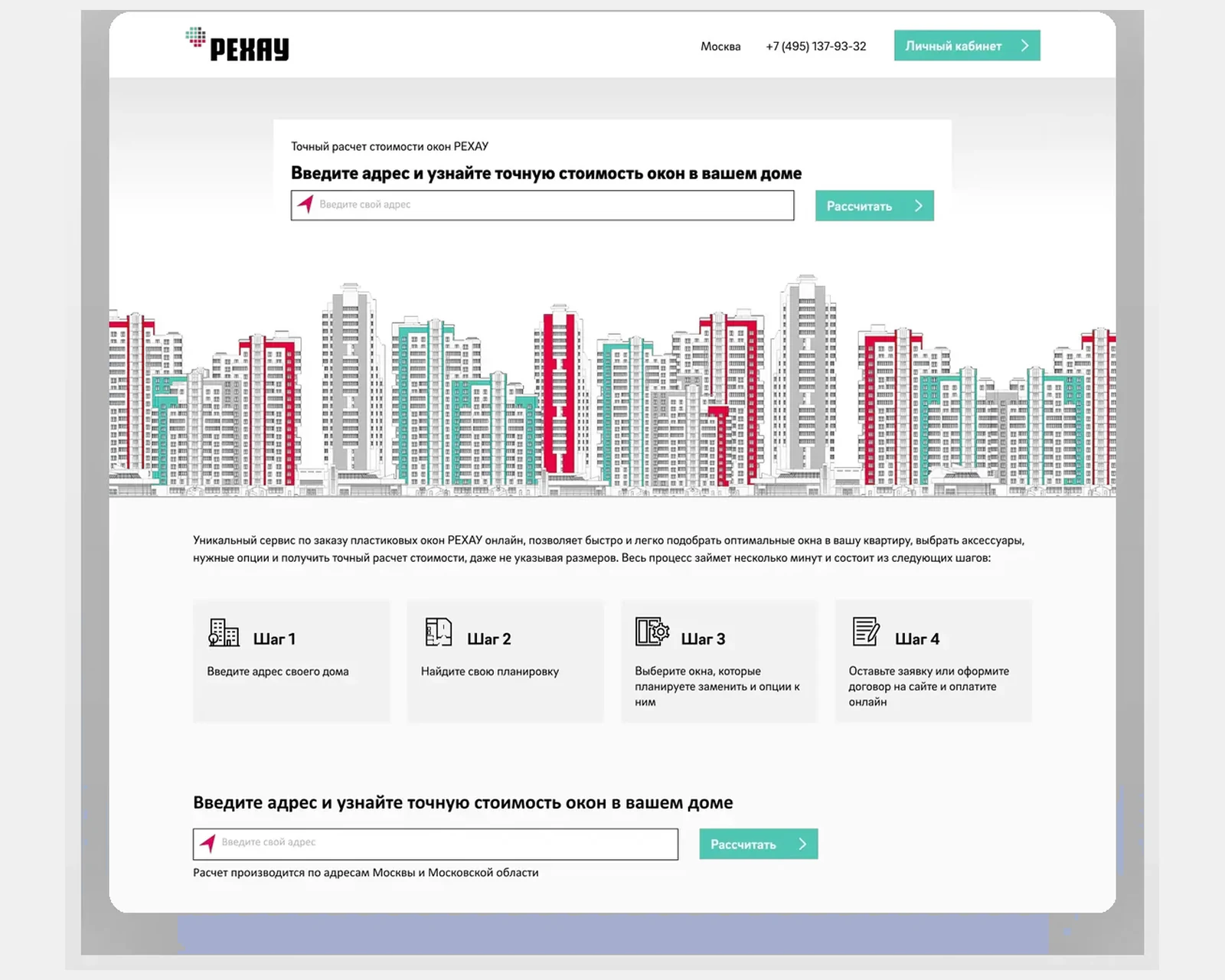
B2B e-commerce and product configurator for a global polymer manufacturer with multi-region pricing, stock and dealer workflows.
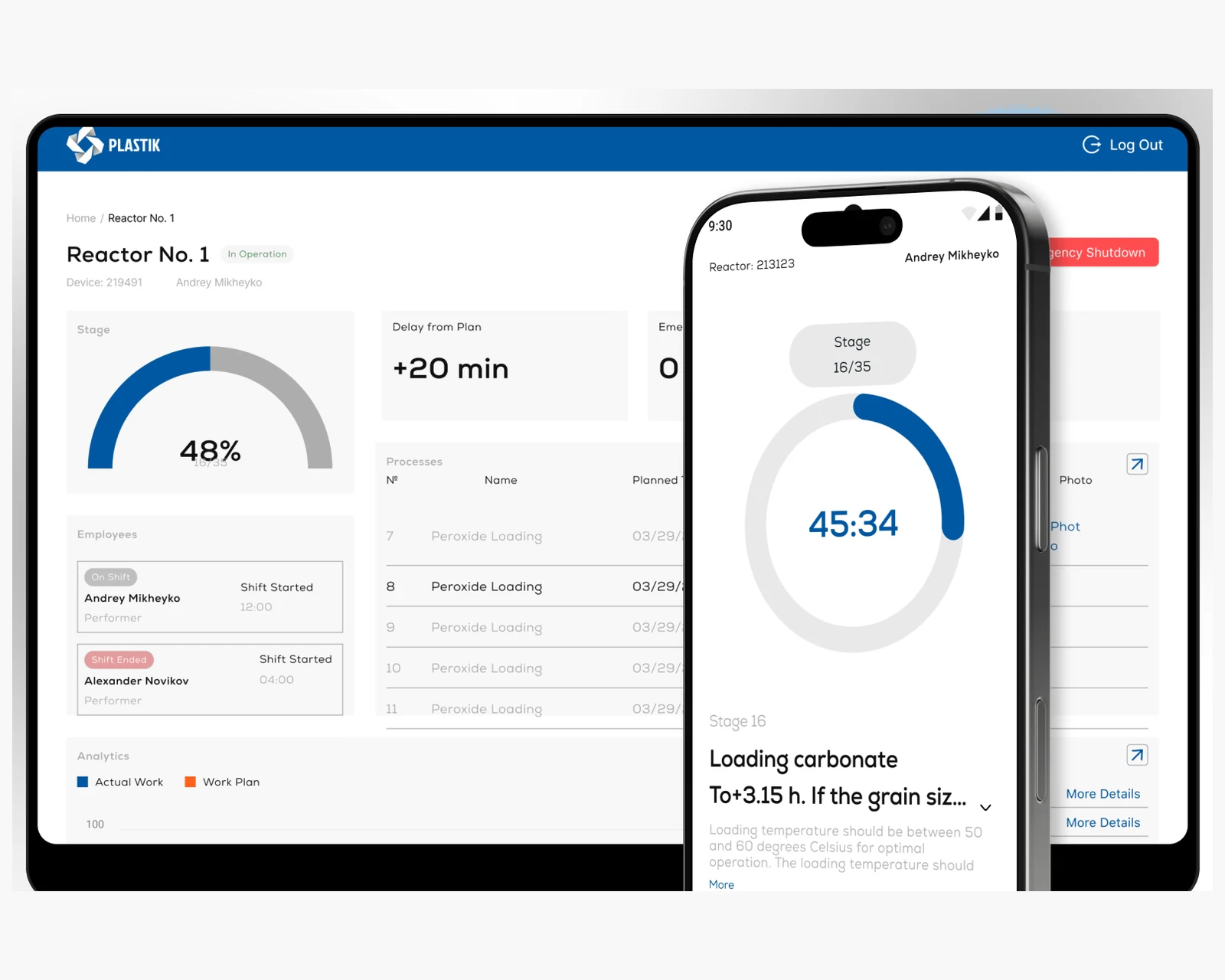
Offline-first ecosystem replacing paper journals for reactor process control — Android, admin, controller dashboard.
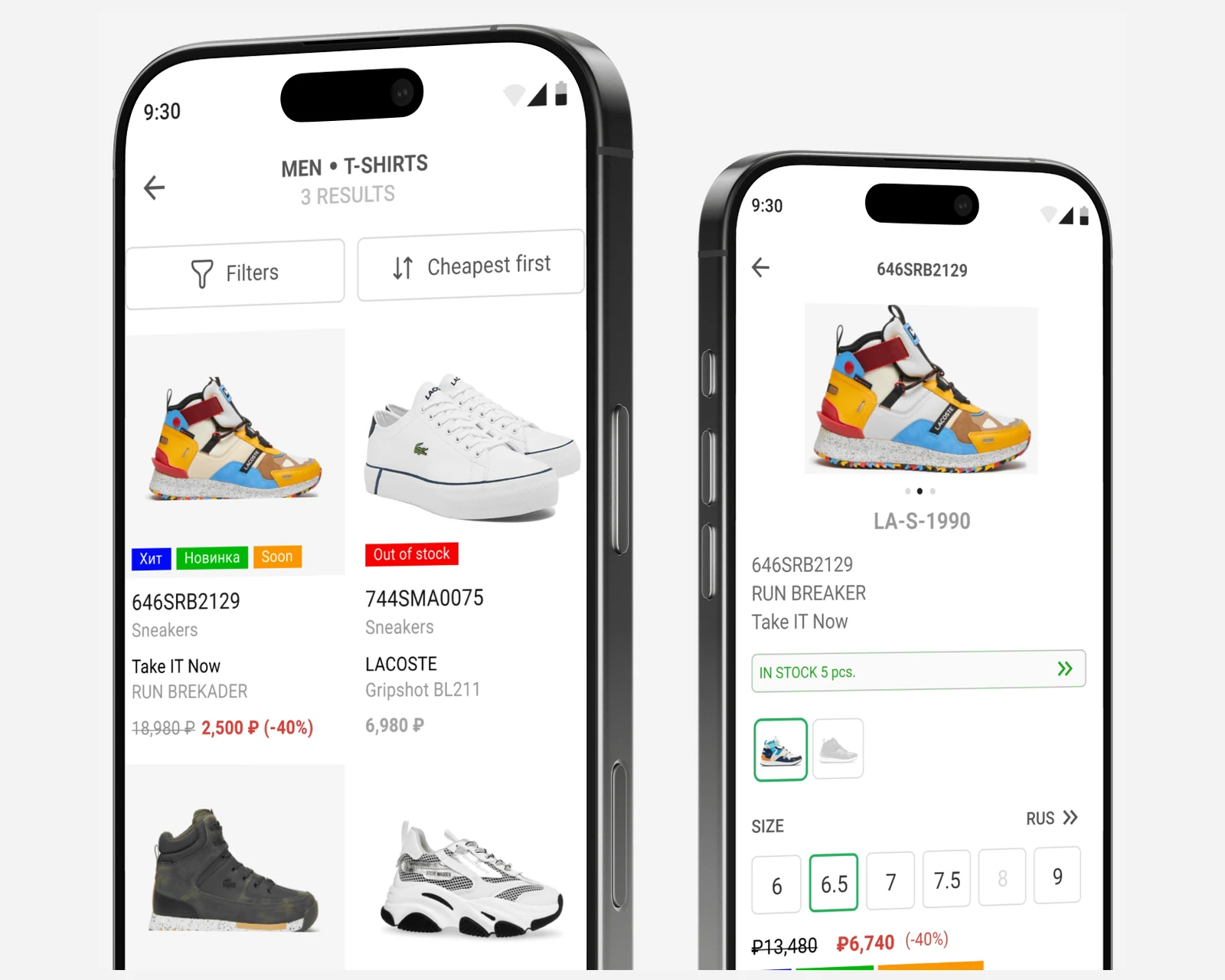
Retail POS companion app for a multi-brand boutique chain — ElasticSearch cross-store inventory search, 1C-system integration.
Transformation risk lives in the regulatory and integration detail of a sector, not in a generic playbook. We run programmes where compliance and legacy complexity are the hard part.
Industry 4.0 transformation in manufacturing centers on connecting physical assets to digital systems through IIoT sensor networks, real-time OEE dashboards, and predictive maintenance models that reduce unplanned downtime by 30–50%. We run digital twin pilot programs using Azure Digital Twins or AWS IoT TwinMaker that simulate production line behavior, allowing engineers to test process changes virtually before applying them to the physical plant.
Legacy ERP modernization (SAP ECC to S/4HANA, Oracle E-Business Suite) through phased API-first integrations maintains operational continuity while progressively migrating functionality to modern microservices. We design the transition architecture using the strangler fig pattern that allows the legacy system to remain operational while its capabilities are incrementally replaced.
Core banking modernization from monolithic COBOL systems to cloud-native API platforms is the defining challenge for traditional banks competing with neobanks. We develop phased strangler fig migration strategies that wrap legacy systems with API facades, progressively migrate functionality to modern microservices, and implement RPA bots (UiPath, Automation Anywhere) for back-office reconciliation and regulatory reporting automation.
AI risk model deployment requires MLOps infrastructure for model governance, bias monitoring, and explainability documentation that satisfies regulatory requirements from EBA, FCA, and the EU AI Act. Open banking API platform development connects the traditional bank's account data to the TPP ecosystem, driving new revenue through data monetization and partnership models. See FinTech.
Omnichannel transformation requires unifying customer data, inventory visibility, and commerce capabilities across stores, e-commerce, mobile apps, and social channels into a single source of truth. We execute headless commerce migrations from monolithic platforms (Magento, Hybris, Salesforce Commerce Cloud) to composable architectures, design unified customer data platforms (CDP) that merge POS, e-commerce, and loyalty data.
Real-time inventory synchronization enables accurate BOPIS (buy online, pick up in store) experiences that have become table-stakes for competitive retail. We design event-driven inventory update pipelines that propagate stock changes from warehouse management systems to all commerce channels within seconds, eliminating the oversell risk that damages customer trust during peak sales events. See E-commerce.
Healthcare digital transformation is constrained by regulatory requirements (HIPAA, FDA), clinical workflow dependencies, and decades of legacy system debt in hospital information systems. We design HL7 FHIR R4 API layers that expose EHR data to third-party innovators, build telehealth platforms with WebRTC video and asynchronous messaging capabilities, and create AI diagnostics readiness roadmaps that address FDA SaMD regulatory pathways before development begins.
Patient portal modernization reduces call center volume and improves care adherence by giving patients self-service access to records, appointment scheduling, and secure messaging. We design patient-facing digital experiences that meet ADA/WCAG 2.1 accessibility requirements and HIPAA-compliant data handling, and integrate with Epic, Cerner, and Meditech via SMART on FHIR app frameworks. See HealthTech.
Government digital transformation must balance legacy system stability with citizen expectations for modern digital services, often within procurement and regulatory constraints that slow commercial technology adoption. We design citizen portal modernization programs that deliver Gov.UK-standard service design, execute legacy mainframe (IBM z/OS, Unisys) migration using API-first wrapping and incremental replacement strategies.
GovTech automation for high-volume document processing, benefits administration, and compliance workflows delivers significant efficiency improvements while maintaining audit trails required for government accountability. We design automation solutions that comply with digital accessibility requirements (Section 508, EN 301 549), government security frameworks (NIST SP 800-53, Cyber Essentials+), and procurement transparency requirements.
Supply chain disruptions since 2020 accelerated digital transformation investment in end-to-end visibility platforms, predictive logistics, and autonomous warehouse operations. We build supply chain control tower solutions that aggregate data from ERPs, carrier APIs, IoT sensors, and weather feeds into unified disruption alerting dashboards, implement predictive ETA models using ML on historical shipment data. See Logistics.
Warehouse management system (WMS) modernization integrates with autonomous mobile robots (AMRs), RFID scan points, and pick-to-voice/pick-to-light systems through standardized integration middleware layers. We design warehouse digital twin environments that model order fulfillment flows, identify throughput bottlenecks in simulation before deploying process changes to the physical warehouse.
GDPR-aligned · ISO 27001 ready · SOC 2 Type II in progress · HIPAA-capable · CCPA-acknowledged
The same architect and engineers who write the strategy ship the pilot. No handover from a senior partner to a less senior delivery team months later, no incentive to inflate scope.
No multi-year programme commitments before a measurable outcome. A fixed-price pilot lands real value in 8–12 weeks, and the scale-phase budget is committed against demonstrated results, not slideware.
Engineers under EU contracts on managed endpoints, EU data residency · US options on request, DPAs on request, ISO 27001-aligned controls, SOC 2 Type II in progress, CCPA-acknowledged for US consumer data.
For payments workloads we run inside PCI DSS scope and coordinate with your QSA; for healthcare workloads we run HIPAA-capable engagements with BAA in place where applicable.
A retail chain with dozens of locations needs document workflows that non-technical staff can follow without training. YuSMP built an internal DMS with approval chains, versioning, and role-based access that our compliance officer called the cleanest system we have ever deployed.
Our consultants were losing 15 minutes per customer on manual inventory checks. YuSMP built native apps backed by ElasticSearch, wired to our 1C system in real time. Time-per-customer dropped 40% across all locations within a week of launch.
Digital transformation is not a project — it is a capability-building program. We structure engagements in stages that deliver tangible value at each milestone while maintaining strategic coherence across the multi-year journey.
We map your current technology landscape, interview stakeholders across business units, and benchmark your digital maturity against industry peers using established frameworks (Gartner Digital Business Transformation Maturity Model). Deliverables include a current-state architecture diagram, pain point prioritization matrix, and a preliminary opportunity register with estimated effort and impact ratings. This phase typically takes 4–8 weeks and produces the evidence base needed to secure executive sponsorship.
Based on assessment findings, we develop a digital transformation strategy with a 3-year roadmap organized into 90-day execution sprints. The strategy includes a target architecture blueprint, technology selection rationale, build-vs-buy-vs-integrate decisions for each capability, and a business case with ROI projections tied to operational KPIs (cost reduction, revenue growth, customer NPS). We use a digital maturity model to define milestone states the organization must reach before advancing to subsequent phases.
We select a high-visibility, bounded-scope pilot that can deliver tangible results in 10–16 weeks and build organizational confidence in the transformation approach. The pilot phase includes change management planning, user training design, and success metrics definition before development begins. We conduct structured retrospectives at each sprint boundary and adjust the roadmap based on validated learning from real user behavior in the pilot environment.
Scaling a successful pilot requires platform thinking, API-first integration standards, and self-service capabilities that allow business teams to extend digital capabilities without deep IT involvement. We implement transformation KPI dashboards (time-to-market, IT cost per transaction, digital revenue share, customer effort score) and run quarterly strategy reviews that realign the roadmap with evolving business priorities and technology capabilities.
Work is fixed-scope and all-in, quoted in USD and tiered by automation scope. A systems integration that wires two systems together runs from $1,400 (1–2 weeks); automating one end-to-end process from $1,800 (2–3 weeks); automating a whole department or function from $4,600 (4–6 weeks); end-to-end automation across the operation, with ERP/CRM rationalisation and a data platform, from $10,400 (8–12 weeks). What moves the number is how many processes and systems sit inside the slice, the integration surface, the depth of each process, and the compliance scope. You see the line-item budget at the end of discovery and sign off before any code is written — no recruitment markup, no tool surcharges, and cloud runs on your own accounts, so you keep the cost lever.
We are engineers first, consultants second. Big Four and Accenture engagements typically separate strategy from execution: a senior partner sells a slide deck, then a different team — often less senior, frequently rotated — implements it months later. We staff one continuous team: an architect, two engineers, and a product lead who write the strategy and ship the pilot themselves. Every recommendation in our discovery deck is something the same people will deliver in weeks 5–16. That removes the handover loss and the incentive to inflate scope.
Both, and the second is the point. A standalone strategy document has near-zero half-life inside an operating company — by the time procurement signs an implementation partner, the assumptions have shifted. Our default model is discovery (4–6 weeks, fixed price), immediately followed by a pilot (8–12 weeks, fixed price) where the same team ships the highest-ROI slice end-to-end. After the pilot you can scale with us on T&M, hand it to your internal team, or do both in parallel.
A discovery delivers four artefacts: a current-state architecture and integration map, a value-stream map of the top 3–5 business processes in scope, a ranked list of 8–15 transformation bets scored on ROI, time-to-value, risk, and dependency, and a 12–18 month roadmap with explicit pilot scope for the top bet. The deck is roughly 40 pages but the centre of gravity is the ROI model and the pilot statement of work — both written to be defensible to a CFO, not just a CIO.
We score every candidate on four axes: annual P&L impact (revenue uplift or cost reduction), time to first measurable result, technical and organisational risk, and dependency on other bets. Anything that cannot show measurable value within 90 days of a pilot starting gets deferred. Anything that requires a multi-year platform replacement before any value is unlocked gets restructured into a thin slice first. Typical winners are a single legacy app modernisation, an AI integration into an existing workflow, or a data platform that unlocks two downstream use cases.
Yes, and most engagements run that way. We are comfortable working alongside an existing SI, a hyperscaler professional services team, or your own platform engineers. We define interfaces clearly: which components we own, which you own, which the partner owns, and where the integration test boundaries are. We also write the runbooks and architecture decision records so that when we step back, your team and any partner can keep operating without us. No lock-in by opacity.
Adoption is designed into the pilot, not bolted on afterwards. The product lead works with your business sponsor from day one to identify the 10–30 end users who will use the pilot output daily, runs weekly demos with them during the build, and ships an onboarding kit (recorded walkthroughs, in-product guidance, a written FAQ) with the pilot release. We track adoption metrics — weekly active users, task completion, time-on-task — for the first 8 weeks after go-live and adjust before the scale phase begins.
A meaningful digital transformation program takes 2–5 years from strategy to full-scale deployment, depending on organization size and complexity. This is not because technology takes that long to build — a working digital product can ship in 10–16 weeks. The constraint is organizational change: retraining employees, redesigning processes, migrating data from legacy systems, and building internal digital capability that makes the transformation sustainable after the consulting engagement ends. We structure programs in 90-day value delivery cycles so that tangible business results accumulate throughout the program rather than waiting for a single "go-live" milestone that is years away.
A digital maturity model is a framework that describes the stages an organization progresses through in its digital transformation journey, from manual/paper-based processes through digitization, integration, intelligence, and ultimately autonomous digital operations. Common models include Gartner's Digital Business Transformation Maturity Model, MIT CISR's Digital Strategy Model, and McKinsey's Digital Quotient framework. We use maturity models to establish a shared language between business and technology leaders about where the organization currently stands, where it needs to reach to compete effectively, and what specific capabilities must be built at each stage. This turns "digital transformation" from an aspiration into a measurable program with milestone criteria.
The strangler fig pattern is the standard approach to legacy modernization without disruption: you progressively replace legacy functionality with modern services, routing traffic to the new service for specific functions while the legacy system continues to handle everything else. This allows you to modernize incrementally, validate each replacement in production, and roll back specific changes if problems arise without affecting the entire system. For mission-critical systems (core banking, ERP, manufacturing execution), we also implement API facade layers that expose legacy capabilities through modern interfaces, decoupling downstream consumers from the legacy system's implementation details and enabling gradual migration.
Cloud migration is often mistaken for digital transformation itself, but it is an enabling infrastructure change, not a business capability improvement. Moving a legacy application to the cloud (lift-and-shift) without redesigning its architecture typically delivers 20–30% cost savings through infrastructure optimization but zero improvement in business agility, feature delivery speed, or customer experience. We recommend treating cloud migration as a means to an end: identify the digital capabilities that will drive business outcomes, design the target architecture for those capabilities, and then determine which cloud services and migration approach best supports that architecture. Cloud-native patterns (containerization, managed services, event-driven architecture) deliver the agility benefits; the cloud platform is the enabler.
AI readiness has four dimensions: data readiness (do you have sufficient labeled, clean, structured data in accessible repositories), infrastructure readiness (do you have cloud compute, ML platform capabilities, and API infrastructure to deploy AI), talent readiness (do you have data scientists, ML engineers, or AI-literate product managers), and governance readiness (do you have AI ethics policies, model risk management processes, and regulatory awareness). We conduct a structured AI readiness assessment covering all four dimensions, identify the highest-value AI use cases for your business, and recommend a sequenced AI adoption plan that builds internal capability alongside early proof-of-concepts. Starting with narrow, well-scoped AI applications (document processing automation, predictive maintenance, recommendation systems) builds organizational confidence and data infrastructure before tackling complex generative AI applications.
Practical guides on digital transformation, legacy modernization, and enterprise strategy.
Share a few details and a senior consultant will reply within one business day.