


What is wealth management software development?
Wealth management software development is the process of designing and building software that runs the full advisory lifecycle — client onboarding, account and data aggregation, portfolio management, financial planning, reporting, billing and compliance — for RIAs, family offices, private banks and robo-advisors. The three hardest engineering challenges are multi-custodian data aggregation (reconciling accounts across Schwab, Fidelity and Pershing), the portfolio management engine (performance calculation, rebalancing, sleeve accounting), and regulatory compliance (SEC Books-and-Records, Reg S-P, SOC 2 Type II).
Wealth management software development encompasses the design, engineering and maintenance of systems that power the complete advisory client relationship — from the moment a prospect submits a risk questionnaire to the moment their quarterly performance report is generated and their AUM fee is billed. The software must aggregate account data from multiple custodians, calculate portfolio performance to the cent, enforce fiduciary compliance rules, and give advisors a real-time view of every client's financial picture.
This is firmly within the domain of custom fintech software development rather than generic enterprise software, because the non-functional requirements are shaped by regulation and fiduciary duty. The platform must maintain immutable audit trails, produce SEC-compliant performance records, enforce role-based access control down to the individual account, and survive a regulatory examination without gaps. A broader view of how financial software categories relate to one another is covered in our financial software development guide.
According to Grand View Research, the wealth management software market was valued at approximately USD 5.5B in 2024 and is projected to reach USD 12.07B by 2030, growing at a 14.0% CAGR. The broader WealthTech market, which includes embedded advisory and AI-powered tools, is estimated at USD 14.6B in 2026 with a 22.5% CAGR over the next five years (The Business Research Company, 2026). Those growth rates explain why both established RIAs and fintech challengers are commissioning bespoke platforms rather than accepting the feature ceiling of incumbent SaaS tools.
Who uses wealth management software (and platform types)?
Wealth management software serves six distinct platform types, each with a different compliance posture and feature priority. Knowing which category you are building for determines the scope of your aggregation layer, compliance controls and billing engine before a line of code is written.
- Registered Investment Advisers (RIAs). Fee-only, fiduciary advisors regulated by the SEC or state regulators. Core needs: portfolio management, billing, performance reporting, client portal, Books-and-Records compliance.
- Wirehouses and broker-dealers. Commission and fee-based; regulated by FINRA. Need suitability documentation, best-execution records, commission calculation and supervisory-review workflows.
- Family offices. High-complexity consolidated reporting across custodians, alternative assets (private equity, real estate, hedge funds), currency exposure and multi-generational planning.
- Private banks and trust companies. Fiduciary obligations, trust accounting, discretionary and non-discretionary mandates, and deep CRM integration for relationship management.
- Hybrid robo-advisors. Algorithm-driven portfolio construction with human oversight. According to Fortune Business Insights (2026), hybrid robo-advisors account for approximately 56.53% of the robo-advisory market and serve around 48% of new digital advisory clients. Building for this model requires the full automation stack plus an advisor escalation layer.
- TAMPs (Turnkey Asset Management Platforms). Platforms that outsource investment management to third-party model managers; require sleeve accounting, sub-advisory billing and model-library management.
Core features and modules
A production-grade wealth management platform is built from seven interlocking modules. Every module must be engineered to financial precision — rounding errors compound, and an incorrect fee calculation is both a client-trust problem and a regulatory one.
- Portfolio management and performance reporting. Holdings ingestion, security master, TWRR/MWRR calculation, benchmark comparison, composite reporting and GIPS-compliant attribution. This is the computational heart of the platform.
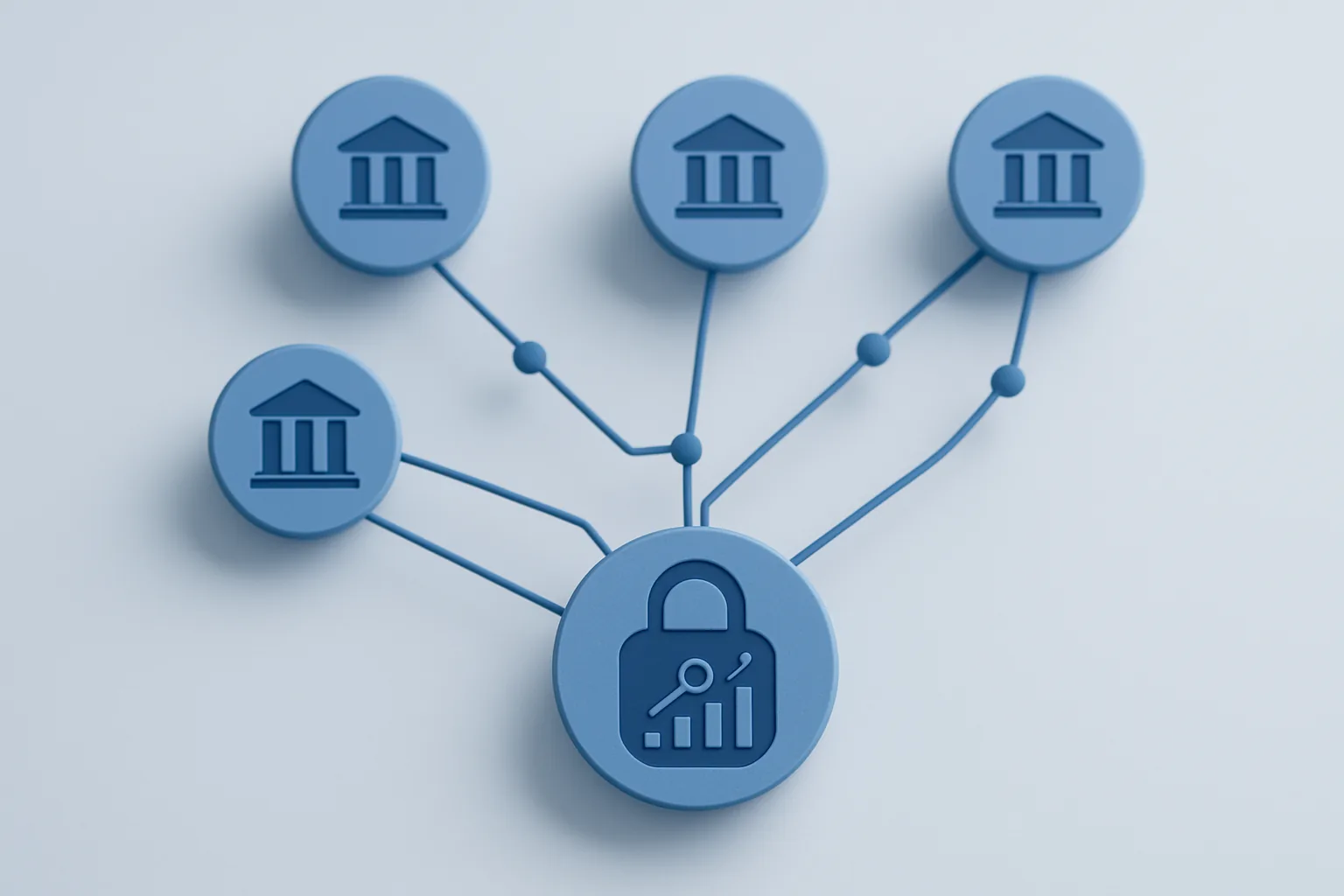
- Account and data aggregation (multi-custodian). Automated data feeds from custodians (Schwab Advisor Services, Fidelity, Pershing) via FTP/SFTP position files or REST APIs, reconciled nightly against positions, cash and transactions. Held-away assets use aggregation APIs (Plaid, Yodlee, MX).
- Financial planning and goals engine. Monte Carlo simulation, goal-based projections, cash-flow modelling, Social Security optimisation and retirement-income planning. Often integrated with eMoney, MoneyGuide Pro or a proprietary planning engine.
- CRM and client portal. Advisor-facing CRM for relationship tracking, tasks and household management; client-facing portal for account views, document vault, e-signature and messaging. Must support configurable permission levels per advisor role.
- Automated rebalancing and model management. Model portfolio library, drift monitoring, tax-loss harvesting triggers, sleeve accounting for multi-manager portfolios, and direct-indexing support at scale.
- Risk profiling and suitability. Digital questionnaires, risk-score calculation, investment-policy statement (IPS) generation, and ongoing suitability-monitoring alerts against client profile changes.
- Billing and fee calculation. AUM-based, flat-fee, hourly and performance-fee schedules; tiered billing across households; automated invoice generation and custodian direct-debit. Integration with a payment gateway for fee collection where direct custody billing is not available.
Custom build vs off-the-shelf vs hybrid
Custom wealth management software development wins on differentiation, unique workflow fit and long-term unit economics; off-the-shelf platforms win on speed to market and lower upfront cost. The hybrid approach — buying a core platform and building a custom layer — is the most common choice for mid-market RIAs in 2026.
| Approach | Best for | Time-to-market | TCO (5 yr) | Differentiation | Compliance control |
|---|---|---|---|---|---|
| Off-the-shelf (Orion, Envestnet, Addepar) | RIAs <$500M AUM, standard workflows | 2–4 months | High SaaS licensing per AUM | Low — feature parity with competitors | Vendor-controlled |
| Custom build | Firms >$1B AUM, proprietary models, TAMPs | 10–24 months | High upfront, lower per-AUM at scale | High — full workflow ownership | Full — own every control |
| Hybrid (core platform + custom layer) | $200M–$1B AUM, differentiated reporting or billing | 4–8 months for first layer | Medium — licensing + dev | Medium — custom where it matters | Shared with vendor |
The build-vs-buy breakeven for a firm serving 200+ AUM relationships is typically three to four years. Firms commissioning custom wealth management software development most often cite three trigger points: their existing platform cannot support their fee-billing complexity (sleeve-level fees, performance fees, household netting), their data model does not fit multi-manager or alternative-asset allocation, or their compliance team wants full ownership of audit-trail architecture rather than relying on a vendor's SOC 2 report.
Regulatory compliance — SEC, FINRA, SOC 2 and more
What compliance does wealth management software need? At minimum: SEC Regulation S-P (client data privacy), the SEC Books-and-Records rule (immutable trade and communication records for 3–6 years), and SOC 2 Type II (controls assurance for data security and availability). Firms serving EU clients add GDPR and MiFID II suitability and record-keeping requirements.

- SEC Books-and-Records (17 CFR 275.204-2). All client records, trade confirmations, account statements and correspondence must be retained in an immutable, tamper-evident form for three to six years, accessible within 24 hours on demand. The platform's audit trail architecture is the direct implementation of this rule.
- Regulation S-P. Governs safeguarding and disposal of client financial information. Requires written policies, access controls and breach-notification procedures — all of which must be enforced at the software layer, not just in policy documents.
- SEC Marketing Rule (2026). Standardises how performance data and testimonials may be presented in client-facing materials and portals; the platform's reporting and client-communication modules must produce compliant output.
- RIA Custody Rule. Requires independent verification (typically annual surprise examination) of client assets; the platform must export data in formats auditors can reconcile against custodian records.
- SOC 2 Type II. Enterprise advisors and institutions require a SOC 2 report before integrating with a vendor. Achieving it costs $40,000–$120,000 and takes 6–12 months for a first engagement. Our guide to SOC 2 Type II for SaaS platforms covers the audit preparation path in detail.
- GDPR and MiFID II (EU clients). GDPR governs personal data processing; MiFID II mandates suitability documentation, best-execution records and cost transparency for advisory services.
The mandatory technical controls across all frameworks are consistent: AES-256 encryption at rest and in transit, MFA for all user roles, role-based access control (RBAC) with least-privilege enforcement, immutable audit logs, and annual penetration testing by an independent firm. Designing these in from the start costs far less than a compliance retrofit after a failed examination.
Integrations that make or break the platform
A wealth management platform's functional quality is largely determined by the depth and reliability of its integrations. The custodian integration layer is the single highest-risk dependency in any build — delays in custodian API onboarding have derailed more wealthtech timelines than any other factor.
- Custodians (Schwab, Fidelity, Pershing). Each custodian provides position, transaction and cash files via its own proprietary format — typically SFTP-delivered CSV or fixed-width files for legacy feeds, with newer REST APIs emerging. Multi-custodian normalization is a significant data engineering effort; plan 6–12 weeks per custodian for API onboarding, testing and reconciliation sign-off.
- Market and pricing data. Real-time or end-of-day pricing from ICE Data Services, Refinitiv or Bloomberg for portfolio valuation; corporate actions data for cost-basis accuracy.
- Held-away account aggregation. Plaid, Yodlee (now Envestnet | Yodlee) or MX for bank accounts, 401(k)s and other held-away assets not custodied at the firm's primary custodians.
- CRM systems. Salesforce Financial Services Cloud, Redtail or Wealthbox for client relationship data, household grouping and task management.
- Financial planning tools. eMoney Advisor, MoneyGuide Pro or a proprietary planning engine via API for goal-based projections and retirement income modelling.
- E-signature and document management. DocuSign or HelloSign for digital account opening, IPS acceptance and advisory agreements.
- Open APIs. As covered in our trading software development guide, well-designed open APIs for market data and order routing are increasingly table stakes for advisors running model portfolios or direct indexing strategies.
Tech stack and architecture
Wealth management platforms are best built as multi-tenant SaaS on AWS or GCP, with an event-driven data pipeline for custodian aggregation and a separate, strongly-typed portfolio calculation service. The architecture prioritises correctness and auditability over throughput, because a miscalculated portfolio return or a missed cost-basis adjustment is a fiduciary failure, not a performance bug.
| Layer | Common 2026 choices | Why |
|---|---|---|
| Backend / portfolio engine | Java, Kotlin, Python (analytics) | Exact decimal arithmetic, strong typing, mature financial libraries |
| Primary database | PostgreSQL with row-level security | ACID transactions; multi-tenant isolation; JSONB for custodian raw data |
| Event streaming / reconciliation | Apache Kafka | Ordered, replayable custodian-feed events; audit trail backbone |
| Frontend / client portal | React, TypeScript; React Native for mobile | Interactive charts, account views, maintainable typed codebase |
| Cloud / infrastructure | AWS (EKS, RDS, S3) or GCP; Terraform IaC | SOC 2-aligned infrastructure; scalable to thousands of accounts |
| Security layer | AWS KMS / GCP KMS, SIEM, pen-test cadence | Encryption key management; real-time anomaly detection; audit evidence |
Multi-tenant architecture needs particular care in a regulated wealth management context: row-level security in PostgreSQL (or separate schemas per firm) ensures that an advisor at Firm A cannot see any data from Firm B even if a query bug exists. For the SaaS architecture patterns that underpin this, our SaaS software development guide covers multi-tenancy design in detail.
Development process and timeline
Building a wealth management platform follows a seven-stage process that front-loads compliance design rather than treating it as a final phase. Firms that reverse this order invariably rebuild their audit-trail and data-model architecture after the first regulatory review — at two to three times the original cost.
- Discovery and compliance scoping (weeks 1–4). Define the firm's AUM tier, custodians, fee structures, investor types and regulatory obligations. Map which SEC/FINRA rules, SOC 2 controls and (if applicable) GDPR/MiFID II requirements apply before architecture begins.
- Data model and aggregation design (weeks 3–8). Design the security master, position model, cost-basis schema and audit-trail table structure. Map custodian file formats and reconciliation rules — the most complex data-engineering step in the build.
- Portfolio engine and core modules (weeks 6–18). Build performance calculation, rebalancing, billing and model management; implement the client portal and advisor dashboard. This phase runs in parallel with integration work.
- Custodian and third-party integrations (weeks 8–22). Onboard custodian data feeds one by one; build normalisation, reconciliation and exception-handling pipelines. The longest dependency — cannot be accelerated by adding engineers.
- Security hardening and SOC 2 prep (weeks 16–24). Implement MFA, RBAC, encryption at rest and in transit, and immutable logging. Begin SOC 2 evidence collection and schedule penetration testing.
- UAT with real advisor data (weeks 22–28). Run parallel portfolio calculations against an existing system; reconcile every account; test edge cases (corporate actions, currency, alternative assets).
- Launch and ongoing compliance operations (week 28+). Ship with monitoring, incident runbooks and a quarterly compliance-review cadence. SEC Books-and-Records retention begins at launch — this is an ongoing operating state, not a one-time project.
How much does wealth management software development cost in 2026?
Wealth management software development costs range from roughly $120,000 for a focused MVP to over $1.5M for an enterprise multi-custodian platform in 2026. The primary cost drivers are the number of custodian integrations, the complexity of the portfolio engine (sleeve accounting, direct indexing, alternatives), and the depth of compliance infrastructure required.
| Scope | Typical 2026 cost | Timeline | Key inclusions |
|---|---|---|---|
| MVP RIA tool | $120,000–$250,000 | 4–6 months | 1 custodian, basic portfolio view, client portal, AUM billing |
| Mid-market platform | $300,000–$700,000 | 10–18 months | Multi-custodian, auto-rebalancing, planning, full SEC/SOC 2 compliance |
| Enterprise multi-custodian | $700,000–$1,500,000+ | 18–30 months | Sleeve accounting, direct indexing, alternatives, full TAMP infrastructure |
Annual maintenance, compliance updates and infrastructure costs typically run 15–20% of the initial build cost. The build-vs-SaaS breakeven is driven by per-AUM licensing costs: at $500M–$1B AUM, the annual SaaS bill for a full-featured platform commonly exceeds $150,000–$300,000 per year, making a custom build's total cost of ownership competitive within three to four years. Our broader financial software development guide benchmarks these cost ranges against other fintech categories for context.
AI in wealth management software (2026)
AI is reshaping wealth management platforms in 2026 across four concrete technology categories, not as a single generic "AI feature." PwC projects that algorithm-driven, AI-enabled digital wealth platforms will manage almost $6 trillion in assets by 2027 — nearly double the 2022 figure — and Deloitte's 2026 financial-services outlook finds advisors using agentic AI already see productivity gains of roughly 32% in early deployment, rising to about 57% once adoption matures within a firm. Robo and hybrid advisory platforms — which now represent approximately 56.53% of the robo-advisory market (Fortune Business Insights, 2026) — are the fastest-growing beneficiary, with retail robo-advisor adoption up 31% in 2026 (Future Market Insights) and robo AUM on track to surpass $2T globally.

Generative AI
Drafts client-facing meeting summaries, plain-language portfolio commentary and first-pass responses to client questions for advisor review. EY's 2026 wealth and asset management survey finds roughly four in ten firms plan to use AI to enable more personalised investment strategies at scale — a workload generative AI is best positioned to support, provided every output is reviewed and logged before it reaches a client.
Machine learning and predictive analytics
Powers goal-probability scoring in the financial planning engine, tax-loss harvesting optimisation, churn prediction for at-risk client relationships, and dynamic risk-score recalibration as market conditions or client circumstances change.
Natural language processing (NLP)
Applied to advisor–client communications to flag potential Marketing Rule or suitability violations before they become regulatory findings — this is where AI delivers the most immediate compliance value on traditional RIA platforms, not just robo-advisory front ends.
Robotic process automation (RPA)
Automates back-office reconciliation exceptions, document intake for account opening, and repetitive data entry between the CRM, custodian feeds and planning tools — reducing the manual-review backlog that otherwise grows with every new custodian integration.
Across all four categories, portfolio-level AI also surfaces anomalies in aggregated data — missed custodian feeds, erroneous prices, duplicate positions — that human reconciliation misses in large account populations. The key engineering note: AI components in a regulated platform must be explainable and auditable. A black-box recommendation engine that cannot produce a suitability rationale fails the SEC's fiduciary standard, and EY reports that 97% of wealth and asset management firms have seen only minimal headcount change so far — AI here augments advisor judgment rather than replacing the compliance review step.
Common pitfalls
Five engineering and planning mistakes account for the majority of failed or over-budget wealth management platform builds. Awareness of them is the first defence.
- Underestimating custodian reconciliation complexity. Each custodian delivers data in its own format, on its own schedule, with its own corporate-actions handling. A three-custodian build is not three times a one-custodian build — reconciliation edge cases multiply combinatorially. Budget 6–12 weeks per custodian and plan for surprises.
- Compliance as a retrofit. Adding audit trails, immutable logging and access controls to an existing data model is an architectural rebuild, not a feature sprint. Map the compliance requirements before the schema is designed, not after the first regulatory review.
- Custodian data quality assumptions. Position and transaction files from even the largest custodians contain errors: missing prices, split-adjusted shares, erroneous cost-basis lots. The platform needs a robust exception-handling and human-review layer — not a garbage-in, garbage-out pipeline.
- Security debt. Wealth management platforms hold fiduciary-level personal and financial data. Teams that defer encryption key management, RBAC and pen-testing until launch inherit technical debt that cannot be paid off incrementally — it requires a dedicated security remediation sprint that delays launch.
- Over-scoping the MVP. Every advisory firm wants direct indexing, alternatives, sleeve accounting and multi-currency on day one. Launching a focused MVP with one custodian, core portfolio management and a clean client portal — and iterating — consistently delivers faster client adoption and lower total build cost than a 30-module big-bang launch.
How to evaluate a wealth management software development partner
Vendor selection determines whether the pitfalls above actually happen. Five checks separate a partner who can deliver a fiduciary-grade platform from one who will discover the compliance requirements mid-build:
- Regulated-industry portfolio, not generic fintech. Ask for prior work specifically in RIA, broker-dealer or bank-grade platforms — SEC Books-and-Records and SOC 2 requirements are different from generic SaaS security, and a team that has only shipped payments or lending software will relearn these lessons on your project.
- Named custodian integration experience. Ask which of Schwab, Fidelity or Pershing they have integrated before, in what format (SFTP position files vs. REST API), and how they handled a reconciliation exception in production — not just whether the integration is "possible."
- Compliance-first engineering, evidenced not asserted. A partner should be able to describe how they design immutable audit trails and RBAC before a single feature is built, and whether they have supported a client through a SOC 2 Type II audit or an SEC examination.
- A team that owns the calculation logic, not just the UI. Portfolio performance (TWRR/MWRR), cost-basis tracking and fee calculation are the parts of the platform that must be exactly right; ask how the team tests these against known reference values, not just how the dashboard looks.
- A realistic post-launch operating model. SEC Books-and-Records retention and quarterly compliance review start at launch, not at the end of the project. Confirm what maintenance, monitoring and custodian-format-change support is included after go-live.
Our FinTech software development team has built multi-custodian, SEC/FINRA-compliant wealthtech platforms end to end — from custodian reconciliation through SOC 2 evidence collection — and can walk through each of these checks against your specific AUM tier and compliance scope in a single scoping call.
FAQ
What is wealth management software development?
Wealth management software development is the design and engineering of software that runs the full advisory client lifecycle — onboarding, account and data aggregation, portfolio management, financial planning, reporting, billing and compliance — for RIAs, family offices, private banks and robo-advisors. The three hardest challenges are multi-custodian aggregation, the portfolio engine (performance calculation, rebalancing, sleeve accounting), and regulatory compliance (SEC Books-and-Records, Reg S-P, SOC 2 Type II). Because no off-the-shelf platform fits every firm's workflow, most serious builds are custom fintech software development projects.
How much does custom wealth management software development cost in 2026?
Custom wealth management software development costs approximately $120,000–$250,000 for an MVP RIA tool, $300,000–$700,000 for a mid-market multi-custodian platform, and $700,000–$1,500,000+ for an enterprise build with sleeve accounting, direct indexing and full TAMP infrastructure. Annual maintenance and compliance upkeep typically adds 15–20% of build cost per year. The build-vs-SaaS breakeven is typically three to four years at $500M–$1B AUM.
Build vs buy: should an RIA build custom wealth management software?
An RIA should build custom wealth management software when its fee structures, compliance requirements or investment workflows exceed the configurability of off-the-shelf platforms like Orion, Envestnet or Addepar, or when its AUM scale makes SaaS per-AUM licensing more expensive than a custom build's total cost of ownership over three to four years. Below $500M AUM, a hybrid approach — buying a core platform and adding a custom reporting or billing layer — usually delivers the better tradeoff.
What compliance and regulations must wealth management software meet in 2026?
US wealth management software must comply with SEC Regulation S-P (client data privacy), the SEC Books-and-Records rule (immutable records for 3–6 years), the SEC Marketing Rule, the RIA Custody Rule, FINRA record-keeping requirements, and SOC 2 Type II. Platforms serving EU clients add GDPR and MiFID II suitability and record-keeping rules. Mandatory technical controls across all frameworks include AES-256 encryption, MFA, RBAC, immutable audit logs and annual penetration testing.
How long does it take to build a wealth management platform?
Building a wealth management platform takes 4–6 months for an MVP, 10–18 months for a mid-market platform with multi-custodian aggregation and full compliance controls, and 18–30 months for an enterprise TAMP-grade build in 2026. Custodian API onboarding is typically the longest single dependency, adding 6–12 weeks per custodian regardless of team size.
What integrations does a wealth management platform need?
A wealth management platform must integrate with custodians (Schwab, Fidelity, Pershing) for account data and order routing, market data providers (ICE, Refinitiv) for portfolio valuation, aggregation APIs (Plaid, Yodlee, MX) for held-away assets, a CRM (Salesforce, Redtail), financial planning tools (eMoney, MoneyGuide Pro), e-signature (DocuSign), and a payment or fee-billing engine. Multi-custodian aggregation — normalising data from three or more custodians with different formats and delivery schedules — is the most complex integration surface in the platform.
How do you evaluate a wealth management software development partner?
Evaluate a wealth management software development partner on five criteria: a portfolio of regulated-industry work (RIA, broker-dealer or bank-grade platforms, not just generic fintech), named custodian integration experience with Schwab, Fidelity or Pershing, evidence of compliance-first engineering such as SOC 2 Type II support or SEC examination experience, ownership of the core calculation logic (performance, cost basis, fees) rather than only the UI, and a realistic post-launch maintenance and compliance-monitoring model.
Last updated 27 September 2026. Cost, timeline and compliance figures reflect widely reported 2026 US and EU market data, including Grand View Research (wealth management software market), Fortune Business Insights (robo-advisory), The Business Research Company (WealthTech), PwC and Deloitte (AI-enabled platform AUM and advisor productivity), EY (2026 WAM AI survey), and practitioner sources (Saigon Technology, Velmie, StratiFi, ETNA). Treat all figures as planning ranges, not quotes — request a scoped estimate against your specific AUM tier, custodians and compliance requirements.