MES & OEE platforms
ISA-95-aligned MES with production orders, WIP tracking, downtime reasons, OEE/TEEP calculation and ERP/PLM integration.

Industries IEC 62443 AI-native
YuSMP Group builds manufacturing and Industry 4.0 software for US and EU plants: discrete and process manufacturers, automotive tier suppliers, FDA-regulated pharma and medical-device producers, and ESCO-style energy and utilities OEMs. Senior engineers ship MES and OEE platforms, IIoT and SCADA gateways, predictive-maintenance ML, digital-twin simulations, WMS and traceability systems. Work runs under ISO 9001 QMS, IEC 62443 OT cybersecurity, NIS2 governance for EU essential entities, GDPR and 21 CFR Part 11 where the production touches regulated outputs.
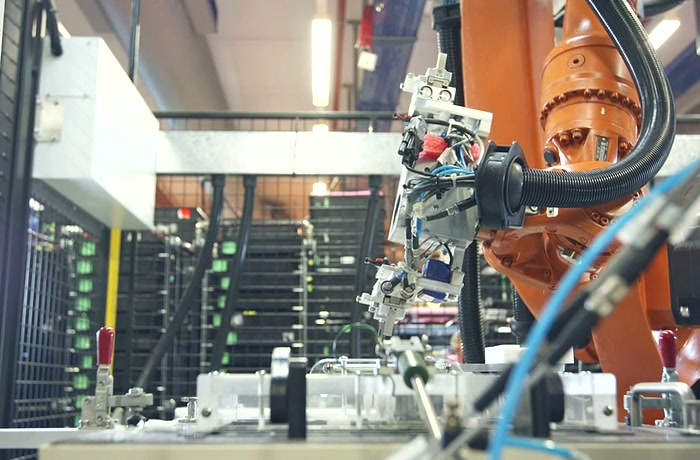
Our manufacturing practice serves four buyer profiles: plant operators modernizing MES, OEE and shop-floor connectivity under ISA-95; equipment OEMs adding IIoT, remote service and outcome-based business models; regulated manufacturers (pharma, medical device, food and beverage) needing 21 CFR Part 11, EU Annex 11 and DSCSA serialization; and supply-chain leaders pursuing end-to-end traceability, WMS modernization and supplier visibility. We design OT/IT boundaries to IEC 62443 zones and conduits, treat NIS2 incident-reporting duties as architectural inputs, and ship OPC UA, MQTT Sparkplug B and ISA-95-compliant integrations. Explore how we deliver this through our Enterprise Software Development service.
What we build
ISA-95-aligned MES with production orders, WIP tracking, downtime reasons, OEE/TEEP calculation and ERP/PLM integration.
Edge gateways across OPC UA, MQTT Sparkplug B, Modbus, EtherNet/IP and Siemens S7. Unified namespace for cloud and on-prem.
Anomaly detection, RUL estimation and condition-based maintenance with model drift monitoring and CMMS write-back.
Asset and line digital twins for what-if scheduling, layout optimization and operator training, with NVIDIA Omniverse and Unity-based viewers.
WMS modernization, ASN management, supplier portals and end-to-end visibility with EDI (X12, EDIFACT) and EPCIS event capture.
Genealogy, batch and serial-number traceability, SPC dashboards and CAPA workflows compliant with ISO 9001 and 21 CFR Part 11.
Compliance
ISO 9001 · ISO 27001 ready · SOC 2 Type II in progress · IEC 62443 OT security · NIS2 aware
ISO 9001 ISO 27001 IEC 62443 (OT security) NIS2 (EU) GDPR 21 CFR Part 11 (FDA) EU Annex 11 (GMP) OPC UA MQTT Sparkplug B ISA-95 ISA-88 (batch) DSCSA (US pharma supply chain) EU FMD EPCIS / GS1 CMMC (US defense) NIST SP 800-82 (ICS) CE / UKCA marking awareness
Process
Plant walk-through, OT/IT inventory, ISA-95 level mapping, ERP and PLM landscape, regulator scope (FDA, EMA, NIS2 competent authority).
IEC 62443 zone/conduit diagram, ISA-95 data model, edge-vs-cloud split, validation strategy and SL-T targets agreed before sprint one.
Two-week sprints with hardware-in-the-loop testing, OPC UA conformance checks, 21 CFR Part 11 audit-trail regression and shop-floor pilots.
Line-by-line rollout, operator training, OT-aware 24/7 on-call, change-control to GAMP 5 and quarterly OT cybersecurity reviews.
Cases
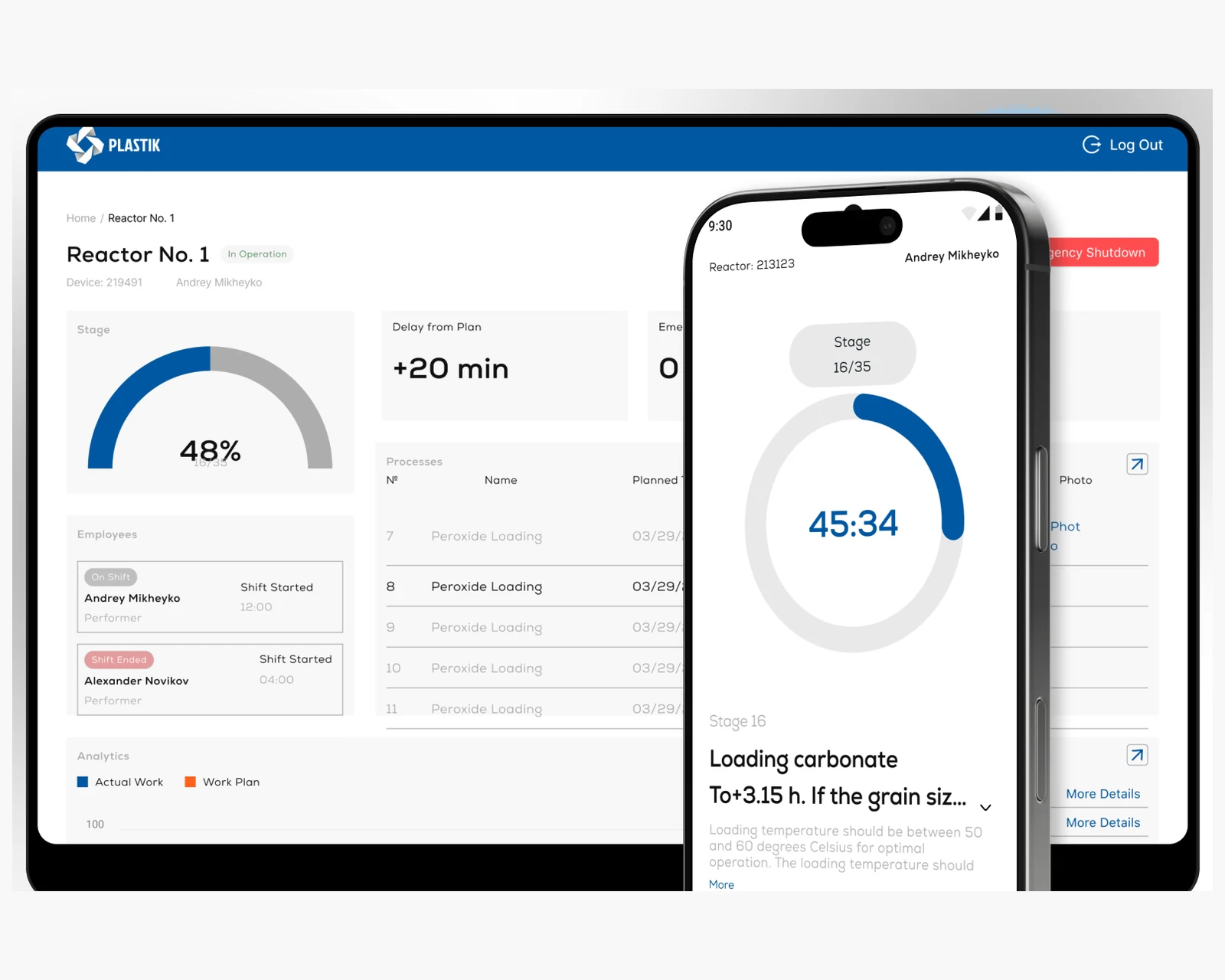
Offline-first ecosystem replacing paper journals for reactor process control — Android, admin, controller dashboard.
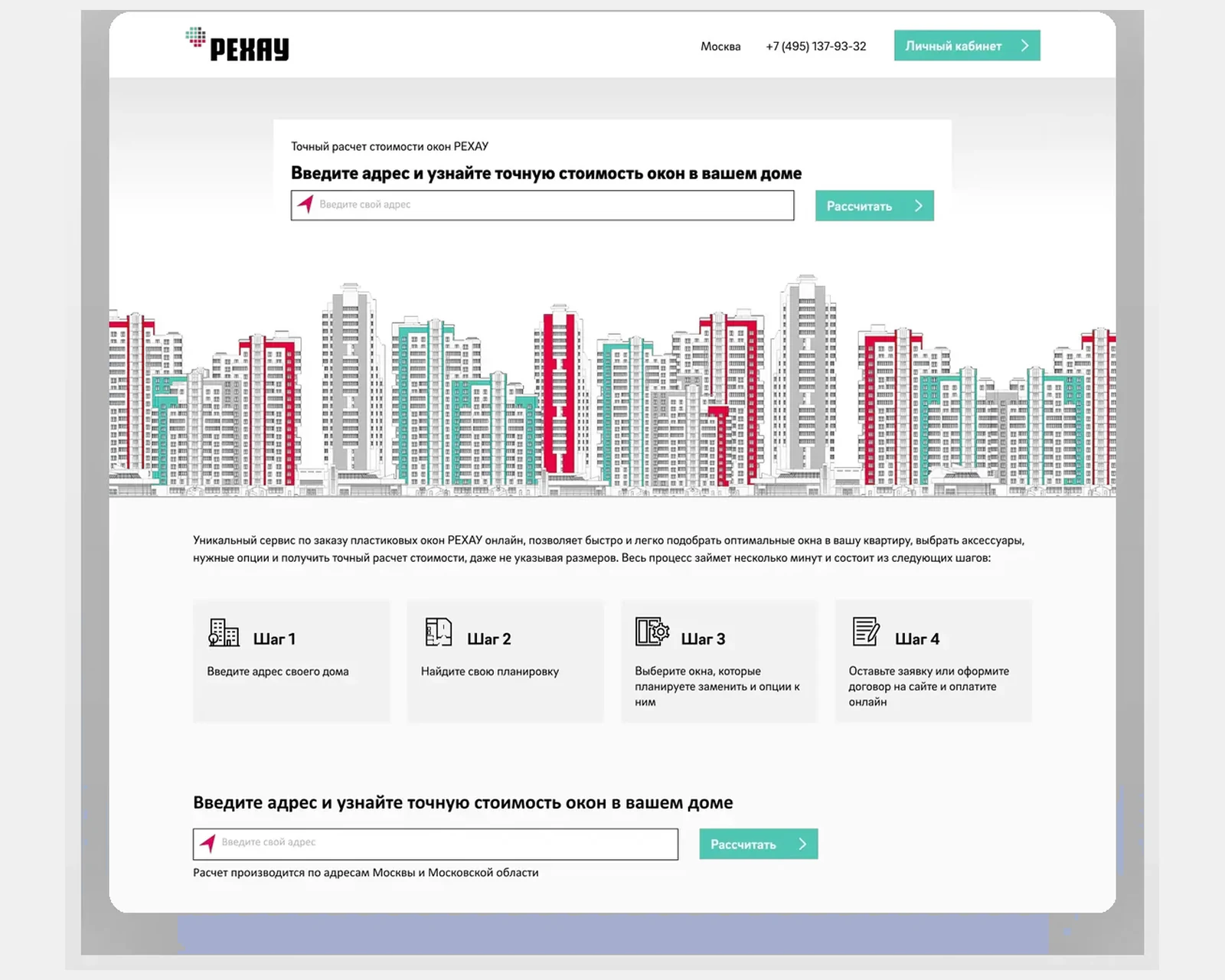
B2B e-commerce and product configurator for a global polymer manufacturer with multi-region pricing, stock and dealer workflows.
Why YuSMP
Senior engineers who respect plant-floor reality: IEC 62443 zones, change-window discipline, deterministic protocols and validated states.
ISA-95 information models, OPC UA companion specifications and Sparkplug B unified namespaces — production-grade, not POC.
GAMP 5 categorization, URS/FS/DS/IQ/OQ/PQ artefacts and 21 CFR Part 11 audit trails — without grinding velocity to a halt.
Compliance posture: ISO 9001 · ISO 27001 ready · IEC 62443 aware · NIS2-ready governance · 21 CFR Part 11 / Annex 11 capable · GDPR-aligned · CMMC-aware for US defense supply chains.
Process control in a reactor environment cannot afford connectivity gaps. YuSMP delivered an offline-first MES that captures every step reliably and syncs to the central server without data loss. Audit readiness that once took days now takes minutes.
B2B commerce for a polymer products brand means complex product configurators, dealer pricing tiers, and order workflows that non-technical buyers must navigate. YuSMP built a platform our dealers adopted without a single training session. Order volumes through the portal doubled in year one.
Technology stack
Industry 4.0 programs span multiple technology layers from plant-floor PLCs to cloud analytics. Below are the six platform categories we engineer most frequently — selected, extended or replaced based on your production environment, regulatory scope and OT/IT architecture rather than a vendor preference.
ISA-95 levels 2–4 MES on Siemens Opcenter, Rockwell FactoryTalk or custom platforms: electronic work instructions, production order dispatch, WIP tracking, downtime reason codes and OEE/TEEP calculation. We integrate MES bidirectionally with SAP S/4HANA PP and QM modules so production orders flow down and actual costs, quality results and batch records flow up without manual re-entry.
SCADA applications on Wonderware AVEVA, Ignition (Inductive Automation) or bespoke stacks: real-time process visualisation, historian integration, alarm management to ISA-18.2 and operator training simulators. We design SCADA within IEC 62443 zone-and-conduit boundaries so the control system is isolated from the corporate IT network without losing the data visibility that operations and quality need.
Industrial IoT platforms on AWS IoT Greengrass, Azure IoT Hub or on-prem equivalents: device provisioning, certificate-based auth, OTA firmware updates and time-series data pipelines at plant scale. Edge computing nodes pre-process sensor data to reduce cloud egress costs and ensure local continuity when WAN links are disrupted — a critical requirement for manufacturing environments where connectivity cannot be assumed.
SAP S/4HANA implementations and integrations covering PP (production planning), QM (quality management), PM (plant maintenance), MM (materials management) and WM/EWM (warehouse). We build BAPI, RFC and OData V4 connectors between S/4HANA and plant-floor systems so production actuals, quality inspection results and maintenance work orders are reflected in ERP without the 24-hour batch delay that erodes planning accuracy.
Asset and production-line digital twins for what-if scheduling, layout optimisation, predictive failure modelling and operator training. We use NVIDIA Omniverse for physics-accurate simulation, Unity for interactive 3D training applications, and lightweight simulation models for real-time process optimisation where a full physics engine is not required. Twins are synchronised to live sensor data so the virtual model reflects the current state of the physical asset.
eQMS platforms covering CAPA, deviation management, change control, document control and training records — aligned to ISO 9001, IATF 16949 (automotive), ISO 13485 (medical devices) and 21 CFR Part 820 (FDA QSR). Statistical process control dashboards with Western Electric rules, Cpk and Ppk trending feed closed-loop quality signals back to the MES so production can act on drift before scrap accumulates.
Integrations
Manufacturing software creates value only when plant-floor systems, ERP, quality and supply chain platforms communicate reliably. The integrations below are the most common connection points we engineer — built to industrial protocol standards and validated against the production environments they run in.
We read and write to PLCs from Siemens (S7-300/400/1500), Rockwell Automation (ControlLogix, CompactLogix), Beckhoff (TwinCAT) and Mitsubishi using native protocols: S7comm, EtherNet/IP, ADS and SLMP. Where direct PLC communication is not possible due to OT network segmentation, we deploy protocol converters and data diodes that move data upward through ISA-95 levels without creating bidirectional attack surfaces that violate IEC 62443 conduit requirements.
Historian integrations (OSIsoft PI, AspenTech IP.21, Aveva Historian) collect high-frequency time-series from SCADA into a long-term store accessible by analytics and ML workloads without impacting control system performance.
Event-driven connectors between MES and ERP covering the ISA-95 Level 3–4 boundary: production order download, work-in-progress reporting, goods receipt and goods issue posting, batch master creation and quality inspection lots. We build these as asynchronous message flows (SAP Integration Suite, MuleSoft, Azure Integration Services) with idempotency guarantees and dead-letter handling so a temporary ERP downtime does not stop production reporting.
For Oracle Cloud SCM and Microsoft Dynamics 365 we follow the same event-driven pattern via REST APIs and change-data-capture streams, with transformation layers that isolate the MES from ERP schema changes during upgrades.
OPC UA is the primary integration standard for modern industrial equipment: we implement OPC UA client/server and publish/subscribe models using companion specifications (DI, Machinery, PackML, EUROMAP) so device data arrives with semantic context rather than raw register values. MQTT Sparkplug B provides the complementary pattern for resource-constrained edge devices: structured payloads with birth/death certificates ensure the broker always knows whether a device reading is current or stale.
Modbus TCP/RTU and legacy fieldbus protocols (PROFIBUS, DeviceNet) are handled by edge gateway translators that normalise their data into OPC UA or MQTT before publishing to the unified namespace — preserving existing capital investment without requiring a full hardware refresh.
Supplier portal APIs for purchase order collaboration, ASN transmission, invoice matching and quality certificate exchange — EDI X12 (850/856/855/810) and EDIFACT (ORDERS/DESADV/INVOIC) remain the dominant standards for large manufacturer-to-supplier exchanges, and we build and maintain these translation layers alongside REST-based alternatives for suppliers without EDI capability.
EPCIS 2.0 event capture supports DSCSA serialisation (US pharma), EU FMD aggregation (EU pharma), and IATF 16949 traceability requirements for automotive sub-assemblies. Events are structured to GS1 CBV vocabulary so they are interoperable with trading partners and regulatory verification systems.
Predictive maintenance pipelines ingest vibration, temperature, current draw and acoustic emission data from sensors via the IIoT platform, apply anomaly detection models (isolation forest, autoencoder, LSTM) and remaining-useful-life estimators, and write maintenance recommendations directly to the CMMS work-order queue. We pair each model with an explainability layer — SHAP values for tabular sensor features — so maintenance engineers understand why a bearing is flagged rather than treating the system as a black box they cannot trust.
Model drift monitoring compares the current sensor distribution against the training baseline and triggers retraining when drift crosses a defined threshold — keeping predictions accurate as equipment ages, operating conditions change or sensor calibration drifts.
Need a specific integration scoped? Our enterprise software development and cloud & DevOps teams own the build and the runtime.
FAQ
We design plant-floor systems against IEC 62443-3-3 system requirements (zones, conduits, SL targets) and align governance to NIS2 essential-entity duties — including incident reporting timelines, supply-chain controls and board-level accountability.
Yes. We deliver MES and OEE platforms aligned to ISA-95 levels 2-4: production orders, work-in-progress tracking, downtime classification, OEE/TEEP calculation and ERP integration with SAP S/4HANA, Oracle and Microsoft Dynamics.
Yes. We build edge gateways speaking OPC UA, MQTT Sparkplug B, Modbus TCP/RTU and proprietary PLC protocols (Siemens S7, Rockwell EtherNet/IP, Beckhoff ADS), normalized into a unified namespace for cloud and on-prem consumers.
For FDA-regulated production we deliver 21 CFR Part 11 electronic records and signatures, audit trails, role separation and validation packages (URS/FS/DS/IQ/OQ/PQ) and align with EU Annex 11 for European facilities.
Yes. We build sensor pipelines, anomaly detection and remaining-useful-life models with explainability, drift monitoring and a clear feedback loop to maintenance and reliability engineers — not just dashboards.
We deliver DSCSA-compliant serialization, aggregation and EPCIS event capture across packaging lines and warehouses, with trading-partner verification and saleable-returns workflows in line with FDA enforcement timelines.
ERP (SAP, Oracle, Dynamics) manages business processes at ISA-95 level 4: sales orders, purchasing, finance, master data and high-level production planning. MES operates at levels 2–3: it receives production orders from ERP and manages their execution on the shop floor — dispatching work to machines and operators, tracking WIP in real time, collecting quality data and reporting actuals back to ERP. ERP knows what was planned; MES knows what actually happened minute by minute. Most discrete and process manufacturers need both because ERP's batch refresh cycle (hourly or daily) is far too slow to manage a production line, but MES on its own cannot close financials, calculate landed cost or run the supply chain. The integration between them — production order download, goods-movement posting, quality inspection results — is where most value is lost when systems are not properly connected.
Brownfield IIoT implementations typically follow five steps. First, asset inventory: catalogue every machine, its communication interface (OPC UA, Modbus, proprietary protocol, serial) and its approximate data rate. Second, connectivity layer: deploy edge gateways that speak native PLC protocols and translate to OPC UA or MQTT Sparkplug B — this decouples the cloud layer from equipment-specific protocols. Third, OT/IT boundary design: establish IEC 62443 zone separation so edge devices communicate upward through conduit-controlled paths without exposing PLCs to corporate IT networks. Fourth, data modelling: define a unified namespace with semantic context (tag names that mean something to maintenance engineers, not just raw register addresses). Fifth, pilot and expand: start with one production line, validate data quality and latency against use-case requirements, then roll out systematically. The biggest mistake is starting with a data lake before validating that the raw sensor data is accurate, timestamped correctly and complete enough to train a model.
Digital twin ROI comes from three sources: reduced physical testing cost (simulating layout changes or new product introductions before committing capital), faster operator training (immersive 3D environments cut time-to-competency by 30–50% in studies across automotive and aerospace), and predictive insight (twins synchronised to live sensor data can detect process drift earlier than threshold alarms alone). Implementation time ranges from 3 months for a single-asset condition-monitoring twin to 12–18 months for a full production-line simulation with physics-accurate models. We recommend starting with a specific high-value use case — line balancing optimisation or energy consumption modelling — rather than a platform-wide twin programme, because a narrow scope produces faster ROI and builds the organisational muscle to expand.
OEE improvement through software works on all three factors. Availability improves when downtime is captured in real time with standardised reason codes rather than paper logbooks — root-cause analysis becomes possible within days rather than requiring a month of manual data cleaning. Performance improves when the MES compares actual cycle times to ideal cycle times per job and surfaces micro-stoppages that individually are below the threshold for a downtime event but collectively account for 5–15% of lost capacity. Quality improves when SPC charts surface process drift before it produces scrap, closing the loop between quality data and production control. Manufacturers moving from paper-based reporting to a properly integrated MES typically see a 5–12 OEE percentage point improvement within 12 months — with the largest gains coming from availability (eliminating unclassified downtime) and the slowest from performance, which requires operator behaviour change supported by training and management commitment.
Legacy machines with no digital output can still be connected through three techniques. Retrofit sensors: vibration, current-clamp, temperature and acoustic-emission sensors attached externally to the machine provide condition signals without modifying the original control system. Serial-to-Ethernet converters: machines with RS-232 or RS-485 serial ports and Modbus RTU register maps can be bridged to Modbus TCP and then to OPC UA using a protocol gateway — a common approach for CNCs and packaging lines from the 1990s and 2000s. Machine activity inference: power consumption monitoring via smart meters or current transformers can detect run/idle/fault states with reasonable accuracy for machines where the only goal is availability tracking rather than process parameter capture. The right technique depends on what data you need, the machine's physical accessibility and your change-control requirements — for 21 CFR Part 11 environments, even a retrofit sensor installation may require an IQ/OQ validation package before data from that sensor can be used for lot release decisions.
Response within 1 business day. NDA on request.
Share a few details and a senior consultant will reply within one business day.