The short answer
Microsoft is now renting out the agent runtime that powers GitHub Copilot. Since October 28, 2026 the Copilot harness is in public preview in Foundry Agent Service: Microsoft runs the agent loop and sandbox, and developers pick a model and write the instructions, skills and tools. For teams planning AI agent development, it removes weeks of plumbing work, but it also ties the runtime to Microsoft’s rules and prices.
What did Microsoft announce?
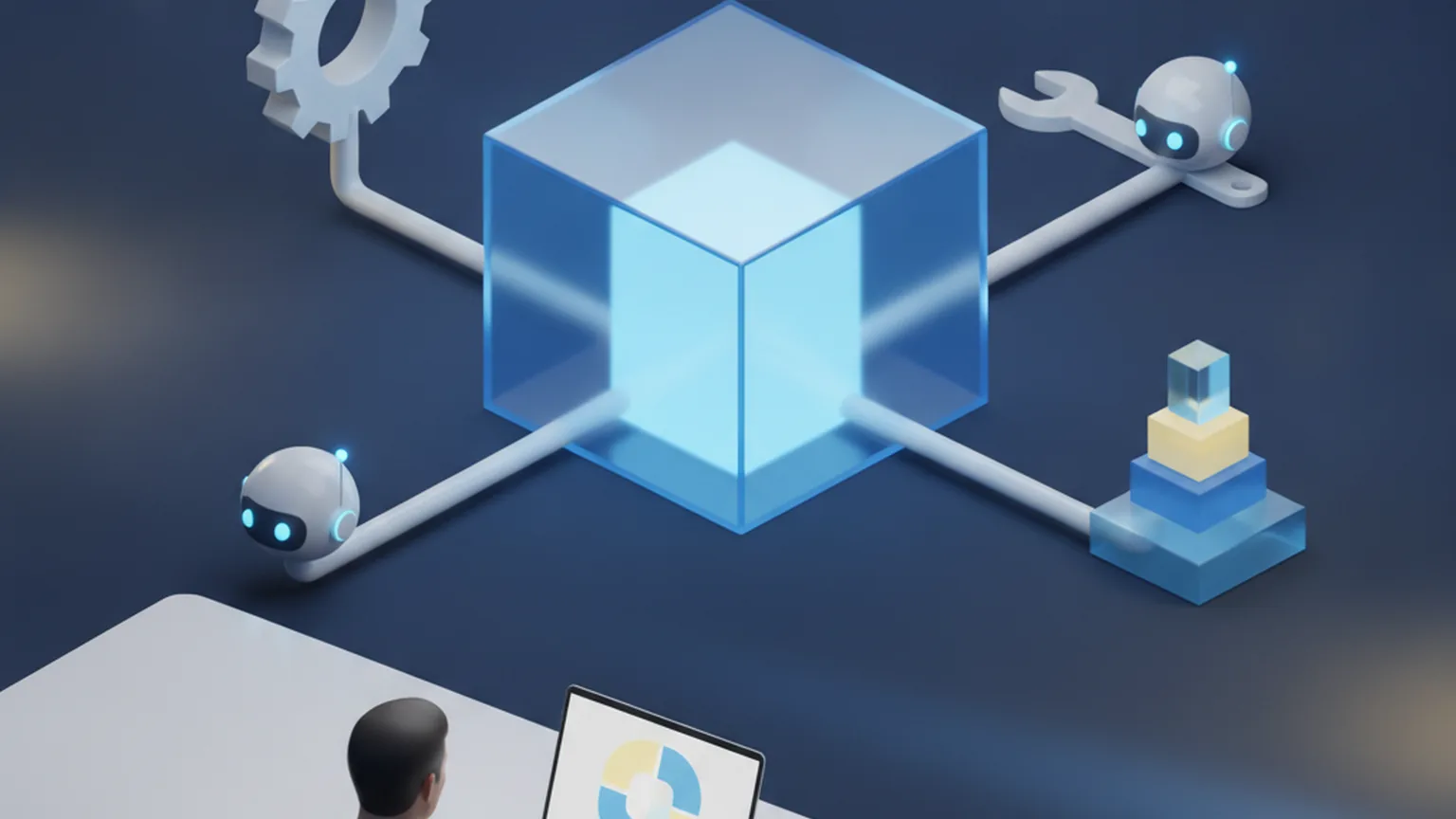
A harness is everything around the model that lets an agent finish a task: instructions, context, tools, an execution environment and controls. In a post co-signed by Foundry CVP Tina Schuchman and GitHub CTO Vladimir Fedorov, Microsoft said it is opening the harness GitHub built for Copilot to outside developers, either as a downloadable SDK or as a fully managed service in Foundry, where Microsoft runs the agent loop and sandbox with governance built in. Microsoft also says it recently ported the harness runtime to Rust to cut session overhead and time to first token.
According to The New Stack, the harness manages model and tool calls, tracks context and keeps agents within configured policies. Skills package instructions, scripts and resources; agents can work with files, run code and hand work to subagents, with the main agent combining the results. Agents are defined in an azure.yaml file, deployed with azd deploy --all through the Azure Developer CLI, and their configuration can live in source control next to application code. That makes it a natural option for teams already running on Azure.
What are the trade-offs?
Control over the runtime is the main one. The harness type must be chosen when a prompt agent is created and cannot be changed later, even in a new version. Microsoft also decides how much CPU and memory the agent gets and how long it can sit idle. Developers decide what the agent does, not the environment it runs in.
The multi-model promise has limits too. Microsoft cites more than 20 frontier models plus bring-your-own-key, but in the managed Foundry version agents use compatible models deployed through Foundry, and The New Stack reports that bringing your own custom models is not supported. Teams that need their own frameworks or models can use Foundry hosted agents instead, where Microsoft only handles hosting; on the same day it made long-running resilience generally available for those agents, so tasks lasting hours or days can recover from interruptions.
How much will it cost?
The harness is free in Foundry Agent Service until December 1, 2026, though model inference and some tools and connected services are billed separately. After that, Microsoft will charge $0.0994 per vCPU-hour and $0.0118 per GiB-hour of memory, with rates that can vary by region and agreement. Runtime cost is therefore small next to tokens for most agents, but idle sessions, long tasks and parallel subagents add up, so cost should be tracked per completed task, not per month.
What it means for US & EU software teams
The hard part of agents is moving from model choice to runtime engineering: sandboxing, tool permissions, retries, context handling and audit trails. A managed harness that already serves millions of Copilot users, by Microsoft’s count, takes much of that off a team’s backlog. For US teams on Azure, that can shorten a pilot from weeks to days and give security reviewers a known runtime to assess instead of custom code.
For EU teams, a governed runtime with approval-gated MCP connections and policy controls helps with the logging and human-oversight duties that regulated clients ask about, but it does not settle where data is processed. Check which regions host the agent and model, and document tool access and approvals for GDPR, DORA and EU AI Act reviews. Everywhere, the strategic question is the same: the more of your agent lives in a vendor’s harness, the harder it is to change vendors later.
What should teams do now?
- Pilot during the free window. Build one real agent before December 1 and measure success rate, tokens and runtime hours per task.
- Keep agent logic in your repository. Store skills, instructions, tool definitions and evaluations in git so they can move to another runtime.
- Decide the harness up front. Because it cannot be changed after creation, choose between the Copilot harness and hosted agents per use case before building.
- Lock down tools. Use MCP authentication and approvals, least-privilege credentials and separate sandboxes for production data.
- Set budgets and alerts. Track vCPU-hours, memory and model spend per agent, and cap idle time and parallel subagents.
- Confirm data location. Record regions, models and data flows for client and regulatory audits.
Frequently asked questions
What is the Microsoft Copilot harness?
It is the orchestration layer GitHub built for its own Copilot products: the part around the model that manages instructions, context, tool calls, the execution sandbox and policy controls. Microsoft says the same harness now runs Copilot Code, Copilot Studio, the GitHub Copilot app, the CLI and VS Code. Since October 28, 2026 developers can use it for their own agents through Foundry Agent Service in public preview, or download an SDK from GitHub.
How much does the Copilot harness cost?
The harness is free in Foundry Agent Service until December 1, 2026, although model inference and some tools and connected services are charged separately. After that, The New Stack reports Microsoft will charge $0.0994 per vCPU-hour for compute and $0.0118 per GiB-hour for memory, with rates that may vary by region and customer agreement.
Which models can agents on the Copilot harness use?
Microsoft says the harness works with more than 20 frontier models plus bring-your-own-key. In the managed Foundry version, agents use compatible models deployed through Foundry; The New Stack notes that bringing your own custom models is not supported there. Teams that need their own models or frameworks can use Foundry hosted agents instead.
What are the lock-in risks?
The harness type is chosen when a prompt agent is created and cannot be changed later, even in a new version, and Microsoft controls CPU, memory and idle limits. Keeping skills, instructions, tool definitions and evaluations in your own repository, and behind a thin internal interface, keeps a later move to another runtime manageable.
Should we build agents on the Copilot harness now?
It is a good fit for pilots, internal tools and Azure-centric teams that want a governed agent runtime quickly. For long-lived products, test it during the free preview, measure cost per completed task, and compare it with a framework you host yourself before committing production workloads.
Sources
The Official Microsoft Blog — Introducing the Microsoft Copilot harness (primary source, October 28, 2026)
The New Stack — Microsoft’s new Copilot harness makes agents easy, until you want to switch (October 2026)
Visual Studio Magazine — Microsoft Opens GitHub-Built Copilot Harness to Developers Through Foundry (October 28, 2026)