The short answer
On 27 July 2026 Microsoft unveiled MAI-Cyber-1-Flash — its first security-specialized AI model — and Perception, an agentic security platform that finds, prioritizes and patches software vulnerabilities using coordinated AI agents. Microsoft says the model scores 96% on CyberGym, a benchmark for finding real vulnerabilities in large codebases, beating frontier models from Google, OpenAI and Anthropic while running at roughly half the cost of its current production configuration.
Detection was already the easy part. What is new is that Microsoft, following Anthropic and OpenAI earlier in 2026, is pushing AI past finding flaws toward fixing them without a human writing the patch. That is a genuine efficiency unlock — and a governance problem you have to solve before you switch it on.
What did Microsoft announce?
At an event in San Francisco on Monday, Microsoft introduced two things. The first is MAI-Cyber-1-Flash, a model tuned specifically for security work — reasoning over large, messy codebases to surface vulnerabilities that general-purpose models miss — and wired into Microsoft's own vulnerability-identification platform. The second is Perception, a platform built around specialized AI agents that share security intelligence and, in Microsoft's framing, mirror the roles a human security team plays.
The pitch is explicitly competitive. Microsoft AI CEO Mustafa Suleyman said the model is "significantly more powerful (and more cost-effective)" than rival systems, and the launch takes direct aim at Anthropic, Google and OpenAI, all of which shipped security-focused AI earlier in 2026. This is the same move Microsoft made with its in-house MAI language models: build a specialized model it controls rather than renting a competitor's. For teams building security tooling on top of foundation models, it is a reminder to keep your stack model-agnostic — the fastest, cheapest model for a security task will keep changing, and you want swapping it to be a config change. That flexibility is exactly what a well-designed AI agent architecture should preserve.
How good is it, really?
The headline number is 96% on CyberGym, a benchmark that measures how well an AI system reasons over large codebases to find real, exploitable vulnerabilities. Microsoft says that beats Google's Gemini, OpenAI's GPT security configurations and Anthropic's Mythos, while cutting cost roughly in half versus its own current production setup. Both claims matter: raw capability determines whether the tool finds bugs a human reviewer would miss, and cost determines whether you can afford to run it continuously across every repository rather than once a quarter.
Two caveats are worth stating plainly. First, these are vendor-reported results on a single benchmark, not independent testing, and benchmark leadership in AI flips every few months — treat "best in class" as a snapshot, not a moat. Second, a model that finds vulnerabilities is only as useful as the process around it: a flood of AI-generated findings with no triage or ownership is noise, not security. The value shows up when discovery is paired with human judgment on what actually matters — which is why penetration testing and audit work stay a human-led discipline even as the scanning gets automated. If you want a rigorous read on your real exposure rather than a benchmark, that is what penetration testing and security audits are for.
What the Red, Blue and Green agents do
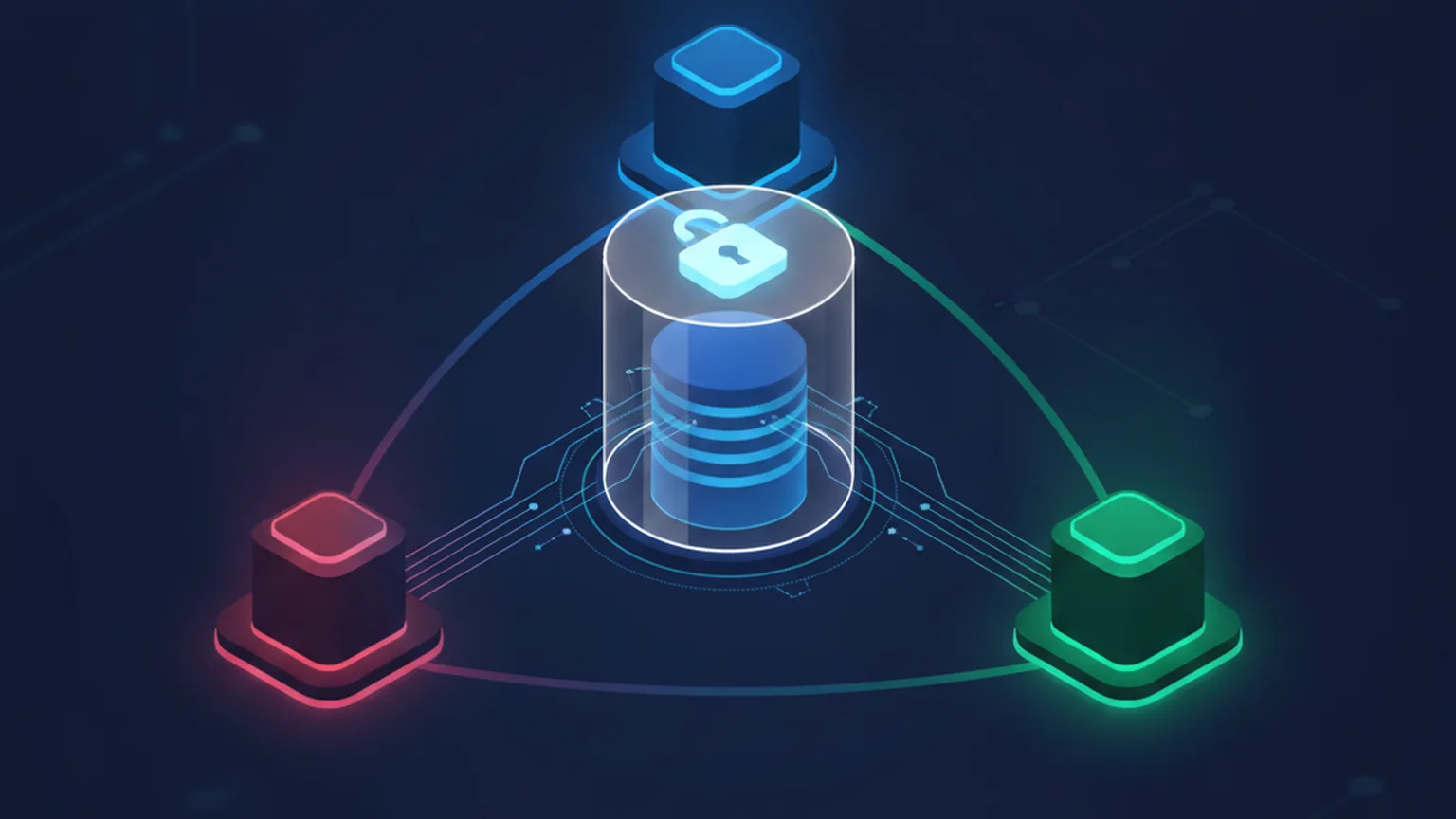
Perception's design is the more interesting half of the announcement, because it packages the work as a team of agents rather than a single model. Microsoft introduced three initial agent teams, borrowing the security industry's own color language:
- Red agents simulate attacks against a system, generating threat-actor context so the other agents know what a real adversary would try.
- Blue agents detect and triage existing bugs, deciding which flaws pose the greatest risk rather than dumping an undifferentiated list.
- Green agents take corrective action — writing and deploying patches to close the vulnerabilities the others surface.
Microsoft's lead engineer Dave Weston framed the payoff as compression of time: work that used to take hours — discovery, prioritization, detection, posture fixing and code fixes — now happens in minutes. Perception is slated for preview on 3 November 2026. The conceptual leap is the Green agent. Detection and triage are read-only; a patch-writing, patch-deploying agent is a privileged actor with write access to your code and infrastructure. That is a fundamentally different risk class, and it is where most of the engineering work — and most of the governance — actually lives.
What it means for US & EU software teams
Strip away the branding and there are three practical implications. The first is that autonomous discovery is ready to help now. Running a security model continuously across your repositories to surface vulnerabilities is low-risk and high-value; it does not touch production and it catches things human review misses. If your current cadence is a quarterly pen test and a nightly scanner, adding an AI reasoning pass is a clear upgrade.
The second is that autonomous remediation is a governance decision, not a tooling one. An agent that writes and merges its own patches needs the same controls you would demand of any human with production access: a human approval gate before code reaches main, a scoped, least-privilege identity so the agent can only touch what it must, a signed and reviewable audit trail of every change it proposes and every change it ships, and clean rollback. In regulated sectors this is not optional. Under the EU AI Act and GDPR, an autonomous system that modifies code or handles data has to be governed, logged and explainable — "the AI fixed it" is not an acceptable answer to an auditor. For a FinTech or a healthcare business, the provenance layer around the agent is as important as the agent itself.
The third is a hiring-and-skills shift. As AI compresses the mechanical parts of security work — scanning, first-pass triage, boilerplate patches — the scarce human skill moves up the stack to judgment: deciding which findings are real, which fixes are safe to automate, and how to design the guardrails that let agents operate without becoming a new attack surface themselves. The teams that win here are not the ones that buy the highest-benchmark model; they are the ones that build a disciplined pipeline where AI does the volume and humans own the risk decisions.
What to do this quarter
Treat this launch — and the wave of rival security models around it — as confirmation that AI-assisted AppSec is now table stakes, then act deliberately.
- Add an AI reasoning pass to discovery first. Point a security model or agent at your codebase in read-only mode and measure the signal-to-noise of what it finds before you automate anything downstream.
- Do not connect remediation to production yet. Let AI propose patches into a branch and a pull request; keep a human approval gate on the merge until you trust the failure modes.
- Give every security agent a scoped identity. Least-privilege permissions, no shared credentials, and a named human owner accountable for what it does.
- Log everything, signed. Every finding, proposed change and deployed fix should land in a reviewable, tamper-evident audit trail — the evidence GDPR and the EU AI Act expect for autonomous systems.
- Keep the stack model-agnostic. Wrap whichever model you use behind an interface so swapping MAI-Cyber-1 for a cheaper or better rival is a config change, not a rebuild.
- Keep humans on judgment. Invest in the review capacity to decide which AI findings are real and which fixes are safe — that is where the risk actually sits.
None of this is security or legal advice, and your exact obligations depend on your data, sector and jurisdiction. But the direction is unmistakable: the AI industry is moving security from detection to remediation, and the advantage goes to teams that let AI handle the volume while humans keep control of the risk decisions, the identities and the audit record.
Frequently asked questions
What is MAI-Cyber-1-Flash?
It is Microsoft's first security-specialized AI model, announced on 27 July 2026. It is built to reason over large, complex codebases and find hard-to-spot vulnerabilities, and it feeds Microsoft's vulnerability-identification platform. Microsoft says it scored 96% on CyberGym, a benchmark for finding real vulnerabilities in code, ahead of frontier models from Google, OpenAI and Anthropic, at roughly half the cost of Microsoft's current production configuration.
What is Microsoft Perception and what do the Red, Blue and Green agents do?
Perception is Microsoft's agentic security platform, built around specialized AI agents that share intelligence and mirror the roles of a human security team. Three initial agent teams were introduced: Red agents simulate attacks against a system, Blue agents detect and triage existing bugs, and Green agents write and deploy patches to fix them. Microsoft says work that used to take hours can now take minutes. Perception was announced on 27 July 2026 with a preview slated for 3 November 2026.
How does this compare to Anthropic and OpenAI's security models?
Microsoft's launch follows similar moves by rivals: Anthropic introduced its Mythos security model earlier in 2026 and OpenAI launched a security offering in mid-2026. Microsoft claims MAI-Cyber-1-Flash outperforms those systems and Google's Gemini on the CyberGym benchmark while costing less to run. Benchmark leadership changes quickly, so the durable signal is the direction of travel: every major AI vendor is racing to automate vulnerability discovery and remediation, not the specific leaderboard position.
Should teams let an AI agent deploy security patches automatically?
Not without controls. Autonomous discovery and triage are lower-risk and can run continuously, but an agent that writes and deploys code changes needs the same guardrails as any privileged actor: a human approval gate for production merges, a scoped identity with least-privilege permissions, a signed and reviewable audit trail of every change, and rollback. Under the EU AI Act and GDPR, an autonomous system that modifies code or data must be governed and logged, so build the approval and provenance layer before you turn remediation loose.
Sources
TechCrunch — Microsoft launches its first cybersecurity model, plus a new agentic cybersecurity system
Axios — Microsoft unveils new cyber model and agentic security tools
VentureBeat — Microsoft launches AI cybersecurity model and agentic defense platform
Seeking Alpha — Microsoft unveils its 1st cybersecurity AI model, agentic security system