SaaS product frontends
Multi-tenant dashboards, admin consoles, billing portals, and customer-facing apps on Next.js 15 App Router with RSC. SSR for SEO-relevant marketing surfaces, client rendering for app shells, Server Actions for mutations.

Services
Senior React engineering for funded SaaS, fintech and AI products. We ship on React 19 with the React Compiler, TypeScript 5.6 strict, Next.js 15 App Router or Vite 6, and design systems on Radix UI + Tailwind 4. Teams run a CET workday with a US East-Coast overlap, sign GDPR DPAs, and ship to WCAG 2.2 AA. Fixed-scope, all-in USD pricing: a client account or dashboard from $4,100, an admin panel from $5,800, a full SaaS web service from $10,400 and a client portal from $13,800 — with IP transferred to you on day one.

GDPR-aligned · ISO 27001 ready · SOC 2 Type II in progress · HIPAA-capable · CCPA-acknowledged · CET workday with 9 AM–1 PM ET overlap
React is the default frontend stack for US and EU SaaS, but the gap between "we use React" and "we ship a fast, accessible, maintainable React product" is enormous. We close that gap. Our engineers have shipped React in production since the class-component era — through hooks, Concurrent Mode, Server Components, and now the React Compiler — and we use that history to make boring, correct architecture decisions instead of chasing whatever was tweeted last week. Whether you need a greenfield product from a Figma file, a design-system rebuild on top of Radix and shadcn/ui, or a rescue mission on a Redux codebase that has outgrown its team, the engagement looks the same: senior engineers, weekly demos, measurable Web Vitals, and code your team can own when we leave. Evaluating the stack first? See our React capabilities, architecture patterns and when to choose React.
Multi-tenant dashboards, admin consoles, billing portals, and customer-facing apps on Next.js 15 App Router with RSC. SSR for SEO-relevant marketing surfaces, client rendering for app shells, Server Actions for mutations.
Token-first design systems on Radix UI primitives, Tailwind CSS 4 with @layer composition, Storybook 8 visual review, and Chromatic regression testing. Shared across web, mobile-web, and Electron surfaces.
Virtualised tables with TanStack Table v8, charts on Recharts or Visx, real-time grids over WebSocket, and complex form flows on React Hook Form 7 + Zod 3 schemas shared with the backend.
CRA → Vite or Next.js, Webpack 4 → Turbopack, Redux → TanStack Query + Zustand, Enzyme → React Testing Library + Vitest. We migrate incrementally behind feature flags — no big-bang rewrites.
INP, LCP and CLS audits with field RUM data, route-level code splitting, Suspense boundaries, image pipelines on AVIF/WebP, and Lighthouse CI budgets in GitHub Actions that block regressions on PR.
WCAG 2.2 AA conformance with axe-core in CI, VPAT documentation for US federal procurement, EAA-aligned audits for EU launches, and i18n on next-intl or react-i18next with ICU MessageFormat and RTL support.
Week 1: codebase walk-through, dependency audit, bundle analysis with rollup-plugin-visualizer, Core Web Vitals baseline from CrUX field data, and a written report with quick-win backlog.
Weeks 2–3: decide routing model (App Router vs Vite SPA), state shape, design tokens from Figma Variables, folder layout, lint and type-check baselines, and CI gates.
Senior engineers ship features behind LaunchDarkly or Unleash flags, daily PR review, Storybook for visual sign-off, demo every Friday, deploy to preview on every PR via Vercel or Cloudflare.
ADR documentation, onboarding video for your engineers, 30-day support tail, and a clean Git history. You own the IP, the secrets, the domains, and the codebase from day one.
Default for a bounded product surface: a client account, an admin panel, a SaaS web service or a client portal. Fixed scope, fixed all-in USD price, signed off at the end of discovery before any code is written.
Post-launch evolution on monthly invoicing per named seat. Same squad, same context, no recontracting — ship weekly against a rolling backlog, or add staff augmentation to plug a specific gap.
A long-running dedicated development team embedded in your roadmap for teams scaling beyond a single surface — your Jira, your standup, your release calendar.
All engagements include NDA, GDPR DPA and IP assignment on day one. No third-country subprocessors without written approval.
Most agencies keep the number for a sales call. Below are our fixed-scope tiers by app surface — we name the exact quote after a free scope assessment. Pricing is all-in and quoted in USD, with no recruitment markup, no tool surcharges and no hidden fees. You see the line-item budget before any code is written and sign off on it.
Client account / dashboard
from $4,100
Customer-facing account area
Auth, profile and account state, core data views, a typed design system and Core Web Vitals budgets. The single-surface entry point.
Admin panel / dashboard
from $5,800
Internal operations UI
Roles and permissions, virtualised data tables, charts, filters and real-time grids over WebSocket.
SaaS / web service
from $10,400
Full product surface
Next.js 15 App Router, multi-view product, billing and auth integrations, admin and analytics, RUM-tracked performance.
Client portal
from $13,800
Multi-role external + internal
External and internal roles, SSO, complex form flows, third-party integrations and a shared design system.
What moves the number: the number of views and roles; the rendering model (Next.js 15 App Router with RSC vs a Vite SPA app shell); the integration count (billing, auth, third-party APIs); the compliance scope (WCAG 2.2 AA and Section 508 VPAT for US federal and EU public-sector procurement, GDPR DPA); and the depth of each data flow. GPU, third-party tooling and cloud spend run on your own accounts, so you keep the cost lever. Anything outside the signed scope goes on the post-launch roadmap with sized estimates. Prices are indicative and fixed in a written quote for your specific scope.
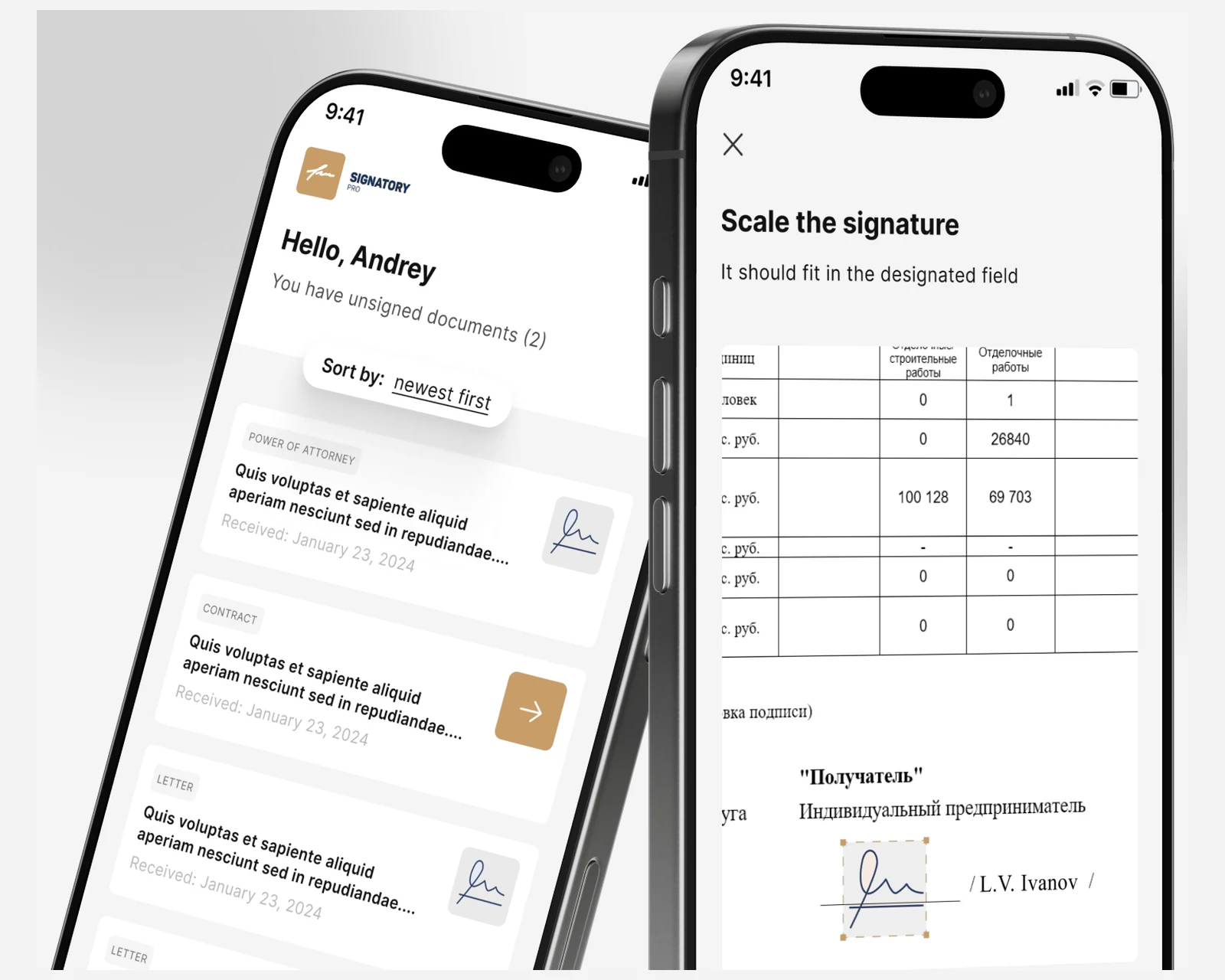
Native iOS and Android e-signature clients with a Symfony + React CRM for a cross-border law firm — KYC onboarding and a defensible evidence trail for US & EU matters.
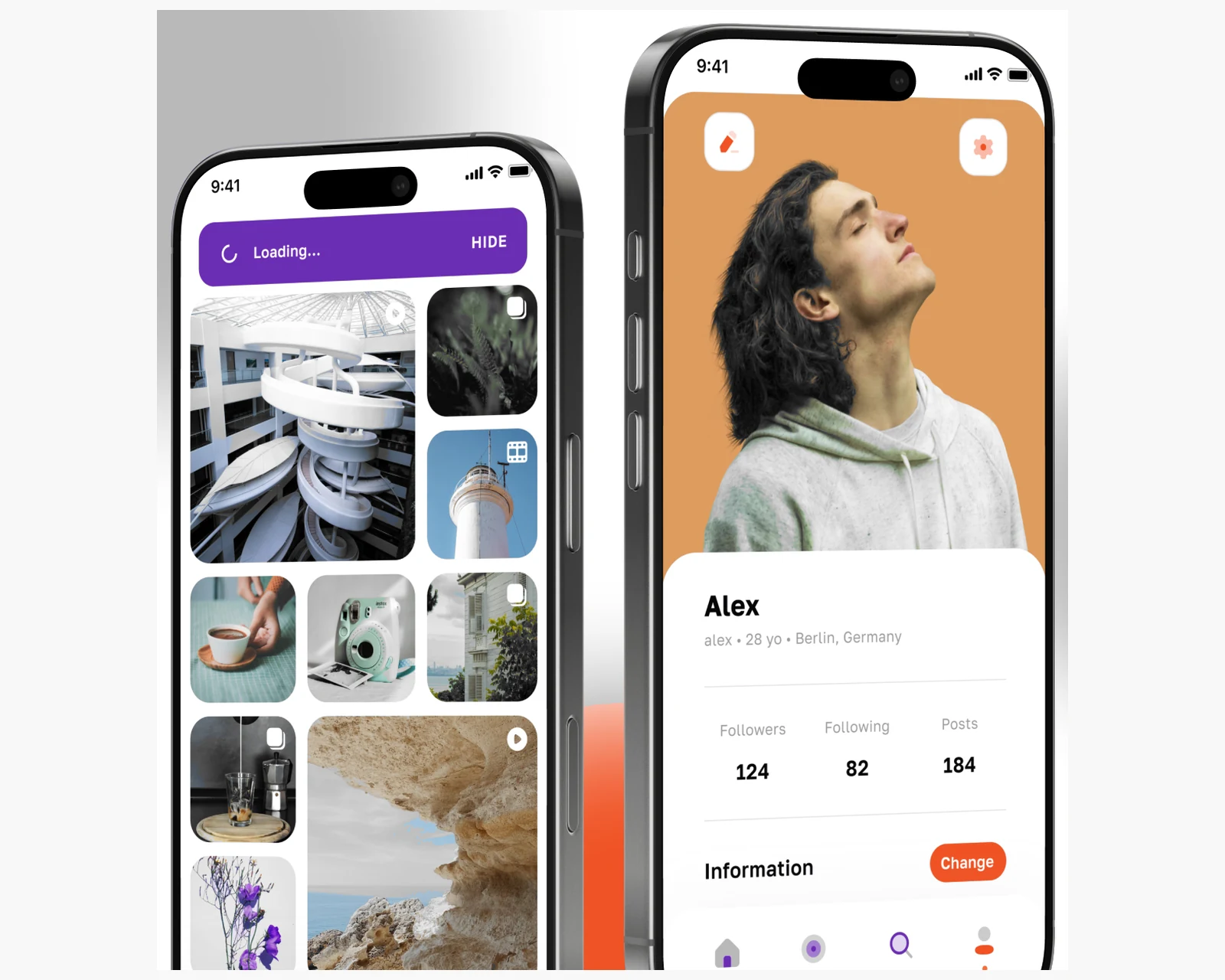
Production social platform — App Store + Google Play, live across the US and EU — with geo Radar, encrypted messaging and a virtual economy.
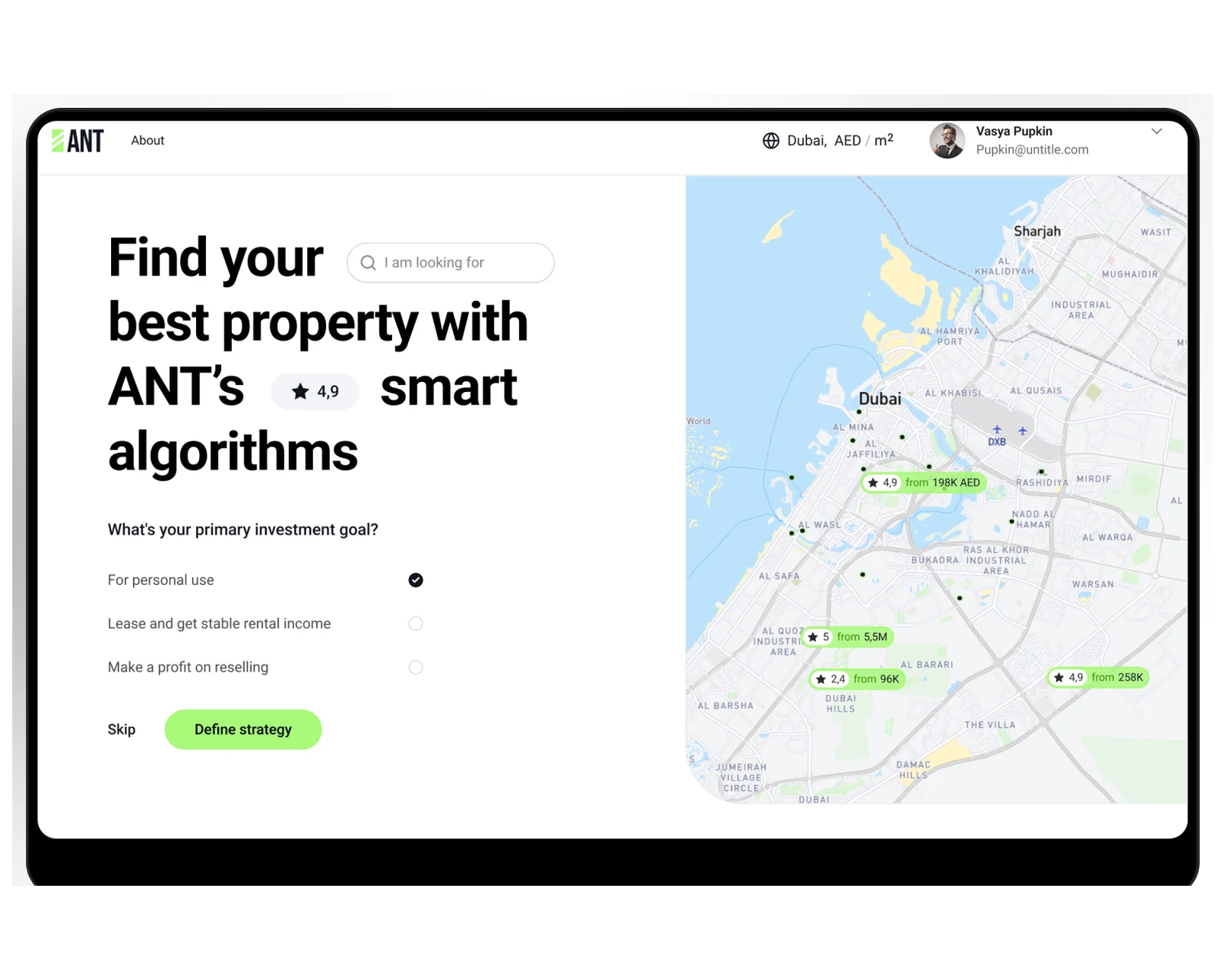
Property marketplace web platform with listing CMS, search and B2B admin console for US and EU operators.
GDPR-aligned · ISO 27001 ready · SOC 2 Type II in progress
Median 8+ years of React in production. Every engineer has shipped at least one design system and one Core Web Vitals turnaround. No bootcamp hires staffed on your account.
WCAG 2.2 AA by default, EAA-aligned audits for EU launches, Section 508 VPAT for US federal RFPs, and axe-core wired into CI so regressions never reach main.
EU-based engineers working 9 AM–6 PM CET with a guaranteed 4-hour overlap with US East Coast. English-only async-first communication on Linear, Slack, and Loom.
Pricing is all-in and quoted in USD; IP is transferred to you on day one, with no recruitment markup and no tool surcharges. Cloud fees run on your own accounts, so you keep the cost lever — no third-country subprocessors without your written approval.
Building an e-learning platform on Laravel and React sounds straightforward until you need progress tracking, certificates, and payment flows that actually convert. YuSMP made it look easy. Course completion rates on our platform consistently beat industry averages.
A microloan platform built on Laravel and React needs to handle high-volume applications, instant credit checks, and a borrower portal that does not intimidate first-time users. YuSMP delivered all of it within budget. Application volume doubled in the quarter following launch.
New apps go on React 19.0 with the React Compiler enabled in opt-in mode, TypeScript 5.6 in strict mode, and Vite 6 for SPA bundling. For SSR and edge rendering we default to Next.js 15 App Router with React Server Components and Server Actions. For very large product surfaces we run Turborepo monorepos with pnpm workspaces. We avoid CRA (deprecated) and Webpack-only setups in greenfield work, and we migrate Webpack 4/5 projects to Vite or Turbopack as part of modernisation engagements.
Server state lives in TanStack Query v5 with suspense boundaries and granular invalidation, never in Redux. Client state goes to Zustand 4 or Jotai for cross-tree atoms; Redux Toolkit only when a client requires it for legacy reasons. Forms use React Hook Form 7 with Zod 3 schemas shared between client and server. For real-time we use TanStack Query subscriptions on top of WebSocket or Server-Sent Events, with optimistic updates and rollback. This stack typically removes 30 to 50 percent of boilerplate from Redux-era codebases.
Both. For greenfield SaaS we build a token-first design system on Radix UI primitives, shadcn/ui patterns, Tailwind CSS 4 with CSS-layer composition, and Storybook 8 for visual review. For clients with an existing Figma library we wire Figma Variables to design tokens via Style Dictionary and ship the React component layer to match. All components ship with WCAG 2.2 AA contrast checks, keyboard navigation, and screen-reader labels — required for EU public-sector procurement and US Section 508.
We treat LCP, INP, and CLS as engineering SLOs, not marketing metrics. INP is the hard one in React: we audit hydration cost, move heavy work to useDeferredValue and startTransition, and split routes with React.lazy plus Suspense. For image-heavy product UIs we use AVIF/WebP via the Next.js Image component or unpic-img with responsive srcset. We measure in production via web-vitals 4.x posting to a real-user monitoring sink (Sentry, Vercel Analytics, or Datadog RUM) and gate PRs on Lighthouse CI budgets in GitHub Actions.
Yes. All engineers are inside the EU under GDPR-aligned employment contracts; we sign a DPA with every client and act as data processor. We avoid sending PII to US-based analytics by default and prefer EU-region hosting (Vercel Frankfurt, Cloudflare EU isolation, Hetzner). For accessibility we follow WCAG 2.2 AA (mandatory under European Accessibility Act from June 2025) and Section 508 for US federal contracts. We run axe-core in CI and ship VPAT documentation when the client needs it for procurement.
Fixed-scope and all-in, quoted in USD, tiered by the app surface we build. A client account or dashboard runs from $4,100; an internal admin panel or dashboard from $5,800; a full SaaS web service from $10,400; a multi-role client portal from $13,800. The exact number depends on the number of views and roles, integration count (billing, auth, third-party APIs) and the depth of each data flow. You see the line-item budget at the end of discovery and sign off before any code is written — no hidden fees, no recruitment markup, no tool surcharges, and cloud fees run on your own accounts so you keep the cost lever.
Practical guides on React, Next.js, and modern frontend development in 2026.
Share a few details and a senior consultant will reply within one business day.