

VoIP software development is the engineering of applications that carry voice (and often video and messaging) over IP networks instead of traditional phone lines. It ranges from adding a click-to-call button to a web app, through building a cloud PBX or softphone, to running a multi-tenant contact center or a carrier-grade switching platform that handles millions of minutes a month.
Companies rarely build VoIP from scratch because they want to own a phone system. They build it because voice is part of their product or operations: a telehealth app needs secure video visits, a sales platform needs calls logged to the CRM automatically, a logistics company needs drivers and dispatchers connected without roaming bills. In each case, an experienced custom software development company has to combine real-time media engineering with ordinary product work — user management, billing, analytics and integrations — and with telecom regulation that most web teams never meet.
This guide explains what VoIP software development services include, the main types of VoIP software, the protocols and open-source engines behind them, how a reliable architecture looks, the build process step by step, call quality and compliance requirements in the US and EU, what drives cost in 2026, when CPaaS beats a custom build and how to choose a VoIP software development company.
What is VoIP software development?
VoIP software development is the process of building software that sets up, carries, manages and bills voice calls over the internet or private IP networks. A VoIP product has two jobs: signaling (finding the other party, ringing, transferring, hanging up) and media (moving compressed audio packets in real time with as little delay and loss as possible). Everything else — dashboards, recordings, routing rules, CRM sync — is built around these two layers.
Teams that offer VoIP software development services typically work on four kinds of projects: new VoIP products (for example a cloud PBX or a calling app), voice features inside existing products (in-app calling, call tracking, voice bots), integrations between telephony and business systems, and modernization of legacy phone infrastructure that is moving from copper and ISDN to SIP.
How does a VoIP call work?
A VoIP call works by digitizing the caller’s voice, splitting it into small packets and sending them across an IP network to the other party, where they are reassembled and played back. The sequence for a typical SIP call looks like this:
- Registration. The phone, softphone or browser registers with a SIP server so the system knows where to reach the user.
- Call setup. The caller sends a SIP INVITE; servers route it to the destination user, another network or the public phone network (PSTN) through a SIP trunk.
- Media negotiation. Both sides agree on codecs and network addresses using SDP, with ICE, STUN and TURN helping traffic cross firewalls and NAT.
- Media flow. Audio travels as RTP packets, encrypted as SRTP, typically every 20 milliseconds per packet.
- Mid-call features. Hold, transfer, conferencing, recording and DTMF tones are handled by signaling and media servers.
- Teardown and billing. A SIP BYE ends the call, and a call detail record (CDR) is written for analytics and billing.
How big is the VoIP market in 2026?
The VoIP market is worth roughly $185–195 billion in 2026, depending on how analysts define it, and keeps growing at about 10–12% a year. Fortune Business Insights estimates $195.4 billion for 2026 and $389 billion by 2034, with North America holding about 45% of the market and hosted IP PBX the largest segment; Mordor Intelligence projects $308 billion by 2030. The practical takeaway: voice is not a legacy channel, and buyers increasingly expect it inside the software they already use.
What types of VoIP software can you build?
The main types of VoIP software are IP PBX and cloud phone systems, softphones, unified communications (UCaaS) platforms, contact center (CCaaS) software, WebRTC calling apps, VoIP billing systems and carrier switching platforms. They share the same protocols but differ widely in scale, users and regulatory exposure.
| Type of VoIP software | What it does | Typical users |
|---|---|---|
| IP PBX / cloud PBX | Extensions, call routing, IVR menus, voicemail, ring groups | SMBs, enterprises, hosted PBX providers |
| Softphone apps | Desktop and mobile apps that place and receive SIP calls, with push notifications | Remote teams, field staff, VoIP providers |
| UCaaS platform | Voice, video, chat, presence and meetings in one product | Companies replacing several communication tools |
| Contact center (CCaaS) | ACD queues, skills-based routing, predictive dialer, recording, QA, real-time dashboards | Support, sales and collections teams |
| WebRTC calling | Browser and in-app voice or video without plugins | Telehealth, marketplaces, education, customer support |
| VoIP billing and OSS | Rating, invoicing, prepaid balances, number inventory, fraud controls | VoIP carriers, ITSPs, resellers |
| Class 4 / Class 5 switching | Wholesale call routing between carriers, least-cost routing, retail features | Telecom operators and wholesale carriers |
| Voice AI and analytics | Voice bots, real-time transcription, call summaries, sentiment | Contact centers, sales teams, healthcare |
For the broader telecom picture, including OSS/BSS and 5G systems, see our guide to telecom software development; this article focuses on voice applications built on IP.
What do VoIP software development services include?
VoIP software development services include everything from technical discovery and architecture to development, integration, testing, deployment and long-term support of the voice platform. A full-cycle engagement usually covers seven areas:
- Consulting and architecture. Choosing between CPaaS, hosted engines and self-built media servers; capacity planning; network and security design.
- Custom VoIP application development. Softphones for iOS, Android and desktop, web dashboards, admin portals and self-service portals.
- Server-side development. SIP proxies, PBX logic, IVR flows, queues, conferencing, recording and media processing on engines such as Asterisk, FreeSWITCH or Kamailio.
- WebRTC development. Browser calling, video consultations and in-app voice with TURN infrastructure and media servers.
- Integrations. CRM, helpdesk, ERP, EHR and identity systems, plus SIP trunks, number providers and CPaaS APIs.
- Billing and analytics. CDR processing, rating, invoicing, quality dashboards and fraud alerts.
- Testing, deployment and support. Load and interoperability testing, CI/CD, monitoring of call quality, 24/7 incident response and updates.
What features should business VoIP software have?
Business VoIP software should offer reliable calling first and productivity features second: users forgive a missing feature, but not dropped calls. The feature set below covers what most buyers expect in 2026, grouped by priority.
| Priority | Features |
|---|---|
| Core calling | Inbound and outbound calls, caller ID, hold, transfer (blind and attended), call waiting, voicemail, DTMF |
| Routing | IVR menus, ring groups, time-based and skills-based routing, queues, overflow, least-cost routing for carriers |
| Collaboration | Conferencing, presence, chat and SMS, video calls, screen sharing |
| Management | Multi-tenant admin portal, number management, user provisioning, role-based access, SSO |
| Recording and analytics | Call recording with consent controls, real-time and historical dashboards, MOS and jitter reports, CDR export |
| Integrations | CRM click-to-call and auto-logging, helpdesk tickets, webhooks and REST APIs |
| AI features | Transcription, call summaries, voice bots, sentiment and keyword alerts |
If your product needs a voice assistant rather than a human-to-human call, the logic is closer to conversational AI; our AI chatbot development cost guide explains how voice bots are scoped and priced.
Which protocols and technologies are used in VoIP development?
Most VoIP software is built on SIP for signaling, RTP and SRTP for media, and WebRTC for browser and in-app calling, with open-source engines such as Asterisk, FreeSWITCH and Kamailio doing the heavy lifting on the server side. Choosing the right combination matters more than choosing a programming language.
| Layer | Common technologies | What to know |
|---|---|---|
| Signaling | SIP (RFC 3261), SIP over TLS, WebSocket for SIP in the browser | SIP is the industry standard for trunks, phones and PBXs; H.323 survives mainly in legacy systems |
| Media transport | RTP (RFC 3550), SRTP (RFC 3711), DTLS-SRTP in WebRTC | Always encrypt media; SRTP is mandatory in WebRTC |
| NAT traversal | ICE, STUN, TURN (coturn) | Without a TURN relay, a share of calls from corporate and mobile networks will fail to connect media |
| Codecs | Opus, G.711, G.722, G.729, AMR-WB | Opus adapts to bandwidth and is the WebRTC default; G.711 is the safe choice for PSTN interconnects |
| PBX and media engines | Asterisk, FreeSWITCH | Asterisk is popular for PBX and IVR logic; FreeSWITCH is often chosen for high-concurrency media and conferencing |
| SIP proxies and routing | Kamailio, OpenSIPS | Lightweight SIP routers that scale to very high call rates and load-balance media servers |
| WebRTC media servers | Janus, mediasoup, Jitsi, LiveKit | SFU servers forward media for group calls and recordings without transcoding every stream |
| Session border controllers | Commercial SBCs or Kamailio with rtpengine | Protect the network edge, normalize SIP and hide internal topology |
| Mobile clients | Native iOS (CallKit, PushKit) and Android (ConnectionService, FCM), Flutter or React Native with native modules | Background push for incoming calls is the hardest part of a reliable softphone |
Business logic, portals and APIs around the voice core are usually written in mainstream languages such as Node.js, Go, Python, Java or .NET, which makes it easier to find engineers and to design clean APIs for customers and partners.
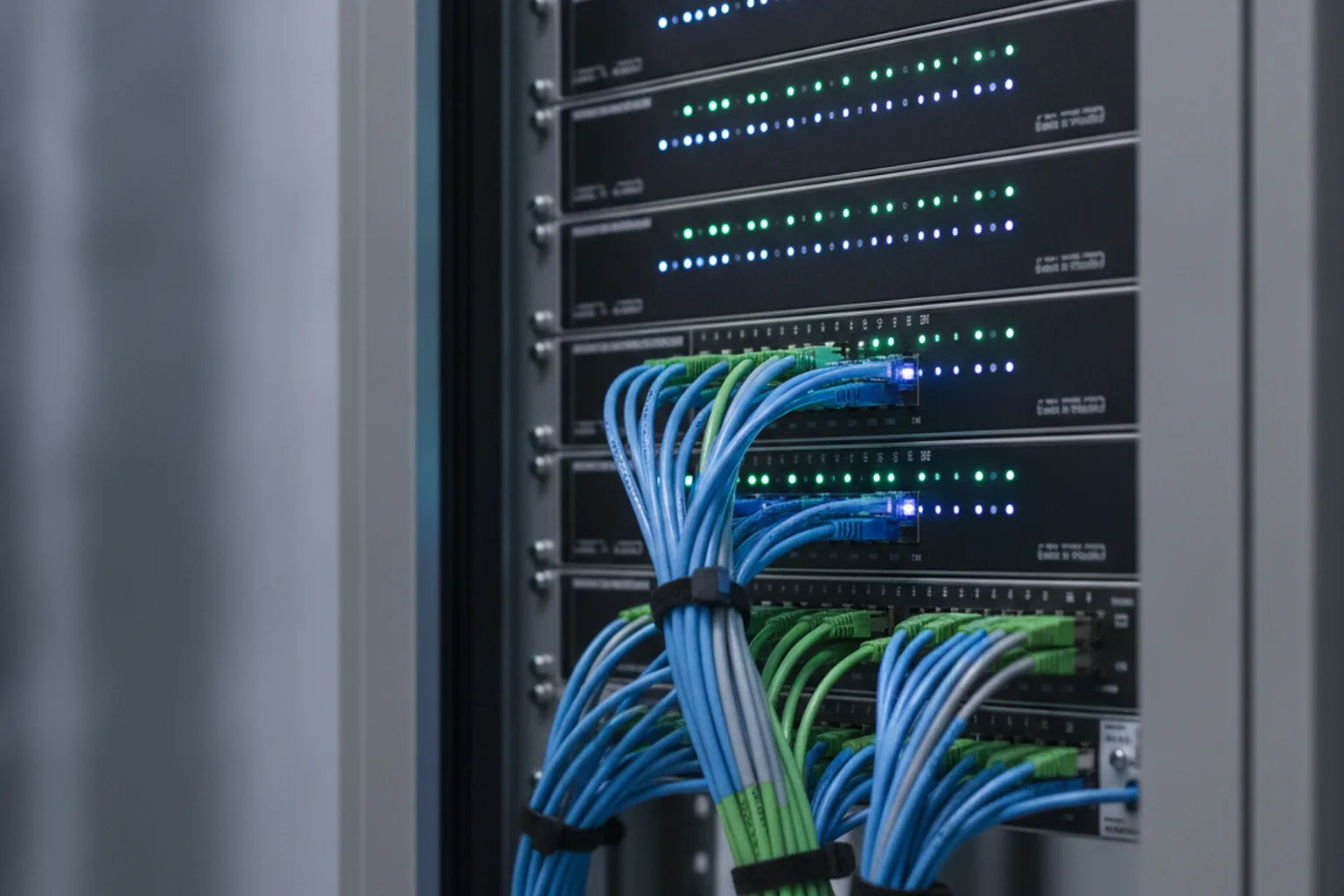
How is a reliable VoIP architecture designed?
A reliable VoIP architecture separates signaling, media and business logic into independent tiers, removes every single point of failure and places media servers close to users. That separation lets each tier scale on its own and keeps calls running when one component fails.
A typical production design for a cloud PBX or calling platform includes:
- Edge tier. Session border controllers and TURN servers in each region, protecting the core and handling NAT traversal.
- Signaling tier. A cluster of SIP proxies (for example Kamailio) that authenticates users, routes calls and balances load across media servers.
- Media tier. Pools of Asterisk or FreeSWITCH servers for IVR, queues, conferencing and recording, plus SFUs for WebRTC video.
- Application tier. Stateless APIs, admin and customer portals, routing rules, provisioning and integrations.
- Data tier. Databases for configuration, a time-series store for quality metrics, object storage for recordings and a pipeline for CDRs.
- Carrier connectivity. At least two SIP trunk providers with automatic failover, plus number porting and E911 provider integration.
The same tiers can be deployed in three ways. Cloud deployment on AWS, Azure or Google Cloud suits SaaS products and multi-region platforms. Hosted deployment in a telecom data center or colocation suits carriers that need direct interconnects and predictable media performance. On-premises deployment remains common in hospitals, government and factories where calls must stay inside the private network; hybrid setups keep the PBX on site and move portals and analytics to the cloud.
Three design choices separate hobby systems from carrier-grade ones. First, active-active redundancy across availability zones, so a failed server costs a few retries, not an outage. Second, geographic media placement, because every extra 50 milliseconds of network path is audible. Third, observability built for voice: per-call MOS scores, jitter and packet-loss metrics, SIP ladder traces and alerts on failed call ratios, not just CPU graphs. Cloud infrastructure, containers and infrastructure as code help, but media servers need careful tuning — real-time audio does not tolerate noisy neighbours or aggressive autoscaling.
How to build VoIP software: a step-by-step process
Building VoIP software follows the same lifecycle as other software, with extra emphasis on early prototyping of media, interoperability testing and regulatory checks. A proven sequence has eight steps:
- Discovery and requirements. Define users, call flows, expected concurrent calls, regions, devices, integrations and compliance obligations. Map every call scenario, including failures. A structured discovery phase usually takes 2–4 weeks.
- Build-vs-buy and architecture. Decide what comes from CPaaS or SIP trunk providers and what you build. Choose engines, codecs, hosting model and redundancy level.
- Media proof of concept. Before building screens, prove that calls connect and sound good across real networks, NATs and devices, including mobile push for incoming calls.
- UX and product design. Design the dialer, call screens, admin portal and agent desktop. Voice UX is unforgiving: incoming call screens must appear in under a second.
- Iterative development. Build signaling, media services, APIs, clients and integrations in short sprints, with a working end-to-end call from the first iterations.
- Testing. Run functional tests, SIP interoperability tests against carriers and phones, load tests with tools such as SIPp, network impairment tests (jitter, loss, latency) and security tests, including toll-fraud scenarios.
- Compliance and launch. Configure STIR/SHAKEN, E911, recording consent and data retention, then roll out in phases: internal users, pilot customers, full launch.
- Operations and evolution. Monitor call quality, rotate certificates, patch engines, add features and review carrier costs continuously.

What call quality targets should VoIP software meet?
VoIP software should keep one-way latency under 150 milliseconds, jitter under about 30 milliseconds and packet loss under 1% to deliver calls that users perceive as clear. The 150 ms latency limit comes from the ITU-T G.114 recommendation; the jitter and loss thresholds are widely used engineering targets.
| Metric | Good | Noticeable problems | How software helps |
|---|---|---|---|
| One-way latency | < 150 ms | > 250 ms: people talk over each other | Regional media servers, short routes, no unnecessary transcoding |
| Jitter | < 30 ms | > 50 ms: choppy audio | Adaptive jitter buffers, QoS marking, wired or 5 GHz Wi-Fi guidance |
| Packet loss | < 1% | > 3%: words drop out | Opus with forward error correction, packet loss concealment |
| MOS (mean opinion score) | 4.0–4.5 | < 3.6: users complain | Per-call MOS monitoring and alerting |
| Post-dial delay | < 3 s | > 5 s: callers hang up | Fast routing, warm connections to carriers |
Measuring these values per call — not just averaging them — is what lets a support team answer “why was my call bad?” with data rather than guesses.
What security and compliance rules apply to VoIP software?
VoIP software that connects to the public phone network must comply with telecom rules on caller ID authentication, emergency calling and lawful intercept, plus privacy and industry rules for the data it records. In the US, the most important requirements are STIR/SHAKEN, E911 obligations and, for regulated industries, HIPAA or PCI DSS; in the EU, GDPR and national telecom law dominate.
- STIR/SHAKEN. The FCC requires US voice providers to sign and verify caller ID on IP calls to fight robocalls and spoofing, and to file in the Robocall Mitigation Database, which now requires annual recertification by March 1. Since September 18, 2025, providers that let a third party sign calls on their behalf must use their own SPC token and certificate. If you route your own traffic to the PSTN, your software or carrier must handle attestation.
- E911, Kari’s Law and RAY BAUM’S Act. Multi-line telephone systems in the US must allow direct 911 dialing without a prefix, notify a central point on the premises and send a dispatchable location (such as building, floor and room) with emergency calls.
- CALEA and record keeping. Interconnected VoIP providers in the US have lawful intercept obligations and must keep certain records; regulated VoIP providers also contribute to the Universal Service Fund.
- Call recording consent. Several US states, including California, require all parties to consent to recording; GDPR in the EU requires a legal basis, transparency and retention limits.
- HIPAA and PCI DSS. Telehealth calls need encryption, access controls and a business associate agreement with every vendor touching protected health information; payment calls need pause-and-resume recording or DTMF masking so card numbers never reach recordings.
- Toll fraud protection. Attackers brute-force SIP credentials and route expensive international calls through hacked PBXs. Rate limits, fail2ban-style blocking, geographic restrictions, spend caps and alerts are mandatory, not optional.
For broader guidance on securing the web layer around your voice platform, see our web app security best practices for 2026.
Custom VoIP vs CPaaS vs off-the-shelf: which should you choose?
Choose off-the-shelf VoIP when standard phone features are enough, CPaaS when voice is a feature inside your product and speed matters, and a custom or self-hosted VoIP build when voice is your core product, volumes are high or you need full control of data and cost per minute. Many successful products start on CPaaS and move high-volume traffic to their own SIP infrastructure later.
| Criterion | Off-the-shelf (hosted PBX, UCaaS) | CPaaS APIs (e.g. Twilio, Vonage, Telnyx) | Custom / self-hosted VoIP |
|---|---|---|---|
| Time to launch | Days | Weeks | Months |
| Upfront cost | Lowest | Low to medium | Highest |
| Cost per minute at scale | Per-seat licences | Highest, usage-based | Lowest, carrier rates plus infrastructure |
| Product differentiation | None | Medium | Full |
| Data control and residency | Vendor-controlled | Vendor-controlled, regional options | Full control |
| Team required | IT admin | Product engineers | Product plus VoIP and DevOps engineers |
| Best for | Internal phone systems | Voice inside SaaS, marketplaces, telehealth MVPs | VoIP providers, contact center vendors, high-volume or regulated platforms |
The same trade-offs apply to other software decisions; our article on custom software vs off-the-shelf walks through a general framework for making the call.
How much does VoIP software development cost?
VoIP software development cost depends mainly on the type of product, the number of platforms, the share of media work you build yourself, integrations, compliance scope and redundancy level. A focused feature such as WebRTC click-to-call or a CRM-integrated dialer is a small project; a multi-tenant cloud PBX or contact center platform is a multi-month program with a dedicated team.
| Project type | Typical scope | Typical timeline |
|---|---|---|
| Voice feature on CPaaS | Click-to-call, call tracking or in-app calling via APIs, basic call logs | 4–8 weeks |
| Softphone MVP | Mobile or desktop SIP client with push notifications, contacts, history | 2–4 months |
| Telephony integration | PBX or trunk connected to CRM, helpdesk or ERP, recordings and reporting | 1–3 months |
| Cloud PBX / IVR platform | Multi-tenant PBX, admin portal, IVR builder, billing hooks | 4–8 months |
| Contact center platform | ACD, dialer, agent desktop, QA, analytics, AI features | 6–12+ months |
| Carrier switching and billing | Class 4 routing, rating, invoicing, fraud management | 6–12+ months |
At YuSMP, a scoped corporate system starts from $2,900 (6–10 weeks) and a portal or multi-role web service from $10,400 (14–22 weeks); voice platforms with media servers, mobile clients and carrier integrations are estimated after discovery because concurrency, redundancy and compliance change the scope substantially. Our custom software development cost guide explains how such estimates are built.
For orientation, vendor estimates published in 2025–2026 put a basic SIP softphone for iOS and Android at roughly $15,000–35,000, IVR, WebRTC or FreeSWITCH projects at $15,000–60,000, typical custom VoIP platforms at $25,000–120,000 and carrier-grade platforms above $200,000, with annual maintenance at about 15–20% of the build cost. Treat these as indicative ranges, not quotes.
Do not forget recurring costs, which often exceed the build budget over three years:
- Usage fees. Per-minute charges from SIP trunk or CPaaS providers, phone number rental and SMS fees.
- Infrastructure. Media servers, TURN relays, recording storage and bandwidth in each region.
- Compliance services. E911 provider fees, STIR/SHAKEN certificates, CNAM and number reputation monitoring.
- Support and maintenance. Engine upgrades, security patches, carrier changes and 24/7 monitoring.
How to choose a VoIP software development company
Choose a VoIP software development company that can show working voice products, explain its architecture choices in plain terms and prove it has handled real-world call quality, interoperability and compliance problems. General web experience is not enough: real-time media and telecom regulation are specialist territory.
Use this checklist when you compare vendors:
- Relevant portfolio. Ask for live VoIP, WebRTC or contact center products and the concurrency they handle.
- Engine expertise. Check hands-on experience with Asterisk, FreeSWITCH, Kamailio or your chosen CPaaS, not just API wrappers.
- Mobile calling know-how. Ask how they implement incoming calls with CallKit and Android ConnectionService; this separates experienced teams quickly.
- Testing approach. Look for load testing, network impairment tests and carrier interoperability testing in their plan.
- Security and compliance. Expect clear answers on SRTP/TLS, toll-fraud controls, STIR/SHAKEN, E911, HIPAA or GDPR as relevant.
- Operations model. Clarify monitoring, on-call support, SLAs and who owns carrier relationships after launch.
- Ownership and transparency. You should own the code, infrastructure accounts and documentation.
What are the VoIP software trends in 2026?
The strongest VoIP software trends in 2026 are AI built into calls, the shutdown of legacy copper networks, WebRTC everywhere and tighter anti-fraud regulation. Each one creates new development work for companies that depend on voice.
- AI in every call. Real-time transcription, call summaries, voice agents that resolve routine requests and agent-assist suggestions are becoming standard features in contact center and UCaaS products.
- PSTN and ISDN switch-off. Operators across Europe are retiring copper telephone networks. In the UK, Openreach has fixed 31 January 2027 as the end of the analogue phone network; in Germany, the regulator BNetzA proposed in January 2026 to switch off copper region by region once fibre reaches 80% of homes. Every remaining analogue PBX, alarm line and fax workflow needs a SIP-based replacement.
- WebRTC as the default client. Browser and in-app calling reduce the need for desk phones and separate softphones, especially in telehealth, education and customer support.
- Stronger caller ID rules. Regulators keep extending caller authentication and robocall mitigation requirements, so branded calling and number reputation management are increasingly built into outbound platforms.
- Integration over standalone tools. Buyers expect voice inside CRM, helpdesk and collaboration tools; see our enterprise system integration guide for patterns that apply here too.
Frequently asked questions
What are VoIP software development services?
VoIP software development services are engineering services for designing, building, integrating and supporting voice-over-IP products such as cloud PBX systems, softphones, UCaaS and contact center platforms, WebRTC calling and VoIP billing. They typically cover architecture, server and client development, carrier and CRM integrations, testing, compliance setup and 24/7 operations.
How long does VoIP software development take?
VoIP software development takes about 4–8 weeks for a voice feature built on CPaaS APIs, 2–4 months for a softphone MVP and 4–12 months or more for a cloud PBX, contact center or carrier platform. Discovery, media prototyping and interoperability testing add time but prevent expensive rework later.
What is the difference between SIP and WebRTC?
SIP is a signaling protocol used to set up and control calls between phones, PBXs and carriers, while WebRTC is a set of browser and mobile technologies for real-time audio and video without plugins. Many VoIP products use both: WebRTC in the browser or app and SIP to connect to trunks and the phone network.
Should I use Twilio or build my own VoIP platform?
Use a CPaaS such as Twilio, Vonage or Telnyx when voice is one feature of your product and you need to launch quickly. Build your own SIP and media infrastructure when voice is your core product, call volumes are high enough that per-minute fees dominate costs, or you need full control over data, routing and features.
Can I add VoIP calling to my existing app?
Yes. Most existing web and mobile apps can add VoIP calling through WebRTC and a CPaaS or SIP backend without a rewrite. The work usually includes a calling UI, push notifications for incoming calls on mobile, a TURN server, call logging in your database and, if needed, a connection to phone numbers through a SIP trunk.
Do I need STIR/SHAKEN if I use Twilio?
If you place calls through a CPaaS such as Twilio, the provider signs calls to the US phone network, so you do not implement STIR/SHAKEN yourself. You still need to register numbers and business details correctly to receive the highest attestation level. If you run your own SIP trunks and interconnects, STIR/SHAKEN becomes your responsibility.
Is Asterisk or FreeSWITCH better for VoIP development?
Asterisk is often the better fit for PBX, IVR and business telephony logic because of its large community and mature feature set. FreeSWITCH is often chosen for high-concurrency media, conferencing and multi-tenant platforms. Large systems frequently combine one of them with Kamailio or OpenSIPS for SIP routing and load balancing.
What compliance rules apply to VoIP apps in the US?
VoIP apps that connect to the US phone network may need STIR/SHAKEN caller ID authentication, E911 support with dispatchable location under Kari’s Law and RAY BAUM’S Act, CALEA lawful intercept capability and state call recording consent rules. Healthcare and payment use cases add HIPAA and PCI DSS requirements.
How do I choose a VoIP software development company?
Choose a VoIP software development company with live voice products in its portfolio, hands-on experience with SIP engines and WebRTC, a clear testing approach for call quality and load, solid answers on security and compliance, and a support model for operations after launch. Make sure you will own the code and infrastructure.
Published 9 November 2026. Technical references: IETF RFC 3261 (SIP), RFC 3550 (RTP) and RFC 3711 (SRTP); ITU-T Recommendation G.114 for one-way delay; FCC rules on STIR/SHAKEN, Kari’s Law and RAY BAUM’S Act. Market data: Fortune Business Insights and Mordor Intelligence VoIP market reports; Openreach and BNetzA on copper switch-off. YuSMP Group prices are starting prices published on our service pages; final quotes depend on platforms, concurrency, integrations, compliance scope and hosting. Product names belong to their respective owners.