What it is
AI consulting turns “we should use AI” into a ranked list of use cases, a budget and a working pilot. Good AI consultants also tell you where AI is the wrong tool.
AI consultants who take you from a use-case audit to a system running in production — not a strategy deck that ends up in a drawer. We check your data and readiness, score the use cases that are actually worth money, write the roadmap and the budget, and prove the bet with a PoC in 4–6 weeks from $2,900. When the numbers hold, the same senior team handles the AI development or generative AI integration, connects it to your CRM, ERP or helpdesk, and tracks ROI after launch.
GDPR-aligned · ISO 27001 ready · SOC 2 Type II in progress · HIPAA-capable · CCPA-acknowledged · CET workday with 9 AM–1 PM ET overlap
Most companies do not need more AI ideas. They need someone to say which two of their twenty ideas will pay back, which ones will quietly burn budget, and what it takes to get the winners into the tools their teams already use. That is what an AI consulting company should do, and it is what our AI implementation consulting is built around: a written business case before code, a bounded proof of concept before a build, and integration work done by the same engineers who wrote the plan.
We work with operators, founders and CTOs across the US and EU — from a 30-person services firm that wants to stop answering the same support questions by hand to an enterprise team that needs an AI roadmap its security office will sign. If you are looking for AI for business that survives contact with real users, you are in the right place.
AI consulting turns “we should use AI” into a ranked list of use cases, a budget and a working pilot. Good AI consultants also tell you where AI is the wrong tool.
Discovery and the readiness audit run 1–3 weeks. A proof of concept on your real data takes 4–6 weeks. Integration into production follows only after a written go/no-go.
The first paid step is a PoC from $2,900 for one use case. Production builds start from $8,100 (RAG), $10,400 (AI agent) and $13,800 (ML model).
A use-case shortlist with ROI per item, a roadmap, a tested prototype, a go/no-go memo with running costs — and code, evals and IP that belong to you from day one.
AI consulting services cover the whole path from “is our data good enough?” to “is the model still worth what it costs?”. You can take one piece or all eight. Each one ends with a document or a working artifact you keep.
We map where your data lives, how clean and accessible it is, who owns it and which regulations apply. You get a readiness score per data source and a list of fixes ranked by effort. Want a quick self-check first? Run our free AI readiness assessment.
We interview product, operations, sales and support, collect 8 to 15 candidate use cases and score each one on revenue or cost impact, build effort, data availability and risk. Output: a ranked shortlist and an honest “do not build this” list with reasons.
The top use cases become an AI implementation roadmap: sequence, dependencies, team, budget per stage, running costs and the metrics that decide whether each stage continues. Written so that a board, a CFO and an engineering lead read the same plan.
A bounded PoC on your real data in 4–6 weeks: one use case, an eval set, a working prototype and a go/no-go memo with a cost projection. If the numbers do not hold, you stop with a clear answer instead of a half-built product.
AI only pays back inside the tools people already use. We wire models into Salesforce, HubSpot, amoCRM, Zendesk, Jira, SAP, 1C or your own backend through APIs and queues — with logging, fallbacks and a human-review path where the stakes are high.
Risk classification, data-flow maps, model cards, human oversight and audit logs, built in from the first sprint rather than bolted on later. For high-risk systems we work alongside our EU AI Act compliance team.
Workshops for managers on where AI helps and where it does not, hands-on sessions for the people who will use the new tools, and pairing with your engineers so they can run, change and extend the system without us.
Quality dashboards, drift and latency alerts, cost per request and per user, and a quarterly review of model choice as prices and capabilities move. Size the token bill before you commit with our LLM Spend Calculator.
Most AI projects that pay back fall into a handful of patterns. During discovery we match your problem to the pattern, then to the team that builds it. Each card links to the delivery service behind it.
Assistants that answer routine questions from your own knowledge base, hand complex cases to a human with full context, and cut first-response time without hurting satisfaction scores.
Agents that read emails and documents, fill CRM fields, prepare quotes, reconcile records and route approvals — with a person confirming every step that moves money or commitments.
Search and Q&A over contracts, policies, tickets and wikis that answers with citations, respects access rights and stays current as documents change.
Machine learning models for demand forecasts, churn and lead scoring, credit and fraud risk, and dynamic pricing — trained on your history and monitored for drift.
Computer vision for quality control, document capture, shelf and inventory checks, and video analytics — on the edge or in your cloud.
When prompts and retrieval are not enough, we fine-tune a model on your terminology, tone and structured output so it behaves consistently at lower cost per call.
How to implement AI in business without a six-month detour: eight steps, each with an output you can review and a point where you can stop. Weeks are typical for one use case; several use cases run in parallel tracks.
Week 1: a free 45-minute session with a senior consultant. We go through your goals, current tools and the ideas already on the table, and agree what the readiness audit should cover.
Weeks 1–3: data sources, quality and access, systems that need to connect, security and regulatory constraints, and the skills your team already has.
Weeks 1–3: every candidate scored on value, effort, data and risk. Weak ideas are dropped here, on paper, while dropping them is still free.
End of discovery: a staged plan with a line-item budget, running-cost forecast, team and success metrics. You sign off before any build starts.
4–6 weeks: the top use case on your real data, measured against an eval set, ending in a written go/no-go with a cost projection for production.
Weeks 6–10 for a pilot, then rollout: connection to your CRM, ERP or helpdesk, access control, logging, fallbacks and a customer-zero launch behind a feature flag.
Alongside launch: runbooks, workshops for end users and pairing with your engineers, so the system has owners inside your company.
Weeks 11+: quality, latency and cost tracked against targets, prompts and models re-evaluated every quarter, new use cases added from the roadmap.
There are three honest ways to bring AI into a company. None is right for everyone — it depends on your in-house skills, how fast you need results and how much risk you can carry.
| Dimension | Do it yourself | AI consulting (strategy + PoC) | Full delivery partner |
|---|---|---|---|
| Cost | Internal salaries and tool subscriptions; the hidden cost is the time of people pulled from their main work. | A bounded budget: discovery plus a PoC from $2,900 for one use case. | Fixed-scope builds from $8,100 (RAG), $10,400 (AI agent) or $13,800 (ML model in production). |
| Time to first result | Unpredictable; often months of experiments before anything reaches users. | A go/no-go on real data in 4–6 weeks. | A pilot in production in weeks 6–10, then rollout. |
| Risk | High: wrong use case, no evals, security and compliance gaps found late. | Low: you spend a small, fixed amount to learn whether the idea works. | Medium, controlled by staged sign-offs, evals in CI and a rollback path. |
| Skills you need in-house | ML or LLM engineers, data engineering, MLOps, security review. | A product owner and access to data; engineers help but are not required. | A product owner and someone to own the system after handover. |
| Who it suits | Teams with an existing ML function and a low-stakes internal use case. | Companies that are unsure which AI bet to make, or need a plan their board will approve. | Companies with a validated use case that need it built, integrated and supported. |
Many clients move through all three columns: a consulting phase to pick the bet, a delivery phase to build it, then their own team running and extending it. We design every engagement so that last step is possible.
Lean, fixed-scope tiers so you can budget before discovery. Everything is all-in and quoted in USD, with IP transferred to you on day one, no recruitment markup and no tool surcharges. You see the line-item budget before any code is written and sign off on it. Want to check the business case first? Use our free AI ROI Calculator.
PoC
from $2,900
4–6 weeks · one use case
Use-case scoring, ROI model, eval-set design, a working prototype and a written go/no-go — before you commit to a build.
Get a quoteRAG over your knowledge base
from $8,100
grounded on your corpus
Search and answers over your own documents with citations, access control, an eval harness in CI and PII handling.
Get a quoteAI agent
from $10,400
6–9 weeks · multi-step, tool-using
An agent that takes actions across your tools, with human-in-the-loop on high-stakes paths, evals and output filters.
Get a quoteML model in production
from $13,800
notebook to serving
A custom or fine-tuned model shipped to production: data pipelines, training, MLOps and drift monitoring.
Get a quoteWhat moves the number: how many use cases you take forward; the state of your data, because cleaning and labelling is often the largest line; how many systems the solution must read from and write to; latency and availability targets; and compliance scope — GDPR, HIPAA or EU AI Act high-risk obligations raise the bar for documentation, testing and hosting. A single assistant on a stable knowledge base sits at the bottom of a tier; a multi-system integration writing to production under a DPA sits at the top. Cloud and token spend run on your own accounts, so you keep the cost lever.
For example, a team that wants to automate first-line support typically starts with a PoC from $2,900 to measure answer quality on its own tickets, then moves to a RAG system from $8,100 if the PoC clears the agreed accuracy bar.
Best for discovery, a PoC or a clearly defined build. One price, one deliverable list, staged sign-offs. You know the total before we start.
Best when the roadmap will change as you learn from the pilot. Weekly reporting, a budget cap you set, and the freedom to re-prioritise between sprints.
Best for companies running several AI initiatives at once. A stable team of consultants and engineers that works inside your processes and tools.
All engagements start with a mutual NDA, IP assignment and a DPA.
We would rather lose a deal than sell a project that cannot pay back. Here is the arithmetic we run with every client, and the list of situations where we recommend not starting at all.
Hours spent per month, cost per hour, error rate and what each error costs, lost revenue from slow responses. This is your baseline.
Not “AI replaces the team”, but the share of requests or documents that can be handled automatically at the quality bar you set — measured in the PoC, not assumed.
Build, integration, model and cloud spend per month, monitoring, and the internal time to review edge cases. Running costs matter as much as the build.
Payback period and a pessimistic scenario. If the project only works in the optimistic case, it goes on the “not now” list. Model it yourself in the AI ROI Calculator.
The task is frequent and repetitive; there is enough data or documentation to learn from; mistakes are cheap to catch or a person reviews the output; and the result lands directly in a tool your team already uses.
Volume matters: automating a task done 5,000 times a month beats automating one done 50 times.
The answer is always a database lookup or a fixed rule; the process itself is broken and AI would only speed up the mess; the volume is too low to cover running costs; there is no data and no way to collect it; or a single wrong decision is unacceptable and nobody can review the output. In these cases we will say so and suggest the simpler fix.
AI consulting for small business is not a scaled-down enterprise programme. A 20- to 200-person company rarely needs a strategy document; it needs one or two automations that save real hours and a clear view of the monthly bill.
We pick the single process where time or errors cost you most — usually support, quoting, document handling or lead qualification — and prove the effect with a PoC from $2,900.
Your CRM, helpdesk, office suite and cloud already have AI features and APIs. Often the cheapest path is configuring and connecting them, not building from scratch.
Model and cloud spend run on your own accounts with alerts and caps, so a busy month never turns into a surprise invoice.
For mid-market companies we add what larger organisations need: an AI implementation roadmap across departments, governance that legal and security can sign off, and enablement so internal teams can launch the next use cases on their own.
Security and compliance are part of the design, not a review at the end. Every engagement documents where data goes, who can see it and how decisions can be checked.
We classify each use case by risk level early, so obligations for high-risk systems — documentation, human oversight, logging, transparency — shape the design. See EU AI Act compliance.
Data minimisation, lawful basis, DPIAs where required, PII stripping before data reaches a model, EU hosting for EU data and DPAs signed before kickoff. See GDPR compliance consulting.
PHI kept inside HIPAA-eligible services, signed BAAs with providers where applicable, access logging and minimum-necessary data flows. See HIPAA-compliant software development.
Access control, change management, audit trails and incident runbooks that fit into your existing SOC 2 or ISO 27001 programme, so the AI system does not become the gap in your next audit.
Zero-retention contracts with model providers, private endpoints, tenant isolation and the option to run models inside your own cloud or on-premise. Your data is never used to train someone else’s model.
We do not resell a vendor. Models from OpenAI, Anthropic, Google, AWS Bedrock or open-weights options are compared on your own eval set for quality, latency and cost, and re-checked every quarter.
The same model behaves very differently under PCI DSS, HIPAA or a logistics SLA. We pair AI strategy consulting with industry context, and pull in our AI, ML & data and AI agent development teams when a use case moves to delivery.
Credit and fraud scoring, document processing for onboarding and KYC, analyst copilots and dispute summaries — with explainability and audit trails regulators expect.
Intake and triage support, summarisation of records and protocols, scheduling and care-ops automation — HIPAA-capable and GDPR-aligned, with clinicians in the loop.
Demand and ETA forecasting, exception handling, document capture for shipments and customs, and dispatcher assistants over live operational data.
Catalogue enrichment, search and recommendations, support automation and pricing models, with per-request cost caps that keep margins intact.
Visual quality inspection, predictive maintenance, demand planning and assistants over technical documentation for service teams.
Contract review and clause extraction, research over your own document base and drafting assistants — always with a human-review gate and strict data residency.
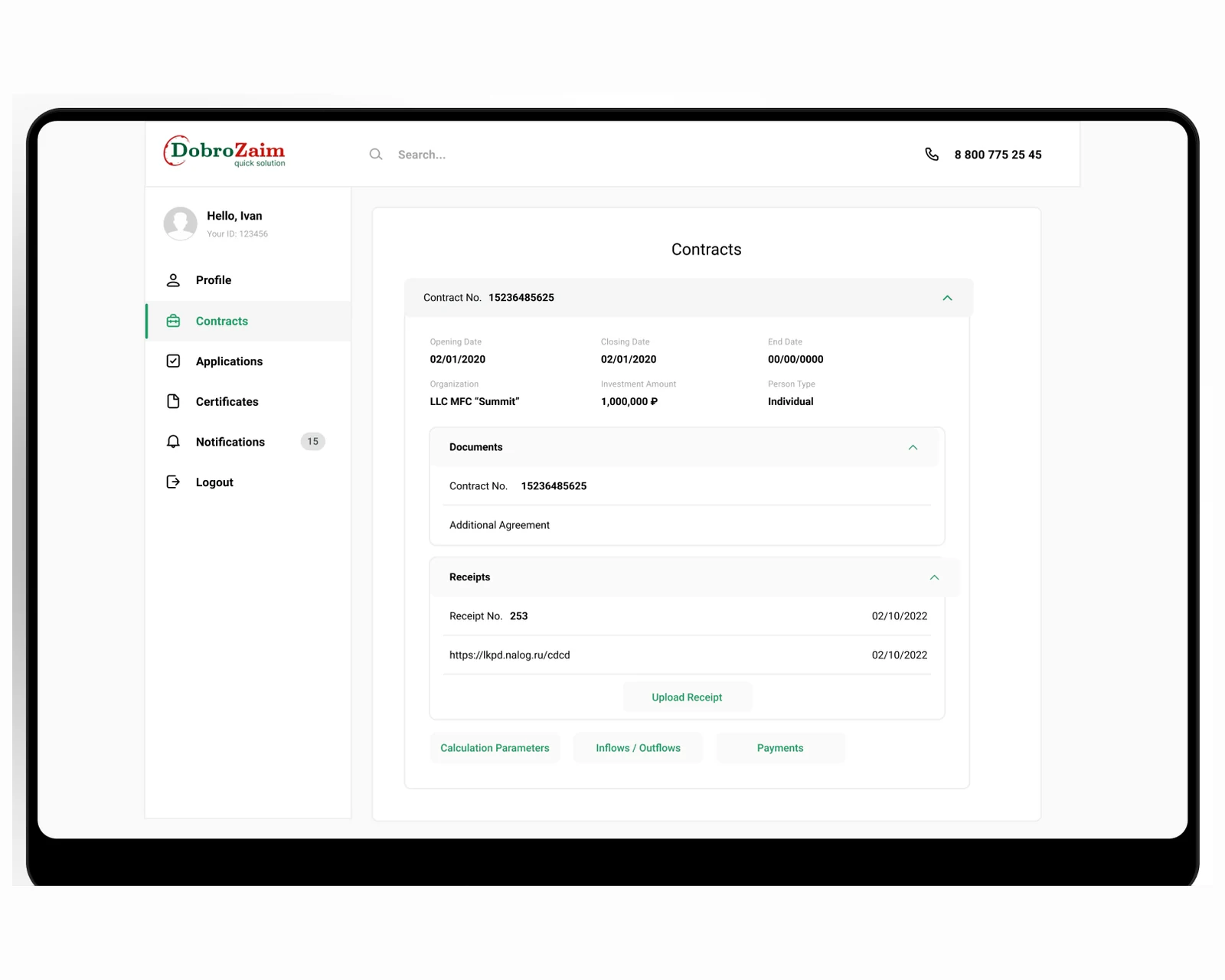
A high-throughput loan decision engine on Laravel — automated scoring, credit-bureau integration, and 10x faster decisions for US & EU lenders.
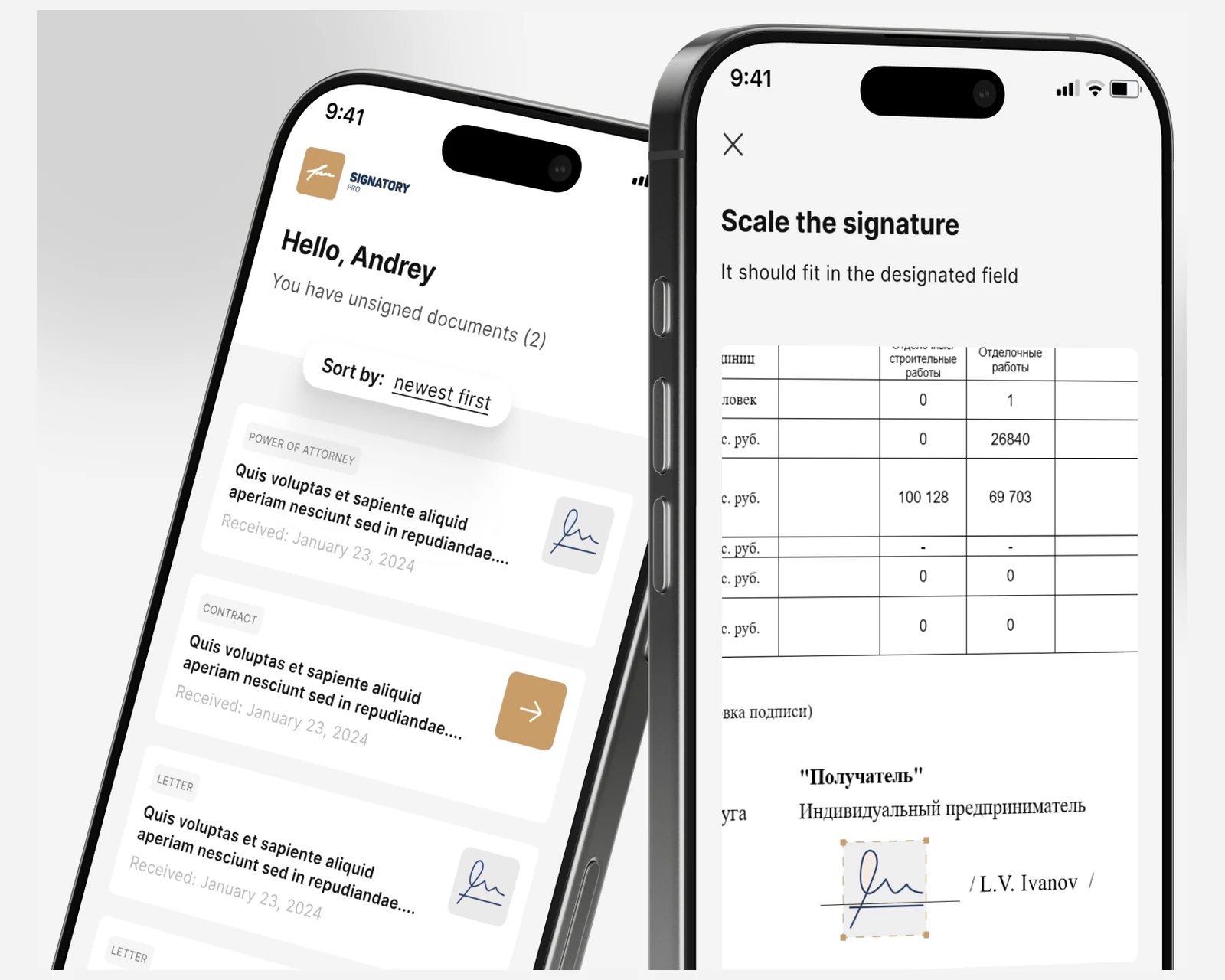
Native iOS and Android e-signature clients with a Symfony + React CRM for a cross-border law firm — KYC onboarding and a defensible evidence trail for US & EU matters.

Single-page Tilda landing with Telegram-bot lead capture for an ad agency — shipped in two weeks, US & EU ready.
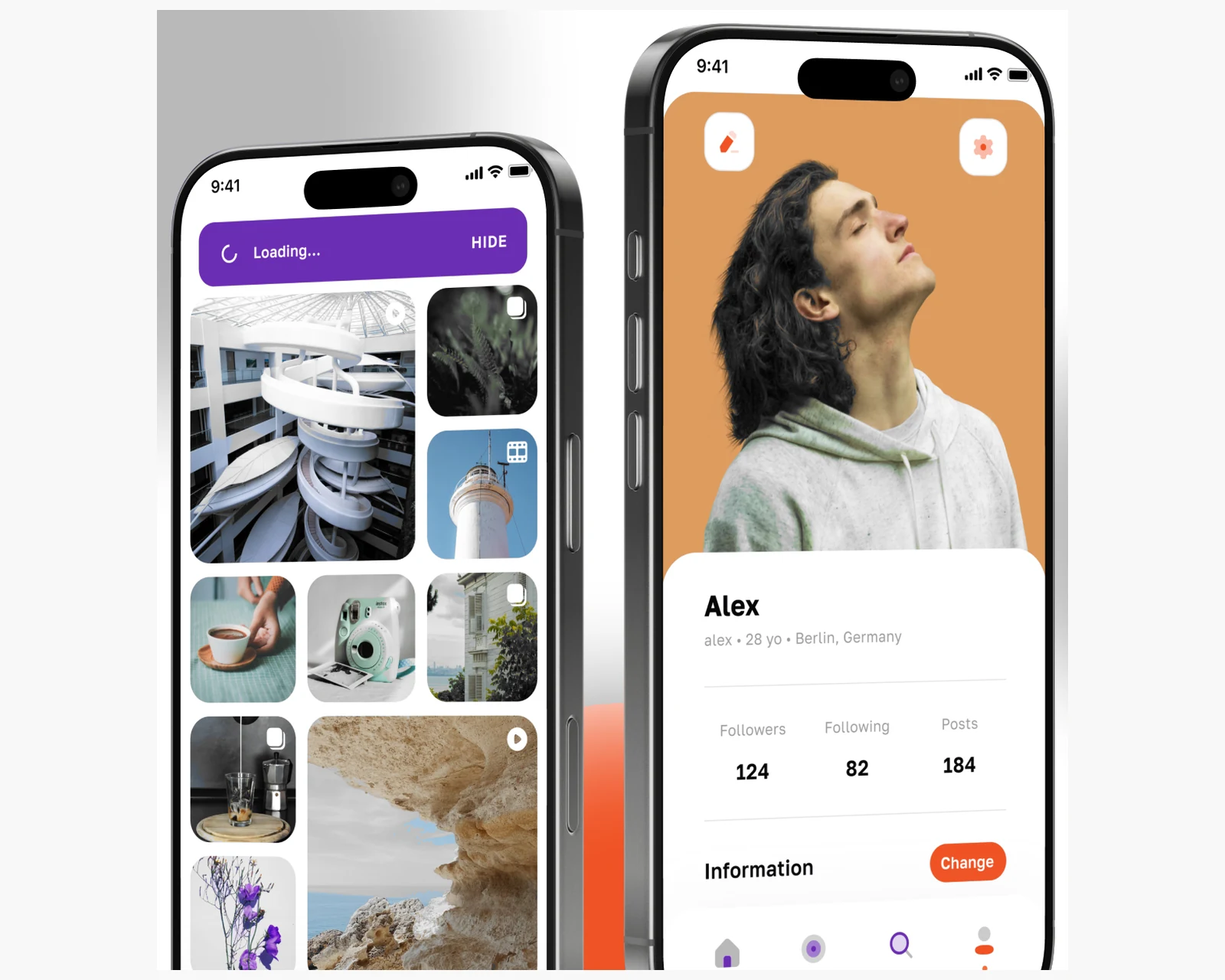
Production social platform — App Store + Google Play, live across the US and EU — with geo Radar, encrypted messaging and a virtual economy.
GDPR-aligned · ISO 27001 ready · SOC 2 Type II in progress · HIPAA-capable · CCPA-acknowledged
The people who write your roadmap are the engineers who can ship it. No hand-off from a strategy firm to a separate vendor, and no plan that ignores how your systems actually work.
Every recommendation is backed by a measured PoC or an eval on your data. Demos are not evidence, and we will not ask you to fund a build on a hunch.
All-in USD pricing, staged sign-offs, IP transferred on day one and cloud spend on your own accounts. You can take the work in-house at any point.
Among AI consulting firms, we are deliberately model-neutral: when the frontier moves, your evals tell us what to change — not a vendor partnership.
A loan decision engine that takes ten times less time to approve does not happen by accident. YuSMP built the scoring pipeline, integration with credit bureaus, and a back-office that our underwriters actually enjoy using. Approval turnaround went from two days to under four hours.
An AI consultant helps you decide where AI is worth using and then gets it working. In practice that means auditing your data and systems, collecting and scoring candidate use cases on value, effort and risk, writing an implementation roadmap with a budget, and proving the top use case with a proof of concept on your real data. A good consultant also tells you which ideas to drop. At YuSMP the same senior team can continue into integration, launch, team training and post-launch monitoring, so the plan is written by people who will have to deliver it.
Our first paid step is a proof of concept from $2,900 for one use case, which takes 4–6 weeks and ends with a written go/no-go and a cost projection. If you move to production, fixed-scope builds start from $8,100 for RAG over your knowledge base, $10,400 for an AI agent and $13,800 for an ML model in production. The final number depends on the number of use cases, the state of your data, the systems to integrate and the compliance scope. Pricing is all-in in USD, and cloud and model spend run on your own accounts.
Discovery and the readiness audit take 1–3 weeks. A proof of concept takes 4–6 weeks. A pilot connected to your systems typically runs in weeks 6–10, and an AI agent build is usually 6–9 weeks. Larger programmes with several use cases run as parallel tracks on a roadmap. The biggest variable is data: clean, accessible data shortens every stage, while scattered or unlabelled data adds time for preparation.
Look for five things. First, they ask about your business metrics before talking about models. Second, they propose a small, fixed-price proof of concept rather than a large upfront programme. Third, they can show production systems, not only demos and slides. Fourth, they are model-neutral and explain how they compare providers on your data. Fifth, they cover security and compliance, and they hand over code, evals and documentation so you are not locked in. Ask every shortlisted firm what they would advise you not to build — the answer tells you a lot.
Not always. Many useful projects start from documents you already have — policies, product manuals, tickets, contracts — and need no training data at all, because modern models can work over your documents through retrieval. Forecasting, scoring and custom ML models do need historical data, usually at least several months of records. The readiness audit tells you what you have, what is missing and whether it is cheaper to collect data or to start with a use case that does not need it.
Yes. We deploy into your AWS, Google Cloud or Azure account, use private endpoints of model providers with zero-retention terms, or run open-weights models on your own GPU servers when data must not leave your perimeter. The choice depends on data sensitivity, expected volume and budget: self-hosting gives full control but adds infrastructure and maintenance costs, so we compare options on quality, latency and cost before recommending one.
Through the same APIs, webhooks and queues your other systems use. A typical setup reads data from the CRM, ERP or helpdesk, sends the relevant context to the model, and writes the result back as a draft, a field update, a task or a suggested reply. High-impact actions go through a human approval step. We log every request, add fallbacks for when a model or provider is unavailable, and respect existing access rights so users only see data they are allowed to see.
It depends entirely on the use case, which is why we measure it instead of promising it. We start from the cost of the current process — hours, errors, delays — estimate the share that can realistically be automated, then subtract build and running costs to get a payback period with a pessimistic scenario. The PoC replaces assumptions with measured accuracy on your data. You can model a first estimate yourself in our free AI ROI Calculator before talking to us.
Then the PoC did its job. It is designed to answer a yes-or-no question for a small, fixed amount before you invest in a full build. You receive the eval results, the reasons the use case fell short and what would have to change for it to work — more data, a different scope or a different approach. Often a narrower version of the same idea, or the next item on the roadmap, passes. You are never obliged to continue with us after a PoC.
It is worth it when there is a frequent, repetitive task that costs real hours — support replies, quotes, document handling, lead qualification. For a small business we skip the long strategy phase, pick one process, prove the effect with a PoC from $2,900 and use the tools you already pay for wherever possible. If the volume is too low to cover running costs, we will tell you so and suggest a simpler, non-AI fix instead.
Practical guides on choosing an AI partner, consulting engagements and AI in software delivery.
Share a few details and a senior consultant will reply within one business day.
Email: sales@yusmpgroup.com
Phone: +374 44 871 811
Offices: KAMAR Business Center, Vazgen Sargsyan St. 2, Yerevan, Armenia · Remote — East-Coast US overlap (9 AM–1 PM ET)