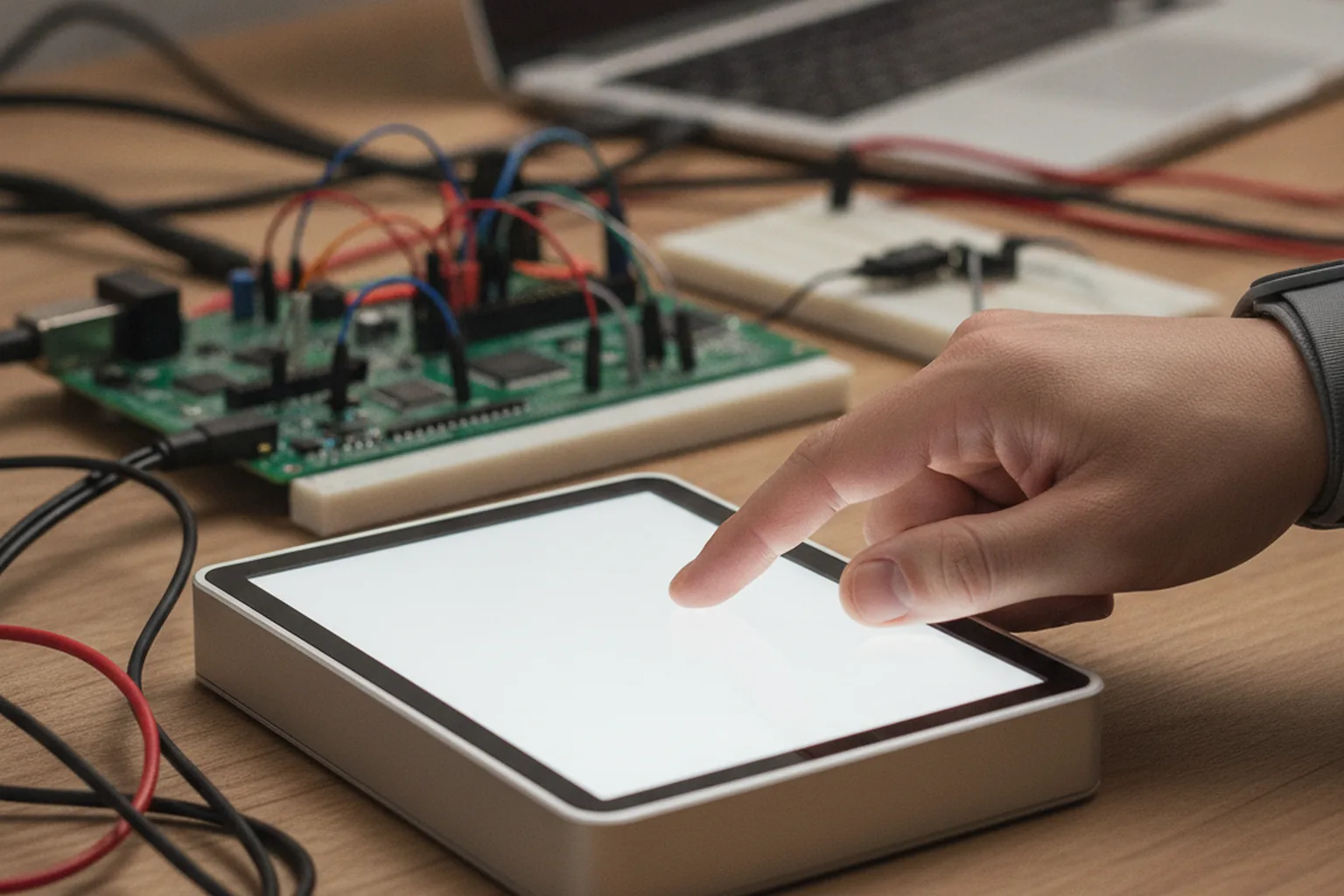

Qt software development services are engineering services for building, porting and supporting applications on Qt, a C++ framework with its own declarative UI language, QML. A Qt development company delivers desktop applications that run on Windows, macOS and Linux from one code base, graphical interfaces for embedded devices, mobile apps, and the migration and performance work that keeps long-lived Qt products alive.
Qt is most valuable where software meets hardware. Qt Group reported net sales of €216.3 million for 2025, and its distribution licence revenue, paid per shipped device, grew 26.4% on demand from automotive, medical and industrial manufacturers. That is why Qt projects usually sit next to embedded software, firmware and IoT development services: the same team has to make the interface, the board support package and the connectivity work together.
This guide explains what Qt services include, which Qt version and licence to choose in 2026, how a Qt project runs step by step, what drives the cost and how to choose a vendor. If your product is a control panel or an operator screen, read it together with our guide to HMI software development; if it is a Windows or macOS tool, our desktop software development buyer's guide covers the non-Qt options too.
What are Qt software development services?
Qt software development services are outsourced or embedded-team engineering work done on the Qt framework, from UI design to release and long-term maintenance. Qt itself is a set of C++ libraries and tools: Qt Widgets for classic desktop interfaces, Qt Quick and QML for fluid touch interfaces, plus modules for networking, databases, 3D, multimedia, Bluetooth and serial communication.
A Qt development company sells expertise in this toolkit rather than a generic "app". Clients usually come with one of four requests:
- New product. A desktop application or a device interface built from scratch on Qt 6.
- Port or migration. Moving a Qt 4 or Qt 5 code base to Qt 6, or moving a non-Qt UI (MFC, WinForms, Java Swing) to Qt.
- Performance rescue. Fixing slow start-up, laggy animations or memory problems on weak embedded hardware.
- Team extension. Adding senior Qt and QML engineers to an in-house team for a release.
The deliverable is working software plus the build pipeline, tests and documentation needed to keep shipping it. On device projects it also includes the Linux image or RTOS integration that the Qt application runs on.
Why do companies choose Qt in 2026?
Companies choose Qt because one C++ code base can run natively on desktop, mobile, embedded Linux, real-time operating systems and even microcontrollers, with a hardware-accelerated UI. Few frameworks cover that whole range, and web-based frameworks rarely fit the memory budget of a small embedded board.
Four reasons come up in almost every project we scope:
- Native performance. Qt compiles to native code, so start-up time and animation smoothness hold up on low-power processors where a browser engine would struggle.
- Long support windows. Since Qt 6.8, every long-term support (LTS) release gets five years of maintenance, which matches the life cycle of industrial and medical products.
- Mature tooling. Qt Creator, Qt Design Studio, Squish GUI testing and profiling tools come from the same vendor, so teams do not have to assemble their own toolchain.
- Regulatory readiness. Qt 6.12 LTS ships the first EU Cyber Resilience Act (CRA) Declaration of Conformity for commercial Qt, which helps device makers document their software supply chain.
Qt is a weaker choice for content-heavy web products or for consumer mobile apps that live in app stores only. For those, native or other cross-platform stacks are usually cheaper to staff.
What does a Qt development company offer?
A Qt development company offers application development, UI and UX design, embedded integration, migration, testing and long-term support, all on the Qt framework. Most vendors package these as separate services so a client can buy only the part it lacks.
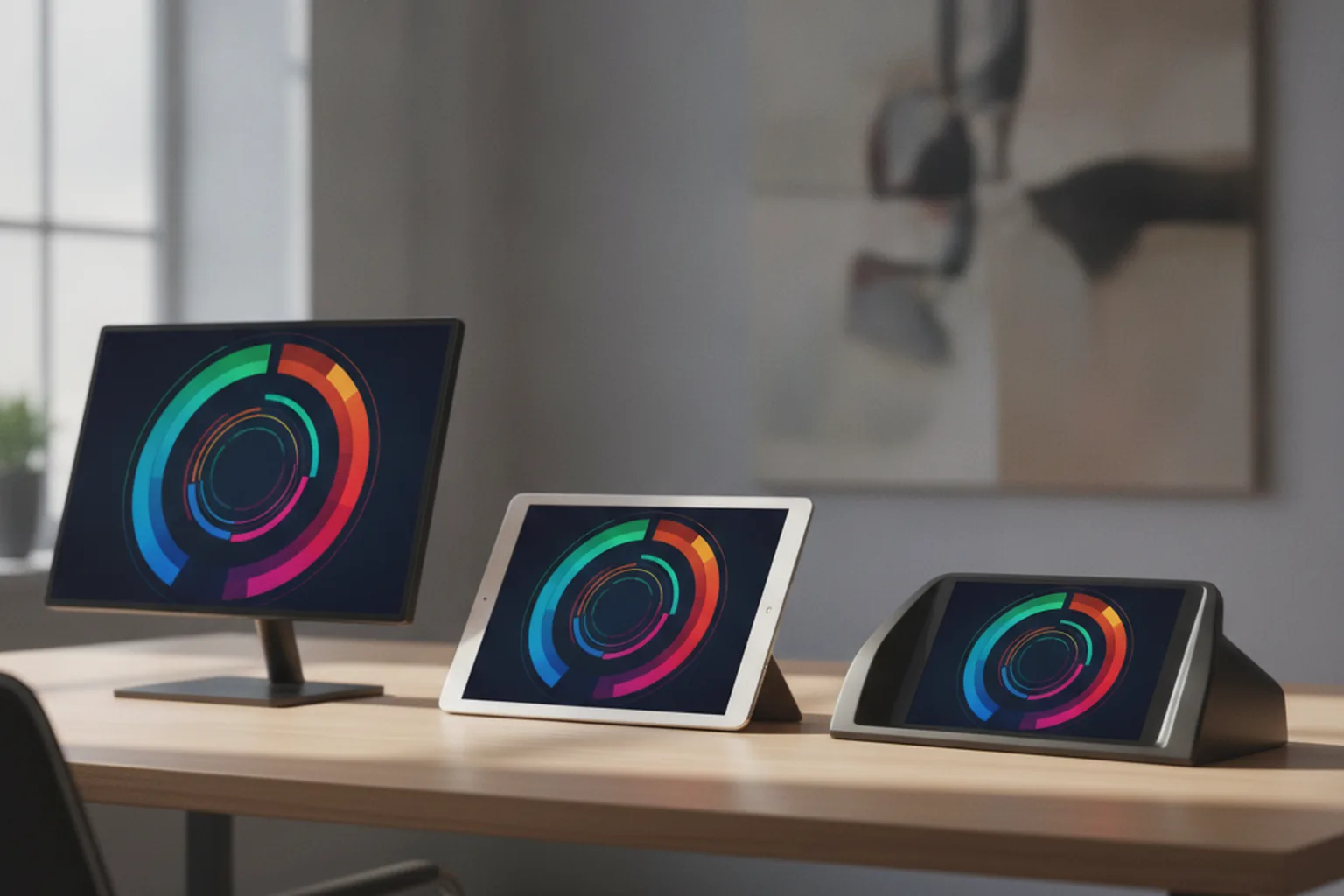
Cross-platform desktop applications
Cross-platform desktop development is the classic Qt service: one application for Windows, macOS and Linux, usually built with Qt Widgets or Qt Quick. Typical products are engineering and CAD tools, medical imaging viewers, trading terminals, laboratory software and device configuration utilities.
Embedded GUI and HMI development
Embedded GUI development means building the touchscreen interface of a device such as an infusion pump, a machine control panel, an EV charger or a smart-home hub. The Qt team works with the hardware team on the processor, the GPU, the display driver and the Linux or RTOS image, often using Boot to Qt as the reference stack. For the Linux side of this work, see our embedded Linux software development guide.
Qt for MCUs
Qt for MCUs is a separate product that renders a subset of QML on microcontrollers without Linux, on FreeRTOS, Zephyr or bare metal. It suits appliances, wearables and small instrument clusters, where a full embedded Linux board would add too much cost.
Mobile applications
Qt also builds Android and iOS apps, which is useful when a mobile companion app has to share logic and design with a device or desktop product. For a mobile-first consumer product, a dedicated mobile app development team working in native or Flutter code is usually the better fit.
UX and UI design for Qt
UX and UI design for Qt covers screen flows, touch targets, design systems and the hand-off from Figma to QML through Qt Design Studio. Good Qt design work accounts for real constraints such as glove use, sunlight readability and the GPU budget of the target board, which is why our UI/UX design services team reviews hardware specs before drawing the first screen.
Porting, migration and modernization
Migration services move old Qt 4 and Qt 5 applications to Qt 6, or replace legacy UI frameworks with Qt. This is often the most urgent request in 2026, because Qt 5.15 is out of commercial support.
Testing, performance and support
Testing and support services include automated GUI tests, memory and start-up profiling, security patching and long-term maintenance of released versions. Qt for Python (PySide6) is sometimes used here for internal test and tooling apps; PySide6 6.12 supports Python 3.10 to 3.14.
Which industries use Qt software development?
Automotive, medical devices, industrial automation and consumer electronics are the main users of Qt software development, because they all ship devices with screens that must run for many years. Qt Group named exactly these sectors as the drivers of its distribution licence growth in 2025.
| Industry | Typical Qt product | What matters most |
|---|---|---|
| Automotive and e-mobility | Digital instrument clusters, infotainment, EV charger screens | Start-up time, functional safety boundaries, long support |
| Medical devices | Infusion pumps, patient monitors, imaging workstations | IEC 62304 process, usability engineering, traceability |
| Industrial automation | Machine HMIs, SCADA clients, test and measurement software | Reliability, rugged touch input, fieldbus integration |
| Consumer electronics | Smart-home panels, appliances, set-top boxes | Unit cost, smooth UI on cheap hardware, OTA updates |
| Engineering and science | CAD, simulation and lab software on desktop | Large data sets, 3D rendering, cross-platform support |
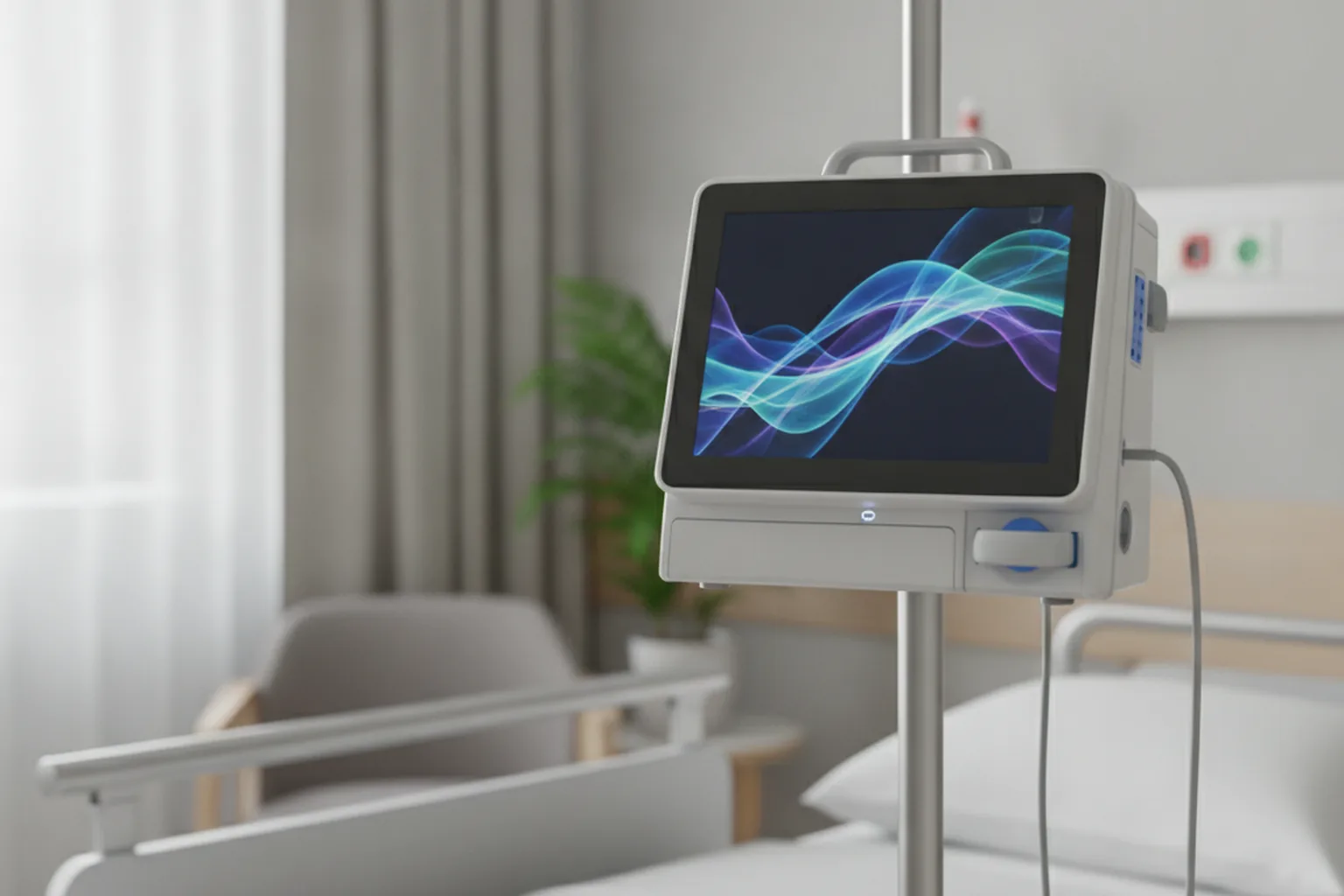
Regulated sectors add process work on top of coding. A Qt interface for a medical device needs documented requirements, risk control and verification records; our medical device software development guide explains how IEC 62304 shapes that work. In cars, the Qt layer usually runs next to safety-critical code, as described in our automotive software development guide.
QML vs Qt Widgets: which approach fits your project?
Choose QML (Qt Quick) for touch interfaces, animations and embedded devices, and choose Qt Widgets for dense desktop tools with many tables, forms and dockable panels. Both are fully supported in Qt 6, and one application can mix them.
| Criterion | QML / Qt Quick | Qt Widgets |
|---|---|---|
| Best for | Touchscreens, HMIs, animated and branded UIs | Classic desktop apps, data-heavy tools |
| Rendering | GPU-accelerated scene graph | CPU-based, native-looking controls |
| Language | Declarative QML plus C++ back-end | C++ (or Python via PySide6) |
| Design hand-off | Figma to Qt Design Studio to QML | Mostly hand-coded or Qt Designer forms |
| Runs on microcontrollers | A subset, via Qt for MCUs | No |
| Developer iteration | QML hot reload in Qt 6.12 | Rebuild and restart |
Qt 6.12 also introduced StyleKit as a Labs module, which lets one styling source drive both Widgets and Qt Quick. It is still experimental, so we treat it as an option for new projects rather than a reason to restyle an existing product.
Which Qt version should you build on in 2026?
New Qt projects in 2026 should start on Qt 6.12 LTS, released on 30 September 2026 with standard support until 30 September 2031. Products already on Qt 6.8 LTS can stay there until 8 October 2029 and plan their move to 6.12 in a normal release cycle.
| Qt version | Type | Standard support ends | Recommendation |
|---|---|---|---|
| Qt 6.12 | LTS (5 years) | 30 Sep 2031 | Default for new products |
| Qt 6.11 | Regular (1 year) | 17 Mar 2027 | Upgrade to 6.12 |
| Qt 6.8 | LTS (5 years) | 8 Oct 2029 | Stay, plan move to 6.12 |
| Qt 6.5 | LTS (3 years) | Ended April 2026 | Upgrade; paid extended security maintenance only |
| Qt 5.15 | LTS | Extended support ended 26 May 2025 | Migrate to Qt 6 |
Two details often surprise teams. First, Qt 6.12 is the last release that supports Windows 10, so a Windows desktop product needs a plan for Windows 11-only builds after it. Second, Qt 6.5 and later Qt 6 releases are binary and source compatible, which makes moving from 6.5 or 6.8 to 6.12 much smaller than any Qt 5 migration.
How do you migrate from Qt 5 to Qt 6?
You migrate from Qt 5 to Qt 6 in stages: clean up deprecated APIs on Qt 5.15, switch the build to Qt 6, then port the changed modules. New Qt 6 features come only after that, and doing it all in one big rewrite is the most common reason these projects overrun.
- Audit the code base. List the Qt modules in use, third-party libraries, platform-specific code and the test coverage you have.
- Clean up on Qt 5.15. Turn on deprecation warnings and fix them while still on Qt 5, so the later switch has fewer surprises.
- Move the build to CMake. Qt 6 uses CMake as its main build system; qmake projects still work, but new tooling assumes CMake.
- Port changed modules. Replace removed classes, update Qt Multimedia, graphics and string-handling code, and use the Qt 5 Core Compatibility module as a temporary bridge where needed.
- Re-test on target hardware. Qt 6 renders through a new graphics layer (RHI), so measure start-up time and frame rate on the real device, not only on a developer PC.
- Release and remove the bridges. Ship on Qt 6, then retire compatibility shims in the next releases.
The size of a migration depends more on custom painting, multimedia and platform code than on the number of screens. For the business side of such projects, including how to justify the budget, see our legacy system modernization guide and the software modernization services page.
Qt licensing: LGPL or commercial licence?
Qt is available under open-source licences, mainly LGPLv3, and under a commercial licence from Qt Group. The LGPL route is free of licence fees but comes with obligations; the commercial route costs money but removes those obligations and adds support, extra tools and device-creation components.
Under LGPLv3 you must tell users that the product uses Qt, provide the Qt library source code you used, and allow users to replace the Qt libraries with their own modified versions. On a locked-down embedded device that last condition is hard to meet, which is the main reason device makers buy commercial licences. Some Qt modules are available only under GPL, which would require the whole application to be released under GPL.
- Application development licences cover desktop and mobile apps.
- Device creation licences add embedded tooling such as Boot to Qt and are often combined with per-device distribution licences.
- Qt for Small Business is listed at €546 per year for application development and €1,090 per year for device creation, for companies with up to €1 million in annual revenue or funding.
- Standard commercial prices are not published; Qt Group quotes them per customer.
The EU Cyber Resilience Act adds a new reason to plan this early. Its main obligations for products with digital elements apply from December 2027, and Qt Group now provides a CRA Declaration of Conformity for commercial Qt 6.12. A device maker still has to cover its own code, its update process and its vulnerability handling.
Which platforms does Qt support?
Qt 6.12 supports all major desktop and mobile systems, embedded Linux, several real-time operating systems and the browser through WebAssembly. Qt for MCUs extends the range down to microcontrollers.
| Platform group | Supported in Qt 6.12 |
|---|---|
| Desktop | Windows 10 (1809+) and 11, including Windows on Arm; macOS 14.4 and later; Ubuntu, Debian, RHEL, openSUSE and SLES |
| Mobile | Android API levels 28 to 37; iOS 18 and later |
| Embedded Linux | Yocto-based images and Boot to Qt reference stacks on Arm and x86 boards |
| Real-time OS | QNX 7.1 and 8.0, INTEGRITY, VxWorks |
| Microcontrollers | FreeRTOS, Zephyr and bare metal via Qt for MCUs |
| Web | WebAssembly (Emscripten) |
Platform support in the official list does not mean every board works out of the box. On embedded projects the Qt team still has to validate the GPU driver, the display and input stack and the memory budget on the exact hardware revision.
Qt vs Flutter, Electron and LVGL
Qt is the strongest option when one product must run on desktop, embedded Linux and an RTOS with native performance; Flutter, Electron and LVGL each win in narrower cases. The table compares them on the points buyers ask about most.
| Framework | Language | Strong at | Weak at | Licence |
|---|---|---|---|---|
| Qt | C++, QML, Python | Desktop plus embedded devices, long product life | Hiring cost, licence planning | LGPLv3 / GPL / commercial |
| Flutter | Dart | Consumer mobile apps, fast UI iteration | Small embedded targets, RTOS | BSD |
| Electron | JavaScript, TypeScript | Desktop apps built by web teams | Memory use, embedded devices | MIT |
| LVGL | C | Very small microcontroller GUIs | Rich desktop apps, large UIs | MIT |
If your product is mobile-first, our Flutter app development team is usually the faster route. For a wider comparison of shared-code approaches, see what cross-platform software development is.
How does a Qt development project work?
A Qt development project runs through seven steps, from discovery to long-term support, and on device projects the hardware and software tracks run in parallel. The steps below are the ones we use for both new products and migrations.
- Discovery. Define users, screens, target hardware, markets and regulatory scope; fix the Qt version and the licence model.
- UX and UI design. Build flows and a clickable prototype, then a design system that can be exported to QML.
- Architecture. Split the C++ back-end from the UI layer, choose communication with hardware (serial, CAN, Modbus, Bluetooth, network) and plan the update mechanism.
- Platform bring-up. For devices, prepare the Linux image or RTOS port, display and touch drivers and a CI pipeline that builds for the target.
- Iterative development. Deliver in two-week sprints with builds running on real hardware, not only in the desktop simulator.
- Testing and certification. Run automated GUI and unit tests, performance and memory profiling, and produce the evidence that IEC 62304, ISO 26262 or the CRA require for your product.
- Release and support. Ship, monitor, patch security issues and plan the next LTS upgrade before the current one ends.
Across 120+ products we have launched since 2017, the average MVP took 12 to 24 weeks, and Qt projects sit in the same range when hardware is ready on time. Late or changing hardware is the main source of delay, so we put platform bring-up on the plan before the first sprint.
How much do Qt development services cost?
Qt development services cost depends on the target platforms, the amount of hardware integration, the regulatory scope and the licence model; the Qt licence itself is a separate line item from the engineering work. A desktop tool on one platform is the cheapest case, while a regulated medical or automotive device with a custom Linux image is the most expensive.
| Cost driver | Lower cost | Higher cost |
|---|---|---|
| Platforms | One desktop OS | Desktop, embedded and mobile from one code base |
| Hardware | Standard PC or evaluation board | Custom board, new display, RTOS or Qt for MCUs |
| UI | Standard Widgets controls | Custom QML design system, 3D, animations |
| Starting point | New code on Qt 6.12 | Large Qt 5 or non-Qt legacy code base |
| Compliance | Internal tool | IEC 62304, ISO 26262, CRA documentation |
| Licence | LGPL with dynamic linking | Commercial licence plus per-device fees |
For reference, our embedded and IoT engagements start from $3,500 for a first working device with one core function, $5,800 for fleet-ready firmware with signed over-the-air updates, $9,200 for a telemetry pipeline with a dashboard and $11,500 for a full multi-device platform. A Qt interface on top of these is scoped after discovery, once screens and hardware are known.
How to choose a Qt development company
Choose a Qt development company by checking recent Qt 6 work on hardware similar to yours, its licensing advice, its testing on real devices and its plan for long-term support. Pretty screenshots prove little; a demo running on an embedded board proves much more.
Qt vendors fall into three groups. Qt Group's own professional services know the framework best and bundle licences. Specialist Qt consultancies focus on Qt alone and are strong on performance and migration. Full-cycle software companies combine Qt with firmware, cloud back-ends, mobile apps and design, which suits connected products that need all of these.
- Ask for two or three Qt 6 projects and which Qt modules they used.
- Ask how they would license your product and why.
- Check that builds and tests run on the target hardware in CI.
- Ask who owns the board support package and the Linux image.
- Ask how they handle security patches and the CRA after release.
- Agree on code ownership and documentation from day one.
If you need senior Qt engineers inside your own team rather than a fixed-scope project, a dedicated development team is the usual model; 90% of our clients stay with us for support after launch.
FAQ
What are Qt software development services?
Qt software development services are engineering services for building, porting and maintaining applications on the Qt C++ framework. They include cross-platform desktop apps, touchscreen interfaces for embedded devices, Qt for MCUs GUIs, mobile apps, UX and UI design in QML, Qt 5 to Qt 6 migration, testing and long-term support.
What does a Qt software development company do?
A Qt software development company designs, codes, tests and supports software built on Qt. On device projects it also prepares the embedded Linux or RTOS platform, integrates the display and touch drivers, and advises on Qt licensing and compliance such as IEC 62304 or the EU Cyber Resilience Act.
Is Qt still a good choice in 2026?
Qt is still a good choice in 2026 for products that combine desktop, embedded and mobile targets or need a native UI on low-power hardware. Qt 6.12 LTS was released on 30 September 2026 with support until 2031, and Qt Group's device licence revenue grew 26.4% in 2025.
Is Qt free for commercial use?
Qt can be used in commercial products for free under LGPLv3 if you meet its obligations: credit Qt, provide the Qt source you used and let users replace the Qt libraries. Locked-down devices often cannot meet the last condition, so device makers usually buy a commercial licence.
Should I use QML or Qt Widgets?
Use QML (Qt Quick) for touchscreens, animated interfaces and embedded devices, and Qt Widgets for dense desktop tools with many tables and forms. Both are supported in Qt 6, and one application can combine them.
How long does it take to migrate from Qt 5 to Qt 6?
A Qt 5 to Qt 6 migration takes from a few weeks for a clean desktop app to several months for a large code base with custom painting, multimedia and platform-specific code. Cleaning up deprecated APIs on Qt 5.15 first and testing on target hardware early are the two steps that shorten it most.
Which Qt version should a new project use?
A new project should use Qt 6.12 LTS, which has standard support until 30 September 2031. Qt 6.8 LTS, supported until October 2029, remains a safe choice for products already built on it.
Sources
- Qt Group, Qt 6.12 LTS released, September 2026
- Qt Documentation, Qt releases and support periods
- Qt Documentation, Supported platforms
- Qt Group, Qt 6.5 reaches end of support, January 2026
- Qt Group, Open source LGPL obligations
- Qt Group, Qt for Small Business
- Qt Group, Qt for Python 6.12 is here, October 2026
- Qt Group, Financial statements bulletin for 2025, February 2026
- KDAB, Qt consulting and development services
- Integra Sources, Qt software development services