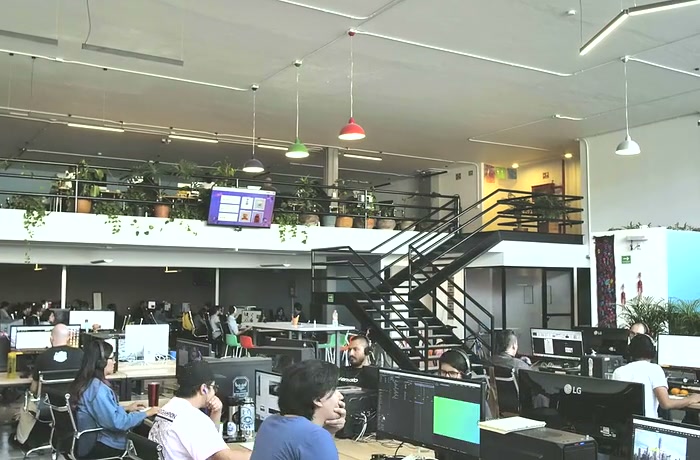

TL;DR: Sports software development is custom software for clubs, leagues, venues, broadcasters and betting or fantasy operators. It covers athlete performance analytics, fan apps, streaming, ticketing and league operations. In our 2026 estimates, an MVP costs about $40–90K and multi-module platforms run $150–500K+. Real-time data, integrations and athlete-data compliance drive both budget and architecture.
Sports software development is the work of designing and building custom digital products for the sports industry: performance platforms for coaches, apps and streams for fans, systems that run leagues and stadiums, and engines behind fantasy and betting products. The market behind it is large and still growing fast. Analysts put sports technology at roughly $34–39 billion in 2026. Fortune Business Insights estimates USD 39.34 billion in 2026 and USD 200.83 billion by 2034 (22.6% CAGR), with North America holding 36.86% of the market in 2025. MarketsandMarkets sizes it at USD 34.25 billion in 2025, rising to USD 68.71 billion by 2030 (14.9% CAGR).
Most of that money goes into software that off-the-shelf tools serve poorly: data that arrives every fraction of a second, audiences that grow a hundredfold at kick-off, and health data that regulators treat as highly sensitive. Clubs and leagues that outgrow generic team-management apps usually turn to sports custom software development services. That way they own their performance data, integrate their ticketing, CRM and streaming stack, and give fans an experience that carries their brand rather than a vendor's.
This guide is written from the engineering side. It covers the platform types worth building, the features that matter, when custom pays off, the stack that survives match day, the compliance rules most competitors skip, realistic 2026 budgets, and a build process that fits the sports calendar. For a fan-facing product, most of the budget usually goes into mobile app development, so we cover that side too.
What is sports software development?
Sports software development is custom engineering for sports organizations and sports businesses: software that captures, processes and presents athletic, fan, operational or wagering data in real time. Its buyers range from professional clubs, leagues and federations to venue operators, broadcasters, sports-tech startups and licensed betting operators.
Three things separate it from ordinary business software. First, real-time events: a goal, a substitution or an odds change has to reach thousands or millions of devices within a second or two. Second, extreme load spikes. Traffic on a fan app can sit near zero on a Tuesday and jump by orders of magnitude at kick-off, half-time and the final whistle. Third, sensitive and regulated data. Wearables produce biometric and health data, ticketing and subscriptions handle card payments, and betting products sit inside strict gambling licensing regimes. Good sports software development services plan for all three from the first architecture sketch, not after the first outage on derby day.
Types of sports software you can build in 2026
Sports software falls into eight main categories in 2026. Each has a different core user, data model and budget profile, and many real products combine two or three of them around a shared data platform. The table maps each type to what it does and who typically buys it.
| Type | What it does | Typical buyer |
|---|---|---|
| Athlete performance & AMS | Training load, testing results, wellness questionnaires and performance dashboards in one athlete management system | Pro clubs, national teams, college programs |
| Health, injury prevention & wearables | Ingests GPS trackers, heart-rate and HRV sensors; flags fatigue and injury risk; supports medical staff | Performance and medical departments |
| Video & computer-vision analysis | Tags match video, tracks players and ball, runs pose and skeletal tracking for technique analysis | Analysts, coaches, broadcasters |
| Scouting & recruitment | Player databases, scouting reports, video clips, shortlists and comparison models | Clubs, agencies, college recruiters |
| League, club & tournament management | Scheduling, referee assignment, registration, memberships, standings and payments | Leagues, federations, amateur clubs |
| Venue & stadium operations | Ticketing, access control, concessions, crowd flow and smart-stadium IoT | Arena and stadium operators |
| Fan engagement & OTT streaming | Live scores, push alerts, second-screen stats, highlights and live or on-demand video | Clubs, leagues, sports media |
| Fantasy sports & betting | Contests, odds, wallets, settlement, KYC and responsible-gaming controls | Licensed operators, media brands |
Athlete performance and health platforms
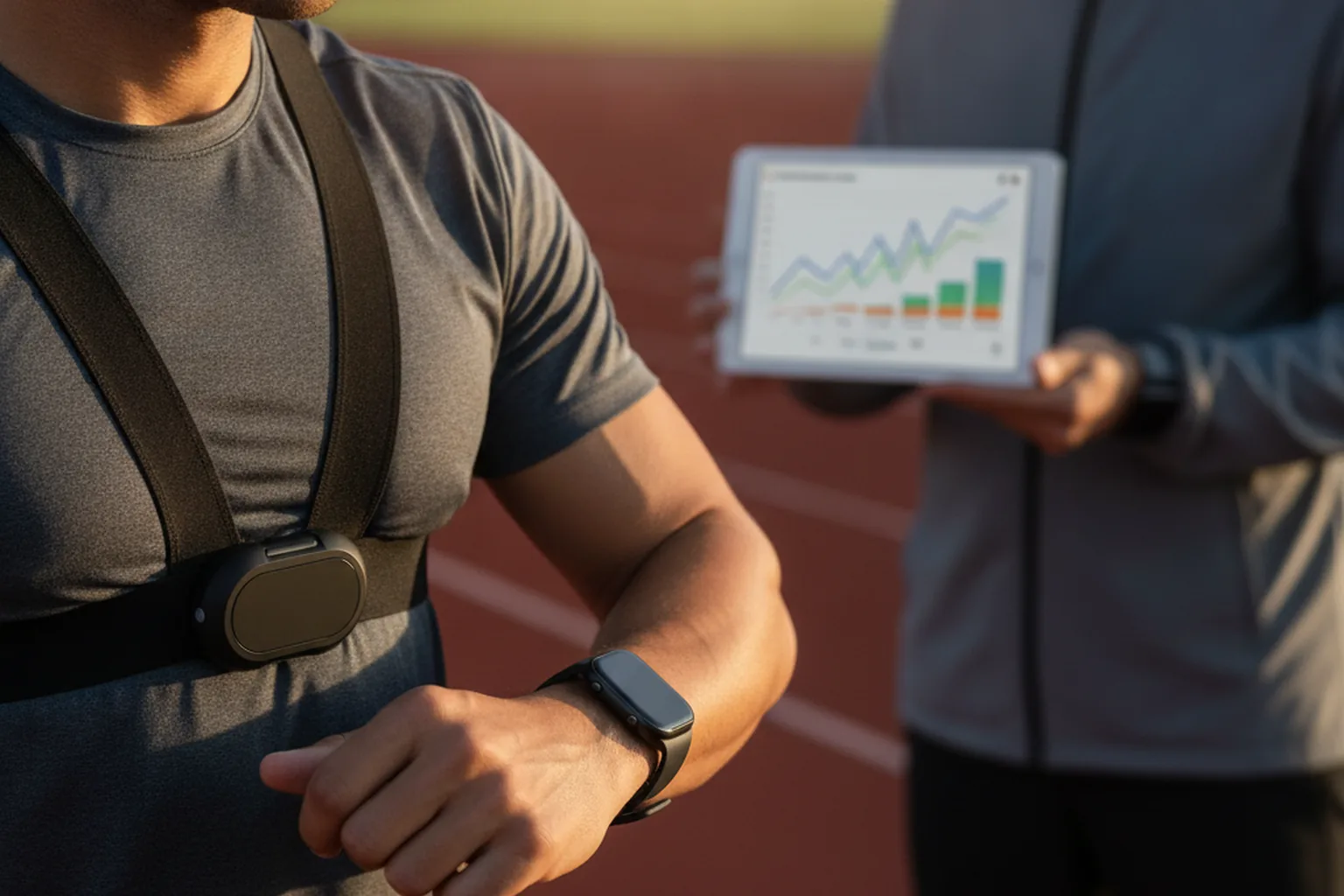
Athlete performance and health platforms combine training, testing, wellness and wearable data so coaches and medical staff can manage load and reduce injury risk. The core is usually an athlete management system (AMS) that merges GPS and heart-rate streams, gym testing and daily wellness check-ins into one timeline per athlete. The harder engineering sits in video. Automatic player tracking and technique analysis rely on computer vision software development, with pose estimation models running on match or training footage.
Fan engagement apps and live streaming
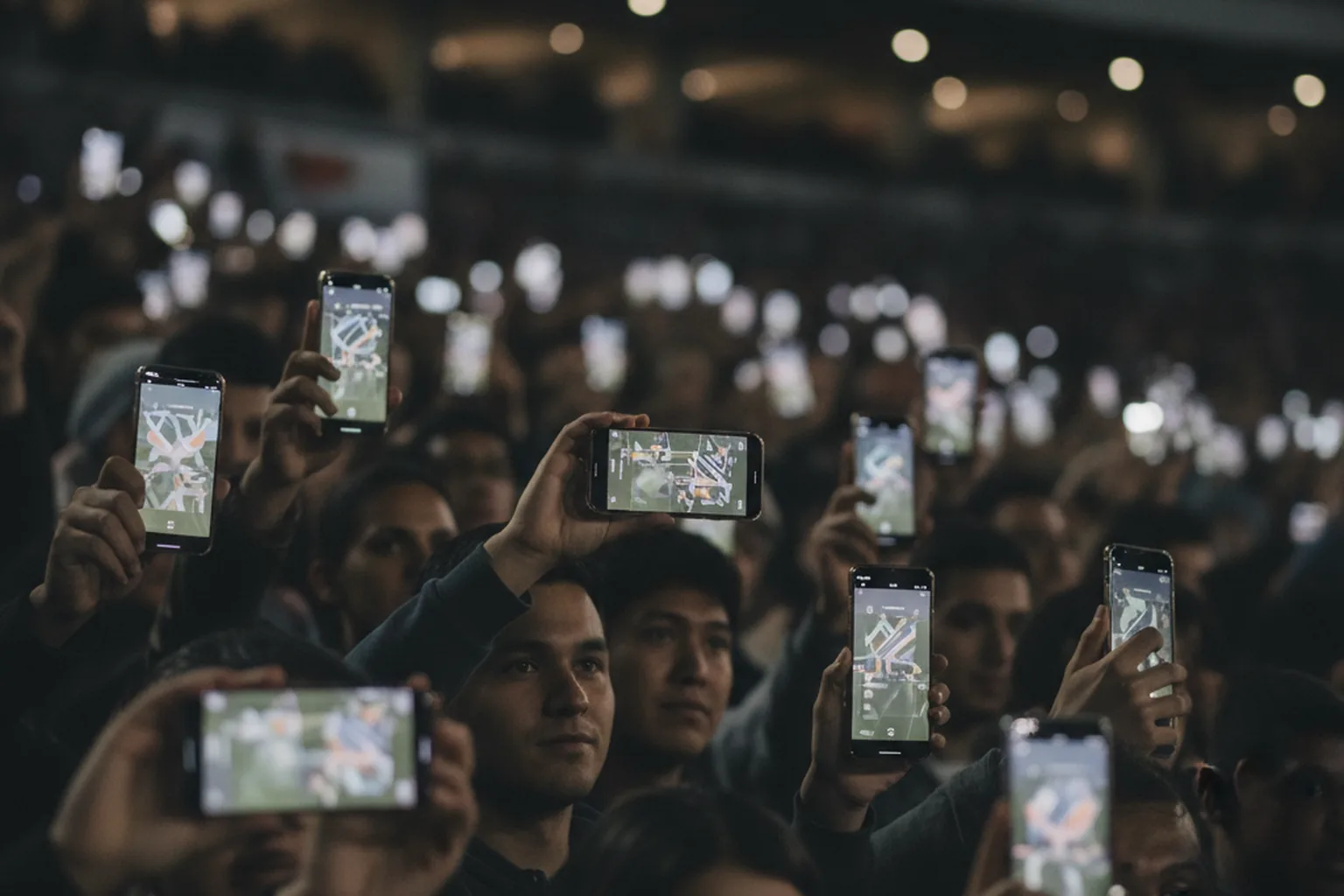
Fan engagement apps give supporters live scores, instant alerts, stats, highlights and, increasingly, live or on-demand video in a branded app. The hard part is latency and scale: the notification for a goal must arrive before the fan hears the neighbours cheer, and the video must hold up when every fan opens it at once. Streaming architecture, rights management and OTT delivery overlap heavily with media and entertainment software, so sports streaming teams often borrow patterns from broadcasters.
League, club and tournament management software
League, club and tournament management software automates the administrative side of sport: fixtures, venues, referee assignment, registrations, eligibility, memberships and fee collection. For amateur and youth sport, a mobile-first experience matters more than analytics depth, because volunteers and parents run most of the work. Custom builds make sense when a federation has unusual competition formats, eligibility rules or integrations with national registries that standard SaaS cannot model.
Fantasy sports and sports betting platforms
Fantasy sports and sports betting platforms turn live sports data into contests and wagers, so they combine real-time data processing with strict financial and regulatory controls. A betting product needs an odds feed, a trading and risk engine, a wallet, settlement, geolocation, KYC/AML checks and responsible-gaming limits. In the US it also needs state licensing, which has been possible since the Supreme Court struck down PASPA in 2018. Fantasy platforms are lighter but still handle contest entry fees, payouts and state-by-state eligibility rules.
Who uses custom sports software?
Custom sports software is commissioned by any organization whose results, revenue or fan relationship depends on sports data. Each buyer type tends to start with a different module:
- Professional clubs and franchises build performance platforms, scouting tools and branded fan apps. They often start by owning their athlete data.
- Leagues and federations need competition management, officiating tools, central data platforms and direct-to-consumer streaming.
- College and NCAA athletic departments invest in recruiting, compliance tracking, athlete wellbeing and fan ticketing.
- Youth and amateur clubs digitize registration, scheduling, payments and parent communication, where child-privacy rules apply.
- Venue and arena operators run ticketing, access control, concessions and smart-stadium systems.
- Sports media and broadcasters build OTT platforms, live stats overlays and second-screen experiences.
- Sports-tech startups and betting or fantasy operators treat the software as the product itself, from coaching and fitness apps to licensed wagering platforms.
Must-have features of sports software
Every sports platform needs a common core: secure accounts, real-time updates, content, payments and analytics. Advanced features such as AI, computer vision and AR are where products differentiate. Getting the core right first keeps the advanced layer cheap to add later.
Core features for every sports platform
- Authentication and roles: separate permissions for athletes, coaches, medical staff, admins and fans, with SSO for staff.
- Real-time scores and notifications: live events pushed over WebSockets and push notifications, with per-user preferences for teams and alert types.
- Content and CMS: news, highlights, rosters and match centres that editors can update during a live game.
- Payments and subscriptions: tickets, memberships, season passes, premium tiers and merchandise through a PCI-compliant gateway.
- Analytics dashboards: performance dashboards for staff and engagement dashboards for commercial teams.
- Admin console: tools for fixtures, users, content moderation and support without developer involvement.
- Offline-tolerant mobile: apps that queue actions and cache data when stadium networks drop or congest.
Advanced features: AI, computer vision and AR
- Wearable integrations: ingest data from GPS vests, heart-rate straps and smartwatches. Our guide to wearable app development covers sensor SDKs, Bluetooth sync and battery limits.
- Injury-risk and load models: machine learning that flags athletes whose training load or recovery markers drift from their baseline.
- Computer-vision tracking: automatic player and ball tracking, event tagging and skeletal tracking for technique feedback.
- Personalized feeds: recommendation models that surface the clips, stats and offers each fan is most likely to engage with.
- AR overlays: live stats, player cards and replays layered on the camera view or broadcast.
- Automated highlights: models that detect key moments and cut clips within minutes of the play.
When does custom sports software pay off vs off-the-shelf?
Custom sports software development pays off when data ownership, integrations or fan experience are part of your competitive edge. Off-the-shelf tools win for commodity administration. The comparison below uses generic SaaS team-management and ticketing tools as the baseline.
| Dimension | Off-the-shelf SaaS | Custom sports software |
|---|---|---|
| Data ownership | Data sits in the vendor's platform; exports are often limited | You own the data model, raw data and history |
| Integrations | Prebuilt connectors only | Any data feed, wearable, ticketing, CRM or streaming system |
| Fan UX and branding | Templated look, vendor branding | Fully branded experience built around your fans |
| Scale on match day | Shared infrastructure, limits you do not control | Capacity designed and tested for your own peaks |
| Compliance control | Depends on vendor terms and hosting regions | You choose data residency, retention and access rules |
| Time to launch | Days to weeks | Roughly 3–10 months, depending on scope |
| 3-year TCO | Low at first; per-seat and per-fan fees grow with scale | Higher upfront; flat and predictable once built |
The decision rule is simple. Buy for commodity club administration such as registrations, rosters and simple scheduling. Build where data or fan experience is your edge: proprietary performance models, a fan app that drives sponsorship and subscription revenue, or integrations no vendor offers. Many organizations end up hybrid, with SaaS for admin and custom modules for what differentiates them. Our deeper guide to custom software vs off-the-shelf walks through the full three-year TCO calculation.
Recommended tech stack for sports platforms
A sports platform's stack is chosen for real-time delivery and elastic scale first, and developer convenience second. The typical 2026 choices by layer:
| Layer | Typical choices in 2026 | Why it fits sports |
|---|---|---|
| Mobile | Swift, Kotlin; React Native or Flutter | Native for wearables and heavy video; cross-platform for fan apps on a budget |
| Web | React, Next.js | Fast match centres, SEO for news and fixtures, rich staff dashboards |
| Backend | Node.js, Go, Java/Kotlin; Python for ML | High-concurrency I/O and a mature ML ecosystem |
| Real-time | WebSockets, Kafka or Redis Streams, event-driven services | Fan-out of live events to millions of clients in near real time |
| Video | LL-HLS, WebRTC, multi-CDN delivery | Low-latency live streams that stay close to the betting and social feed |
| Data | PostgreSQL, TimescaleDB or InfluxDB, a data lake | Sensor and event data is time-series by nature; the lake keeps history for models |
| ML / computer vision | PyTorch, pose-estimation models, GPU inference | Player tracking, technique analysis and injury-risk models |
| Cloud | AWS or Google Cloud with autoscaling and pre-warming | Absorbs kick-off spikes without paying for peak capacity all week |
| Integrations | Sports data feeds, ticketing APIs, CRM, payment gateways | Official data, commerce and fan identity come from third-party systems |
The most common failure is not the choice of framework. It is an architecture that was never designed for a hundredfold surge within minutes. Pre-scaled capacity before kick-off, caching of match-centre pages at the edge, and a message bus between data ingestion and fan delivery are what keep platforms up. Our article on scalability architecture covers these patterns in depth. Commercial sports data feeds from providers such as Sportradar or Stats Perform should always sit behind your own adapter layer, so you can switch providers or add a second source without rewriting the product.
Athlete data privacy and compliance: what sports software must meet
Biometric and health data from wearables is special category data under GDPR, and in the US it can fall under state biometric privacy laws, so sports software has to be compliant by design rather than patched later. Payments, youth users, AI features and wagering each bring further obligations. The table maps the main regulations to what the software must actually do.
| Regulation | Applies when | What the software must do |
|---|---|---|
| GDPR Art. 9 + DPIA | You process health or biometric data of EU/UK athletes or fans | Document a lawful basis and an Art. 9 condition, run a DPIA, minimize and segregate health data, support access and deletion requests |
| EU AI Act | You use AI on athletes or employees in the EU | No emotion inference from physiological signals at work (banned since Feb 2025); treat selection or scoring AI as potentially high-risk, with human oversight and logging |
| Illinois BIPA & state biometric laws | You collect biometric identifiers from US athletes or fans (e.g. face scans for entry) | Written notice and consent, a published retention schedule, no sale of biometric data, secure destruction |
| COPPA | Your youth-sports app has users under 13 in the US | Verifiable parental consent, minimal data collection, parent-controlled deletion |
| PCI DSS 4.0 | You take card payments for tickets, subscriptions or wallets | Tokenize cards through a compliant gateway, keep card data out of your systems, protect payment pages from script tampering. See our payment gateway integration guide. |
| State gambling licensing, GLI-19 / GLI-33 | You operate real-money betting or iGaming in US states (legal state by state since PASPA fell in 2018) | Certified platform and event-wagering systems, geolocation, KYC/AML, responsible-gaming limits, full audit trails |
| WCAG 2.2 | Any public fan app or ticketing site | Accessible navigation, contrast, captions for video and screen-reader support |
In engineering terms, compliance comes down to a few concrete design choices: keep health data in a separate, encrypted store with its own access rules, log every access, enforce retention periods automatically, and make each AI feature explainable to the athlete and the medical team. For EU-facing products, our guide to GDPR for US founders covers the basics of lawful basis and data transfers, and the EU AI Act compliance checklist helps you classify each model before it ships.
How much does sports software development cost in 2026?
In our 2026 project estimates, sports software development costs about $40,000–$90,000 for a focused fan app MVP, $60,000–$350,000 for most club, performance, streaming or computer-vision platforms, and from $500,000 to over $2 million for a licensed betting platform. The ranges below assume blended US/EU nearshore rates and are planning figures, not quotes.
| Project type | Scope | Timeline | Cost range (YuSMP 2026 estimate) |
|---|---|---|---|
| Fan engagement MVP app | Live scores, alerts, news, basic profile, iOS + Android | 3–4 months | $40,000–$90,000 |
| Club / league management platform | Registration, scheduling, referees, payments, admin | 4–6 months | $60,000–$150,000 |
| Athlete performance & wearables analytics | AMS, sensor ingestion, dashboards, load models | 5–8 months | $80,000–$200,000 |
| OTT / live streaming platform | Live and VOD, subscriptions, DRM, multi-device | 6–10 months | $120,000–$350,000 |
| Computer-vision video analysis | Tracking, tagging, pose estimation, analyst tools | 6–9 months | $100,000–$300,000 |
| Fantasy sports platform | Contests, scoring engine, wallet, payouts, eligibility | 5–8 months | $80,000–$250,000 |
| Licensed sports betting platform | Odds, risk engine, wallet, KYC/AML, geolocation, certification | 12–24 months | $500,000–$2M+ (licensing and certification add cost) |
What drives the budget
The biggest cost drivers in sports software are data and regulation rather than screens. Six factors move the number most:
- Real-time volume: the number of concurrent users and events per second decides how much streaming infrastructure and load testing you need.
- Video: live streaming, DRM and transcoding add both build cost and ongoing CDN spend.
- Integrations and data-feed licences: official data feeds, ticketing and CRM connectors cost engineering time, and the feeds carry recurring licence fees.
- Compliance and certification: DPIAs, PCI scope reduction, gaming certification and audits add weeks and specialist effort.
- Platforms: iOS, Android, web, smart TV and wearables each add build and QA effort.
- AI and computer vision: training data, labelling, model evaluation and GPU inference are separate budget lines.
Plan for 15–20% of the build cost per year for maintenance, hosting and seasonal updates. For a broader breakdown of rates and pricing models, see our guide to custom software development cost in 2026.
How to build sports software: a 6-step process
Sports software is best built in six steps that start with data and end with a launch timed to the season. The order matters because data sources and compliance decide the architecture, and the sports calendar decides the deadline.
- Discovery and data mapping. List every data source the product needs: official data feeds, wearables, video, ticketing and CRM. Mark which data is personal or biometric and which legal basis covers it. Deliverable: a data map, a compliance matrix and a prioritized backlog.
- Scope the MVP around one feature. Choose the single feature that makes the product worth using, such as live scores with instant alerts or one performance dashboard coaches check daily, and ship that first. Deliverable: an MVP scope that fits one season.
- Design UX for match day and second screen. Design for fans glancing at a phone during a live game and for coaches reading data on a sideline: large targets, glanceable numbers, outdoor readability and graceful behaviour on congested networks. Deliverable: tested prototypes.
- Architecture and integrations. Set up an event-driven, real-time backbone and connect feeds, payments, ticketing and CRM through adapters. Where sensors or smart-stadium devices are involved, apply the same patterns used in IoT software development. Deliverable: an architecture decision record and working integrations.
- Build, QA and load testing for peak events. Build in two-week iterations and load-test against a simulated peak match day, including the kick-off and final-whistle surges. Deliverable: a release candidate with measured capacity headroom.
- Launch, monitor and iterate by season. Launch before pre-season friendlies, watch latency and error rates on every match day, and schedule big releases for the off-season. Deliverable: a live product with monitoring, on-call support and a season roadmap.
Choosing a partner is part of the process. When you compare sports software development services, look for proven real-time and streaming experience, a clear approach to athlete-data compliance, load-testing practice, and a team that stays on for post-launch support through the season. A vendor who quotes a fixed price without a discovery phase is guessing.
Monetization models and sports tech trends for 2026
Sports platforms earn money through subscriptions, commerce, advertising and data, and the 2026 trends favour products that combine live data with AI personalization. The two lists below cover how platforms monetize and where the market is moving.
How sports platforms make money
- Subscriptions: season passes, OTT streaming tiers and premium club memberships.
- Freemium with premium stats: free scores and news, with paid advanced analytics, ad-free viewing or exclusive content.
- In-app ads and sponsorship inventory: branded match centres, sponsored alerts and partner segments that clubs can sell.
- Ticketing and merchandise commerce: first-party ticket sales, upgrades, concessions and merchandise inside the app.
- Contest entry fees: fantasy and prediction games with entry fees and prize pools where regulation allows.
- Data licensing: leagues and tracking providers licensing official or derived data to media, betting and analytics buyers.
Trends shaping sports software in 2026
- AI coaching and injury prediction: AI-based platforms are the fastest-growing platform type in sports technology, according to MarketsandMarkets.
- Computer-vision officiating and tracking: optical tracking is moving from elite leagues to lower divisions and training grounds.
- Smart stadiums: stadium analytics is the fastest-growing technology segment, at a 17.2% CAGR (MarketsandMarkets), driven by cashless venues, crowd-flow sensors and connected seating.
- Personalized OTT: direct-to-consumer streaming with personalized highlights, alternate camera angles and interactive stats.
- AR overlays: live stats and replays layered on phones in the stands and on broadcast feeds.
- Women's sports and grassroots digitization: fast-growing audiences in women's sports and underserved amateur and youth sport are creating demand for new, affordable platforms.
Frequently asked questions
What is sports software development?
Sports software development is the design and engineering of custom software for the sports industry: athlete performance and health platforms, video and computer-vision analysis, scouting tools, league and club management systems, venue and ticketing software, fan engagement apps with live streaming, and fantasy sports or betting platforms. It differs from generic custom software because it has to handle real-time match data, sharp traffic spikes on match days, sensor and wearable data, and regulated money flows such as ticketing, subscriptions and wagering.
How much does custom sports software development cost?
In our 2026 project estimates, a fan engagement MVP app costs about $40,000–$90,000, a club or league management platform $60,000–$150,000, an athlete performance and wearables analytics platform $80,000–$200,000, a computer-vision video-analysis system $100,000–$300,000, and an OTT or live streaming platform $120,000–$350,000. A licensed sports betting platform starts around $500,000 and can pass $2 million because of licensing and certification. The main cost drivers are real-time data volume, video, data-feed licences, compliance and the number of platforms.
How long does it take to build a sports app or platform?
A focused sports app MVP, such as a fan engagement app with live scores and notifications, usually takes 3–4 months. Club and league management platforms take 4–6 months, athlete performance and wearables analytics 5–8 months, and OTT streaming or computer-vision systems 6–10 months. Licensed sports betting platforms take 12–24 months because certification, geolocation and KYC/AML work add long regulatory steps. Plan launches around the season calendar so load testing finishes before the first big match day.
What do sports software development services usually include?
Sports software development services usually cover discovery and data mapping, UX/UI design for match-day and second-screen use, mobile and web development, real-time backend and streaming architecture, integration with sports data feeds, ticketing, CRM and payment gateways, machine learning or computer-vision modules where needed, QA with load testing for peak events, compliance work such as GDPR assessments and PCI DSS scope reduction, and post-launch monitoring and seasonal iteration.
Is athlete wearable data covered by GDPR?
Yes. Heart rate, heart-rate variability, sleep, injury and other health signals from wearables are special category data under GDPR Article 9, so processing needs both a lawful basis and an Article 9 condition. Consent from employed athletes is often not freely given because of the power imbalance with the club, so teams usually rely on other conditions plus clear contract terms. Large-scale biometric processing requires a Data Protection Impact Assessment (DPIA), and under the EU AI Act emotion inference from physiological signals at work has been prohibited since February 2025.
Should a sports club buy off-the-shelf software or build custom?
A sports club should buy off-the-shelf software for commodity administration such as registrations, rosters, basic scheduling and member payments, where standard SaaS tools are cheap and fast to launch. It should build custom software where data or fan experience is its competitive edge: proprietary performance analytics, a branded fan app, integrations across ticketing, CRM and streaming, or strict control over athlete data. Many clubs run a hybrid, with SaaS for admin and custom modules for the parts that differentiate them.
What tech stack is best for real-time sports apps?
Real-time sports apps typically combine native Swift and Kotlin or a cross-platform framework such as React Native or Flutter on mobile, React or Next.js on the web, and a Node.js, Go or Java/Kotlin backend. Live updates run over WebSockets fed by an event stream such as Kafka or Redis Streams. Video uses LL-HLS or WebRTC through a CDN, time-series data sits in TimescaleDB or InfluxDB next to PostgreSQL, and autoscaling cloud infrastructure on AWS or Google Cloud absorbs match-day spikes.
Last updated 25 September 2026. Market figures: sports technology USD 32.36B (2025), USD 39.34B (2026) and USD 200.83B by 2034 at 22.6% CAGR, North America 36.86% share in 2025 (Fortune Business Insights); USD 34.25B (2025) to USD 68.71B (2030) at 14.9% CAGR, stadium analytics the fastest-growing segment at 17.2% CAGR (MarketsandMarkets). Regulatory points on wearable data draw on Lewis Silkin (28 May 2026) and Foley & Lardner (2025). Cost and timeline ranges are YuSMP 2026 delivery estimates at blended US/EU nearshore rates, not quotes. Nothing here is legal advice.