VIN lookup
Search for parts by VIN or vehicle specs (make, model, body, year)
Auto parts · Web platform
Car and bots is an online service for finding and ordering auto parts. We built the web platform from scratch: it automates parts requests, operator processing and service monetization, with a multi-level role system and integrated payments on Laravel and React.
Car and bots is an online service for finding and ordering auto parts. The platform collects requests from car owners, helps them find the right parts by VIN or vehicle specs and passes the requests on to operators. The service sits where automotive e-commerce meets parts-sourcing services.
The client needed a web platform built from scratch to automate how parts requests are collected, processed by operators and monetized. We delivered the full cycle: from submitting a request and searching the catalog to payment and delivery tracking.
Before the platform, parts sourcing was manual and fragmented: requests were collected outside a single system, operators handled them without a shared tool, and there was no monetization model for the services. The whole chain had to be automated and made manageable.
Access control added complexity: customers, operators and administrators each had to see only their own part of the system. That called for a role model, integrated payments and a transparent catalog where users could find the parts they need on their own.
We designed a multi-level role system with several user types and integrated payments to automate the business processes of finding and ordering parts. A customer submits a request or searches the catalog, an operator handles it, and an administrator manages access and services.
Monetization is built on paid services and subscriptions: a free trial, access to the full parts catalog and one-off sourcing requests. The interface uses a dark theme with a purple accent, and catalog search is complemented by search by OEM number.
Search for parts by VIN or vehicle specs (make, model, body, year)
A tree of vehicle assemblies and sub-assemblies with images and OEM part numbers
Placing a one-off request for operators to source parts
Five access levels: customers, operators, administrators
Free trial, paid catalog access, one-off services
Tracking the status and delivery of placed orders
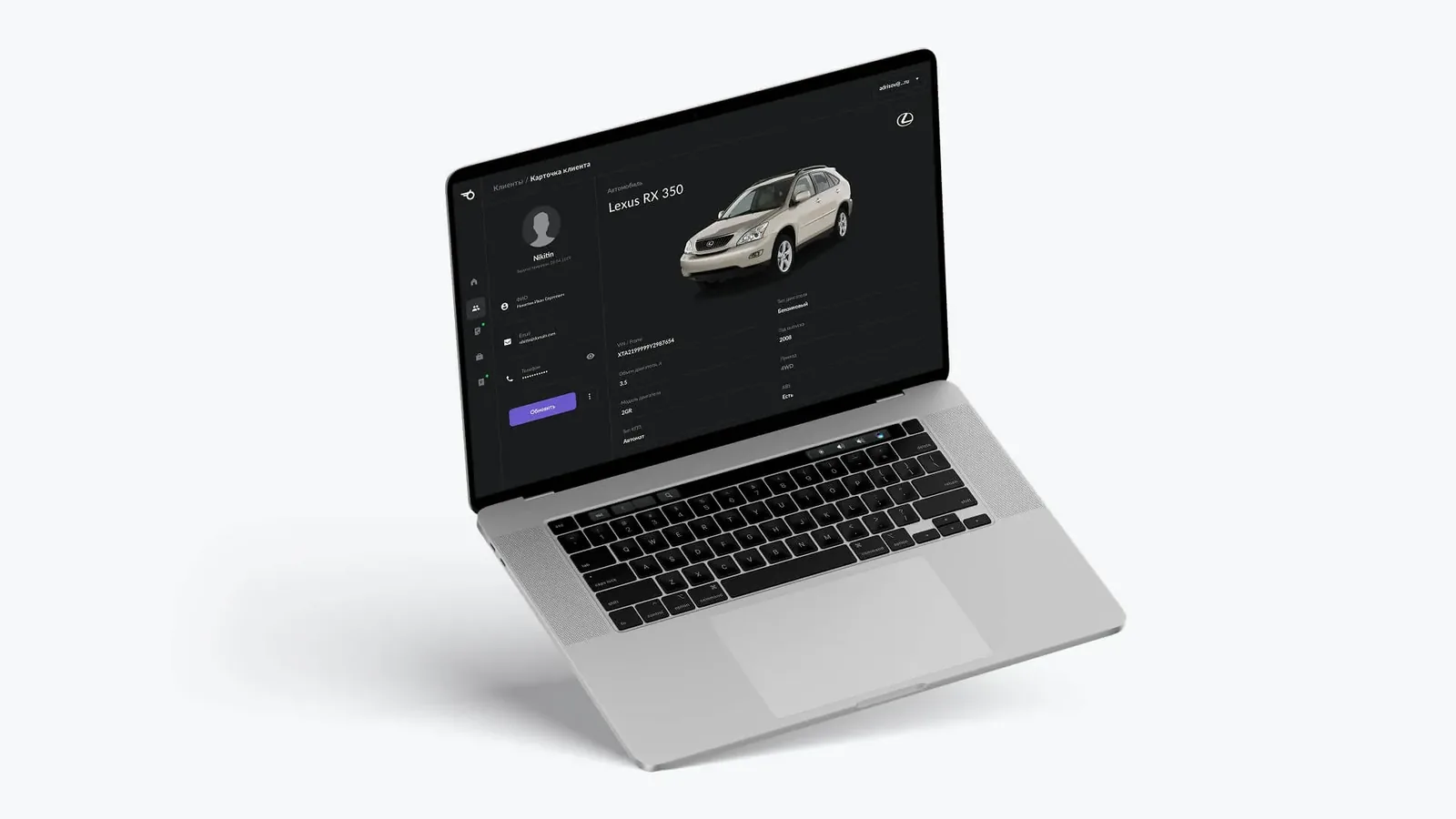
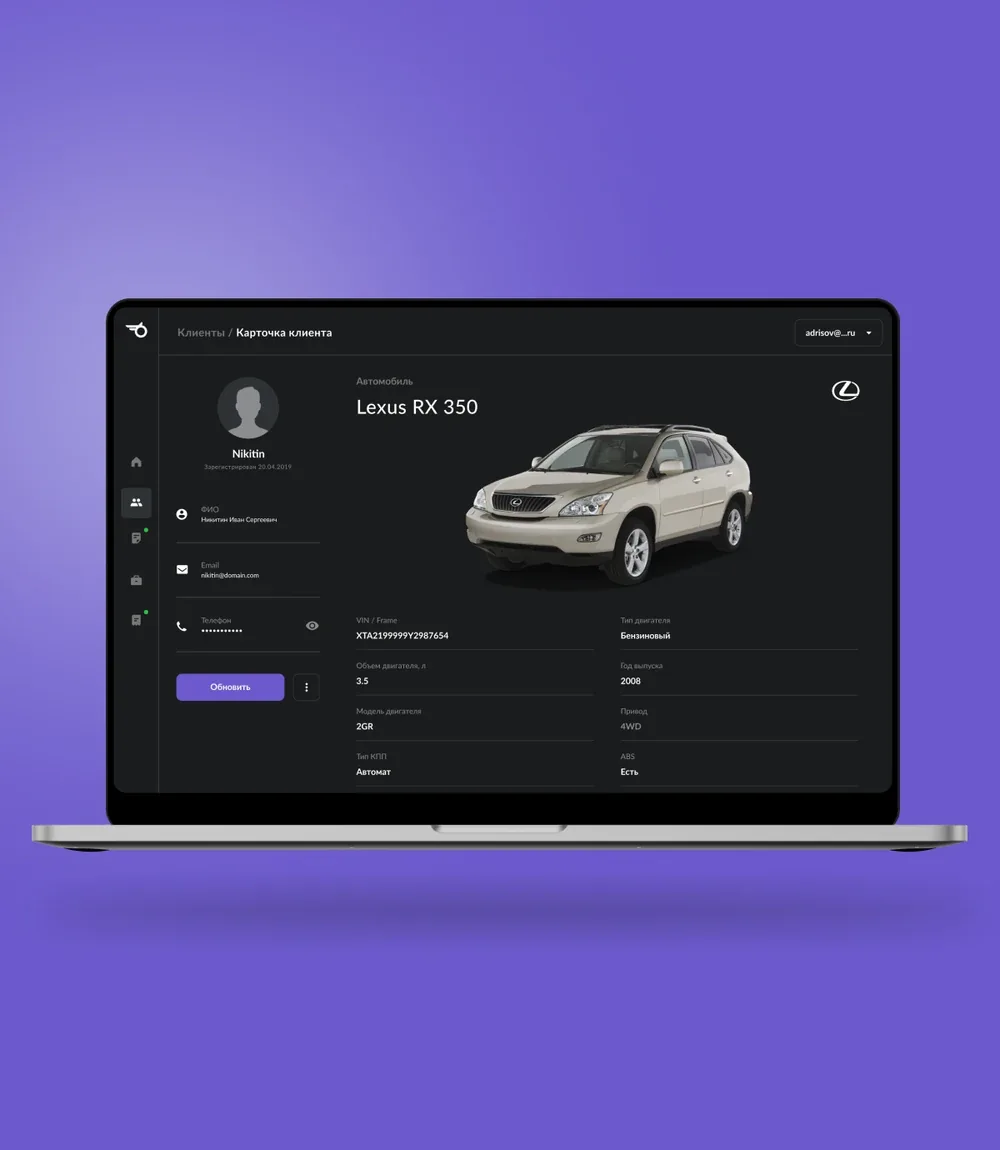
The operator sees the customer profile with contact details and full vehicle data: make and model (Lexus RX 350), VIN, year, engine displacement and model, transmission type, drivetrain and ABS.
All vehicle information sits on one screen together with a photo of the model, which is enough to start sourcing the right parts right away.
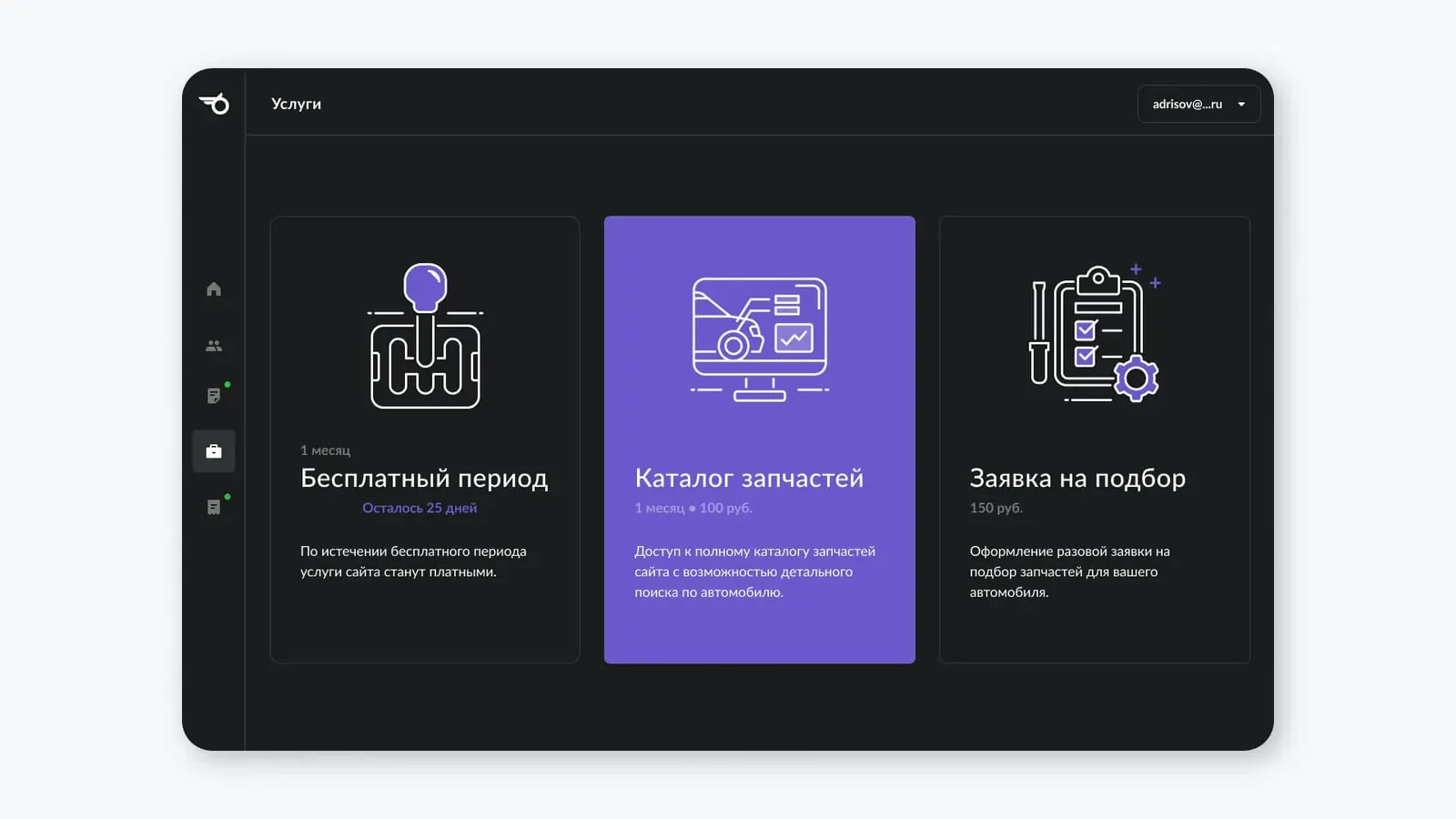
The services screen shows the monetization model: a one-month free trial, paid access to the full parts catalog and a one-off sourcing request.
Each service has its own card with a price and description, and the active plan is highlighted in the purple accent, so users immediately see what is free and what requires a subscription.
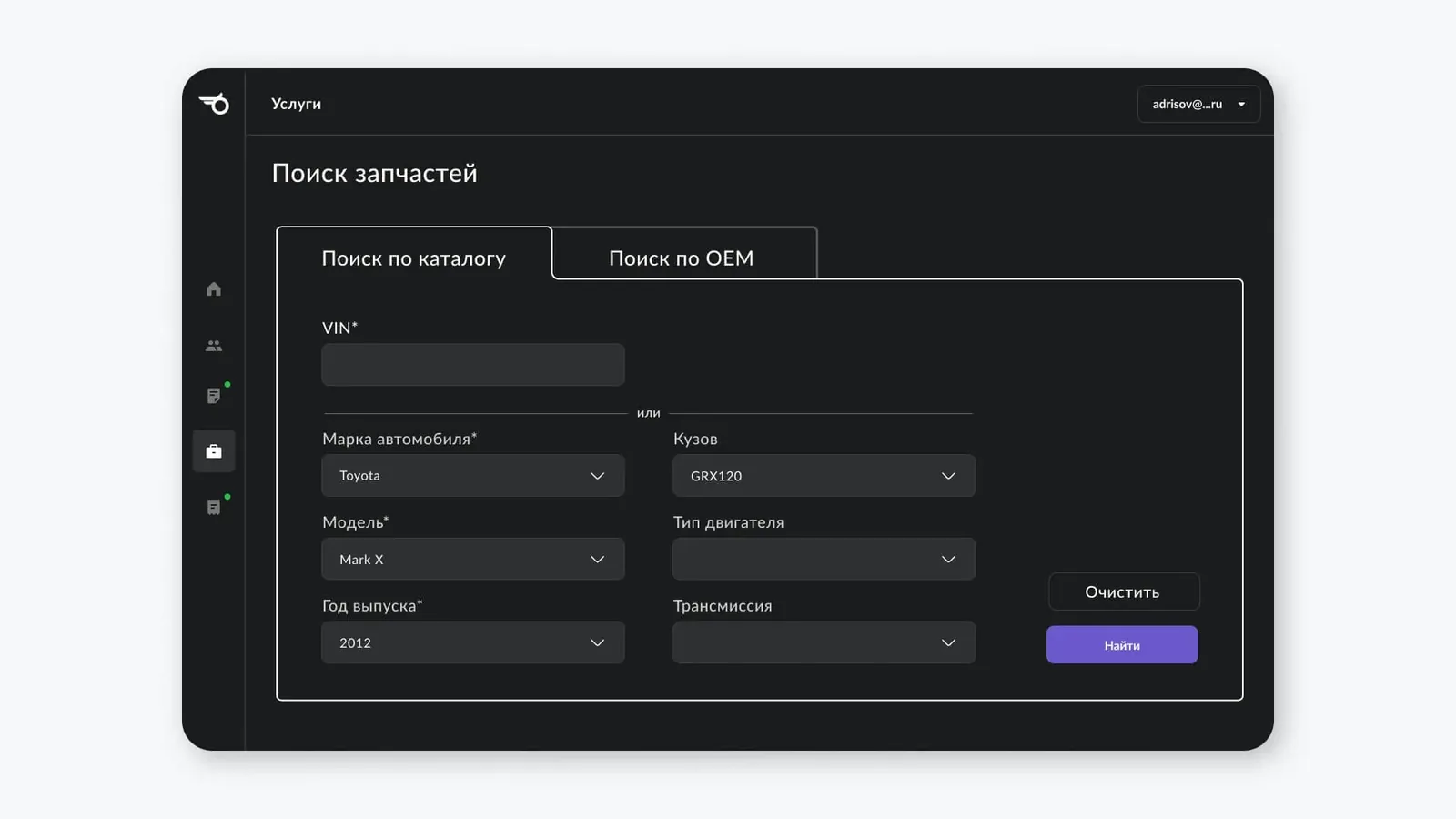
The parts search form offers two paths: by catalog and by OEM number. Catalog search works by VIN or by specs: make, model, body, year, engine type and transmission.
Required fields are marked, with Search and Clear buttons. The either-or logic between VIN and specs keeps the search flexible for any scenario.
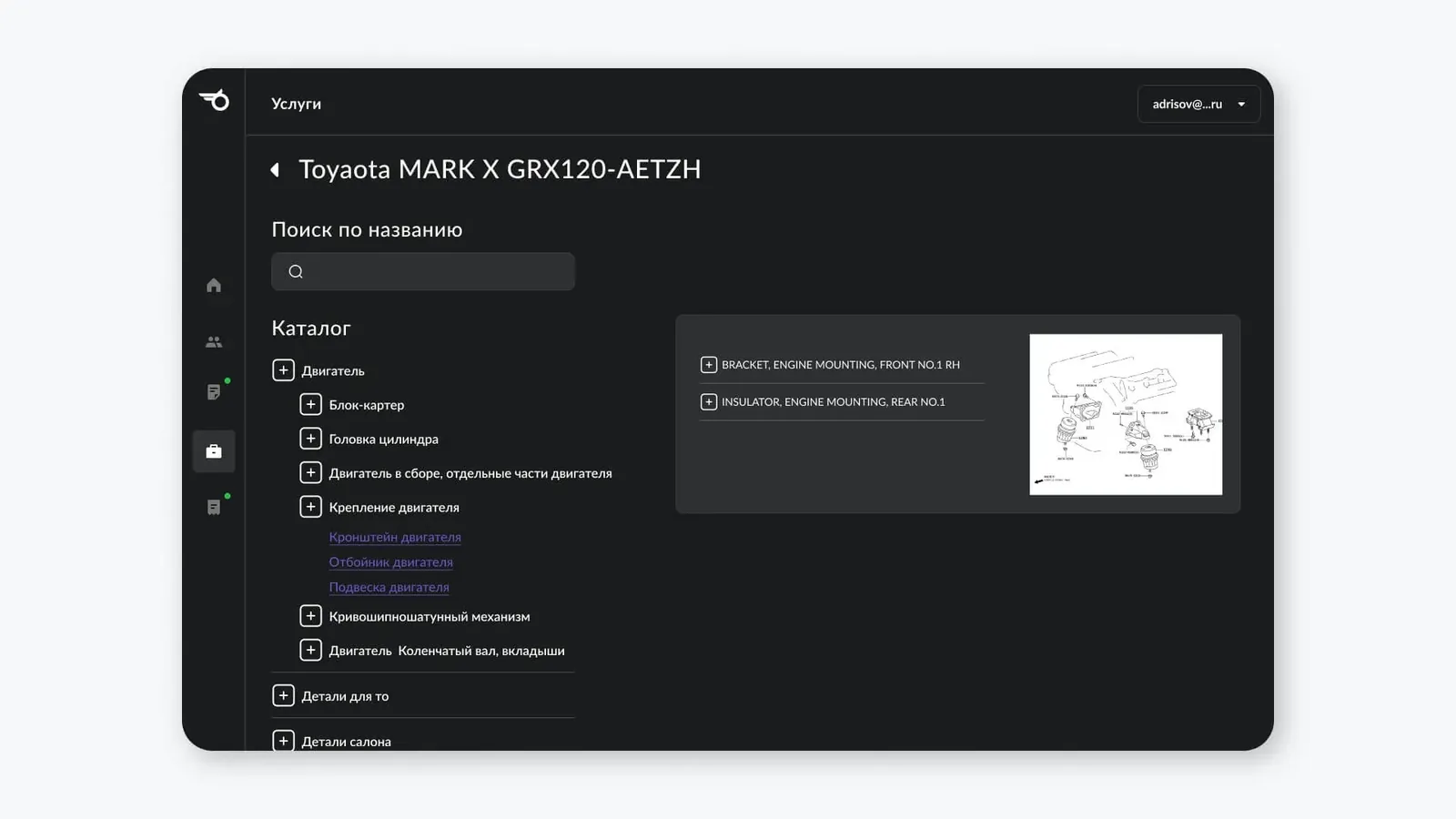
Once a vehicle is selected, a tree catalog opens: engine, maintenance parts, interior parts and other sections with expandable sub-assemblies (cylinder block, cylinder head, engine mounting).
On the right are the assembly diagram and a list of specific parts with OEM names (BRACKET, ENGINE MOUNTING), and a name search at the top takes users straight to the item they need.
An auto parts aggregator with an operator workspace and multi-level roles needs specific business logic that off-the-shelf marketplaces (Yandex.Market, Avito, Exist) don’t offer without heavy customization. Custom development let us implement a unique interaction model between roles and the logic for verifying parts before payment.
A 1C-Bitrix-based option was also considered, but its Marketplace edition did not support the required operator role model without substantial rework of the module.
A web aggregator for auto parts: search by vehicle make and model, part number and manufacturer.
Operator workspace: handling requests, managing sourcing and supporting orders.
Integrated payments and delivery tracking inside the platform.
Role model: buyer, operator, supplier, each with a separate interface and access rights.
Project delivered in about 8 months from kickoff to launch.
The platform handles customers’ personal data and their vehicle data, so access is strictly separated by a five-level role model: each user sees only their own part of the system.
Payments are integrated through a certified payment gateway: subscriptions and one-off services are paid on the provider’s side, and the platform stores only the request and order data it needs to operate.
The service processes users’ personal data (authentication, order history, payment details). Data is processed under the requirements of the client’s jurisdiction, stored on locally hosted servers, and access is restricted by role.
 LaravelBackend, business logic, role model and API
 ReactFrontend, account and catalog interfaces
 PostgreSQLStorage for the parts catalog, requests and users
Planning a marketplace or sourcing service with operator workflows, roles and payments? Tell us about your project, and we’ll propose an architecture and a realistic delivery plan.
The cost depends on the number of roles, the depth of integrations and the monetization model. We provide an exact estimate after analyzing the requirements.
An operator checks availability and compatibility before the order is confirmed. Every buyer request goes through a processing queue before a part is shipped.
Yes. A built-in payment module and integration with logistics services are available via API. The set of providers is defined at the design stage.
The service earns from paid parts-sourcing services and from subscriptions to extended functionality. The model is configured to fit the client’s business model.
For a web aggregator with a role model and payments, a typical timeline is 6–12 months depending on the feature set.
Related cases
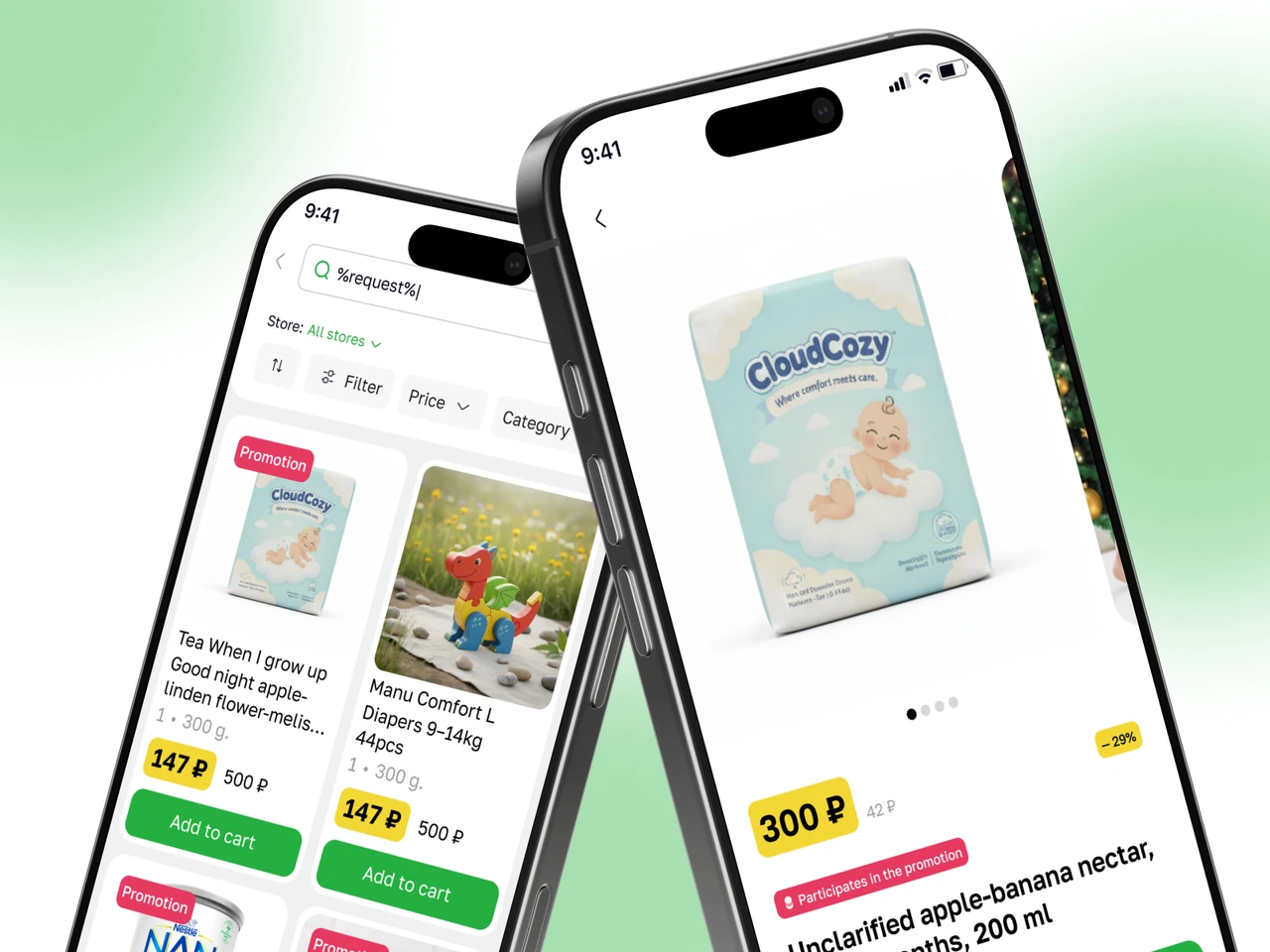
Local marketplace mobile app for an offline children's-goods chain — flexible catalog, two-tap checkout, online/offline stock sync.
View case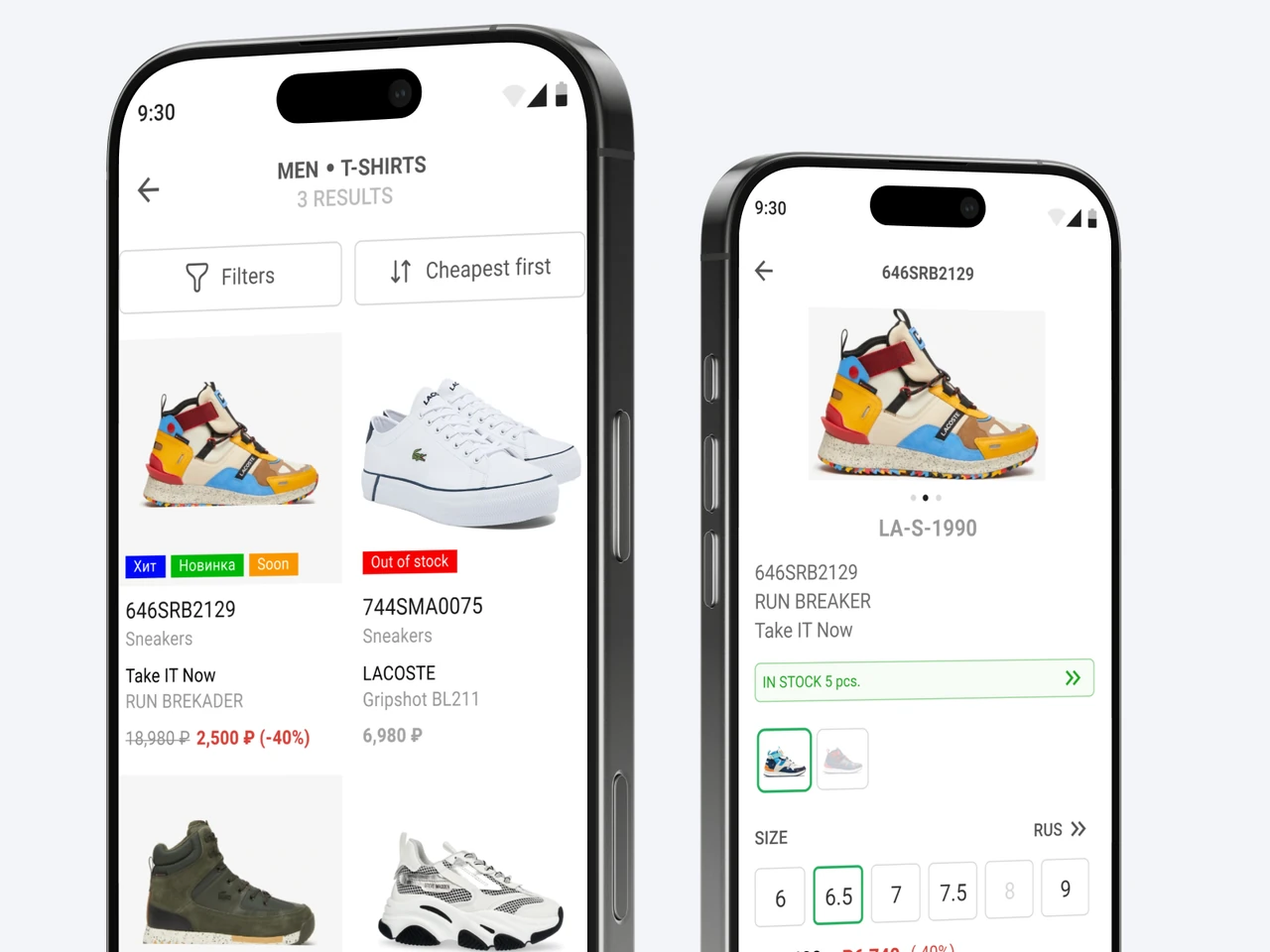
Retail POS companion app for a multi-brand boutique chain — ElasticSearch cross-store inventory search, 1C-system integration.
View case
B2B e-commerce and product configurator for a global polymer manufacturer with multi-region pricing, stock and dealer workflows.
View caseShare a few details and a senior consultant will reply within one business day.
Email: sales@yusmpgroup.com
Phone: +374 44 871 811
Offices: KAMAR Business Center, Vazgen Sargsyan St. 2, Yerevan, Armenia · Remote — East-Coast US overlap (9 AM–1 PM ET)