7 Best React Native Development Companies in 2026
The React Native development companies worth shortlisting in 2026 are YuSMP Group, Callstack, Software Mansion, Infinite Red, GeekyAnts, thoughtbot and Brains & Beards. We compared them on shipped apps, open-source work in the React Native ecosystem and clients named on their own sites.
By Yury Pukhov, CEO of YuSMP Group · Published · Updated · 16 min read
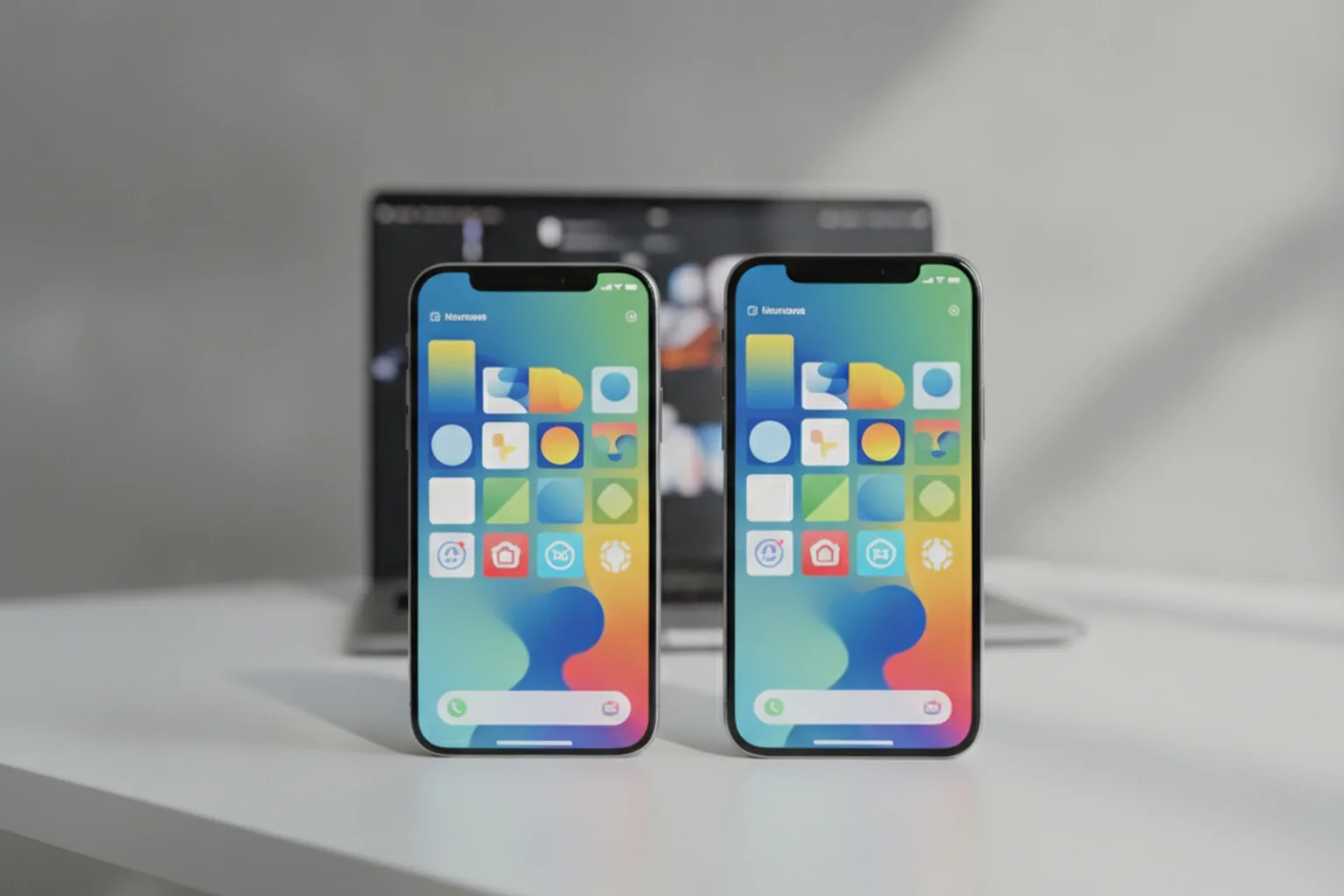
A React Native development company is a team that builds iOS and Android apps from one JavaScript or TypeScript codebase with React Native, writes native modules when needed and maintains the app through yearly platform changes. All seven firms below ship React Native apps to production and name real clients or open-source projects on their own websites.
If you already know React Native fits your product, our page on React Native development services lists the four fixed-scope tiers, the stack and how we run releases. This shortlist covers the step before that: choosing two or three React Native agencies and comparing them on the same evidence. For native and Flutter teams as well, see our comparison of mobile app development companies.
Every fact about companies 2 to 7 comes from the company's own website, checked on 27 November 2026 and linked in each card. YuSMP Group compiled this list and placed its own studio first, so judge us by the same criteria as everyone else.
 1. YuSMP Groupour studio
 2. Callstackcore contributors
 3. Software MansionReanimated authors
 4. Infinite RedUS React Native
 5. GeekyAntsUI libraries
 6. thoughtbotproduct process
 7. Brains & Beardsnative background
Key takeaways
- React Native expertise is public: look for libraries, commits and conference talks, not only a services page.
- Callstack and Software Mansion maintain parts of the framework and its key libraries; Infinite Red and Brains & Beards focus on rescues and native depth.
- Since React Native 0.76, the New Architecture is on by default, so ask every vendor how it migrates older apps.
- React Native apps still face App Store and Google Play deadlines, including the 2026 target API level 36 rule.
How did we pick these React Native development companies?
We picked these React Native development companies on six criteria, each checked against public sources rather than sales pages. A firm made the cut only if React Native is a core service and it names real React Native apps, clients or open-source projects on its own site.
| Criterion | What we checked | Where we checked it |
|---|---|---|
| Shipped React Native apps | Named apps and clients built with React Native | Portfolio and case pages |
| Open-source footprint | Libraries, boilerplates and commits to React Native | GitHub, company open-source pages |
| Community role | Conferences, podcasts, foundation membership | Company site, event sites |
| Native depth | Swift and Kotlin modules, brownfield integration | Service pages and case studies |
| Client signals | Named brands, testimonials with names | Company site |
| Post-launch support | React Native upgrades, store deadlines, OTA release process | Service descriptions |
Positions 2 to 7 are not a score. We ordered them to give you a spread of profiles: framework and library maintainers first, then US and Indian delivery teams, then product-led and native-heavy studios. Pick by fit, not by number.
We left out review-site scores, paid badges and awards we could not confirm on a primary page. Where a firm is a weaker fit for some projects, the card says who it suits instead of listing drawbacks.
React Native development companies compared side by side
The table compares all seven React Native development companies by focus, base, main strength and the client each one suits best.
| # | Company | React Native focus | Base / since | Strength | Best for |
|---|---|---|---|---|---|
| 1 | YuSMP Group (our studio) | React Native, TypeScript; app + backend | Yerevan office, US/EU clients / 2017 | Fixed tiers from $3,500 | Startups and SMBs |
| 2 | Callstack | React Native, React | Wrocław / OSS since 2016 | Core framework expertise | Enterprises at scale |
| 3 | Software Mansion | React Native, Expo | Kraków / listed company | Reanimated, Gesture Handler | Animation-heavy consumer apps |
| 4 | Infinite Red | React Native, Expo | US / Chain React since 2017 | Ignite, senior US team | US apps needing a rescue |
| 5 | GeekyAnts | React Native, React | Bengaluru / London, SF | NativeBase, gluestack-ui | Large teams on a budget |
| 6 | thoughtbot | React Native, iOS, Android | Teams across time zones | Belt CLI, public Playbook | Founders who want process |
| 7 | Brains & Beards | React Native, native modules | Remote / since 2016 | Native depth in RN | Apps needing native modules |
The 7 React Native development companies, one by one
Each card shows the company's logo, React Native focus and base, then the public apps, libraries or clients behind those facts. Links to company websites open in a new tab and carry no endorsement.
1YuSMP Group: React Native when it fits, native when it does not
- our studio
- since 2017
- Yerevan office, US and EU clients
- 120+ projects delivered
- React Native · TypeScript
YuSMP Group builds React Native apps for iOS, Android and the web together with the backend and admin panel, and builds natively in Swift and Kotlin when a project needs it. The company was founded in 2017, has 9+ years in business and 120+ delivered projects, and has worked with US and EU clients since 2024 (About YuSMP Group).
React Native projects are sold in fixed tiers on our React Native development service page: an MVP from $3,500 in 4–8 weeks, a production app from $5,800, a full product from $9,200 and a complex app from $11,500. New projects start on the New Architecture with TypeScript in strict mode.
To be transparent: most of our public mobile cases are native, and Coach is our public React Native case. We list the native ones because they show where we chose against React Native and why.
- Coach. A learner app, a webinar web resource and an admin panel on one React Native codebase for iOS, Android and the web, with a Laravel back end and an MVP in 12–20 weeks (case study).
- Food delivery aggregator. React Native was considered; we chose native Swift and Kotlin for stable background geolocation for couriers (case study).
Who it suits: startups and SMBs that want iOS, Android and often a web app from one TypeScript codebase at a published price, with an honest native-or-cross-platform call at the start.
Our React Native development service →
2Callstack: React Native core contributors for enterprise apps
- Wrocław, Poland
- contributing since 2016
- 300+ commits to React Native
- React Foundation founding member
Callstack is a React and React Native company registered in Wrocław, Poland, that has contributed to open source since 2016 and lists 300+ commits to React Native itself (callstack.com). The company is a founding member of the React Foundation and reports 100+ enterprise projects and 50M+ open-source downloads a month.
Named clients include Expensify, Ticketmaster, DirecTV, AutoZone and HelloFresh. Its services cover performance optimisation, brownfield integration of React Native into existing native apps, upgrades and release automation.
Who it suits: large companies with a React Native app at scale that need performance work, a brownfield migration or engineers who can fix problems inside the framework itself.
Callstack website →
3Software Mansion: the team behind Reanimated and Gesture Handler
- Kraków, Poland
- 400+ engineers
- listed on NewConnect
- Expo SDK contributor
Software Mansion is a Kraków-based company listed on the NewConnect market, with 400+ engineers building iOS, Android and web apps (swmansion.com). It maintains some of the most used React Native libraries: Reanimated, Gesture Handler, Screens, React Native SVG and React Navigation.
The company also maintains major parts of the Expo SDK and runs events including App.js Conf. Case studies on its site name Partiful, Supabase and Photobucket.
Who it suits: product teams whose React Native app lives on animations, gestures or media, and companies that want the authors of their key libraries on the project.
Software Mansion website →
4Infinite Red: US-based React Native rescue and scale
- US-based developers
- Chain React since 2017
- Ignite boilerplate
- 30+ open-source projects
Infinite Red works in React Native and Expo with US-based developers who average 15 years of professional experience, according to the company (infinite.red). It maintains the Ignite boilerplate among 30+ open-source projects and runs the React Native Radio podcast.
The company hosts Chain React, an annual React Native conference held in Portland, Oregon since 2017. Case studies on its site name Mercari, Zoom and GasBuddy.
Who it suits: US teams that already run a React Native app and need senior help with performance, upgrades or architecture next to their own developers.
Infinite Red website →
5GeekyAnts: React Native UI libraries and large delivery teams
- Bengaluru, India
- London · San Francisco
- 350+ product engineers
- NativeBase · gluestack-ui
GeekyAnts is headquartered in Bengaluru, India, with offices in London and San Francisco, and lists 350+ product engineers (geekyants.com). The company created NativeBase, a React Native component library, and gluestack-ui, its newer UI framework.
GeekyAnts reports 1,000+ products shipped to production. Client logos on its site include WeWork, Darden and ICICI.
Who it suits: companies that need a large React Native team on a budget and value a shared component library across mobile and web.
GeekyAnts website →
6thoughtbot: React Native with a published product playbook
- React Native recommended
- Belt CLI
- iOS · Android · web
thoughtbot designs and builds iOS, Android and cross-platform React Native apps, and calls React Native its recommended mobile framework when speed, cost and functionality all matter (thoughtbot, mobile). The team created Belt, a command-line tool that standardises how new React Native apps start.
The company publishes its Playbook and Handbook, which describe how it builds web and mobile products and runs the business. Mobile sits next to its long-standing Ruby on Rails, design and product work.
Who it suits: founders and product teams that want a React Native app plus product strategy and design from one partner with an open, documented process.
thoughtbot website →
7Brains & Beards: a React Native team with native roots
- remote since 2016
- React Native focus
- native iOS and Android background
Brains & Beards builds cross-platform apps in React Native and says it spent years shipping native iOS and Android apps first, so it drops down to native code when a product needs it (brainsandbeards.com). The team has worked remotely since 2016.
Companies named on its site include ManoMano, Rakuten and XING. The firm also runs a podcast and a blog on React Native practice.
Who it suits: Product companies that want a small senior React Native team able to write Swift and Kotlin modules when the bridge is not enough.
Brains & Beards website →Which React Native development company fits your app?
The right React Native development company depends on where your app stands: a new MVP, a slow app at scale, an animation-heavy product or a codebase that needs native modules. Use the scenarios below to narrow the list to two or three agencies before you send a brief.
| Your situation | Start with |
|---|---|
| MVP on iOS, Android and web with a fixed budget | YuSMP Group |
| Large app with performance problems or a brownfield migration | Callstack, Infinite Red |
| App built around animations, gestures or media | Software Mansion |
| Existing US app that needs senior hands now | Infinite Red |
| Big React Native team at a lower rate | GeekyAnts |
| Product strategy and design together with the build | thoughtbot |
| App that needs custom Swift and Kotlin modules | Brains & Beards, Callstack |
Settle the framework first. Our guides to React Native vs Flutter and React Native vs Swift cover the trade-offs, and what cross-platform software development is explains the basics for non-technical founders.
How to choose a React Native development company: a 9-point checklist
Choose a React Native development company by checking evidence in this order: shipped apps, framework depth, native skills, people, release process and support. Run every shortlisted agency through the same nine points and write the answers down.
- Install two of their React Native apps. Check scrolling, transitions and start-up time on a mid-range Android phone, where weak apps show first.
- Ask about the New Architecture. A current team can explain how it moved older apps to Fabric and TurboModules and which libraries caused trouble.
- Check native skills. Ask for a Swift or Kotlin module they wrote for a React Native app and why the JavaScript side was not enough.
- Ask Expo or bare, and why. The answer should depend on your native needs, not on the team's habit.
- Meet the people who will build it. Get the names of the lead React Native developer, the native specialist and the QA engineer.
- Review the release process. Look for TestFlight and Play internal builds on every merge, crash reporting and a rule for what may ship over the air.
- Confirm ownership. Your company should own the repository, both store accounts, the Expo or CI account and the signing keys.
- Plan upgrades. Agree how often the team upgrades React Native and who pays for yearly store requirements.
- Call one reference. Ask a past client what went wrong and how the team handled it.
For team set-up and roles, read our guide on how to hire a React Native development team and the overview of React Native software development.
How much does React Native app development cost in 2026?
React Native app development in 2026 costs from a few thousand dollars for an MVP to six figures for a complex product, usually less than two separate native apps of the same scope. As a reference point, YuSMP Group publishes fixed tiers on its React Native service page:
| Tier (YuSMP Group, React Native) | Price from | What it includes |
|---|---|---|
| MVP | $3,500 | 4–8 weeks, one codebase for iOS and Android, one core flow |
| Production app | $5,800 | Several features, backend integration, offline storage, analytics |
| Full product | $9,200 | Multiple modules and roles, integrations, CI/CD, real-device QA |
| Complex app | $11,500 | Native modules, offline-first sync, payments, scale |
Prices come from our React Native service page on 27 November 2026; the full breakdown is on the pricing page. The other agencies on this list quote per project after discovery, so ask each one for a written estimate on the same brief.
What drives the price of a React Native app up
- Native modules. Bluetooth, background location, video and payments SDKs often need Swift and Kotlin code next to TypeScript.
- Web from the same codebase. Adding a web target, as in our Coach case, saves a separate build but adds layout and testing work.
- Legacy upgrades. Moving an old app to the New Architecture can touch every third-party library.
- Store fees. Digital goods still go through Apple and Google billing; Apple charges 15% in its App Store Small Business Program for developers with up to $1 million in proceeds.
For budget detail, read our mobile app development cost guide and the app maintenance cost guide.
Which platform changes affect React Native projects in 2026?
React Native projects in 2026 follow two sets of changes at once: the framework's own release cycle and the yearly rules of both app stores. Ask every shortlisted agency how it plans for these:
- New Architecture by default. When you upgrade to React Native 0.76, the New Architecture and React 18 are enabled by default (React Native blog, 2024).
- Frameworks first. The React Native documentation recommends starting new apps with a framework and calls Expo a production-grade React Native framework (React Native docs, get started).
- Apple build rule. Since 28 April 2026, App Store uploads must be built with Xcode 26 and the iOS 26 SDK, React Native apps included (Apple Developer).
- Google Play rules. From 31 August 2026, new apps and updates must target API level 36, and apps targeting Android 15 or higher must support 16 KB memory page sizes, which matters because React Native ships native libraries (Android Developers).
An agency that skips these items leaves you with an app that cannot ship updates. Privacy work applies on both platforms; our article on mobile app security and GDPR compliance covers the data side.
Our take: when React Native is the right call and when it is not
In our experience, the most expensive React Native mistake is choosing the framework before listing what the app must do in the background. Below is how we decide; read it as our opinion, not as market data.
- React Native wins when most screens are forms, lists and content on top of an API, when your team already writes React for the web, and when one codebase should also serve a web app, as in Coach.
- Native wins when the app lives in the background: live courier tracking, alarms, Bluetooth hardware. For the food delivery aggregator we considered React Native and chose Swift and Kotlin for stable background geolocation.
- Over-the-air updates need rules. Shipping JavaScript fixes without a store release is useful, but agree in advance what may ship that way and how it is tested.
- Libraries are part of the estimate. A React Native app is only as healthy as its least maintained dependency, so we check every library before we commit to a timeline.
When is a cross-platform app not worth it?
We think cross-platform is not a default. If the product is a single platform for the first year, or if its value sits in native features such as HealthKit, widgets or background tracking, two native apps or one native iOS app first can be the cheaper path. React Native pays off when both platforms matter on day one and the screens are mostly shared.
Our position is simple: shortlist the agency whose public code and shipped apps you can inspect, then judge it by how honestly it answers the native-or-cross-platform question for your brief. Every project also teaches us something new about other industries, as the founder of YuSMP Group says:
“And along the way we always deepen our own knowledge and broaden our view of other domains…”
Yury Pukhov, founder and CEO of YuSMP Group (Meet the CEO)
If Flutter is still on your list, compare our Flutter development service, and plan QA and testing on real iOS and Android devices for every release.
Frequently asked questions
What is the best React Native development company in 2026?
The best React Native development company is the one whose shipped apps and libraries match your problem. On this list, Callstack leads on framework-level and enterprise work, Software Mansion on animations and gestures, Infinite Red on US rescues and YuSMP Group on fixed-price apps with the backend included.
How much does React Native app development cost?
React Native app development costs from a few thousand dollars for an MVP to six figures for a complex product. YuSMP Group publishes tiers from $3,500 for an MVP to $11,500 for a complex app (service page, 27 November 2026); the other agencies here quote after discovery.
Is React Native still a good choice in 2026?
React Native is a good choice in 2026 when you need iOS and Android from one TypeScript codebase and most screens sit on top of an API. Since version 0.76, the New Architecture is enabled by default, which removed many old bridge bottlenecks.
Should I hire a React Native company or a Flutter company?
Hire a React Native company if your team already writes React and TypeScript for the web or you want to share code with a web app. Choose Flutter if you want one rendering engine with pixel-identical UI on both platforms; our React Native vs Flutter guide compares both.
Should a new React Native app use Expo?
Most new React Native apps should start with a framework: the React Native documentation recommends one and calls Expo a production-grade React Native framework. Bare workflow still makes sense for brownfield apps or heavy custom native code.
Did YuSMP Group put itself first on this list?
Yes. YuSMP Group compiled this list and placed its own studio first, which we state at the top of the page. Companies 2 to 7 are real firms with facts linked to their own websites, so you can judge every team by the same criteria.
Sources
- React Native blog: the New Architecture is here (0.76)
- React Native docs: get started with React Native (checked 27 November 2026)
- Apple Developer: upcoming requirements
- Android Developers: support 16 KB page sizes
- Apple: App Store Small Business Program
- Company facts for positions 2 to 7: each company's own website, linked in its card (checked 27 November 2026)
See also
- Mobile app development companies compared (all platforms)
- Web app development companies compared
- Nearshore software companies in Europe
- UI/UX design agencies compared
- iOS app development companies compared
- Android app development companies compared
- Flutter app development companies compared
- All vendor comparisons
Want a second opinion on your React Native plan?
Tell us where you want to be in twelve months. We’ll come back with a plan to get you there.
Get a proposal
Share a few details and a senior consultant will reply within one business day.
- Requirements review and tech-stack recommendations
- Estimate of timeline, budget and team composition
- No commitment — just a clear plan
Email: sales@yusmpgroup.com
Phone: +374 44 871 811
Offices: KAMAR Business Center, Vazgen Sargsyan St. 2, Yerevan, Armenia · Remote — East-Coast US overlap (9 AM–1 PM ET)